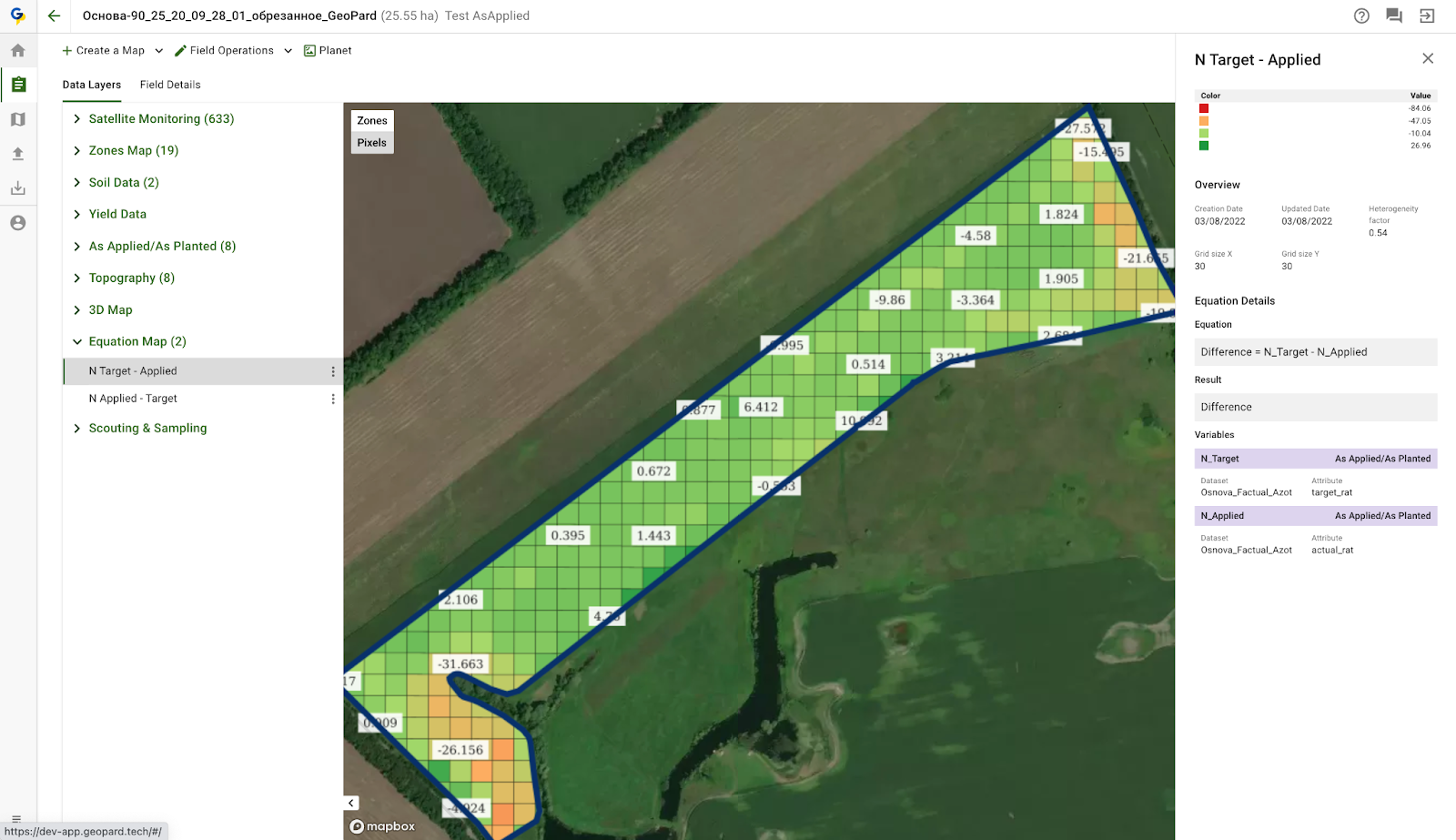
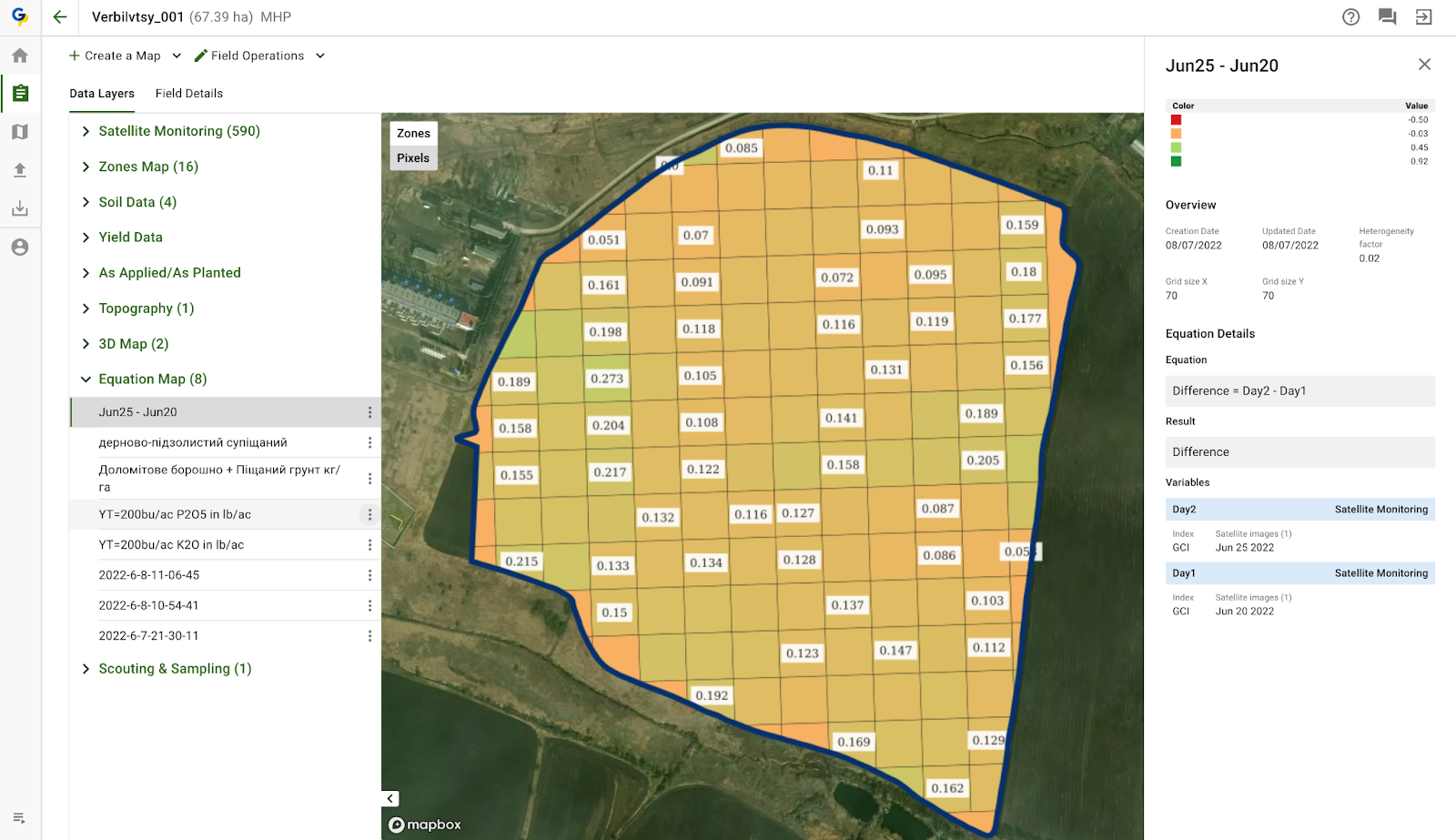
Sustainable Farming, Biofuels, and Role of Precision Agriculture: A GeoPard Perspective

As the world grapples with the challenges of climate change and increasing energy demands, the quest for sustainable and renewable energy sources has become a global priority. Biofuels, derived from organic matter, have emerged as a promising solution, particularly in the aviation industry.

However, their production presents its own set of challenges, primarily related to land use and farming practices. This is where precision agriculture, powered by GeoPard, comes into play.

Understanding Biofuels

Biofuels, in essence, are fuels derived from biological sources, such as plants, algae, and organic waste. They stand in stark contrast to fossil fuels, which are non-renewable resources like coal, oil, and natural gas.

The key distinction lies in their origin: they are created from living or recently deceased organisms, while fossil fuels stem from ancient organic materials buried deep within the Earth’s crust.

According to the International Energy Agency (IEA), global biofuel production has been on a consistent rise, reaching over 150 billion liters of ethanol and nearly 35 billion liters of biodiesel production in recent years.

The United States, Brazil, and the European Union are among the leading producers of biofuels, driven by policies aimed at reducing greenhouse gas emissions and promoting energy diversification.

Types of Biofuels and Their Origins:

Certainly! There are several types of biofuels, each derived from different sources. Here are the main types and their origins:

1. Biodiesel:

Biodiesel is synthesized from vegetable oils or animal fats through a process called transesterification. Common feedstocks include soybean oil, canola oil, and waste cooking oil.

Biodiesel can be blended with or substituted for traditional diesel fuel, reducing emissions of particulate matter and sulfur dioxide.

2. Bioethanol:

Bioethanol, often simply referred to as ethanol, is produced from sugar or starch-rich crops such as corn, sugarcane, and wheat.

Through fermentation, these crops are transformed into alcohol, which can be blended with gasoline or used in its pure form as a renewable fuel source. Ethanol offers cleaner combustion and fewer greenhouse gas emissions.

3. Biogas:

Biogas results from the anaerobic digestion of organic materials like agricultural residues, animal manure, and sewage.

The process releases methane and carbon dioxide gases, which can be captured and used as a source of energy for heating, electricity generation, and even vehicle fuel. Biogas reduces methane emissions from waste and provides a cleaner energy alternative.

Types of Biofuels and Their Origins

Benefits of Biofuels

They offer a range of benefits that contribute to both environmental and energy-related goals. Here are some of the key benefits of using biofuels:

1. Reduced Greenhouse Gas Emissions:

One of the most significant benefits of biofuels is their potential to reduce greenhouse gas emissions compared to fossil fuels. They emit fewer carbon dioxide (CO2) and other harmful pollutants when burned, leading to a smaller carbon footprint.

2. Renewable Energy Source:

They are derived from renewable resources, such as crops, agricultural waste, and organic materials. This contrasts with fossil fuels, which are finite resources that take millions of years to form.

3. Diversification of Energy Sources:

They provide an alternative to traditional fossil fuels, reducing dependence on oil and promoting energy security by diversifying the sources of transportation and energy fuels.

4. Support for Agriculture and Rural Economies:

Their production can provide economic opportunities for farmers and rural communities by creating a demand for agricultural products used as feedstock. This can stimulate local economies and reduce rural unemployment.

5. Reduced Air Pollutants:

They generally produce fewer particulate matter, sulfur dioxide (SO2), and nitrogen oxides (NOx) compared to conventional fossil fuels, contributing to improved air quality and public health.

6. Use of Low-Value Feedstocks:

Some biofuels, such as cellulosic ethanol, can be produced from low-value feedstocks like agricultural residues and forestry waste, reducing competition with food production.

7. Improved Energy Efficiency:

Their production can be more energy-efficient compared to fossil fuel extraction and refinement processes.

Benefits of Biofuels

8. Carbon Neutrality in Some Cases:

They produced from certain feedstocks and processes can achieve carbon neutrality or even negative emissions, as the carbon dioxide released during combustion is offset by the carbon dioxide absorbed during the growth of the feedstock.

9. Biofuel Blending with Conventional Fuels:

They can be blended with conventional fossil fuels, such as gasoline and diesel, without significant modifications to existing engines and infrastructure. This allows for gradual adoption without requiring a complete overhaul of transportation systems.

10. Potential for Sustainable Waste Management:

Biofuels can be produced from organic waste materials, such as agricultural residues, food waste, and sewage, contributing to more efficient waste management practices.

11. Research and Technological Innovation:

The development and implementation of biofuel technologies drive research and innovation in areas like biotechnology, agricultural practices, and sustainable energy production.

12. International Agreements and Climate Goals:

Many countries are working towards reducing their carbon emissions as part of international agreements. They can play a role in helping nations achieve their climate targets.

However, it’s important to note that not all biofuels are equally beneficial, and their impact depends on factors like feedstock selection, production methods, and land use changes.

Sustainability considerations and responsible sourcing are crucial to ensure that the production and use of biofuels truly contribute to a more environmentally friendly energy landscape.

The Challenges of Biofuels Adoption

While they hold immense potential to mitigate climate change and reduce dependence on fossil fuels, several challenges need careful consideration to prevent unintended consequences.

According to the Food and Agriculture Organization (FAO), biofuel production requires about 2-6% of the world’s agricultural land. Their expansion is often driven by government policies and incentives aimed at reducing carbon emissions and promoting renewable energy.

The European Union and the United States are significant players in the biofuel market, with policies encouraging their adoption. However, these policies have also spurred debates about their long-term impact on food security and land use.

1. Food vs. Fuel Debate:

The use of agricultural crops for its production can lead to competition with food production, potentially driving up food prices and exacerbating food security concerns, particularly in regions already facing food scarcity.

Example: The use of corn and soybeans for ethanol and biodiesel production in the United States has raised concerns about diverting these crops from food markets, leading to debates about resource allocation.

The Challenges of Biofuels Adoption

2. Land Use Change and Deforestation:

Expanding biofuel production may result in the conversion of forests, grasslands, and other natural habitats into agricultural land, leading to deforestation, loss of biodiversity, and disruption of ecosystems.

Example: The conversion of rainforests in Southeast Asia into oil palm plantations for biodiesel production has drawn criticism due to its impact on biodiversity and local communities.

3. Indirect Land Use Change (ILUC):

The displacement of food crops due to biofuel production can cause indirect land use changes, as new areas are converted to meet food demand. This can result in increased deforestation and greenhouse gas emissions.

4. Sustainability and Environmental Impact:

Some biofuels may have a higher environmental impact than expected due to factors such as water use, pesticide use, and changes in land management practices. Sustainable sourcing and production are essential to mitigate these impacts.

Example: The cultivation and processing of certain biofuel feedstocks, like palm oil, can result in high emissions due to land-use changes and processing methods.

5. Limited Feedstock Availability:

The availability of suitable feedstocks for its production is not unlimited. Depending on the region, competition for these feedstocks can arise between biofuel production, food production, and other industries.

6. Energy and Resource Inputs:

The energy and resources required for cultivating feedstock, processing, transportation, and conversion can offset the environmental benefits of biofuels, especially if fossil fuels are used extensively in the production process.

7. Technical Challenges and Compatibility:

Different biofuels have varying properties and energy densities compared to conventional fossil fuels. Adapting vehicles, engines, and infrastructure to accommodate biofuel blends can be technically challenging and costly.

8. Economic Viability and Cost-Effectiveness:

The economic viability of biofuel production can be influenced by factors like feedstock prices, production efficiency, government policies, and competing markets.

9. Infrastructure and Distribution Challenges:

They often require separate storage and distribution systems, which can be costly to develop and integrate into existing fuel supply chains.

10. Water Usage Concerns:

Some biofuel crops, particularly water-intensive ones like sugarcane, corn, and oil palm, can exacerbate water scarcity issues in regions where water resources are already stressed.

11. Technological Advancements and Research Needs:

Continued research and innovation are necessary to develop more efficient and sustainable biofuel production methods, address technical challenges, and reduce production costs.

12. Policy and Regulatory Frameworks:

Inconsistent or unclear policies regarding biofuel incentives, sustainability criteria, and regulations can hinder investment and adoption in the biofuel sector.

13. Public Perception and Awareness:

Negative perceptions or misconceptions about biofuels, such as concerns about their environmental impact or impact on food security, can influence public acceptance and support.

Numerous studies have examined the sustainability of different pathways. Life cycle assessments (LCAs) offer insights into the environmental impacts of biofuel production, considering factors like emissions, energy inputs, and land use change.

These assessments help policymakers and stakeholders make informed decisions about which biofuel pathways offer the most significant benefits with the least negative consequences.

Their future hinges on a delicate balance between technological advancements, policy interventions, and a holistic understanding of their environmental impact.

Developing second-generation biofuels that utilize non-food feedstocks, improving agricultural practices to boost crop yields, and implementing policies that prioritize sustainability are steps toward addressing these challenges.

Vital Biofuel Crops and Their Role in Fuel Production

In the quest for cleaner and more sustainable energy sources, they have emerged as a promising alternative to traditional fossil fuels. These renewable fuels, derived from organic matter, are essential contributors to reducing greenhouse gas emissions and promoting a greener energy landscape.

Several key crops play a pivotal role in biofuel production, providing the raw materials necessary to create a range of renewable fuels. These crops are selected for their high energy content, fast growth rates, and ability to thrive in diverse climatic conditions.

1. Corn (Maize):

Corn is a versatile biofuel crop used primarily in the production of ethanol. The United States is a prominent producer of corn-based ethanol, using a process that converts corn starch into fermentable sugars and subsequently into ethanol through fermentation. Corn-based ethanol is often blended with gasoline to reduce emissions and dependence on fossil fuels.

1. Corn (Maize)

2. Sugarcane:

Sugarcane is also a biofuel crop widely cultivated in tropical regions, particularly in Brazil. Sugarcane’s high sucrose content makes it an excellent candidate for bioethanol production.

The Brazilian experience demonstrates the viability of using sugarcane to produce ethanol, contributing significantly to the country’s energy independence.

3. Soybeans:

Soybeans are utilized in the production of biodiesel, an alternative to traditional diesel fuel. Soybean oil, extracted from soybeans, is transformed through a process called transesterification into biodiesel.

The United States is a major producer of soy-based biodiesel, and its usage contributes to reducing greenhouse gas emissions from the transportation sector.

4. Jatropha:

Jatropha is an intriguing biofuel crop due to its ability to thrive in arid and marginal lands, minimizing competition with food crops.

Its seeds yield oil that can be converted into biodiesel. Countries like India, Indonesia, and parts of Africa are exploring the potential of jatropha as a sustainable biofuel feedstock.

5. Switchgrass:

Switchgrass is a native North American grass that has garnered attention for its potential as a biomass feedstock for cellulosic ethanol production.

Its fibrous structure and high cellulose content make it a suitable candidate for converting cellulose into ethanol through advanced biochemical processes. This crop holds promise in reducing land use conflicts as it can grow on marginal lands not suitable for food crops.

5. Switchgrass

6. Algae:

Algae, a versatile group of organisms that thrive in various aquatic environments, offer a remarkable source of biofuel. Algae can accumulate high levels of lipids (oils), which can be extracted and processed into biodiesel.

Algae’s rapid growth rates and ability to capture carbon dioxide make it a compelling feedstock, potentially reducing emissions and providing a sustainable energy solution.

7. Camelina:

Camelina, also known as false flax or gold-of-pleasure, is an oilseed crop with a high oil content. Its seeds can be processed to yield biojet fuel, making it an attractive feedstock for the aviation industry’s efforts to reduce emissions.

Camelina’s ability to grow in dry conditions without requiring significant water resources further contributes to its appeal.

8. Miscanthus:

Miscanthus is a perennial grass that exhibits rapid growth and high biomass yield. Its potential as a feedstock for both bioethanol and bioenergy production has gained attention.

Miscanthus’ efficient use of water and nutrients, coupled with its potential to sequester carbon, positions it as an environmentally friendly biofuel crop.

The Potential of Biofuels in Aviation:

The aviation industry, a cornerstone of global connectivity and economic growth, has long been associated with substantial carbon emissions. In the pursuit of a more sustainable future, their integration into aviation has gained traction as a promising solution.

These renewable fuels, sourced from organic materials, can significantly reduce the industry’s carbon footprint and contribute to global efforts to combat climate change.

According to the U.S. Department of Energy, sustainable aviation fuels (SAFs) can reduce lifecycle greenhouse gas emissions by up to 80% compared to conventional jet fuel, contributing to improved air quality and diminished environmental harm.

The Potential of Biofuels in Aviation

According to the International Air Transport Association (IATA), several airlines have successfully conducted flights using biofuel blends, showcasing the feasibility of integration. Biojet fuel production capacity has also increased, with numerous commercial airlines and airports incorporating biofuels into their operations.

Companies like Gevo are leading the way in low-carbon ethanol production, demonstrating the potential of biofuels in creating a sustainable energy future.

Types of Biofuels in Aviation

Biofuels used in aviation, commonly known as “biojet fuels,” are specifically designed to replace or supplement traditional jet fuels while reducing greenhouse gas emissions and promoting sustainability. Several types of biofuels are being explored and developed for aviation use:

1. Hydroprocessed Esters and Fatty Acids (HEFA):

  • HEFA biojet fuels are produced by hydroprocessing plant oils and animal fats, typically derived from crops like camelina, soybean, and used cooking oil.
  • These biojet fuels are chemically similar to conventional jet fuels and can be used as drop-in replacements without requiring modifications to aircraft engines or infrastructure.

2. Fischer-Tropsch (FT) Synthesis:

  • FT biojet fuels are synthesized from various feedstocks, including coal, natural gas, and biomass, through a process known as the Fischer-Tropsch synthesis.
  • FT biojet fuels have excellent energy density and can be produced with lower sulfur and aromatic content compared to conventional jet fuels.

3. Algae-based Biojet Fuels:

  • Algae are microorganisms that can produce oils or lipids suitable for biojet fuel production.
  • Algae-based biojet fuels have the potential for high oil yields and can be cultivated in various environments, including non-arable land and wastewater.

4. Waste-based Biojet Fuels:

  • Biojet fuels can be produced from various waste materials, such as agricultural residues, forestry waste, and municipal solid waste.
  • These waste-based biojet fuels contribute to waste management solutions and reduce the environmental impact of waste disposal.

5. Synthetic Paraffinic Kerosene (SPK):

  • SPK biojet fuels are synthesized from renewable sources using advanced processes such as biomass gasification and catalytic synthesis.
  • These fuels have similar properties to conventional jet fuels and are designed to be compatible with existing aviation infrastructure.

6. Lipid-derived Biojet Fuels:

  • Lipid-derived biojet fuels are produced from plant oils, animal fats, and other lipid-rich feedstocks.
  • These feedstocks are converted into biojet fuels through processes like transesterification and hydrotreatment.

7. Cellulosic Biojet Fuels:

  • Cellulosic biojet fuels are derived from non-food feedstocks, such as agricultural residues, wood chips, and grasses.
  • The cellulose content is converted into sugars, which can be fermented to produce biofuels.

8. Blended Biojet Fuels:

  • Blended biojet fuels are mixtures of biojet fuels with conventional jet fuels.
  • These blends allow for incremental adoption of biojet fuels and can meet aviation safety and performance standards.

Examples of Successful Implementation

Several successful implementations of biofuels in aviation have demonstrated the feasibility and potential of using sustainable alternatives to traditional jet fuels. Here are a few notable examples:

1. Virgin Atlantic’s Biofuel-Powered Flight (2008):

Virgin Atlantic conducted the world’s first commercial flight using a blend of biofuel and traditional jet fuel in 2008. The Boeing 747-400 flight from London to Amsterdam used a biofuel blend made from coconut and babassu oil.

Examples of Successful Implementation

2. Qantas Biofuel-Powered Flight (2012):

Qantas operated the first-ever commercial flight using a 50/50 blend of refined cooking oil and conventional jet fuel. The Airbus A330 flight traveled from Sydney to Adelaide.

3. United Airlines’ Historic Biofuel Flight (2016):

United Airlines operated the first U.S. commercial flight powered by biofuels derived from agricultural waste. The flight used a blend of 30% biofuel and 70% traditional jet fuel.

4. Lufthansa’s Regular Biofuel Flights (2011 – Present):

Lufthansa has been operating regular flights between Hamburg and Frankfurt using Airbus A321 aircraft powered by biofuel blends. These flights showcase the airline’s commitment to sustainable aviation.

5. KLM’s Biofuel-Powered Flights (2011 – Present):

KLM has conducted numerous biofuel-powered flights, including flights between Amsterdam and Paris. The airline has partnered with other companies to produce sustainable biofuels from various feedstocks.

6. Air New Zealand’s Jatropha Flight (2008):

Air New Zealand operated a successful test flight using a Boeing 747-400 powered by a blend of jatropha-based biofuel and conventional jet fuel.

7. Alaska Airlines’ Multiple Biofuel Flights (2011 – Present):

Alaska Airlines has been involved in several biofuel test flights. One of their flights used a blend of biofuel made from forest residuals.

8. Embraer’s E-Jet Flight (2012):

Embraer conducted a demonstration flight of its E170 aircraft using a blend of renewable jet fuel made from sugarcane-derived ethanol.

9. Gulfstream’s Biofuel-Powered Business Jets:

Gulfstream Aerospace has flown its business jets, including the G450 and G550 models, on biofuel blends to showcase the viability of sustainable aviation in private jet travel.

10. Singapore Airlines’ Green Package Program (2020):

Singapore Airlines introduced its “Green Package” program, offering customers the option to purchase sustainable aviation fuel (SAF) to offset the carbon emissions from their flights.

These successful implementations highlight the aviation industry’s efforts to integrate biofuels into their operations as part of broader sustainability initiatives.

While these examples demonstrate progress, continued research, investment, and collaboration among airlines, governments, and biofuel producers are essential for scaling up its adoption in the aviation sector.

Role of Precision Agriculture in Biofuel Production

As the world grapples with the dual challenges of feeding a growing population and mitigating environmental impact, innovative approaches are essential to forge a sustainable path forward.

Their dynamic integration with precision agriculture offers a compelling solution, synergizing the power of renewable energy with advanced farming practices.

Biofuels, derived from organic matter, and precision agriculture, which employs technology for targeted farming practices, may seem disparate. However, their union promises to transform agriculture into an environmentally conscious, resource-efficient endeavor.

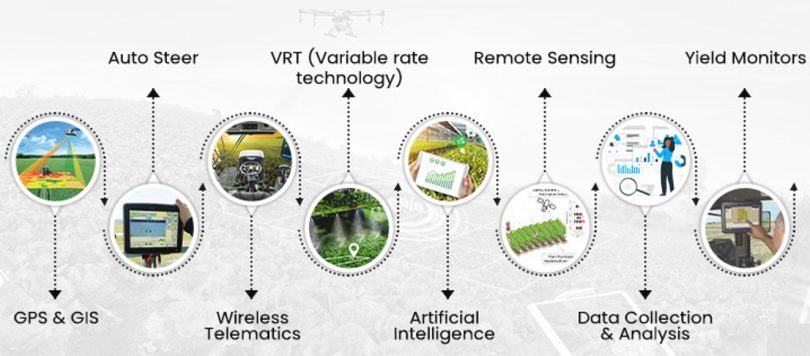
Precision agriculture involves the use of advanced technologies to monitor and manage crop growth at a granular level. It enables farmers to optimize their use of resources like water, fertilizer, and energy, thereby reducing their environmental impact.

Moreover, by improving crop yields, precision agriculture can help make biofuel production more efficient and sustainable.

precision Agriculture in Biofuel Production

According to the PrecisionAg Institute, the adoption of precision agriculture has grown substantially, with a global market value exceeding $5 billion in recent years. Similarly, the International Energy Agency (IEA) reports a steady increase in biofuel production. The strategic alliance of these two realms holds immense potential in reshaping the agricultural and energy sectors.

a. United States: The United States has seen success in integrating biofuels and precision agriculture. By analyzing crop yield data, farmers can predict crop residues that are suitable for biofuel conversion. For instance, the production of cellulosic ethanol from corn stover has gained traction.

b. Brazil: In Brazil, precision agriculture is used to optimize sugarcane cultivation for bioethanol production. Data-driven decisions enhance sugarcane growth while minimizing environmental impact.

Biofuel Integration in Precision Agriculture

The integration of biofuels in precision agriculture presents a unique opportunity to enhance the sustainability, efficiency, and environmental impact of farming practices. Here’s how they can be integrated into precision agriculture:

1. On-Farm Energy Generation:

They can be produced from various on-farm resources, such as agricultural residues, crop waste, and dedicated energy crops.

By using them to generate on-farm energy, farmers can power machinery, equipment, and irrigation systems more sustainably, reducing reliance on fossil fuels.

2. Renewable Power for Precision Technologies:

Precision agriculture relies on advanced technologies like GPS, sensors, drones, and automated equipment. These technologies can be powered by biofuels, reducing the carbon footprint of their operations.

3. Biofuel Residue Utilization:

Crop residues left after harvest, such as corn stover and wheat straw, can be converted into biofuels.
These residues can also be used to generate bioenergy to power farm operations or be processed into biochar, which can improve soil fertility.

4. Closed-Loop Systems:

Precision agriculture generates data that can be used to optimize its production. For instance, data on crop yields, soil health, and weather conditions can inform decisions about which crops to grow for biofuel feedstock.

5. Precision Application of Biofuel Inputs:

Precision technologies can be applied to the production of biofuel feedstocks, ensuring efficient use of resources like water, fertilizers, and pesticides. This reduces the environmental impact of its production and maximizes crop yield.

6. Site-Specific Biofuel Crop Planting:

Precision agriculture enables site-specific planting of biofuel crops, optimizing seed density and spacing based on soil conditions and other variables.
This approach can lead to higher yields and improved its feedstock quality.

7. Optimized Harvesting:

Precision agriculture techniques can help determine the ideal time to harvest biofuel crops for maximum yield and quality. This improves the efficiency of its production and reduces waste.

8. Reduced Environmental Impact:

Integrating them with precision agriculture can lead to more sustainable farming practices by reducing greenhouse gas emissions and minimizing the use of non-renewable resources.

9. Biodiversity Promotion:

Precision agriculture can facilitate the establishment of buffer zones, cover crops, and wildlife habitats on the farm, contributing to biodiversity. This can also support the growth of biofuel feedstocks that benefit from diverse ecosystems.

10. Circular Economy:

Precision agriculture can be integrated with biofuel production to create a circular economy model where agricultural waste is repurposed for energy production, reducing waste and enhancing sustainability.

11. Educational and Outreach Opportunities:

Integrating biofuels and precision agriculture provides educational opportunities for farmers to learn about sustainable practices and the environmental benefits of biofuel adoption.

By combining their benefits, farmers can achieve more efficient, environmentally friendly, and sustainable agricultural systems while contributing to the renewable energy landscape.

The International Renewable Energy Agency (IRENA) reports that biofuels could potentially replace up to 27% of the world’s total transport fuel demand by 2050.

Similarly, the precision agriculture market is expected to reach over $12 billion by 2027, according to Allied Market Research. These trends underline the growing importance of sustainable energy and precision-driven farming.

Furthermore, research has consistently demonstrated the positive impact of biofuels and precision agriculture on reducing carbon emissions, optimizing resource use, and enhancing food security.

The ongoing evolution of these practices is backed by scientific evidence that showcases their potential to revolutionize energy production and agricultural sustainability.

How GeoPard Enables Sustainable Biofuel Production:

At GeoPard, we are leveraging the power of precision agriculture to enable sustainable biofuel production. Our platform provides farmers with detailed insights into their fields, allowing them to monitor crop health, predict yields, and optimize resource use.

By doing so, we not only help farmers improve their profitability but also contribute to the sustainability of biofuel production.

For instance, our field potential maps can help farmers identify the most productive areas of their fields, enabling them to maximize their yields while minimizing their environmental impact.

Meanwhile, our latest imagery analytics can provide real-time information on crop health, allowing farmers to take timely action to protect their crops and ensure a successful harvest.

By helping farmers optimize their practices and improve their yields, we can contribute to the development of a truly sustainable energy future. As the demand for biofuels, particularly sustainable aviation fuels, continues to grow, we are committed to providing the tools and insights needed to make biofuel production more sustainable and efficient.

By aligning our efforts with initiatives like the U.S. Department of Energy’s Bioenergy Technologies Office, we aim to contribute to the global transition towards a more sustainable and resilient energy system.

Conclusion

The convergence of biofuels and precision agriculture represents a promising pathway towards a more sustainable and efficient future. With innovations like advanced feedstocks, next-gen conversion processes, AI-driven precision techniques, and waste-to-biofuel solutions, both sectors are poised to revolutionize energy production and farming practices.

The global outlook, backed by scientific evidence, highlights their potential in reducing emissions, enhancing yields, and fostering sustainability. As emerging trends like carbon dioxide utilization and urban precision agriculture come to the fore, it’s clear that these dynamic fields will continue to drive positive change for our planet, offering a greener and more prosperous tomorrow.

Lebanon’s Cedar Crest is Among 11 FFA Chapters to Get Precision Agriculture Driving Simulator

As Cedar Crest FFA Parliamentarian Bradyn Aurentz tried to follow the red line on the driving simulator, the sales manager noticed his manual steering resulted in spinning in circles.

However, after switching to auto steer mode with GPS assistance, Aurentz easily stayed within the designated field path marked by two blue lines.

Aurentz praised the Raven RS-1 Demo Education Simulator, stating that it provides a realistic experience for students, allowing them to train on the same system used by farmers for accurate equipment steering and application of chemicals, seeds, and fertilizer.

Lebanon County’s Cedar Crest FFA chapter is one of 11 nationwide to receive a Raven RS-1 Demo Education Simulator, donated by CNH Industrial, the parent company of Raven Technologies and New Holland Agriculture.

The simulator, which utilizes Raven technology in New Holland farm equipment, allows farmers to use GPS-assisted auto steer and monitor the application of chemicals, seeds, and fertilizer. Messick’s Equipment in Rapho Township serves as the vendor and hosted Cedar Crest FFA members and Pennsylvania FFA state officers for a preview of the simulator operations and a tour of the facility.

The tabletop simulators feature a display screen connected to GPS and other sensors, providing students with a compact unit for hands-on learning.

The auto steer function in the Raven RS-1 simulator allows farmers to drive straight lines easily, combating operator fatigue and minimizing the overuse of materials in the fields. This helps reduce the economic and environmental impact of farming practices.

The high-end unit, valued at around $23,000, will be provided to Cedar Crest FFA, with efforts underway to find bundle or discount options for other interested FFA chapters nationwide.

Access to learning materials is available at bit.ly/PrecisionToolkits for FFA teachers and students to receive training similar to what field technicians use to operate the simulator.

Making A Difference

In addition to Cedar Crest, other FFA chapters receiving the donated simulators are Botkins FFA (Ohio), Chicago Ag Sciences FFA (Illinois), Graves County FFA (Kentucky), Imbler FFA (Oregon), Rossville FFA Chapter (Indiana), South Hamilton FFA (Iowa), Stockbridge Valley FFA (New York), and Dodgeville FFA, Mosinee FFA, and Whitehall FFA (all in Wisconsin).

Cedar Crest FFA teacher Phil Haussener, along with instructors Darren Grumbine and Claudia Brady, visited Messick’s Equipment with six chapter officers and one member working on a farm.

They previewed the simulator training, which Haussener plans to incorporate into the curriculum in the upcoming fall semester.

Cedar Crest’s application for the simulator donation was made in fall 2022, and having an active farmer like Grumbine, who uses precision tech on his Lebanon farm, might have contributed to their chances of receiving the simulator.

Crystal Bomgardner, the Pennsylvania FFA President since June, graduated in 2022 from the Bob Jones Academy and Northern Lebanon FFA chapter.

As a local resident, she expressed excitement about the donated simulator going to a school in her home area. Bomgardner’s father has a farming background, owning a custom hay baling business and a hobby farm with show heifers, pigs, and chickens.

Cedar Crest FFA teacher, Phil Haussener, mentioned that having students like Bomgardner with farm backgrounds is relatively rare nowadays, with only about 10 to 15% of his students coming from a farming background.

Both Bomgardner and Haussener highlighted that the high-end simulator will provide valuable learning opportunities about the latest agricultural technology, essential not only for modern farming but also applicable to advanced fields like self-driving vehicles and artificial intelligence.

Haussener emphasized that the simulator opens up new possibilities for the students and Bomgardner praised the GPS-assisted auto steer, a significant improvement compared to older manual steering equipment available to many FFA chapters.

They believe this simulator experience will give Cedar Crest FFA students a better understanding of modern AI applications in agriculture.

How Precision Turf Management Shapes World-Class Golf Fields?

Golf has long been considered a prestigious sport that demands impeccable playing conditions. The lush, well-maintained greens and fairways are what make golfing a truly enjoyable experience for players and spectators alike.

Behind the scenes, achieving such high-quality conditions involves a comprehensive approach known as Precision Turf Management.

What is Precision Turf Management?

Precision Turf Management, also referred to as Precision Agronomy or Precision Golf Course Management, is a modern, science-based approach to maintaining golf courses that focuses on using data, technology, and expert knowledge to optimize the management of turfgrass and associated resources.

It uses a variety of technologies, including sensors, GPS, GIS, and decision support systems, to collect data on turfgrass conditions. This data is then used to create management plans that are tailored to the specific needs of each area of the turf.

What is Precision Turf Management

The goal is to provide golfers with pristine, consistent, and playable surfaces while minimizing inputs such as water, fertilizer, and pesticides.

Significance in Golf Course Maintenance

Precision Turfgrass Management holds immense significance in golf course maintenance, revolutionizing how golf courses are managed and elevating the overall playing experience.

Reports indicated that water usage on golf courses decreased by up to 25%, while pesticide and fertilizer applications dropped by around 15% in some regions. Here are the key benefits of Precision Turf Management:

1. Enhanced Playing Conditions

It ensures uniform and consistent playing conditions throughout the entire golf course. By closely monitoring and managing factors such as irrigation, fertilization, mowing, and pest control, it helps create a level playing field for golfers.

This consistency contributes to fair play and enhances the overall golfing experience, attracting more players and boosting the reputation of the course.

2. Resource Optimization

Traditional turf management practices often led to the inefficient use of resources like water, fertilizers, and labor. PTM, on the other hand, utilizes data-driven decision-making and advanced technologies to target specific areas that require attention.

By applying resources precisely where and when they are needed, PTM minimizes waste and reduces operational costs, making golf course maintenance more sustainable and economically viable.

3. Environmental Sustainability

In today’s environmentally-conscious world, sustainable practices have become a priority for golf course management. It aligns with this focus by promoting eco-friendly approaches.

Through reduced water consumption, minimal chemical usage, and improved soil health, it helps mitigate the environmental impact of golf course maintenance, preserving natural ecosystems and biodiversity.

4. Improved Turf Health

PTM’s proactive approach involves continuous monitoring and early detection of stress, diseases, or nutrient imbalances in the turf.

By intervening promptly to address potential issues, turf managers can prevent problems from escalating into significant damage, ensuring healthier and more resilient turf throughout the course.

5. Cost-Effectiveness

While implementing PTM may require an initial investment in technology and expertise, it proves cost-effective in the long run. By optimizing resource utilization and reducing unnecessary expenses, it leads to substantial savings in maintenance costs over time.

Significance in Golf Course Maintenance

6. Positive Course Reputation

Golfers are increasingly drawn to courses that prioritize high-quality playing conditions and environmental responsibility. Adopting PTM enhances the reputation of the golf course, attracting more visitors, members, and tournament organizers, which, in turn, can boost revenue and overall success.

Components of Precision Turf Management

It involves a combination of essential components that work together to optimize turf health and sustainability. The key components are as follows:

1. Soil Analysis: Its core component is soil analysis, providing crucial data on nutrient content, pH levels, and organic matter.

This information guides targeted fertilization, soil amendments, and maintenance, optimizing soil health for robust turf growth and optimal performance.

2. Remote Sensing and Imaging: Precision Turfgrass Management uses cutting-edge remote sensing and imaging tech, like satellites and drones, to gather real-time data on turf condition.

This helps identify problems early, like water stress or pests, enabling timely interventions and maintaining turf health and aesthetics.

3. Geographic Information Systems (GIS): GIS is essential in PTM, creating detailed maps of turf areas with vital spatial data like soil variability and water flow patterns.

Visualizing this information allows managers to allocate resources precisely, reducing wastage and maximizing maintenance effectiveness.

Components of Precision Turf Management

4. Weather Monitoring and Irrigation Management: Weather plays a significant role in turf health, and PTM takes this into account through weather monitoring. Weather stations provide data on temperature, rainfall, humidity, and other climate factors that impact the turf.

Further, soil moisture sensors are devices used to measure the moisture content in the soil. These sensors are buried in the ground at various depths and provide real-time data on the soil’s water availability.

By considering this data, turf managers can adjust irrigation schedules, fertilizer applications, and other maintenance practices accordingly.

5. Nutrient Management: Nutrient management in PTM ensures the right balance of essential elements for turf growth. Soil analysis guides precise fertilizer application, minimizing runoff and environmental pollution while maintaining sustainable and high-quality turf growth.

6. Pest and Disease Control: Precision Turf Management adopts Integrated Pest Management (IPM) for effective pest and disease control.

Using natural methods and targeted treatments, it reduces chemical pesticide use, promoting biodiversity and environmental preservation while managing turf issues.

7. Aeration and Soil Compaction: Aeration and soil compaction alleviation are crucial practices in PTM. Aeration involves perforating the soil to improve air exchange and nutrient absorption by the roots.

Soil compaction alleviation relieves soil compression, promoting better root growth. These practices enhance root health, leading to stronger and more resilient turf that can withstand stress, drought, and foot traffic.

8. Turf and Plant Selection: The choice of turf types and landscape plants is essential. Turf managers can carefully select species and varieties that are well-suited to the local climate, soil conditions, and intended use of the area. Proper selection ensures better tolerance to environmental stressors and reduces the need for excessive maintenance.

Steps to apply Precision Turfgrass Management

9. Mowing Practices: It includes tailored mowing practices that consider turf species, growth patterns, and environmental factors. Proper mowing height and frequency ensure optimal turf health and appearance.

Steps to apply Precision Turfgrass Management

By following these steps, golf courses can adopt PTM, ensuring efficient resource utilization, improved course performance, and environmental sustainability.

1. Characterize and Document the Site

  • Collect data concerning the soils, plants, irrigation system, and various sections of the golf course, including tees, greens, roughs, fairways, landscapes, and more.
  • Create detailed maps and drawings, including irrigation infrastructure and aerial photographs.

2. Conduct Soil and Water Analyses

  • Perform soil and water analyses to understand nutrient levels and irrigation requirements for different zones.

3. Consider Climate and Weather

  • Analyze long-term climate trends and within-season weather conditions to adapt management practices accordingly.

4. Identify Turf Types and Landscape Plants

  • Recognize the various turf types and landscape plants present on the course, understanding their unique requirements.

5. Develop Management Zones

  • Group areas with common characteristics (e.g., soil type, plant requirements, pest threats, slopes) into management zones.

6. Set Performance Goals

  • Set specific performance objectives for each management zone with the aim of optimizing the overall performance of the golf course.

7. Document and Track Management Practices

  • Record and document successful management practices that contribute to achieving the best possible performance for the golf course, while also monitoring and analyzing changes over time.

8. Determine Minimum Resource Requirements

  • Determine the essential natural, human, chemical, and mechanical resources required to attain optimal course performance.

9. Implement Resource Reductions

  • When required, apply resource reductions to adhere to environmental or budgetary constraints.
  • Aim to use resources more effectively without compromising turf performance.

10. Optimize Resource Allocation

  • Reallocate manpower and resources, such as irrigation and fertilization, to prioritize critical areas while reducing inputs in out-of-play areas.

Challenges and Limitations of Precision Turf Management

PTM undoubtedly revolutionizes golf course maintenance, but like any advanced approach, it is not without its challenges and limitations. Some of them are:

1. Initial Investment: Adopting PTM often requires significant initial investments in technology, equipment, and training. This upfront cost may be a barrier for some golf courses or turf managers.

2. Data Accuracy and Reliability: It heavily relies on data from various sensors and sources. Ensuring the accuracy and reliability of this data is crucial for making informed decisions. Inaccurate or faulty data can lead to improper management practices.

3. Complexity of Data Analysis: Analyzing the large volume of data collected can be complex and time-consuming. Turf managers need to possess the necessary skills and expertise to interpret and utilize the data effectively.

4. Site-Specific Variability: Each golf course has unique characteristics, including soil types, microclimates, and turf species. it must account for these site-specific variabilities, which can be challenging to address comprehensively.

5. Weather Variability: Weather conditions, especially in regions with unpredictable climates, can significantly impact turf health and management plans. Adapting to rapidly changing weather patterns requires flexibility and quick decision-making.

6. Limited Access to Resources: Some golf courses may not have access to the latest technology, soil testing facilities, or specialized expertise, which can hinder the full implementation of PTM practices.

7. Transition Period: Transitioning from traditional turf management to a data-driven approach may require a period of adjustment for both turf managers and maintenance staff. This shift in mindset and practices can take time and effort.

8. Environmental Constraints: While PTM aims to promote sustainability, there may still be environmental limitations or regulations that restrict certain management practices, such as water usage or chemical applications.

9. Integration with Existing Systems: Integrating new technology and data analysis systems into an established golf course management structure may present logistical challenges and require seamless coordination.

10. Training and Education: Ensuring that the turf management team is adequately trained and knowledgeable about PTM practices is essential. Ongoing education and training may be necessary to stay updated with advancements in the field.

Despite these challenges, Precision Turfgrass Management offers significant benefits in terms of resource efficiency, improved turf health, and sustainable golf course management. Addressing these limitations and finding practical solutions can lead to successful adoption and long-term advantages.

Difference from Traditional Turf Management Practices

The traditional approach to turf management often relied on a set schedule of routine applications of fertilizers and pesticides, regardless of the actual needs of the turf.

Difference from Traditional Turf Practices

PTM, on the other hand, employs a more customized and data-driven strategy, considering factors such as soil moisture levels, weather conditions, and turfgrass health. Some of the key differences are:

1. Personalization vs. One-Size-Fits-All

Traditional turf management often followed a one-size-fits-all methodology, where the same maintenance practices were applied uniformly across all turf areas. Whether it was irrigation schedules, fertilizer applications, or pest control, the approach lacked customization.

In contrast, it emphasizes personalization. It considers each turf area as a unique ecosystem, taking into account factors like soil composition, grass species, climate conditions, and usage patterns.

2. Data-Driven Decision Making vs. Subjective Judgment

In the conventional approach, groundskeepers and turf managers often relied on subjective judgment and visual assessments to determine maintenance needs. While experience is valuable, it can be limited and prone to human biases.

PTM, on the other hand, is grounded in data-driven decision making. It utilizes advanced technologies to gather precise and real-time data about the turf’s condition.

3. Sustainability and Environmental Focus

One of the most significant distinctions between traditional turf management and PTM lies in their approach to environmental sustainability. Traditional practices often relied heavily on synthetic fertilizers, pesticides, and herbicides, which could lead to nutrient runoff, soil degradation, and harm to non-target organisms.

PTM, however, adopts a more eco-conscious approach. By conducting soil tests and employing GIS technology, it minimizes the use of chemicals by applying them only where needed.

Additionally, It promotes integrated pest management (IPM), using natural predators and biological controls to manage pests and diseases, thus reducing the environmental impact.

4. Resource Optimization vs. Resource Waste

Traditional turf management sometimes led to the inefficient use of resources such as water, fertilizers, and labor. Without precise data on soil moisture levels or actual turf needs, overwatering and over-fertilization were common occurrences.

PTM, in contrast, focuses on resource optimization. By using weather monitoring and smart irrigation systems, it ensures that water is delivered precisely.

5. Proactive Maintenance vs. Reactive Approaches

Conventional turf management often involved reactive approaches to problems, addressing issues after they had already escalated. This could result in more significant damage and costly repairs.

However, PTM takes a proactive stance. Through continuous monitoring and early detection of stress, diseases, or nutrient imbalances, it allows turf managers to intervene promptly and prevent potential problems from becoming severe, resulting in healthier and more resilient turf.

Conclusion

Precision Turf Management is a game-changer for the golf course maintenance industry. By combining technology, data, and expert knowledge, this approach allows golf courses to achieve consistent, high-quality playing surfaces while reducing their environmental footprint. As golf continues to be a beloved sport worldwide, the global adoption of Precision Turfgrass Management practices will undoubtedly contribute to a sustainable future for both the sport and the environment.

The Environmental Benefits of Precision Agriculture

Precision agriculture, often referred to as smart farming or precision farming, is a revolutionary approach to modern agriculture that integrates cutting-edge technology, advanced sensors, and data analysis to optimize farming practices.

This transformative methodology has the potential to revolutionize the agricultural industry by enhancing resource efficiency, reducing environmental impact, and increasing productivity. Its fundamental principles revolve around the precise and site-specific management of resources.

Environmental Benefits of Precision Farming

Its environmental benefits are significant and can help to protect our natural resources for future generations. As precision agriculture technologies continue to develop, we can expect to see even greater environmental benefits in the years to come.

A study by the American Farm Bureau Federation found that farmers who use precision agriculture technologies achieve the following environmental benefits:

  • 4% increase in crop production.
  • 7% increase in fertilizer placement efficiency.
  • 9% reduction in herbicide and pesticide use.
  • 6% reduction in fossil fuel use.
  • 4% reduction in water use.

Here are some examples of how precision agriculture can benefit the environment:

1. Water Conservation

Water is a precious resource essential for sustaining life and supporting agricultural productivity. With growing concerns over water scarcity and the need for sustainable farming practices, it has emerged as a powerful solution.

By leveraging advanced technologies such as sensors and data analytics, it empowers farmers to manage water resources more efficiently and responsibly.

Precision Agriculture Water Management and Irrigation Techniques

Water scarcity is a pressing global issue, exacerbated by factors like climate change and population growth. Agriculture accounts for a significant portion of water usage, making efficient water management in farming a critical concern.

Traditional irrigation practices often involve excessive water application, leading to wastage, soil erosion, and waterlogged fields. It aims to address these challenges by adopting data-driven strategies to optimize water usage.

a. Sensor Technology:

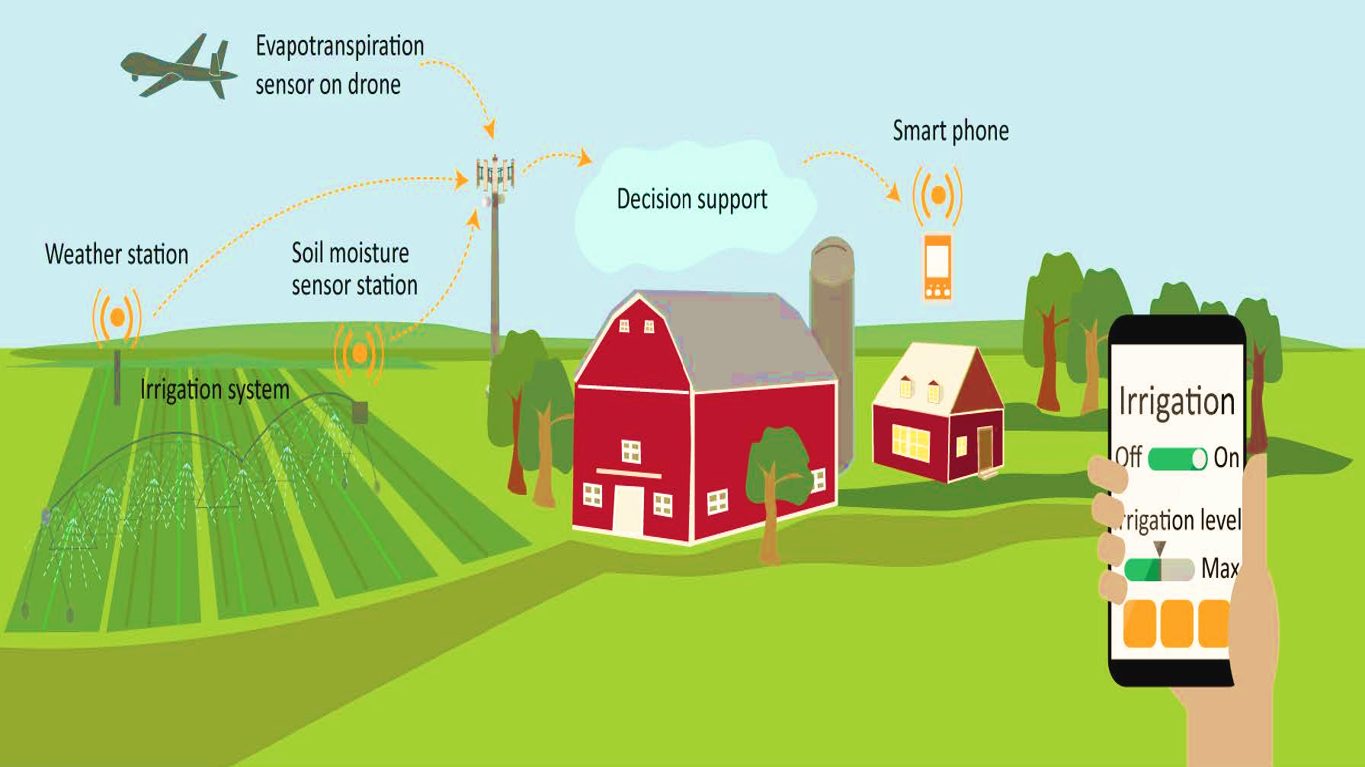
It relies on advanced sensor technologies, such as soil moisture sensors, weather stations, and crop health sensors.

These sensors are strategically placed throughout the fields and collect real-time data on soil moisture levels, weather conditions, and crop health. The data gathered is sent to a centralized system for analysis and decision-making.

b. Data Analysis and Insights:

The real power of precision agriculture lies in data analysis and gaining valuable insights. Through sophisticated data analytics and machine learning algorithms, farmers can understand the water needs of different areas within their fields.

They can identify variations in soil moisture levels, enabling them to make informed decisions about irrigation schedules and water application rates.

c. Drip Irrigation:

Drip irrigation is a precise and efficient water delivery method. It involves the slow and steady application of water directly to the root zone of plants through a network of tubes and emitters.

With data-driven insights, farmers can regulate the flow rate of water based on the specific water requirements of different crops and soil types, reducing water wastage significantly.

d. Sprinkler Irrigation:

It optimizes sprinkler irrigation by using data to adjust the direction, intensity, and timing of irrigation events.

Precision Agriculture Water Management and Irrigation Techniques

By fine-tuning these parameters, farmers can ensure water is applied uniformly across the fields, avoiding overwatering and runoff.

e. Variable Rate Irrigation (VRI):

VRI systems, integrated with precision agriculture, allow farmers to apply water at variable rates based on site-specific needs.

By dividing fields into management zones, farmers can precisely adjust the water application rates in response to varying soil types, crop types, and moisture levels.

Benefits of Precision Water Management

By harnessing the power of sensors, data analytics, and precise irrigation techniques, farmers can optimize water usage, conserve this precious resource, and enhance agricultural productivity. Some of the benefits include:

  • Water Savings: Precision agriculture’s targeted approach to water application results in significant water savings. By applying water only where and when it is needed, farmers can reduce overall water consumption while maintaining or even increasing crop yields.
  • Soil Health and Conservation: Overwatering can lead to soil erosion and nutrient leaching, negatively impacting soil health. It helps maintain optimal soil moisture levels, promoting healthier soil structure, better nutrient retention, and reduced erosion.
  • Reduced Environmental Impact: By minimizing water runoff and the use of chemicals that may contaminate water bodies, it contributes to a healthier environment and reduced ecological impact.

2. Soil Health and Fertility

In recent years, it has emerged as a game-changer in the realm of sustainable farming practices. This innovative approach utilizes advanced technologies to optimize agricultural operations, leading to better soil health and increased productivity.

One of its key aspect is the use of variable rate technology for fertilizers, enabling farmers to apply nutrients precisely where they are most needed.

Precision Agriculture Techniques and Soil Health

Precision agriculture techniques involve the collection of extensive data from various sources, such as soil sensors, satellite imagery, and weather forecasts.

This data is then analyzed to gain insights into soil characteristics, nutrient levels, moisture content, and other crucial factors that affect crop growth. Armed with this information, farmers can make informed decisions to optimize the use of resources and minimize environmental impacts.

Its adoption, including VRT for fertilizers, has been rapidly gaining traction worldwide. According to a report by the Food and Agriculture Organization (FAO), these techniques are being implemented on approximately 20-30% of the world’s arable land.

Precision Agriculture Techniques and Soil Health

This trend is expected to continue as more farmers recognize the benefits of sustainable and resource-efficient farming methods.

Numerous scientific studies have highlighted its positive impact on soil health. A study conducted by the Journal of Soil and Water Conservation revealed that VRT application of fertilizers reduced nitrate leaching by up to 40%, thereby minimizing groundwater contamination.

Another research paper published in the Journal of Environmental Quality reported that these practices led to a 50% reduction in phosphorus runoff, mitigating the harmful effects on aquatic ecosystems.

a. Use of Variable Rate Technology for Fertilizers

Variable rate technology (VRT) is a pivotal aspect of precision agriculture that has revolutionized fertilizer application. Traditionally, farmers applied fertilizers uniformly across entire fields, which often led to overuse in some areas and underuse in others.

This not only wasted valuable resources but also harmed soil health and nearby ecosystems due to nutrient runoff.

With VRT, farmers can now apply fertilizers in varying amounts across different sections of their fields based on specific soil requirements. Sophisticated equipment, such as GPS-enabled tractors and custom applicators, facilitates the precise application of nutrients.

The technology takes into account soil nutrient levels, crop needs, and historical yield data, ensuring that each plant receives the appropriate amount of nutrients. As a result, VRT optimizes fertilizer usage, reduces wastage, and significantly improves soil health.

Numerous success stories illustrate its transformative potential techniques in promoting soil health. In the United States, a maize farmer implemented VRT for nitrogen fertilizers, resulting in a 25% reduction in nitrogen usage while maintaining crop yields.

This not only reduced the farm’s environmental impact but also improved soil health by minimizing nitrogen leaching. Similarly, in Brazil, soybean farmers utilizing VRT practices reported higher yields and healthier soils, leading to reduced erosion and better carbon sequestration.

Contributing to Reduced Erosion

Healthy soils play a crucial role in preventing erosion, as they possess better structure and stability. Precision agriculture, by improving soil health through VRT for fertilizers, helps retain soil structure, reducing the risk of erosion caused by wind and water.

Consequently, soil erosion rates are curbed, preserving fertile topsoil and promoting sustainable land management.

Better Carbon Sequestration

Soil health is closely linked to carbon sequestration, the process by which carbon dioxide is absorbed and stored in the soil. Healthy soils have higher organic matter content, which enhances their carbon sequestration capacity.

Its practices, particularly VRT for fertilizers, contribute to improved soil health by increasing organic matter content. This not only aids in mitigating greenhouse gas emissions but also helps in climate change adaptation by making soils more resilient to extreme weather events.

3. Reduced Chemical Usage

One of the most significant advantages of precision agriculture is its role in minimizing the use of pesticides and herbicides, thus promoting environmentally friendly and sustainable farming methods.

Its role in minimizing chemical use has been gaining momentum globally. According to the International Federation of Organic Agriculture Movements (IFOAM), its practices have contributed to a 20% decrease in pesticide usage on a global scale over the past decade.

This trend is projected to continue as more farmers recognize the benefits of adopting its techniques for sustainable and environmentally responsible farming.

Minimizing Pesticide and Herbicide Use with Precision Agriculture

Furthermore, scientific studies have consistently supported its positive impact in reducing pesticide and herbicide usage. A study published in the Journal of Environmental Management found that targeted application methods reduced pesticide runoff by up to 70% compared to conventional spray applications.

Another research published in the journal PLOS ONE reported a significant increase in pollinator abundance and diversity in precision agriculture fields where harmful chemical usage was minimized.

Minimizing Pesticide and Herbicide Use with Precision Agriculture

It employs advanced technologies, such as GPS-guided machinery, drones, and remote sensing, to collect data on crop health, pest infestations, and weed presence.

This data-driven approach enables farmers to make precise decisions about pesticide and herbicide application, ensuring that these chemicals are only used when and where they are needed.

By targeting specific areas instead of blanket application, it significantly reduces the overall use of harmful agrochemicals.

Lowering Chemical Runoff and Protecting Ecosystems

One of the major concerns associated with conventional agriculture is the runoff of pesticides and herbicides into nearby water bodies. When applied indiscriminately, these chemicals can leach into rivers, lakes, and groundwater, polluting water sources and harming aquatic life.

Precision agriculture’s targeted application methods help minimize chemical runoff by using the right amount of pesticides and herbicides in the precise locations where they are required.

This reduction in runoff not only protects aquatic ecosystems but also maintains the quality of drinking water for communities residing nearby.

The excessive use of pesticides and herbicides in conventional agriculture has detrimental effects on biodiversity. These chemicals not only kill pests and weeds but can also harm beneficial insects, birds, and other wildlife.

Its judicious application of agrochemicals minimizes unintended harm to non-target species, preserving biodiversity on farmlands.

Furthermore, it promotes the growth of natural habitats within or near farmlands, which in turn attracts beneficial insects and pollinators.

By reducing harmful chemical usage, it supports the population of bees, butterflies, and other pollinators essential for crop pollination. This, in turn, enhances crop yields, improves fruit set, and fosters sustainable agricultural practices.

In Spain, a citrus farmer implemented precision agriculture techniques to monitor the presence of pests in the orchard.

By using targeted application methods, the farmer reduced pesticide use by 30% while maintaining optimal crop health.

In the United States, a soybean farmer adopted precision agriculture practices that enabled them to identify weed-infested areas with high accuracy.

By using site-specific herbicide application, the farmer decreased herbicide use by 40% and significantly lowered chemical runoff into nearby streams.

4. Lower Greenhouse Gas Emissions:

As concerns over climate change intensify, the agricultural sector is under scrutiny for its contribution to greenhouse gas emissions. However, it presents a promising solution to reduce these emissions and promote sustainability in farming practices.

By integrating cutting-edge technologies and data-driven decision-making, it optimizes machinery use and crop management, leading to a substantial reduction in greenhouse gas emissions.

Several real-world examples showcase its efficacy in reducing greenhouse gas emissions. In Australia, a wheat farmer adopted precision agriculture techniques, leading to a 25% decrease in fuel usage and a subsequent reduction in CO2 emissions from farm machinery.


According to a report by the World Resources Institute, its practices can potentially reduce global greenhouse gas emissions from the agricultural sector by up to 14%.

These practices are already being adopted across millions of hectares worldwide, contributing to a significant impact on emissions reduction.

Furthermore, numerous scientific studies have provided evidence supporting precision agriculture’s role in reducing greenhouse gas emissions. A study published in the journal Agricultural Systems found that adopting precision agriculture practices could reduce CO2 emissions by up to 13% and N2O emissions by up to 20%.

Optimized Machinery Use for Lower Emissions

It employs advanced technologies like GPS-guided tractors and drones to optimize machinery use on farmlands. These smart devices enable farmers to map fields accurately, plan efficient routes, and minimize overlaps during operations.

As a result, fuel consumption is reduced, leading to lower emissions of carbon dioxide (CO2), a major greenhouse gas.

Additionally, these technologies also promote timely and targeted interventions, such as irrigation and fertilization, further cutting down on energy and resource consumption.

Efficient Crop Management and Greenhouse Gas Reduction

Precision agriculture’s data-driven approach enhances crop management by providing farmers with real-time information on soil health, moisture levels, and plant nutrition.

Armed with this knowledge, farmers can adjust irrigation and nutrient application rates to match specific crop needs accurately.

This precision in resource allocation leads to improved crop health and higher yields, reducing the need for additional land conversion and thus curbing greenhouse gas emissions associated with deforestation and land-use change.

Moreover, by reducing the overuse of fertilizers, it helps mitigate emissions of nitrous oxide (N2O), another potent greenhouse gas. N2O is released when excess nitrogen-based fertilizers break down in the soil.

By using precise application methods, it prevents nitrogen runoff and leaching, reducing N2O emissions and protecting water bodies from pollution.

Carbon Offsetting Potential through Precision Agriculture

Carbon offsetting involves compensating for greenhouse gas emissions by reducing emissions elsewhere or actively removing carbon dioxide from the atmosphere. Its practices offer significant potential for carbon offsetting, especially through improved soil carbon sequestration.

Healthy soils play a crucial role in sequestering carbon dioxide from the atmosphere. Precision agriculture’s focus on sustainable practices, such as reduced tillage and cover cropping, enhances soil organic matter and increases carbon sequestration capacity.

The process of sequestration involves the capture and storage of CO2 in the soil as organic matter decomposes.

5. Biodiversity and Wildlife Conservation

As the world grapples with the challenges of agricultural expansion and wildlife conservation, its emergence brings hope for striking a harmonious balance between these seemingly conflicting interests.

It, with its data-driven and technology-centric approach, has the potential to complement wildlife conservation efforts.

By preserving natural habitats, promoting biodiversity, and protecting endangered species, it demonstrates its compatibility with sustainable land management practices.

Biodiversity and Wildlife Conservation precision agriculture

In Argentina, precision agriculture practices have been instrumental in conserving grassland habitats known as the Pampas. By using GPS-guided machinery, farmers can avoid plowing areas with high conservation value, preserving these critical habitats for wildlife like the Pampas deer and endangered grassland birds.

According to a report by the Nature Conservancy, its techniques have the potential to conserve an additional 1.2 million hectares of land globally. This conservation area is equivalent to about 1.5 times the size of Belgium and represents significant progress towards wildlife preservation on agricultural lands.

A study published in the Journal of Applied Ecology found that precision agriculture practices led to a 55% reduction in pesticide use, resulting in a corresponding increase in bird populations on farmlands.

Preserving Natural Habitats and Wildlife Corridors

One of the critical ways precision agriculture supports wildlife conservation is through the preservation of natural habitats.

By using advanced technologies like GPS and remote sensing, farmers can accurately map their fields and identify ecologically sensitive areas, such as wetlands, forests, and grasslands. It allows farmers to avoid cultivating or disturbing these critical habitats, leaving them untouched for wildlife to thrive.

Additionally, by designating wildlife corridors within farmlands, it ensures safe passage for animals, reducing the risk of human-wildlife conflicts.

Promoting Biodiversity in Agricultural Landscapes

Conventional agricultural practices often contribute to the decline of biodiversity by using monoculture and eliminating natural vegetation. In contrast, precision agriculture’s site-specific management allows farmers to cultivate a diverse range of crops within the same area.

Crop rotation and intercropping practices are easier to implement with precision techniques, fostering a more diverse and resilient agricultural landscape. These practices create favorable conditions for wildlife by providing food sources and shelter, thus promoting biodiversity in and around farmlands.

Protecting Endangered Species through Responsible Farming

Its focus on sustainable practices aligns with the conservation of endangered species. By optimizing the use of inputs like water, fertilizers, and pesticides, it minimizes the negative impacts of agriculture on the environment.

Reduced chemical usage and proper waste management prevent pollution of water bodies, protecting aquatic species. Additionally, precision agriculture’s targeted approach helps mitigate habitat destruction, reducing threats to endangered species and ensuring their survival.

Use of Precision Techniques in Sustainable Land Management

It offers a suite of tools for sustainable land management practices. For instance, soil sensors provide real-time data on soil health, enabling farmers to implement precise irrigation and fertilization strategies.

This reduces water consumption and minimizes nutrient runoff, safeguarding water quality and aquatic ecosystems.

Furthermore, its integration of unmanned aerial vehicles (drones) allows for efficient wildlife monitoring and anti-poaching efforts. Drones equipped with thermal cameras can detect illegal activities, helping authorities take timely action to protect wildlife.

Conclusion

Precision agriculture, with its emphasis on optimizing agricultural practices through advanced technologies, has emerged as a cornerstone of sustainable farming. The use of variable rate technology for fertilizers stands as a shining example of how it can significantly promote better soil health. With increasing global adoption and mounting scientific evidence, it is proving to be a powerful tool in ensuring the future of agriculture remains both productive and environmentally sustainable.

Introducing GeoPard’s Profit Maps: A Step Forward in Precision Agriculture

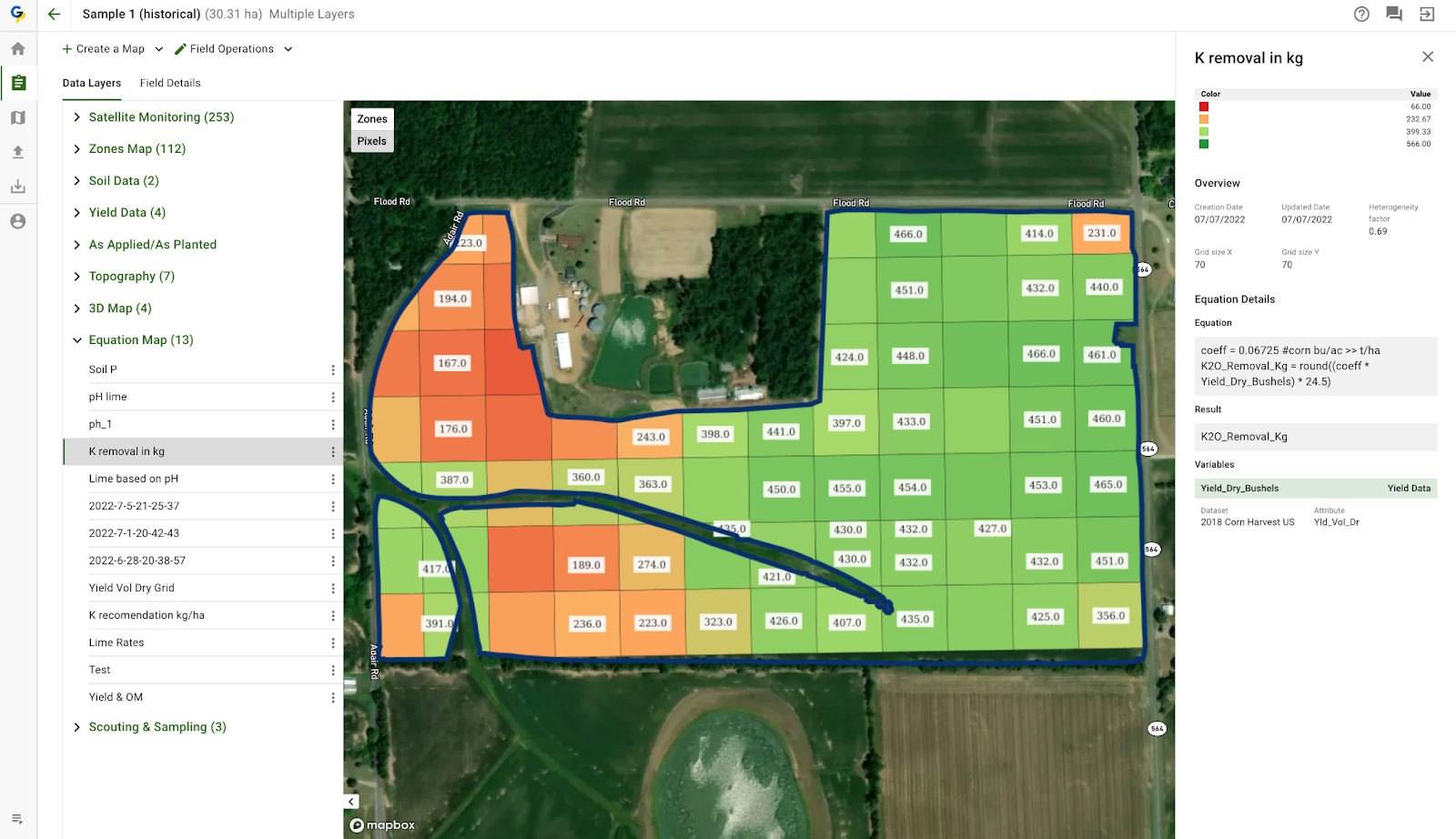
The profit map from the example in the screenshot takes into account the as-applied datasets of fertilization, seeding, two times of crop protection application, and harvesting. Other expenses can be added to the calculation, such as land preparation, miscellaneous activities as well.

Precision agriculture is a data-driven approach that seeks to increase efficiency and profitability. GeoPard, a leading provider of precision agriculture solutions, is enhancing its data analysis capabilities with the introduction of Profit Maps.

This feature provides a visual representation of profitability at the subfield level, enabling more informed decision-making and resource allocation. You’ll be able to see at a glance where your fields are making you money and where the costs of inputs and changes aren´t paying off.

Profit Maps are generated by integrating various data layers, including as-applied seeding, crop protection application, fertilizer usage, and harvesting data. This information is sourced directly from agricultural equipment and the John Deere Operations Center.

GeoPard then applies a custom equation, factoring in the cost of each input, to calculate zone-level profitability. These profit maps provide a comprehensive view of the profit spread across different field zones.

One of the key features of GeoPard’s Profit Maps is the ability to display the spread in profit across different zones of a field. This is calculated in dollars/euros/any currency and provides a clear indication of how much profit a farmer is making in each specific area.

By having this information at their fingertips, farmers can make more informed decisions about where and how to use their agricultural inputs.

For instance, they might choose to invest more in areas with higher profitability or reconsider their strategies in zones with lower returns. This granularity level in data analysis sets GeoPard’s Profit Maps apart.

Vladimir Klinkov, Managing Director of GeoPard, emphasizes the transformative potential of this tool, stating, “These maps allow farmers to make more informed decisions about resource distribution and costs on each hectare of the field and plan their business more effectively.”

The practical application of Profit Maps is already being demonstrated in real-world scenarios. Eurasia Group Kazakhstan, an official John Deere dealer, has been leveraging this feature to optimize its operations.

Evgeniy Chesnokov, Director of Agricultural Management at Eurasia Group Kazakhstan LLP, shares his experience: “With the help of GeoPard Agriculture’s Profit Map, we were able to gain a deeper understanding of the profitability of our partners’ fields.

This allowed our farmers to make more strategic decisions on the allocation of resources, which ultimately increased operational efficiency and improved bottom line indicators.”

GeoPard’s Profit Maps represent a significant advancement in precision agriculture, providing farmers with the insights they need to optimize their operations and maximize profitability. As the industry continues to evolve, tools like these will play an increasingly important role in shaping the future of farming.

For more insights into the development and application of profitability maps in precision agriculture, you can explore these resources: Kansas State University, ASPEXIT, Chilean Journal of Agricultural Research, USDA, and ResearchGate.

Stay tuned for more updates as GeoPard continues to innovate and push the boundaries of what’s possible in precision agriculture.

About the companies:

GeoPard is a leading provider of precision farming software. The company was founded in 2019 in Cologne, Germany, and is represented globally. The company offers a range of solutions that help farmers optimize their operations and increase yields.

With a focus on sustainability and regenerative economics, GeoPard aims to promote precision farming practices around the world.

The company’s partners include such well-known brands as John Deere, Corteva Agriscience, ICL, Pfeifer & Langen, IOWA Soybean Association, Kernel, MHP, SureGrowth, and many others.

Eurasia Group Kazakhstan is the Kazakh representative office of Swiss company Eurasia Group AG, an official dealer of John Deere in the Republic of Kazakhstan and Kyrgyzstan since 2002. The company delivers solutions for agriculture from leading world manufacturers like JCB, Väderstad, GRIMME, and Lindsay, covering all areas of crop and horticulture.

Eurasia Group Kazakhstan pays great attention during all its activity to the technologies of precise agriculture, completing the line of machinery with products of digitalization of agriculture.

Eurasia Group Kazakhstan has an extensive regional network – 14 regional offices in Kazakhstan and one in Kyrgyzstan, more than 550 employees, of which almost half – after-sales service employees, its own department of agricultural management and digitalization.

Over the years, more than 13,000 units of equipment have been supplied to Kazakhstan and 4.4 million hectares of land have been digitized. This year the company celebrates its 25th anniversary.

GeoPard’s Crop Development Graphs for Precision Agriculture

Today’s agricultural industry requires not only hard work and understanding of the land, but also the smart application of technology. I am thrilled to share an insight into one of the tools making a significant difference in sustainable farming practices: GeoPard’s Crop Development Graphs.

Our Crop Development Graphs offer a comprehensive, user-friendly display of crop growth data since 1988. Automatically generated for any field, these graphs are designed to ensure precision and accuracy.

The data is calculated solely for the cloud and shadow-free area of the field. A simple hover reveals the average NDVI (Normalized Difference Vegetation Index) value, providing an instant snapshot of crop health.

But what sets our tool apart? The capability to switch views. GeoPard’s interface allows users to alternate between Yearly and Monthly views. This level of detail ensures you are equipped with the essential data to make well-informed decisions about crop management, harvest timing, and yield prediction.

In the hands of a farmer, this precise insight can guide field management strategies, helping to detect the optimal harvest time, monitor crops at scale, and overall, optimize productivity and sustainability.

This is an exciting step forward in precision farming, a path that leads not only to improved yields but also to more sustainable practices that consider our environmental footprint.

Stay tuned for more updates as we continue to develop and refine our tools to serve the agricultural community better. We’re on a journey to make precision farming more accessible and efficient, and we’re thrilled to have you join us. Together, let’s redefine the future of farming!

What are Major Components of Precision Farming?

Precision farming, also known as precision agriculture (PA), is a modern approach to agricultural management that uses advanced technologies and primary components of precision farming to optimize agricultural production and minimize waste.

It has gained significant momentum in recent years due to its potential to improve agricultural productivity, reduce waste, and promote sustainability.

According to a report by Grand View Research, the global precision farming market size was valued at USD 5.44 billion in 2020 and is expected to grow at a compound annual growth rate (CAGR) of 12.7% from 2021 to 2028.

This growth is attributed to the increasing adoption of precision farming technologies by farmers worldwide.

Components of Precision Farming

The major components include information, technology, and management, which are integrated to optimize production.

Information:

Information is a key component of precision farming. This component includes gathering data about soil, weather, crops, and other factors that affect agricultural production. This information is collected through various sources such as sensors, drones, satellites, and ground-based equipment.

Once the data is collected, it is analyzed using advanced software and algorithms to generate actionable insights. These insights help farmers to make informed decisions about planting, fertilizing, irrigating, and harvesting crops.

For example, soil sensors can be used to measure soil moisture, temperature, and nutrient levels, which can help farmers to determine the optimal time to plant and fertilize crops.

Similarly, weather data can be used to predict the likelihood of pests and diseases, which can help farmers to take preventive measures before the crops are affected.

components of precision farming include information

Technology:

Technology is another major component. This component includes a wide range of technologies such as GPS, drones, robotics, and advanced machinery.

These technologies are used to automate various agricultural processes, reduce labor costs, and improve efficiency.

For example, GPS technology can be used to guide tractors and other farm equipment, which can reduce overlap in operations and minimize fuel consumption.

Similarly, drones can be used to monitor crop health and detect pests and diseases, which can help farmers to take timely action to prevent crop damage.

Management:

Management is the third major component of precision farming. This component includes the use of advanced software and tools to manage agricultural operations, optimize resource use, and minimize waste. This component also includes the adoption of sustainable agricultural practices to protect the environment and promote long-term sustainability.

For example, precision farming software can be used to plan crop rotations, optimize irrigation, and monitor crop growth, which can help farmers to maximize yields and minimize waste.

Similarly, sustainable agricultural practices such as conservation tillage, cover cropping, and integrated pest management can help farmers to reduce soil erosion, conserve water, and minimize the use of pesticides.

How Components of Precision Farming Can be Implemented?

There are several systems and processes that farmers can follow. These systems are designed to help farmers collect and analyze data, automate agricultural processes, and make informed decisions about resource use and crop management.

Here are some of the systems and processes that farmers can adopt to implement the components of precision agriculture:

Farm Management Software:

Farm management software is a key tool for implementing the management component. This software can help farmers to plan and manage their agricultural operations, track input use and costs, and monitor crop growth and yields.

How Components of Precision Farming Can be Implemented

Farm management software can also be used to integrate data from various sources, such as soil sensors and weather stations, to provide real-time insights that can inform decision-making.

GPS and Auto-steering:

GPS technology is essential for implementing the technology. By using GPS-enabled farm equipment, farmers can ensure that they are operating with maximum efficiency, reducing overlap in operations and minimizing fuel consumption.

Auto-steering technology can also be used to guide farm equipment, which can improve accuracy and reduce operator fatigue.

Sensors and Drones:

Sensors and drones are essential for implementing the information. These tools can be used to collect data on soil moisture, temperature, and nutrient levels, as well as monitor crop growth and detect pests and diseases.

This data can then be analyzed to generate insights that can inform crop management decisions, such as when to plant and fertilize crops, and when to take preventive measures against pests and diseases.

Irrigation Management:

Irrigation management is a critical component. By using soil moisture sensors and weather data, farmers can optimize irrigation schedules to ensure that crops receive the right amount of water at the right time.

This can help to reduce water waste, minimize the risk of crop damage due to over- or under-watering, and improve yields.

Crop Monitoring:

Crop monitoring is another important component. By using drones or satellite imagery, farmers can monitor crop growth and detect potential issues such as nutrient deficiencies or pest infestations.

This can help farmers to take timely action to address these issues, improving crop health and maximizing yields.

In conclusion, to implement the components, farmers can adopt a range of systems and processes that enable them to collect and analyze data, automate agricultural processes, and make informed decisions about resource use and crop management. By leveraging the power of technology, data, and management, precision farming can help farmers to achieve greater efficiency, sustainability, and profitability in their agricultural operations.

Equation-based Analytics in Precision Agriculture

With the release of the Equation-based analytics module, the GeoPard team has taken a big step forward in empowering farmers, agronomists, and spatial data analysts with actionable insights for each square meter. The module includes a catalog of over 50 predefined GeoPard precision formulas that cover a wide range of agriculture-related analytics.

The precision formulas have been developed based on multi-year independent agronomic university and industry research and have been rigorously tested to ensure their accuracy and usefulness. They can be easily configured to be executed automatically for any field, providing users with powerful and reliable insights that can help them to optimize their crop yields and reduce input costs.

The Equation-based analytics module is a core feature of the GeoPard platform, providing users with a powerful tool to gain a deeper understanding of their operations and make data-driven decisions about their farming practices. With the ever-growing catalog of formulas and the ability to customize formulas for different field scenarios. The GeoPard can meet the specific needs of any farming operation.


Potassium Removal based on Yield data

Potassium Removal based on Yield data


Use Cases (see examples below):

  • Nitrogen Uptake in absolute numbers using Yield and Protein data
  • Nitrogen Use Efficiency (NUE) and Excess calculations with Yield and Protein data layers
  • Lime recommendations based on pH data from soil sampling or soil scanners
  • Sub-field (zones or pixel-level ROI maps)
  • Micro and Macro nutrients fertilization recommendations based on Soil sampling, Field Potential, Topography, and Yield data
  • Carbon modeling
  • Change detection and alerting (calculate difference between Sentinel-2, Landsat8-9 or Planet imagery)
  • Soil and grain moisture modeling
  • Calculation of dry yield out of wet yield datasets
  • Target Rx vs As-applied maps difference calculation


Potassium Recommendations based on Two Yield Targets (Productivity Zones)

Potassium Recommendations based on Two Yield Targets (Productivity Zones)


Fertilizer: Recommendations Guide. Potassium / Corn.

Fertilizer: Recommendations Guide (South Dakota State University): Potassium / Corn. Review and Revision: Jason Clark | Assistant Professor & SDSU Extension Soil Fertility Specialist


Potassium Use Efficiency in Kg/Ha

Potassium Use Efficiency in Kg/Ha


Nitrogen Use Efficiency in percentage. Calculation is based on Yield, Protein and Grain Moisture data layers

Nitrogen Use Efficiency in percentage. Calculation is based on Yield, Protein and Grain Moisture data layers


Nitrogen: Target Rx vs As-Applied

Nitrogen: Target Rx vs As-Applied


Chlorophyll difference between two satellite images

Chlorophyll difference between two satellite images


A user of GeoPard can adjust existing and create their private formulas based on Imagery, Soil, Yield, Topography, or any other data layers GeoPard supports. 

Examples of the template GeoPard Equations

Examples of the template GeoPard Equations


Formula-based analytics helps farmers, agronomists, and data scientists to automate their workflows and make decisions based on multiple data and scientific research to enable easier implementation of sustainable and precision agriculture.

What is Equation-based Analytics in Precision Agriculture? The Use of Precision Formula

Equation-based analytics in precision agriculture refers to the use of mathematical models, equations, precision formula, and algorithms to analyze agricultural data and derive insights that can help farmers make better decisions about crop management.

These analytics methods incorporate various factors such as weather conditions, soil properties, crop growth, and nutrient requirements to optimize agricultural practices and improve crop yields, while minimizing resource waste and environmental impact.

Some of the key components of equation-based analytics in precision agriculture include:

  • Crop growth models: These models describe the relationship between various factors such as weather, soil properties, and crop management practices, to predict crop growth and yield. Examples of such models include the CERES (Crop Environment Resource Synthesis) and APSIM (Agricultural Production Systems sIMulator) models. These models can help farmers make informed decisions about planting dates, crop varieties, and irrigation scheduling.
  • Soil water models: These models estimate the water content in the soil profile based on factors such as rainfall, evaporation, and crop water use. They can help farmers optimize irrigation practices, ensuring that water is applied efficiently and at the right time to maximize crop yields.
  • Nutrient management models: These models predict nutrient requirements for crops and help farmers determine the optimal rates and timing of fertilizer application. By using these models, farmers can ensure that crops receive the right amount of nutrients, while minimizing the risk of nutrient runoff and environmental pollution.
  • Pest and disease models: These models predict the likelihood of pest and disease outbreaks based on factors such as weather conditions, crop growth stages, and management practices. By using these models, farmers can make proactive decisions about pest and disease management, such as adjusting planting dates or applying pesticides at the right time.
  • Remote sensing-based models: These models use satellite imagery and other remote sensing data to monitor crop health, detect stress factors, and estimate yield. By integrating this information with other data sources, farmers can make better decisions about crop management and optimize resource use.

In summary, equation-based analytics in precision agriculture uses mathematical models and algorithms to analyze complex interactions between various factors that affect crop growth and management. By leveraging these analytics, farmers can make data-driven decisions to optimize agricultural practices, improve crop yields, and minimize environmental impact.


Frequently Asked Questions


1. How can precision agriculture help address resource use and pollution issues in agriculture?

It can help address resource use and pollution issues in agriculture through targeted resource application, efficient resource management, enhanced monitoring, and the adoption of conservation practices. By applying inputs such as fertilizers and pesticides only where needed, farmers can reduce waste and minimize pollution.

Data-driven decision-making enables optimal resource management, while real-time monitoring allows for timely interventions to prevent pollution incidents. Additionally, the implementation of conservation practices promotes sustainable agriculture and reduces environmental impacts.

Precision agriculture technologies to drive smallholders

The widespread adoption of precision agriculture may be attributed to several critical technologies: mobile phones, drones, satellites, and on-site sensors. Even if not all of them are brand new, the fact that they are becoming more reasonably priced and readily available makes them more relevant to farmers everywhere.

However, despite the generally optimistic view, many obstacles must be overcome before smallholder farmers can implement these solutions. The concept of “The Five A’s of Technology Access,” which consists of “availability,” “affordability,” “awareness,” “ability,” and “agency,” is a helpful framework to analyze these many difficulties.

In many areas of the world, the availability of precision agriculture technologies may be severely limited for reasons such as a deficiency in the digital infrastructure required to support such solutions (for example, power or the Internet).

Although if they are accessible, many farmers may not have the financial means to purchase them. For instance, farmers may not afford a smartphone with an Internet connection, an essential prerequisite for many precision farming technologies.

Even when viable solutions are accessible and cost-effective, farmers could be unaware of them. It is also the case with several other technological services provided by both public and commercial organizations. There is also a possibility that farmers lack the literacy and technology abilities necessary to utilize the solutions.

In a poll conducted by the GSMA, respondents from low- and middle-income countries who were familiar with mobile Internet said that this was the primary barrier preventing them from using the Internet.

Finally, farmers who belong to underserved groups, such as women farmers, may not have ‘agency’ because of the many socio-cultural hurdles that stand in their way and hinder them from gaining access to technology solutions.

To overcome these obstacles, interventions are required on operational and policy levels. These involve creating solutions with the user in mind, developing business and service delivery models that are creative and inclusive, and enacting legislation making it possible to transform the sector digitally.

The multifaceted nature of the obstacles highlights the need for enhanced cooperation between many stakeholders, including the governmental and commercial sectors, civil society, and the academic community, to accelerate the use of digital technology by smallholder farmers.

Relevant precision agriculture technologies

In this section, we will present an overview of the most critical and relevant precision farming technologies to promote the growing use of these technologies.

1. Use of mobile phones 

Growing mobile and internet penetration has paved the way for developing a wide variety of mobile phone-enabled services for the agricultural industry.

These services are also referred to as “m-Agri services.” These incorporate ensuring that farmers have access to inputs, loans, insurance, and marketplaces where they may sell their products.

Mobile phones make it possible for farmers and agricultural professionals to communicate in both directions, provide real-time monitoring facilities, and facilitate the digitization and simple collecting of field data.

Smartphones equipped with GPS may facilitate the collection of precise position data and allow the distribution of individualized information to farmers. Cell devices are a very accessible medium for spreading information and insights using other precision farming technologies such as satellites, on-site sensors, and Unmanned Aerial Vehicles (UAVs).

Perhaps a phone with only the most fundamental features and no “smart” functionality offers various capabilities for farmers to unlock individualized information.

This makes it possible for farmers who do not have the financial means to purchase a smartphone or who live in locations with minimal or no Internet connectivity to take advantage of precision agriculture technologies.

The mobile phone-based agricultural advice services presently aiding countless farmers across the globe are the most prevalent option. These services are also referred to as “digital extensions.”

They can overcome many of the disadvantages that agricultural extension workers (AEWs) have, such as a lack of numbers, limited proven efficacy, and mistrust among farmers about the advice that AEWs provide.

Advising services are a cost-effective strategy for enhancing agricultural results, even though the impacts of advisory services alone are minor.

For instance, one research found that farmers who increased the amount of lime they applied to their crops in response to SMS-based alerts had a benefit-to-cost ratio of up to ten to one.

2. Use of satellites as agriculture technologies

Spectral data collected by satellites may be used to build spectral index maps, which provide a visual representation of the state of the farm while advising the farmer on which areas of the farm need their attention. ARVI, NBR, and NDVI are examples of spectral indices used often.

  • The normalized difference vegetation index, or NDVI, evaluates how green the vegetation is and may serve as a stand-in for assessing crop health throughout the field.
  • The NBR is used for both assessing the burn extent as well as monitoring ongoing fires.
  • ARVI monitors the concentration of particulate matter and enables users to pinpoint regions affected by pollution or even activities such as slash-and-burn agriculture.

Through mobile apps, farmers can get farm maps illustrating intra-farm variation in crop health and farm-specific advising information.

Integration of satellite data with several other data sources, such as weather, on-site sensors, and agricultural records (fertilizer usage, planting dates, etc.), followed by processing using machine learning algorithms, may provide information that is even more accurate for local farmers.

Several new businesses give precision farming technologies. These include solutions for the use of fertilizer as well as yield prediction based on satellite images.

Satellites can also provide geopositioning information. Satellite-based navaids such as GPS assist in collecting georeferenced details and identifying accurate field locations.

It is necessary for the precise arrangement of seeds and herbicides and pesticides, as well as the management of the sustainable use of water and the assistance in overarching agriculture practices.

The use of satellites and navigation systems together helps to characterize the variability of the farms’ soil and crops, which enables the use of cultivation methods that are both more intense and more efficient.

3. Use of unmanned aerial vehicles (UAVs) in precision agriculture

Combined with several other forms of technology(multiple sensors and variable rate technology), drones are utilized in successive parts of the crop growth cycle. It ranges from the soil evaluation to the planting of seeds or the spraying of crops to determining the optimal harvesting time.

They have two main applications: detecting and reducing the amount of work that must be done. Drones fitted with cameras and other sensors make it possible to conduct real-time aerial surveillance and provide an unparalleled perspective of the farm.

Payloads that may be attached to drones, similar to spraying systems, might reduce the manual labor required for specific agricultural tasks, like scouting and applying herbicides, fertilizers, and insecticides.

4. Use of sensors and internet-of-things (IoT) 

Growers can base their choices on the data collected by on-site sensors, which monitor the features of their fields and crops with enhanced precision.

Precision agriculture technologies like sensors are utilized in applications: precision planting and spraying, monitoring of pests and soil, smart irrigation, monitoring of yields, monitoring of the weather, and monitoring of the environment.

inter-device communication has to be governed by a set of rules for on-site sensors to be able to talk with one another and convey data. The term “network protocol” refers to this predetermined set of guidelines.

Because the various wireless networks typically have varying ranges and capacities for data transmission, they are best suited for multiple applications.

The technology known as Low-Power Wide-Area Networks (LPWAN) is gaining popularity for use in agricultural Internet of Things applications.

LPWAN is optimal for situations where intelligent devices communicate across a considerable distance but need to transfer just a limited quantity of data. LPWAN network technologies include LoRaWAN and NB-IoT, for example.

Precision Agriculture applications for smallholder farmers

In addition to having a large coverage area (up to 20 kilometers), these sensors also have high energy efficiency. As a result, the batteries used to power the sensors may survive for as long as 15 years.

Since it does not depend on 4G or GPS, LoRaWAN has become more popular for usage in precision farming technologies or applications, providing reliable data transfer in addition to geolocation. It indicates that it is better suited for use in more remote places with less 4G coverage.

Additional precision agriculture technologies

Precision agriculture is being helped along by technological developments such as variable rate technology (VRT), farm robots, and automation.

However, smallholder farmers seem unable to implement these practices because of the high costs involved, the lack of acceptable business models, and the requirement for certain levels of technical expertise.

1. Robotics and agricultural automation

Farmers all over the world are turning to robotics in a multitude of types, such as weeding robots, autonomous tractors, crop monitoring bots, and harvesting robots, to cut down on the number of trips needed for farm monitoring, minimize crop damage and loss, increase farm yield, and lower their consumption of fuel.

The rising cost of precision farming technologies such as robots is the most significant barrier to widespread use in underdeveloped nations.

E.g. in 2017, it was anticipated that robotic agricultural scouting would have an initial cost of over $9,000 and an annualized operating cost of $18 per hectare. The price of other mobile robots designed for light-duty tasks like weeding and pruning may quickly go from $15,000 to $30,000.

To make robots a more financially viable choice, however, various business models are being investigated.

For example, a company’s business model can include ARaaS, which refers to “Agricultural Robots-as-a-service.” By compensating farmers for using agricultural robots, this concept provides smallholder farmers with a convenient and secure monetary choice.

2. Variable Rate Technology (VRT)

There is seldom any uniformity in the factors that determine crop output throughout a field. Additionally, the application of inputs in a consistent manner does not provide for the maximum possible production or profitability.

To help maximize input efficiency and, as a result, the yield and profit growth of individual fields, variable rate technology (VRT) encompass customizing and vastly differing the rates of inputs, such as fertilizers, chemicals, and seed pods, in appropriate locations throughout the field. It is done to maximize the potential of the area as a whole.

For delivery, vehicles like drones, tractors, and other farming robots are outfitted with equipment that can operate at variable rates (e.g., sprayers and spreaders).

Smallholder farms often cannot justify the purchase of such equipment because of its prohibitively high cost (estimated to range between $150,000 and $250,000), as well as its complexity for farmers to understand and execute.

GeoPard is one of the autonomous precision farming technology companies that can handle any data from a georeferenced farm. We assist firms involved in crop farming in precision farming solutions while also helping them make their operations more efficient.

Also, growers and crop consultants may get precision agriculture technologies from our company. API, white label solutions, and widgets are some of the other services we provide to large agribusinesses. They can introduce their solutions in just a few short weeks as a result of this.


Frequently Asked Questions


1. Which of the following is the most likely reason why most smallholders avoid precision agricultural technology?

The most likely reason why most smallholders avoid precision agricultural technology is the high initial cost associated with adopting and implementing these technologies. Smallholders often have limited financial resources and may perceive precision agriculture as too expensive and inaccessible.

Additionally, limited access to technical knowledge, lack of infrastructure, and inadequate training and support services can also deter smallholders from adopting precision agricultural technology.

2. How does the use of GPS technology in this manner benefit the farmer?

The use of GPS technology in precision agriculture benefits farmers by providing accurate field mapping, enabling targeted input application, streamlining farm operations, and facilitating data-driven decision-making.

Accurate field mapping helps farmers understand variations within their fields, optimizing resource allocation. Targeted input application reduces waste and lowers input costs. GPS-guided machinery improves operational efficiency, saving time and labor. Data collection and analysis enable informed decision-making for improved productivity and profitability.

Crop monitoring is a crucial tool that allows crop growers to detect problem areas and mitigate the risk of yield losses.

Easily monitor your crop development by relying on the latest satellite imagery. Add your field boundary to the system and access the complete satellite imagery archive on one screen:

  • Assessment of crop development conditions.
  • Detection of vegetation anomalies in near-real time.
  • Scout spots with different levels of crop development.
  • View through the clouds.

Translate the satellite imagery crop monitoring insights into fieldwork actions and benefit from making the data-driven decisions:

  • Detect the difference in crop vegetation between the latest images and scout the focused areas for tissue sampling.
  • Create Variable Rate Application maps for crop protection and in-season fertilization based on near-real-time field assessment and collect the execution report.
  • Mark the damaged field areas after a weather disaster or a disease or a pest attack and send reports to the insurance.
Learn more

Vegetation index: how are they used in precision agriculture?

Now, to have a whole conversation about precision agriculture, you need to speak about Vegetation Index, particularly when you’re discussing the role of remote sensing in this form of agriculture.

Vegetation is intimately involved with almost every facet of human existence, including the act of breathing, the provision of clothes and shelter, the production of food, etc. Any shift in the composition of the vegetation can influence the environment and the economy significantly.

Recent technological advances (geographic information systems (GIS), global positioning systems (GPS), remote sensing, and precision agriculture) have been the principal drivers of improved crop management. For instance, precision agriculture provides improved analysis and the discovery and control of both temporal and geographical variations in crop production within a field.

AgTech pioneers revolutionize precision agriculture via vegetation indices. It is of utmost significance in the achievement of the objective of this kind of agriculture, which is to maximize production while minimizing the number of resources used.

This modern use of vegetation indice in precision farming provides several advantages: physicochemical monitoring, real-time data, and farm activity planning. It is also possible to make efficient use of vegetation indexes mapping for future references to indicate the cyclical changes.

What are vegetation indices and their types?

Since 1974, the use of vegetation indexes, which assists in conducting periodic distant surveys of vegetation, has been widespread. Utilizing two or more spectral bands, this statistical model is a spectral transformation that may be used to detect vegetation in its more general meaning.

What are vegetation indices and their types?


Using this method, scientists and other curious individuals may efficiently watch photo-centric behaviors and spot differences in the canopy. If necessary, they can also draw reliable comparisons using this information. It involves evaluating a variety of variables, such as the development of the crop, its vigor, its biomass, and its chlorophyll content. Here is the list of vegetation indices:

  • NDVI (Normalized Difference Vegetation Index)
  • VARI (Visible Atmospherically Resistant Index)
  • ReCl (Red-Edge Chlorophyll Vegetation indexes)
  • EVI2 (Two-Band Enhanced vegetation index)
  • LAI (Leaf Area Vegetation Index)
  • WDRVI (Wide Dynamic Range Vegetation Index)
  • GNDVI (Green Normalized Difference Vegetation indexes)
  • GCI (Green Chlorophyll Vegetation Index)
  • RCI (Red Chlorophyll Vegetation indice)
  • NDWI (Normalized Difference Water Index)

What can vegetation index be used for?

When examining patterns in plant health, agricultural professionals such as farmers, agronomists, crop insurers, researchers, and others might benefit from using a vegetation index such as NDVI or VARI.

Users of the agricultural mapping and analysis tool can implement the index with the click of a button, producing a green or red patch on their aerial images, depending on the results of the index. The regions indicated by the color green have plants that are in good health. Colors such as orange, yellow, and red indicate a loss of energy and vitality.

For instance, a corn farmer may use the program to submit multispectral photographs of their cornfields at any point between the appearance of plants and the harvesting of the crop. The application would then apply the preferred vegetation index.

The colorful output may bring to their attention that a portion of the field has taken on an orange and red hue in certain places. It is an indication that the plants are becoming brown or yellow or that they are getting pockmarked. The plants in this region may be suffering from the effects of an extended period of drought, flooding, insufficient or excessive fertilization, or are infected with a disease.

As was the case before, ground-truthing was the most effective method for diagnosing a specific problem. Nevertheless, the vegetation indice provide the farmer with a hint that they should concentrate their efforts on a particular section of their land. They are free to investigate what caused the problem and consider possible solutions at this point.

Why are hyperspectral vegetation indices so important?

Integrating a reflectance spectrum into a single numerical value, known as the Vegetation Index, is a standard method for determining the qualities of vegetation. Hyperspectral Vegetation Indices, also known as Narrow-band Vegetation indexes, contain characteristics or wavelengths that hyperspectral equipment can only catch because of their shorter bandwidths.

Structure, biochemistry, and plant physiology or stress are the three primary categories that may be used to classify the vegetation attributes that can be assessed using HVIs.

  • The proportionate cover, Leaf Area Index (LAI), green leaf biomass, senesced biomass, and proportion of photosynthetically active radiation absorbed are all examples of structural features that may be measured. Most indices for structural analysis were designed for complete band setups and had narrow-band and hyperspectral counterparts.
  • Examples of biochemical features comprise water, pigments (such as chlorophyll, anthocyanins, and carotenoids), and other nitrogen-rich products (such as proteins). Plant structural components also fall under this category (lignin and cellulose).
  • A stress-induced shift in the status of xanthophylls, variations in chlorophyll content, changes in leaf wetness, and fluorescence are some understated alterations that may be measured using physiological and stress indices.

Why are hyperspectral vegetation indices so important?

Generally speaking, biochemical and physiological or stress indicators were developed with the help of laboratory or field equipment (spectral sampling of less than 10 nm). They are aimed at very tiny spectral characteristics. As a direct consequence of this, they are exclusively hyperspectral. Developed indices for water are the only exception to this rule.

Vegetation index and remote sensing technology

Earth-observing satellites supply remote sensing scientists with new data to feed their study and improve upon the analysis that has already been conducted as sensors progress.

Businesses that already have their index-based technology and those that are preparing to introduce a new one can substantially create a market for their agriculture-related products by embracing the latest innovations in spectral vegetation indexes applications. It is valid for companies that already have their index-based software and those planning to launch a new one.

The benefits vegetation indexes offer in remote sensing enhance the overall quality of the customer experience. Comparing satellite photography to different types of aerial data enables the following:

  • Reduced expenses of operation, processing, and interpretation of data collected by drones.
  • In comparison to aerial images, satellite imagery may cover a wider area.
  • Bringing down the costs of doing field inspections: extra UAV (unmanned aerial vehicle) observations are more expensive than standard satellite revisits.
  • Obtaining analyses of the data in a suitable format within a shorter amount of time.
  • Monitoring the fields regardless of how strong the winds are.

Using satellite imagery enables agricultural software companies to considerably increase the amount of aerial data they already have access to while also saving them time and money and allowing end-users to obtain more data in a shorter time.

Therefore, vegetation indice in remote sensing and crop monitoring help conduct a high-level, distant examination of the crop status. If there is a problem, farmers may choose to examine the areas that have been noticed rather than the whole field.

Reach out to GeoPard for a solution in your niche

The vast majority of the most critical vegetation indices, which number in the hundreds, have to be included in agricultural software in the form of a long list that can be accessed and used in a single location. GeoPard offers the essential analytics that can be integrated into the already available agriculture software and the planned software.

We will guide you on the optimal choice that will fulfill the requirements set out by you or your clients. No matter how you plan to utilize our product — API, white-label, or bespoke solutions — you can rest confident that the data you receive will be accurate and trustworthy since it was gathered using remote sensing and cutting-edge satellite technology.

GeoPard can provide accurate data-driven analytics on a worldwide scale. As a result, the company has won the satisfaction of many happy clients. Please contact us to discuss the specifics and potential of using remote sensing in your niche or industry.

Crop monitoring is a crucial tool that allows crop growers to detect problem areas and mitigate the risk of yield losses.

Easily monitor your crop development by relying on the latest satellite imagery. Add your field boundary to the system and access the complete satellite imagery archive on one screen:

  • Assessment of crop development conditions.
  • Detection of vegetation anomalies in near-real time.
  • Scout spots with different levels of crop development.
  • View through the clouds.

Translate the satellite imagery crop monitoring insights into fieldwork actions and benefit from making the data-driven decisions:

  • Detect the difference in crop vegetation between the latest images and scout the focused areas for tissue sampling.
  • Create Variable Rate Application maps for crop protection and in-season fertilization based on near-real-time field assessment and collect the execution report.
  • Mark the damaged field areas after a weather disaster or a disease or a pest attack and send reports to the insurance.
Learn more
wpChatIcon
wpChatIcon

    Request Free GeoPard Demo / Consultation


    By clicking the button you agree our Privacy Policy. We need it to reply to your request.

      Subscribe


      By clicking the button you agree our Privacy Policy

        Send us information


        By clicking the button you agree our Privacy Policy