UKCEH to Deploy AI-Driven Biodiversity Monitoring Stations at Farms

Over the next four years, scientists plan to employ automated sensors and AI to assess the effectiveness of on-farm environment and peatland restoration initiatives.

The UK Centre for Ecology & Hydrology (UKCEH) will implement solar-powered biodiversity monitoring stations, equipped with camera ‘traps’ and acoustic recording equipment, at farms.

These stations will be strategically placed in areas practicing emission reduction, carbon capture enhancement, and wildlife support, such as agroforestry and wildflower hay meadows.

These monitoring stations will enable the measurement of the impact of these schemes on species populations by comparing areas of the farm with and without agri-environment measures.

In addition, these stations will be situated in degraded peatland areas to contrast species populations on farms that are drained for agricultural purposes with neighboring sites where rewetting efforts are creating wetland habitats that promote biodiversity and sequester carbon dioxide from the atmosphere.

To identify species, researchers will utilize AI software capable of recognizing them from photographs or call recordings. This study is a component of AgZero+, a five-year research program led by UKCEH, aimed at supporting the UK’s shift towards its new agricultural support system.

Professor Richard Pywell from UKCEH, spearheading the program, stated, “By harnessing cutting-edge technology, we will observe species at farms implementing diverse crop and land management practices to showcase the impact of various farming systems and agri-environment measures on populations.”

“Our monitoring endeavors will furnish scientific evidence crucial for shaping sustainable land management policies and practices that foster biodiversity, combat climate change, and improve crop production,” he added.

The study will be conducted at four pairs of farms located in Dorset, Wiltshire, Oxfordshire, and Northamptonshire. It aims to compare the effects of agri-environment schemes on these farms.

Additionally, the study will assess two peatland sites in Cambridgeshire—one being actively farmed and the other under restoration.

UKCEH plans to deploy the automated monitoring stations at additional sites across England every year, from March to October in 2024, 2025, and 2026.

Dr. Tom August, a computational ecologist at UKCEH, responsible for deploying the monitoring stations, highlighted the transformative impact of new sensor and AI technology on biodiversity monitoring.

“With solar-powered automated biodiversity monitoring stations, we can now observe wildlife continuously in remote locations without the need for physical presence on-site,” Dr. August explained.

He added, “AI technologies enable us to process the vast amount of images and recordings generated by these stations much more efficiently than human efforts.”

Upon completing the four-year study, UKCEH will present its findings, while preliminary data will be made available during the course of the project.

Zimbabwe Government Paves The Way For Precision Agriculture Shift

The government’s recent acquisition of nine drones signals a clear intention to transition from traditional agricultural methods to adopting smart technological systems known as precision farming on a global scale.

Dr. John Basera, the permanent secretary of Lands, Agriculture, Fisheries, Water, and Rural Development, emphasized the importance of equipping the agricultural sector with modern tools like drones as a crucial step in establishing a “smart agriculture sector” while gearing up for precision agriculture.

“The incorporation of drones is a key component of the implementation of intelligent agricultural strategies aimed at optimizing land utilization, boosting crop yields, and reducing production costs to ensure sustainable agricultural practices as the country strives for self-sufficiency.”

Dr. Basera remarked that the acquisition of nine drones marks a positive step towards achieving a smart agricultural economy by 2025. With ongoing technological research initiatives, the government is actively promoting precision agriculture, enabling the full integration of modern technology to enhance production efficiency and maximize productivity.”

Precision farming systems lead to higher yields and improved farmer profitability. According to Dr. Basera, one of the key milestones in the National Development Strategy 1 (NDS1) is enhancing community resilience, achievable through improved production and income generation.

Drones play a vital role in this context by providing accurate field mapping data, enabling farmers to identify irregularities like wet and dry areas, and determine optimal drainage patterns to implement more efficient watering techniques based on prevailing climate conditions.

Dr. Basera also highlighted that drone technology offers superior precision in surveying, mapping, and monitoring large crop areas.

Aligned with the Ministry of Lands, Agriculture, Fisheries, Water, and Rural Development’s mission to foster the development of a modern and sustainable climate-smart agricultural sector, the use of precisely targeted drone spraying can significantly decrease pesticide usage.

Dr. Basera emphasized that this approach plays a crucial role in safeguarding the environment and human health, as it reduces the risk of inhaling hazardous chemicals compared to conventional chemical spraying methods, which can be detrimental to both people and the environment.

He also highlighted that the T40 drones in use have the capacity to carry 40 liters of chemicals and are equipped with state-of-the-art atomized spraying systems.

“I have been informed that the T40 drones possess a 40-liter chemical-carrying capacity and feature advanced atomized spraying systems,” Dr. Basera revealed.

According to Dr. Basera, drone technology is well-suited for collecting specific data that facilitates precise decision-making at both policy and farm levels.

The Civil Aviation Authority of Zimbabwe (CAAZ) has established a standardized framework for regulating and licensing drone operations in the country.

La Salle County Crop and Rainfall Report

La Salle County farmers regularly publish the summer crop and rainfall report, offering updates on crop conditions and precipitation.

This is the seventh report of the summer, covering July 3 to July 9, and is supported by the La Salle County Farm Bureau.

David Hall from Serena reported that the crops have significantly improved due to 2.1 inches of rain received during the reporting week, which came from a mix of a violent storm and a gentle shower.

Thankfully, there was no hail, and the wind didn’t harm the corn. Currently, the corn is tasseling, but consistent rains during pollination and grain filling are crucial for achieving average yields. Soybeans are growing well and shading 30-inch rows.

Other activities in the area included the second cutting of hay, ditches mowing, completing soybean spraying, and preparing for the fair season. Wishing everyone a safe week ahead!

According to Ken Beck from Mendota, the northwest part of the county received 0.5 inches of rain. Overall, the situation is quite promising, and recent rains have significantly advanced crop growth.

Some corn fields are already tasseling, while others are close to reaching that stage. The progress has been better than expected, and the crops are showing remarkable growth.

David Myer from Marseilles shared his gratitude for receiving 1.25 inches of rain in the past week. The rain brought new life to the corn, and the beans grew significantly in just a short time. While this weather is beneficial for corn and soybean farmers, it poses challenges for livestock farmers trying to cut and bale hay or harvest crops.

The wheat harvest was completed despite the moisture, although yields were slightly lower compared to the past couple of years. Surprisingly, it fared better than expected considering the limited rainfall in late May and June. As corn tassels emerge, there is anticipation to assess the impact of the drought on ear size. David welcomes more rain to replenish the soils.

Bill Gray from Tonica/Lostant reported receiving 1.1 inches of rain last week. As a result, the corn fields have grown taller and are now starting to tassel. They are closely monitoring the fields for potential issues such as insect pests and diseases.

Plans are in place to apply fungicide on some fields using planes. The soybean fields are also looking promising, with a minor herbicide spraying to manage weed escapes. Although they are keeping an eye on Japanese Beetle feeding on leaves, it hasn’t caused significant damage so far.

Wheat harvest has begun, and soon the straw will be baled. To control weeds, roadside ditches and waterways are being mowed. Wishing everyone a good week ahead and to stay safe.

Ken Bernard from Grand Ridge shared that they received 0.75 inches of rain in the past week, and it has significantly improved the overall outlook. The grass is now lush and green, and all the yards have been mowed again.

However, with the moisture, weeds are starting to appear in the bean fields. The corn is tasseling and entering the pollination phase, which is benefiting from the recent cool weather. Despite this positive development, they still require timely rains to ensure a successful harvest.

There is still much work ahead, with more second crop hay to cut and bale. Wheat harvesting has already taken place, with straw baled.

The next task is to spray fungicide on the corn and beans, but the decision will depend on the crop scouts’ assessment of its necessity and cost-effectiveness. Wishing everyone a great time at the La Salle County 4-H Fair.

Geoffrey Janssen from Rutland reported that the corn is rapidly progressing, with tassels appearing daily. The first planted corn is almost fully tasseled, and pollen is now in the air. Recent rains have contributed to the corn’s increased height.

Soybeans are also thriving, becoming taller and bushier each day. Some areas are undergoing respraying to manage weed growth after the abundant rainfall. Yards, road ditches, and waterways are being mowed again as they finally regain their greenness after an extended dry spell. Since the last report, it received 1.9 inches of rain.

GeoPard’s Crop Development Graphs for Precision Agriculture

Today’s agricultural industry requires not only hard work and understanding of the land, but also the smart application of technology. I am thrilled to share an insight into one of the tools making a significant difference in sustainable farming practices: GeoPard’s Crop Development Graphs.

Our Crop Development Graphs offer a comprehensive, user-friendly display of crop growth data since 1988. Automatically generated for any field, these graphs are designed to ensure precision and accuracy.

The data is calculated solely for the cloud and shadow-free area of the field. A simple hover reveals the average NDVI (Normalized Difference Vegetation Index) value, providing an instant snapshot of crop health.

But what sets our tool apart? The capability to switch views. GeoPard’s interface allows users to alternate between Yearly and Monthly views. This level of detail ensures you are equipped with the essential data to make well-informed decisions about crop management, harvest timing, and yield prediction.

In the hands of a farmer, this precise insight can guide field management strategies, helping to detect the optimal harvest time, monitor crops at scale, and overall, optimize productivity and sustainability.

This is an exciting step forward in precision farming, a path that leads not only to improved yields but also to more sustainable practices that consider our environmental footprint.

Stay tuned for more updates as we continue to develop and refine our tools to serve the agricultural community better. We’re on a journey to make precision farming more accessible and efficient, and we’re thrilled to have you join us. Together, let’s redefine the future of farming!

GeoPard Cooperation with Eurasia Group Kazakhstan

In April 2023, Eurasia Group Kazakhstan and GeoPard Agriculture entered into a partnership agreement to bring the new GeoPard Agriculture solution to the markets of Kazakhstan and Kyrgyzstan.

The two companies share a common goal: to contribute to the sustainable development of agriculture in Kazakhstan by introducing precision farming solutions and optimizing crop production throughout the agricultural year.

The cooperation is aimed to support farmers who are looking for new and practical ways to optimize and automate crop production processes, increase the profitability of their business, and reduce  environmental footprint.

Vladimir Klinkov, Managing Director and Co-founder of GeoPard Agriculture: “We are very excited to launch our solution for precision and sustainable agriculture in the Kazakh market. GeoPard Agriculture utilizes cutting-edge technologies, including cloud computing for processing vast volumes of geospatial data, artificial intelligence, and analyzes field data from all possible sources. The GeoPard team has been working in the field of agriculture and developing digital solutions since 2012, and now it has brought its expertise to the lands of Kazakhstan. We automate precision farming expertise and offer a solution at the most reasonable price with the best quality.”

Customers can manage productivity and analyze factors affecting field heterogeneity and yield, identify locations for soil sampling based on productivity zones, perform field monitoring and scouting, create variable rate application (VRA) maps for seeding, fertilizing, crop protection products, and growth regulators applications.

“The GeoPard Agriculture solution is unique in that it provides comprehensive analytics across a large number of data layers, relying on yield maps, soil analysis, air moisture and vegetation moisture indicators over a multi-year period. The software is based on 35 years of NDVI satellite image data for each specific field, and then, at his discretion, the farmer can load other indicators into it with our help. The program will analyze the data and productivity of the field areas, making prescriptions for further differentiated application of seeds and fertilizers. This, above all, will lead to savings in seeds and fertilizers, and increase the yield and efficiency of the agricultural business,” commented Evgeny Chesnokov, Director of Agricultural Management Division of Eurasia Group Kazakhstan.

The GeoPard Agriculture solution was tested in the fields of Kazakhstan this year and is already actively used by Kazakh farmers.

About the companies:

GeoPard Agriculture is a leading provider of precision farming software. The company was founded in 2019 in Cologne, Germany and is represented globally. The company offers a range of solutions that help farmers optimize their operations and increase yields.

With a focus on sustainability and regenerative economics, GeoPard Agriculture aims to promote precision farming practices around the world.

The company’s clients and partners include such well-known brands as John Deere, Corteva Agriscience, ICL, Pfeifer & Langen, IOWA Soybean Association, Kernel, MHP, SureGrowth and many others.

Eurasia Group Kazakhstan is the Kazakh representative office of Swiss company Eurasia Group AG, an official dealer of John Deere in the Republic of Kazakhstan and Kyrgyzstan since 2002. The company delivers solutions for agriculture from leading world manufacturers like JCB, Väderstad , GRIMME, Lindsay, covering all areas of crop and horticulture.

Eurasia Group Kazakhstan pays great attention during all its activity to the technologies of precise agriculture, completing the line of machinery with products of digitalization of agriculture.

Eurasia Group Kazakhstan has an extensive regional network – 14 regional offices in Kazakhstan and one in Kyrgyzstan, more than 550 employees, of which almost half – after-sales service employees, its own department of agricultural management and digitalization.

Over the years, more than 13,000 units of equipment have been supplied to Kazakhstan and 4.4 million hectares of land have been digitized. This year the company celebrates its 25th anniversary.

GeoPard Agriculture Participated in Smart Farming Days Exhibition

I had a great time at the Smart Farming Days exhibition where GeoPard Agriculture, as a member of the Agrirouter association DKE Data GmbH & Co. KG, had a stand. It was an excellent opportunity to connect (and reconnect) with #AgTech enthusiasts and learn about the latest industry advancements, particularly in machinery data exchange and usage.

Here are some key insights from the event:

Agrirouter is gaining recognition as a standard in the agricultural industry. More machinery producers are supporting it by default and displaying the “ready for agrirouter” label. In short, Agrirouter is an open data exchange platform that enables seamless data transfer and integration between different agricultural machinery and software solutions.

When discussing trends in agricultural machinery, I would like to highlight:

  • Versatility, where machines can perform multiple operations in one pass to reduce the number of field visits. For example, the PRIOS 404 exhibited by GRIMME combines soil cultivation, potato planting, fertilizing, seed dressing, and ridge shaping.
  • Real-time calculations on agricultural machinery, such as spot spraying based on computer vision. This approach reduces overall chemical use by targeting specific areas on the run. Check out the exhibited Ecorobotix ARA.
  • Autonomy in agricultural machinery.
  • Open data connectivity.


AgTech from technical universities

I was especially pleased to see the great interest in the development of AgTech from technical universities to keep up to date with new developments and share knowledge with students, future AgTech innovators. Regards to Simon Grebner and Maximilian Treiber from the Technical University of Munich.

Marc Favier from RPTU Kaiserslautern-Landau is leveraging digital farming software to organize a workshop that aims to educate farmers about precision farming technologies.

It was exciting also to see more farmers adopting #PrecisionAg tech. I was asked about high-density soil scanners to prepare VR irrigation and fertilizing. Companies like geo-konzept GmbH and Geoprospectors GmbH offer soil scanning services, and GeoPard Agriculture is a handy tool for transforming the data into actionable VRA strategies.

Reporting Ag inputs applications for regulatory purposes is getting attention as well. Farmers need to record field operations, and machinery data about executed operations simplifies the process. There were solutions presented specifically targeting this topic. At GeoPard Agriculture, we are adding the possibility to generate PDF reports from as-applied maps and other analytics.

Fruitful discussion

I also had the opportunity to discuss various topics with industry experts and business partners:

  • The “Digital Label Compliance” initiative, expertly explained by Martin Herchenbach, aims to use standardized digital labels for crop protection. The labels contain information from authorities and manufacturers on how to use the product. Farmers can access the information by scanning a code on the packaging or directly in the Farm Management Systems, which connects to a centralized database.
  • Spot spraying was a hot topic, and I had an insightful conversation with Dr. Robin Mink, co-founder of SAM-DIMENSION precision farming start-up. Their service involves flying a drone over a field (just 30 minutes for a 40ha field), running weed detection in the cloud, and creating a spraying map. The spraying is then done by a tractor on the same day (could be even 2-3 hours after flight). It allows for optimizing herbicide usage and avoiding visiting non-weed areas. Since the model is cloud-based it can be easily adjusted and retrained based on the new datasets.
  • Nicole Bartelds highlighted the reporting for regulations topic and the importance of knowing historical field operations for better planning. I am looking forward to her training program for farmers, agronomists, and ag consultants on Precision Ag!
  • Gottfried Pessl emphasized the value of real-time weather and soil moisture data for agricultural operations, yield prediction, and historical weather data for land assessments, particularly in vineyards.
  • The importance of integrating machinery data into digital farming solutions through platforms like Agrirouter and JD Operation Center was discussed with Thomas Schilling
  • With Nikola Strah we explored the synergies between high spatial and temporal resolution Planet remote sensing data and ground-level data for agricultural insights.
  • With Tamme van der Wal and Matthias Lautenschläger we delved into the market readiness for precision agriculture adoption topic, emphasizing the need for reliable, affordable, and easy-to-use technologies for farmers. Separately touched on the use of drones for spraying and authorization challenges in Germany and the Netherlands. Tamme, I hope you write the “30 Years of Precision Ag” book someday!

With former colleagues from Bayer Crop Science, Xarvio

Attending AgTech exhibitions is always an enriching experience. By working collaboratively, we can drive positive change and make farming more sustainable and efficient.

Calculating Difference Between Target Rx and As-Applied Maps

In precision agriculture, one of the common challenges is ensuring the application of seeds, fertilizers, or crop protection agents as per the prescribed rate (Target Rx).

Variations between the target prescription and what is actually applied on the field (As-Applied) could lead to inefficient use of resources and impact crop performance.

By leveraging GeoPard’s powerful analytics, you can calculate and visualize the differences between your Target Rx and As-Applied maps.

This difference analysis can serve as an important tool to quickly identify issues with equipment, application timing, or the actual application itself.

Let’s take a deeper look into this:

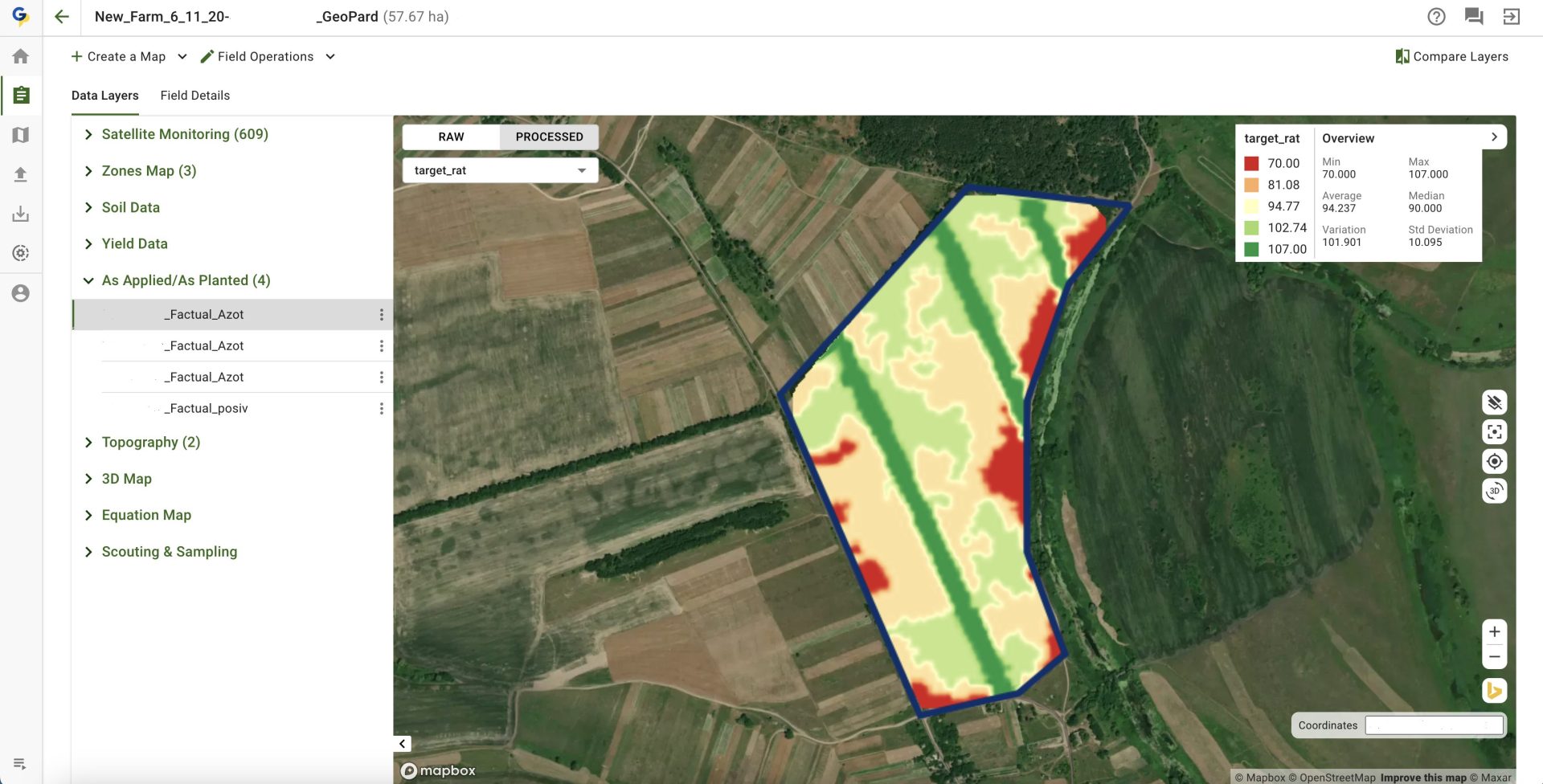
  • Visualizing Differences: GeoPard’s platform allows you to generate a “difference map”, overlaying your Target Rx and As-Applied data. This visual representation of variance provides a quick and intuitive way to spot areas where the actual application didn’t match the target.
  • Identifying Problems: By comparing the difference map against your original Rx and As-Applied maps, you can pinpoint specific areas or trends that might indicate equipment malfunction, sub-optimal application timing, or issues with the applied product itself.
  • Improving Efficiency: This analysis can help you optimize resource usage by addressing the identified issues, thus aligning your As-Applied rates closer to your Target Rx for future applications.
  • Enhancing Crop Performance: By ensuring that your field receives the right amount of inputs at the right time, you can boost crop health and potentially increase yield.

Remember, precision agriculture is all about making more informed and accurate decisions. By integrating this feature into your regular farm management practices, you can ensure you’re getting the most out of your inputs and drive your farm towards greater productivity and profitability.

Application prefix contains the operations related to the applied application some of them are:

1. Application Applied Rate – original applied map from the machinery (how was the product applied)

Application_AppliedRate.png - original applied map from the machinery (how was the product applied)

2. Application Target Rate – original target from the machinery (how has the product to be applied)

Application_TargetRate.png - original target from the machinery (how has the product to be applied)

3. Application Accuracy Clusterization – clusterization of the results: 0 – no data (machine did not visit these spots), 1 – applied below the target and not in the acceptable range (+-5% from the target)t, 2 – applied in the acceptable range ( +-5% from target), 3 – applied above the target and not in the acceptable range (+-5% from the target)

Application_AccuracyClusterization.png - clusterization of the results: 0 - no data (machine did not visit these spots), 1 - applied below the target and not in the acceptable range (+-5% from the target)t, 2 - applied in the acceptable range ( +-5% from target), 3 - applied above the target and not in the acceptable range (+-5% from the target)

4. Application Rate Difference – difference between applied and target rates in absolute numbers (l/ha units)

Application_RateDifference.png - difference between applied and target rates in absolute numbers (l/ha units)


Seeding prefix contains the operations related to the seeding some of them are:

1. Seeding Applied Rate – original applied from the planter (how many seeds were seeded)

Seeding_AppliedRate.png - original applied from the planter (how many seeds were seeded)

2. Seeding Target Rate – original target from the planter (how many seeds have to be seeded)

Seeding_TargetRate.png - original target from the planter (how many seeds have to be seeded)

3. Seeding Accuracy Clusterization – same clusterization rules, BUT the acceptable range is +-1% from the target

Seeding_AccuracyClusterization.png - same clusterization rules, BUT the acceptable range is +-1% from the target

4. Seeding Accuracy Clusterization Zoomed – same as Seeding Accuracy Clusterization but zoomed to show same area as Seeding Target Rate and Seeding Applied Rate

Seeding_AccuracyClusterizationZoomed.png - same as Seeding_AccuracyClusterization.png but zoomed to show same area as Seeding_TargetRate.png and Seeding_AppliedRate.png

5. Seeding Rate Difference – the difference between applied and target rates in absolute numbers (seeds/ha units)

5. Seeding Rate Difference - the difference between applied and target rates in absolute numbers (seeds/ha units)

What is target prescription (Target Rx) in agriculture?

In agriculture, the target prescription refers to the recommended or desired set of practices or inputs prescribed for optimal crop growth, health, and yield. It serves as a guideline or plan for farmers to follow in order to achieve specific agricultural objectives.

The target prescription takes into account various factors such as crop type, growth stage, soil conditions, climate, pest and disease pressures, and nutrient requirements.

It provides instructions on the application of fertilizers, pesticides, irrigation, crop rotation, seed selection, planting density, and other essential agricultural practices.

The purpose of a target prescription is to provide farmers with scientifically backed recommendations based on research, agronomic knowledge, and local conditions. It aims to optimize resource utilization, minimize crop losses, and enhance overall agricultural productivity.

Target prescriptions are often developed by agricultural experts, agronomists, agricultural extension services, or research institutions.

They may be specific to different crops, regions, or even individual fields, taking into account the unique characteristics and challenges of each farming context.

Farmers use target prescriptions as a reference point to guide their decision-making and management practices.

By following the recommended guidelines, farmers aim to maximize crop health, yield, and quality while minimizing the negative impact on the environment.

It is important to note that target prescriptions should be flexible and adaptable to account for variations in local conditions and the need for sustainable farming practices.

Farmers may need to make adjustments based on real-time observations, on-farm experiences, and continuous monitoring to ensure the best possible outcomes for their specific agricultural operations.

What is applied on the field (As-Applied)?

As-applied agriculture encompasses the process of accurately and precisely applying inputs, such as fertilizers, pesticides, and irrigation, to crops based on real-time data and site-specific conditions.

It involves the integration of various technologies, including GPS (Global Positioning System), GIS (Geographic Information System), sensors, and variable rate application equipment.

What is Variations between them?

In agriculture, variations between the target prescription and the actual application on the field refer to the differences or deviations between the recommended or desired agricultural practices and the real-world implementation.

These variations can manifest in various aspects, including the use of fertilizers, pesticides, irrigation, cultivation techniques, and more.

Factors Influencing Variations

Several factors contribute to variations between the target prescription and actual field application in agriculture:

  • Environmental Factors: Agricultural practices are influenced by dynamic environmental conditions, including soil composition, climate patterns, and water availability. Variations may arise due to unexpected changes in these factors, affecting the feasibility and effectiveness of prescribed practices.
  • Human Factors: The knowledge, skills, and expertise of farmers play a crucial role in implementing prescribed practices accurately. Variations can occur when farmers encounter challenges in understanding or interpreting the prescribed instructions, leading to deviations during the application.
  • Technological Limitations: Agricultural technology, while advanced, may not always be accessible or affordable to all farmers. Variations can arise when farmers do not have access to the latest equipment, precision farming tools, or real-time data, impacting the accuracy of field applications.
  • Timing and Logistics: Agriculture is time-sensitive, with specific windows for planting, harvesting, and applying agrochemicals. Variations may occur if farmers face logistical constraints, such as delays in procuring inputs or adverse weather conditions that disrupt the timely application of prescribed practices.

Conclusion

Variations between the target prescription and actual field application in agriculture present challenges that need to be addressed for sustainable and efficient farming practices. Understanding the factors contributing to these variations and their impact on agricultural outcomes is crucial.

GeoPard Joins EIT Food Accelerator for Agtech Innovation

GeoPard is thrilled to announce their participation in the EIT Food Accelerator Network program. This program is aimed at accelerating the technology revolution in agriculture and food systems.

GeoPard is excited to collaborate with other agtech and foodtech startups from all over Europe and is looking forward to taking part in the upcoming cohort, which is set to start this week.

The EIT Food Accelerator Network is a European network of support programs for startups, which aims to foster innovation and entrepreneurship in the agrifood sector.

The program provides training, mentorship, and resources to help startups accelerate their tech validation and business growth towards successful market adoption.

As a participant in the EIT Food Accelerator Network program, GeoPard Agriculture will have access to a wide range of resources and support, including expert mentorship, investment opportunities, and networking events.

GeoPard Joins EIT Food

This will enable the company to accelerate its development and growth, and to bring its innovative solutions to the market more quickly.

GeoPard Agriculture is a technology company that specializes in precision agriculture. The company’s solutions help farmers optimize their crop management by providing real-time data and analytics on soil moisture, temperature, and other key factors.

By using GeoPard’s technology, farmers can make more informed decisions about irrigation, fertilization, and other important aspects of crop management, which can ultimately lead to higher yields and better quality crops.

The company’s participation in the EIT Food Accelerator Network program is an important step in its growth trajectory.

By collaborating with other startups and receiving support from the program, GeoPard Agriculture will be able to accelerate its development and bring its innovative solutions to market more quickly.

The program’s focus on the technology revolution in agriculture and food systems is also in line with GeoPard’s mission to make agriculture more sustainable and efficient.

GeoPard and Strube collaboration

GeoPard Agriculture is proud to announce that Strube D&S GmbH, known worldwide for the great diversity of high-quality seeds, has joined the GeoPard partner program.

Customers of Strube BeetControl app (the precise analysis and prognosis of leaf diseases) will now be able to streamline their workflow with GeoPard powerhouse analytics including monitoring, scouting and adoption of precision agriculture practices.

GeoPard is used to determine exact location where nematodes are potentially present on sugar beet fields. Nematode damage detection is based on a remote sensing and historical development of the field. Soil samples are analysed for nematodes at the Strube laboratory, followed by advice from a cultivation consultant.

5G network in Agriculture. Grant from the state of North Rhine-Westphalia.

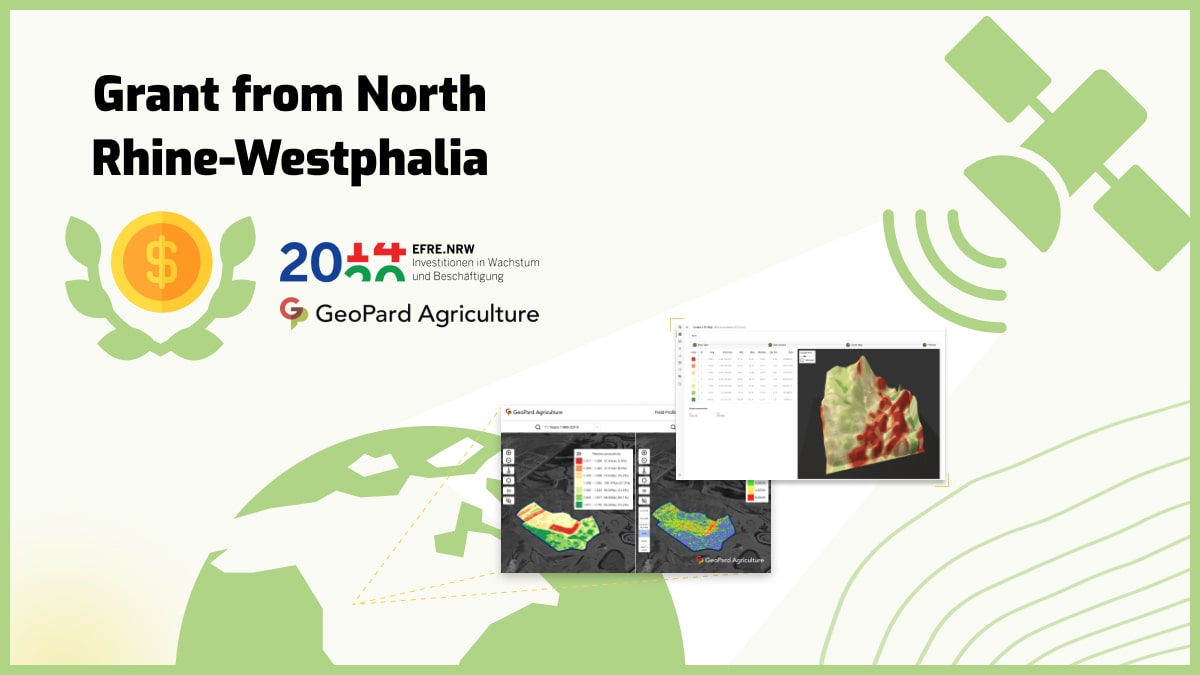
We are glad to announce that the “5G networks as an enabler for real-time learning in sustainable farming” project was selected for partial funding by the Ministry of Economic Affairs, Industry, Climate Action and Energy of the State of North Rhine-Westphalia.


Ministry of Economic Affairs, Industry, Climate Action and Energy of the State of North Rhine-Westphalia.

The project is researching how 5G can be used to make the agricultural process more ecological, economical and sustainable. The low latency of 5G makes it possible to integrate information technology systems into the process in real time and to react to sensor and position data within defined response times.

Together with our partner HSHL and the associated partner Pfeifer & Langen, the process of sugar beet cultivation from initial planting to harvesting is being examined on the partner’s fields to show how 5G can act as an enabler technology in the agricultural sector of NRW.


Project kick-off meeting on the field with representatives of Hochschule Hamm-Lippstadt, FlyPard Analytics GmbH and Pfeifer & Langen GmbH & Co. KG.

Project kick-off meeting on the field with representatives of Hochschule Hamm-Lippstadt, FlyPard Analytics GmbH and Pfeifer & Langen GmbH & Co. KG.

Role of 5G Network in Agriculture

5G networks, characterized by improved connectivity, reduced latency, and high-speed data transmission, possess the potential to substantially impact the agricultural industry. This state-of-the-art technology can accommodate various applications and innovations in agriculture, resulting in heightened efficiency, sustainability, and productivity. The following are some primary functions of 5G networks in agriculture:

  • Precision agriculture: 5G connectivity allows for real-time data acquisition, processing, and analysis from multiple sensors and devices, such as soil moisture sensors, weather monitoring stations, and drones. This empowers farmers to make data-informed decisions and implement precision agriculture practices, including targeted irrigation, fertilization, and pest management.
  • Remote monitoring and control: The reduced latency and high-speed data transfer capabilities of 5G networks enable real-time remote supervision and control of farming equipment and machinery. This leads to more effective resource allocation, lowered labor costs, and enhanced safety.
  • Autonomous farming: 5G networks facilitate the deployment of autonomous farming equipment, including self-driving tractors, harvesters, and drones. High-speed connectivity and low latency allow these machines to communicate with each other and make real-time adjustments, improving efficiency and minimizing human intervention.
  • Smart livestock management: 5G connectivity supports the use of IoT devices, such as smart collars and wearables, to monitor livestock health, location, and behavior in real-time. This helps farmers optimize feeding, breeding, and healthcare strategies, improving animal welfare and productivity.
  • Supply chain traceability: 5G networks can aid in the implementation of blockchain technology and IoT devices to monitor and track agricultural products throughout the supply chain. This improves traceability, strengthens food safety, and reduces waste.
  • Enhanced rural connectivity: 5G networks can help bridge the digital divide by providing high-speed internet access to rural and remote areas. This allows farmers to access online resources, tools, and services, fostering knowledge sharing, capacity building, and market access.
  • Virtual and augmented reality: 5G network can support the use of virtual and augmented reality applications in agriculture, such as remote training, equipment maintenance, and crop monitoring. This assists farmers in acquiring new skills, enhancing decision-making, and increasing efficiency.

In summary, 5G networks can play a vital role in modernizing and transforming the agricultural sector by enabling a wide array of applications and innovations. High-speed connectivity, reduced latency, and enhanced capacity of 5G can support the adoption of advanced technologies, resulting in increased productivity, sustainability, and overall growth in the industry.

wpChatIcon
wpChatIcon

    Request Free GeoPard Demo / Consultation


    By clicking the button you agree our Privacy Policy. We need it to reply to your request.

      Subscribe


      By clicking the button you agree our Privacy Policy

        Send us information


        By clicking the button you agree our Privacy Policy