Preparing for Q2 Success: Essential Steps from Q1 Precision Insights

Preparing for Q2 Success: Essential Steps from Q1 Precision Insights

You’ve spent months gathering Q1 insights from your fields, but turning that data into a clear Q2 plan can feel overwhelming. GeoPard Agriculture simplifies this by unifying your yield data analytics, soil layers, and satellite imagery into actionable steps. In this post, you’ll learn how to use management zones and variable rate application tools to sharpen your Q2 planning and connect seamlessly with John Deere Operations Center. For more insights on precision agriculture, check out this resource.

Leveraging Q1 Insights for Q2 Planning

As you step into Q2, it’s crucial to make the most of your Q1 data. Transforming these insights into actionable strategies can set the stage for success.

Analyzing Yield Data and Soil Layers

Uncovering trends within your yield data is the first step. This data, along with detailed soil layers, reveals the unique characteristics of your fields. By examining patterns, you can pinpoint which areas consistently perform well and which require attention. For example, a field that shows a 15% increase in yield might indicate optimal soil conditions.

Next, integrate soil data to understand its impact on crop performance. This might include analyzing pH levels or nutrient content. By doing so, you can identify specific areas needing nutrient adjustments. Imagine knowing exactly where to apply fertilizers for maximum impact. This precision not only saves resources but also enhances overall yield.

Mapping Management Zones and VRA Maps

Creating management zones allows for tailored strategies in each area. When you’re aware of field variability, you can address each zone’s needs specifically. For instance, a high-yield zone might require less intervention, while a low-yield area could benefit from targeted inputs.

Variable Rate Application (VRA) maps are your allies in this process. They guide you in applying the right amount of resources where needed. This approach not only optimizes input use but also increases profitability. Crafting these maps might seem challenging, but with the right tools, it becomes a straightforward task.

Harnessing NDVI and Satellite Imagery

NDVI and satellite imagery provide a bird’s eye view of your fields. These tools reveal crop health and growth patterns in real-time. By regularly monitoring this imagery, you can react swiftly to any changes. This insight allows for proactive management, addressing issues before they escalate.

Imagine spotting a pest outbreak early through satellite imagery. You can intervene immediately, safeguarding your crops. This proactive management ensures healthier fields and better yields. Leveraging these tools places you ahead, ensuring your crops thrive throughout the season.

GeoPard Tools for Q2 Success

GeoPard’s suite of tools empowers you to implement these strategies seamlessly. These tools are designed to enhance your decision-making and streamline operations.

Streamlining John Deere Operations Center Integration

Integrating with the John Deere Operations Center brings a new level of efficiency. It allows for seamless data flow between your systems. This integration means less manual entry and more time focusing on strategy. Data syncing ensures that your decisions are backed by the latest insights.

By connecting your GeoPard data with John Deere, you’re ensuring consistency across platforms. This unified approach simplifies your workflow, reducing the chances of errors. It’s about creating a system where every decision is data-driven and precise.

Crafting Smart Recommendations and Agronomic Workflows

Crafting smart recommendations is about understanding the nuances of your fields. GeoPard enables you to create agronomic workflows tailored to each zone’s needs. This customization ensures that every action you take is optimized for results.

Whether it’s adjusting fertilizer rates or planning irrigation schedules, these workflows guide you. They provide a clear path to follow, ensuring you’re always on track. Ultimately, it’s about maximizing your field’s potential with informed decisions.

Monitoring Crops with Historical Imagery

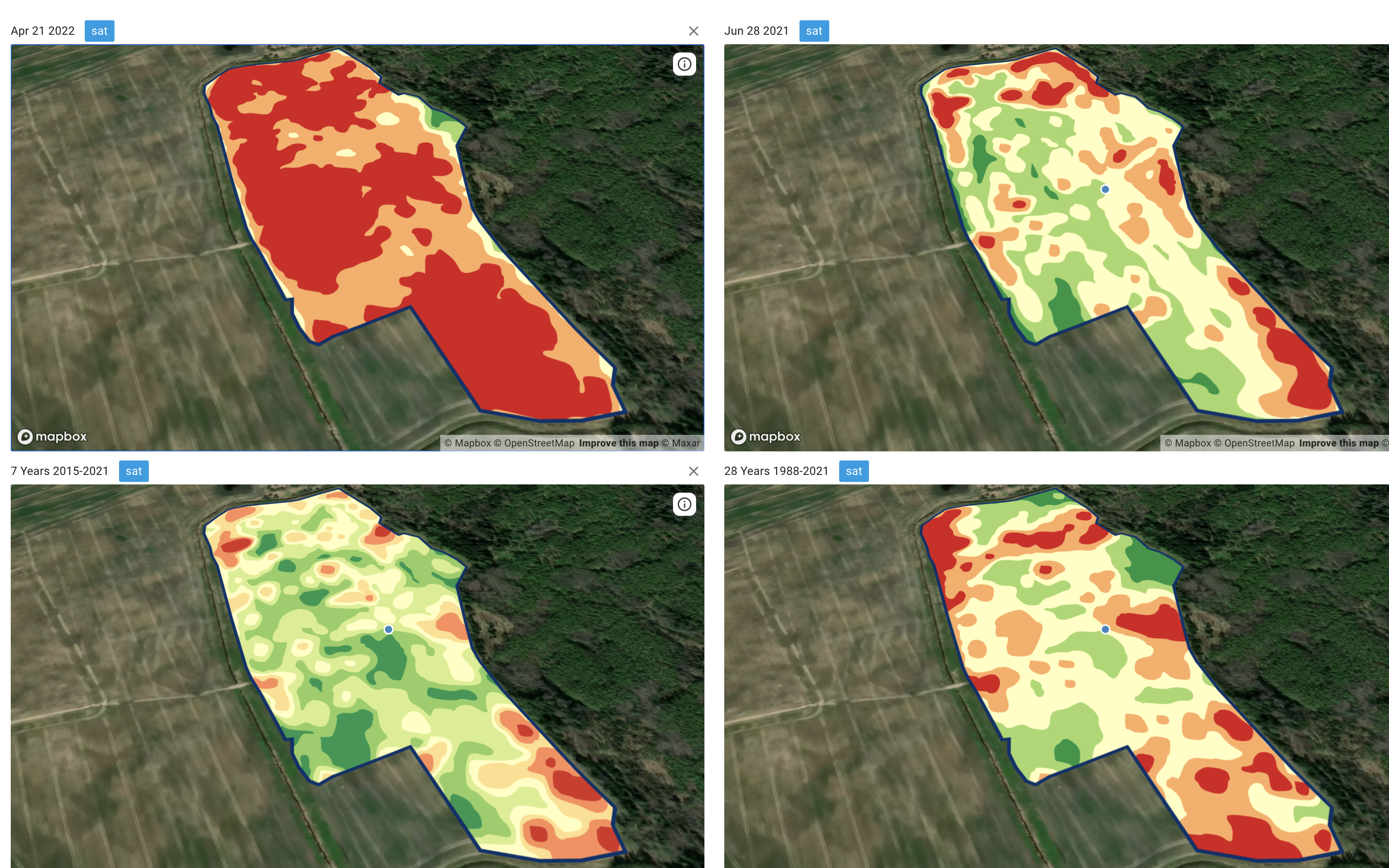
Historical imagery offers a wealth of information. It allows you to track changes and trends over time. By analyzing this data, you can predict future challenges and opportunities. This foresight helps in planning and resource allocation.

Imagine knowing exactly how a field responds to certain treatments over the years. This knowledge makes future planning more effective. You’re not just reacting to changes; you’re anticipating them, ensuring your fields remain productive.

Driving Trials and Demos with Precision

Precision is key when it comes to trials and demos. It’s about showcasing the effectiveness of your strategies and tools.

Implementing Bi-Directional Data Sync

Bi-directional data sync ensures that information flows seamlessly between systems. This feature keeps your data current and consistent. It’s crucial for making real-time decisions during trials.

By maintaining data accuracy, you can trust the results of your trials. This reliability builds confidence in your strategies and showcases their effectiveness. Stakeholders can see the real impact of data-driven decisions.

Conducting ROI Analysis and Profitability Mapping

ROI analysis is essential for understanding the financial impact of your strategies. With GeoPard, you can map profitability across different zones. This analysis highlights which areas deliver the best returns.

Profitability mapping guides your investment decisions. It shows where to focus resources for maximum gain. With clear insights, you can make informed financial decisions that enhance overall profitability.

Engaging with Free Trials and Subscriptions

Free trials and subscriptions offer a low-risk way to explore GeoPard’s capabilities. They provide hands-on experience with the tools and features. This engagement helps you see firsthand how GeoPard can transform your operations.

By trying these tools, you gain confidence in their benefits. It’s about understanding how GeoPard fits into your workflow and enhances decision-making. Embrace these opportunities to fully realize the potential of precision agriculture.

By leveraging these insights and tools, you’re not just planning for Q2; you’re setting the foundation for ongoing success.

Prepare for smarter farm decisions this year

Streamlining Farm Data Workflows: Q1 insights and actionable tips for ag service providers

Streamlining Farm Data Workflows: Q1 Insights and Actionable Tips for Ag Service Providers

You just spent hours juggling fragmented data across multiple platforms and still can’t get a clear picture of your fields. Farm data workflows often slow down agronomists and service providers more than they realize. In this post, you’ll find Q1 insights revealing common bottlenecks and practical tips to streamline your data ingestion, analysis, and delivery using GeoPard’s precision agriculture software. Learn more here.

Key Q1 Farm Data Insights

Understanding Q1 farm data insights can illuminate significant challenges and solutions for agronomists. Let’s explore common workflow issues and how GeoPard makes a difference.

Common Data Workflow Bottlenecks

Agricultural data often sits in silos, leading to delays. Imagine trying to merge data from multiple sources manually. This can take hours. Many service providers report that over 50% of their time gets lost in data wrangling. The complexity of handling different formats is another hurdle. Most people think that having large amounts of data is beneficial, but it can overwhelm if not managed well.

GeoPard’s Role in Streamlining

GeoPard’s software simplifies these workflows, making data more accessible. By consolidating information from various sources, it reduces processing time significantly. With GeoPard, you can integrate and analyze data in real-time. This approach challenges the belief that data management has to be cumbersome. Instead, it’s about efficiency and clarity.

Streamlining Data Processes

Improving how you handle farm data can transform your agricultural operations. Let’s see how you can optimize each stage, from ingestion to delivery.

Ingesting Agricultural Data Efficiently

The first step is gathering data effectively. GeoPard supports multiple data types, including soil sensors and satellite imagery. This integration enables a seamless collection process. For instance, using automated data entry, you can reduce errors and save time. Many think manual entry is unavoidable, but automation proves otherwise.

Analyzing with Precision Agriculture Software

Once you’ve collected data, analysis becomes crucial. GeoPard’s precision software uses AI to provide deep insights. You can generate management zones and variable rate application maps. This means you can make informed decisions faster. A key insight: precise data analysis leads to better crop management.

Delivering Insights to Ag Service Providers

Finally, delivering insights efficiently is vital. GeoPard ensures that service providers receive timely reports. This includes yield data analysis and topography analytics. By sharing clear insights, you help clients optimize their operations. The longer you wait to streamline, the more opportunities you miss.

Actionable Tips for Service Providers

Enhance your service offerings with practical steps. These tips will help you harness GeoPard’s capabilities effectively.

Implementing a Practical Checklist

Creating a checklist can guide your workflow improvements. Start with assessing your current data sources. Then, identify integration opportunities with platforms like GeoPard. Regularly reviewing this checklist ensures continuous improvement. Here’s the key insight: structured processes lead to better outcomes.

Engaging with GeoPard’s Free Trial

Trying out GeoPard’s trial can demonstrate its potential. During the trial, explore features like AI agronomy analytics and field analytics platforms. This hands-on experience can show you how it fits into your workflow. Most people hesitate to try new software, but trials offer risk-free exploration.

Integration with John Deere Operations Center

GeoPard integrates seamlessly with systems like the John Deere Operations Center. This bi-directional data sync enhances collaboration. By using such integrations, you can streamline operations further. It challenges the idea that systems must remain isolated. Instead, interconnected platforms offer greater value.

In conclusion, streamlining your farm data workflows with GeoPard can lead to significant operational improvements. From ingestion to delivery, each step offers opportunities for optimization. Adopting these practices will not only improve efficiency but also enhance your service offerings.

Prepare for smarter farm decisions this year

Taming Precision Ag Data: Common Challenges and How to Overcome Them

Taming Precision Ag Data: Common Challenges and How to Overcome Them

Taming precision agriculture data management feels like wrestling a storm. You wrestle with messy yield data, scattered soil data layers, and tangled topography analytics that slow your progress. This guide breaks down those common challenges and shows how to turn complex data into clear, actionable insights—so you can build precise management zones, create VRA maps, and boost ROI with confidence. For more insights, visit this resource.

Navigating Precision Ag Data Challenges

Precision agriculture promises efficiency and higher yields, but managing the data can feel overwhelming. You might think that more data would always be a good thing, but too much information can slow you down. Let’s break down these challenges and see how you can overcome them.

Understanding Data Overload

In precision agriculture, the term “data overload” is all too familiar. With multiple sources like satellite imagery, yield monitors, and sensors, the sheer volume of data can paralyze decision-making. Imagine trying to organize a library with no cataloging system. It’s essential to prioritize what information truly impacts your decisions.

To manage this, focus on the data that provides actionable insights. For instance, historical NDVI analysis can spotlight trends that matter most to your fields. By narrowing your focus, you can transform data overload into a streamlined operation.

Tackling Data Inconsistencies

Data inconsistencies can derail even the best-laid plans. You may find discrepancies between yield monitors and manual measurements, leading to mistrust in the data. This inconsistency often arises from varying equipment calibrations or environmental factors affecting sensors.

Addressing these gaps requires a systematic approach. Start by calibrating your devices regularly to ensure accurate readings. Consistent data cleaning practices also play a vital role in maintaining reliable datasets. By doing this, you can restore trust in your data management process.

Streamlining Data Interoperability

Interoperability stands as a significant hurdle in data management. Different systems often fail to communicate effectively, leading to siloed information and missed opportunities. Imagine trying to solve a puzzle with pieces from different sets. This is where seamless integration becomes essential.

You can overcome this challenge by adopting platforms that support interoperability. For instance, connecting systems like GeoPard with the John Deere Operations Center can create a bi-directional data sync that enhances overall efficiency. Embrace open standards to ensure your systems speak the same language.

Strategies for Effective Data Management

Harnessing the full potential of your data requires practical strategies. Let’s explore techniques to optimize each step of your data management journey—starting with cleaning yield data, integrating soil data layers, and leveraging topography analytics.

Yield Data Cleaning Techniques

Cleaning yield data is the first step toward reliable insights. Dirty data can lead to inaccurate yield maps and flawed decision-making. Imagine trying to read a map with smudged labels.

  1. Calibration: Ensure your equipment is calibrated to provide consistent readings.

  2. Filtering: Remove outliers and noise to get a clear picture of actual yield patterns.

  3. Validation: Cross-reference yield data with other datasets to confirm accuracy.

By refining your data, you create a solid foundation for all subsequent analyses.

Integrating Soil Data Layers

Soil data is crucial for understanding field conditions. However, integrating multiple soil data layers can be challenging. Think of it like layering a cake with different textures and flavors.

  1. Layer Consolidation: Combine data from soil sensors, lab tests, and historical records into a unified format.

  2. Visualization: Use tools that visualize soil variability to identify management zones effectively.

  3. Validation: Compare integrated data with real-world observations to ensure accuracy.

With a clear approach, soil data can become a powerful tool in your management strategy. For more on the importance of soil data, check out this article.

Leveraging Topography Analytics

Topography analytics provide insights into field variations that affect crop growth. Understanding elevation, slope, and aspect can significantly influence your field management strategies, much like knowing the terrain before setting out on a hike.

  1. Mapping: Utilize topographic maps to understand field gradients and water movement.

  2. Analysis: Assess how topography impacts soil moisture and erosion risk.

  3. Integration: Combine topography data with other variables for comprehensive insights.

Topography analytics can reveal hidden opportunities and risks in your fields. Dive deeper into this topic with this guide.

Unlocking Potential with GeoPard

GeoPard can be your ally in navigating data challenges. With its comprehensive tools, you can create management zones, develop VRA maps, and enhance API integration for seamless data flow.

Building Multi-Layer Management Zones

Creating effective management zones is key to precision farming. These zones allow you to tailor inputs like water and nutrients according to specific field needs.

  • Data Integration: GeoPard combines various data layers to form accurate management zones.

  • Customization: Adjust zones based on real-time data to optimize resource use.

  • Efficiency: Target inputs more precisely, improving yields and reducing waste.

Creating Efficient VRA Maps

Variable Rate Application (VRA) maps are critical for precise input application. With GeoPard, you can create detailed VRA maps that guide equipment for optimal resource distribution.

  • Real-Time Updates: Adjust VRA maps with current data to ensure accuracy.

  • Cost Reduction: Apply inputs only where needed, saving on costs.

  • Yield Improvement: Enhance crop performance with tailored input applications.

Enhancing API Integration for AgTech

Integration is vital for a smooth workflow. GeoPard’s API capabilities allow seamless data exchange with other AgTech platforms, boosting your overall efficiency.

  • Flexibility: Connect with existing systems for streamlined operations.

  • Scalability: Easily integrate new technologies as your needs grow.

  • Data Flow: Ensure continuous data exchange for real-time insights.

By adopting these strategies and tools, you can transform your data challenges into opportunities, unlocking the full potential of your precision agriculture efforts.

Identify your biggest precision agriculture challenges and start building solutions.

wpChatIcon
wpChatIcon

    Request Free GeoPard Demo / Consultation


    By clicking the button you agree our Privacy Policy. We need it to reply to your request.

      Subscribe


      By clicking the button you agree our Privacy Policy

        Send us information


        By clicking the button you agree our Privacy Policy