GeoPardin integrointi UP42:n kanssa

GeoPard and UP42 are proud to announce technical partnership between the platforms.


GeoPard analytical blocks are now available at the UP42 GIS marketplace and include the following capabilities:

  • Integrated satellite constellations: Pleiades, Pleiades NEO, SPOT
  • Supported vegetation indices: NDVI, EVI, SAVI, NDWI
  • The output in COG format (Cloud Optimized GeoTIFF)


The integration will allow Up42 clients to get access to the advanced crop (without limitation to only crops) monitoring using GeoPard satellite imagery processing algorithms.

GeoPard analytical block is used to calculate NDWI on top of 30cm resolution Pleiades NEO.


Dmitry Dementiev, GeoPard’s CEO: “Technical partnership with UP42 allows UP42 clients to use novel GeoPard’s geospatial analytics, including the processing of satellite images at high scale and unpreceded speed for such huge datasets. The analytical derivatives could be used for prescriptive precision agriculture, regenerative/ carbon farming, and high temporal and spatial crop monitoring.
It also indicates the ambition of GeoPard to be integrated with the most advanced technology platforms in the world .”


Earlier GeoPard team announced integration with JohnDeere (the biggest producer of agricultural machinery and equipment) via MyJohnDeere Operation center platform (the biggest by acres digital ag platform in the world), and Planeetta – a satellite imagery company with the biggest amount of satellites.
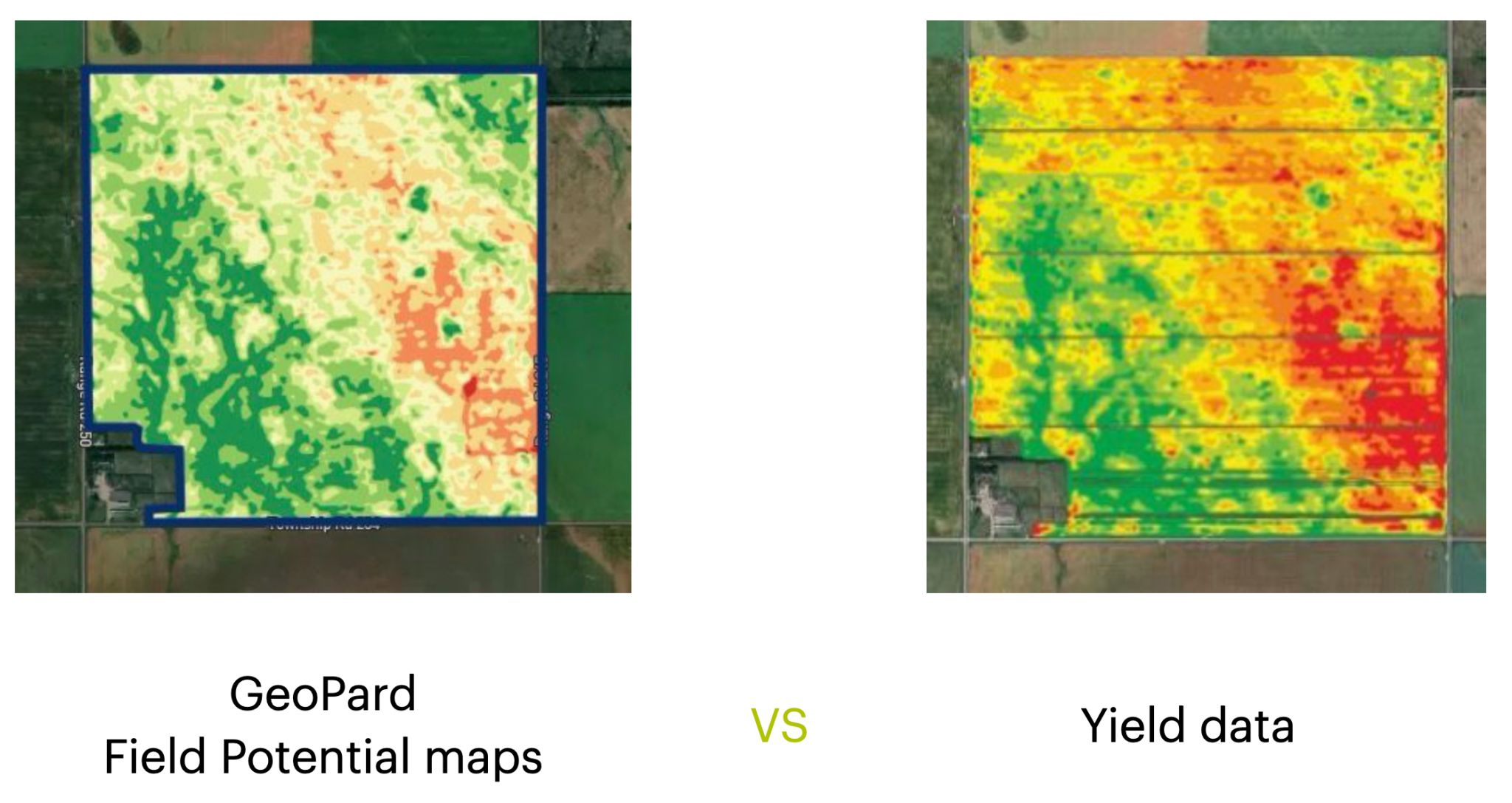
 

GeoPard-peltopotentiaalikartat vs. satotiedot

GeoPard Field Potential -kartat näyttävät usein täsmälleen sama tuotto dataa.

Luomme ne käyttämällä monikerroksinen analytiikka historiallisia tietoja, topografiaa ja paljaan maaperän analyysiä.

Tällaisen prosessin synteettiset satokartat on automatisoitu (ja patentoitu) ja sen luominen kestää noin minuutin millä tahansa kentällä maailmassa.


GeoPard-peltopotentiaalikartat vs. satotiedot

Voidaan käyttää pohjana seuraaville:

Mitä ovat kenttäpotentiaalikartat?

Peltopotentiaalikartat, jotka tunnetaan myös satopotentiaalikarttoina tai tuottavuuspotentiaalikarttoina, ovat visuaalisia esityksiä pellon potentiaalisen sadon tai tuottavuuden alueellisesta vaihtelusta. Nämä kartat luodaan analysoimalla erilaisia tekijöitä, jotka vaikuttavat sadon kasvuun, kuten maaperän ominaisuuksia, topografiaa ja historiallisia satotietoja.

Näitä karttoja voidaan käyttää täsmäviljelyssä apuna hoitopäätöksissä, kuten lannoitteiden vaihtelevassa määrin levittämisessä, kastelussa ja muissa panoksissa, sekä tunnistamaan alueita, jotka vaativat erityistä huomiota tai hoitokäytäntöjä.

Joitakin keskeisiä tekijöitä, joita tyypillisesti otetaan huomioon kenttäpotentiaalikarttoja luotaessa, ovat:

  1. Maaperän ominaisuudet: Maaperän ominaisuudet, kuten koostumus, rakenne, orgaanisen aineksen pitoisuus ja ravinteiden saatavuus, vaikuttavat merkittävästi satopotentiaalin määrittämiseen. Kartoittamalla maaperän ominaisuuksia pellolla viljelijät voivat tunnistaa korkean tai matalan tuottavuuspotentiaalin alueet.
  2. TopografiaTekijät, kuten korkeus merenpinnasta, kaltevuus ja näkökulma, voivat vaikuttaa sadon kasvuun ja satopotentiaaliin. Esimerkiksi alavilla alueilla voi olla taipumusta veden kertymiseen tai suurempi hallan riski, kun taas jyrkät rinteet voivat olla alttiimpia eroosiolle. Näiden topografisten ominaisuuksien kartoittaminen voi auttaa viljelijöitä ymmärtämään, miten ne vaikuttavat tuottavuuspotentiaaliin, ja mukauttamaan hoitokäytäntöjään vastaavasti.
  3. Historialliset tuottotiedot: Analysoimalla aiempien vuosien tai kausien historiallisia satotietoja viljelijät voivat tunnistaa tuottavuuden trendejä ja malleja pelloillaan. Näitä tietoja voidaan käyttää sellaisten karttojen luomiseen, jotka korostavat alueita, joilla on jatkuvasti korkea tai matala satopotentiaali.
  4. Kaukokartoitustiedot: Satelliittikuvia, ilmakuvia ja muita kaukokartoitustietoja voidaan käyttää sadon terveyden, elinvoiman ja kasvuvaiheen arviointiin. Näitä tietoja voidaan käyttää sellaisten karttojen luomiseen, jotka heijastavat sadon tuottavuuspotentiaalin alueellista vaihtelua.
  5. Ilmastotiedot: Myös ilmastomuuttujat, kuten lämpötila, sademäärä ja auringonsäteily, voivat vaikuttaa satojen kasvuun ja satopotentiaaliin. Sisällyttämällä ilmastotietoja näihin karttoihin viljelijät voivat paremmin ymmärtää, miten ympäristötekijät vaikuttavat heidän peltojensa tuottavuuspotentiaaliin.

Ne ovat arvokkaita työkaluja täsmäviljelyssä, sillä ne auttavat viljelijöitä visualisoimaan peltojensa tuottavuuspotentiaalin alueellista vaihtelua. Käyttämällä näitä karttoja hoitopäätösten ohjaamiseen viljelijät voivat optimoida resurssien käyttöä, parantaa kokonaissatoa ja vähentää maataloustoimintansa ympäristövaikutuksia.

Peltopotentiaalikarttojen ja satotietojen välinen ero

Sekä peltopotentiaalikarttoja että satotietoja käytetään täsmäviljelyssä auttamaan viljelijöitä ymmärtämään peltojensa alueellista vaihtelua ja tekemään parempia tietoon perustuvia päätöksiä viljelystä. Näiden kahden välillä on kuitenkin joitakin keskeisiä eroja:

Tietolähteet:

Nämä kartat luodaan yhdistämällä tietoja eri lähteistä, kuten maaperän ominaisuuksista, topografiasta, historiallisista satotiedoista, kaukokartoitustiedoista ja ilmastotiedoista. Nämä tiedot kerätään kuitenkin sadonkorjuukoneisiin asennetuilla satomittareilla, jotka tallentavat sadonkorjuun yhteydessä.

Ajallinen näkökulma:

Nämä kartat edustavat arviota pellon potentiaalisesta tuottavuudesta, joka on yleensä staattinen tai muuttuu hitaasti ajan myötä, ellei maaperän ominaisuuksissa tai muissa vaikuttavissa tekijöissä tapahdu merkittäviä muutoksia. Satotiedot ovat kuitenkin spesifisiä tietylle kasvukaudelle tai useille kausille ja voivat vaihdella merkittävästi vuodesta toiseen esimerkiksi sääolosuhteiden, tuholaispaineen ja hoitokäytäntöjen perusteella.

Yhteenvetona voidaan todeta, että peltopotentiaalikartat ja satotiedot ovat toisiaan täydentäviä työkaluja täsmäviljelyssä. Nämä kartat tarjoavat arvion pellon potentiaalisesta tuottavuudesta ja auttavat viljelijöitä tunnistamaan alueet, jotka saattavat vaatia erilaisia hoitokäytäntöjä. Satotiedot puolestaan dokumentoivat todellisen sadon määrän ja niitä voidaan käyttää hoitokäytäntöjen tehokkuuden arviointiin ja tulevan päätöksenteon tueksi.

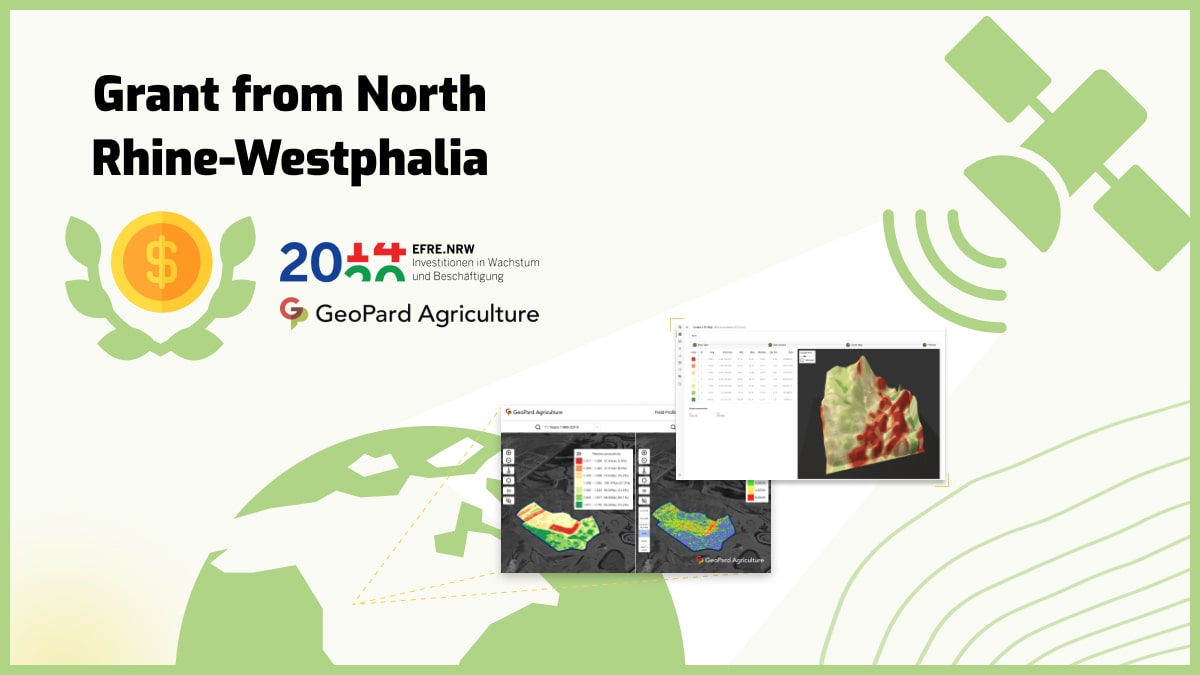
5G-verkko maataloudessa. Avustus Nordrhein-Westfalenin osavaltiolta.

We are glad to announce that the “5G networks as an enabler for real-time learning in sustainable farming” project was selected for partial funding by the Ministry of Economic Affairs, Industry, Climate Action and Energy of the State of North Rhine-Westphalia.


Ministry of Economic Affairs, Industry, Climate Action and Energy of the State of North Rhine-Westphalia.

The project is researching how 5G can be used to make the agricultural process more ecological, economical and sustainable. The low latency of 5G makes it possible to integrate information technology systems into the process in real time and to react to sensor and position data within defined response times.

Together with our partner HSHL and the associated partner Pfeifer & Langen, the process of sugar beet cultivation from initial planting to harvesting is being examined on the partner’s fields to show how 5G can act as an enabler technology in the agricultural sector of NRW.


Project kick-off meeting on the field with representatives of Hochschule Hamm-Lippstadt, FlyPard Analytics GmbH and Pfeifer & Langen GmbH & Co. KG.

Project kick-off meeting on the field with representatives of Hochschule Hamm-Lippstadt, FlyPard Analytics GmbH ja Pfeifer & Langen GmbH & Co. KG.

Role of 5G Network in Agriculture

5G networks, characterized by improved connectivity, reduced latency, and high-speed data transmission, possess the potential to substantially impact the agricultural industry. This state-of-the-art technology can accommodate various applications and innovations in agriculture, resulting in heightened efficiency, sustainability, and productivity. The following are some primary functions of 5G networks in agriculture:

  • Täsmäviljely: 5G connectivity allows for real-time data acquisition, processing, and analysis from multiple sensors and devices, such as soil moisture sensors, weather monitoring stations, and drones. This empowers farmers to make data-informed decisions and implement precision agriculture practices, including targeted irrigation, fertilization, and pest management.
  • Remote monitoring and control: The reduced latency and high-speed data transfer capabilities of 5G networks enable real-time remote supervision and control of farming equipment and machinery. This leads to more effective resource allocation, lowered labor costs, and enhanced safety.
  • Autonomous farming: 5G networks facilitate the deployment of autonomous farming equipment, including self-driving tractors, harvesters, and drones. High-speed connectivity and low latency allow these machines to communicate with each other and make real-time adjustments, improving efficiency and minimizing human intervention.
  • Smart livestock management: 5G connectivity supports the use of IoT devices, such as smart collars and wearables, to monitor livestock health, location, and behavior in real-time. This helps farmers optimize feeding, breeding, and healthcare strategies, improving animal welfare and productivity.
  • Supply chain traceability: 5G networks can aid in the implementation of blockchain technology and IoT devices to monitor and track agricultural products throughout the supply chain. This improves traceability, strengthens food safety, and reduces waste.
  • Enhanced rural connectivity: 5G networks can help bridge the digital divide by providing high-speed internet access to rural and remote areas. This allows farmers to access online resources, tools, and services, fostering knowledge sharing, capacity building, and market access.
  • Virtual and augmented reality: 5G network can support the use of virtual and augmented reality applications in agriculture, such as remote training, equipment maintenance, and crop monitoring. This assists farmers in acquiring new skills, enhancing decision-making, and increasing efficiency.

In summary, 5G networks can play a vital role in modernizing and transforming the agricultural sector by enabling a wide array of applications and innovations. High-speed connectivity, reduced latency, and enhanced capacity of 5G can support the adoption of advanced technologies, resulting in increased productivity, sustainability, and overall growth in the industry.

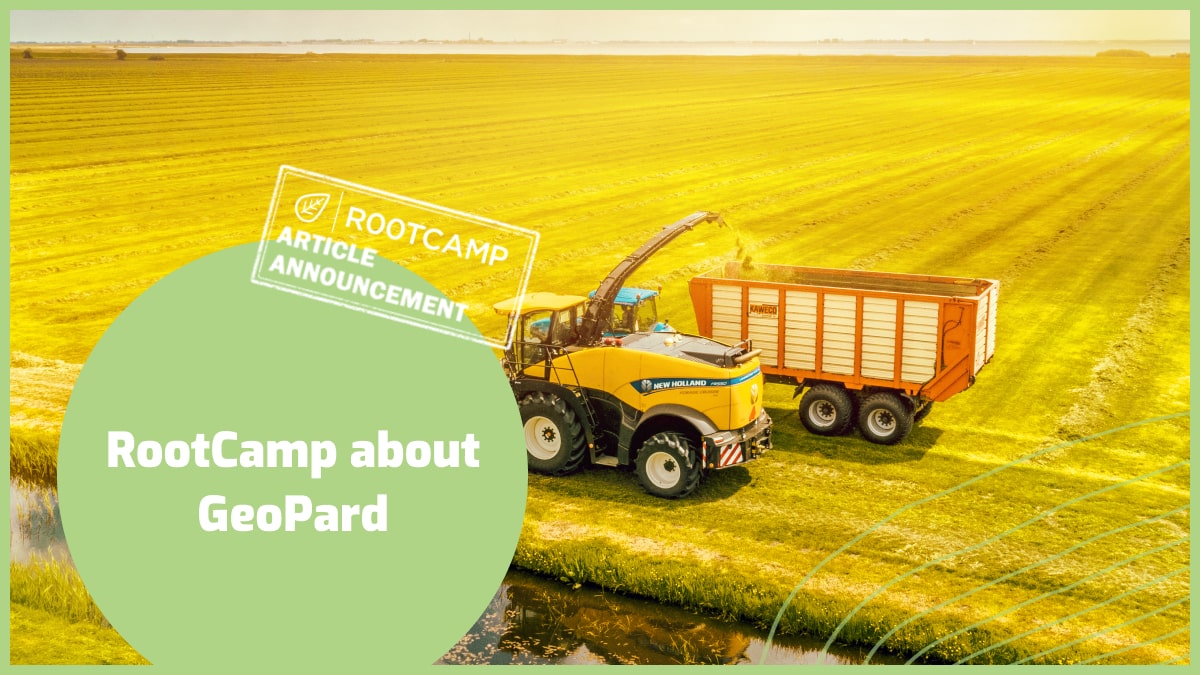
GeoPard läpäisi RootCamp-kiihdytysohjelman onnistuneesti

About 300 companies applied for participation in the intense three-month Acceleration Program by RootCamp. But only 7 of them have been chosen as international AgriTech startups to join.

One of them is an agriculture intelligence platform based in Cologne, Germany called GeoPard. In short, GeoPard helps to automate the agronomic workflows like season planning, to fertilize, seeding, harvesting, and so on by streamlining them all in one system.

To do so, GeoPard uses cutting-edge spatial data analytics and AI algorithms and focuses on making sustainable and profitable precision agriculture solutions accessible and affordable to all agribusinesses.

Data products provided by GeoPard include soil sampling analytics, crop monitoring, field benchmarking, and Variable Rate application maps for agricultural in-season operations (like seeding, fertilizing, crop protection, and herbicides).

Some Unique Data Products of GeoPard Presented in Rootcamp

GeoPard focuses on building a Digital Twin of any agricultural field by aggregating all available data layers obtained through various methods and technologies. Moreover, some of the salient advantages that make GeoPard stand out from a crowd of similar products include:

1. An attractive business model for all business sizes: GeoPard users only pay for consumed analytics with no extra costs. GeoPard offers several plans to choose from according to the customer’s size.

The pricing model is based on an AWS-like pay-as-you-go credits approach that ensures that our offer remains affordable for all sizes of agricultural businesses. GeoPard also boasts a service that ensures delivery of the branded precision agriculture solution in just 2 weeks.

2. Independence and non-biasedness: About 0.5M data points are generated per day per farm as of 2021 and this number will be x6 during the next 10 years.

As data becomes more and more valuable, their security and protection become equally important, especially while dealing with massive data like this. So it is noteworthy that GeoPard is not affiliated with any agricultural corporation and all the data is owned by the user and is definitely not for sale.

3. Level of automation and analytics capabilities: The whole point of precision agriculture is to optimize the usage of agricultural inputs and maximize yield via data-driven decisions.

Efficiently dealing with such a huge amount of data requires increasing automation and decreasing manual work. GeoPard achieves this by establishing a platform that automatically collects data layers, standardizes them, and streamlines agricultural field insights on top.

So GeoPard customers focus on efficient data-driven decisions instead of struggling with manual data processing.

Another highlight of GeoPard is its user-friendly web and mobile interfaces. Along with the web and mobile interfaces, GeoPard provides integration capabilities like API, widgets, White Label, and On-premise solutions.

GeoPard also provides a quick assistance service that can help customers anytime. Ongoing communication with the customers and partners, consultants, and business is of prime importance in both the past and future of this company.

GeoPard aims to improve the adoption of precision farming technologies, ensure efficient and sustainable crop production, and offer high-quality and adaptable data products.

The overall operation of GeoPard in the field of sustainable precision agriculture is based on using the most sophisticated technologies for data capturing, streamlining of analytics, and dissemination while ensuring that customers have the most practical experience and the highest ROI using data products from GeoPard.

Having specialized in precision farming technologies to maximize the efficiency of all agribusinesses, GeoPard plans to venture more into data products for sustainability, biodiversity, and carbon sequestration in the future.

To dive deeper into GeoPard, its services, its vision, and its plan for the future from one of the founders, you can watch this video or read more on this blogi.

GeoPardin ratkaisu läpäisi AWS-sertifioinnin

In February 2022 GeoPard* joined AWS Partner Network** as a Technology Partner. The community of AWS Partners includes strategic experts and experienced cloud engineers and architects, who help address specific business needs and build cost-effective scalable cloud solutions for organizations. Here the GeoPard team brings its 10+ years of experience in building cloud scalable digital solutions in Agriculture and ​​assists crop farming agribusinesses to keep pace with cloud cutting-edge technology.

AWS Partner

In March 2022 GeoPard platform successfully passed the Foundational Technical Review performed by AWS Solution Architects. The review included certifications according to the Center for Internet Security (CIS v1.2.0) and AWS Foundational Security Best Practices (v1.0.0).

In other words, the GeoPard Agriculture platform met AWS security and best practice requirements. And it is ready for On-premise/White Label installation in the customer AWS cloud.

AWS certification partner

GeoPard took additional steps to extend its market offer with certified on-premise solutions to be utilized either as a standalone data platform or as an automated data analytics extension to already existing digital farming suites. That makes integration to the customer’s cloud infrastructure faster and smoother.

* GeoPard is an agriculture intelligence platform that enables crop farming agribusinesses to increase ROI via data-driven agronomic decisions and integrate sustainable precision agriculture practices using cutting-edge spatial data analytics and AI algorithms.
AWS Startups Blog: Improving the Sustainability of Crop Farming Using a Data-driven Approach.

** The AWS Partner Network (APN) is a global community of partners that leverages programs, expertise, and resources to build, market, and sell customer offerings.

GeoPard showcased at FoodHub NRW expo

Last week GeoPard team presented at the Foodhub NRW expo in Neuss, Germany.

Our speaker session was about the state of Precision Agriculture, past, present, and the future.
In detail, we described a few examples of how decision support tools and data analysis helps to implement data-driven crop farming practices in different regions: the US, Canada, Europe.

GeoPard team presented at the Foodhub NRW expo in Neuss, Germany

We are proud to be in the epicenter of innovations in the crop farming industry.

It was great to meet a lot of food startups. Agriculture is one of the biggest industries in the world and we need more innovations and collaborations between corporates and startups across the value chain.


Integration with MyJohnDeere Ops Center

The team at GeoPard is pleased to announce their integration with the MyJohnDeere Operations Center (Ops Center). MyJohnDeere customers can now seamlessly upload their data into the GeoPard system, where they can do an advanced data analysis, compare information to other data sets, and create detailed Variable Rate Application (VRA) maps for seeding, fertilizing and spraying.

These maps can then be wirelessly sent back to the MyJohnDeere Operations center and subsequently to fleets and machinery via a cloud-to-cloud connection, with no need for a USB stick. A step-by-step tutorial about import/export capabilities is täällä.

Description of Geopard integration to John Deere

Moreover, GeoPard provides automated synchronization of crop monitoring, detailed topography analytics, machinery and soil scanner data for MyJohnDeere clients.

GeoPard tarjoaa automatisoidun sadonseurannan synkronoinnin
3D composite based on Productivity Zones and Topography collected by fleets

Agronomists, agribusinesses, precision agriculture specialists, and equipment dealerships can all utilize the GeoPard platform as a means to collate many data sets for optimal analysis.

From the John Deere Operations Center, field boundaries, seeding (as-planted) data, as-applied fertilizer maps, as-applied crop protection, tillage data, and yield data can all be imported to GeoPard and cross-analyzed.

This integration has simplified the data streamline process for multiple parties and stakeholders by providing them with a smooth-running analytical engine to gain new insights about relevant land parcels and logistics. 

GeoPard platform as a means to collate many data sets for optimal analysis
Zoned (Classified) VS Original Harvest Data
LiDAR VS Machinery Topography collected by fleets

“Growers, JohnDeere dealerships, and ag consultants need solutions to get informed data-driven decisions. We are proud to be a software partner of MyJohnDeere platform to enable GeoPard precision agriculture analytics solutions for John Deere clients via wireless integration,” said Dmitry Dementiev, CEO & Co-Founder of GeoPard Agriculture.

This collaboration optimizes all the benefits of precision agriculture to users by making the creation of complex and personalized VRA maps increasingly accessible and simple to navigate and manage.

Prescription maps can be sent back to the John Deere Ops Center and to machinery in a streamlined process that promotes efficiency and accuracy for the VRA of multiple inputs.

About John Deere Ops Center: John Deere Ops Center is a digital platform of agricultural corporation John Deere, where users can manage the logistics and services of their machine fleets and equipment.

The data is stored securely in user accounts and allows customers to share and analyze their data systems via the internet and IoT devices, optimizing the efficiency of fleet and land management.  Learn more at: https://www.deere.com/en/technology-products/precision-ag-technology/data-management/operations-center/

About GeoPard Ag: Geopard is an AgTech company whose mission is to develop accessible and affordable enterprise-level analytics for sustainable agriculture.

Their platform allows you to simplify the complexities of precision agriculture through tools and services like VRA map creation and multi-layer yield, soil, topography, ground scanners and satellite data analytics. Learn more at: https://geopard.tech/.

Tuottotiedot ja analytiikka GeoPardissa

In this article:

  • Using yield analytics in precision agriculture
  • In-depth yield data analytics in GeoPard Agriculture 
  • Visualization of each attribute in Yield files
  • Correction of raw yield data 
  • 5 Practical examples of usage of yield maps
Raw and cleaned yield data in GeoPard

Tuottotiedot allows you to make more informed decisions and improve growing efficiency.
Field management zones constructed from multiple years of yield data are suitable for an initial assessment of potential yield and soil nutrient variability to make future crop management decisions.

Analysis of yield data can be converted to a variable rate application map and used, for example, for fertilizer application. Its calibration is another topic you need to consider, we will cover it in a separate blog post.

The advanced analytics in GeoPard is that you can perform multi-layer analysis by combining multiple layers of data into one map and looking for relationships between the data layers. 

Combined productivity zones can be generated based on vegetation indices from satellite imagery, topography, data from machinery such as yield, electrical conductivity, soil moisture, and others, as well as agrochemical analysis results.

Visualization of yield files is done automatically after downloading the file, it’s automatic processing and cleaning. Two versions of maps are shown below – the original image with data from the equipment monitor as is, and the GeoPard visualization.

The raw data has been converted into a gradient continuous surface image, for an easier understanding of the field heterogeneity and for creating management zones.

Each of the attributes of the yield file is available for visualization, such as moisture, yield mass, yield volume wet and dry, downforce, fuel consumption, machine speed, and so on.

Raakadatan korjaus means that if a point in the field is unnatural, it will be smoothed (for example, working over not the full width of the combine header). When creating Zones-based yield data, you can correct individual zones and polygons. 

Let’s take a look at some practical examples of using yield maps and other GeoPard data layers.

1. Management zones based on yield data. Management zones can be constructed based on either one year’s yield data or multiple years. It is important to note that you cannot directly stack yields from different years, as you will get a bias in favor of one of the years.

To reduce this effect, GeoPard applies several algorithms to make the weight of each year even.  You can set the importance of a single year through the Weight tool when you create a Multi-layer map.

Such field management zones can be used to build application/prescription/Rx (VRA) maps, calculating the potential yield in each zone.

Multi-year and multi-layer yield potential map

2. Multi-layer zones with yield data and other data sources (topography, soil, sensor, satellite). It can be added to multilayer analytics and set the weight it will have on the final zones.

In this example, three layers of data are added to the map: Yield, Satellite imagery, and Topography. You can combine any data layers you consider relevant for analytics. The multi-layer map can be used for further yield analytics and for creating VRA maps. 

Yield, Topography and Satellite imagery
Multi-layer zones: Yield, Topography and Satellite imagery

3. Yield calculation on zone and field level. To analyze different treatments, seed varieties, and agronomic practices you probably want to compare the average and total yield in each zone, strip, or between fields.

GeoPard automatically calculates this for you to make it easier to compare yield in absolute numbers. 

GeoPard calculates yield in abs numbers based on Yield files. Total and average for field and each zone

4. Dependency zones based on yield data. Zones based on yield data can be overlaid on other data zones and you can search for dependencies between data layers. This example shows the overlay of high yield and average protein (1) and low yield and high protein (2) of different wheat varieties in a field.

Other examples include the relationship between the influence of topography on yield, the intersection between low yields, and the lack of macro-and micronutrients in the soil, soil moisture, and electrical conductivity (EC) layers.

Intersections of different yield and protein levels

5. Variable Rate application (VRA) maps based on yield data.  You can create prescription maps for different operations – fertilizing, seeding, spraying, irrigation, and planning of soil sampling. You can edit the number and shape of the zones.

You can also build a prescription map for a variable rate application by combining yield data with other data sources (soil, EC, satellite, topography). 

Variable rate Seeding rates per zone
Variable-rate Seeding rates per zone

Even if you do not have yield data, you can use GeoPard multi-year zones (up to 33 years) based on satellite imagery or combine it with other data layers like topography to start your precision agriculture journey. These analyses often correlate with yield analytics data, but this is another story.


Usein kysytyt kysymykset


1. How to do yield analysis?

Yield analysis is a process used to assess the productivity and performance of a crop or agricultural system. Here are the steps to conduct a basic yield analysis:

  • Measure the total harvested yield: Collect all the harvested produce from a specific area and weigh it.
  • Determine the area: Measure or calculate the total area of land from which the yield was obtained.
  • Calculate the yield per unit area: Divide the total harvested yield by the area to get the yield per unit area (e.g., yield per hectare).
  • Compare and analyze: Compare the obtained yield with previous years’ data or regional averages to assess the performance and identify any variations or trends.

Yield analysis helps farmers make informed decisions, monitor crop productivity, and identify areas for improvement in their farming practices.

2. What is yield data?

Yield data refers to the information collected and recorded about the amount of crop or agricultural produce obtained from a specific area of land. It includes measurements or estimates of the quantity of harvested yield, usually expressed in terms of weight or volume.

It provides valuable insights into the productivity and performance of crops, helping farmers make informed decisions about their farming practices, assess the effectiveness of different techniques or inputs, and monitor trends or variations in crop yields over time.

3. What is yield potential?

Yield potential refers to the maximum achievable yield or production level of a crop under ideal growing conditions. It represents the upper limit of what a specific crop variety or plant species can yield in terms of quantity and quality.

Yield potential is influenced by various factors such as genetics, environmental conditions, nutrient availability, and management practices. It serves as a benchmark or reference point for farmers and agronomists to evaluate the performance and productivity of different crop varieties and to identify areas where improvements can be made to optimize yield levels.

Yhteistyö FarmVun kanssa

FarmVu Inc., Three Hills, Alberta and GeoPard Maatalous, Cologne, Germany are pleased to announce their successful integration and partnership which combines creative telemetry and soil moisture sensing solutions with a powerful precision ag analytics platform.

Precision Ag consultants now have a flexible tool to connect, display, and automatically process ground sensor data collected with EM38, DualEM, or FarmVu’s soil moisture sensors. The integration of these technologies frees up hours of processing time for consultants. It offers them a powerful precision ag analytics platform to combine sensor data with satellite imagery, topography, yield, soil, as-applied data and analytics to create zone maps and prescriptions their clients can act on.

The use of sensor technology in agriculture is growing rapidly. The success of these technologies depends on our ability to connect, combine, and analyze multiple data layers, including sensor data, to create problem-solving solutions. At the same time, the process has to be simple, fun, and ignite creativity, so we all can find new ways to solve problems in agriculture. That makes the partnership between these two passionate teams a success, and one we can’t wait for users to try. 

About: FarmVu offers consultants, farmers and researchers field scale soil moisture sensing technology along with ground sensor telemetry solutions. Their powerful technology is helping customers optimize water use in dryland and irrigated cropping systems while simplifying the data collection process. 

define the cross section between yield loss more 50% and areas of high soil moisture
Compare and analyze data layers to create actionable zone maps. Here we define the cross section between yield loss more 50% and areas of high soil moisture to measure ROI on drainage solutions.

Yhteistyössä Planetin kanssa

GeoPard Agriculture team is excited to partner with Planeetta, the largest earth observation satellite network delivering a near-daily global dataset, to enable its high-resolution and high-frequency satellite imagery data to make Agriculture more sustainable. 

GeoPard expands its spatial agronomic modeling offering including the creation of accurate management zones for Variable Rate application,  monikerroksinen analytiikkavegetation indices based on chlorophyll, ja calculating stability zones based on the Planet imagery. 

With access to a near-daily imagery dataset, we at GeoPard will be able to provide VRA maps with the actual almost real-time biomass distribution.

GeoPard management zones based on PlanetScope image and Red Chlorophyll index

Dzmitry Yablonski, GeoPard Director: Planet data will enable GeoPard to increase the temporal and spatial resolution of satellite imagery for our clients to make accurate in-season decisions about fertilization, spraying. The value it provides, especially for small and medium-sized growers, is outstanding. We invest a lot in the automation of the creation of VR maps based on the Planet data. It enables accurate decision for soil sampling and variable rate application.

“Planet’s partnership with GeoPard will enable and support agriculture customers to make informed business decisions due to the ability to monitor past and future data yields with our satellite imagery and it’s unprecedented detail”, says Jason Jones Planet’s EMEA Channel and Alliances Director. “We look forward to seeing what Planet’s data and archive married with GeoPards analytics brings to the unique customer base.”

Satellite PlanetScope image
PlanetScope image


wpChatIcon
wpChatIcon

    Pyydä ilmainen GeoPard-demo / konsultaatio


    Hyväksymällä painikkeen painamisen hyväksyt meidän Tietosuojaseloste. Tarvitsemme sen vastataksemme pyyntöösi.

      Tilaa


      Hyväksymällä painikkeen painamisen hyväksyt meidän Tietosuojaseloste

        Lähettäkää meille tietoa


        Hyväksymällä painikkeen painamisen hyväksyt meidän Tietosuojaseloste