Cloud-Based Transformative Crop Recommendation Model Changing Precision Agriculture

Agriculture is at a crossroads. With the global population set to reach 9.7 billion by 2050, farmers must produce 70% more food while battling climate change, soil degradation, and water scarcity.

Traditional farming methods, which rely on outdated practices and guesswork, are no longer sufficient. Enter the Transformative Crop Recommendation Model (TCRM), an AI-driven solution designed to tackle these challenges head-on.

This article explores how TCRM uses machine learning, IoT sensors, and cloud computing to deliver 94% accurate crop recommendations, empowering farmers to boost yields, reduce waste, and adopt sustainable practices.

The Growing Need for AI in Modern Farming

The demand for food is skyrocketing, but traditional farming struggles to keep up. In regions like Punjab, India—a major agricultural hub—soil health is declining due to overuse of fertilizers, and groundwater reserves are depleting rapidly.

Farmers often lack access to real-time data, leading to poor decisions about crop selection, irrigation, and resource use. This is where precision agriculture, powered by AI, becomes critical.

Unlike conventional methods, precision agriculture uses technology like IoT sensors and machine learning to analyze field conditions and provide tailored recommendations. TCRM exemplifies this approach, offering farmers actionable insights based on soil nutrients, weather patterns, and historical data.

By integrating AI into farming, TCRM bridges the gap between traditional knowledge and modern innovation, ensuring farmers can meet future food demands sustainably.

“This isn’t just about technology—it’s about ensuring every farmer has the tools to thrive.”

How TCRM Works: Merging Data and Machine Learning

At its core, TCRM is an AI crop recommendation system that combines multiple technologies to deliver precise advice. The process begins with data collection. IoT sensors deployed in fields measure critical parameters like soil nitrogen (N), phosphorus (P), potassium (K), temperature, humidity, rainfall, and pH levels.

These sensors feed real-time data into a cloud-based platform, which also pulls historical crop performance records from global databases like NASA and the FAO. Once collected, the data undergoes rigorous cleaning.

Missing values, such as soil pH readings, are filled using regional averages, while outliers—like sudden humidity spikes—are filtered out. The cleaned data is then normalized to ensure consistency; for example, rainfall values are scaled between 0 (100 mm) and 1 (1000 mm) to simplify analysis.

Next, TCRM’s hybrid machine learning model takes over. It blends Random Forest algorithms—a method using 500 decision trees to avoid errors—with deep learning layers that detect complex patterns.

How TCRM Works Merging Data and Machine Learning

A key innovation is the multi-head attention mechanism, which identifies relationships between variables. For instance, it recognizes that high rainfall often correlates with better nitrogen absorption in crops like rice.

The model is trained over 200 cycles (epochs) with a learning rate of 0.001, fine-tuning its predictions until it achieves 94% accuracy. Finally, the system deploys recommendations via a cloud-based app or SMS alerts, ensuring even farmers in remote areas receive timely advice.

Why TCRM Outperforms Traditional Farming Methods

Traditional crop recommendation systems, such as those using Logistic Regression or K-Nearest Neighbors (KNN), lack the sophistication to handle farming’s complexities.

For example, KNN struggles with imbalanced data—if a dataset has more entries for wheat than lentils, its predictions skew toward wheat. Similarly, AdaBoost, another algorithm, scored just 11.5% accuracy in the study due to overfitting. TCRM overcomes these flaws through its hybrid design.

By merging tree-based algorithms (for transparency) with deep learning (for handling intricate patterns), it balances accuracy and interpretability.

In trials, TCRM achieved a 97.67% cross-validation score, proving its reliability across diverse conditions. For instance, when tested in Punjab, it recommended pomegranate for farms with high potassium (120 kg/ha) and moderate pH (6.3), leading to a 30% yield increase.

Farmers also reduced fertilizer use by 15% and water waste by 25%, as the system provided precise nutrient and irrigation guidelines. These results highlight TCRM’s potential to transform agriculture from a resource-intensive industry into a sustainable, data-driven ecosystem.

TCRM Outperforms Traditional Farming Models

Real-World Impact: Case Studies from Punjab

Punjab’s farmers face severe challenges, including depleted groundwater and soil nutrient imbalances. TCRM was tested here to assess its practical value.

One farmer, for example, input data showing soil nitrogen at 80 kg/ha, phosphorus at 45 kg/ha, and potassium at 120 kg/ha, alongside a pH of 6.3 and 600 mm of annual rainfall.

TCRM analyzed this data, recognized the high potassium levels and optimal pH range, and recommended pomegranate—a crop known for thriving in such conditions. The farmer received an SMS alert detailing the crop choice and ideal fertilizers (urea for nitrogen, superphosphate for phosphorus).

Over six months, farmers using TCRM reported 20–30% higher yields for staple crops like wheat and rice. Resource efficiency improved too: fertilizer use dropped by 15% as the system pinpointed exact nutrient needs, and water waste fell by 25% due to irrigation aligned with rainfall forecasts.

These outcomes demonstrate how AI-driven tools like TCRM can enhance productivity while promoting environmental sustainability.

Technical Innovations Behind TCRM’s Success

TCRM’s success hinges on two breakthroughs. First, its multi-head attention mechanism allows the model to weigh relationships between variables.

For example, it detected a strong positive correlation (0.73) between rainfall and nitrogen uptake, meaning crops in high-rainfall regions benefit from nitrogen-rich fertilizers.

Conversely, it found a slight negative link (-0.14) between soil pH and phosphorus absorption, explaining why acidic soils require lime treatment before phosphorus-heavy crops like potatoes are planted.

Second, TCRM’s cloud and SMS integration ensures scalability. Hosted on Amazon Web Services (AWS), the system handles over 10,000 users simultaneously, making it viable for large cooperatives.

For smallholders without internet, the Twilio API sends SMS alerts—3,000+ monthly in Punjab alone—with crop and fertilizer advice. This dual approach ensures no farmer is left behind, regardless of connectivity.

Technical Innovations Behind TCRM’s Success

Challenges in Adopting AI for Farming

Despite its promise, TCRM faces hurdles. Many farmers, especially older ones, distrust AI recommendations, preferring traditional methods. In Punjab, only 35% of farmers adopted TCRM during trials.

Cost is another barrier: IoT sensors cost 200500 per acre, unaffordable for small-scale farmers. Additionally, TCRM’s training data focused on Indian crops like wheat and rice, limiting its usefulness for quinoa or avocado growers in other regions.

The study also highlights gaps in testing. While TCRM scored 97.67% in cross-validation, it wasn’t evaluated under extreme conditions like floods or prolonged droughts. Future versions must address these limitations to build resilience and trust.

The Future of AI in Agriculture

Looking ahead, TCRM’s developers plan to integrate Explainable AI (XAI) tools like SHAP and LIME. These will clarify recommendations—for example, showing farmers that a crop was chosen because potassium levels were 20% above the threshold.

Global expansion is another priority; adding datasets from Africa (e.g., maize in Kenya) and South America (e.g., soybeans in Brazil) will make TCRM universally applicable.

Real-time IoT integration using drones is also on the horizon. Drones can map fields hourly, updating recommendations based on changing weather or pest activity.

Such innovations could help predict locust outbreaks or fungal infections, enabling preemptive action. Lastly, partnerships with governments could subsidize IoT sensors, making precision agriculture accessible to all farmers.

Conclusion

The Transformative Crop Recommendation Model (TCRM) represents a leap forward in agricultural technology. By combining AI, IoT, and cloud computing, it offers farmers a 94% accurate, real-time decision-making tool that boosts yields and conserves resources.

While challenges like costs and adoption barriers remain, TCRM’s potential to revolutionize farming is undeniable. As the world grapples with climate change and population growth, solutions like TCRM will be vital in creating a sustainable, food-secure future.

Reference: Singh, G., Sharma, S. Enhancing precision agriculture through cloud based transformative crop recommendation model. Sci Rep 15, 9138 (2025). https://doi.org/10.1038/s41598-025-93417-3

Role of Deep Learning Computer Vision Applications for Early Plant Disease Detection

Plant diseases silently threaten global food security, destroying 10–16% of crops annually and costing the agriculture industry $220 billion in losses. Traditional methods like manual inspections and lab tests are slow, expensive, and often unreliable.

A groundbreaking 2025 study, “Deep Learning and Computer Vision in Plant Disease Detection” (Upadhyay et al.), reveals how AI plant disease detection and computer vision agriculture are transforming farming.

Why Early Plant Disease Detection Matters for Global Food Security

Agriculture employs 28% of the global workforce, with countries like India, China, and the U.S. leading crop production. Despite this, plant diseases caused by fungi, bacteria, and viruses slash yields and strain economies.

For instance, rice blast disease reduces harvests by 30–50% in affected regions, while citrus greening has wiped out 70% of Florida’s orange groves since 2005. Early detection is critical, but many farmers lack access to advanced tools or expertise.

This is where AI-driven disease detection steps in, offering fast, affordable, and precise solutions that outperform traditional methods.

How AI and Computer Vision Detect Crop Diseases

The study analyzed 278 research papers to explain how AI plant disease detection systems operate. First, cameras or sensors capture images of crops. These images are then processed using algorithms to identify signs of disease.

For example, RGB cameras take color photos to spot visible symptoms like leaf spots, while hyperspectral cameras detect hidden stress signals by analyzing hundreds of light wavelengths.

Once images are captured, they undergo preprocessing to enhance quality. Techniques like thresholding isolate diseased areas by color, and edge detection maps the boundaries of lesions or discoloration.

How AI and Computer Vision Detect Crop Diseases

Next, deep learning models analyze the preprocessed data. Convolutional Neural Networks (CNNs), the most common AI tools in agriculture, scan images layer by layer to identify patterns like unusual textures or colors.

In a 2022 trial, ResNet50—a popular CNN model—achieved 99.07% accuracy in diagnosing tomato diseases.

Meanwhile, Vision Transformers (ViTs) split images into patches and study their relationships, mimicking how humans analyze context. This approach helped detect grapevine vein-clearing virus with 71% accuracy in a 2020 study.

“The future of farming lies not in replacing humans, but in equipping them with intelligent tools.”

The Role of Advanced Sensors in Modern Farming

Different sensors offer unique advantages for precision agriculture. RGB cameras, though affordable and easy to use, struggle with early-stage diseases due to limited spectral detail. In contrast, hyperspectral cameras capture data across hundreds of light wavelengths, revealing stress signals invisible to the naked eye.

For example, researchers used hyperspectral imaging to diagnose apple valsa canker with 98% accuracy in 2022. However, these cameras cost 10,000–50,000, making them too expensive for small-scale farmers.

Thermal cameras provide another angle by measuring temperature changes caused by infections. A 2019 study found that leaves infected with citrus greening show distinct heat patterns, allowing early detection.

Meanwhile, multispectral cameras—a middle-ground option—track chlorophyll levels to assess plant health.

These sensors mapped wheat stripe rust in 2014, helping farmers target treatments more effectively. Despite their benefits, sensor costs and environmental factors like wind or uneven lighting remain challenges.

Public Datasets: The Backbone of AI Agriculture

Training reliable AI models requires vast amounts of labeled data. The PlantVillage dataset, a free resource with 87,000 images of 14 crops and 26 diseases, has become the gold standard for researchers.

Over 90% of studies cited in the paper used this dataset to train and test their models. Another key resource, the Cassava Disease Dataset, includes 11,670 images of cassava mosaic disease and achieved 96% accuracy with CNN models.

However, gaps persist. Rare diseases like pinewood nematode have fewer than 100 labeled images, limiting AI’s ability to detect them. Additionally, most datasets feature lab-captured images, which don’t account for real-world variables like weather or lighting.

To address this, projects like AI4Ag are crowdsourcing field images from farmers worldwide, aiming to build more robust and realistic datasets.

Measuring AI Performance: Accuracy, Precision, and Beyond

Performance Metrics of AI Plant Disease Detection Systems

Researchers use several metrics to evaluate AI plant disease detection systems. Accuracy—the percentage of correct diagnoses—ranges from 76.9% in early models to 99.97% in advanced systems like EfficientNet-B5.

However, accuracy alone can be misleading. Precision measures how many flagged diseases are real (avoiding false alarms), while recall tracks how many actual infections are detected.

For example, Mask R-CNN, an object-detection model, achieved 93.5% recall in spotting strawberry anthracnose but only 45% precision in cotton root rot detection.

The F1-Score balances precision and recall, offering a holistic performance view. In a 2023 trial, PlantViT—a hybrid AI model—scored 98.61% F1-Score on the PlantVillage dataset.

For object detection, mean Average Precision (mAP) is critical. Faster R-CNN, a popular model, achieved 73.07% mAP in apple disease trials, meaning it correctly located and classified infections in most cases.

Challenges Holding Back AI in Agriculture

Despite its potential, AI-driven disease detection faces hurdles. First, data scarcity plagues rare or emerging diseases.

  • For instance, only 20 images of cucumber powdery mildew were available for a 2021 study, limiting model reliability.
  • Second, environmental factors like wind, shadows, or varying light conditions reduce field accuracy by 20–30% compared to lab settings.
  • Third, high costs hinder adoption. Hyperspectral cameras, while powerful, remain unaffordable for small farmers, and AI tools require smartphones or internet access—still a barrier in rural areas.
  • Finally, trust issues persist. A 2023 survey found 68% of farmers hesitate to adopt AI due to its “black box” nature—they can’t see how decisions are made.

To overcome this, researchers are developing interpretable AI that explains diagnoses in simple terms, like highlighting infected leaf areas or listing symptoms.

The Future of Farming: 5 Innovations to Watch

1. Edge Computing for Real-Time Analysis: Lightweight AI models like MobileNetV2 (7 MB size) run on smartphones or drones, offering real-time disease detection without internet. In 2023, this model achieved 99.42% accuracy on potato disease classification, empowering farmers to make instant decisions.

2. Transfer Learning for Faster Adaptation: Pre-trained models like PlantViT can be fine-tuned for new crops with minimal data. A 2023 study adapted PlantViT for rice blast detection, achieving 87.87% accuracy using just 1,000 images.

3. Vision-Language Models (VLMs): Systems like OpenAI’s CLIP let farmers query AI using text (e.g., “Find brown spots on leaves”). This natural interaction bridges the gap between complex tech and everyday farming.

4. Foundation Models for General-Purpose AI: Large models like GPT-4 could simulate disease spread or recommend treatments, acting as virtual agronomists.

5. Collaborative Global Databases: Open-source platforms like PlantVillage and AI4Ag pool data from farmers and researchers worldwide, accelerating innovation.

Case Study: AI-Powered Mango Farming in India

In 2024, researchers developed a lightweight DenseNet model to combat mango diseases like anthracnose and powdery mildew. Trained on 12,332 field images, the model achieved 99.2% accuracy—higher than most lab-based systems.

With 50% fewer parameters, it runs smoothly on budget smartphones. Indian farmers now use a $10 app built on this AI to scan leaves and receive instant diagnoses, reducing pesticide use by 30% and saving crops.

Conclusion

AI plant disease detection and precision agriculture technology are reshaping farming, offering hope against food insecurity. By enabling early diagnosis, cutting chemical use, and empowering small farmers, these tools could boost global crop yields by 20–30%.

To realize this potential, stakeholders must address sensor costs, improve data diversity, and build farmer trust through education.

Reference: Upadhyay, A., Chandel, N.S., Singh, K.P. et al. Deep learning and computer vision in plant disease detection: a comprehensive review of techniques, models, and trends in precision agriculture. Artif Intell Rev 58, 92 (2025). https://doi.org/10.1007/s10462-024-11100-x

How IoT Is Transforming Precision Agriculture and Solving Current Challenges?

The world’s population is growing rapidly, with estimates suggesting it will reach 9.7 billion by 2050. To feed everyone, food production must increase by 60%, but traditional farming methods—reliant on soil, heavy water use, and manual labor—are struggling to keep up.

Climate change, soil degradation, and water shortages are making matters worse. For instance, soil erosion alone costs farmers $40 billion annually in lost productivity, while traditional irrigation wastes 60% of freshwater due to outdated practices.

In India, unpredictable monsoons have reduced rice yields by 15% in the last decade. These challenges demand urgent solutions, and smart farming—powered by the Internet of Things (IoT) and aeroponics—offers a lifeline.

The Power of IoT in Modern Agriculture

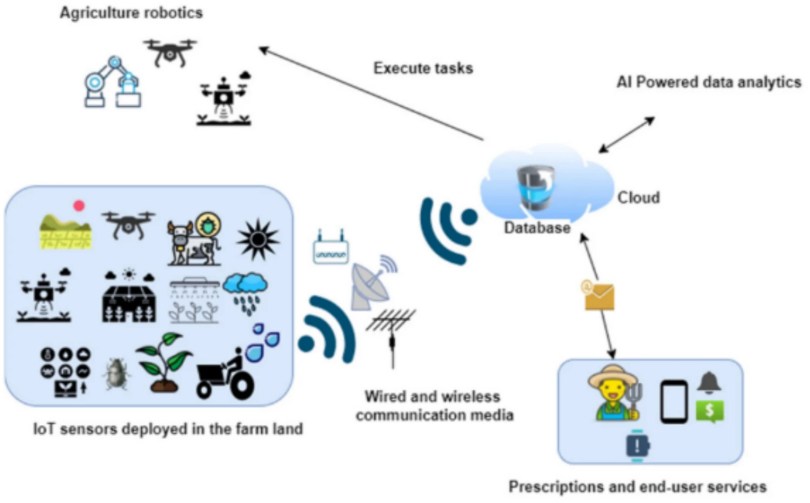
At the heart of smart farming is IoT, a network of interconnected devices that collect and share data in real time. Wireless Sensor Networks (WSNs) are central to this system.

These networks use sensors placed in fields to monitor soil moisture, temperature, humidity, and nutrient levels. For example, the DHT22 sensor tracks humidity, while TDS sensors measure nutrient concentration in water.

This data is sent to cloud platforms like ThingSpeak or AWS IoT using low-power protocols like LoRa or ZigBee. Once analyzed, the system can trigger actions, such as turning on irrigation pumps or adjusting fertilizer levels.

In Coimbatore, India, a 2022 project demonstrated IoT’s potential. Sensors detected dry soil zones in tomato fields, enabling targeted irrigation that reduced water waste by 35%.

Similarly, drones equipped with multispectral cameras scan vast fields to identify issues like pest infestations or nutrient deficiencies.

A 2019 study used drones to detect Northern Leaf Blight in maize crops with 98% accuracy, saving farmers $120 per acre in losses. Machine learning further enhances these systems.

Researchers trained AI models on thousands of leaf images to diagnose diseases like powdery mildew with 99.53% accuracy, allowing farmers to act before crops are destroyed.

Aeroponics: Growing Food Without Soil

While IoT optimizes traditional farming, aeroponics reimagines agriculture entirely. This method grows plants in air, suspending their roots in mist-filled chambers that spray water and nutrients.

Unlike soil-based farming, aeroponics uses 95% less water and no pesticides. Roots absorb oxygen more efficiently, accelerating growth.

For example, lettuce grown aeroponically develops 65% faster than in soil, according to a 2018 study.

Aeroponics is especially valuable in cities or regions with poor soil. Vertical farms stack plants in towers, producing 10 times more food per square meter than traditional fields.

In Mexico City, a 2022 rooftop aeroponic farm yielded 3.8 kg of lettuce per square meter—triple the output of soil farming—while using just 10 liters of water per kilogram.

Singapore’s Sky Greens takes this further, growing 1 ton of vegetables daily in 30-foot towers, using 95% less land than conventional farms.

IoT takes aeroponics to the next level. Sensors monitor root chambers for humidity, pH, and nutrient levels, adjusting misting cycles automatically.

In a 2017 project, researchers automated an aeroponic system using Raspberry Pi, cutting labor costs by 50%. Farmers control these systems via mobile apps like AgroDecisor, which sends alerts for issues like nutrient imbalances.

Challenges Slowing Progress

Despite their potential, IoT and aeroponics face significant hurdles. High costs are a major barrier. A basic IoT setup costs 1,500 – 5,000, while advanced drones and sensors require 10,000–50,000 upfront—far beyond the reach of small-scale farmers in developing nations. Meanwhile, maintenance adds another 15–20% annually, straining budgets further.

Connectivity gaps compound the problem. About 40% of rural areas lack reliable internet, crippling real-time data transmission.

In Ethiopia, a 2021 IoT pilot failed when 3G signals dropped mid-field, disrupting irrigation schedules. Security risks also loom large. IoT protocols like MQTT and CoAP often lack encryption, leaving systems vulnerable to hackers.

In 2021, 62% of agricultural IoT systems reported cyberattacks, including data breaches that could manipulate sensor readings or disable equipment.

Technical complexity adds another layer of difficulty. Farmers need training to interpret data and troubleshoot systems.

A 2017 aeroponic project in Colombia collapsed when incorrect pH settings damaged crops, wasting $12,000 in seedlings.

Even power supply is an issue—solar sensors fail during monsoons, and drones last just 20–30 minutes per charge.

The Future of Farming: Innovations on the Horizon

Despite these challenges, the future looks promising. 5G networks will revolutionize connectivity, enabling drones to monitor vast farms in real time.

In Brazil, a 2023 trial used 5G-connected drones to scan 1,000+ acre soybean fields, detecting diseases in 10 minutes instead of days. Edge AI, which processes data directly on devices, reduces reliance on the cloud.

The MangoYOLO system, for instance, counts mangoes with 91% accuracy using onboard cameras, eliminating delays from data uploads.

Blockchain technology is another game-changer. By tracking produce from farm to consumer, it ensures transparency and reduces fraud.

The eFarm app uses crowdsourced data to verify organic certifications, cutting fraud by 30%. Walmart’s blockchain system reduced mango supply chain errors by 90% in 2022.

AI-driven greenhouses are also rising. These systems use models like VGG19 to monitor plant health with 91.52% accuracy.

In Japan, robots like AGROBOT harvest strawberries 24/7, tripling productivity. Urban areas are embracing aeroponics too—Berlin’s Infarm grows herbs in grocery stores, slashing transport emissions by 95%.

Governments and companies are stepping up. India’s 2023 Agri-Tech Initiative subsidizes IoT tools for 500,000 small farmers, while Microsoft’s FarmBeats provides low-cost drones to Kenyan farmers.

A Blueprint for Success

IoT and aeroponics are not just tools—they are essential for a sustainable future. By 2030, these technologies could:

  • Save 1.5 trillion liters of water annually.
  • Cut greenhouse gas emissions by 1.5 gigatons per year.
  • Feed 2 billion additional people without expanding farmland.

To achieve this, governments must subsidize affordable tools, expand rural internet access, and enforce cybersecurity standards. Farmers need training to harness these technologies effectively.

As the FAO states, “The future of food depends on today’s innovations.” By embracing IoT and aeroponics, we can cultivate a world where no one goes hungry—and where farming nurtures, rather than harms, our planet.

Reference: Dhanasekar, S. (2025). A comprehensive review on current issues and advancements of Internet of Things in precision agriculture. Computer Science Review, 55, 100694.

Precision Agriculture: Technologies and Strategies in Today’s World

The adoption of precision agriculture technologies is growing, with large-scale farms leading the way in integrating advanced tools to enhance efficiency, reduce costs, and increase crop yields.

According to a report from the U.S. Department of Agriculture (USDA), nearly 70% of large-scale farms, defined as those grossing over $1 million annually, are utilizing technologies such as yield monitors, autosteering systems, and soil maps to improve their operations.

This is a significant contrast to just 13% of small-scale farms that reported using similar technologies in 2023, as per the USDA’s Economic Research Service.

Why Larger Farms Are More Likely to Adopt Precision Agriculture

Precision agriculture refers to the use of advanced technologies to optimize farming practices and maximize productivity. For larger farms, the benefits of these technologies are substantial.

With a focus on increasing crop yields, lowering operational costs, and managing unpredictable weather and market fluctuations, large-scale farms have more financial resources to invest in technology. This makes it easier for them to adopt tools that require substantial upfront costs, such as yield monitors, autosteering systems, and automated equipment.

According to the USDA survey, the disparity in technology adoption is stark. While 68% of large-scale farms used decision-support technologies such as yield monitors and soil maps, only 13% of small-scale farms employed these tools.

The report underscores that larger operations not only have the financial capability to invest in such technologies but can also benefit more from their implementation.

Precision agriculture technologies, especially those focused on automation and data-driven decision-making, can lead to higher efficiency, better resource management, and ultimately higher profit margins.

Key Technologies Driving Precision Agriculture Adoption

Among the various precision agriculture tools available, several stand out for their widespread use on large farms:

1. Yield Monitors: These devices measure the quantity and quality of crops as they are harvested. By providing real-time data, yield monitors allow farmers to assess field variability and make informed decisions on crop management and resource allocation.

2. Guidance Autosteering Systems: These systems are integral to large-scale farm equipment such as tractors and harvesters. Autosteering uses GPS technology to guide equipment, reducing human error and optimizing the accuracy of operations like planting, fertilizing, and harvesting. According to the USDA report, 70% of large farms used autosteering systems, compared to just 9% of small farms.

3. Soil Maps and Data Analytics: Soil mapping technology provides detailed information about the soil conditions across a farm, enabling farmers to make precise decisions about irrigation, fertilization, and planting. By understanding the variability of soil composition and moisture levels, large-scale farmers can increase yields and reduce input costs.

Factors Influencing Technology Adoption

The USDA report highlights several factors that influence the adoption of precision agriculture, with farm size and financial resources being the most significant. Larger farms, with higher revenues and the ability to make long-term investments, are more likely to adopt technologies that require substantial upfront capital.

On the other hand, smaller operations, especially those generating less than $150,000 per year, face challenges in justifying the initial investment due to limited budgets and lower profit margins.

In addition to financial constraints, the nature of the farm also plays a role in technology adoption. Retirement farms, or those operated by farmers approaching retirement, are often less inclined to invest in new technologies, as their long-term involvement in the farming business may be uncertain.

For these operations, the benefits of precision agriculture might not outweigh the costs, particularly if the farmer plans to phase out of active farming in the near future.

The Struggle for Widespread Adoption

While precision agriculture technologies offer clear advantages, their widespread adoption has been slower than expected. Despite the growing use of tools like yield monitors and autosteering systems on large farms, certain technologies have yet to gain significant traction across farm sizes.

Drones, wearable livestock monitoring devices, and robotic milkers, for example, remain underutilized even among larger-scale farms.

The use of drones, which are often seen as a promising tool for crop monitoring and field analysis, was reported by just 12% of large-scale family farms in 2023.

Other high-tech tools, such as robotic milkers and wearable devices for livestock, also saw low adoption rates, with farmers hesitant to embrace these technologies due to cost, complexity, or uncertain benefits.

The Role of Equipment Manufacturers

As the demand for precision agriculture continues to grow, agricultural equipment manufacturers are ramping up their investments in advanced technologies.

Companies are developing more affordable and accessible solutions to meet the needs of a broader range of farmers, including those with smaller operations. However, despite these efforts, the market remains challenging, with many farmers still hesitant to adopt new technologies amid a tough agricultural economy.

Manufacturers are also focusing on creating automated systems that can help optimize the performance of tractors, combines, and other farming machinery. These innovations are aimed at helping farmers reduce labor costs and increase productivity, ensuring that precision agriculture technologies become more appealing to farmers of all sizes.

Conclusion

Precision agriculture technologies offer substantial benefits to farmers, particularly those managing large-scale operations. With tools such as yield monitors, autosteering systems, and soil maps, large farms can optimize their productivity, reduce costs, and navigate the challenges posed by volatile markets and unpredictable weather.

However, the high upfront costs of these technologies continue to hinder adoption among smaller farms, particularly those with limited financial resources.

Large Farms Dominate Precision Agriculture Landscape, Says USDA

The adoption of precision agriculture technologies is growing, with large-scale farms leading the way in integrating advanced tools to enhance efficiency, reduce costs, and increase crop yields.

According to a report from the U.S. Department of Agriculture (USDA), nearly 70% of large-scale farms, defined as those grossing over $1 million annually, are utilizing technologies such as yield monitors, autosteering systems, and soil maps to improve their operations.

This is a significant contrast to just 13% of small-scale farms that reported using similar technologies in 2023, as per the USDA’s Economic Research Service.

Why Larger Farms Are More Likely to Adopt Precision Agriculture

Precision agriculture refers to the use of advanced technologies to optimize farming practices and maximize productivity. For larger farms, the benefits of these technologies are substantial.

With a focus on increasing crop yields, lowering operational costs, and managing unpredictable weather and market fluctuations, large-scale farms have more financial resources to invest in technology. This makes it easier for them to adopt tools that require substantial upfront costs, such as yield monitors, autosteering systems, and automated equipment.

According to the USDA survey, the disparity in technology adoption is stark. While 68% of large-scale farms used decision-support technologies such as yield monitors and soil maps, only 13% of small-scale farms employed these tools.

The report underscores that larger operations not only have the financial capability to invest in such technologies but can also benefit more from their implementation. Precision agriculture technologies, especially those focused on automation and data-driven decision-making, can lead to higher efficiency, better resource management, and ultimately higher profit margins.

Key Technologies Driving Precision Agriculture Adoption

Among the various precision agriculture tools available, several stand out for their widespread use on large farms:

  1. Yield Monitors: These devices measure the quantity and quality of crops as they are harvested. By providing real-time data, yield monitors allow farmers to assess field variability and make informed decisions on crop management and resource allocation.
  2. Guidance Autosteering Systems: These systems are integral to large-scale farm equipment such as tractors and harvesters. Autosteering uses GPS technology to guide equipment, reducing human error and optimizing the accuracy of operations like planting, fertilizing, and harvesting. According to the USDA report, 70% of large farms used autosteering systems, compared to just 9% of small farms.
  3. Soil Maps and Data Analytics: Soil mapping technology provides detailed information about the soil conditions across a farm, enabling farmers to make precise decisions about irrigation, fertilization, and planting. By understanding the variability of soil composition and moisture levels, large-scale farmers can increase yields and reduce input costs.

Factors Influencing Technology Adoption

The USDA report highlights several factors that influence the adoption of precision agriculture, with farm size and financial resources being the most significant. Larger farms, with higher revenues and the ability to make long-term investments, are more likely to adopt technologies that require substantial upfront capital.

On the other hand, smaller operations, especially those generating less than $150,000 per year, face challenges in justifying the initial investment due to limited budgets and lower profit margins.

In addition to financial constraints, the nature of the farm also plays a role in technology adoption. Retirement farms, or those operated by farmers approaching retirement, are often less inclined to invest in new technologies, as their long-term involvement in the farming business may be uncertain.

For these operations, the benefits of precision agriculture might not outweigh the costs, particularly if the farmer plans to phase out of active farming in the near future.

The Struggle for Widespread Adoption

While precision agriculture technologies offer clear advantages, their widespread adoption has been slower than expected. Despite the growing use of tools like yield monitors and autosteering systems on large farms, certain technologies have yet to gain significant traction across farm sizes. Drones, wearable livestock monitoring devices, and robotic milkers, for example, remain underutilized even among larger-scale farms.

The use of drones, which are often seen as a promising tool for crop monitoring and field analysis, was reported by just 12% of large-scale family farms in 2023. Other high-tech tools, such as robotic milkers and wearable devices for livestock, also saw low adoption rates, with farmers hesitant to embrace these technologies due to cost, complexity, or uncertain benefits.

The Role of Equipment Manufacturers

As the demand for precision agriculture continues to grow, agricultural equipment manufacturers are ramping up their investments in advanced technologies. Companies are developing more affordable and accessible solutions to meet the needs of a broader range of farmers, including those with smaller operations.

However, despite these efforts, the market remains challenging, with many farmers still hesitant to adopt new technologies amid a tough agricultural economy.

Manufacturers are also focusing on creating automated systems that can help optimize the performance of tractors, combines, and other farming machinery. These innovations are aimed at helping farmers reduce labor costs and increase productivity, ensuring that precision agriculture technologies become more appealing to farmers of all sizes.

Conclusion

Precision agriculture technologies offer substantial benefits to farmers, particularly those managing large-scale operations. With tools such as yield monitors, autosteering systems, and soil maps, large farms can optimize their productivity, reduce costs, and navigate the challenges posed by volatile markets and unpredictable weather. However, the high upfront costs of these technologies continue to hinder adoption among smaller farms, particularly those with limited financial resources.

As the agricultural industry continues to evolve, it is likely that the use of precision agriculture will expand further. For small-scale farmers, the development of more affordable and accessible solutions will be key to ensuring that these technologies are available to all. The future of farming, it seems, will be increasingly shaped by the digital tools that allow farmers to make smarter, data-driven decisions in their operations.

The Evolution of Precision Agriculture: How the Past Shapes Tomorrow

Precision agriculture (Precision Ag), an innovative approach to farming that integrates technology, data, and advanced methodologies, has transformed the agricultural landscape.

By leveraging tools like GPS guidance, drones, sensors, and data analytics, farmers can maximize efficiency, reduce waste, and optimize yields. However, this revolutionary field did not emerge in isolation. Its evolution is deeply rooted in centuries-old agricultural practices, demonstrating how the past serves as a prologue to the future.

A Look Back: The Foundations of Precision Agriculture

Agriculture has always been a field of innovation. Long before the advent of modern technology, farmers relied on keen observation, experience, and trial-and-error to improve productivity.

Practices like crop rotation, irrigation, and selective breeding exemplify early forms of precision farming. These methods, though rudimentary by today’s standards, laid the groundwork for modern agricultural strategies.

The Industrial Revolution in the 18th and 19th centuries marked a significant turning point. Mechanized equipment like plows, seed drills, and threshing machines enhanced efficiency, allowing farmers to manage larger plots of land.

This period also saw the advent of chemical fertilizers and pesticides, further boosting crop yields. These innovations set the stage for the precision-driven technologies that would follow in the 20th and 21st centuries.

The Emergence of Modern Precision Agriculture

The concept of precision agriculture as we know it today began to take shape in the late 20th century with advancements in satellite technology, computing power, and geographic information systems (GIS). Key milestones in this period include:

  1. GPS Technology (1990s): The introduction of GPS systems revolutionized farming by enabling precise navigation of machinery. Farmers could now optimize planting, fertilizing, and harvesting patterns, reducing overlap and minimizing resource wastage.
  2. Yield Monitoring (1990s): Yield monitors installed on combine harvesters provided detailed data on crop performance, helping farmers identify high- and low-yield areas within their fields.
  3. Remote Sensing (2000s): The use of satellite imagery and drones allowed farmers to monitor crop health, soil conditions, and water usage with unprecedented accuracy.
  4. Variable Rate Technology (VRT): VRT enabled farmers to apply inputs like seeds, fertilizers, and pesticides at variable rates across a field, tailored to the specific needs of different zones.

These innovations marked the transition from generalized farming practices to site-specific management, significantly enhancing efficiency and sustainability.

The Current Landscape: Precision Ag Today

In the 21st century, precision agriculture has become a cornerstone of modern farming. Today’s technologies incorporate advanced sensors, machine learning algorithms, and real-time data analytics. Key trends shaping the current landscape include:

  • Big Data and AI: Farmers now collect massive amounts of data from their fields, including soil composition, weather patterns, and crop performance. Artificial intelligence processes this data to generate actionable insights.
  • Internet of Things (IoT): Smart sensors and IoT devices allow for continuous monitoring of field conditions, enabling real-time decision-making.
  • Autonomous Machinery: Self-driving tractors and robotic harvesters reduce labor requirements while improving precision and efficiency.
  • Sustainability Focus: Precision agriculture aligns with the growing emphasis on sustainability by minimizing resource use, reducing environmental impact, and improving carbon sequestration in soils.

The Future of Precision Agriculture

Looking ahead, precision agriculture is poised to evolve further as emerging technologies reshape the industry. Some of the most promising developments include:

  • Gene Editing: Tools like CRISPR could enable the creation of crops specifically designed for precision farming, with traits optimized for local soil and climate conditions.
  • Predictive Analytics: Advances in AI and machine learning will improve the accuracy of predictive models, helping farmers anticipate challenges like pest outbreaks or weather anomalies.
  • Blockchain Technology: Blockchain can enhance transparency and traceability in agricultural supply chains, ensuring ethical sourcing and fair pricing.
  • Expanded Connectivity: With the rollout of 5G networks, rural areas will gain access to high-speed internet, enabling even more sophisticated precision ag technologies.

Past as Prologue: Learning from History

The journey of precision agriculture underscores a critical lesson: innovation builds on the foundations of the past. Early agricultural practices taught us the importance of observation and adaptation. The mechanization era highlighted the value of efficiency and scalability. Today’s precision agriculture combines these lessons with cutting-edge technology to address the challenges of feeding a growing global population.

By understanding and appreciating the historical context of precision agriculture, we can better navigate its future. The past serves not just as a guide but as a reminder that progress is a continuous journey, rooted in the ingenuity and resilience of those who came before us.

Conclusion

Precision agriculture is a testament to the power of human innovation and the enduring relevance of history. As we stand on the cusp of new breakthroughs, it is essential to recognize that the advancements of tomorrow will be shaped by the insights of today and the lessons of the past. By embracing this continuity, we can ensure that precision agriculture continues to evolve, fostering a sustainable and prosperous future for farmers and the planet alike.

5G-Enabled Real-time Learning in Sustainable Farming: A Study on Sugar Beet

We are excited to announce the successful completion of the “5G Networks as an Enabler for Real-time Learning in Sustainable Farming” project, supported by partial funding from the Ministry of Economic Affairs, Industry, Climate Action, and Energy of the State of North Rhine-Westphalia.

This initiative represents a significant step forward in exploring the transformative potential of 5G technology in agriculture, specifically aimed at enhancing the ecological, economic, and sustainable aspects of sugar beet cultivation.

It leveraged the low latency of 5G to integrate advanced information technology systems in real-time, enabling immediate responses to sensor and positional data within predefined timeframes.

Picture from the final event of the project presentation at Hochschule Hamm-Lippstadt (HSHL)

Project Focus and Partnership

In collaboration with partners at HSHL and with the support of Pfeifer & Langen, the project focused on studying the entire lifecycle of sugar beet cultivation in fields belonging to the partners. It aimed to demonstrate how 5G could serve as a pivotal technology catalyst within North Rhine-Westphalia’s agricultural sector, showcasing its potential as an enabler for innovation and efficiency.

Role of GeoPard Agriculture

GeoPard Agriculture played a crucial role in defining and implementing key aspects of the project, including scenarios for plant detection, monitoring, and production prediction. We developed a prototype AI system tailored for the 5G agricultural environment, executed models within a cloud infrastructure, and created a mobile application for real-time interaction with cloud-based models.

Technological Integration

Artificial intelligence (AI) methods were deployed via a robust cloud infrastructure with high computing capabilities. AI algorithms categorized plants in real-time during each crossing and monitored their growth throughout their entire lifecycle, eliminating the need for unnecessary field visits solely for data collection purposes.

This advancement enabled the precise application of fertilizers and crop protection products, dynamically adjusting application rates during crossings through machine learning algorithms.

Deployment of Unmanned Vehicles

Furthermore, the project utilized the reduced latency of 5G to deploy unmanned vehicles for plant monitoring and data collection. These vehicles played a crucial role in gathering real-time insights, and further optimizing agricultural practices.

Project Outcomes: Enhancing Sugar Beet Production with 5G Technology

The project demonstrated how 5G technology could serve as a transformative enabler in North Rhine-Westphalia’s agricultural sector by analyzing the entire lifecycle of sugar beet cultivation, highlighting substantial improvements facilitated by 5G technology. However, to efficiently demonstrate the project outcomes, the researchers have used work packages containing different scenarios and infrastructures.

Sugar beet test field

Scenario Definition Considering Existing Geodata and ML Infrastructure

The project demonstrated how traditional processes within the sugar beet production lifecycle could be enhanced through the integration of 5G technology. Key objectives included:

  • Developed ready-to-implement scenarios for plant recognition, monitoring, and production prediction.
  • Established technical requirements necessary for the successful deployment of these scenarios.
  • Identified and assessed relevant ecological and economic indicators to evaluate the added value brought by the 5G network.

This phase underscored the project’s commitment to integrating cutting-edge technology with existing agricultural practices. This architecture leveraged the high-speed connectivity of the 5G network to facilitate real-time data collection and processing between edge devices and the cloud. The cloud infrastructure provided essential resources for training and deploying large-scale AI models, while the AI platform offered robust tools for model development and deployment. The application layer presented actionable insights derived from AI models to end-users, enhancing decision-making capabilities.

Machine Learning and AI in the Context of 5G

The focus of this part was to adapt existing machine learning and AI systems to align with the scenarios outlined above, optimizing them accordingly. Key objectives included:

  • Define system’s goals and develop the architecture of the system
  • Collected ground truth data for training and validating AI models.
  • Established and annotated a suitable database tailored for plant identification and monitoring.
  • Integrated AI models seamlessly into the 5G network infrastructure.

In this phase, edge devices equipped with mobile phone SIMs utilizing 5G technology played a crucial role. Key performance indicators (KPIs) such as latency or end-to-end (E2E) latency were monitored closely. Measurements included assessing the reliability and availability of data packets received accurately, along with analyzing user data rates and peak data rates.

Furthermore, assumptions were made based on streaming UHD resolution video in MP4 format, transmitted via Transmission Control Protocol (TCP). Potential solutions explored included optimizing with single images instead of continuous video streams, performing base optimizations directly on edge devices, and implementing model quantization techniques to enhance efficiency.

Cloud Infrastructure and AWS Services

The project relied heavily on cloud infrastructure leveraging AWS services such as Lambda, SageMaker, S3, CloudWatch, and RDS, which played a critical role in providing the necessary resources for training and deploying AI models.

AWS Lambda was employed for efficient instance management and application serving, while AWS SageMaker facilitated the construction of robust machine learning pipelines. Storage solutions such as S3, CloudWatch, and RDS were essential for storing datasets and logs crucial for the operation of machine learning models and neural networks.

AWS cloud infrastructure

Hence, this infrastructure supported the real-time data processing capabilities enabled by the 5G network.

5G Network Latency

5G networks were designed to achieve ultra-low latency, typically ranging from 1 to 10 milliseconds. This latency reflected the time taken for data to travel between mobile devices and AWS servers via the 5G network. Device-specific processing capabilities, such as the speed of capturing and processing photos on smartphones with high-performance processors, also influenced latency.

Data upload speeds on the 5G network and the size of the photo impacted data transfer times to AWS. AWS further contributed to latency with processing times for tasks like neural network-based detection and segmentation, which varied based on algorithm complexity and AWS service efficiency. After processing, results were downloaded back to mobile devices, influenced by the download speed of 5G and the size of the result data.

Plant Recognition Using AI

In the realm of plant recognition, AI-driven processes involved creating a comprehensive database of plant images for training algorithms based on the neural networks. These algorithms were trained to distinguish sugar beet species from other plants by recognizing features specific for that particular plant type such as leaf shapes, flower colors, etc.

Phenological development of sugar beet plants
Phenological development of sugar beet plants. Source: https://www.mdpi.com/2073-4395/11/7/1277

Here, by plant recognition we mean the task of weed detection and sugar beet plants segmentation.

  • Weed Detection

For weed detection, the project employed MobileNet-v3, which was trained with extensive data augmentations and weighted sampling. This model achieved an impressive accuracy of 0.984 and an AUC of 0.998.

  • Sugar Beet Segmentation

For segmentation tasks, models like YOLACT, ResNeSt, SOLO, and U-net were employed to precisely delineate individual sugar beet samples within images. Then the most efficient model was chosen based on the different criteria: speed, inference time, etc. Data for segmentation was sourced from drone-captured RGB images, which were resized and annotated for training and validation purposes.

Segmentation tasks involved creating masks that accurately delineated plant boundaries. This method reduced human annotation efforts while optimizing efficiency. By prioritizing the labeling of challenging samples, the model’s performance was significantly enhanced. Iterative retraining and uncertainty sampling strategies had proven effective, achieving segmentation accuracy rates exceeding 98% across various growth stages.

Example of input-output of segmentation
  • Model Evaluation

The model was trained with rigorous data augmentations. The model was evaluated using different metrics including Intersection over Union (IoU). Inference analysis for the built model, conducted on a subset from the ‘plant seedlings v2’ dataset, demonstrated an accuracy of 81%.Inference time took approximately 320 milliseconds to compute after a 7-second initialization period, necessary only once per session.

In plant monitoring powered by artificial intelligence (AI), cameras and sensors captured vital plant data, analyzed by machine learning and AI algorithms. This analysis played a crucial role in assessing plant health, pinpointing stress, diseases, or other factors impacting growth.

Applications extended from optimizing agricultural productivity to monitoring natural ecosystems like forests, aiding conservation efforts, and enhancing understanding of environmental impacts.

Object Detection in Plant Monitoring

The next phase after segmenting sugar beet plants is the object detection aimed to understand specifics of each plant in terms of health, growth and other factors. For object detection in plant monitoring, advanced models such as YOLOv4, MobileNetV2, and VGG-19 with attention mechanisms were deployed. These models analyzed segmented images of sugar beets to detect specific stress and disease areas, enabling precise and targeted interventions.

The project achieved significant milestones in disease detection, training ResNet-18 and ResNet-34 models pre-trained on ImageNet. These models demonstrated an impressive accuracy of 0.88 in identifying diseases affecting sugar beet plants, with an Area Under the ROC Curve (AUC) of 0.898. The models exhibited high prediction confidence, accurately distinguishing between diseased and healthy plants.

Example of input-output of object detection

The project employed a systematic approach to disease detection, segmenting images into standardized patches. These patches underwent meticulous annotation using interactive tools to pinpoint areas affected by diseases. Object detection further enhanced accuracy by outlining bounding boxes around plants, facilitating precise monitoring of plant health.

Plant Production Prediction

In the domain of plant production prediction, AI models leveraged environmental data such as weather conditions and soil parameters to forecast crop yields. Regression models like Isolation Forest, Linear Regression, and Ridge Regression were employed.

These models integrated numeric features extracted from bounding box regions along with soil data to optimize fertilizer application.

Sugar beet on test field

Model Deployment Considerations

Deployment strategies for the developed models were evaluated for both edge devices and cloud platforms. Deploying models on edge devices offered advantages such as reduced costs and lower latency.

However, this approach might trade off potential accuracy due to hardware constraints. On the other hand, cloud deployment offered faster inference times using high-performance GPUs but might incur additional costs and was reliant on internet connectivity, which could introduce communication latency.

Comparative Analysis with 5G Network

A comparative analysis demonstrated that utilizing a 5G network significantly enhanced sugar beet segmentation compared to traditional 4G/WiFi setups. This improvement was evidenced by reduced average setup and network times, highlighting the efficiency gains achieved through 5G technology.

  • Data Preparation Process

The data preparation process involved collecting datasets of healthy and diseased plants, detecting weeds, identifying growth stages, and extracting images from 4K raw video. Techniques like histogram equalization, image filtering, and HSV color space transformation were used to prepare the data for analysis.

Samples of healthy sugar beet leaves and diseased samples, such as corn leaves with Grey Leaf Spot, were collected. Disease feature extraction involved separating the leaf from the background, resizing, transforming, and merging images to create realistic samples for analysis.

Annotation process for segmentation
  • Active Learning Loop

An active learning loop was initiated with unlabeled data, utilized to train detection models. These models generated annotation queries that were addressed by human annotators, continually refining the model’s accuracy through iterative training and annotation cycles.

  • Data Annotation via Multimodal Foundation Model

Addressing the challenge of limited labeled data, the project leveraged robust foundation models to generate ground truth annotations. Notably, CLIP, a transformer-based model developed by OpenAI, trained on a vast dataset of over 400 million image-text pairs, played a pivotal role.

Utilizing Vision Transformers as its backbone, CLIP achieved a remarkable 95% accuracy on validation sets, proficiently categorizing images into distinct classes such as sugar beet and weed with high precision.

  • Drone Technology for Data Collection

One of the critical technologies employed in the project was the use of drones equipped with RGB cameras that captured 4K video. These drones provided detailed images (3840×2160 resolution) for analysis.

Pre-processing these images significantly boosted model accuracy, with notable improvements observed in models like VGGNet (+38.52%), ResNet50 (+21.14%), DenseNet121 (+7.53%), and MobileNet (+6.6%).

Techniques such as histogram equalization were used to enhance image contrast, while transformation into HSV color space helped emphasize plant areas and highlight relevant features.

  • Synthetic Data Generation

To address the challenge of limited image data, synthetic datasets were generated via machine learning and AI. Data collection was performed using drones flying at heights between 1m to 4m and speeds of 2m/s or more, utilizing RGB cameras.

Emulation environment

Other vehicles, such as tractors, were also employed for data collection. This synthetic data generation proved particularly beneficial for detecting sugar beet diseases.

Conclusion

The “5G Networks as an Enabler for Real-time Learning in Sustainable Farming” project successfully demonstrated how 5G technology can enhance the ecological, economic, and sustainable aspects of sugar beet cultivation. Through collaboration with HSHL and Pfeifer & Langen, the project integrated real-time data collection and AI-driven analysis, improving efficiency and reducing unnecessary field visits.

A dedicated 5G campus network enabled precise applications of fertilizers and crop protection products. Geopard Agriculture played a crucial role in developing plant detection and monitoring scenarios, and creating a prototype machine learning system for the 5G agricultural environment. The project’s success underscored the importance of advanced technologies in sustainable farming, highlighting 5G’s potential to drive innovation and efficiency.

The Gradual Shift Towards Precision Agriculture

Since the 1990s, precision agriculture has aimed to revolutionize farming by providing growers with detailed information about their crops and the technology to utilize that data effectively.

Many advancements have been made, enhancing precision in agriculture. Modern tractors can steer themselves using GPS, and farmers can now adjust the rate of seed and fertilizer application. Advances have also been seen in crop genetics and weed management.

“The only thing we have not advanced is the sensor,” said Pablo Sobron, founder of Impossible Sensing. “The ability to see things that matter in both the plants, the soil, and the roots.”

Sobron and his team of scientists in St. Louis are now developing the second prototype of a sensor designed to be mounted on the back of a planting machine. This sensor will allow farmers to see real-time information about nutrient levels, soil health, water conditions, and other factors affecting individual plants as they drive through their fields.

“Our belief is that having more precise knowledge of which areas of the farm need more or less fertilizer will help farmers apply the right amount,” Sobron said. “The real value and need here is to provide insights and knowledge, prescribing what to do and when.”

This data should help farmers make decisions that not only improve their profits but also reduce the overuse of fertilizers and chemicals, and make irrigation more targeted.

However, Sobron acknowledged that the advancements in precision agriculture haven’t fully transformed farming yet.

“It’s not living up to the hype it was marketed with,” he said.

It will likely be years before promising tools, like lasers, are adopted on thousands, let alone millions, of farming acres.

“Experimentation is a risk,” said Bill Leigh, a farmer in Marshall County, Illinois, who grows about 2,200 acres of corn and soybeans with his brother. Since starting in the early 1980s, Leigh has gradually added more precision tools to his equipment, which have helped him plant seeds and apply fertilizer, herbicides, and fungicides more efficiently.

But this change has been slow, he explained.

“It’s not a jump in with both feet, it’s a process,” Leigh said. “It’s just too expensive and there’s too much at risk to take that flying leap and realize there’s not a high jump pit at the end, it’s a piece of concrete.”

New farm technology can cost more than $100,000 in some cases. Leigh is willing to make such investments if he sees an economic return. This financial consideration is crucial because many farms operate on slim margins.

According to BioSTL Agrifood Director Chad Zimmerman, there’s still a gap between the new technology available and the farmers who use it because many can’t afford to try something new on all their fields.

“We can’t be asking them to take on more risk, to just take a decrease in their profit to accomplish somebody else’s goal,” Zimmerman said.

This puts pressure on companies to prove their precision ag tech really delivers. Many are working on this, noted Alison Doyle, associate director at the Iowa State University Research Park.

“A lot of the ag companies are positioning themselves more in the tech space than in traditional ag,” Doyle said.

Labor is a major factor. There are fewer farm workers today than in the past, and today’s farms are much larger, Doyle added.

“When you have an operation that large, where commodity prices and input prices are where they are, you’re looking for a tiny bit of margin wherever you can find it,” she said. “So these precision tools become necessary.”

Visualizing Economic Impacts of Sustainable Farming Using GeoPard in Precision Agriculture

Researchers from Bayerische Landesanstalt für Landwirtschaft (LfL) and GeoPard Agriculture teamed up to look into the economics of strip-intercropping systems for sustainable farming. They shared their findings at the University of Hohenheim’s event on “Promote Biodiversity through Digital Agriculture,” focusing on eco-friendly farming practices and their financial impacts.

Their project, “Future Crop Farming,” aimed to explore new ways of farming, with a special focus on strip-intercropping. This technique involves growing different crops side by side in strips within the same field, which could reduce the need for chemicals and increase biodiversity. The researchers wanted to find ways to make farming more eco-friendly while still being profitable for farmers.

Led by Olivia Spykman and Markus Gandorfer from LfL, along with Victoria Sorokina from GeoPard, this collaboration started during the EIT Food Accelerator program. Using their knowledge in farming, digital tools, and data analysis, they set out to study the economic side of sustainable farming practices.

While addressing the reduction of synthetic inputs and the increase of biodiversity they found that the ecological potential of strip-intercropping is well-researched. However, its mechanization and labor economics, especially with autonomous equipment, require further evaluation.

They found that farmers were unsure about its practicality, especially with new technology. To address this, they talked with farmers at a strip-intercropping field lab to understand their concerns and communicate better.

Furthermore, changes to the landscape can make farmers hesitant, so providing clear information upfront is important. Therefore, digital tools, like visualizations, can facilitate communication between farmers and their communities, generating acceptance and appreciation for ecologically beneficial landscape transformations.

For example, in New Zealand, farmers used virtual reality (VR) goggles to visualize suitable areas for afforestation, aiding farm-scale planning by illustrating impacts on farm profitability, landscape aesthetics, and rural communities. Such visualizations can enhance farmers’ understanding and interest in landscape changes, though successful implementation also depends on farmers’ self-confidence.

Similarly, in this research, the cloud-based program GeoPard was used to analyze a strip intercropping production system from multiple perspectives. GeoPard’s equations were parametrized with empirical data from the Future Crop Farming project. Initial results include visualizations of herbicide and nitrogen input and yield output, with more complex calculations planned.

Herbicide application map displaying

Furthermore, the system integrated various data sources, including:

  • Yield and applied-input datasets
  • Price information for crops and plant protection (provided by the user)
  • Satellite imagery (Sentinel-2, Landsat, Planet)
  • Topography data
  • Zone maps of historical data available in GeoPard

Meanwhile, the main techniques utilized involved spatial analysis and efficient handling of spatial data using the NumPy framework. Data was sourced from .xlsx and .shp files. However, the shape file lacked specific details about individual strips, necessitating the integration of various data formats.

GeoPard facilitated organizing data spatially to link strip-specific details with their respective locations in the field. Hence, the integrated dataset, displaying the strips, formed the basis for the descriptive trial analysis in GeoPard.

Although the research didn’t examine variable-rate application of inputs, GeoPard’s high-resolution mapping (pixel size: 3×3 meters) enabled detailed visualization at the pixel level, adding complexity. This detailed mapping is valuable for future applications, like combining multiple layers or integrating more spatially variable information such as ‘yield profiles’ based on small-scale yield data collected by plot combines in the research project.

Yield-per-crop map in full view and zoomed-in to show pixel-level details

Researchers have also discovered that although GeoPard has primarily served descriptive functions, it possesses the potential for more complex visualizations. For example, incorporating sub strip-level yield data and price information could help create profit maps, showing edge effects between neighboring crop strips.

Furthermore, integrating labor economic data could reveal the impacts of reducing economies of scale to promote biodiversity. Such data can aid scenario modeling, allowing exploration of various crop rotations, strip widths, and mechanization types, focusing on field-specific outcomes to improve agricultural management and decision-making.

Hence, the setup could function as a digital twin, with real-time data transfer from field machines and sensors to GeoPard, a capability already achievable with some commercial technologies and satellite data. However, farmers’ concerns about technology compatibility emphasize the need to integrate additional data sources for broader applicability.

How Is SDSU Shaping The Precision Agriculture Revolution In The State?

South Dakota State University (SDSU) pioneered a program teaching and aiding farmers in utilizing precision agriculture.

In Brookings, South Dakota, SDSU’s new precision agriculture program has been successful in encouraging local and some other Midwestern farmers to adopt more technology in their operations. However, farmers in other states are slower in embracing this technology.

SDSU became the first university in the country to establish a program that educates and assists farmers in using precision agriculture, which is the science of integrating new technologies and traditional methods to improve operational efficiency, leading to increased crop yields while minimizing environmental effects.

For instance, the utilization of global positioning satellites aids in targeting chemicals and fertilizers precisely where they are most needed.

Ali Mirzakhani Nafchi, an assistant professor at the precision ag center, mentioned that the school is working to increase usage through education and research to make the technology more practical for farmers.

“I am very optimistic it is going to work. And we will see the changes not only in South Dakota, in the nation and in the world,” Nafichi said.

South Dakota has one of the highest percentages of usage, with 53% of farmers using precision ag technology, according to a study from the U.S. Department of Agriculture.

In other Midwest states such as North Dakota, Iowa, Illinois, and Nebraska, more than half of the farmers use precision agriculture, according to a study conducted by the SDSU Ness School of Management and Economics.

However, nationally, only 27% of farmers use precision agriculture practices to manage crops or livestock, as found by the Ness study.

Precision Ag Benefits, Challenges To Adoption

Precision agriculture (precision ag) technologies are becoming more popular among farmers. Auto-steering in machinery is one widely used technology. It helps farmers steer their machines without needing to do it manually. Another important technology is “georeferencing,” which involves taking digital images to pinpoint locations.

Precision Ag Benefits, Challenges To Adoption

Satellite imagery is also widely used, with nearly 60% of farmers having tried it, according to a study by Ness. This technology allows farmers to view their fields from above. Research shows that precision ag technologies typically increase crop production by 4% and improve fertilizer placement efficiency by 7%, according to a study by the Association of Equipment Manufacturers. Additionally, precision ag reduces the use of herbicides, pesticides, fossil fuels, and water.

However, despite the benefits of improving returns and yields, factors such as cost and a lack of general knowledge about precision ag have prevented many farmers from using these technologies as widely as expected.

Anna Karels, a student at the precision ag center, remarked that although it requires money to get started, it ultimately saves money in the long term.

“I think it’s hard for a lot of farmers to grasp that, yes, it may increase my costs upfront, but it pays off over a certain number of years,” Karels said.

Nafchi mentioned that lowering the initial rate will incentivize more farmers to use the technology.

“The initial costs for variable rate application are too high,” Nafchi said. “So imagine if we get help. Somehow maybe make it less expensive, or lower the initial costs, or just provide an incentive, an investment for them, and ask them to just try it. And then they see the return on their investment is really good. I’m very optimistic they will use it.”

If the initial costs are too high for some farmers, there are programs to help. According to the U.S. Government Accountability Office, the USDA and the National Science Foundation have given nearly $200 million for precision ag research and development from 2017 to 2021.

Another reason for the low adoption rates is the lack of knowledge about the new technology. But there are options for South Dakota farmers to learn more.

“Dealerships like John Deere, they organize a lot of clinics where they show farmers how to use it,” Karels said.

The Raven Precision Agriculture Center

The Raven Precision Agriculture Center was established to help students in the major learn about precision ag in hands-on ways.

The building has rooms filled with equipment and precision ag products that students use for hands-on learning. It opened in August 2021, costing $46.2 million, making it the first precision ag program in the nation.

The Raven Precision Agriculture Center

“We want to grow our precision ag program to the next level and enhance the experiences for our students,” said Muthukumarappan.

The department needs to continue making changes to keep up with new technologies. This is one area where the program can improve, according to some students.

“The precision ag program is something that is going to have to keep changing to adapt to all the new technology that’s emerging. And I think that maybe SDSU could do a little bit better job of keeping up with that,” Karels said.

This is something the program is working on.

One change is to add more specialized majors to collect more data on precision ag.

“Previously, we had a one recipe for all the students who are enrolled in (the) precision ag program, meaning that we combine agronomy and technologies together and make it one robust program,” Muthukumarappan said. “Now, we are making it more user-friendly. And we have three different tracks. One is for technology track. The other one is for agronomy track. And the other one is for data track, electronic strikers.”

“Currently, our new faculty are working on developing biosensors and unmanned vehicles,” Muthukumarappan said.

The program’s goal is to conduct more research that will make precision ag more practical for farmers, which may raise adoption rates in turn.

The program is aiming to increase enrollment rates by 20% in the next five years to make this goal achievable. SDSU’s mission is to simplify this technology and make it more practical for farmers, Nafchi said.

Currently, the program has 66 students.

“We have great resources as a building. However, we didn’t have a lot of faculty resources, human resources, in doing things, offering things and doing research activities in this space,” Muthukumarappan said. “The last two years, we were able to hire three new faculty to do high-end research activities, bring in more research dollars and help our research program to grow.”


Source: South Dakota News Watch

wpChatIcon
wpChatIcon

    Request Free GeoPard Demo / Consultation


    By clicking the button you agree our Privacy Policy. We need it to reply to your request.

      Subscribe


      By clicking the button you agree our Privacy Policy

        Send us information


        By clicking the button you agree our Privacy Policy