

In the realm of agriculture, the pursuit of optimal crop yield is a perpetual challenge for farmers worldwide. While conventional wisdom often attributes yield losses to readily apparent factors and adverse weather conditions, there exists a more subtle and elusive phenomenon known as Phantom Yield Loss.
It refers to the unexplained reduction in crop yield that cannot be directly attributed to conventional factors like pests, diseases, or adverse weather conditions. Unlike overt threats that manifest visibly, it operates beneath the surface, often eluding detection until its impact becomes evident during harvest.
According to a report by the Food and Agriculture Organization (FAO), an estimated 30% of global crop production is lost each year due to various factors, including it.
This phenomenon challenges the conventional understanding of yield limitations and prompts a more nuanced examination of the agricultural ecosystem. Therefore, its understanding is crucial for farmers and agronomists as it sheds light on factors that may go unnoticed but exert a substantial influence on crop yields.
By acknowledging and addressing these hidden elements, agricultural practices can be refined, and overall productivity improved.
Phantom Yield Loss In Corn
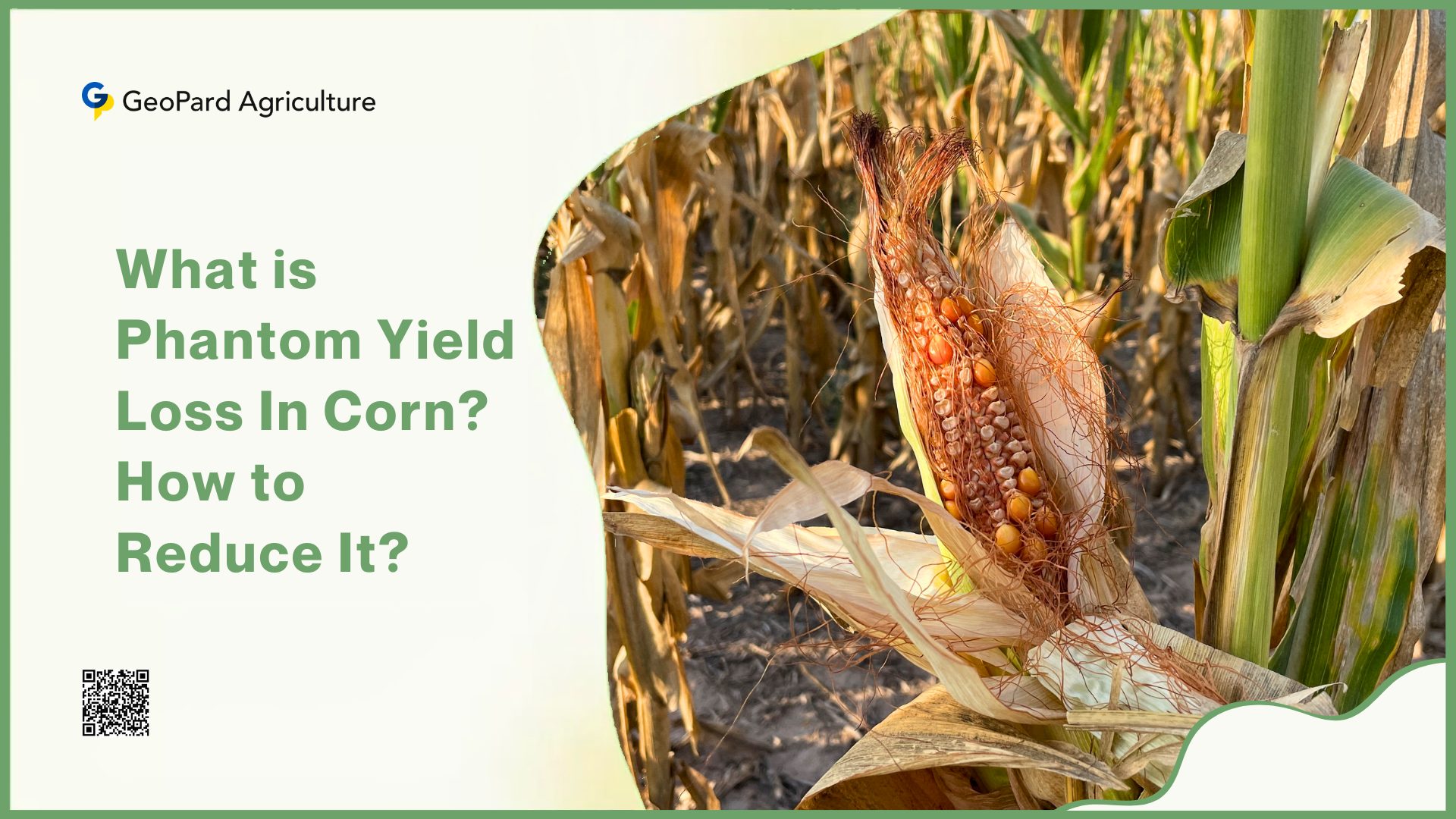
Corn, one of the world’s most essential crops, plays a pivotal role in global food production. However, farmers face numerous challenges in optimizing corn yields, with one significant factor being phantom yield loss.
It is the loss of potential yield that occurs when corn is left to dry down naturally in the field beyond a certain point. It happens because the corn kernels continue to respire and lose weight as they dry, reducing their mass and quality. It is not visible to the eye, but it can have a significant impact on your profits.

According to Eric Frank, a Channel Seedsman based in Frankfort, Indiana, it is “a yield hit that happens to corn when you don’t start harvest earlier. It occurs because you allow the crop to naturally dry down to a certain point before harvest. When it loses that much moisture in the field, it basically cannibalizes itself a little bit.”
How kernel respiration contribute to it?
It happens because the kernels are still alive after reaching black layer, and they continue to respire and use up their stored sugars and starches. This metabolic activity reduces the mass of the kernels and lowers their test weight and quality.
Kernel respiration is the process by which kernels use oxygen and glucose to produce energy, carbon dioxide, and water. It is a normal metabolic activity that occurs throughout the kernel development and maturation stages.

However, kernel respiration does not stop at physiological maturity, when the black layer forms at the tip of the kernel. The kernel remains alive until it is dried down to a low enough moisture level (around 15%) to kill it. During this period, the kernel continues to respire and lose dry matter.
How much yield can you lose due to it?
That depends on several factors, such as the hybrid, the weather, the soil type, and the harvest timing. However, some studies have shown that it can range from 5 to 15 bushels per acre or more.
For example, in 2020, Farm Journal Field Agronomist Missy Bauer conducted a test plot in an irrigated field with one hybrid. She harvested part of the field on September 23, when the moisture level was 27.9%, and the rest of the field on October 30, when the moisture level was 18.4%. She found that the early harvest yielded 15.6 bushels per acre more than the late harvest, at 214.2 versus 198.6 bushels per acre.

However, a general rule of thumb is that it starts to occur when corn moisture drops below 13% to 16%. According to some studies, it can range from 0.5% to 1.6% per point of moisture below 15%. This means that a farmer who harvests corn at 12% moisture instead of 15% could lose up to 4.8% of yield due to it alone.
Some further studies have reported yield losses ranging from 5 to 15 bushels per acre with later harvest dates. For example, a five-year study in Nebraska found that yield declined by an average of 9.1 bushels per acre with later harvest, regardless of the change in grain moisture or the duration of time between harvest dates. Similarly, a study in Michigan showed an average yield advantage of 8.9 bushels per acre for earlier harvest.
How to measure it?
The best way to measure it is to compare the yields of corn harvested at different moisture levels in the same field. This can be done by harvesting a portion of the field early, when the corn is still wet (around 25% to 30% moisture), and another portion later, when the corn is dry (around 15% or lower).
The difference in yields between the two portions represents the amount of loss that occurred in the field. For example, if the early-harvested corn yielded 200 bu/acre and the late-harvested corn yielded 190 bu/acre, then the yield loss will be 10 bu/acre or 5%.
Factors that contribute to phantom yield loss
Here are some of the hidden or less apparent factors that contribute to yield loss:
1. Kernel size and shape: Modern corn hybrids have larger and deeper kernels than older ones, which means they have more mass to lose during respiration.
According to Farm Journal Field Agronomist Missy Bauer, today’s kernels average 70,000 to 76,000 per bushel, compared to 90,000 in the past. This means that each kernel has more impact on the final yield and that it can be more significant with newer genetics.
2. Kernel moisture content: The moisture content of the kernels determines how much water they can lose during respiration. The higher the moisture content, the higher the respiration rate and the potential for yield loss.
According to Channel Seedsman Eric Frank, it starts to occur when the kernel moisture drops below 16%. He recommends harvesting corn between 20% and 25% moisture to avoid losing too much weight and quality in the field.
3. Weather conditions: The weather conditions during the dry down period can affect the rate of respiration and yield loss. High temperatures, low humidity, wind and sunlight can increase the evaporation of water from the kernels and accelerate the weight loss.

Conversely, low temperatures, high humidity, rain and cloud cover can slow down the evaporation and respiration processes and reduce the yield loss. However, these conditions can also increase the risk of mold, disease and insect damage, which can also lower the yield and quality of corn.
4. Harvest timing: The harvest timing is a crucial factor that determines how much it occurs in a corn crop. Harvesting too early can result in high drying costs and lower test weight, while harvesting too late can result in excessive loss and lower grain quality.
The optimal harvest timing depends on several factors, such as hybrid maturity, grain elevator discounts, weather forecast, field conditions and equipment availability. Frank advises farmers to monitor their fields closely and adjust their harvest plans accordingly.
Meanwhile, farmers may face unfavorable conditions that delay or interrupt their harvest plans, such as rain, hail, frost, or snow. These events can damage the stalk integrity and increase the risk of lodging, ear drop, or mold infection, which can further reduce the yield and quality of corn.
How to avoid or reduce it? The early harvesting!
The best way to avoid loss is to harvest corn at the optimal moisture level and use controlled drying methods. Harvesting corn at a higher moisture level (around 20% to 25%) can help preserve kernel weight and quality, as well as reduce field losses due to ear drop, stalk lodging, insect damage, mold growth, and mycotoxin contamination.
However, harvesting wet corn also requires proper drying and storage facilities to prevent spoilage and quality deterioration. Controlled drying methods, such as natural air drying or low-temperature drying, can help reduce kernel damage and shrinkage during the drying process.

Additionally, farmers should consider the economic factors involved in harvesting wet corn versus dry corn. These include grain elevator discounts or premiums for moisture content, drying costs or savings, storage costs or savings, and potential yield or quality losses or gains.
By weighing these factors and using reliable data from their own fields or local sources, farmers can make informed decisions about when to harvest their corn and how to dry it efficiently and effectively.
Another way is to choose hybrids that have good standability and resistance to diseases and pests that can affect stalk strength and ear retention. You can also use agronomic practices that promote healthy plant growth and development, such as proper fertilization, weed control, irrigation, and pest management.
Does PYL can affect other crops?
Yes, it can affect different crops, but not all in the same way. It can harm crops with a lot of moisture content when they are fully grown and take a while to dry out in the field. However, some crops are more at risk than others, based on their seeds, how they respire, and the environment.
Take soybeans, for instance. They’re less likely to have a big PYL problem compared to corn. This is because soybeans have less moisture content when they’re ready to be harvested (about 50% compared to corn’s 70%) and they dry out faster in the field (about 10 days compared to 30 days for corn).
Yet, if soybeans aren’t harvested until they have more than 13% moisture content, they can still lose weight and quality due to breathing, breaking apart, or getting infected by fungi.
Wheat, on the other side, is more at risk than soybeans. This is because wheat has more moisture content when it’s time to harvest (about 60% compared to soybeans’ 50%) and it takes longer to dry out in the field (about 20 days compared to 10 days for soybeans).
Wheat can lose up to 10% of its weight if it’s not harvested until it has more than 14% moisture content, thanks to breathing, breaking apart, sprouting, or diseases.
Other crops like barley, oats, rye, sorghum, sunflower, canola, and alfalfa can also suffer from PYL. How much they’re affected depends on the crop’s makeup, genes, how they’re taken care of, and the weather. That’s why it’s crucial for farmers to keep an eye on their crops’ moisture levels and harvest them at the best time to avoid unnecessary losses.
How GeoPard’s Automated Yield Cleaning and Calibration Can Help with PYL?
At the heart of GeoPard’s solution lies a suite of features designed to automate the cleaning and calibration of yield data. The technology systematically identifies gaps or skips in the yield dataset, ensuring a more reliable representation of actual yields.

By leveraging advanced algorithms, it enhances the precision of monitoring, providing farmers with a trustworthy foundation for decision-making. One of the standout features of GeoPard’s technology is its ability to fill lacked data with synthetic yield maps.
In situations where data gaps exist, it generates synthetic yield maps that seamlessly integrate with the existing dataset. This innovative approach not only ensures a comprehensive yield record but also contributes to a more accurate understanding of crop performance.
The application of GeoPard’s automated cleaning and calibration technology directly translates to a reduction in phantom yield loss. With a more accurate representation of crop yields, farmers can make better-informed decisions regarding crop management, resource allocation, and harvesting timelines. It empowers agricultural stakeholders to overcome the challenges associated with inaccurate data, ultimately leading to improved overall productivity.
Conclusion
It is a subtle yet significant challenge in agriculture, requiring a comprehensive approach to crop management. By recognizing less apparent factors impacting yield, farmers can take proactive measures. Precision farming, soil health management, microbial interactions, climate-smart practices, and crop genetics advancements form a roadmap to address it. Embracing this holistic perspective enables the agricultural community to foster sustainable and resilient food production systems amidst evolving challenges.
Yield