What is the best type of fertilizer?

The best type of fertilization always requires the use of the best fertilizers. The best type of fertilizer for your plants depends on what you are trying to grow, and what types of soil you have. If you are growing vegetables in your garden you will want to choose a fertilizer that has high levels of nitrogen, phosphorus, and potassium.

Nitrogen helps produce green leaves and stems, phosphorus helps produce root development, and potassium helps the plant withstand stress from heat or cold.

A good all-purpose fertilizer would be a 10-10-10 NPK (nitrogen, phosphorus, and potassium). This type of fertilizer will work well for most plants and soil types.

If your soil is sandy or clay-based then you may want to use a fertilizer that has more phosphorus as well as a higher NPK value such as 15-15-15 since sandy soils don’t hold nutrients well and often need more nitrogen than clay-based soils do.

If you are growing flowers or fruit trees then it is best to use a slower release type of fertilizer such as an Osmocote slow-release granular fertilizer which works great when used in conjunction with organic mulches like straw or pine needles which provide some extra nutrients while also holding in moisture around the base of your plant.

There are many different types of fertilizer available and each one has its strengths and weaknesses. For instance, liquid fertilizers work quickly but are often expensive and can be hard to apply evenly. Pelleted fertilizers are easier to apply evenly but may take longer for the nutrients to become available for the plants.

Organic fertilizers like composted manures and alfalfa meals can be beneficial but they need time to break down to work well. Some organic liquid feedings are beneficial for plants that need a quick boost of nutrients but these don’t last very long either.

When deciding which type of fertilizer might be best for your garden, it’s important to consider what kind of plants you have and what their needs are at this stage in their lives. There are numerous methods for delivering nutrients to your plants. Many gardeners employ a variety of fertilizers and strategies in their gardens.

To address minor deficiencies or immediately stimulate development, try employing granular goods or manures to offer the key nutrients and water. Understanding what nutrients your plants require is crucial when choosing a fertilizer. Plants require nutrients to flourish, which they acquire through their root system from the soil.

Fertilizers feed plants with the major nutrients (nitrogen, phosphorus, and potassium, as well as crucial minor elements). The soil’s productive capability decreases with each harvest unless nutrients are supplemented.

Types of fertilizer

In general, there are two common types of fertilizers. They include organic and inorganic fertilizers.

1. Organic fertilizers

These are made from natural materials such as manure, compost, and peat moss. Organic fertilizers are generally easier on the environment, but they are slower acting than chemical fertilizers and they can cost more money. Some organic fertilizers have special properties that help to condition soil and improve its structure over time.

Organic fertilizers are derived from plant or animal sources. They provide nutrients for plants through decomposition. The most common organic fertilizer is composting material from an animal source (such as manure or composted chicken litter). This type of fertilizer helps retain moisture in the soil and adds essential nutrients to it.

It also provides a habitat for beneficial insects like earthworms that aerate the soil and improve its drainage capacity by bringing down deep-rooted plants from the topsoil layer to the subsoil layer where it can be accessed by the roots of most plants.

Organic fertilizers are generally considered more environmentally friendly than synthetic ones because they don’t pollute the soil or groundwater like chemicals might. However, all fertilizer can be harmful to your plants if used incorrectly — you have to know how much fertilizer to use as well as when and how to apply it.

two common types of fertilizers

2. Inorganic fertilizers

These are made from chemicals such as nitrogen (N), phosphorus (P), and potassium (K). These chemicals can be found in many different combinations to match the nutrient needs of specific plants. Inorganic fertilizers can be very effective, but some people worry about using them because they may run off into local water supplies or damage soil organisms like earthworms.

Inorganic fertilizers are often used when planting new plants or seeds in soil because they help plants get established quickly. This means that plants can produce more fruit and vegetables per plant than if they were growing in soil without any additional nutrients added to it.

For example, if you’re starting a garden from scratch, you may want to use chemical fertilizers until your plants are big enough to eat organic food waste. Inorganic fertilizers can also be used as a supplement for organic gardening methods. Inorganic fertilizers do not contain any organic matter and can be used on all plants.

They are easy to apply and may be water-soluble or granular. They are less likely than organic fertilizers to burn plant roots, which makes them suitable for delicate plants like seedlings and houseplants. They are less expensive than organic fertilizers.

Types of inorganic fertilizers

1. Nitrogen fertilizers

In Europe, nitrate-based fertilizers are the most widely used direct fertilizers. Nitrate-based fertilizers such as ammonium nitrate (AN) and calcium ammonium nitrate (CAN), which are well adapted to most European soils and climatic circumstances, and urea and urea ammonium nitrate (UAN) aqueous solutions, which are widely used in other areas of the world, are the primary products.

Ammonium sulfate and ammonium sulfate nitrate, calcium nitrate, sodium nitrate, Chilean nitrate, and anhydrous ammonia are some of the other straight nitrogen fertilizers. Nitrogen is an essential plant nutrient, but too much of it can lead to “nitrogen burn,” which causes leaf discoloration and even death.

To avoid this, use a fertilizer that’s high in nitrogen (N) only on actively growing plants (check labels) and at half their recommended dosage.

2. Nitrogen fertilizers with inhibitors

Nitrogen immobilization, denitrification, volatilization, and leaching can all occur as a result of certain climate conditions and soil properties, lowering fertilizer efficiency.

As a result, the fertilizer industry has created specialized fertilizers to mitigate these consequences. Foliar, delayed, and controlled release fertilizers, as well as fertilizer additives like urease and nitrification inhibitors, are among them.

3. Phosphorus fertilizers

Single superphosphate (SSP), triple superphosphate (TSP), monoammonium phosphate (MAP), di-ammonium phosphate (DSP), and ammonium polyphosphate liquid are the most prevalent phosphate fertilizers.

For efficient application, different fertilizer formulations have distinct release profiles and require different spreader settings. Phosphorus is also essential for healthy growth, but it doesn’t move beyond the root zone as easily as nitrogen does.

Because phosphorus needs to be applied more frequently than nitrogen, choose a slow-release product that will provide a steady supply of phosphorus throughout the season.

4. Potassium fertilizers

Potassium is also found in a variety of fertilizers, including potassium chloride (KCl), potassium sulfate (K2SO4) or sulfate of potash (SOP), and potassium nitrate (KNO3), often known as KN, which contain potassium alone or in combination with two or more minerals.

Potassium is a secondary element that helps plants resist disease and improve overall vigor. Look for potassium sources like potash sulfate or muriate of potash on product labels; they’re usually listed as K2O or KClO3.

5. Calcium, magnesium, and sulfur fertilizers

Secondary plant nutrients such as calcium (Ca), magnesium (Mg), and sulfur (S) are necessary. They are frequently used in conjunction with the major nutrients N, P, and K rather than as standalone fertilizers. Straight N fertilizers like ammonium nitrate or urea frequently contain sulfur.

Single superphosphate (SSP), potassium sulfate (SOP), and potassium magnesium sulfate (Kainite) are further sulfur sources, with the last also containing magnesium. Kieserite is a magnesium sulfate material that is mined and used in agriculture as a fertilizer, mostly to treat magnesium deficiency.

Calcium is mostly used in the form of calcium nitrate, gypsum (calcium sulfate), or lime/dolomite (calcium carbonate), with calcium nitrate being the only commonly available calcium source in plants.

6. Micronutrient fertilizers

Currently, a wide range of specialized fertilizers is readily accessible to provide plants with essential micronutrients including iron, manganese, boron, zinc, and copper. These might be inorganic or organic chemicals, with the latter being separated into water-soluble and non-soluble varieties.

7. Inhibitors

In today’s EU, there are two major types of inhibitors available to farmers. Nitrification inhibitors are chemical substances that restrict the activity of Nitrosomonas bacteria in the soil, delaying the nitrification of ammonium. The goal is to keep ammonium in a soil-stable state while slowing its conversion to nitrate.

This temporarily lowers the proportion of nitrate in the soil, lowering the risk of nitrate leaching into water or the generation of N2O gas in the atmosphere. Urease inhibitors are chemical substances that prevent the hydrolysis of urea in the soil, which can result in NH3 emissions, from occurring before it is transformed into ammonium.

They help to drastically reduce ammonia emissions into the atmosphere, which is one of the major air pollutants. For a better grasp of nutrients and their health benefits, here’s a spreadsheet:

Table of Nutrients

Nutrient Where It Comes From What It Does
Nitrogen (N) The atmosphere Vital in protein formation
Phosphorus (P) Shallow rock deposits formed by the decay of ancient sea life Crucial for photosynthesis and other cellular processes
Potassium (K) Deep rock deposits left behind by evaporation of ancient seas Aids in the production of higher quality crops
Calcium (Ca) It can be found around the globe in rocks like dolomite and limestone Strengthens plant structure
Magnesium (Mg) China has substituted the United States as the biggest supplier Vital for the formation of chlorophyll
Sulfur (S) Commercial deposits are found in volcanic regions like Sicily, Indonesia, and Japan. It’s very important for the production of amino acids
Boron (B) Primary sources of borax ore are Turkey and the United States Important for healthy cell growth and pollen formation
Chlorine (CI) Salt deposits (sodium chloride) found around the world Assists plants in managing water stress
Copper (Cu) The largest producers are Chile, the United States, Indonesia, and Peru The essential catalyst for chemical reactions found in plant cells
Iron (Fe) The largest producers include China, Brazil, Australia, India, and Russia An important catalyst for chemical reactions within plant cells
Manganese (Mn) The most vital sources are Ukraine and South Africa Aids plants in making chlorophyll and regulates various important enzymes
Molybdenum (Mb) Key suppliers are China, Russia, the United States, Canada, and Chile. Aids plants in using N and P more efficiently
Nickel (Ni) Key producers include Canada and Siberia (Russia) Enables plants in regulating biochemical processes
Zinc (Zn) Large deposits in Australia, Canada, and the United States Assists plants in forming proteins, starches, and growth hormones

Organic fertilizers

Organic fertilizers consist primarily of crop leftovers, animal manures, and slurries. They are usually available on the farm and the nutrients and organic carbon they contain are recycled, despite their diverse nutritional worth.

Animal manures and slurries include a variety of nutrition sources with varying physical qualities and nutrient concentrations. Furthermore, its nutrient content varies by region and is dependent on the type of animals and farming technique used.

Organic fertilizers consist primarily of crop leftovers

GeoPard is a complete and easy-to-use crop monitoring and data analytics software that helps farmers and agribusinesses to organize better crop monitoring and provide better data analytics. If you are a farmer or an agribusiness, you know how important it is to collect information on your crops, fields, or farms.

For example, the weather forecast can help you decide when it should be planted, but it doesn’t show you the actual conditions in your field. You need more information about soil temperature, humidity, and other characteristics of your land.

The only way to get this information is through manual observations. This is time-consuming and costly for farmers.

GeoPard helps you organize better crop monitoring by collecting all types of data from different sources: satellite maps, weather forecasts, sensors located in your field (for example soil sensors), etc.

With GeoPard you can track any changes in your fields over time — for example changes in soil moisture or temperature — easily compare them with other fields (whether they have similar characteristics) or make comparisons with historical data from previous years.

With GeoPard, you can easily track the status of your crops, whether they are in the field or at home. You can also monitor the health of your crops and identify any potential problems before they become serious issues.

GeoPard is designed to help farmers gather all their data in one place so they can easily monitor their farm’s performance. The software also offers insights into historical data, so you can see how your farm has changed over time and make informed decisions about future activities.


Frequently Asked Questions


1. Which fertilizer is best for plants and is useful for gardening?

The best fertilizer for plants largely depends on their specific needs. Generally, a balanced fertilizer containing equal parts nitrogen, phosphorus, and potassium (NPK) can provide essential nutrients for overall growth.

However, it’s crucial to consider factors such as soil type, plant species, and stage of growth. Conducting a soil test and consulting with gardening experts can help determine the most suitable fertilizer, ensuring optimal plant health and productivity.

2. What are fertilizers? What they do for plants?

They are substances that provide essential nutrients to plants to support their growth and development. These nutrients include nitrogen, phosphorus, and potassium, as well as secondary and micronutrients.

They are typically applied to soil or directly to plants to replenish nutrient levels and enhance their health and productivity. They come in various forms such as granules, liquids, and powders, and can be organic or synthetic in nature.

3. What fertilizer has nitrogen phosphorus and potassium?

A fertilizer that contains nitrogen, phosphorus, and potassium is often referred to as an NPK fertilizer. This type of fertilizer is specifically formulated to provide a balanced combination of these essential nutrients. The proportions of nitrogen, phosphorus, and potassium can vary in different NPK fertilizers, depending on the specific needs of plants and their growth stages.

4. How does fertilizer work?

They work by supplying essential nutrients to plants. When applied to the soil or directly to plants, they release nitrogen, phosphorus, potassium, and other micronutrients that plants need for various biological processes.

These nutrients are absorbed by plant roots and used for functions like photosynthesis, cell division, and the production of proteins and enzymes. By replenishing nutrient levels in the soil, they ensure that plants have an adequate supply of nutrients to support their metabolic activities and achieve optimal health and productivity.

5. Is osmocote fertilizer organic?

It is not classified as organic. It is a synthetic or inorganic that is commonly used in gardening and agriculture. Osmocote is a controlled-release fertilizer that contains a balanced blend of nutrients encapsulated in a resin coating.

While it provides essential plant nutrients over an extended period, it does not meet the criteria of organic fertilizers, which are derived from natural sources like compost, manure, or plant-based materials.

6. What is fertilizer made of?

They are made of various components that provide essential nutrients for plants. They typically contain three main nutrients: nitrogen (N), phosphorus (P), and potassium (K). These nutrients can be derived from both organic and inorganic sources.

Inorganic fertilizers often use mineral salts as their sources, while organic are derived from natural materials such as compost, manure, or plant residues. Additionally, they may also contain secondary and micronutrients like calcium, magnesium, iron, and zinc, depending on the specific needs of plants and soil conditions.

7. What is 30-0-10 fertilizer used for?

A 30-0-10 fertilizer is primarily used for promoting healthy lawn growth. The numbers in this fertilizer represent the percentage of nitrogen (30%), phosphorus (0%), and potassium (10%) it contains.

With a high nitrogen content, it stimulates lush green foliage and helps with overall grass development. The absence of phosphorus suggests that the soil already has sufficient levels of this nutrient, while the potassium component supports root growth and enhances the lawn’s resilience to stress and diseases.

8. Is 20-20-20 fertilizer good for tomatoes? does it go bad?

It can be suitable for tomato plants, especially during their early growth stages. This balanced ratio of nitrogen, phosphorus, and potassium promotes healthy foliage, root development, and fruit production.

However, as tomato plants mature and start fruiting, a fertilizer with a higher phosphorus content may be more beneficial. Regarding whether fertilizers go bad, if stored properly and kept dry, most fertilizers have a long shelf life.

9. How often should i fertilize my lawn?

The frequency of lawn fertilization depends on several factors, including the type of grass, soil conditions, climate, and the specific type being used. As a general guideline, it is recommended to fertilize your lawn two to four times per year.

However, it’s crucial to follow the instructions on its packaging or consult with a local gardening expert to determine the best fertilization schedule for your specific lawn.

10. How to fertilize a plant?

Fertilizing a plant is a straightforward process. Start by selecting the appropriate fertilizer based on the plant’s needs. Follow the instructions on the its packaging for the recommended dosage.

Gently apply it around the base of the plant, avoiding direct contact with the leaves. Finally, water the plant thoroughly to help the nutrients penetrate the soil and reach the roots.

It’s important to follow the recommended fertilization schedule and adjust based on the specific plant species and growth stage for optimal results.

11. How to make soil acidic?

To make soil acidic, you can take a few steps. First, test the pH of the soil using a soil testing kit. If the pH is higher than desired, you can add amendments such as elemental sulfur or peat moss to lower the pH. These materials release acidic compounds when they break down.

Mix the amendments into the top layer of soil and water thoroughly. Repeat the process periodically, monitoring the pH to maintain the desired acidity level for plants that thrive in acidic conditions.
Benefits of variable rate fertilizer application

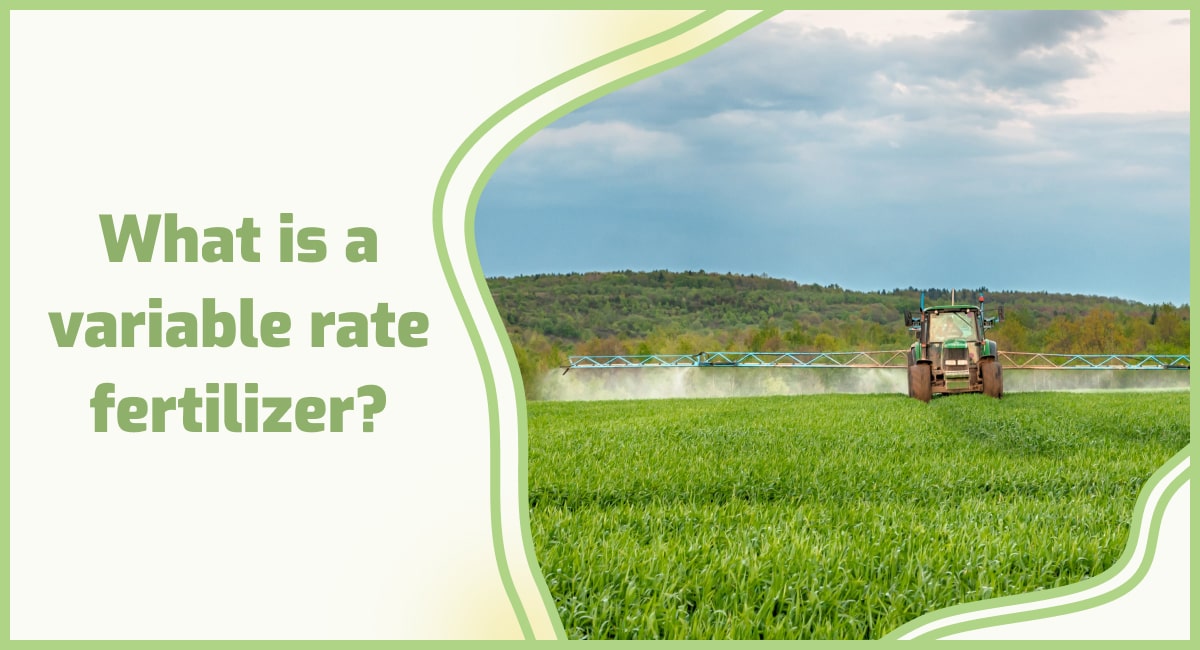
When you are hearing of Variable Rate Fertilizer (VRF) for the first time, then, you need to understand that this involves the use of conflicting rates and even types of fertilizers on different soil areas in a given piece of land based on a pre-set field map that is generated depending on all kinds of information. The main goal is to balance fertilizer application and heighten crop production, but again, VRF invites lots of challenges.

Of all the challenges, the first one is mainly for farmers to choose whether there is adequate soil variation within the fields to warrant the financing of coming up with accurate fertilizer maps.

As for the costs, private agronomists do charge about $5 to $15 per acre or even higher amounts for other VRF services. Besides that, the cost varies according to the kind of technologies used, the value of variable rate fertilizer information given, and the extent of analysis and soil sampling done.

The important section of annual cropland across the Prairies of Western Canada possesses adequate variability in surface physical and chemical traits in the lands to allow for the use of a certain quantity of variable rate fertilization.

A general law is that lands with rolling topography possess a good potential for adopting the use of VRF technology, as opposed to the fields having uniform topography always not having adequate soil variation to allow for the use of VRF technology.

Immediately a choice has been made to allow for the use of variable rate fertilizer technology, the tiresome drawback for landowners and crop consultants is to build “effective” variable rate fertilizer prescription maps.

For this to be attained, conflicting soil handling zones have to be known first. Below are some of the questions that farmer-owners have to inquire about:

Which are the most valuable full soil factors that have to be delineated to find site-specific management sections that possess lower, medium, and even higher crop production chances on their field?

These variable factors may include things such as depth of topsoil, present quantities of N, P, K, or S, a variation in the soil texture, soil organic matter quantities, and lastly the depth of the subsoil among many others.

Which are the highly vouched for methods to find site-specific or topography management sections in the lands? The information may involve things such as satellite imagery, land topography map, crop production maps, and aerial photos among many others.

The most crucial is field-specific farmer proficiency and awareness that does not go beyond the $10 per acre when priced by VRF firms.

How variable are soul test N, P, K, and S quantities in a field and across the known soil management sections? How do crops respond to all the applied fertilizers depending on every year?

How will you or even your crop advisor find out about the highest levels of fertilizer types and rates for each of the management sections to balance economic returns for variable lands? For instance, will you use more fertilizer or less fertilizer on eroded knolls or less productivity against higher yield sections?

Tools for generating management zones

Firstly, to get to know the soil variability found on their lands, farmers can choose to use aerial photos of their lands, crop yield maps, provincial soil survey maps, and also their general knowledge of crop yields in their lands.

It can be a very good beginning, though always, more deep information may be required. Industry agronomists possess different approaches to the best ways to come up with fertilizer prescription maps. They use a range of approaches to produce different kinds of field maps and each one of them has advantages and drawbacks:

Crop production maps – they can be generated when produced and geographic position data are all keyed in during the harvest with your combine. Yield maps are important to tell the higher, medium, and even lower-productive sections within a piece of land.

The problem is to get to know the major aspects that contribute to higher and lower production chances. Unfortunately, conflicting yielding sections are not necessarily well correlated with differences found in the soil forms and also the level of soil fertility.

Further complicating the process, yield maps always vary mostly every year making it very hard to delineate conflicting land management sections.

Soil texture maps – it is commonly assumed that land sections having higher clay content tend to possess higher water retaining capacity, therefore, possess higher crop production chances. Soil texture maps are produced based on information gathered through an EM 38 or even Veris.

All of the technologies try to measure the available electrical conductivity of the soil via the application of sensors since they are better conductors as compared to sandy textured soils. This makes clay provide higher sensor reading against sandy soils.

But again, the readings are higher on wetter against drier soils, and whenever soil salts are higher against lower. At the moment there are no ways that these instruments can differentiate the causes of higher against lower readings.

Apart from that, such technologies should be avoided whenever the soils are frozen since frozen soil moisture such as ice will not make the instruments respond similarly to liquid moisture such as water. With all that, the ability to find exact soil texture maps is doubted by some researchers and even agronomists regarding their validity and accuracy.

Soil salinity maps – whenever slight to moderate quantities of salts is a most likely problem for your land, coming up with a salinity map by EM 38 or Veris technology can be used.

After that, fertilization rates can be lowered based on the quantities of soil salinity to equal lower crop yield potential. An accurate salinity map is an important tool if soil salinity is a challenge in your land.

Soil organic matter and pH maps – Apart from soil texture, some machines use on-the-go mapping of other soil properties including organic matter and pH. Near-Infrared (NIR) spectral measurements are said to correlate with soil organic matter, soil pH buffer quantity, and soil moisture and soil carbon.

Satellite imagery maps – maps are capable of finding higher against lower yield sections of land. For instance, Near-Infrared satellite imagery is utilized to find much about plant growth. Higher relative biomass production sections in fields are assumed to be related to higher crop production potential. Many firms use imagery to delineate crop management sections in a land.

Besides that, imagery information has a high chance of changing during the planting season and is always variable every year. With that, interpreting this information is difficult. For that given reason, imagery from many good yield years is generally used to find sections with a piece of land having consistent higher or lower yields.

Again, satellite imagery has the same drawbacks as using crop production maps. The main aspects that lead to the differences in crop biomass potential within a piece of land must be known. It is crucial to know if the differences in biomass are associated with the differences in the soil forms and also soil fertility, or even other crop yield aspects.

Topography maps – can be important when creating fertilizer prescription maps. Well, the topography is a big soil-forming aspect that impacts how variable soils have generated on variable sections.

Incorporating variable rate fertilizer application in your farm

Below are the steps that one can use to incorporate variable rate fertilization in his or her land:
Conduct systematic soil sampling on the land and then lab analysis of the soil. Doing so will make you understand the nature of the soil found on your land and from there you can find the rate of fertilizer that you are to use to make the soil properties reach the needed quantity.

Come up with farm-specific maps of the soil nutrient quantities in your field. The maps are to use by the one applying to know the quantity of fertilizer to be applied in certain points of your field according to the needs of every given section.

Utilize the information on analyzed soil properties and farm-specific maps to create a nutrient prescription map that is site-specific. Utilize the nutrient prescription map to regulate and allow the fertilizer variable applicator to complete everything.

Nitrogen application based on multi-layer analytics

Knowing how to achieve maximum yield with the right fertilizer is an ideal way of managing nutrients. A good supply of nitrogen results in healthier roots.

Therefore, more nutrients are captured and those that remain in the soil are reduced. Better precision and timing when fertilizing also reduce residual nitrates that can leach below the root zone and into the groundwater.

By improving the efficiency of nitrogen usage, your farm thrives now and in the future – increasing yields while reducing your impact on the environment. Digital tools can help you accurately choose the right nitrogen application rate, specific to your growing space, in real-time.

As a farmer, you should know that you can calculate the nitrogen use efficiency of your crops with GeoPard. Leopard precision tools are designed to meet the specific needs of your crop and our precision application techniques adapt to different locations and soil types, as well as different weather conditions.

P, K application based on soil sampling data

Potassium and phosphorus fertilization play a fundamental role in plant nutrition. Its deficiency can cause damage to the crop and loss of productivity. It is interesting to keep potassium levels always within the requirements of the plant’s needs and maintain soil fertility.

Potassium fertilization should preferably be carried out at the sowing of the crop, facilitating management and practice. Attention should be paid to symptoms of deficiency and the monitoring of soil fertility using tools such as soil fertility analysis and harvest maps.

How to calculate nitrogen deficiency map based on Target Yield

Nitrogen is key to vegetation: to the formation of chlorophyll, vital for photosynthesis the way plants get food. It is necessary for plant development: amino acids, DNA, membrane proteins, enzymes, most coenzymes, auxins, cytokinins, and cells.

If it is missing, a nitrogen deficiency occurs. On the contrary, its fixation and correct supply guarantee adequate growth and the full production capacity of the crops. Among the consequences of nitrogen deficiency is a low level of protein in cereals, for example, maize and wheat.

When plants lack nitrogen, it can be supplied by organic or chemical methods. This idea is aimed at preventing nitrogen deficiency in plants. The chemical contributions are made with fertilizers that include synthetic nitrogen to try to make the affected plants recover.

Some examples of chemicals that correct nitrogen deficiency are urea or ammonium nitrate. Before thinking of applying any of these chemicals, a soil test must be carried out to adjust the soil’s pH and nutrient content to avoid harming the plants with a different problem at the expense of solving this one.

Calculate N Removal with GeoPard

By knowing the exact amount of removal of one or another element, we can easily calculate the doses of mineral fertilizers to replenish the stock of the content of nutrients.

With the cost of mineral fertilizers, which is only growing every year, one has to think about using additional funds that reduce the number of fertilizers applied.

One of these nutrients is nitrogen. How do you calculate the nitrogen of the current nitrification?

It is easy to calculate. You can take the content of nitrate nitrogen at the start, remove the crop, and at the end measure how much nitrogen has been removed by the removal of the crop. You will get to know the difference accumulated over this period. All values ​​are not fixed, as they depend on many factors.

It seems like a simple formula, but the topic is so extensive that you need to understand each of the indicators, and analyze it personally: how it will be calculated in a particular case, and what component it will have. To know more about this, you can check how to Calculate N Removal with GeoPard.

Summary

GeoPard leads in helping you implement Variable rate fertilizer application on your farm through several services such as:

  • Zones creator and managed automation
  • Set rates
  • Customize
  • Multi-layer analytics
  • Field Stability maps
  • Among many others

Frequently Asked Questions


1. How much to charge for fertilizer application?

The amount to charge for fertilizer application can vary based on several factors. These factors include the size of the area to be treated, the type of fertilizer being used, the equipment and labor required, and local market rates.

It is advisable to research local competitors and consult with industry professionals to determine a fair and competitive price. Consider the costs associated with materials, labor, equipment, and any additional services provided to arrive at a reasonable pricing structure that reflects the value of your expertise and ensures profitability.

2. How to calculate fertilizer rate?

Calculating the fertilizer rate involves a few simple steps. First, determine the nutrient requirement of the specific crop or plant you are fertilizing. This can be based on soil test results or general guidelines.

Next, determine the area to be fertilized in square feet or acres. Divide the nutrient requirement by the area to get the amount of fertilizer needed per unit of area.

Finally, based on the nutrient content of the fertilizer, calculate the quantity of fertilizer needed to meet the desired nutrient rate. Remember to adjust for any variations in application efficiency or specific crop requirements.

3. When to apply fertilizer?

The timing for fertilizer application depends on the type of plant and the specific growth stage. Generally, it is recommended to apply fertilizer during the active growing season. For most plants, this means applying fertilizer in early spring before new growth starts.

However, it’s important to consider the specific recommendations for the plant species and any regional or climate-specific considerations. Additionally, some fertilizers may have specific instructions for application timing, so it’s best to follow the instructions provided on the fertilizer packaging or consult with a gardening expert for optimal results.

What is the difference between organic and synthetic fertilizers?

Very often farmers do not apply the right amount of organic or synthetic fertilizers. They apply more in the hope to get a higher yield. But it is important to get the right balance of nutrients because overfertilization can cause just as many problems as under fertilization. The symptoms show leaves that are overly large, soft, and dark green; stems are too soft and weak to stand; flowers are small, and roots grow slowly.

Plants obtain most of the nutrients they need for growth and metabolism in the form of ions such as ammonium, nitrate, phosphate, and potash. These ions are absorbed by roots and used to make amino acids that can be transported throughout the plant.

Plant growth and development are regulated by the availability of nutrients in the soil, and nitrogen represents a growth-limiting nutrient in natural ecosystems. Soil nitrogen and plant growth can be increased by treating the soil with nitrogenous fertilizers, but the level and type of nitrogen used must be carefully controlled.

High levels of nitrogen, especially ammonium, are toxic to some plants, and moderately high levels promote lush vegetative growth that is susceptible to pests and diseases. The increased pest and disease susceptibility observed in over-fertilized plants could be due to two processes.

Firstly, alterations to plant metabolism may make more nutrients available to pathogens (disease-causing organisms such as bacteria and fungi). Secondly, the complex biosynthetic pathways used to synthesize anti-microbial chemicals may be suppressed by high soil nitrogen, making plants less able to defend themselves against infection.

Intriguingly, some changes in plant physiology caused by high soil nitrogen resemble those caused by pathogen infection, which suggests that pathogens produce chemicals that inhibit and alter plant nitrogen metabolism in order to promote pathogen growth.

With the use of organic compounds containing nitrogen such as compost and manure, in which nitrogen is in a form that is slowly released and needs more time to transform into nitrogen that is more accessible to the plant we can achieve a more balanced nutrient uptake.

Slow absorption of nitrogen means that the plants will not have irregular development and be more resilient in the aspect of pest and disease attacks, as well as harsh environmental conditions.

What is synthetic fertilizer?

Synthetically derived fertilizer, as the name suggests, is a type of agricultural input that is made from naturally occurring raw materials such as air, natural gas, and various ores. In order to produce these fertilizers, there is a need for large amounts of energy and highly sophisticated factory processes.

What is a Synthetically Derived Fertilizer?

Most of them are highly water-soluble and provide a quick nutritional boost to the plants. For easier application, they can be made individually such as nitrate fertilizers or a combination of several basic nutrients (nitrogen, phosphorus, and potassium) with the addition of micronutrients (iron, manganese, boron, zinc, and copper).

Their formulation can be the following: ammonium nitrate (AN), calcium ammonium nitrate (CAN), urea ammonium nitrate (UAN), single superphosphate (SSP), triple superphosphate (TSP), monoammonium phosphate (MAP), di-ammonium phosphate (DSP) and ammonium polyphosphate liquid, potassium chloride (KCl), potassium sulfate (K2SO4) or sulfate potash (SOP), potassium nitrate (KNO3), potassium magnesium sulfate (Cainite) and many others.

For proper nutritional management and effective utilization of synthetic fertilizers, the producers must have some previous insights into the nutritional content in the fields. Such insights can be in the form of soil analysis data (average or site-specific), yield maps, vegetation indices, hyperspectral imaging, etc.

example of synthetic fertilizer

What is organic fertilizer?

Organically derived fertilizers are presenting the total opposite of synthetic ones. They are different in many ways, starting from their origin, the process of making up to their chemical compositions.

What is an Organically Derived Fertilizer?

These fertilizers are derived from organic matter that was under various decomposition and transformation processes that occur naturally prompted by microbes, fungi, and invertebrates.

Their composition is often containing almost every needed macro and micronutrient in a very complex form. Compared to the synthetically derived fertilizers, the organic ones can have a lower NPK content, but their decomposition and availability last much longer.

Organic fertilizers can be made from animals (bone meal, blood meal, manure, fish meal, shellfish), plants (compost, legumes, seaweeds), and rocks (sandstones and rock phosphate).

example of synthetic fertilizer

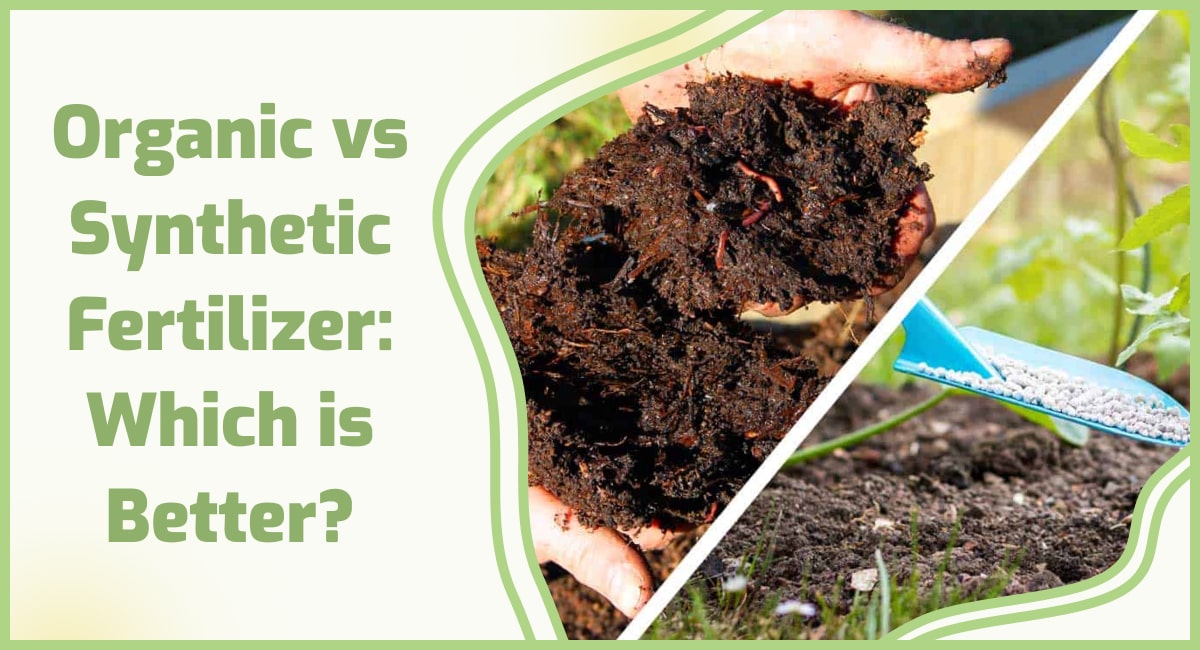
Organic vs synthetic fertilizers: What is the difference between them?

Although they have the same function, to nourish the planets in order to obtain needed nutrients for proper growth and development, the differences between organic vs synthetic fertilizers are the following:

difference between Organic fertilizer & synthetic fertilizer

Organic fertilizers Synthetic fertilizer
They often are more expensive than synthetic ones. Used by a larger portion of producers and is readily available in greater amounts which makes them cost-effective.
They are bulkier, which requires the implementation of specific mechanization larger than the conventional spreaders for pellets. Available in several forms (pellets, powder, granules, liquid, and other forms) and the mechanization for application i.e., disc spreaders are more available and cheaper than the spreaders for organic fertilizers.
Over application is rare. High risk of plant deterioration if they are not properly applied (excessive amounts, overlapping, non-treated areas).
Prevent soil degradation and promote biodiversity. Promote soil degradation resulting from soils with poor microbial activity.
Have water retention capacity, slow release of nutrients, and positively contributes to the sustainability of the soil. Fast release of nutrients with the higher ability for water runoffs leaching in the lower subsoils and underground waters.
They have applied once or twice annually, resulting in fewer agro-technical activities Need for several applications during the growing year, contributing to higher soil compaction from the frequent traffic of mechanization.
They consist of macro and micronutrients. Synthetically derived fertilizers have specific formulations that can contain macro or micronutrients, or both.

Can I use organic and synthetic fertilizers together?

Conventional and intensive agricultural production does not envision the usage of organic fertilizer due to the factors explained above in the table.

But with the fast-changing trends and more focus on sustainability and carbon sequestration, agricultural production or specifically the plant’s nutrition management can be also effectively performed by using a combination of organic and synthetic fertilizers.

This does not mean simultaneous usage, but rather carefully planned nutritional operations that will provide enough nutrients in every stage of plant development needed for achieving higher yields.

One example of such operations is the application of compost or manure before sowing or planting and the application of nitrate mineral fertilizers in crucial stages of plant development such as tillering and stem elongation in cereals or branching in vegetables.

Cost of organic and synthetic fertilizers

If we look at the nutritional content, time of production, transport, and labor requirement we can conclude that the process of manufacturing organic vs synthetic fertilizers is more expensive.

Although the nutritional content is far richer than the content in synthetic fertilizer, their concentration is lesser, meaning that the producer needs to apply a larger amount of organic fertilizer.

The manufacturing plants for synthetic can produce large amounts in a very short period of time, unlike the production of organic which is dependent on natural processes and specific environmental conditions (such example is the production of bio humus from vermiculture which needs approximately one year for the transformation of reasonable quantities of vermicompost).

Large quantities of fertilizer require substantial transportation logistics resulting in higher costs making the use of organic fertilizer more costly than synthetic ones. With the industrialization and the advanced manufacturing processes, the labor requirement is greatly reduced when compared to the production of organics which depend on labor-intensive operation and implementation of heavy mechanization.

Currently, several types of technologies are being developed that enable the reuse of waste materials, substances such as the content of municipal sewage to produce nitrogen and phosphorus, struvite (phosphorus mineral that is deposited in the human kidneys, but also in sewage pipes) for production of phosphorus or reuse of biological waste from intensive broiler production.

Such fertilizers are called bio-based fertilizers and their development might lead to the creation of mixed fertilizers that contain mineral fertilizers with the addition of specific microbes coating.


Frequently Asked Questions


1. What is synthetic?

Synthetic refers to something that is artificially created or manufactured, rather than being naturally occurring. In the context of materials or substances, synthetic products are made through chemical processes using non-natural ingredients or components.

Synthetic materials are designed to mimic or replicate natural substances, but they are not derived directly from natural sources. Examples of synthetic products include synthetic fabrics, synthetic chemicals, and synthetic drugs.

2. What is difference between manure and fertilizers?

Manure and fertilizers are both used to provide nutrients to plants, but there are key differences between them. Manure is organic matter derived from animal waste or decomposed plant material. It contains a mix of nutrients and organic compounds that improve soil fertility and structure.

Fertilizers, on the other hand, can be organic or synthetic and are formulated to provide specific nutrients in specific ratios. They are typically more concentrated and readily available to plants. While manure slowly releases nutrients over time, fertilizers offer more precise control over nutrient application.

3. What is difference between biofertilizer and chemical fertilizer?

Biofertilizers and chemical fertilizers differ in their composition and mode of action. Biofertilizers are made from living organisms such as bacteria, fungi, or algae. They work by enhancing nutrient availability through biological processes like nitrogen fixation or nutrient solubilization.

In contrast, chemical fertilizers are synthetically manufactured and contain concentrated nutrients that are readily available for plants. They provide precise and immediate nutrient supplementation. Biofertilizers are environmentally friendly, promote soil health, and have a slow-release effect, while chemical fertilizers offer quick nutrient availability but may contribute to environmental concerns if misused.

4. What is difference between natural and artificial fertilizers?

The main difference between natural and artificial fertilizers lies in their origin and composition. Natural fertilizers are derived from organic sources, such as animal manure, compost, or plant residues. Artificial fertilizers, also known as synthetic or chemical fertilizers, are manufactured through chemical processes and contain concentrated nutrients in specific ratios.

5. Is organic fertilizer better? What is it made of?

The question of whether it is better depends on various factors. It offer several benefits, such as improving soil structure, increasing microbial activity, and promoting long-term soil fertility. They are derived from natural sources and generally have lower environmental impact.

However, they may have lower nutrient concentrations compared to synthetic fertilizers, which can limit their immediate effectiveness. The choice between organic and synthetic ultimately depends on specific plant needs, soil conditions, sustainability goals, and personal preferences.

6. Does fertilizer expire?

Fertilizers can expire over time, although their shelf life can vary depending on factors such as the type of fertilizer and storage conditions. Moisture, extreme temperatures, and exposure to air can degrade the quality and effectiveness of fertilizers.

It’s important to check the expiration date on fertilizer packaging and use it before it expires for optimal results. If unsure about the viability of a fertilizer, it’s best to consult the manufacturer’s guidelines or a gardening expert for advice. Further, proper storage in a cool, dry place can help prolong the shelf life of fertilizers.

7. What is organic soil conditioner?

An organic soil conditioner is a natural substance used to improve soil quality and enhance its fertility. It is typically derived from organic materials such as compost, manure, peat moss, or plant-based residues.

Organic soil conditioners enrich the soil with beneficial organic matter, microorganisms, and nutrients, improving its structure, water retention, and nutrient-holding capacity.

They promote healthy root development, enhance soil aeration, and foster a balanced ecosystem, leading to improved plant growth and overall soil health. Organic soil conditioners are a sustainable and environmentally friendly approach to nurturing and maintaining healthy soils.

8. Is compost a fertilizer?

Compost is often considered a type of fertilizer, although it is more accurately classified as an organic soil amendment. Compost is created through the decomposition of organic matter, such as kitchen scraps, yard waste, or manure.

While compost does provide some nutrients to plants, its primary function is to improve soil structure, enhance water retention, and promote beneficial microbial activity. It enriches the soil with organic matter, making it a valuable addition for soil health and fertility.

9. How to tell when compost is ready?

Determining when compost is ready involves assessing its physical characteristics and level of decomposition. Ready compost should have a dark brown color, crumbly texture, and an earthy smell. It should no longer resemble the original organic materials used.

Additionally, any visible plant materials should be fully broken down. To confirm its readiness, perform the squeeze test: squeeze a handful of compost; if it holds together loosely and feels moist but not overly wet, it is likely ready to use. Patience is key, as the composting process can take several months to a year to complete.

10. How to make liquid organic fertilizer?

Making liquid organic fertilizer can be done through a simple process. Start by adding organic matter such as compost, manure, or seaweed to a container filled with water. Allow the mixture to steep for a few days or weeks, stirring occasionally.

Strain the liquid to remove any solids, and dilute it with water if needed. Use the resulting liquid fertilizer to water your plants, providing them with a nutrient-rich boost. Experiment with different organic materials and ratios to find a formulation that works best for your plants’ needs.

How to Save Over-Fertilized Plants

Crops need fertilizers to attain optimum growth and provide a good yield. This is because, as opposed to most natural ecosystems, the nutrients present in the soil of cultivated farms and lawns are not enough to support the proper growth of the constantly rotating plants.

The addition of fertilizers in such type of soil ensures that the fundamental nutrients that plants require are readily present in the soil.

However, using too much fertilizer or using the wrong type of fertilizer may result in an exact opposite condition known as fertilizer burn. A plant cannot limit the intake of nutrients and when present in excess, the plant will intake more than what it needs and can use.

This is reflected in several visible as well as invisible signs and symptoms of fertilizer burn, all of which lead to a reduction in yield. As a farmer or a gardener, it is absolutely vital to understand it; mainly its identification, the reasons behind its occurrence, and the ways to treat fertilizer burns.

What does fertilizer burn look like? Signs of over-fertilized plants

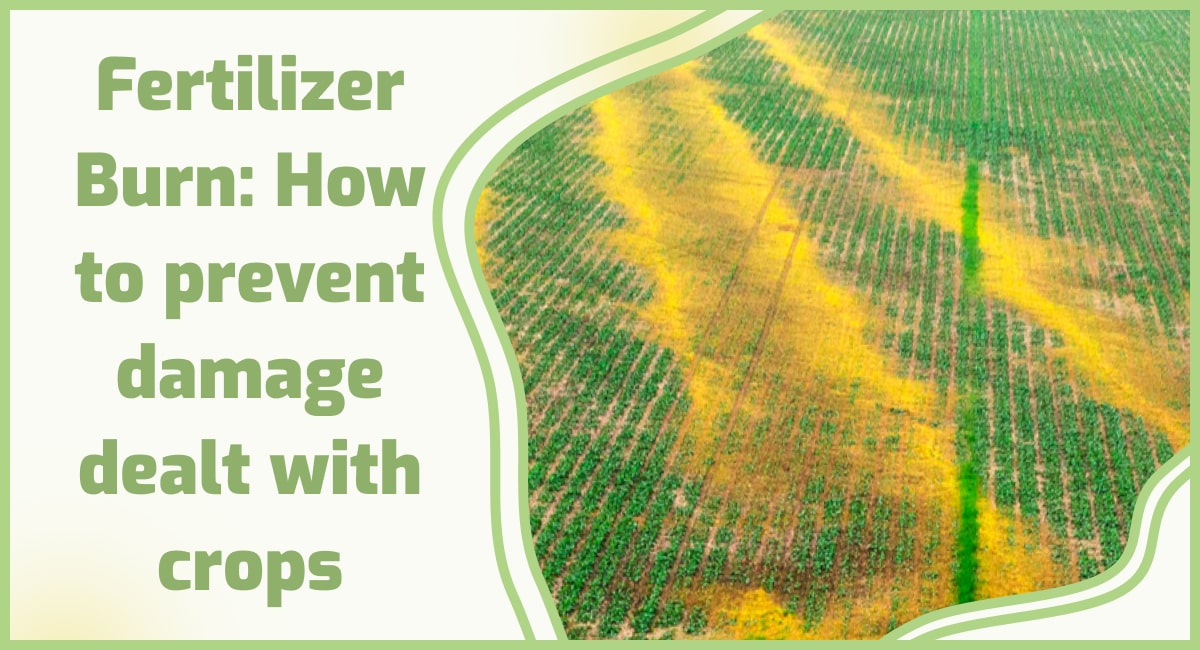
There are several ways in which the over-fertilized plants show signs and symptoms of fertilizer burn. It has different appearances in different settings. In a grass lawn, the most common fertilizer burn appears in the form of patches of dead grass that have turned yellowish or brownish.

This clearly demarcates the area of the field in which fertilizer has been added in excess. In a container plant, you may see its initial occurrence in the form of salt crusts over the soil. This will slowly cause the leaves and stem to change colors, rot, and die. In most plants, the leaves generally turn brown.

On a farm or a garden, you need to look out for wilting in plants, the discoloration of leaves, and also leaves being detached from the stem and falling on the ground.

Fertilizer-burn on plants

The symptoms of fertilizer burn mentioned above are very similar to conditions that generally occur in any problematic plant-like pesticide injuries.

Fertilizer-burn on plants

So, to easily identify over-fertilized plants as the cause, when it is actually the case, you need to have a proper record of the type and volume of fertilizer used in your plants and shouldn’t ignore other probable causes as well.

When you use an excessive amount of fertilizer on plants, initially the plants achieve high foliage growth, but blossoming will be significantly reduced. This is the sign of fertilizer burn in plants even before visible signs like discoloration and wilting occur.

Moreover, the discoloration starts from the margin of the leaves and moves inwards. The foliage growth will now halt and the growth will be stunted. While all these are effects we can see, the main event is happening underground at the plant’s roots as fertilizer root-burn.

Fertilizer root-burn

If you pull your plants out of the ground and the roots are blackened or brown and limp, it can be caused by either excess water or excess fertilizer. If the soil water content is not higher, then it is most likely a case of fertilizer root burn.

Fertilizer root-burn

Fertilizer root burn occurs because when fertilizer is present in excess in the soil surrounding the root, the root cannot properly obtain water from the soil because of the lack of osmotic pressure.

Causes of fertilizer burn

The major cause of fertilizer burn is the excess use of fertilizer for your plants. However, there is more to it than what catches the eye. The effects of high fertilizer usage in your plants can be exacerbated when fertilization is not performed under appropriate conditions.

Using even a slight excess amount of fertilizer can be serious when fertilization is carried out:

  • to soil containing low moisture content
  • on a high-temperature day or when plants are stressed due to excessive heat
  • to leaves that are wet
  • in the daytime when the sun is direct
  • very near to the seeds on pits

Moreover, besides the conditions or methods of fertilizer application, there are other common reasons behind it:

Misjudged lawn area: Quite frequently, people tend to make errors while calculating the amount of fertilizer that their lawn or garden needs because they have already made a mistake while determining the area. Only include the area where fertilizer is intended to be used and not the whole area of the.

Using the wrong fertilizer combination: One of the most common reasons behind it is the lack of attention to detail when applying more than one fertilizer. If you apply two fertilizers that have a common compound, you could inadvertently take too much of the same compound which will result in fertilizer burn because of that specific compound.

While these are common actions or mistakes that may cause fertilizer burn in your plants, the science behind the occurrence of fertilizer burn due to excess fertilizer is quite simple as well. The key is the dehydration of plants.

This is because most of the fertilizers are highly-soluble salts and when present in excess, they increase the osmotic pressure of the soils. In normal conditions, plants’ uptake of water is caused by the difference in osmotic pressure between the soil (low salt concentration) and roots (high salt concentration).

As a result, the addition of excessive salts in the form of fertilizers reverses the flow of water and causes dehydration in plants resulting in wilting and yellowing of leaves.

How to treat over-fertilized plants?

Fertilizer burn is a serious issue and it should be treated as soon as possible after proper diagnosis. Proper diagnosis is important because it is very easy to misjudge fertilizer burn with excess water or too little water or even pesticide and insecticide damage. Some of the ways to treat fertilizer-burn on plants are listed below:

Watering: Watering the over-fertilized plants serves two purposes. First of all, it helps to increase the amount of water available for roots fertilizer-burn has occurred due to dry soils. More importantly, water helps to treat it by a process known as leaching.

Leaching is the downward flow of nutrients by the action of water. By water, the accumulated excess drugs can be leached down to lower soil horizons making the root-zone safe for the roots. However, it is important to make sure that waterlogging doesn’t occur which may further make the matters worse.

Manual removal: This method is applicable only in cases of container plants where the white crust of excess fertilizers that is formed over the soil can be manually removed which prevents it from further adding nutrients to the lower soil.

Removal of the affected plant part: Since there is little to no scope for the recovery of the affected leaves or other plant parts, they should be removed so that the rest of the plant can grow properly by making optimal use of the limited energy.

After stopping additional input of fertilizer into the soil and trying out each of the above-mentioned options, you now need to track the progress of your plants over the next few days and weeks depending on the severity.

If the plants do not recover, and there is an extreme case of root rot as well as foliage damage, you may need to remove the entire plants and replant only after treating the bare soil with water or by using mechanical treatment.

However, it is not recommended to use chemical methods of adding further chemicals to balance out the level of nutrients available in the soil, as you would do to deal with high or low pH soil. The most effective method is to flush out the excess nutrients by the use of water.

How to prevent fertilizer burn

As it goes without saying that prevention is always better than cure. So preventing it from occurring in the first place is the best option to optimize plants’ health as well as crop yield. Some of the ways of preventing fertilizer burn are as follows:

prevent fertilizer burn

To state the obvious, the best way of dealing with fertilizer burn is to only use as much fertilizer as the plant needs. It is always a better option to use less than the required amount rather than greater in case of any confusion because you can always add more fertilizer if needed.

There are two ways to balance the amount of fertilizer that a plant gets over its growth period. First, you can divide the application of fertilizers into small amounts over equal periods instead of adding them all at once. Secondly, slow-release fertilizers are a great choice that adds nutrients to the soil gradually.

When applicable, liquid fertilizers must be preferred to solid ones because liquid fertilizers distribute evenly in the soil itself while solid particles require additional irrigation. Irrigate your soil adequately after fertilizing.

While organic fertilizers can also cause fertilizer burn in plants, the chances are significantly lower. So, composting and organic fertilizers can help prevent it.

The conditions of the soil and the environment while fertilizing should be optimum in the sense that droughts and dry soil should not be present. To control this you should take soil sampling.

Finally, since different species of plants require different levels of nutrients for optimum growth and yield, the type and amount of fertilizer should be properly tailored to the needs of your plants.

Fertilizer burn is a serious issue that can be mistaken for other issues like overwatering and excess nitrogen. So, a proper review of the signs and symptoms should be done for an accurate diagnosis. While it is primarily caused by the excessive use of fertilizers for your plants, there may be underlying causes to its severity.

Also, it should be treated as soon as possible and nutrient leaching with the help of water is the best option to do so. Finally, whenever planting crops, gardening, or managing your lawn, it should be seriously considered and prevented by limiting the amount of fertilizer you will use.


Frequently Asked Questions


1. Can you over fertilize plants?

No, you can not over fertilize plants. When excess fertilizer is applied, it can lead to nutrient imbalances and harm the plant’s health. Over-fertilization can cause leaf burn, stunted growth, and even plant death.

2. Will over fertilized plants recover?

Yes, over fertilized plants can recover with proper care. To help them recover, you should flush the soil with water to remove excess nutrients. Adjusting the watering schedule and providing adequate sunlight can also aid in the recovery process.

3. Can you over fertilize with organic fertilizer?

No, you cannot over fertilize with organic fertilizer. Organic fertilizers are derived from natural sources, they contain nutrients that can be excessive if applied in large quantities. Over-application of organic fertilizers can lead to nutrient imbalances and potential harm to plants.

4. What happens to the roots of a plants if you add too much fertilizer to the soil?

Adding too much fertilizer to the soil can have negative effects on plants. Excessive fertilizer can lead to nutrient imbalances, causing nutrient toxicity and burning of the plant’s roots and foliage.

5. Can i fertilize my lawn every 2 weeks?

Fertilizing your lawn every two weeks is not recommended. Frequent fertilization can lead to an excessive build-up of nutrients, which can harm the grass and disrupt its natural growth patterns. It’s best to follow a regular fertilization schedule based on the specific needs of your lawn, typically ranging from once every 6-8 weeks.

Applying fertilizer in moderation and according to recommended guidelines will help promote healthy and balanced lawn growth. Additionally, factors such as climate, soil conditions, and grass type should also be considered when determining the appropriate fertilization frequency.

6. What is 16-16-16 fertilizer used for?

A 16-16-16 fertilizer is a balanced fertilizer that contains equal proportions of nitrogen (N), phosphorus (P), and potassium (K). It is commonly used as an all-purpose fertilizer for various plants and crops.

The balanced nutrient ratio promotes overall plant growth, including root development, flowering, and fruit production. It is suitable for both indoor and outdoor plants, gardens, lawns, and agricultural applications.

However, it’s important to consider specific plant requirements and adjust fertilizer ratios accordingly for optimal results.

wpChatIcon
wpChatIcon

    Request Free GeoPard Demo / Consultation


    By clicking the button you agree our Privacy Policy. We need it to reply to your request.

      Subscribe


      By clicking the button you agree our Privacy Policy

        Send us information


        By clicking the button you agree our Privacy Policy