


In Iowa, Michael Castellano talks about how growing corn involves lots of choices. He says there are billions of ways, and some people think he’s making it up. But he explains that when you add up all the different types of corn, ways of farming, and weather conditions, it really is a huge number.
This uncertainty is a big deal because using too little or too much nitrogen fertilizer can cause problems. Not enough can lower the amount of corn you grow, while too much can cost too much money and harm the environment.
The Iowa Nitrogen Initiative, led by Castellano and Sotirios Archontoulis, is trying to figure out the best amount of nitrogen for each corn field by collecting data from farms all over Iowa.
They want to make it easier for farmers to know how much fertilizer to use. The project is funded by the Iowa Department of Agriculture and Land Stewardship, and Iowa’s Secretary of Agriculture, Mike Naig, thinks it’s a great collaboration between farmers and experts.
He believes it will give farmers the information they need to grow crops better, make more money, and take care of the environment.
Bridging the Divide
The Iowa Nitrogen Initiative is conducting 270 on-farm trials this year across 72 different private farming operations, marking a fourfold increase from the project’s first year in 2022. The ultimate aim is to reach 500 trials per year.
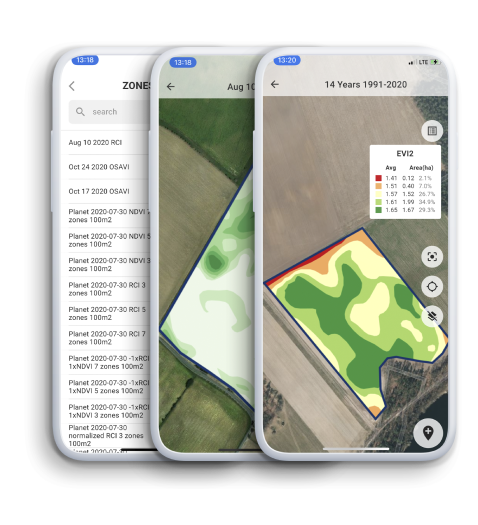
For farmers to join, they need access to two increasingly common precision ag technologies: variable rate fertilizer application and GPS-based yield monitoring. Using historical yield data to identify spots expected to behave differently, project partner Premier Crop Systems designs a trial in a small area of a field, typically about five acres.
Different nitrogen rates, ranging from none to 200 pounds per acre, are assigned to sections within the trial area, and farmers share the yield data with the research team after harvest. Participants are compensated for the yield loss on land that receives no nitrogen.
Trial data is enhanced with simulations from biophysical process models to determine optimal rates based on soil and seed types, management practices, and weather. This database will power the project’s decision-making tools for the public, expected to be available for the 2025 growing season.
These tools will be particularly useful for farmers using precision ag technology to collect data. Farmers with equipment for applying fertilizer at a variable rate often lack evidence-based guidance on how those rates should vary, according to Castellano.
“We’re working to bridge the gap between the technological advancements in precision ag by engineers and the scientific understanding of agronomists,” he said.
Three Helpful Tools
The research team is working on three tools to help farmers make better decisions:
Improved Benchmark Recommendations:
- They are making better suggestions for nitrogen rates, considering differences in things like genetics, soil, how the land is managed, and the weather.
- Farmers can also check out data from trials to see what really happens with different rates and practices.
Forecasting Tool:
- This tool will predict the best rates based on current and near-future guesses about the soil and weather.
- This matters because weather has a big effect on how much nitrogen is needed, according to Castellano.
Hindcasting Tool:
- This tool helps farmers look back at a past year to see how their crop’s needs for nitrogen might have changed if they did things differently. For example, if they planted a different kind of corn or used fertilizer at a different time.
Castellano explains that the goal is to keep updating these tools with new trial data every year.
“As long as farmers are trying new things and the weather is changing, the best nitrogen rates will also change. We need to keep studying and providing farmers with the information to make the best decisions,” he said.
Getting Farmers Involved
Farmers have been part of the Iowa Nitrogen Initiative from the start, even taking part in a design sprint facilitated by Google engineers and designers back in February. Feedback from farmers played a crucial role, shaping decisions like making the initial release of decision-making tools as a mobile app. Farmers suggested this because they’re more likely to use the information if they can access it on the go.
“We’ve been working closely with farmers to make sure the products we’re creating are helpful for the people who will use them. We don’t want farmers to feel like this is something imposed on them,” said Castellano.
He is pleased that every farmer who joined in the first year continued in the second year. Roger Zylstra, one of the volunteers hosting trials for two years, shared at a field day in September that collaborating with the research team was straightforward and smooth. Zylstra, a former president of the Iowa Corn Growers Association, farms near Lynnville in Jasper County and is eager for wetter years to provide more variations in the data.
“I always try to find ways to be a better steward of the land, and we learn there are better ways to do things,” said Zylstra. “I think the potential here is amazing.”
Project leaders are now inviting farmers, crop advisers, and custom fertilizer applicators to sign up for a trial in the 2024 growing season. Those interested can fill out an online form for more information or to express their interest.
News




 English
  German
  Ukrainian
  French
  Kazakh
  Portuguese
  Spanish
  Arabic
  Swedish
  Serbian
  Romanian
  Norwegian
  Finnish
  Lithuanian
  Estonian
  Latvian
  Croatian
  Slovenian
  Slovak
  Japanese
  Polish