
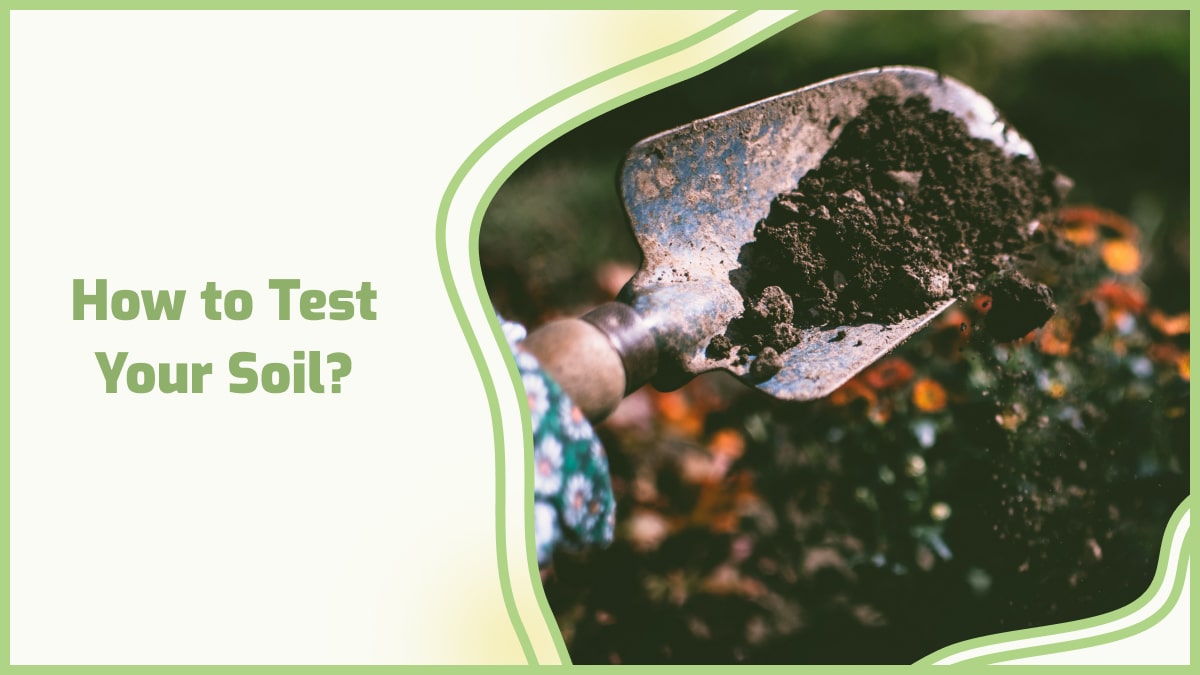


What Is soil testing?
Soil testing is a process that can help you determine the composition and fertility of your soil. Soil is made up of many different components, such as minerals, organic matter, and water. These elements interact with each other in a complex balance that affects how plants grow. What does a soil test tell you? The goal of soil test is to determine these balances so that you can adjust them to grow healthy plants. Also, soil tests helps you to find out what nutrients are missing from your soil. This allows you to add fertilizer or compost to supply those nutrients. It can also tell you if you have too much of a certain nutrient and need to remove it from the garden. You can also test for pH levels, which will help determine whether plants need more acid or alkaline. Different types of tests can be done on your soil. The most common test is for nutrients such as nitrogen (N), phosphorus (P), and potassium (K). These are called NPK tests because they measure all three elements at once with one test kit. Other tests include calcium (Ca), magnesium (Mg), sulfur (S), and micronutrients such as iron (Fe), manganese (Mn), zinc (Zn), and copper (Cu). Soil test is often done by a professional who can analyze the results and give you recommendations for what you need to do to improve. This may include adding fertilizer or other nutrients, planting certain plants in certain areas, removing weeds, and more. You can also do your soil tests at home by buying a kit from a gardening store or online. It will provide instructions on how to collect soil samples from different parts of your yard and then send them off for analysis. If you want more information about how these tests work and why they’re important, continue reading.Why should farmers get their soil test?
It is a critical component of good farming. It can be one of the most valuable tools at your disposal. It can help you determine what nutrients are lacking in your soil, which plants would benefit from these nutrients, and how to best supply them. There are several reasons why farmers should get their soil tested. Here are some of them:- To know the condition of your soil before planting or seeding so you can maximize yields and minimize costs.
- Improve crop performance by knowing the nutrient levels in your soil so you can supplement as necessary.
- Maximize profitability by making sure your crops are receiving all the nutrients they need to thrive.
- Soil tests can help you determine whether your crop needs nutrients, and how much fertilizer to use.
- Getting your soil tested can also show you what kind of crops you should grow in your soil, so you don’t waste time and money trying to grow things that won’t thrive there.
- Soil tests also help farmers understand what nutrients are missing from their soil, so they can make sure their crops get everything they need for optimum growth.
- Determining if your soil has toxic levels of heavy metals or other elements that can be harmful to plants.
- Determining what crops grow best in your area. For example, if your soil tests low on nitrogen but high on phosphorus, then it’s probably best to plant grass instead of vegetables like carrots or tomatoes that need lots of nitrogen. But if the pH level is too acidic or alkaline for certain plants to grow well, then you can add lime or sulfur to adjust the pH level.
- It is an important management tool that helps farmers make informed decisions about their land during every season of the year.
- Identifying sources of contamination in your soil (for example, from nearby factories).
Types of soil testing
1. Soil moisture testing Water is necessary for plant growth because plants cannot develop properly if there isn’t enough moisture in the ground. Although it is visible when the field’s surface is dry, correct water rates are measured in the laboratory. A soil moisture content test determines if plants have enough water or are dehydrated. The usual soil moisture test involves high-temperature moisture evaporation from samples. The moisture rates in the samples are calculated by comparing their mass before and after evaporation. To produce excellent yields, it’s critical to keep track of the moisture in the field before seeding and during the season. EOS Crop Monitoring allows you to check the moisture levels on the surface and in the root zone from afar. Furthermore, historical data demonstrates the moisture level at each stage of crop development. Farmers can forecast moisture deficits and make informed judgments based on this information. Furthermore, the NDMI index on EOS Crop Monitoring aids in the identification of important zones, and soil moisture analysis of these areas will reveal whether they are dehydrated. 2. Soil salinity test Plants in salty fields experience osmotic stress as a result of poor water absorption. Soil salinity testing aids in determining if a piece of land is suitable for agricultural use. The following methods can be used to determine the salinity of a field:- total soluble salts (TSS) evaporation from groundwater extract.
- A saturated paste extract or a distilled water-earth dilution’s electric conductivity (EC) is measured.
- A test for electric conductivity can be done in the field or a laboratory.
How to test soil quality by Yourself? Tips
1. pH Test Your soil’s pH (acidity level) has a big impact on how well your plants develop. pH is measured on a scale of zero to 14, with zero indicating extreme acidity and 14 indicating extreme alkalinity. The pH of most soils should be between six and seven for most plants to thrive. Plants will not grow as well as they should if the pH level is lower than five or higher than eight. pH test kits are available at every home and garden center. Most of these kits are reasonably accurate, but you must follow the testing instructions to the letter. You can start correcting the problem after you know whether or not your soil pH is a problem. 2. The Worm Test During Soil Testing
Worms are excellent indicators of your soil’s general health, particularly in terms of biological activity. If you have earthworms, you’re likely to have all of the helpful bacteria that help your soil stay healthy and your plants grow strong. To do the worm test, follow these steps:
2. The Worm Test During Soil Testing
Worms are excellent indicators of your soil’s general health, particularly in terms of biological activity. If you have earthworms, you’re likely to have all of the helpful bacteria that help your soil stay healthy and your plants grow strong. To do the worm test, follow these steps:
- Make sure the soil has reached a temperature of at least 55 degrees Fahrenheit and is moist but not dripping wet.
- Make a one-foot-wide, one-foot-deep pit. Using a tarp or a piece of cardboard, place the soil.
- As you return the soil to the pit, sift through it with your hands, counting the earthworms as you get further.
- Your soil is in good shape if you detect at least ten worms. Less than that suggests that your soil may be lacking in organic matter, or that it is too acidic or alkaline to maintain a robust worm population.
- Make a six-inch-wide and one-foot-deep hole.
- Fill the opening halfway with water and let it drain.
- Fill it up with water once more.
- Keep track of the amount of time it takes the water to drain.
- You have poor drainage if it takes more than four hours for the water to flow.
Frequently Asked Questions
1. How can a farmer determine the nutrient content of a field? To determine the nutrient content of a field, a farmer can collect soil samples from various locations across the field. These samples can then be sent to a testing laboratory for analysis. The laboratory will provide detailed reports indicating the nutrient levels in the soil, including essential elements like nitrogen, phosphorus, and potassium. 2. Which of the following would be used to test for minerals in a soil sample? To test for minerals in a sample, various methods can be employed. One common technique is using chemical extraction methods, where specific reagents are added to the soil sample to extract and quantify the minerals of interest. Another approach is using spectroscopic techniques like X-ray fluorescence (XRF) or inductively coupled plasma (ICP) analysis, which provide detailed elemental composition information. Additionally, the kits that utilize colorimetric assays or test strips can also be used to assess mineral content qualitatively. These methods help farmers assess the mineral composition of their soil, aiding in proper nutrient management for optimal plant growth. 3. What are five things that a soil sample report will tell you? A soil sample report provides valuable information to farmers and gardeners. Here are five things that a soil sample report typically reveals:
- Soil pH: The report indicates the acidity or alkalinity of the soil.
- Nutrient levels: It shows the levels of essential nutrients like nitrogen, phosphorus, potassium, and other micronutrients.
- Organic matter content: The report indicates the amount of organic material present in the soil, which influences soil fertility.
- Soil texture: It describes the soil composition, whether it is sandy, loamy, or clayey.
- Recommendations: Based on the analysis, the report provides recommendations for soil amendments, such as lime, fertilizer types, and application rates.
Meet the GeoPard AI AssistantNEW
Reasoning AI for precision agriculture: it asks the right agronomic questions, shows its math, and builds dry-run validated prescriptions from your data. You approve every step.







 English
  German
  Ukrainian
  French
  Kazakh
  Portuguese
  Spanish
  Arabic
  Swedish
  Serbian
  Romanian
  Norwegian
  Finnish
  Lithuanian
  Estonian
  Latvian
  Croatian
  Slovenian
  Slovak
  Japanese
  Polish