
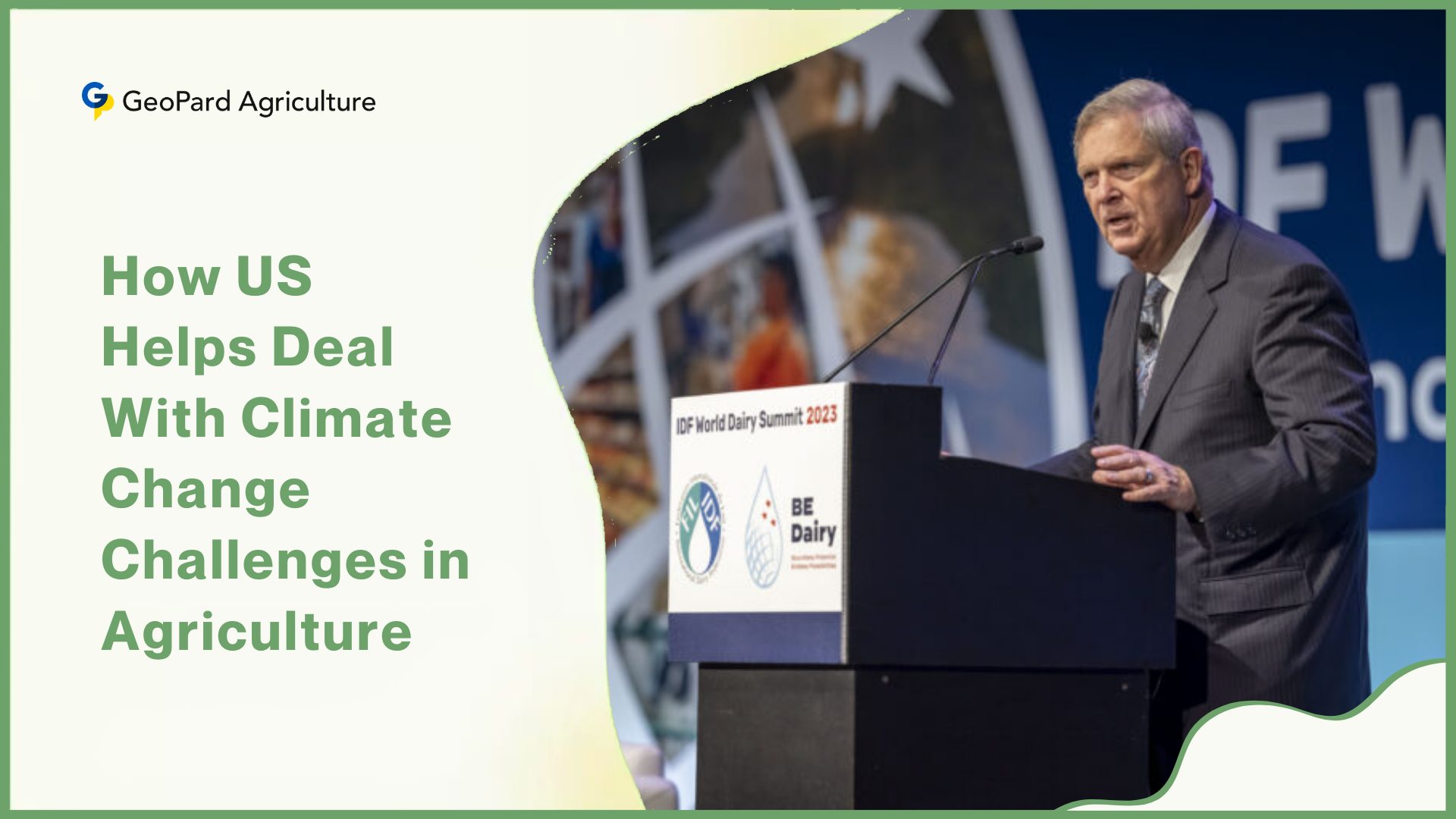


According to US Secretary of Agriculture Tom Vilsack, the dairy industry in the United States was the first to promote a system where farmers are rewarded for addressing climate issues voluntarily and through market-based approaches.
Vilsack is particularly concerned about the well-being of the US dairy industry as farmers grapple with the impacts of both climate change and farm consolidation.
At the 2023 World Dairy Summit in Chicago, Vilsack highlighted the challenges faced by dairy farmers, with 92.5% of them collectively earning only 11% of the total income from dairy operations in the US. This underscores the urgent need for attention and support in the sector.
Vilsack shared insights into the proactive steps the US is taking to ensure the long-term sustainability of agriculture. He emphasized that farmers have expressed a preference for a voluntary and incentive-based system.
They want the market to recognize and appreciate their contributions, and they are keen on robust methods for recording, measuring, monitoring, and verifying results. This, according to Vilsack, will assure consumers that the products they purchase have been sustainably produced.
“And they desire it to be a cooperative partnership, which led to the establishment of the Climate-Smart Partnership Initiative.”
Within the framework of the Partnerships for Climate-Smart Commodities, the US Department of Agriculture has announced its commitment to funding partnerships that promote the production and marketing of climate-smart commodities through a series of pilot projects lasting one to five years.
In the initial phase, 70 projects were selected to receive an investment of up to US$2.8 billion (approximately $4.75 billion). By the end of 2022, an additional 71 projects were included, accompanied by an extra investment of US$325 million.
The funded projects encompass a variety of areas, including precision agriculture, biofuels, as well as marketing and education programs.
“We acknowledge the opportunity to generate value-added commodities so that farmers are not only compensated for adopting climate-smart practices beneficial to the environment, but they are also rewarded in the marketplace with a value-added proposition.”
He expressed his belief that consumers in the United States are interested in and willing to invest in products produced sustainably. However, he emphasized the need for tangible proof to assure consumers that these products genuinely adhere to sustainable practices. He has a profound understanding of the dedication dairy farmers have towards their operations, the environment, and their local communities.
According to him, it is the responsibility of policymakers to take appropriate measures in creating a program that recognizes and values all types of farmers. He is enthusiastic about the opportunity to establish an entrepreneurial model that complements the existing production agriculture model.
Vilsack stressed the importance of maintaining strong agricultural production in the United States to feed the world while also creating opportunities for small to midsize businesses to ensure the continued vibrancy of rural communities.
Vilsack expressed his dissatisfaction with the fact that 57 million hectares of land in the US are no longer utilized for farming. This vast land mass is equivalent to the combined area of the entire states of Florida, Georgia, North Carolina, and South Carolina, representing a substantial loss.
After spending four years with the US Dairy Export Council, Vilsack returned to the USDA with a strong commitment to safeguarding US agriculture. He is dedicated to promoting sustainability and ensuring fair market value.
Reflecting on his tenure in the dairy industry, he emphasized the sector’s potential. The dairy industry, according to Vilsack, was at the forefront in recognizing the capacity and opportunity to move towards a net-zero future. He credited the US dairy industry for championing a voluntary and market-based system that listens to farmers and rewards them for addressing climate concerns.
Expressing gratitude to the industry for taking these steps, Vilsack believes that the dairy sector, and agriculture as a whole, has boundless potential and endless possibilities. He commended the industry for initiating efforts to tap into this potential and emphasized the pride the industry can take in its contributions to addressing climate challenges.
News



 English
  German
  Ukrainian
  French
  Kazakh
  Portuguese
  Spanish
  Arabic
  Swedish
  Serbian
  Romanian
  Norwegian
  Finnish
  Lithuanian
  Estonian
  Latvian
  Croatian
  Slovenian
  Slovak
  Japanese
  Polish