

Globally, deforestation remains a critical issue, with an estimated 10 million hectares of forest lost each year, according to the Food and Agriculture Organization (FAO). The Amazon rainforest, often referred to as the “lungs of the Earth,” has seen significant deforestation, with approximately 17% of its area lost over the past 50 years.
Therefore, the introduction of the European Union Deforestation Regulation (EUDR) is a response to these alarming statistics, as the EU seeks to play a leading role in reversing the trend of global deforestation.
The EU’s legislative measures aim to reduce carbon emissions caused by EU consumption of the relevant commodities by at least 32 million metric tonnes a year.
What is European Union Deforestation Regulation (EUDR)?
The European Union Deforestation Regulation (EUDR), formally known as Regulation (EU) 2023/1115, is a landmark piece of legislation aimed at curbing global deforestation, particularly driven by the demand for agricultural commodities.

Introduced by the European Union, the EUDR seeks to ensure that products entering the EU market do not contribute to deforestation or forest degradation. Because, it is a significant contributor to climate change, biodiversity loss, and ecosystem degradation.
Some of the important stages of the supply chain in EDUR to follow are:
- Growing: Commodities must be produced in a manner that is both legal and free from deforestation. It is essential to collect geolocation data for the production area.
- Trading and Shipping: During trading and shipping, commodities that are deforestation-free and legally compliant must be kept separate from other products. Mixing compliant and non-compliant goods or those of uncertain origin is prohibited.
- Importing: Prior to introducing a product to the EU market, importers are required to conduct due diligence. They must also submit a Due Diligence Statement and obtain a reference number (along with a security token) that must be included in the customs declaration for import.
- Producing: Large manufacturers in the EU, such as those producing chocolate, must verify that due diligence has been properly conducted upstream in the supply chain.
- Selling or Exporting Products: Before a product can be sold on the EU market, major retailers must confirm that due diligence has been performed upstream in the supply chain.
Why EUDR Aim For Deforestation-Free Supply Chains?
A study published in Nature found that agricultural activities were responsible for nearly 80% of global deforestation, with commercial agriculture contributing to around 40%. Moreover, the regulation is backed by substantial scientific research highlighting the detrimental effects of deforestation on climate change.

Forests act as carbon sinks, absorbing carbon dioxide from the atmosphere. The loss of forests not only reduces this capacity but also releases stored carbon, exacerbating global warming. The Intergovernmental Panel on Climate Change (IPCC) reports that deforestation accounts for approximately 11% of global greenhouse gas emissions.
Therefore, by focusing on deforestation-free supply chains, the EUDR aims to reduce the EU’s ecological footprint and encourage sustainable land use practices globally. The regulation also strives to raise awareness and accountability among producers, traders, and consumers regarding the environmental impacts of their consumption choices.
Additionally, the EUDR also aligns with broader global efforts, such as the Paris Agreement and the United Nations Sustainable Development Goals (SDGs), to combat climate change and promote environmental sustainability.
What Are The Key Requirements of EUDR?
The EUDR imposes several key requirements on companies that wish to trade within the EU:
- Due Diligence: Companies must conduct thorough due diligence to ensure that their products are deforestation-free. This involves tracing the origin of commodities, assessing the risk of deforestation, and taking appropriate measures to mitigate any identified risks.
- Traceability: The regulation requires that companies establish traceability systems to track the origin of commodities. This ensures that every step of the supply chain is documented and that products can be traced back to deforestation-free sources.
- Verification: Companies must provide evidence that their products comply with the EUDR’s deforestation-free requirements. This may include satellite imagery, certification schemes, and third-party audits to verify that no deforestation has occurred.
What is EUDR Compliance? And Impacted Industries
EUDR Compliance refers to adhering to the EU Regulation. The EUDR predominantly affects industries that rely heavily on agricultural commodities, such as palm oil, soy, cattle, wood, cocoa, and coffee. These commodities are often linked to deforestation, as forests are cleared to make way for plantations and grazing land.

Consequently, industries in the food, cosmetics, biofuel, and timber sectors are most impacted. Companies operating within these industries must now ensure that their supply chains are free from deforestation-related practices, thereby pushing for greater transparency and sustainability.
Moreover, in terms of global impact, the EUDR is expected to influence supply chains far beyond Europe, as producers and exporters in countries like Brazil, Indonesia, and Côte d’Ivoire also adapted their practices to meet the new requirements.
An example of EUDR compliance can be seen in the cocoa industry. Companies that source cocoa from regions known for deforestation, such as West Africa, must now provide evidence that the cocoa was not produced on deforested land.
This might involve working directly with local farmers to ensure sustainable farming practices or partnering with certification bodies like Rainforest Alliance to verify the sustainability of their supply chains.

Another example is the palm oil industry, where companies are required to prove that their palm oil does not originate from recently deforested areas in countries like Indonesia and Malaysia. This is being achieved through satellite monitoring and collaboration with local governments to enforce sustainable land use practices.
How Earth Observation (EO) Applications Play Role in EUDR Compliance?
In recent years, the global focus on sustainability has intensified, with the European Union Deforestation Regulation (EUDR) emerging as a critical framework for mitigating deforestation and promoting responsible land use.
One of the most significant tools in achieving EUDR compliance is Earth Observation (EO) technology. EO’s ability to provide real-time, accurate, and comprehensive data makes it indispensable for monitoring deforestation, assessing risks, and ensuring compliance with environmental regulations.

EO technology encompasses various types, each playing a unique role. Optical sensors, such as the Landsat series satellites, capture images of the Earth’s surface, allowing for the visual assessment of land-use changes.
Radar sensors, such as the synthetic Aperture Radar (SAR) satellites, can penetrate cloud cover, providing data in regions where optical sensors are less effective. Additionally, multispectral and hyperspectral sensors provide detailed information on vegetation health, aiding in the early detection of deforestation activities.
1. Role of EO in Deforestation Monitoring
EO technology plays a pivotal role in tracking deforestation rates, identifying hotspots, and monitoring land-use changes. By utilizing satellite imagery and remote sensing, EO provides precise data on forest cover, enabling the detection of even minor changes over time.
This capability is crucial in identifying illegal logging activities and unauthorized land conversions, which are often the primary drivers of deforestation. According to the World Resources Institute, the world lost 11.1 million hectares of tropical forest in recent years.

EO data from satellite imagery shows that deforestation rates have remained alarmingly high, particularly in regions such as the Amazon, Southeast Asia, and Central Africa. By leveraging EO, authorities can monitor these regions more effectively, pinpointing areas where deforestation is accelerating and taking timely action to mitigate its impact.
2. EO-Based Risk Assessment
In addition to monitoring deforestation, EO is instrumental in assessing the risk of deforestation within supply chains. Companies, particularly those dealing with agricultural commodities like palm oil, soy, and beef, are under increasing pressure to ensure their products do not contribute to deforestation.
EO allows these companies to evaluate the risk of deforestation in their supply chains by analyzing land-use patterns, forest cover changes, and proximity to protected areas. The importance of EO-based risk assessment lies in its ability to prioritize monitoring efforts.
Companies can identify high-risk areas and allocate resources to monitor and mitigate deforestation impacts more effectively. This proactive approach not only helps in EUDR compliance but also enhances the company’s reputation by demonstrating a commitment to sustainability.

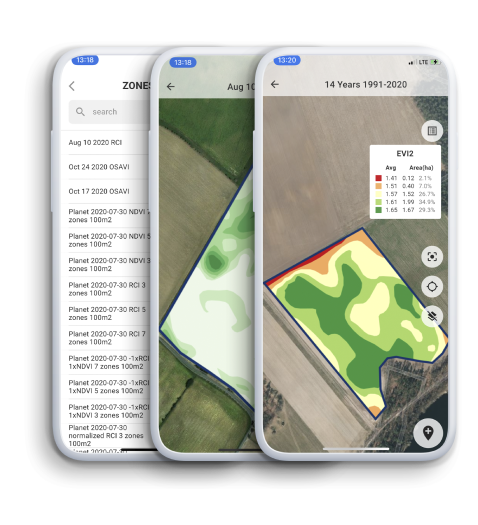
For example, GeoPard’s industry-tailored product suites offer continuous asset monitoring and actionable insights, helping businesses navigate EUDR requirements using their existing systems.
Successful EO Applications in EUDR Compliance
Several EO companies have successfully applied EO technology to ensure EUDR compliance, setting a benchmark for others to follow. For instance, Global Forest Watch, an initiative led by the World Resources Institute, uses EO data to provide real-time information on forest changes worldwide.
Their platform has been instrumental in helping governments and organizations monitor deforestation and take corrective measures.
Another notable example is Airbus’ OneAtlas platform, which provides high-resolution satellite imagery and EO data analytics to monitor land-use changes. This platform has been used by companies in the palm oil industry to ensure their operations do not contribute to deforestation, thereby complying with EUDR requirements.
Similarly, Anthesis Group, also utilizes EO data to support companies in navigating the complexities of the EUDR.
Challenges and Opportunities in EO-Based Deforestation Monitoring
Environmental conservation, particularly the preservation of forests, has become a critical issue worldwide. Earth Observation (EO) technologies, including satellite imagery and remote sensing, have emerged as powerful tools in monitoring deforestation.
However, the use of EO-based monitoring systems comes with its own set of challenges and opportunities, particularly in terms of data quality, processing, and integration with other data sources.
1. Data Quality and Accuracy
One of the most pressing challenges in EO-based deforestation monitoring is ensuring the reliability and accuracy of the data. EO data can be affected by various factors such as atmospheric conditions, sensor limitations, and temporal resolution.
For instance, cloud cover can obscure satellite images, making it difficult to obtain clear and consistent data. Similarly, variations in sensor sensitivity can lead to discrepancies in the data, potentially resulting in inaccurate deforestation assessments.
To address these challenges, advancements in sensor technology and data processing algorithms have been developed. Multi-spectral and hyperspectral sensors, for example, can capture a wider range of wavelengths, improving the accuracy of the data.
For example, in Brazil, the National Institute for Space Research (INPE) uses EO data to monitor deforestation in the Amazon rainforest. The accuracy of this data is crucial for enforcing environmental laws and holding violators accountable.
2. Data Processing and Analysis
Another significant challenge in EO-based deforestation monitoring is the processing and analysis of large volumes of data. Satellite imagery and remote sensing data are often collected at high temporal and spatial resolutions, resulting in massive datasets that require substantial computational resources for processing.
This challenge is compounded by the need to process data in near real-time, especially for applications such as early warning systems for illegal logging. Technical solutions to these challenges have emerged, leveraging advancements in cloud computing and big data analytics.

For instance, Google’s Earth Engine provides a cloud-based platform for processing large-scale EO data, allowing for the analysis of deforestation patterns across different time periods and regions.
Additionally, artificial intelligence (AI) and machine learning (ML) techniques are being employed to automate the analysis of EO data. For example, the Global Forest Watch platform utilizes satellite data processed in near real-time to provide alerts on deforestation activities.
This capability is particularly important in regions where deforestation is rampant, such as Southeast Asia, where palm oil plantations are a major driver of forest loss.
3. Integration with Other Data Sources
While EO data is invaluable in monitoring deforestation, its effectiveness is significantly enhanced when integrated with other data sources. Ground-truth data, for example, can be used to validate and calibrate EO data, improving its accuracy.
Similarly, integrating EO data with supply chain information can help identify the sources of deforestation and hold companies accountable for their environmental impact. One notable example of this integration is the Trase platform, which combines EO data with supply chain data to map the trade of commodities linked to deforestation, such as soy and palm oil.
By linking deforestation events to specific companies and supply chains, Trase provides a powerful tool for promoting transparency and sustainability in global trade.
A study published in the journal “Remote Sensing of Environment” demonstrated that combining satellite data with ground-based measurements significantly improved the detection of deforestation in tropical forests.
What Are The Potential Impacts of EUDR?
While the EUDR is a positive step towards environmental sustainability, it also raises certain concerns and challenges. The EU deforestation regulation came into effect on June 29, 2023. Right after its implementation, European coffee stocks began a notable decline, dropping by 3.12 million bags from June to October.
Although stocks had been gradually decreasing in destination markets over the past two years, this significant 26.9% reduction in just a few months has brought European stocks to historically low levels and raised concerns about the impact of the new regulation.

Moreover, one major concern is the potential impact on small-scale farmers and producers in developing countries. In regions like Sub-Saharan Africa, where smallholder farming is prevalent, the EUDR could inadvertently marginalize these producers, pushing them out of the European market.
Compliance with the EUDR’s requirements may be difficult and costly for these stakeholders, potentially leading to market exclusion or economic hardship.
Meanwhile, one key issue is the potential for “leakage,” where deforestation activities shift to non-EU markets that lack similar regulations. This could undermine the EUDR’s effectiveness in reducing global deforestation, particularly in regions with weak governance or enforcement capabilities.
Ensuring that the EUDR is implemented effectively will require strong collaboration between governments, companies, and civil society organizations. Therefore, strengthening global partnerships and enhancing transparency in supply chains are essential to address the potential drawbacks of the EUDR.
Additionally, ongoing scientific research and technological advancements, such as improved satellite imaging and data analytics, are critical to ensuring the regulation’s success.
How EUDR Differ From Similar Regulations?
1. United States: The Lacey Act
The Lacey Act, enacted in 1900 and amended in 2008, is one of the oldest and most comprehensive environmental regulations in the United States. It prohibits the import, export, and trade of wildlife, fish, and plants that have been illegally sourced.
The Lacey Act has been instrumental in curbing illegal logging and deforestation by imposing strict penalties on violators. While the Lacey Act shares similarities with the EUDR in its aim to protect the environment and prevent illegal trade, it differs in scope and enforcement.
The EUDR focuses specifically on deforestation and targets a broader range of commodities. Additionally, the EUDR emphasizes the responsibility of companies to ensure deforestation-free supply chains, whereas the Lacey Act places more emphasis on the legality of sourcing.
2. United Kingdom: The Environment Act 2021
The UK’s Environment Act 2021 includes provisions aimed at combating illegal deforestation and promoting sustainable supply chains. Like the EUDR, it requires businesses to ensure that certain commodities are not linked to illegal deforestation.
However, the UK regulation is currently less stringent than the EUDR in terms of the range of commodities covered and the level of due diligence required from companies. The Environment Act also emphasizes the role of due diligence and transparency in reducing the UK’s environmental footprint.
It mandates companies to report on their supply chain practices, similar to the EUDR’s requirements for companies to provide evidence that their products are deforestation-free. However, the EUDR goes further by also addressing legal deforestation in its regulations, aiming to protect forests regardless of local laws.
3. Australia: Illegal Logging Prohibition Act 2012
Australia’s Illegal Logging Prohibition Act 2012 focuses on preventing the import and processing of illegally logged timber. This regulation is narrower in scope compared to the EUDR, which covers a wider range of commodities and addresses both legal and illegal deforestation.
The Australian regulation is primarily concerned with the legality of timber harvesting, while the EUDR takes a more comprehensive approach by addressing the environmental impact of deforestation and promoting sustainable practices across multiple industries.
Conclusion
The European Union Deforestation Regulation (EUDR) aims to stop global deforestation by ensuring EU products do not contribute to forest loss. It impacts industries like agriculture and forestry, requiring strict traceability and sustainable practices.
For countries where these sectors are vital, EUDR demands changes such as deforestation-free sourcing and better land management. While compliance can be challenging and costly, it also provides opportunities for innovation and a competitive edge like introduction of Earth Observation (EO) applications.
Blog