Role of Precision Irrigation Methods in Modern Farming

In the realm of modern agriculture, where the demand for food production is ever-increasing to feed a growing global population, the concept of precision irrigation has emerged as a transformative approach.

What is Precision irrigation?

Precision irrigation refers to the practice of applying water to crops in a precise and targeted manner, optimizing water usage and enhancing crop yield while minimizing water wastage. This innovative technique stands as a beacon of hope, addressing the challenges posed by traditional irrigation methods and heralding a new era of sustainable agriculture.

Its significance is rooted in its potential to revolutionize agricultural practices and mitigate the pressing issues of water scarcity and resource inefficiency. Traditional irrigation methods, which often involve flood or furrow irrigation, are notorious for their water wastage and uneven distribution.

These methods lead to excessive consumption of water, causing soil erosion, waterlogging, and nutrient leaching, thereby diminishing crop yield and harming the environment.

What is Precision irrigation

According to the Food and Agriculture Organization (FAO), agriculture accounts for approximately 70% of global freshwater withdrawals. Out of this, a significant portion is wasted due to inefficient irrigation methods.

Precision irrigation, on the other hand, tackles these issues head-on. By utilizing advanced technologies such as sensors, weather forecasts, and data analytics, farmers can accurately determine the water requirements of their crops.

This real-time data-driven approach ensures that water is delivered precisely where and when it is needed, reducing water wastage significantly. Consequently, the agricultural yield is optimized, and water resources are conserved, contributing to sustainable farming practices.

Scientific evidence further supports its advantages. A study published in the “Journal of Irrigation Science” demonstrated that precision irrigation can lead to water savings of up to 40% compared to traditional methods.

Additionally, research conducted by the University of California, Davis, showed that it can result in improved fruit quality and increased profitability for farmers.

Types of Precision Irrigation Methods

It encompasses various methods and technologies, each tailored to address specific aspects of water distribution and crop needs. Here are some of the main types of precision irrigation:

1. Surface Drip Irrigation

Drip irrigation is a precise water delivery system that offers a stark departure from traditional flood or furrow methods. The core principle revolves around delivering water directly to the root zone of plants in a slow, consistent manner through a network of tubes, pipes, and emitters.

This localized application minimizes water wastage, evaporation, and runoff, ensuring that plants receive an optimal amount of moisture exactly where it’s needed.

Drip irrigation systems can be automated and adjusted based on factors like soil type, crop type, and weather conditions, thereby tailoring water delivery to the specific requirements of each plant.

One of the most striking examples is Israel, a nation that has harnessed drip irrigation to turn arid lands into productive agricultural hubs. With a commitment to research and innovation, Israel’s expertise in drip irrigation has led to dramatic water savings and increased crop yields.

Surface Drip watering

Beyond Israel, countries across the globe, from India to the United States, have embraced this method to address water challenges and enhance agricultural output.

According to the Food and Agriculture Organization (FAO), micro-irrigation systems, including drip irrigation, are estimated to be 30-70% more water-efficient compared to traditional methods.

Moreover, reports indicate that drip irrigation can lead to water savings ranging from 20% to a staggering 50%, as demonstrated in regions like California’s Central Valley and Australia’s vineyards.

In China, drip irrigation has been pivotal in boosting crop yields in water-scarce regions. Data from the Chinese Ministry of Water Resources showcases that drip irrigation has increased water use efficiency by up to 40% in some areas, reducing both water consumption and production costs.

Furthermore, the International Water Management Institute (IWMI) conducted research in Sub-Saharan Africa, where water scarcity hampers agriculture.

The study found that adopting drip irrigation alongside proper agronomic practices can lead to yield increases of up to 130% for various crops like tomatoes, onions, and maize, illustrating the transformative potential of this method.

2. Micro-Sprinkler Irrigation

Micro-sprinkler irrigation, also known as low-volume sprinkler irrigation, offers a localized approach to water delivery that falls between traditional sprinkler and drip irrigation methods.

The system employs a network of low-flow, high-pressure emitters that disperse water in the form of fine droplets, simulating a gentle rain. This meticulous application of water minimizes evaporation and drift while providing comprehensive coverage to crops.

Unlike traditional sprinklers that might lead to water wastage through overspray, micro-sprinkler irrigation focuses on efficiency and precision, catering to the unique water needs of plants.

Micro-sprinkler irrigation has garnered attention worldwide as a viable solution for sustainable agriculture, particularly in regions prone to water scarcity. Countries like India and Spain have embraced this method to optimize water resources and improve crop productivity.

Micro-sprinkler systems have enabled farmers to target water directly to the root zone, fostering healthier plants and reducing water wastage.

Micro-Sprinkler

Research by the International Center for Agricultural Research in the Dry Areas (ICARDA) suggests that micro-sprinkler irrigation systems can achieve water savings ranging from 20% to 50% compared to conventional overhead irrigation methods.

A study conducted by the Indian Council of Agricultural Research (ICAR) demonstrated that micro-sprinkler systems led to higher water use efficiency and crop yield compared to traditional flood irrigation.

Furthermore, the “Journal of Horticultural Science and Biotechnology” published research showcasing the positive impact of micro-sprinkler irrigation on tomato cultivation. The study revealed that micro-sprinkler systems enhanced fruit yield and quality by maintaining optimal soil moisture levels and preventing stress-induced crop diseases.

3. Subsurface Drip Irrigation

Subsurface drip irrigation, often referred to as SDI, is a revolutionary approach that delivers water directly to the root zone of plants below the soil surface. The system consists of buried pipes with emitters strategically spaced along their lengths.

These emitters release water in precise quantities, ensuring a consistent and targeted supply to the plant’s root zone. This unique method reduces water evaporation, minimizes weed growth, and prevents water contact with foliage, reducing the risk of disease.

Subsurface drip irrigation is particularly advantageous in arid regions where water conservation is of utmost importance. Countries across the globe, from the United States to Australia, have adopted SDI systems to maximize crop yield and minimize water wastage.

Subsurface Drip Irrigation

Israel, a nation known for pioneering advanced irrigation techniques, has also embraced subsurface drip irrigation to cope with limited water resources. Research conducted by the Texas A&M AgriLife Extension Service highlights that subsurface drip irrigation can lead to water savings of up to 50% compared to traditional surface irrigation methods.

Moreover, the International Journal of Agricultural and Biological Engineering published research that explored the impact of SDI on wheat cultivation. The study highlighted that subsurface drip irrigation systems enhanced water distribution uniformity, leading to more even crop growth and improved yield.

4. Precision Mobile Irrigation

Precision mobile irrigation, also known as automated or robotic irrigation, represents an evolution beyond traditional stationary irrigation systems. This dynamic approach involves the use of mobile platforms equipped with sensors, GPS technology, and data analytics to precisely deliver water to crops.

These platforms can be self-propelled vehicles, drones, or even autonomous tractors. The technology enables real-time monitoring of soil moisture levels, weather conditions, and plant health, allowing for timely and efficient water application.

Precision mobile irrigation offers unparalleled flexibility in adapting to changing field conditions and optimizing water distribution. Countries like the Netherlands, known for their innovative agricultural practices, have embraced precision mobile irrigation to enhance crop yields while minimizing water wastage.

Precision Mobile Irrigation

A study conducted by the University of Nebraska-Lincoln revealed that using automated irrigation reduced water usage by up to 50% compared to traditional irrigation methods.

Furthermore, the Agricultural Research Service of the United States Department of Agriculture reported that precision mobile irrigation systems can achieve water savings ranging from 30% to 50%, depending on the crops and soil conditions.

In addition, research by the University of Florida demonstrated that precision mobile irrigation systems not only reduced water consumption but also reduced energy usage, lowering overall operational costs for farmers.

5. Variable Rate Irrigation (VRI)

Variable Rate Irrigation, also known as VRI, represents a significant departure from traditional irrigation practices. Unlike uniform irrigation, VRI involves the targeted application of water to different areas within a field based on specific crop needs, soil characteristics, and other variables.

This is made possible through the integration of advanced technologies, such as GPS and sensors, that allow farmers to adjust water distribution in real-time.

Countries across the globe, from the United States to Australia, have embraced VRI as a tool to enhance crop yield while minimizing the environmental impact of excessive water usage. Reports from the PrecisionAg Institute indicate that VRI can lead to water savings ranging from 10% to 30% across various crops and regions.

Furthermore, the American Society of Agricultural and Biological Engineers conducted research on VRI’s impact on cotton cultivation. The findings indicated that VRI led to improved yield and fiber quality, showcasing its potential to enhance both economic and environmental outcomes.

6. Fertigation

Fertigation, a combination of “fertilization” and “irrigation,” represents a revolutionary approach to crop nutrition. Unlike traditional methods that involve applying fertilizers separately from water, fertigation involves injecting fertilizers directly into the irrigation system.

This allows nutrients to be delivered directly to the root zone of plants, optimizing their uptake and utilization. Fertigation is enabled by specialized equipment such as drip systems, sprinklers, or even hydroponic setups.

This integrated approach ensures that plants receive nutrients precisely when they need them, resulting in improved growth, yield, and overall health.

Fertigation, a combination of fertilization and irrigation

The International Fertilizer Association (IFA) reports that fertigation can lead to a substantial increase in crop yields, often ranging from 20% to 100%, depending on the crop and environmental conditions.

The United Nations estimates that approximately 50% of applied fertilizers are lost to various forms of inefficiency, including runoff and volatilization. Fertigation addresses this issue by delivering nutrients directly to the root zone, minimizing losses and optimizing plant nutrient uptake.

Furthermore, a research paper in the “Journal of Soil Science and Plant Nutrition” emphasized that fertigation can reduce nutrient leaching, a phenomenon that contributes to water pollution and environmental degradation.

7. Remote Sensing and Automated Control

Technologies like sensors, weather stations, and satellite imagery are used to monitor soil moisture, weather conditions, and crop health. Automated control systems then adjust irrigation based on real-time data, optimizing water delivery.

These controllers use real-time weather data to adjust irrigation schedules, factoring in evapotranspiration rates and precipitation. Some of the other relevant approaches which are used are:

  • Localized Overhead Irrigation: This approach employs low-pressure overhead sprinklers to provide water to specific areas of a field. It’s efficient for crops with varying water requirements or irregular field layouts.
  • Canopy Sensors: These sensors measure the reflection of light from the crop canopy to estimate crop water stress. This information is used to adjust irrigation schedules and amounts.
  • Soil Tensiometers: These devices measure soil tension, indicating how hard roots need to work to extract water from the soil. Farmers can use this information to determine when to irrigate.

Benefits of Precision Irrigation

Precision irrigation offers a multitude of benefits that contribute to more efficient and sustainable agricultural practices. Here are some of the key advantages:

1. Water Efficiency and Conservation: It minimizes water wastage by delivering water directly to plant roots, reducing evaporation and runoff. This targeted approach ensures that water is used efficiently, conserving this precious resource and promoting sustainable water management.

2. Enhanced Crop Yield and Quality: By maintaining optimal soil moisture levels and preventing water stress, it fosters healthy plant growth. This translates into improved crop yield, quality, and overall agricultural productivity.

3. Eco-Friendly Practices: It reduces the environmental impact of farming by minimizing water runoff and the leaching of nutrients and chemicals into ecosystems. This sustainable approach contributes to healthier soil, water bodies, and surrounding environments.

4. Energy Savings: These methods require less energy for water distribution compared to conventional methods. This leads to reduced energy consumption and lower operational costs for farmers, aligning with energy-efficient agricultural practices.

5. Customized Nutrient Management: Integrating precision irrigation with fertilization strategies allows farmers to provide nutrients directly to plant roots. This targeted approach optimizes nutrient uptake, minimizes nutrient wastage, and reduces the risk of nutrient pollution.

6. Efficient Weed and Pest Control: It limits water availability to weeds, reducing their growth and competition with crops. Additionally, by keeping plant foliage drier, it hinders the proliferation of pests and diseases, leading to more effective pest management.

Benefits of Precision Irrigation

7. Adaptability to Field Variability: Fields often exhibit variations in soil type, topography, and crop health. It adapts to these differences, ensuring that each area of the field receives the right amount of water, promoting uniform crop growth.

8. Data-Driven Decision Making: Utilizing advanced technologies like sensors and weather data, precision irrigation empowers farmers with real-time insights. This data-driven approach enables informed decisions about irrigation scheduling, optimizing resource allocation and crop management.

9. Climate Resilience: In the face of changing weather patterns due to climate change, it equipped with weather forecasting capabilities adjusts irrigation practices accordingly. This aids in mitigating risks and ensuring consistent crop production.

10. Long-Term Sustainability: It aligns with the principles of sustainable agriculture. It promotes responsible resource management, preserves soil health, reduces ecological impacts, and contributes to the overall well-being of farming ecosystems.

Incorporating these practices not only benefits farmers through improved efficiency and yield but also safeguards the environment and supports the long-term viability of agriculture in a rapidly changing world.

Components of Precision Irrigation Systems

These components work together to optimize water usage, enhance crop growth, and promote sustainable agriculture through precision irrigation systems. Some of the basic components are:

1. Sensors and Monitoring Devices:

  • Sensors measure soil moisture, temperature, and humidity.
  • Monitoring devices provide real-time data for informed irrigation decisions.

2. Control Systems:

  • Control units process sensor data and automate irrigation schedules.
  • They ensure precise water delivery based on field conditions.

Components of Precision Irrigation Systems

3. Water Delivery Mechanisms:

  • Drip lines, micro-sprinklers, or localized overhead sprinklers deliver water directly to plant roots.
  • Minimizes water wastage and optimizes plant hydration.

4. Weather Stations and Forecasting:

  • Weather stations collect local weather data.
  • Forecasting informs irrigation timing based on climate conditions.

5. Geographic Information Systems (GIS):

  • GIS technology creates field maps with topography and soil type data.
  • Helps tailor irrigation plans to field variability.

6. Automated Valves and Pumps:

  • Valves and pumps regulate water flow within the system.
  • Integrates with control systems for precise water distribution.

7. Data Analytics and Software:

  • Software processes sensor and weather data.
  • Generates insights for optimal irrigation strategies.

8. Variable Rate Irrigation (VRI) Technology:

  • VRI adjusts water application based on field variability.
  • Customizes irrigation for different areas of the field.

9. Remote Sensing and Imaging Tools:

  • Satellite imagery and drones monitor crop health and water distribution.
  • Identifies areas needing adjustments.

10. Mobile Applications and Remote Access:

  • Mobile apps offer real-time control and monitoring.
  • Enables remote management for timely adjustments.

11. Fertigation Systems:

  • Integrates irrigation with nutrient application.
  • Directs nutrients to plant roots for efficient uptake.

12. Alarms and Alerts:

  • System alerts notify of anomalies or failures.
  • Ensures prompt responses to prevent crop damage.

Challenges and Limitations in Precision Irrigation

As the world embraces the era of precision agriculture, the promises of enhanced crop yield, resource efficiency, and sustainable practices are enticing. However, the journey towards implementing precision irrigation technologies is not without its challenges.

1. Initial Investment: Balancing Cost and Benefit

One of the primary challenges of adopting precision irrigation technologies is the substantial initial investment required. The implementation of advanced irrigation systems, sensors, data analytics tools, and other supporting infrastructure can demand a significant financial commitment.

Precision irrigation systems generate vast amounts of data

While these technologies offer long-term benefits, including water savings and increased crop yield, the upfront costs can be a deterrent for many farmers, especially those in resource-constrained regions.

To address this challenge, governments, agricultural organizations, and private sector players need to collaborate in providing financial incentives, subsidies, or affordable financing options to make its technologies accessible to a broader range of farmers.

Highlighting the long-term returns on investment and showcasing success stories of those who have overcome the initial investment barrier can also encourage wider adoption.

2. Technical Expertise: Bridging the Knowledge Gap

The integration of technology into agriculture requires farmers to acquire new skills and knowledge. Many farmers, particularly those from older generations, may lack the technical expertise needed to operate and manage precision irrigation systems effectively.

Understanding the intricacies of sensors, data analysis, and system calibration can be daunting. Addressing this challenge requires education and training programs tailored to the specific needs of farmers.

Agricultural extension services, workshops, online courses, and collaboration with local agricultural universities can empower farmers with the necessary skills to navigate its complexities.

3. Data Management: Wise Decision-Making

Precision irrigation systems generate vast amounts of data, including soil moisture levels, weather patterns, and crop health indicators. Managing and analyzing this data effectively can be overwhelming, especially for smaller-scale farmers without access to sophisticated data analysis tools.

The risk of information overload is real, and without proper data management strategies, its potential benefits could be lost. To tackle this challenge, user-friendly software and platforms that simplify data analysis and interpretation are essential.

Integrating cloud-based solutions, machine learning algorithms, and user-friendly dashboards can help farmers make informed decisions without being overwhelmed by data complexity. Additionally, fostering collaborations between farmers and data experts can lead to tailored solutions that cater to specific farm needs.

Conclusion

Precision irrigation stands as an innovative solution to modern agricultural challenges, embracing techniques like drip irrigation, micro-sprinklers, subsurface systems, precision mobile irrigation, and variable rate methods. Global adoption, supported by data and science, highlights their transformative impact. Overcoming challenges like initial costs, technical skills, and data management requires collaborative efforts. It is the bridge to a sustainable future, uniting technology and agriculture to secure food while conserving resources.

Sustainable Farming, Biofuels, and Role of Precision Agriculture: A GeoPard Perspective

As the world grapples with the challenges of climate change and increasing energy demands, the quest for sustainable and renewable energy sources has become a global priority. Biofuels, derived from organic matter, have emerged as a promising solution, particularly in the aviation industry.

However, their production presents its own set of challenges, primarily related to land use and farming practices. This is where precision agriculture, powered by GeoPard, comes into play.

Understanding Biofuels

Biofuels, in essence, are fuels derived from biological sources, such as plants, algae, and organic waste. They stand in stark contrast to fossil fuels, which are non-renewable resources like coal, oil, and natural gas.

The key distinction lies in their origin: they are created from living or recently deceased organisms, while fossil fuels stem from ancient organic materials buried deep within the Earth’s crust.

According to the International Energy Agency (IEA), global biofuel production has been on a consistent rise, reaching over 150 billion liters of ethanol and nearly 35 billion liters of biodiesel production in recent years.

The United States, Brazil, and the European Union are among the leading producers of biofuels, driven by policies aimed at reducing greenhouse gas emissions and promoting energy diversification.

Types of Biofuels and Their Origins:

Certainly! There are several types of biofuels, each derived from different sources. Here are the main types and their origins:

1. Biodiesel:

Biodiesel is synthesized from vegetable oils or animal fats through a process called transesterification. Common feedstocks include soybean oil, canola oil, and waste cooking oil.

Biodiesel can be blended with or substituted for traditional diesel fuel, reducing emissions of particulate matter and sulfur dioxide.

2. Bioethanol:

Bioethanol, often simply referred to as ethanol, is produced from sugar or starch-rich crops such as corn, sugarcane, and wheat.

Through fermentation, these crops are transformed into alcohol, which can be blended with gasoline or used in its pure form as a renewable fuel source. Ethanol offers cleaner combustion and fewer greenhouse gas emissions.

3. Biogas:

Biogas results from the anaerobic digestion of organic materials like agricultural residues, animal manure, and sewage.

The process releases methane and carbon dioxide gases, which can be captured and used as a source of energy for heating, electricity generation, and even vehicle fuel. Biogas reduces methane emissions from waste and provides a cleaner energy alternative.

Types of Biofuels and Their Origins

Benefits of Biofuels

They offer a range of benefits that contribute to both environmental and energy-related goals. Here are some of the key benefits of using biofuels:

1. Reduced Greenhouse Gas Emissions:

One of the most significant benefits of biofuels is their potential to reduce greenhouse gas emissions compared to fossil fuels. They emit fewer carbon dioxide (CO2) and other harmful pollutants when burned, leading to a smaller carbon footprint.

2. Renewable Energy Source:

They are derived from renewable resources, such as crops, agricultural waste, and organic materials. This contrasts with fossil fuels, which are finite resources that take millions of years to form.

3. Diversification of Energy Sources:

They provide an alternative to traditional fossil fuels, reducing dependence on oil and promoting energy security by diversifying the sources of transportation and energy fuels.

4. Support for Agriculture and Rural Economies:

Their production can provide economic opportunities for farmers and rural communities by creating a demand for agricultural products used as feedstock. This can stimulate local economies and reduce rural unemployment.

5. Reduced Air Pollutants:

They generally produce fewer particulate matter, sulfur dioxide (SO2), and nitrogen oxides (NOx) compared to conventional fossil fuels, contributing to improved air quality and public health.

6. Use of Low-Value Feedstocks:

Some biofuels, such as cellulosic ethanol, can be produced from low-value feedstocks like agricultural residues and forestry waste, reducing competition with food production.

7. Improved Energy Efficiency:

Their production can be more energy-efficient compared to fossil fuel extraction and refinement processes.

Benefits of Biofuels

8. Carbon Neutrality in Some Cases:

They produced from certain feedstocks and processes can achieve carbon neutrality or even negative emissions, as the carbon dioxide released during combustion is offset by the carbon dioxide absorbed during the growth of the feedstock.

9. Biofuel Blending with Conventional Fuels:

They can be blended with conventional fossil fuels, such as gasoline and diesel, without significant modifications to existing engines and infrastructure. This allows for gradual adoption without requiring a complete overhaul of transportation systems.

10. Potential for Sustainable Waste Management:

Biofuels can be produced from organic waste materials, such as agricultural residues, food waste, and sewage, contributing to more efficient waste management practices.

11. Research and Technological Innovation:

The development and implementation of biofuel technologies drive research and innovation in areas like biotechnology, agricultural practices, and sustainable energy production.

12. International Agreements and Climate Goals:

Many countries are working towards reducing their carbon emissions as part of international agreements. They can play a role in helping nations achieve their climate targets.

However, it’s important to note that not all biofuels are equally beneficial, and their impact depends on factors like feedstock selection, production methods, and land use changes.

Sustainability considerations and responsible sourcing are crucial to ensure that the production and use of biofuels truly contribute to a more environmentally friendly energy landscape.

The Challenges of Biofuels Adoption

While they hold immense potential to mitigate climate change and reduce dependence on fossil fuels, several challenges need careful consideration to prevent unintended consequences.

According to the Food and Agriculture Organization (FAO), biofuel production requires about 2-6% of the world’s agricultural land. Their expansion is often driven by government policies and incentives aimed at reducing carbon emissions and promoting renewable energy.

The European Union and the United States are significant players in the biofuel market, with policies encouraging their adoption. However, these policies have also spurred debates about their long-term impact on food security and land use.

1. Food vs. Fuel Debate:

The use of agricultural crops for its production can lead to competition with food production, potentially driving up food prices and exacerbating food security concerns, particularly in regions already facing food scarcity.

Example: The use of corn and soybeans for ethanol and biodiesel production in the United States has raised concerns about diverting these crops from food markets, leading to debates about resource allocation.

The Challenges of Biofuels Adoption

2. Land Use Change and Deforestation:

Expanding biofuel production may result in the conversion of forests, grasslands, and other natural habitats into agricultural land, leading to deforestation, loss of biodiversity, and disruption of ecosystems.

Example: The conversion of rainforests in Southeast Asia into oil palm plantations for biodiesel production has drawn criticism due to its impact on biodiversity and local communities.

3. Indirect Land Use Change (ILUC):

The displacement of food crops due to biofuel production can cause indirect land use changes, as new areas are converted to meet food demand. This can result in increased deforestation and greenhouse gas emissions.

4. Sustainability and Environmental Impact:

Some biofuels may have a higher environmental impact than expected due to factors such as water use, pesticide use, and changes in land management practices. Sustainable sourcing and production are essential to mitigate these impacts.

Example: The cultivation and processing of certain biofuel feedstocks, like palm oil, can result in high emissions due to land-use changes and processing methods.

5. Limited Feedstock Availability:

The availability of suitable feedstocks for its production is not unlimited. Depending on the region, competition for these feedstocks can arise between biofuel production, food production, and other industries.

6. Energy and Resource Inputs:

The energy and resources required for cultivating feedstock, processing, transportation, and conversion can offset the environmental benefits of biofuels, especially if fossil fuels are used extensively in the production process.

7. Technical Challenges and Compatibility:

Different biofuels have varying properties and energy densities compared to conventional fossil fuels. Adapting vehicles, engines, and infrastructure to accommodate biofuel blends can be technically challenging and costly.

8. Economic Viability and Cost-Effectiveness:

The economic viability of biofuel production can be influenced by factors like feedstock prices, production efficiency, government policies, and competing markets.

9. Infrastructure and Distribution Challenges:

They often require separate storage and distribution systems, which can be costly to develop and integrate into existing fuel supply chains.

10. Water Usage Concerns:

Some biofuel crops, particularly water-intensive ones like sugarcane, corn, and oil palm, can exacerbate water scarcity issues in regions where water resources are already stressed.

11. Technological Advancements and Research Needs:

Continued research and innovation are necessary to develop more efficient and sustainable biofuel production methods, address technical challenges, and reduce production costs.

12. Policy and Regulatory Frameworks:

Inconsistent or unclear policies regarding biofuel incentives, sustainability criteria, and regulations can hinder investment and adoption in the biofuel sector.

13. Public Perception and Awareness:

Negative perceptions or misconceptions about biofuels, such as concerns about their environmental impact or impact on food security, can influence public acceptance and support.

Numerous studies have examined the sustainability of different pathways. Life cycle assessments (LCAs) offer insights into the environmental impacts of biofuel production, considering factors like emissions, energy inputs, and land use change.

These assessments help policymakers and stakeholders make informed decisions about which biofuel pathways offer the most significant benefits with the least negative consequences.

Their future hinges on a delicate balance between technological advancements, policy interventions, and a holistic understanding of their environmental impact.

Developing second-generation biofuels that utilize non-food feedstocks, improving agricultural practices to boost crop yields, and implementing policies that prioritize sustainability are steps toward addressing these challenges.

Vital Biofuel Crops and Their Role in Fuel Production

In the quest for cleaner and more sustainable energy sources, they have emerged as a promising alternative to traditional fossil fuels. These renewable fuels, derived from organic matter, are essential contributors to reducing greenhouse gas emissions and promoting a greener energy landscape.

Several key crops play a pivotal role in biofuel production, providing the raw materials necessary to create a range of renewable fuels. These crops are selected for their high energy content, fast growth rates, and ability to thrive in diverse climatic conditions.

1. Corn (Maize):

Corn is a versatile biofuel crop used primarily in the production of ethanol. The United States is a prominent producer of corn-based ethanol, using a process that converts corn starch into fermentable sugars and subsequently into ethanol through fermentation. Corn-based ethanol is often blended with gasoline to reduce emissions and dependence on fossil fuels.

1. Corn (Maize)

2. Sugarcane:

Sugarcane is also a biofuel crop widely cultivated in tropical regions, particularly in Brazil. Sugarcane’s high sucrose content makes it an excellent candidate for bioethanol production.

The Brazilian experience demonstrates the viability of using sugarcane to produce ethanol, contributing significantly to the country’s energy independence.

3. Soybeans:

Soybeans are utilized in the production of biodiesel, an alternative to traditional diesel fuel. Soybean oil, extracted from soybeans, is transformed through a process called transesterification into biodiesel.

The United States is a major producer of soy-based biodiesel, and its usage contributes to reducing greenhouse gas emissions from the transportation sector.

4. Jatropha:

Jatropha is an intriguing biofuel crop due to its ability to thrive in arid and marginal lands, minimizing competition with food crops.

Its seeds yield oil that can be converted into biodiesel. Countries like India, Indonesia, and parts of Africa are exploring the potential of jatropha as a sustainable biofuel feedstock.

5. Switchgrass:

Switchgrass is a native North American grass that has garnered attention for its potential as a biomass feedstock for cellulosic ethanol production.

Its fibrous structure and high cellulose content make it a suitable candidate for converting cellulose into ethanol through advanced biochemical processes. This crop holds promise in reducing land use conflicts as it can grow on marginal lands not suitable for food crops.

5. Switchgrass

6. Algae:

Algae, a versatile group of organisms that thrive in various aquatic environments, offer a remarkable source of biofuel. Algae can accumulate high levels of lipids (oils), which can be extracted and processed into biodiesel.

Algae’s rapid growth rates and ability to capture carbon dioxide make it a compelling feedstock, potentially reducing emissions and providing a sustainable energy solution.

7. Camelina:

Camelina, also known as false flax or gold-of-pleasure, is an oilseed crop with a high oil content. Its seeds can be processed to yield biojet fuel, making it an attractive feedstock for the aviation industry’s efforts to reduce emissions.

Camelina’s ability to grow in dry conditions without requiring significant water resources further contributes to its appeal.

8. Miscanthus:

Miscanthus is a perennial grass that exhibits rapid growth and high biomass yield. Its potential as a feedstock for both bioethanol and bioenergy production has gained attention.

Miscanthus’ efficient use of water and nutrients, coupled with its potential to sequester carbon, positions it as an environmentally friendly biofuel crop.

The Potential of Biofuels in Aviation:

The aviation industry, a cornerstone of global connectivity and economic growth, has long been associated with substantial carbon emissions. In the pursuit of a more sustainable future, their integration into aviation has gained traction as a promising solution.

These renewable fuels, sourced from organic materials, can significantly reduce the industry’s carbon footprint and contribute to global efforts to combat climate change.

According to the U.S. Department of Energy, sustainable aviation fuels (SAFs) can reduce lifecycle greenhouse gas emissions by up to 80% compared to conventional jet fuel, contributing to improved air quality and diminished environmental harm.

The Potential of Biofuels in Aviation

According to the International Air Transport Association (IATA), several airlines have successfully conducted flights using biofuel blends, showcasing the feasibility of integration. Biojet fuel production capacity has also increased, with numerous commercial airlines and airports incorporating biofuels into their operations.

Companies like Gevo are leading the way in low-carbon ethanol production, demonstrating the potential of biofuels in creating a sustainable energy future.

Types of Biofuels in Aviation

Biofuels used in aviation, commonly known as “biojet fuels,” are specifically designed to replace or supplement traditional jet fuels while reducing greenhouse gas emissions and promoting sustainability. Several types of biofuels are being explored and developed for aviation use:

1. Hydroprocessed Esters and Fatty Acids (HEFA):

  • HEFA biojet fuels are produced by hydroprocessing plant oils and animal fats, typically derived from crops like camelina, soybean, and used cooking oil.
  • These biojet fuels are chemically similar to conventional jet fuels and can be used as drop-in replacements without requiring modifications to aircraft engines or infrastructure.

2. Fischer-Tropsch (FT) Synthesis:

  • FT biojet fuels are synthesized from various feedstocks, including coal, natural gas, and biomass, through a process known as the Fischer-Tropsch synthesis.
  • FT biojet fuels have excellent energy density and can be produced with lower sulfur and aromatic content compared to conventional jet fuels.

3. Algae-based Biojet Fuels:

  • Algae are microorganisms that can produce oils or lipids suitable for biojet fuel production.
  • Algae-based biojet fuels have the potential for high oil yields and can be cultivated in various environments, including non-arable land and wastewater.

4. Waste-based Biojet Fuels:

  • Biojet fuels can be produced from various waste materials, such as agricultural residues, forestry waste, and municipal solid waste.
  • These waste-based biojet fuels contribute to waste management solutions and reduce the environmental impact of waste disposal.

5. Synthetic Paraffinic Kerosene (SPK):

  • SPK biojet fuels are synthesized from renewable sources using advanced processes such as biomass gasification and catalytic synthesis.
  • These fuels have similar properties to conventional jet fuels and are designed to be compatible with existing aviation infrastructure.

6. Lipid-derived Biojet Fuels:

  • Lipid-derived biojet fuels are produced from plant oils, animal fats, and other lipid-rich feedstocks.
  • These feedstocks are converted into biojet fuels through processes like transesterification and hydrotreatment.

7. Cellulosic Biojet Fuels:

  • Cellulosic biojet fuels are derived from non-food feedstocks, such as agricultural residues, wood chips, and grasses.
  • The cellulose content is converted into sugars, which can be fermented to produce biofuels.

8. Blended Biojet Fuels:

  • Blended biojet fuels are mixtures of biojet fuels with conventional jet fuels.
  • These blends allow for incremental adoption of biojet fuels and can meet aviation safety and performance standards.

Examples of Successful Implementation

Several successful implementations of biofuels in aviation have demonstrated the feasibility and potential of using sustainable alternatives to traditional jet fuels. Here are a few notable examples:

1. Virgin Atlantic’s Biofuel-Powered Flight (2008):

Virgin Atlantic conducted the world’s first commercial flight using a blend of biofuel and traditional jet fuel in 2008. The Boeing 747-400 flight from London to Amsterdam used a biofuel blend made from coconut and babassu oil.

Examples of Successful Implementation

2. Qantas Biofuel-Powered Flight (2012):

Qantas operated the first-ever commercial flight using a 50/50 blend of refined cooking oil and conventional jet fuel. The Airbus A330 flight traveled from Sydney to Adelaide.

3. United Airlines’ Historic Biofuel Flight (2016):

United Airlines operated the first U.S. commercial flight powered by biofuels derived from agricultural waste. The flight used a blend of 30% biofuel and 70% traditional jet fuel.

4. Lufthansa’s Regular Biofuel Flights (2011 – Present):

Lufthansa has been operating regular flights between Hamburg and Frankfurt using Airbus A321 aircraft powered by biofuel blends. These flights showcase the airline’s commitment to sustainable aviation.

5. KLM’s Biofuel-Powered Flights (2011 – Present):

KLM has conducted numerous biofuel-powered flights, including flights between Amsterdam and Paris. The airline has partnered with other companies to produce sustainable biofuels from various feedstocks.

6. Air New Zealand’s Jatropha Flight (2008):

Air New Zealand operated a successful test flight using a Boeing 747-400 powered by a blend of jatropha-based biofuel and conventional jet fuel.

7. Alaska Airlines’ Multiple Biofuel Flights (2011 – Present):

Alaska Airlines has been involved in several biofuel test flights. One of their flights used a blend of biofuel made from forest residuals.

8. Embraer’s E-Jet Flight (2012):

Embraer conducted a demonstration flight of its E170 aircraft using a blend of renewable jet fuel made from sugarcane-derived ethanol.

9. Gulfstream’s Biofuel-Powered Business Jets:

Gulfstream Aerospace has flown its business jets, including the G450 and G550 models, on biofuel blends to showcase the viability of sustainable aviation in private jet travel.

10. Singapore Airlines’ Green Package Program (2020):

Singapore Airlines introduced its “Green Package” program, offering customers the option to purchase sustainable aviation fuel (SAF) to offset the carbon emissions from their flights.

These successful implementations highlight the aviation industry’s efforts to integrate biofuels into their operations as part of broader sustainability initiatives.

While these examples demonstrate progress, continued research, investment, and collaboration among airlines, governments, and biofuel producers are essential for scaling up its adoption in the aviation sector.

Role of Precision Agriculture in Biofuel Production

As the world grapples with the dual challenges of feeding a growing population and mitigating environmental impact, innovative approaches are essential to forge a sustainable path forward.

Their dynamic integration with precision agriculture offers a compelling solution, synergizing the power of renewable energy with advanced farming practices.

Biofuels, derived from organic matter, and precision agriculture, which employs technology for targeted farming practices, may seem disparate. However, their union promises to transform agriculture into an environmentally conscious, resource-efficient endeavor.

Precision agriculture involves the use of advanced technologies to monitor and manage crop growth at a granular level. It enables farmers to optimize their use of resources like water, fertilizer, and energy, thereby reducing their environmental impact.

Moreover, by improving crop yields, precision agriculture can help make biofuel production more efficient and sustainable.

precision Agriculture in Biofuel Production

According to the PrecisionAg Institute, the adoption of precision agriculture has grown substantially, with a global market value exceeding $5 billion in recent years. Similarly, the International Energy Agency (IEA) reports a steady increase in biofuel production. The strategic alliance of these two realms holds immense potential in reshaping the agricultural and energy sectors.

a. United States: The United States has seen success in integrating biofuels and precision agriculture. By analyzing crop yield data, farmers can predict crop residues that are suitable for biofuel conversion. For instance, the production of cellulosic ethanol from corn stover has gained traction.

b. Brazil: In Brazil, precision agriculture is used to optimize sugarcane cultivation for bioethanol production. Data-driven decisions enhance sugarcane growth while minimizing environmental impact.

Biofuel Integration in Precision Agriculture

The integration of biofuels in precision agriculture presents a unique opportunity to enhance the sustainability, efficiency, and environmental impact of farming practices. Here’s how they can be integrated into precision agriculture:

1. On-Farm Energy Generation:

They can be produced from various on-farm resources, such as agricultural residues, crop waste, and dedicated energy crops.

By using them to generate on-farm energy, farmers can power machinery, equipment, and irrigation systems more sustainably, reducing reliance on fossil fuels.

2. Renewable Power for Precision Technologies:

Precision agriculture relies on advanced technologies like GPS, sensors, drones, and automated equipment. These technologies can be powered by biofuels, reducing the carbon footprint of their operations.

3. Biofuel Residue Utilization:

Crop residues left after harvest, such as corn stover and wheat straw, can be converted into biofuels.
These residues can also be used to generate bioenergy to power farm operations or be processed into biochar, which can improve soil fertility.

4. Closed-Loop Systems:

Precision agriculture generates data that can be used to optimize its production. For instance, data on crop yields, soil health, and weather conditions can inform decisions about which crops to grow for biofuel feedstock.

5. Precision Application of Biofuel Inputs:

Precision technologies can be applied to the production of biofuel feedstocks, ensuring efficient use of resources like water, fertilizers, and pesticides. This reduces the environmental impact of its production and maximizes crop yield.

6. Site-Specific Biofuel Crop Planting:

Precision agriculture enables site-specific planting of biofuel crops, optimizing seed density and spacing based on soil conditions and other variables.
This approach can lead to higher yields and improved its feedstock quality.

7. Optimized Harvesting:

Precision agriculture techniques can help determine the ideal time to harvest biofuel crops for maximum yield and quality. This improves the efficiency of its production and reduces waste.

8. Reduced Environmental Impact:

Integrating them with precision agriculture can lead to more sustainable farming practices by reducing greenhouse gas emissions and minimizing the use of non-renewable resources.

9. Biodiversity Promotion:

Precision agriculture can facilitate the establishment of buffer zones, cover crops, and wildlife habitats on the farm, contributing to biodiversity. This can also support the growth of biofuel feedstocks that benefit from diverse ecosystems.

10. Circular Economy:

Precision agriculture can be integrated with biofuel production to create a circular economy model where agricultural waste is repurposed for energy production, reducing waste and enhancing sustainability.

11. Educational and Outreach Opportunities:

Integrating biofuels and precision agriculture provides educational opportunities for farmers to learn about sustainable practices and the environmental benefits of biofuel adoption.

By combining their benefits, farmers can achieve more efficient, environmentally friendly, and sustainable agricultural systems while contributing to the renewable energy landscape.

The International Renewable Energy Agency (IRENA) reports that biofuels could potentially replace up to 27% of the world’s total transport fuel demand by 2050.

Similarly, the precision agriculture market is expected to reach over $12 billion by 2027, according to Allied Market Research. These trends underline the growing importance of sustainable energy and precision-driven farming.

Furthermore, research has consistently demonstrated the positive impact of biofuels and precision agriculture on reducing carbon emissions, optimizing resource use, and enhancing food security.

The ongoing evolution of these practices is backed by scientific evidence that showcases their potential to revolutionize energy production and agricultural sustainability.

How GeoPard Enables Sustainable Biofuel Production:

At GeoPard, we are leveraging the power of precision agriculture to enable sustainable biofuel production. Our platform provides farmers with detailed insights into their fields, allowing them to monitor crop health, predict yields, and optimize resource use.

By doing so, we not only help farmers improve their profitability but also contribute to the sustainability of biofuel production.

For instance, our field potential maps can help farmers identify the most productive areas of their fields, enabling them to maximize their yields while minimizing their environmental impact.

Meanwhile, our latest imagery analytics can provide real-time information on crop health, allowing farmers to take timely action to protect their crops and ensure a successful harvest.

By helping farmers optimize their practices and improve their yields, we can contribute to the development of a truly sustainable energy future. As the demand for biofuels, particularly sustainable aviation fuels, continues to grow, we are committed to providing the tools and insights needed to make biofuel production more sustainable and efficient.

By aligning our efforts with initiatives like the U.S. Department of Energy’s Bioenergy Technologies Office, we aim to contribute to the global transition towards a more sustainable and resilient energy system.

Conclusion

The convergence of biofuels and precision agriculture represents a promising pathway towards a more sustainable and efficient future. With innovations like advanced feedstocks, next-gen conversion processes, AI-driven precision techniques, and waste-to-biofuel solutions, both sectors are poised to revolutionize energy production and farming practices.

The global outlook, backed by scientific evidence, highlights their potential in reducing emissions, enhancing yields, and fostering sustainability. As emerging trends like carbon dioxide utilization and urban precision agriculture come to the fore, it’s clear that these dynamic fields will continue to drive positive change for our planet, offering a greener and more prosperous tomorrow.

Care Of Important Things On The Farm Is Crucial For Successful Farming

The environment is really important for everyone, especially for farmers and their businesses. This is because we need healthy soil, clean air, and water to grow crops and raise animals. These provide the food, fuel, and things like cloth that we all need.

Taking care of the environment is a big part of being a farmer. It’s also something we do for the whole society, not just ourselves. But we can’t do it alone.

That’s why it was really good to hear that the government is supporting research and projects to help keep our water clean and our soil healthy. They’re giving us tools and programs to do this important work.

I’m a farmer near Cobourg, and I went to an event that happened in our area. David Piccini, who is in charge of taking care of the environment in Ontario, came to Kaiser Lake Farms near Napanee. He said that the government will spend $6 million on things that will help keep the Great Lakes healthy.

This is important for farmers like me because they’re giving money to projects that will help take care of the land we use for farming. These projects will also stop things like nutrients from our farms getting into the Great Lakes, which is good for the water.

Lisa Thompson, the Minister in charge of farming stuff in Ontario, went to Shuh Orchards in Waterloo Region. She said they’re giving $68 million to start three new programs that help farmers do things in a better way that won’t hurt the land.

Most of the money will go to a program called Resilient Agricultural Landscapes Program (RALP). This will help farmers do things like not digging up the soil too much, making ponds to keep water, and other things to stop bad stuff from going into the air and to trap carbon.

Farmers can also get money from the Agricultural Stewardship Initiative to change how they use machines and do things on the farm.

The third program, known as On-Farm Applied Research and Monitoring (ONFARM), will give money to research ways to make farming better for the land. They want to make the soil healthier and keep the water clean.

When Minister Piccini visited Kaiser Lake Farms, they showed different things that farmers can do to keep the water and environment safe.

These include having strips of plants next to the crops to stop water from flowing away, making pathways for water to go into drains, planting special crops to stop the soil from being washed away, and using drains to let water into the ground for plants and nutrients.

These are just a few ways that many farmers all over Ontario have been using for a long time – sometimes even for decades. They do this to make sure they are taking care of the land and the environment while also making smart choices for their farms.

For example, on my own farm in a hilly part of Ontario, I started using a method called “no-till planting” back in the 1980s. This helps stop the soil from washing away, makes the soil stronger, and keeps it healthy.

I’ve also been a part of a local group that works on improving soil and crops. This group helps farmers learn about taking care of the environment while farming.

As technology gets better, farmers have access to new tools that can help them. One example is special equipment that can put fertilizer exactly where the soil needs it or only spray weeds and not other plants. There are also robots that can look for pests, predict how much food we’ll get, and control weeds.

Farmers always want to do a better job and use less stuff to make more food. These kinds of tools help us do that and also take good care of the environment. This isn’t just good for farmers; it’s good for everyone. When the environment is healthy and strong, it’s good for us now and for the people who come after us.

Water and soil are really important things for us because they help us grow the food we eat. That’s why it’s super important that we take care of them and use them wisely. We’re really thankful for the government’s help through programs that were just announced. These programs will help us do a better job of looking after water and soil.

Automated Field Boundaries Detection Model for Precision Agriculture by GeoPard

GeoPard have completed a successful development of an automated field boundaries detection model using mutli-year satellite imagery, accurate cloud and shadow detection, and advanced proprietary algorithms, including deep neural networks.

The GeoPard field detection model has achieved a state-of-the-art accuracy of 0.975 on the Intersection over Union (IoU) metric, validated across diverse regions and crop types globally.

Check out these images to see the results in Germany (average field size is 7 hectares):

1 - Raw Sentinel-2 image

1 – Raw Sentinel-2 image

3 - Segmented field boundaries

2 – Super-resolution Sentinel-2 image by GeoPard (1 meter resolution)

2 - Super-resolution Sentinel-2 image by GeoPard

3 – Segmented field boundaries, 0.975 Intersection over union (IoU) accuracy metric, across multiple international regions and crop types.


Integration into our API and GeoPard application is coming soon. This automated and cost-effective method helps predict yields, benefits governmental organizations, and assists large landowners who often need to update field boundaries between seasons.

GeoPard’s approach utilizes multi-year crop vegetation trends using multi-factor analysis and crop rotation.


The model is accessible via the GeoPard API on a pay-as-you-go basis, offering flexibility without the need for costly subscriptions.


What is Field Boundaries Delineation?

Field boundaries delineation refers to the process of identifying and mapping the boundary of agricultural fields or parcels of land. It involves using various techniques and data sources to demarcate the limits of individual fields or agricultural plots.

Traditionally, field boundaries were delineated manually by farmers or landowners based on their knowledge and observations.

However, with advancements in technology, particularly in remote sensing and geographic information systems (GIS), automated and semi-automated methods have become increasingly prevalent.

One common approach is the analysis of satellite or aerial imagery. High-resolution images captured by satellites or aircraft can provide detailed information about the landscape, including the boundaries between different land parcels.

Image processing algorithms can be applied to these images to detect distinct features such as changes in vegetation type, color, texture, or patterns that indicate the presence of field boundaries.

Another technique involves using LiDAR (Light Detection and Ranging) data, which uses laser beams to measure the distance between the sensor and the Earth’s surface.

LiDAR data can provide detailed elevation and topographic information, allowing for the identification of subtle variations in terrain that may correspond to field boundaries.

Additionally, geographic information systems (GIS) play a crucial role in delineation of field boundaries.

GIS software allows for the integration and analysis of various data layers, including satellite imagery, topographic maps, land ownership records, and other relevant information. By combining these data sources, GIS can aid in the interpretation and identification of field boundaries.

The accurate delineation of field is essential for several reasons. It facilitates better management of agricultural resources, enables precision farming techniques, and supports the planning and implementation of agricultural practices such as irrigation, fertilization, and pest control.

Accurate field boundary data also assists in land administration, land-use planning, and compliance with agricultural regulations.

How it is useful?

It plays a crucial role in agriculture and land management, providing several benefits and importance supported by evidence and global figures. Here are some key points:

1. Precision Agriculture: Accurate field boundaries help in implementing precision agriculture techniques, where resources such as water, fertilizers, and pesticides are precisely targeted to specific areas within fields.

According to a report by the World Bank, precision agriculture technologies have the potential to increase crop yields by 20% and reduce input costs by 10-20%.

2. Efficient Resource Management: It enables farmers to better manage resources by optimizing irrigation systems, adjusting fertilization practices, and monitoring crop health. This precision reduces resource wastage and environmental impact.

The Food and Agriculture Organization (FAO) estimates that precision agriculture practices can reduce water usage by 20-50%, decrease fertilizer consumption by 10-20%, and reduce pesticide usage by 20-30%.

3. Land Use Planning: Accurate field boundary data is essential for land use planning, ensuring efficient utilization of available agricultural land. It allows policymakers and land managers to make informed decisions regarding land allocation, crop rotation, and zoning.

This can lead to increased agricultural productivity and improved food security. A study published in the Journal of Soil and Water Conservation found that effective land use planning could increase global food production by 20-67%.

4. Farm Subsidies and Insurance: Many countries provide agricultural subsidies and insurance programs based on field boundaries. Accurate delineation helps in determining eligible land areas, ensuring fair distribution of subsidies, and calculating insurance premiums accurately.

For instance, the European Union’s Common Agricultural Policy (CAP) relies on accurate field boundaries for subsidy calculations and compliance monitoring.

5. Land Administration and Legal Boundaries: Field boundaries delineation in agriculture is crucial for land administration, property rights, and resolving land disputes. Accurate maps of field boundaries help establish legal ownership, support land registration systems, and facilitate transparent land transactions.

The World Bank estimates that only 30% of the world’s population has legally documented rights to their land, highlighting the importance of reliable field boundary data for secure land tenure.

6. Compliance and Environmental Sustainability: Accurate field boundaries aid in compliance monitoring, ensuring adherence to environmental regulations and sustainable farming practices.

It helps identify buffer zones, protected areas, and areas prone to erosion or water contamination, enabling farmers to take appropriate measures. Compliance with environmental standards enhances sustainability and reduces negative impacts on ecosystems.

According to the FAO, sustainable farming practices can mitigate up to 6 billion tons of greenhouse gas emissions annually.

These points illustrate its usefulness and importance in agriculture and land management. The evidence and global figures presented support the positive impacts it can have on resource efficiency, land use planning, legal frameworks, environmental sustainability, and overall agricultural productivity.

In summary, field boundaries delineation in agriculture is the process of identifying and mapping the boundary of agricultural fields or parcels of land. It relies on various techniques such as satellite imagery analysis, LiDAR data, and GIS to accurately define and demarcate these boundaries, enabling effective land management and agricultural practices.

Equation-based Analytics in Precision Agriculture

With the release of the Equation-based analytics module, the GeoPard team has taken a big step forward in empowering farmers, agronomists, and spatial data analysts with actionable insights for each square meter. The module includes a catalog of over 50 predefined GeoPard precision formulas that cover a wide range of agriculture-related analytics.

The precision formulas have been developed based on multi-year independent agronomic university and industry research and have been rigorously tested to ensure their accuracy and usefulness. They can be easily configured to be executed automatically for any field, providing users with powerful and reliable insights that can help them to optimize their crop yields and reduce input costs.

The Equation-based analytics module is a core feature of the GeoPard platform, providing users with a powerful tool to gain a deeper understanding of their operations and make data-driven decisions about their farming practices. With the ever-growing catalog of formulas and the ability to customize formulas for different field scenarios. The GeoPard can meet the specific needs of any farming operation.


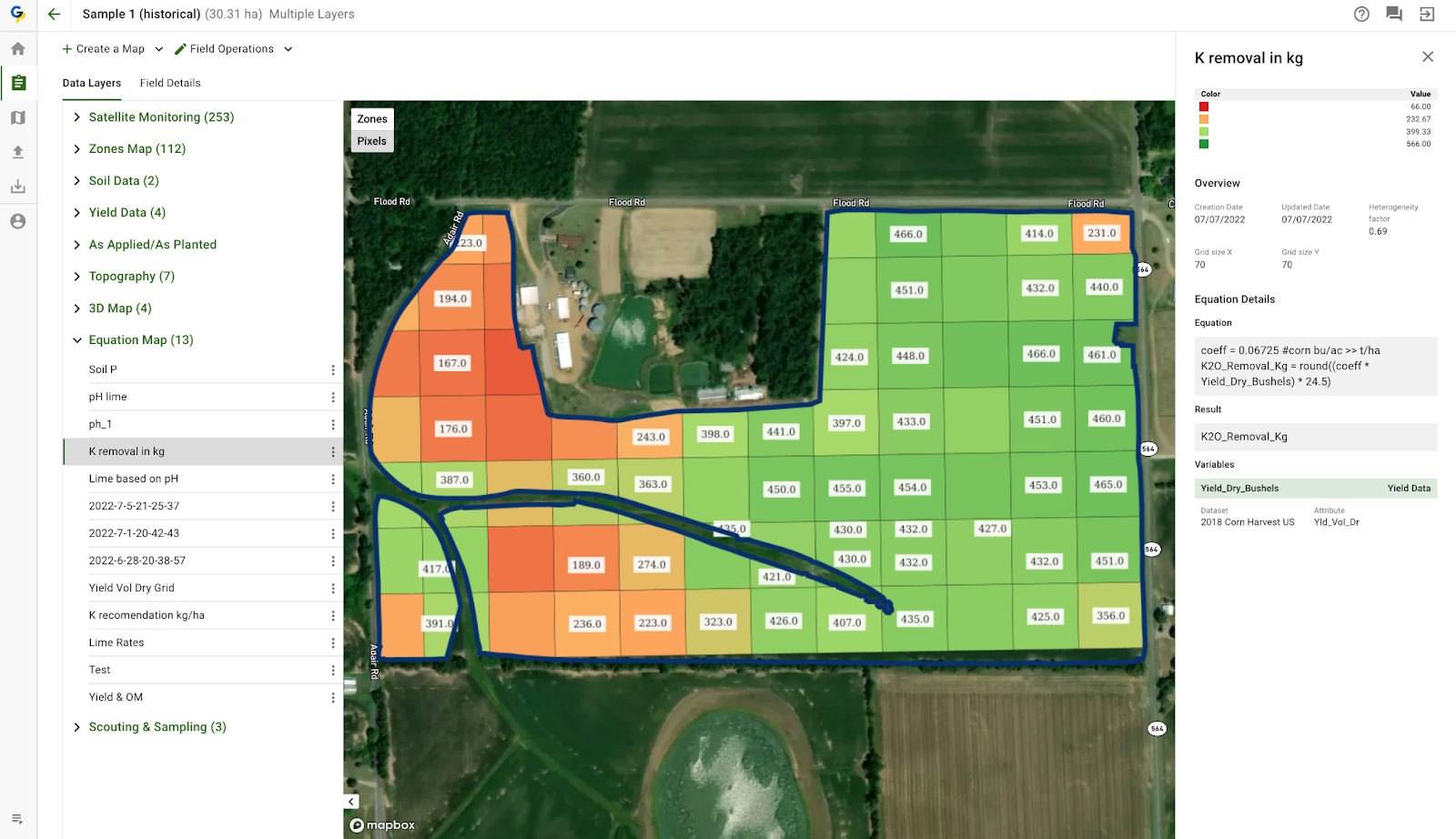
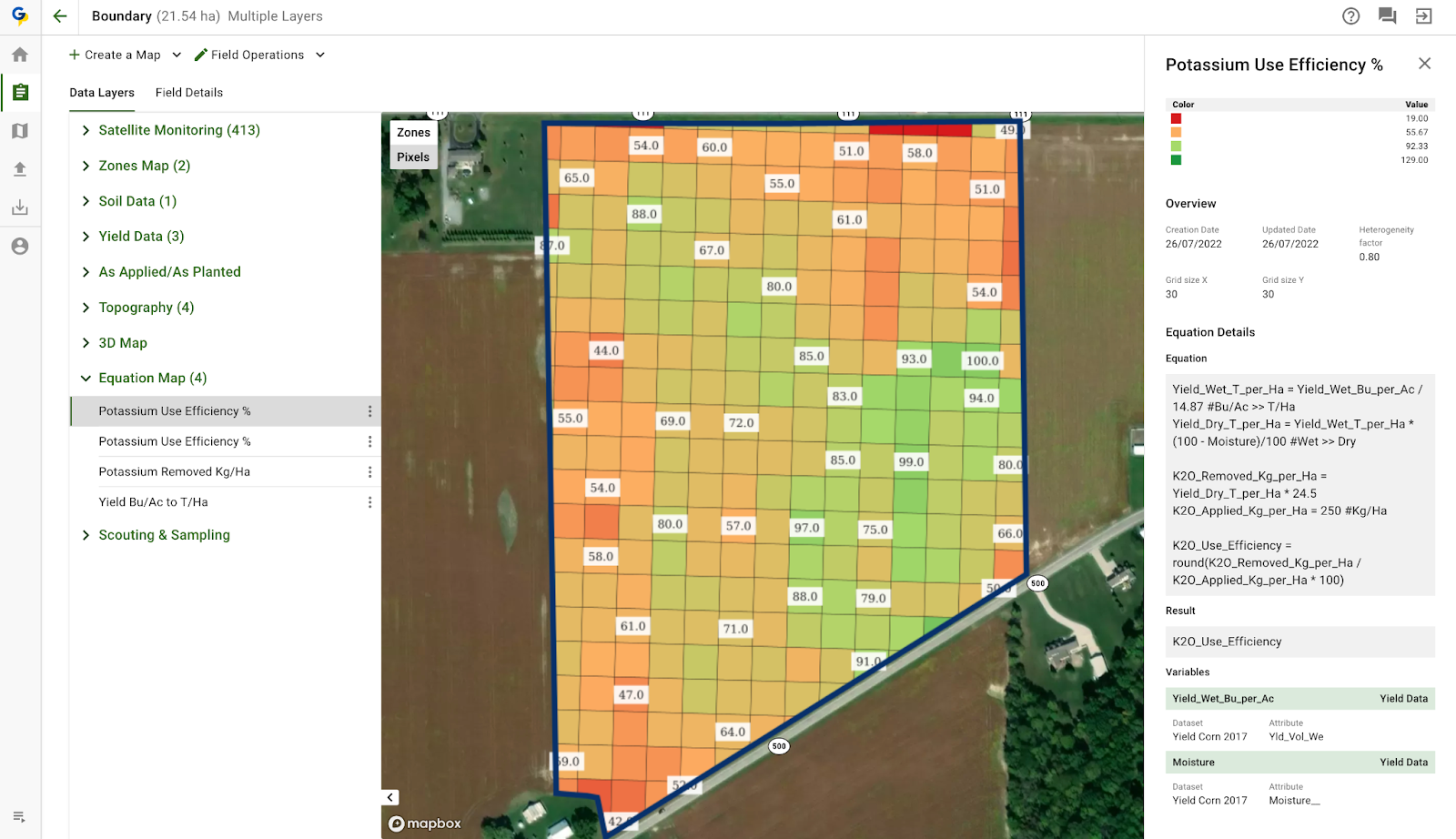
Potassium Removal based on Yield data

Potassium Removal based on Yield data


Use Cases (see examples below):

  • Nitrogen Uptake in absolute numbers using Yield and Protein data
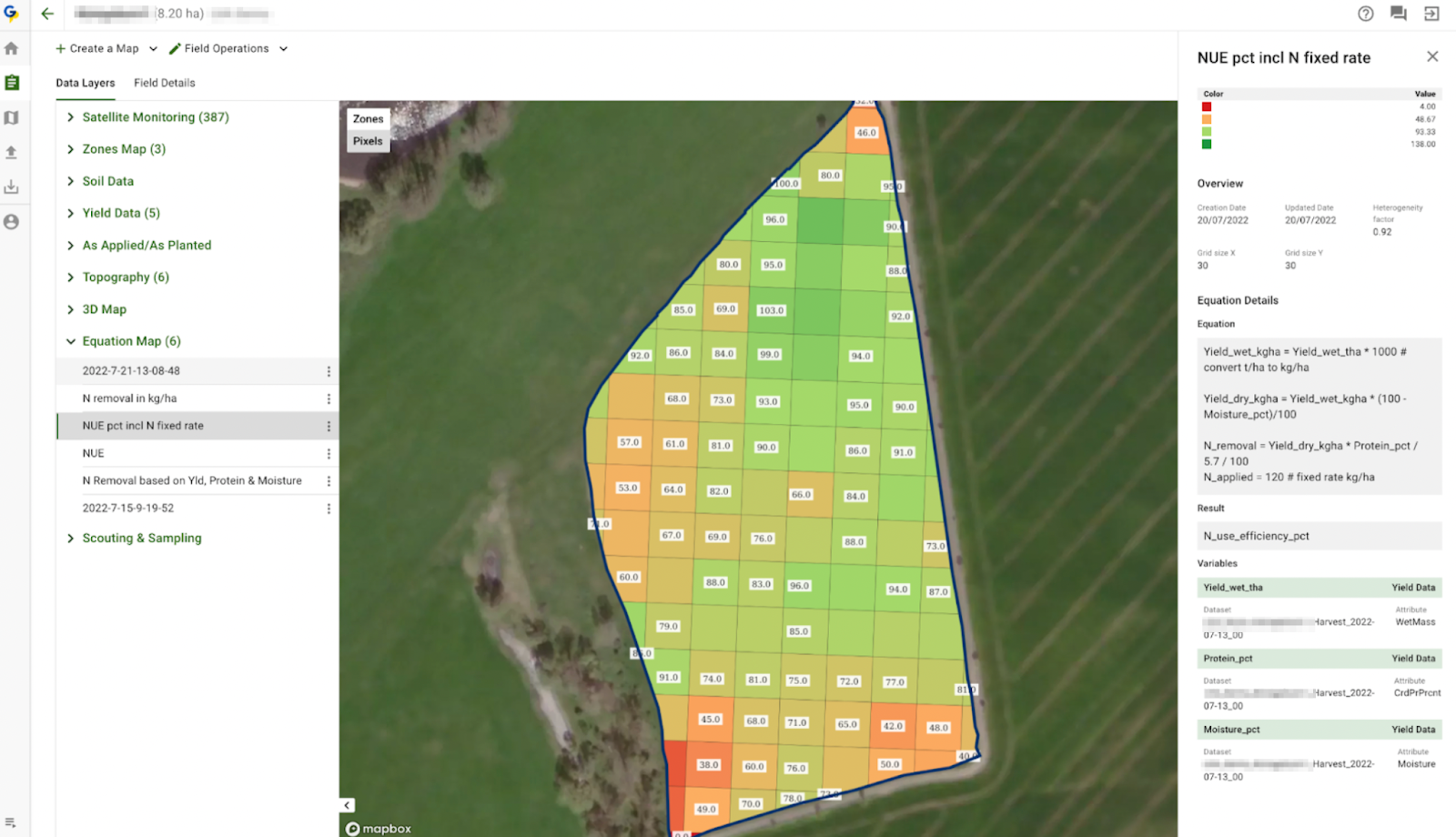
  • Nitrogen Use Efficiency (NUE) and Excess calculations with Yield and Protein data layers
  • Lime recommendations based on pH data from soil sampling or soil scanners
  • Sub-field (zones or pixel-level ROI maps)
  • Micro and Macro nutrients fertilization recommendations based on Soil sampling, Field Potential, Topography, and Yield data
  • Carbon modeling
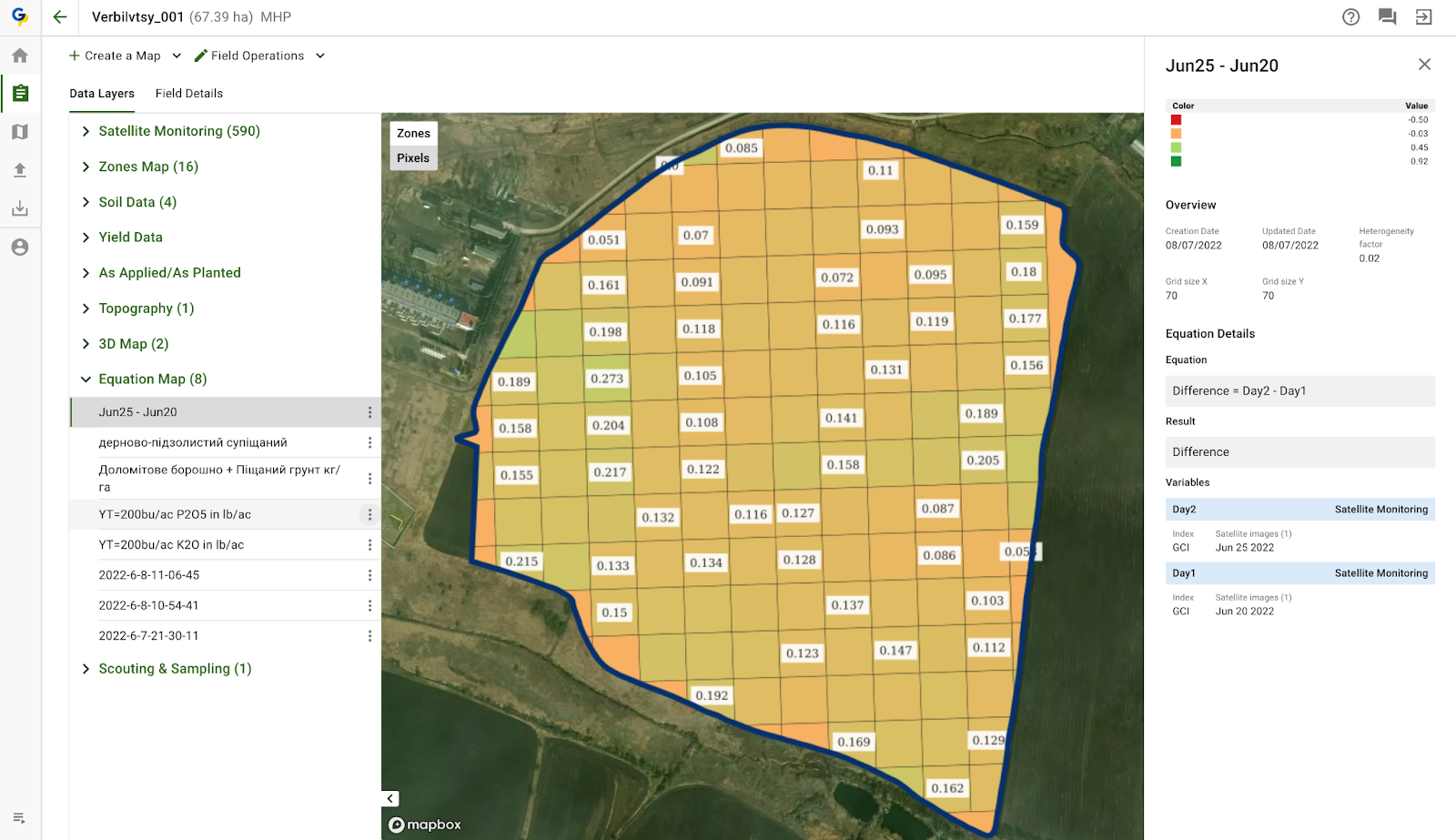
  • Change detection and alerting (calculate difference between Sentinel-2, Landsat8-9 or Planet imagery)
  • Soil and grain moisture modeling
  • Calculation of dry yield out of wet yield datasets
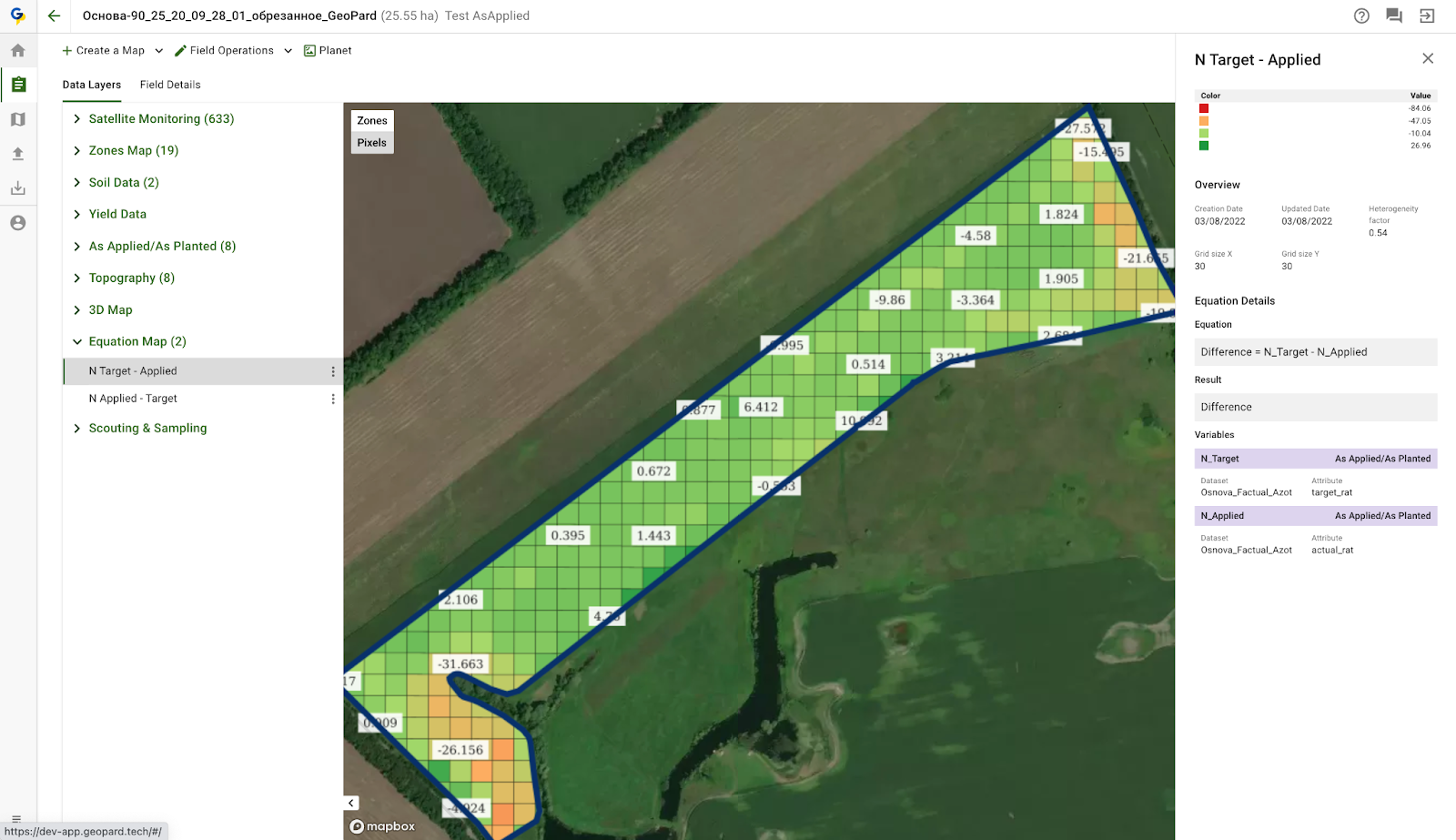
  • Target Rx vs As-applied maps difference calculation


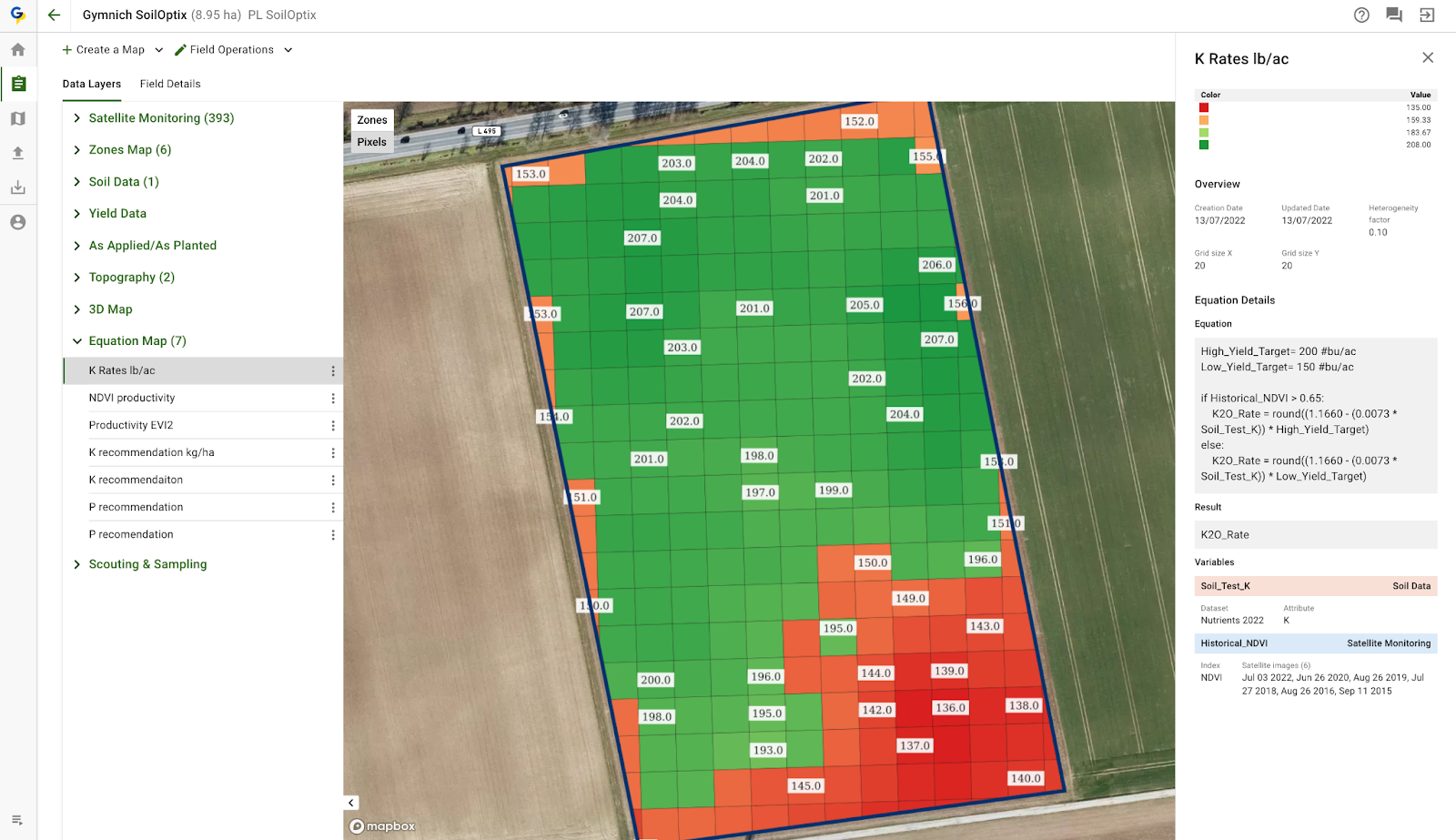
Potassium Recommendations based on Two Yield Targets (Productivity Zones)

Potassium Recommendations based on Two Yield Targets (Productivity Zones)


Fertilizer: Recommendations Guide. Potassium / Corn.

Fertilizer: Recommendations Guide (South Dakota State University): Potassium / Corn. Review and Revision: Jason Clark | Assistant Professor & SDSU Extension Soil Fertility Specialist


Potassium Use Efficiency in Kg/Ha

Potassium Use Efficiency in Kg/Ha


Nitrogen Use Efficiency in percentage. Calculation is based on Yield, Protein and Grain Moisture data layers

Nitrogen Use Efficiency in percentage. Calculation is based on Yield, Protein and Grain Moisture data layers


Nitrogen: Target Rx vs As-Applied

Nitrogen: Target Rx vs As-Applied


Chlorophyll difference between two satellite images

Chlorophyll difference between two satellite images


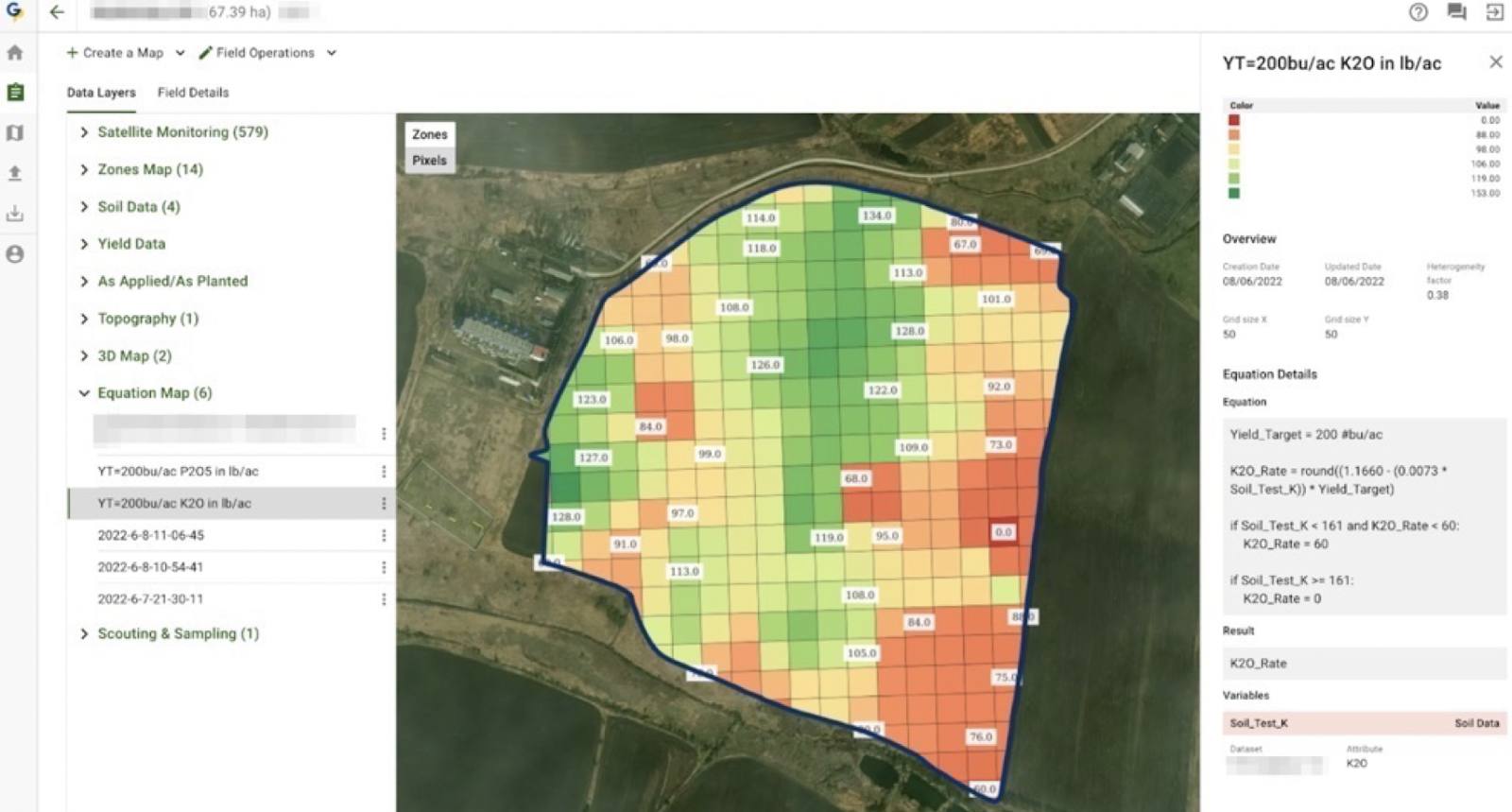
A user of GeoPard can adjust existing and create their private formulas based on Imagery, Soil, Yield, Topography, or any other data layers GeoPard supports. 

Examples of the template GeoPard Equations

Examples of the template GeoPard Equations


Formula-based analytics helps farmers, agronomists, and data scientists to automate their workflows and make decisions based on multiple data and scientific research to enable easier implementation of sustainable and precision agriculture.

What is Equation-based Analytics in Precision Agriculture? The Use of Precision Formula

Equation-based analytics in precision agriculture refers to the use of mathematical models, equations, precision formula, and algorithms to analyze agricultural data and derive insights that can help farmers make better decisions about crop management.

These analytics methods incorporate various factors such as weather conditions, soil properties, crop growth, and nutrient requirements to optimize agricultural practices and improve crop yields, while minimizing resource waste and environmental impact.

Some of the key components of equation-based analytics in precision agriculture include:

  • Crop growth models: These models describe the relationship between various factors such as weather, soil properties, and crop management practices, to predict crop growth and yield. Examples of such models include the CERES (Crop Environment Resource Synthesis) and APSIM (Agricultural Production Systems sIMulator) models. These models can help farmers make informed decisions about planting dates, crop varieties, and irrigation scheduling.
  • Soil water models: These models estimate the water content in the soil profile based on factors such as rainfall, evaporation, and crop water use. They can help farmers optimize irrigation practices, ensuring that water is applied efficiently and at the right time to maximize crop yields.
  • Nutrient management models: These models predict nutrient requirements for crops and help farmers determine the optimal rates and timing of fertilizer application. By using these models, farmers can ensure that crops receive the right amount of nutrients, while minimizing the risk of nutrient runoff and environmental pollution.
  • Pest and disease models: These models predict the likelihood of pest and disease outbreaks based on factors such as weather conditions, crop growth stages, and management practices. By using these models, farmers can make proactive decisions about pest and disease management, such as adjusting planting dates or applying pesticides at the right time.
  • Remote sensing-based models: These models use satellite imagery and other remote sensing data to monitor crop health, detect stress factors, and estimate yield. By integrating this information with other data sources, farmers can make better decisions about crop management and optimize resource use.

In summary, equation-based analytics in precision agriculture uses mathematical models and algorithms to analyze complex interactions between various factors that affect crop growth and management. By leveraging these analytics, farmers can make data-driven decisions to optimize agricultural practices, improve crop yields, and minimize environmental impact.


Frequently Asked Questions


1. How can precision agriculture help address resource use and pollution issues in agriculture?

It can help address resource use and pollution issues in agriculture through targeted resource application, efficient resource management, enhanced monitoring, and the adoption of conservation practices. By applying inputs such as fertilizers and pesticides only where needed, farmers can reduce waste and minimize pollution.

Data-driven decision-making enables optimal resource management, while real-time monitoring allows for timely interventions to prevent pollution incidents. Additionally, the implementation of conservation practices promotes sustainable agriculture and reduces environmental impacts.

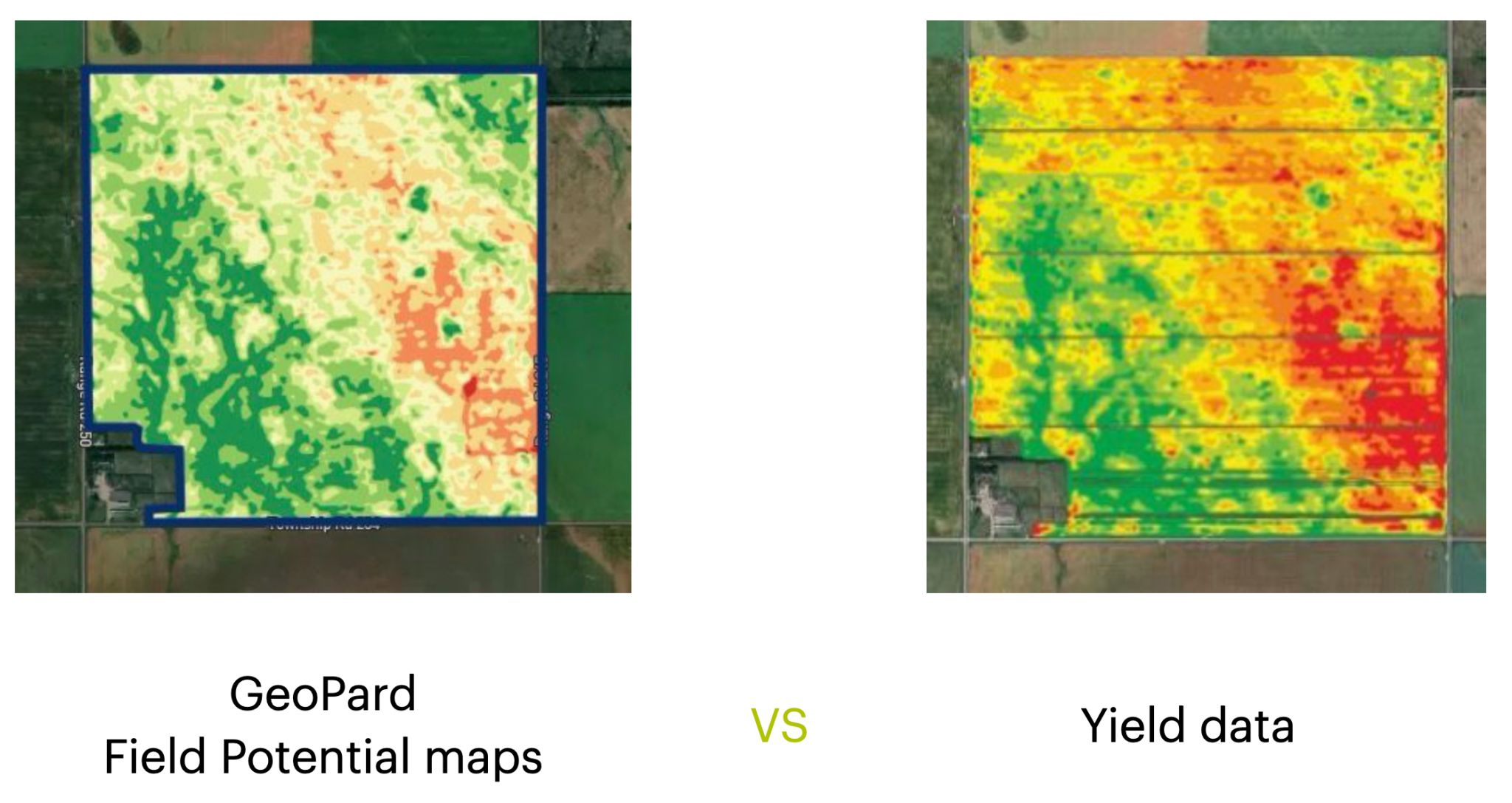
GeoPard Field Potential maps vs Yield data

GeoPard Field Potential maps very often look exactly like yield data.

We create them using multi-layer analytics of historical information, topography, and bare soil analysis.

The process of such synthetic Yield maps is automated (and patented) and it takes about 1 minute for any field in the world to generate it.


GeoPard Field Potential maps vs Yield data

Can be used as the basis for:

What are Field Potential maps?

Field potential maps, also known as yield potential maps or productivity potential maps, are visual representations of the spatial variability in potential crop yield or productivity within a field. These maps are created by analyzing various factors that influence crop growth, such as soil properties, topography, and historical yield data.

These maps can be used in precision agriculture to guide management decisions, such as variable-rate application of fertilizers, irrigation, and other inputs, as well as to identify areas that require specific attention or management practices.

Some key factors that are typically considered when creating field potential maps include:

  1. Soil properties: Soil characteristics such as texture, structure, organic matter content, and nutrient availability play a significant role in determining crop yield potential. By mapping soil properties across a field, farmers can identify areas of high or low productivity potential.
  2. Topography: Factors like elevation, slope, and aspect can influence crop growth and yield potential. For example, low-lying areas may be prone to waterlogging or have a higher risk of frost, while steep slopes may be more susceptible to erosion. Mapping these topographical features can help farmers understand how they affect productivity potential and adjust their management practices accordingly.
  3. Historical yield data: By analyzing historical yield data from previous years or seasons, farmers can identify trends and patterns in productivity across their fields. This information can be used to create these maps that highlight areas of consistently high or low yield potential.
  4. Remote sensing data: Satellite imagery, aerial photography, and other remote sensing data can be used to assess crop health, vigor, and growth stage. This information can be used to create these maps that reflect the spatial variability in crop productivity potential.
  5. Climate data: Climate variables such as temperature, precipitation, and solar radiation can also influence crop growth and yield potential. By incorporating climate data into these maps, farmers can better understand how environmental factors affect productivity potential in their fields.

They are valuable tools in precision agriculture, as they help farmers visualize the spatial variability in productivity potential within their fields. By using these maps to guide management decisions, farmers can optimize the use of resources, improve overall crop yields, and reduce the environmental impact of their agricultural operations.

Difference between Field Potential maps vs Yield data

Field potential maps and yield data are both used in precision agriculture to help farmers understand the spatial variability in their fields and make better-informed management decisions. However, there are some key differences between the two:

Data sources:

These maps are created by integrating data from various sources, such as soil properties, topography, historical yield data, remote sensing data, and climate data. However, this data is collected using yield monitors installed on harvesting equipment, which record the crop yield as it is harvested.

Temporal aspect:

These maps represent an estimation of the potential productivity of a field, which is generally static or changes slowly over time, barring significant changes in soil properties or other influencing factors. However, yield data is specific to a particular growing season or multiple seasons and can vary significantly from year to year based on factors like weather conditions, pest pressure, and management practices.

In summary, field potential maps and yield data are complementary tools in precision agriculture. These maps provide an estimate of the potential productivity of a field, helping farmers identify areas that may require different management practices. Yield data, on the other hand, documents the actual crop output and can be used to assess the effectiveness of management practices and inform future decision-making.

Vegetation Indices and Chlorophyll Content

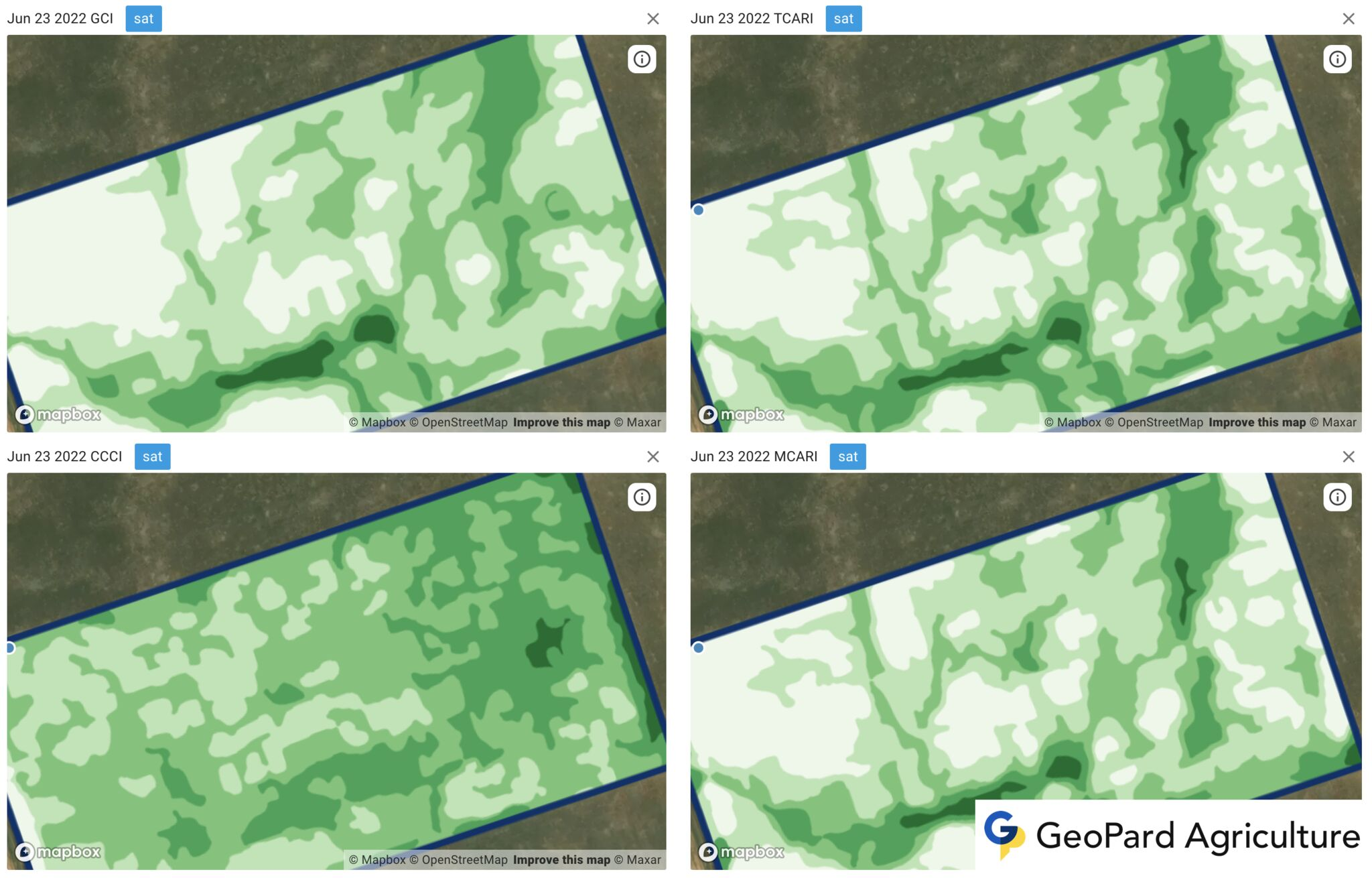
GeoPard extends the family of supported chlorophyll-linked vegetation indices with

  • Canopy Chlorophyll Content Index (CCCI)
  • Modified Chlorophyll Absorption Ratio Index (MCARI)
  • Transformed Chlorophyll Absorption in Reflectance Index (TCARI)
  • ratio MCARI/OSAVI
  • ratio TCARI/OSAVI

They help to understand the current crop development stage including

  • identification of the areas with nutrient demand,
  • estimation of the nitrogen removal,
  • potential yield evaluation,

And the insights are used for precise Nitrogen Variable Rate Application maps creation.


Read More: Which index is the best to use in the precisionAg

Read More: GeoPard vegetation indices


Vegetation Indices and Chlorophyll ContentCanopy Chlorophyll Content Index (CCCI) vs Modified Chlorophyll Absorption Ratio Index (MCARI) vs Transformed Chlorophyll Absorption in Reflectance Index (TCARI) vs Ratio MCARI/OSAVI

What is Vegetation Indices?

Vegetation indices are numerical values derived from remotely sensed spectral data, such as satellite or aerial imagery, to quantify the density, health, and distribution of plant life on the Earth’s surface.

They are commonly used in remote sensing, agriculture, environmental monitoring, and land management applications to assess and monitor vegetation growth, productivity, and health.

These indices are calculated using the reflectance values of different wavelengths of light, particularly in the red, near-infrared (NIR), and sometimes other bands.

The reflectance properties of vegetation vary with different wavelengths of light, allowing for the differentiation between vegetation and other land cover types.

Vegetation typically has strong absorption in the red region and high reflectance in the NIR region due to chlorophyll and cell structure characteristics.

Some widely used vegetation indices include:

  • Normalized Difference Vegetation Index (NDVI): It is the most popular and widely used vegetation index, calculated as (NIR – Red) / (NIR + Red). NDVI values range from -1 to 1, with higher values indicating healthier and denser vegetation.
  • Enhanced Vegetation Index (EVI): This index improves upon NDVI by reducing atmospheric and soil noise, as well as correcting for canopy background signals. It uses additional bands, such as blue, and incorporates coefficients to minimize these effects.
  • Soil-Adjusted Vegetation Index (SAVI): SAVI is designed to minimize the influence of soil brightness on the vegetation index. It introduces a soil brightness correction factor, enabling more accurate vegetation assessments in areas with sparse or low vegetation cover.
  • Green-Red Vegetation Index (GRVI): GRVI is another simple ratio index that uses the green and red bands to assess vegetation health. It is calculated as (Green – Red) / (Green + Red).

These indices, among others, are used by researchers, land managers, and policymakers to make informed decisions regarding land use, agriculture, forestry, natural resource management, and environmental monitoring.

Normalized Difference Moisture Index

The number of vegetation indices supported by GeoPard is continuously growing. GeoPard team introduces the Normalized Difference Moisture Index (NDMI). The index determines vegetation water content and normalized difference water index (NDWI). It is useful for finding the spots with existing water stress in plants.

Lower NDMI values mark the spots where the plants are under stress from insufficient moisture.
On the other side, lower normalized difference water index values following the vegetation peak highlight the spots that are becoming ready for harvesting first.

The difference of the vegetation relative water content between two satellite images (Sentinel-2 constellation in this case)

The difference of the vegetation relative water content between two satellite images (Sentinel-2 constellation in this case)

In the following screenshots, you can find the NDMI zones generated based on June 19 (vegetation peak) and July 6 satellite images and the equation map representing the NDMI difference.

Normalized Difference Moisture Index calculated on top of Planet / Sentinel-2 / Landsat imageNDMI calculated on top of Planet / Sentinel-2 / Landsat image

What is Moisture Index?

It is a measure or calculation used to assess the moisture content or availability in a specific area or region. It is typically derived from various environmental factors such as precipitation, evapotranspiration, soil properties, and vegetation cover.

It provides a relative indication of the wetness or dryness of an area, helping to identify potential water stress or drought conditions.

It is a valuable tool for monitoring and managing water resources, agricultural planning, and understanding the ecological conditions of a particular region.

What is Normalized Difference Moisture Index?

Normalized Difference Moisture Index (NDMI) is a vegetation index derived from remote sensing data to assess and monitor the moisture content of vegetation. Like other vegetation indices, it is computed using spectral reflectance values from satellite or aerial imagery.

It is particularly useful in monitoring plant water stress, assessing drought conditions, estimating fire risk, and studying the impacts of climate change on vegetation.

It is calculated using the Near-Infrared (NIR) and Shortwave Infrared (SWIR) bands, which are sensitive to the moisture content in vegetation. The formula for NDMI is:

NDMI = (NIR – SWIR) / (NIR + SWIR)

NDWI values typically range from -1 to 1, with higher values indicating higher vegetation moisture content and lower values indicating lower moisture content or water stress in the vegetation. Negative NDMI values can be associated with non-vegetated areas or areas with very low moisture content.

What is NDWI?

NDWI, or Normalized Difference Water Index, is a remote sensing index used to quantify and assess water content or water-related features in vegetation or landscapes.

It is calculated by analyzing the reflectance of near-infrared and green light bands from satellite or aerial imagery. It is particularly useful for identifying water bodies, monitoring changes in water availability, and assessing vegetation health.

By comparing the absorption and reflection of different wavelengths, it provides valuable information for applications such as drought monitoring, hydrological analysis, and ecosystem management.

Visualization of NDMI to Determine Normalized Difference Water Index

Visualizing the NDMI involves processing satellite or aerial imagery, calculating the NDMI values, and then displaying the results as a color-coded map or image. Here are the general steps to visualize NDMI:

  • Acquire satellite or aerial imagery: Obtain multispectral imagery from a satellite or aerial platform, such as Landsat, Sentinel, or MODIS. Ensure that the imagery includes the necessary bands: Near-Infrared (NIR) and Shortwave Infrared (SWIR).
  • Pre-process the imagery: Depending on the data source, you may need to preprocess the imagery to correct for atmospheric, geometric, and radiometric distortions. Convert the digital numbers (DN) in the image to spectral reflectance values.
  • Calculate NDMI: For each pixel in the image, use the NIR and SWIR reflectance values to compute the NDMI using the formula: NDMI = (NIR – SWIR) / (NIR + SWIR).
  • Color mapping: Assign a color palette to the NDMI values. Typically, a continuous color scale is used, ranging from one color (e.g., red) for low NDMI values (indicating low moisture content) to another color (e.g., green) for high NDMI values (indicating high moisture content). You can use software like QGIS, ArcGIS, or programming libraries like Python’s Rasterio and Matplotlib to create a color map.
  • Visualize the NDMI map: Display the NDMI map or image using GIS software, a programming library, or an online platform. This will allow you to analyze the spatial distribution of vegetation moisture content and identify areas of water stress or high moisture.
  • Interpretation and analysis: Use the NDWI visualization to assess vegetation health, monitor drought conditions, or evaluate fire risk. You can also compare normalized difference water index maps from different time periods to analyze changes in vegetation moisture content over time.

Remember that different software tools or programming libraries may have slightly different workflows, but the overall process will be similar. Additionally, you can overlay other data layers, such as land use, elevation, or administrative boundaries, to enhance your analysis and better understand the relationships between vegetation moisture content and other factors. 

What is soil regeneration?

Soil regeneration is simply the process of improving the quality of your soil by adding organic matter, which helps to improve drainage, water retention, and nutrition for your plants. Soil regeneration farming involves returning nutrients and organic matter to the soil to restore the soil’s fertility and productivity.

And this can be done by using cover crops, green manures, and composts. These are all plants that are grown specifically for their ability to increase the fertility of the soil they grow in.

Cover crops are planted in between harvests of the main crop, such as wheat or corn, to protect against erosion and shade out weeds. Green manures and composts are used to restore nutrients into the soil after a harvest has been taken from it.

Soil regeneration can be done by several means, including:

  • Restoring a degraded area to its natural state.
  • Introducing and promoting native species.
  • Using organic matter to improve the soil’s physical properties and fertility.
  • Using cover crops to increase organic matter and manage moisture.

However, it is a long and slow process, but the rewards are great. Your plants will flourish, you’ll save money on fertilizers and pesticides, and you can even sell your excess produce for more money.

What is soil regeneration farming and why is it important?

Soil regeneration farming is a way of farming that focuses on building up the soil and improving its quality, intending to improve plant growth and crop yields.

Further, it is an important part of sustainable agriculture. It involves practices that build soil organic matter, reduce erosion, increase water retention and retention of nutrients, improve soil structure and create more diverse plant communities in your field.

The main goal of this type of farming is to increase the soil’s ability to hold water and nutrients. This can be done in many ways, including:

  1. Improving the structure of the soil by adding compost or other organic matter.
  2. Adding cover crops to protect the soil from erosion during fallow periods.
  3. Planting diverse crop rotations that include legumes and grasses.

Furthermore, soil regeneration farming is important because it results in better crop yields. Healthy soils can retain water better, which improves moisture conditions for plants in dry areas or during droughts. They also have higher concentrations of nutrients that plants need to grow well.

What is soil regeneration farming and why is it important?

It also helps in improving the water quality in lakes and streams. Healthy soils contain fewer nutrients like nitrogen and phosphorus that can cause algal blooms in lakes and streams when they wash out into waterways during rainstorms.

By improving soil quality, farmers can reduce runoff from their fields during storms so it doesn’t contaminate nearby water bodies with excess nutrients. It is an important way of improving soil quality. It involves returning nutrients and organic matter to the soil to restore the soil’s fertility and productivity.

Causes of soil degradation

To better understand the growing problem of soil degradation, we first need to look at what causes it. Soil degradation, a complex process that diminishes the quality and fertility of soil, has been increasingly observed worldwide, raising concerns about the future of our planet’s ecosystems and agricultural productivity. Here are some of the causes of soil degradation:

1. Overgrazing

Overgrazing is the most common cause of soil degradation. It is caused by too many animals grazing in a specific area for an extended period. This leads to a reduction of plant cover and poor plant growth, which in turn results in the loss of organic matter and nutrients from the soil.

2. Over-use of pesticides and fertilizers

These can cause pollution and harm wildlife. They may also damage the structure of the soil by killing bacteria that help plants grow healthy roots and shoots, which in turn affects crop yields.

3. Inappropriate irrigation practices

Practices such as flooding fields during rainy seasons or leaving fields dry for extended periods can both damage soils because they disrupt the balance between water infiltration rates (how fast water moves into the ground) and evaporation rates (how fast water evaporates from plants.

Excessive irrigation can also lead to the leaching of nitrogen into groundwater supplies, which may result in eutrophication (excessive nutrient enrichment) of waterways and surface waters.

4. Over-cultivation

Over-cultivation happens when the soil is tilled excessively. Over-cultivation can have several negative impacts on soil health. Excessive tilling can lead to soil compaction, which in turn reduces the pore space within the soil and limits the ability of plants to take up water and nutrients. In addition, over-cultivation can result in a loss of organic matter, which is a critical component of healthy soil.

5. Poor drainage

Poor drainage can have significant impacts on soil health. When soil is poorly drained, it can become waterlogged, which means that water accumulates in the soil and displaces the air that plant roots need to breathe. This can lead to a lack of oxygen in the soil, which can harm plant growth and make the soil more susceptible to erosion. Additionally, it can cause salts to accumulate in the soil, a process known as salinization.

What is the benefit of regenerating soil?

As we explore solutions to combat soil degradation, it is essential to highlight the positive impact of regenerating soil on our environment and agricultural systems. The practice of soil regeneration not only reverses the adverse effects of degradation but also leads to numerous benefits that enhance the overall health of our planet. The benefits of regenerating soil include:

1. Increased productivity

Regenerated soils have more nutrients and minerals than depleted soils. This means that crops can grow better and produce more yields than those grown in depleted soils.

2. Improved water retention

Soil that has been regenerated will have better water retention capacity than depleted soils because it contains more organic matter which helps retain moisture in the soil.

3. Reduced fertilizer use

Regenerated soils require less fertilizer for optimum performance compared with depleted ones because they contain all the nutrients needed for plant growth without additional applications.

4. Soil erosion control

Regenerating soil helps plants grow better because they have more nutrients and water available to them. This allows them to grow bigger and stronger so they don’t have to worry about being blown over by wind or washed away in rainstorms.

5. Increased crop yields

Regenerated soils have greater water holding capacity than tilled soils and have a higher nutrient content. The latter means that you can grow more food on less land, which reduces the need for fertilizers and other chemicals.

Regenerated soil also has a higher pH (a measure of acidity or alkalinity), which means that plants can absorb more nutrients from it. This leads to more nutritious crops, which makes them healthier for people to eat too.

6. Improved soil health

Regenerative agriculture practices build soil health by enhancing biological activity in soils, increasing microbial populations that improve nutrient cycling, supporting beneficial organisms that protect crops from pests and disease, and increasing carbon sequestration.

How to regenerate soil: 5 core principles

As awareness grows about the importance of healthy soil for both the environment and human health, more and more people are looking to regenerate degraded soil. However, regenerating soil may sound like a daunting task, but it’s really a matter of following a few basic principles. Here are 5 core principles of regenerative farming:

1. Integrating livestock

Animals are not necessary for regenerative agriculture, but when cattle graze, they return nutrients to the soil in the form of manure, which is a crucial service. By encouraging organic matter, stimulating soil microbial populations, and enhancing nutrient cycling, this approach enhances soil health.

2. Adding plant diversity

Plants play an active role in seeking nutrients, defending themselves from pests and disease, responding to invasive plants, and stimulating soil microbial activity.

When farmers promote plant diversity, they promote an environment in which plants interact, soil microbial activity can be stimulated by plants, and farmers will benefit in several ways.

Further, they can reduce input costs because soil microbes can provide more nutrients and more water to plant roots than plants can obtain on their own. In addition to actively seeking nutrition, plants also actively respond to invading species, protect themselves from disease and pests, and promote microbial activity in the soil.

Farmers profit in several ways when they encourage plant diversity because it creates an environment where plants may interact and soil microbial activity can be increased. Because soil bacteria can supply plant roots with more nutrients and water than plants can on their own, they can lower input costs.

Farmers should cultivate a variety of warm- and cool-season grasses, warm- and cool-season broadleaves, which cover the main plant kinds that naturally occur in untamed areas, to take into account plant diversity.

How to regenerate soil: 5 core principles

3. Building soil armor

It’s essential to keep your soil covered if you want to create and sustain soil health. More specifically, it preserves soil moisture, boosts organic matter, and enhances soil structure while reducing runoff and soil loss. There are two types of soil armor: passive armor, which consists of agricultural residue left on the ground after harvest, and active armor, which involves cultivating cover crops.

4. Minimizing soil disturbances

Farmers can reduce soil disturbance by using no-till or strip-till techniques, which will ultimately improve soil health. “Fields managed to utilize no-till farming for numerous years have a higher water retaining capacity,” claims the USDA. This is essential in areas prone to drought since a lack of water can lead to crop failure.

5. Maintaining continual living plant roots

Farmers may cycle more nutrients by utilizing cover crops and microbes that encourage more strong root systems in all crop kinds.

What can farmers do for soil regeneration?

For farmers, the health of their soil is directly linked to the success of their crops and the long-term viability of their farm. Therefore, to promote soil regeneration and ensure the continued productivity of their land, there are a variety of techniques and practices they can employ. Below are some of the things farmers can do for soil regeneration:

1. Cover cropping

Regenerative agriculture and soil health both depend on encouraging more continuous plant and root growth in the soil. According to some regenerative agriculture theories, cover crops can fix CO2 from the atmosphere and sequester carbon as organic matter in the soils. They can also feed carbon plant root exudates into the soil, which promotes soil biology, add nutrients to soils, and lessen soil erosion.

Depending on the soil requirements and the region, many crops can be employed. Excellent scavengers of surplus nutrients left in the soil after crop harvesting are cover crops. The extra nutrients can be recycled until needed at the start of the following planting season after being incorporated into their biomass and stored.

Additionally, cover crops will aid in reducing agricultural run-off and potential fertilizer leakage into watersheds and groundwater. To reduce the requirement for nitrogen fertilizers the next season, leguminous cover crops can be utilized to fix nitrogen from the atmosphere into the soil.

Cover crops may be sown between rows in some permanent crop systems. Maintaining soil cover prevents potential soil erosion, controls weed growth, and may even provide habitat for pollinators. The use of cover crops is a fundamental strategy that can help to improve soil biology and structure, recycle nutrients, lessen the need for synthetic fertilizers, trap carbon from the atmosphere into soils, and reduce agricultural runoff. This is a crucial tool that may improve your bottom line while also rejuvenating your soils for maximum crop health and output.

2. Reduced or no-till farming practices

The quantity and variety of soil microorganisms increase when soils are not disturbed, leading to better soil microbiome communities and soil structure. These enhancements assist the environment while also enhancing crop quality, resilience to crop stresses, and eventually production.

Environmentally speaking, these activities enhance soil structure, lessen soil erosion from wind and water, reduce agricultural runoff into watersheds, and support soil carbon sequestration.

According to some regenerative agriculture ideas, growers that embrace reduced or no-till practices may see a variety of improvements on the farm that may boost their financial bottom lines while regenerating their soils for future generations. Less soil crusting, higher soil nutrient retention, availability of crops, increased water penetration and retention, and increased soil organic matter over time are all effects of reduced or no-till techniques. All of these have a significant impact on the resilience of crops to stresses and, ultimately, crop output.

Also, there are ways for growers to cut costs, such as by using water more effectively, requiring less fertilizer, and reducing the need to till the soil. Overall, low or no-till techniques are essential elements of regenerative agriculture that will benefit society in the short and long terms by restoring soils.

3. Composting

Restoring depleted soils requires creating organic soil. Regenerative agriculture relies heavily on digested biological elements like crop residue, food scraps, and animal manure to increase the organic matter in the soil. These materials contain carbon, which when added to the soil slowly decomposes to create stable organic matter. It takes time for organic materials to become stable.

Composting can hasten the decomposition of these components, resulting in compost products that may be more readily available for use by plants and soil bacteria. Earthworms, nematodes, bacteria, fungi, and other species can all contribute to the composting process.

Composts provide fertilizer value to your soils and crops in forms that are available over longer periods than traditional fertilizers, in addition to replenishing carbon/organic matter in soils.

Farmers are often faced with challenges of soil degradation, which can affect their ability to produce crops and other plants. Soil degradation can have an impact on the quality of the soil and its ability to support plant growth. It can also affect the environment as well as human health.

Furthermore, GeoPard’s solution helps farmers in soil regeneration by improving soil structure and porosity, increasing water infiltration rates, improving nutrient retention, and reducing soil erosion. Farmers can also use GeoPard to manage all the data related to their fields and crops.

They can enter information about soil quality, crop growth rate, and other details about their farms. In addition to this, this solution also contains various features that are beneficial for farmers such as a crop yield estimator and field management guide.

Conclusion

In conclusion, soil regeneration refers to the process of restoring degraded soil to a healthy state by implementing regenerative practices such as cover cropping, reduced tillage, and crop rotation. The benefits of regenerating soil are numerous and far-reaching, including improved soil health, increased crop yields, and enhanced ecosystem services.

Farmers can play a critical role in promoting soil regeneration by adopting regenerative practices and techniques such as agroforestry, intercropping, and nutrient cycling. By prioritizing soil health and sustainability, farmers can help to create a more resilient and productive agricultural system that benefits both people and the planet.


Frequently Asked Questions


1. How does topsoil replenish itself?

Topsoil replenishes itself through natural processes such as weathering, erosion, and the decomposition of organic matter. Weathering breaks down rocks into smaller particles, contributing to the mineral content of the soil.

Erosion brings in new sediment and nutrients from surrounding areas. Decomposing plant and animal material adds organic matter to the soil, improving its fertility and moisture retention.

These ongoing processes, combined with sustainable farming practices like crop rotation and cover cropping, help maintain and replenish the topsoil layer over time.

2. What is an essential nutrient that is stripped from soil when the soil is overused to grow certain crops?

One essential nutrient that can be depleted from the soil when it is overused to grow certain crops is nitrogen. Nitrogen is an important element for plant growth and is often supplied through fertilizers.

However, intensive and continuous cultivation of nitrogen-demanding crops can lead to the depletion of nitrogen levels in the soil. This highlights the importance of proper nutrient management.

3. Which solution could best help to restore or increase microorganisms and soil biodiversity?

One solution that can help restore or increase microorganisms and soil biodiversity is the practice of cover cropping. Cover crops are planted during periods when the main crop is not growing, providing a living root system that helps improve soil structure and nutrient cycling.

They also promote the growth of beneficial microorganisms and enhance soil biodiversity. Additionally, the application of organic matter, such as compost or manure, can provide a food source for soil organisms and stimulate their activity, contributing to a healthier soil ecosystem.

4. How long does it take for soil to regenerate?

The time it takes for soil to regenerate can vary depending on several factors such as the current condition of the soil, the specific regeneration practices employed, and environmental conditions.

In general, it can take several years for significant improvements to occur in soil health and fertility. However, with proper management practices such as crop rotation, cover cropping, and organic amendments, noticeable improvements in soil quality can often be observed within a few years.

5. Which process not only controls erosion, but can also help to replenish soil nutrients?’

One process that not only controls erosion but also helps to replenish soil nutrients is the practice of mulching. Mulching involves covering the soil with a layer of organic or inorganic material, such as straw, wood chips, or plastic, which acts as a protective barrier.

This helps to prevent soil erosion by reducing water runoff and wind erosion. Additionally, organic mulches break down over time, enriching the soil with nutrients as they decompose.

6. How to rejuvenate soil?

To rejuvenate soil, several practices can be implemented. First, incorporating organic matter such as compost or manure can enrich the soil with essential nutrients.

Second, practicing crop rotation helps break pest and disease cycles while promoting nutrient diversity. Third, implementing cover cropping prevents soil erosion and adds organic matter.

Finally, reducing tillage and practicing no-till farming techniques preserve soil structure and promote beneficial microbial activity. These practices combined can help rejuvenate and improve the health of the soil.

7. How does sustainable agriculture improve soil fertility?

Sustainable agriculture practices contribute to improved soil fertility in several ways. First, by reducing the use of synthetic fertilizers and pesticides, it preserves the natural balance of soil microorganisms and beneficial insects.

Second, incorporating organic matter and practicing crop rotation helps replenish soil nutrients and enhance microbial activity. Third, conservation practices like cover cropping and mulching prevent erosion and maintain soil structure.

8. What is it called when soil is overused?

When soil is overused and its quality declines due to excessive farming practices, it is commonly referred to as soil degradation. Soil degradation can occur from factors such as erosion, nutrient depletion, compaction, and loss of organic matter.

9. How is over irrigation damaging to soil?

Over irrigation can have detrimental effects on soil health. Excessive watering leads to waterlogging, which reduces the availability of oxygen in the soil. This suffocates beneficial soil organisms and hampers their functions.

Moreover, over-irrigation can cause the leaching of essential nutrients, washing them away from the root zone. It can also lead to the accumulation of salts in the soil, further degrading its fertility. Ultimately, these factors contribute to soil degradation and reduced crop productivity.

10. How does soil help plants?

Soil plays a vital role in supporting plant growth and development. It provides a medium for plants to anchor their roots, allowing them to access water and nutrients. Additionally, soil acts as a reservoir, storing and releasing water as needed by plants.

11. What is top dressing in agriculture?

Top dressing in agriculture refers to the practice of applying fertilizers or soil amendments directly to the surface of the soil or plant canopy. It is done to provide additional nutrients to crops during their growth stage.

Top dressing can be done using granular fertilizers, liquid fertilizers, or organic materials. This technique helps replenish essential nutrients, promote plant growth, and improve crop yields.

12. What causes loss of organic matter in soil?

Loss of organic matter in soil can be caused by various factors. One primary cause is unsustainable agricultural practices such as intensive tillage, overuse of synthetic fertilizers, and improper crop residue management.

Other factors include erosion, waterlogging, and excessive leaching. Additionally, deforestation and urbanization can also contribute to the loss of organic matter.

13. What does soil consist of?

Soil is composed of a mixture of mineral particles, organic matter, water, and air. The mineral particles, such as sand, silt, and clay, give soil its texture and provide essential nutrients.

Organic matter, including decomposed plant and animal materials, improves soil structure and fertility.

Water and air in the soil create a suitable environment for plant roots and soil organisms. Together, these components form the foundation for healthy and productive soil.

14. What is the correct order of soil layers from bottom to top?

The correct order of soil layers from bottom to top is as follows:

  • Bedrock or Parent Material: This is the solid rock layer that underlies all the other soil layers.
  • Subsoil: Located above the bedrock, this layer contains a mix of minerals and organic matter.
  • Topsoil: This is the uppermost layer of soil, rich in organic matter and nutrients, where most plant roots grow.
  • Organic Matter or Humus: This layer consists of decomposed plant and animal matter, providing nutrients and improving soil fertility.

These layers collectively form the soil profile, with each layer playing a vital role in supporting plant growth and ecosystem functions.

15. How to prepare garden soil in spring?

To prepare garden soil in spring, follow these steps:

  • Clear the area: Remove any weeds, debris, or old plant material from the garden bed.
  • Loosen the soil: Use a garden fork or tiller to loosen the soil and break up any compacted areas.
  • Add organic matter: Incorporate compost, well-rotted manure, or other organic amendments into the soil to improve its structure and fertility.
  • Level and smooth: Rake the soil to create a smooth surface, ready for planting.

By following these steps, you can create a healthy and fertile soil environment for your garden plants to thrive in the spring season.

16. Why is soil acidity associated with nutrient depletion?

Soil acidity is associated with nutrient depletion because acidic conditions can affect the availability and uptake of essential nutrients by plants.

In acidic soils, nutrients like phosphorus, potassium, and calcium become less soluble and more bound to the soil particles, making them less accessible to plant roots.

Additionally, acid-loving organisms that contribute to nutrient cycling may be inhibited, further limiting nutrient availability.

17. Is soil a renewable resource?

Soil is a naturally occurring resource that forms over long periods of time through the weathering of rocks and the accumulation of organic matter.

While soil can be replenished through natural processes, such as the decomposition of organic materials and the erosion of rocks, this regeneration process takes a significant amount of time.

Therefore, while soil can be considered renewable, its formation is a slow process, and it is essential to manage and protect soil to ensure its long-term sustainability.

18. Can you reuse potting soil?

Yes, potting soil can be reused with proper care and preparation. To reuse potting soil, remove any plant debris or roots and amend the soil with fresh organic matter, such as compost or fertilizer, to replenish nutrients.

Additionally, ensure that the soil is well-draining and free from pests or diseases. Reusing potting soil can help reduce waste and save costs, but it’s important to monitor the condition of the soil and provide necessary amendments for optimal plant growth.

Why might industrial agriculture be problematic?

Industrial agriculture is a system of producing and marketing food that has been developed over the last few centuries. The term refers to large-scale, heavily mechanized, and chemical-intensive farming operations.

There are so many benefits of industrial farming but it is also a system of farming that has been criticized by many people for its negative impact on the environment.

Industrialized farming or factory farming has also been criticized for its treatment of animals. Factory farms raise large numbers of animals in cramped conditions where diseases spread easily. The conditions are so bad that many animals die before they reach slaughter age.

To prevent this, farmers in some countries inject hormones into cows and pigs to make them grow faster or produce more milk or eggs than they would naturally do. These hormones have been linked with an increased risk of cancer in humans who consume them through milk products or meat from hormone-injected animals.

In general, industrialized agriculture is problematic because it relies on large amounts of fossil fuels, pesticides, and herbicides to produce food. These chemicals are harmful to the environment and can be detrimental to human health. For example, pesticides have been linked to cancer, birth defects, and other health problems.

Industrial agriculture also contributes significantly to climate change. It’s responsible for about 20 percent of global greenhouse gas emissions — more than all transportation combined. Industrial agricultural techniques also require large amounts of land and water resources.

Industrialized farming requires more than half the world’s freshwater supply. It also requires vast amounts of pesticides, fertilizer, and other synthetic products that often end up polluting groundwater supplies or leaching into rivers and streams.

As a result, many farmers have turned towards more sustainable methods such as organic farming or agroecology — a science-based approach that combines traditional knowledge with modern farming practices — which has been shown to provide higher yields than conventional methods while reducing environmental impacts.

What is industrial farming or industrialized agriculture?

Industrial farming is a term used to describe the large-scale, intensive, and highly mechanized production of animals, plants, fish, and other foods. Industrial farms are typically owned by corporations, and they generally focus on producing a single type of food for consumers.

Industrial farms are often located in rural areas where land is cheap and agricultural labor is scarce. They may be owned by small family farms or large corporations. The primary goal of an industrialized farm is to maximize profits by producing as much food as possible with the least amount of overhead costs (including labor).

Generally, industrialized farming involves producing a single crop, such as corn or soybeans, using intensive methods that provide maximum yields for minimum cost. Industrial agriculture is considered an efficient way of producing food because it provides high yields per acre at a low cost.

It has been criticized by some as being unsustainable because it relies heavily on fossil fuels and chemical fertilizers (increasing pollution), uses monocultures (reduces biodiversity), requires large-scale land ownership (leading to rural depopulation), consumes large quantities of water (which may be polluted with agricultural chemicals), destroys tropical rainforests (destroying local livelihoods), involves animal cruelty, and generates high levels of greenhouse gas emissions.

Characteristics of industrial farming

Industrialized agriculture has some characteristics that are obvious and others that are less so. The characteristics of modern agriculture that are listed below have wide-ranging effects in both scenarios.

1. Monocultures

In most of rural America, fields with industrial monocrops are evident. Regularly, these enormous fields are planted with a single crop, such as maize, wheat, or soy. As 36% of all US corn is used to feed farmed animals, industrial grain and industrial animal farming go hand in hand.

2. Corporate concentration

The landscape of American agriculture has transformed as a result of corporate concentration, and consolidation is only getting stronger. Get big or get out refers to the maxim that extractive industrial farming is most profitable at scales large enough to be supported and encouraged by public funds and multilateral investments.

Corporate farms working for international companies like JBS and Tyson, who have enormous financial and political clout, are replacing small and medium-sized livestock farms. Since 1970, corporate dairy goliaths have acquired or forced out of business 93% of the US dairies engaged in animal production.

Heirloom seeds and seed businesses once supported US farming in the field crops sector, but today, agribusiness firms like Bayer and DuPont — which in 2018 purchased seed and chemical tycoon Monsanto — control seeds globally.

3. CAFOS

Animals are raised in specialized animal feeding systems in industrialized farming (CAFOs). The Environmental Protection Agency (EPA) divides CAFOs into different categories based on the severity of the pollution they produce as well as the number of animals that are kept in each facility (predominantly animal waste).

More than 700 dairy cows, 10,000 pigs, or 125,000 broiler chickens are kept in large CAFOs. However, given that some farms house populations of 10,000 dairy cows, 17,500 pigs, or as many as 1,000,000 chickens, these figures do not represent the maximum size limit for CAFOs.

4. Agrichemical inputs

Without synthetic chemicals and medications that enable plants and animals to endure situations they otherwise could not endure, industrial agriculture would not be conceivable.

To compensate for the lack of nutrients brought on by the widespread use of toxic chemicals to manage crop diseases and non-crop plants, industrial monocrops are fertilized with synthetic chemical substances. The strain monocrops place on soil fertility makes these fertilizers even more critical.

CAFOs feed their animals veterinary medications like antibiotics to stimulate weight gain and avoid the infections that would otherwise run rampant across herds housed in crowded and unhealthy circumstances that depress their immune systems to rear animals in severe confinement.

5. GMOS

Gene editing is a technique used in biotechnology to create genetically altered organisms (GMOs). The riskiness of genetic change depends on the type of modification and is neither necessarily positive nor necessarily negative.

Traditional selective breeding, which is a form of genetic manipulation, produces minor, gradual changes over many generations with a low likelihood of unfavorable effects.

Direct laboratory alteration of genomes, however, has a larger risk of unexpected consequences because it can lead to significant changes in a single generation.

In the correct situations, genetic alteration may assist important social goals like increased crop disease resistance, enhanced human nutrition, or drought tolerance. GMO foods, as a technological cure, might fall short in addressing complicated societal issues like starvation.

In addition, strong agribusiness businesses frequently adopt genetic modification because it is expensive to boost earnings from farmed animals and industrial commodity crops. Industrialized field agriculture uses GMOs extensively; more than 90% of the corn, cotton, and soybeans grown in the US are GMOs. A few varieties of salmon and pigs are GMO animals, and new species are being developed.

The long-term effects of GMOs on ecology and human health are still uncertain. In the short term, modification increases industrial agriculture’s dominance, which includes harm to farm animals. It can also alter ecosystems outside of farms by contaminating wild species.

The widespread use of agrichemicals, which continue to pose threats to human and environmental health, goes hand in hand with modern genetic manipulation of crops.

Why is industrial agriculture problematic? The drawbacks

The problems with industrialized farming are many, but here are some of the most significant:

1. Pollution

The enormous amounts of waste produced by industrial farms pollute the land and water supply. Many pesticides and herbicides used in industrialized agriculture are toxic to humans as well as animals, and these chemicals run off into waterways and end up in our drinking water supplies.

2. Food safety

Meat from industrial farms often contains dangerous bacteria like salmonella and E. coli 0157:H7, which can cause serious illness or even death. Factory-farmed meat is also likely to contain hormones, antibiotics, and other drugs that have been fed to the animals themselves — drugs that can be passed on to humans through meat consumption.

3. Animal welfare issues

Animals raised under industrial conditions are kept in cramped quarters that deprive them of their natural behaviors, such as grazing on grass or swimming in water.

This leads to stress-related health problems for both chickens and pigs, who may develop lesions or abrasions from rubbing against their cages or each other; cattle may become lame from standing on hard surfaces for months at a time, and turkeys are prone to suffocation when they pile up on top of each other.

4. The food isn’t nutritious

Factory-farmed meat, eggs, and dairy are low in nutrients because animals don’t have access to fresh air or sunlight and aren’t eating their natural diets of grasses, fruits, nuts, and seeds.

They’re fed a diet consisting mainly of corn and soybeans that have been genetically modified to increase crop yields (which means more profits for the industry). These unnatural diets also contain antibiotics that are used as growth enhancers and can lead to resistance in bacteria that cause disease in humans.

5. Land use

The amount of land used for growing food crops has increased dramatically over the last few centuries due to the spread of industrial agriculture. This has resulted in deforestation, which can lead to biodiversity loss and soil erosion.

6. Water use

Industrial farming is also highly water-intensive. It takes about 1,000 liters (264 gallons) of water to produce one kilogram (2.2 pounds) of wheat or rice, compared with just 100 liters (26 gallons) per kilogram for some vegetables.

Benefits of industrial farming

Here are some of the advantages of industrialized farming:

1. Greater diversity and availability

Because it is now less expensive to produce food, farmers may invest in raising or cultivating a wider range of plants and animals than in the past. The growth of hybrid variants or disease-resistant plants that can be produced in many locations is another benefit of biotechnology advancements.

Also, thanks to developments in storage and shipping technologies, we may continue to enjoy oranges from Florida even during the chilly winters in the Northern states.

2. Affordable food

Because there is a larger supply of food to fulfill consumer demand, most crops are inexpensive, and their prices tend to stabilize over time. Due to increased product mobility brought about by industrialization, it is now affordable to send food long distances.

New breeds of crops resistant to particular plant diseases have also been created because of biotechnology advancements. Insecticides and pesticides raise crop yields and quality.

3. Reduced time to market

Food production, processing, packaging, preservation, and delivery techniques have greatly improved. As a result, groceries and markets receive things more swiftly than previously. The availability of food has never been an issue in first-world or highly developed nations.

Characteristics of industrial farming

4. Less reliance on human labor

Among several pros of industrial farming, farmers are no longer constrained by labor costs thanks to modern technology. For activities that call for labor, they can now choose from a pool of willing workers, and they can use machines to perform tasks that human hands could never complete.

As a result, farms can afford to recruit people of a higher caliber to carry out specialized duties.

5. Less geographical restrictions

Irrigation gives farmers easier access to water. Additionally, they can employ greenhouses and other equipment, such as fertilizers, to lessen the effects of seasonal and weather variations.

The lengthening of the growing season has made it possible to cultivate farmland in areas that were previously impractical for cultivating crops.

6. Longer storage life and availability

Food shelf-life has been extended to increase its economic value. New techniques of food preservation, processing, and packaging are being uncovered constantly. The U.S. Food and Drug Administration website is a good place to browse if you want to learn more about food preservation.

The agriculture industry is facing several challenges, from climate change to food security and environmental degradation. But the good news is that some emerging technologies can help farmers address these issues.

Smart agriculture is one such technology that has the potential to change the way we farm. What exactly is smart agriculture? It’s an umbrella term for technologies that can help farmers grow crops more efficiently and sustainably.

Smart agriculture uses technology to help farmers grow their crops in more sustainable ways. Smart farms use sensors and artificial intelligence (AI) to monitor crops 24/7 and detect problems before they become too large to be treated easily or economically.

Automated drones can be used for aerial surveys of fields or monitoring irrigation systems. This allows farmers to make better decisions about when to irrigate crops or spray pesticides. Smart agriculture keeps industrial farming safe and sustainable by improving soil health, reducing fertilizer runoff, and reducing pesticide use.


Frequently Asked Questions


1. Why industrial farms are good for the environment?

Industrial farms can be beneficial for the environment due to their ability to produce large quantities of food, helping to meet the demands of a growing population. These farms often implement advanced technologies and efficient practices, resulting in higher crop yields and reduced land use.

Additionally, centralized production can minimize transportation distances, decreasing carbon emissions. Furthermore, industrial farms may invest in sustainable initiatives like water conservation and waste management systems, promoting environmental stewardship.

2. Why is the industrial food chain good?

The industrial food chain offers several advantages that contribute to its positive impact. Firstly, it ensures a consistent and reliable food supply, meeting the demands of a growing population. Secondly, it enables efficient distribution and reduces food waste through streamlined processes and logistics.

Thirdly, the industrial food chain supports economies of scale, making food more affordable and accessible to a larger number of people. Lastly, it promotes food safety standards and traceability, enhancing consumer confidence in the products they consume.

3. Difference between plantation and farm?

The primary difference between a plantation and a farm lies in their respective purposes and scale of operations. A plantation typically refers to large-scale agricultural estates focused on cultivating cash crops like coffee, tea, or rubber, often found in tropical regions.

Farms, on the other hand, encompass a broader range of agricultural activities, including the cultivation of crops, livestock production, and various other agricultural practices.

Farms can vary in size and scope, from small family-owned operations to large commercial enterprises, and can produce a diverse array of crops and livestock based on regional conditions and market demands.

4. Why is agriculture bad?

While agriculture is essential for food production, it can have negative impacts on the environment. The use of synthetic fertilizers and pesticides can lead to soil degradation, water pollution, and harm to biodiversity.

Additionally, large-scale monoculture farming practices can deplete soil nutrients and increase the risk of crop diseases. Agricultural activities also contribute to greenhouse gas emissions, particularly through deforestation and livestock production.

However, sustainable farming practices, such as organic farming and agroforestry, can mitigate these negative effects and promote a more environmentally friendly agriculture.

A 3D map is an essential tool to explore the dependencies and correlations between various data layers.

The supported data layers include:

  • In-season and historical vegetation distribution.
  • Soil nutrient properties.
  • Complete topography profile.
  • Machinery data from harvesters, sprayers, seeders, etc.

The 3D mapping tool helps crop growers incorporate a data-driven approach and enter into Precision and Sustainable Agriculture.

The 3D models are working directly in browsers without any plugin or additional software installed.

Learn more
wpChatIcon
wpChatIcon

    Request Free GeoPard Demo / Consultation


    By clicking the button you agree our Privacy Policy. We need it to reply to your request.

      Subscribe


      By clicking the button you agree our Privacy Policy

        Send us information


        By clicking the button you agree our Privacy Policy