How To Calculate Fertilizer Uptake For Corn Field Based On Yield Dry Value?

Fertilizer management is a crucial aspect of successful corn production. Properly calculating fertilizer uptake based on yield dry value ensures that crops receive the necessary nutrients to maximize yield while minimizing costs and environmental impacts.

What is Fertilizer Uptake?

Fertilizer uptake involves the absorption of nutrients by plant roots from the soil. These nutrients include macronutrients such as nitrogen (N), phosphorus (P), and potassium (K), as well as micronutrients like zinc, iron, and manganese.

Meanwhile, the efficiency of this process depends on several factors, including soil health, fertilizer type, application methods, and environmental conditions. Corn, being a high-demand crop, requires substantial amounts of nutrients to achieve its full yield potential. Efficient fertilizer uptake ensures that the corn plant receives adequate nutrition throughout its growth stages, from germination to maturity.

However, it’s important to note that excessive or improper use of fertilizers can have detrimental effects on both the crop and the environment. Over-fertilization can lead to nutrient leaching into water bodies, causing pollution and eutrophication. It can also result in nutrient imbalances in the soil, negatively impacting soil health and future crop cycles.

Why It’s So Important?

Adequate nutrient uptake promotes vigorous plant growth by ensuring that nitrogen supports leaf and stalk development, phosphorus aids in root growth and energy transfer, and potassium strengthens the plant’s resistance to disease and stress.

What is Fertilizer Uptake

Furthermore, efficient nutrient absorption directly correlates with higher yields, enabling the corn plant to produce more kernels per cob and more cobs per plant. This is particularly important for corn that is used for human consumption, as it directly affects the food’s caloric and nutritional content. Studies have shown that optimized fertilizer use can increase corn yields by 20-30%.

Moreover, nutrient availability also affects the overall quality of the corn crop. Sufficient potassium levels enhance the size and weight of the kernels, while adequate nitrogen contributes to protein content, which is vital for both animal feed and human consumption. Corn plants with access to balanced nutrients can photosynthesize more effectively, leading to better growth and higher biomass production.

What Is Corn Yield and Dry Matter Content?

Corn, a staple crop in many parts of the world, is essential for food, feed, and industrial products. Two critical aspects of corn production are yield and dry matter content. These metrics are vital for evaluating crop performance and determining the economic value of the harvest.

1. Corn Yield

Corn yield refers to the amount of harvested crop produced per unit of land area. It is a crucial metric for farmers, agronomists, and the agricultural sector as it directly correlates with the efficiency and profitability of corn production.

The typical measurement unit for corn yield in the United States is bushels per acre (bu/acre). One bushel of corn is equivalent to 56 pounds (approximately 25.4 kilograms) of shelled corn at standard moisture content (15.5%).

What Is Corn Yield and Dry Matter Content

The process of estimating corn yield is methodical and involves several components, including the number of plants per acre, ears per plant, rows per ear, kernels per row, and kernel weight. These components are measured during the growing season using the Yield Component Method, which provides a systematic approach to predict the potential harvest.

2. Dry Matter

Dry matter content in corn refers to the portion of the corn that remains after all the water content has been removed. It is a vital indicator of the quality and nutritional value of the corn, especially when used for silage. The dry matter content is significant because it affects the storage, processing, and feeding value of the corn.

For instance, research has shown that an increase in total tract starch digestibility occurs when corn silage is between 32 and 40 percent dry matter, compared to unprocessed corn silage.

The dry matter content also plays a pivotal role in the overall growth and development of the corn plant. It is involved in nutrient accumulation and partitioning, which are essential for the plant’s productivity. Understanding the dynamics of dry matter accumulation can help farmers and agronomists make informed decisions about irrigation, fertilization, and harvesting times.

How To Calculate Fertilizer Uptake For Corn Field? Step by Step Guide

Corn, one of the most widely cultivated crops, is a staple in the global food supply. To achieve optimal yields, understanding the precise fertilizer requirements based on the yield’s dry value is crucial.

By determining the nutrient requirements, farmers can apply the right amount of fertilizers. However, calculating fertilizer uptake for a corn field based on yield dry value involves understanding the nutrient removal rates by the crop.

Here is a step-by-step guide to calculating fertilizer uptake for corn fields based on yield dry value.

Step 1: Determine the Corn Yield

First, you need to know the corn yield. This is typically measured in bushels per acre (bu/acre). For dry corn, the yield is often adjusted to a standard moisture content of 15.5%.

Step 2: Convert Yield to Dry Matter

Corn grain is typically considered to be 85% dry matter. If you have the yield in bushels per acre, you can convert it to pounds of dry matter per acre.

  • Dry Matter (lb/acre) = Yield (bu/acre) × 56 lb/bu × 0.85

Step 3: Nutrient Removal Rates

Corn plants require essential nutrients like nitrogen (N), phosphorus (P), and potassium (K) for growth. The nutrient removal rates per unit of dry yield can be found in agronomic guidelines or research publications. Typical values are:

  • Nitrogen (N): 1.2 lbs per bushel
  • Phosphorus (P2O5): 0.44 lbs per bushel
  • Potassium (K2O): 0.29 lbs per bushel

guide to calculating fertilizer uptake for corn fields based on yield dry value

Step 4: Calculate Total Nutrient Uptake

Using the yield and the nutrient removal rates, calculate the total nutrient uptake for each nutrient.

  • Total Nitrogen Uptake (lb/acre) = Yield (bu/acre) × 1.2
  • Total Phosphorus Uptake (lb/acre) = Yield (bu/acre) × 0.44
  • Total Potassium Uptake (lb/acre) = Yield (bu/acre) × 0.29

Step 5: Determine Fertilizer Requirement

Depending on the efficiency of your fertilizer application and the nutrient availability in your soil, you might need to adjust these values. Soil tests can help determine the existing nutrient levels and the appropriate fertilizer amounts.

If you assume 100% efficiency (which is rarely the case), the fertilizer requirement would be equal to the nutrient uptake. However, due to losses and other factors, you typically apply more than the calculated uptake.

Example Calculation

Let’s assume a corn yield of 200 bu/acre:

Convert Yield to Dry Matter (optional for nutrient calculations):

  • 200 bu/acre × 56 lb/bu × 0.85 = 9520 lb /acre of dry matter

Calculate Nutrient Uptake:

  • Nitrogen: 200bu/acre × 1.2 = 240 lb N/acre
  • Phosphorus: 200bu/acre × 0.44 = 88 lb P2O5/acre
  • Potassium: 200bu/acre × 0.29 = 58 lb K2O/acre

How Adjusting Fertilizer Application Improve Yield?

Based on the calculated nutrient uptake and crop response, farmers can adjust their fertilizer application rates to meet the specific needs of their crops. However, several critical factors must be considered in this process:

1. Soil Nutrient Levels

Conducting regular soil tests is essential for determining existing nutrient levels and soil health. Soil tests provide a snapshot of nutrient availability, which can inform fertilizer application rates. For instance, if soil tests reveal high phosphorus levels, farmers can reduce or eliminate phosphorus fertilizers, focusing on other nutrients the soil lacks. Key steps include:

  • Baseline Testing: Establish a baseline by conducting soil tests before planting. This helps determine the initial nutrient levels and identifies any deficiencies that need to be addressed.
  • Seasonal Testing: Perform soil tests at various stages of the growing season to monitor changes in nutrient levels and adjust fertilizer applications accordingly.

Soil Nutrient Levels Conducting regular soil tests is essential

2. Fertilizer Efficiency

Not all applied fertilizer is utilized by crops; some may be lost to the environment through processes like leaching, runoff, or volatilization. To enhance fertilizer efficiency:

  • Precision Application: Utilize precision agriculture technologies, such as GPS-guided equipment and variable rate technology (VRT), to apply fertilizers more accurately and efficiently. This reduces waste and ensures nutrients are delivered where they are needed most.
  • Slow-Release Fertilizers: Consider using slow-release or controlled-release fertilizers that provide a steady supply of nutrients over time, improving nutrient uptake efficiency.

3. Environmental Impact

Sustainable fertilizer application practices are crucial for protecting the environment. Improper application can lead to nutrient runoff and leaching, which can contaminate water bodies and harm ecosystems. To minimize environmental impact:

  • Buffer Zones: Establish buffer zones around water bodies to reduce the risk of nutrient runoff. Vegetated buffers can help absorb excess nutrients before they reach water sources.
  • Timing and Weather Considerations: Apply fertilizers during periods of low rainfall and avoid application before heavy rains to reduce the risk of nutrient runoff. Soil moisture conditions should also be considered to optimize nutrient uptake.

4. Crop-Specific Nutrient Needs

Different crops have varying nutrient requirements. Understanding these needs is essential for formulating an appropriate fertilizer strategy.

Crop-Specific Nutrient Needs Different crops have varying nutrient requirements

For example, corn typically requires high nitrogen inputs, while legumes like soybeans can fix atmospheric nitrogen and therefore need less nitrogen fertilizer. Tailoring fertilizer plans to the specific needs of each crop ensures optimal growth and productivity while preventing nutrient imbalances in the soil.

5. Monitoring Crop Response

After applying fertilizers, it’s crucial to monitor the crop’s response through regular field observations and data collection. This can include visual assessments of plant health, growth measurements, and more sophisticated methods such as remote sensing and tissue testing.

For instance, chlorophyll meters can measure the greenness of leaves, indicating nitrogen levels in the plants. Similarly, drone or satellite imagery can detect variations in crop health across a field, allowing for timely adjustments.

6. Adaptive Management

Agricultural conditions are dynamic, influenced by weather patterns, pest pressures, and evolving soil health. Therefore, fertilizer strategies must be adaptable. By continually assessing crop performance and environmental conditions, farmers can make informed adjustments to their fertilizer plans. This adaptive management approach ensures that crops receive the right amount of nutrients at the right time, enhancing yield potential and resource use efficiency.

結論

Accurately calculating fertilizer uptake based on yield dry value is fundamental for effective corn production. By understanding nutrient removal rates, conducting soil tests, and considering application efficiency, farmers can optimize fertilizer use, enhance crop yield, and promote environmental sustainability. Adopting best practices and staying informed about advances in precision agriculture and nutrient management can further improve outcomes in corn farming.
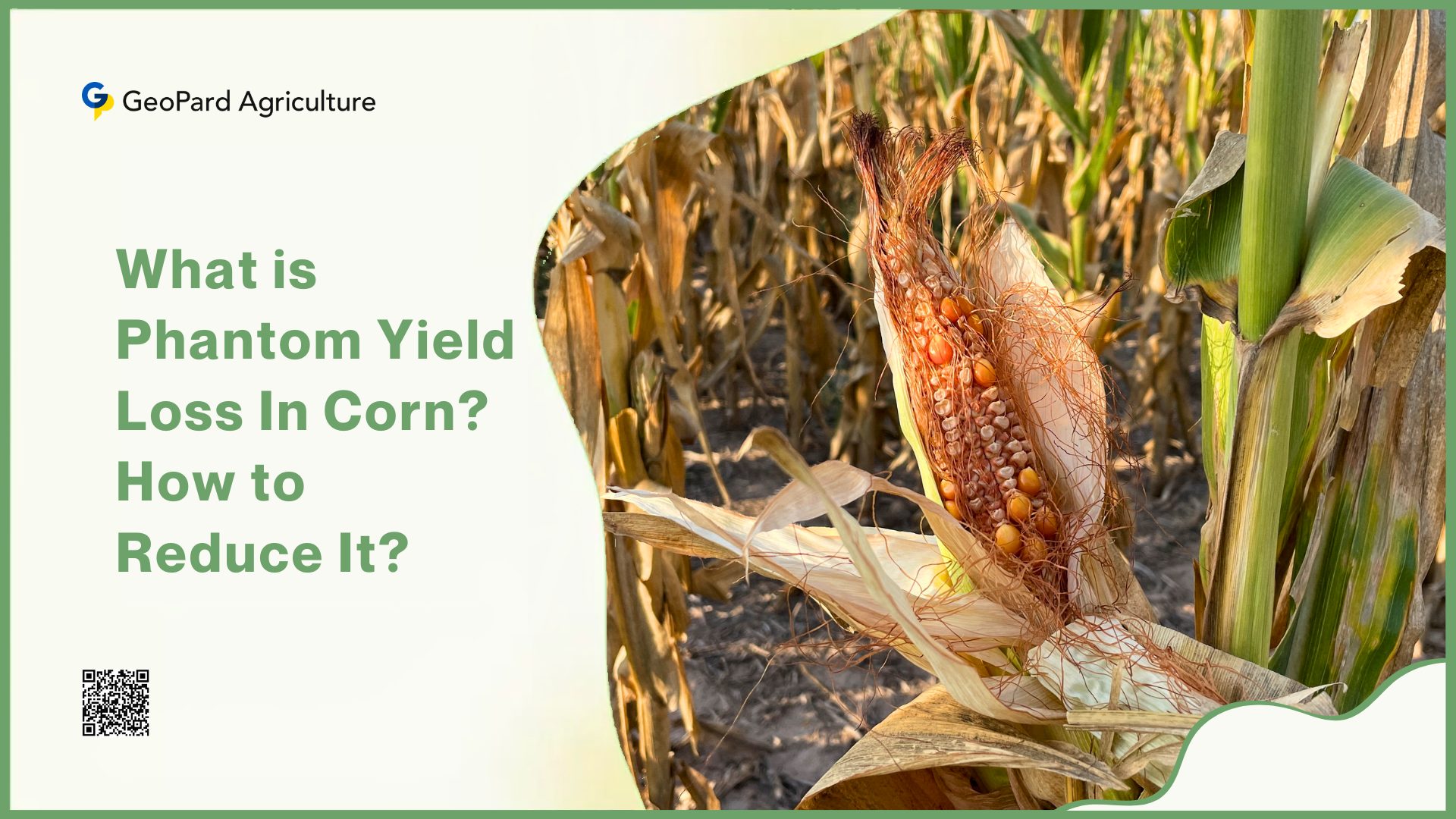
What is Phantom Yield Loss In Corn? How to Reduce It?

In the realm of agriculture, the pursuit of optimal crop yield is a perpetual challenge for farmers worldwide. While conventional wisdom often attributes yield losses to readily apparent factors and adverse weather conditions, there exists a more subtle and elusive phenomenon known as Phantom Yield Loss.

It refers to the unexplained reduction in crop yield that cannot be directly attributed to conventional factors like pests, diseases, or adverse weather conditions. Unlike overt threats that manifest visibly, it operates beneath the surface, often eluding detection until its impact becomes evident during harvest.

According to a report by the Food and Agriculture Organization (FAO), an estimated 30% of global crop production is lost each year due to various factors, including it.

This phenomenon challenges the conventional understanding of yield limitations and prompts a more nuanced examination of the agricultural ecosystem. Therefore, its understanding is crucial for farmers and agronomists as it sheds light on factors that may go unnoticed but exert a substantial influence on crop yields.

By acknowledging and addressing these hidden elements, agricultural practices can be refined, and overall productivity improved.

Phantom Yield Loss In Corn

Corn, one of the world’s most essential crops, plays a pivotal role in global food production. However, farmers face numerous challenges in optimizing corn yields, with one significant factor being phantom yield loss.

It is the loss of potential yield that occurs when corn is left to dry down naturally in the field beyond a certain point. It happens because the corn kernels continue to respire and lose weight as they dry, reducing their mass and quality. It is not visible to the eye, but it can have a significant impact on your profits.

Phantom Yield Loss In Corn

According to Eric Frank, a Channel Seedsman based in Frankfort, Indiana, it is “a yield hit that happens to corn when you don’t start harvest earlier. It occurs because you allow the crop to naturally dry down to a certain point before harvest. When it loses that much moisture in the field, it basically cannibalizes itself a little bit.”

How kernel respiration contribute to it?

It happens because the kernels are still alive after reaching black layer, and they continue to respire and use up their stored sugars and starches. This metabolic activity reduces the mass of the kernels and lowers their test weight and quality.

Kernel respiration is the process by which kernels use oxygen and glucose to produce energy, carbon dioxide, and water. It is a normal metabolic activity that occurs throughout the kernel development and maturation stages.

How kernel respiration contribute to Phantom Yield Loss

However, kernel respiration does not stop at physiological maturity, when the black layer forms at the tip of the kernel. The kernel remains alive until it is dried down to a low enough moisture level (around 15%) to kill it. During this period, the kernel continues to respire and lose dry matter.

How much yield can you lose due to it?

That depends on several factors, such as the hybrid, the weather, the soil type, and the harvest timing. However, some studies have shown that it can range from 5 to 15 bushels per acre or more.
For example, in 2020, Farm Journal Field Agronomist Missy Bauer conducted a test plot in an irrigated field with one hybrid. She harvested part of the field on September 23, when the moisture level was 27.9%, and the rest of the field on October 30, when the moisture level was 18.4%. She found that the early harvest yielded 15.6 bushels per acre more than the late harvest, at 214.2 versus 198.6 bushels per acre.

How much yield can you lose due to it?

However, a general rule of thumb is that it starts to occur when corn moisture drops below 13% to 16%. According to some studies, it can range from 0.5% to 1.6% per point of moisture below 15%. This means that a farmer who harvests corn at 12% moisture instead of 15% could lose up to 4.8% of yield due to it alone.

Some further studies have reported yield losses ranging from 5 to 15 bushels per acre with later harvest dates. For example, a five-year study in Nebraska found that yield declined by an average of 9.1 bushels per acre with later harvest, regardless of the change in grain moisture or the duration of time between harvest dates. Similarly, a study in Michigan showed an average yield advantage of 8.9 bushels per acre for earlier harvest.

How to measure it?

The best way to measure it is to compare the yields of corn harvested at different moisture levels in the same field. This can be done by harvesting a portion of the field early, when the corn is still wet (around 25% to 30% moisture), and another portion later, when the corn is dry (around 15% or lower).

The difference in yields between the two portions represents the amount of loss that occurred in the field. For example, if the early-harvested corn yielded 200 bu/acre and the late-harvested corn yielded 190 bu/acre, then the yield loss will be 10 bu/acre or 5%.

Factors that contribute to phantom yield loss

Here are some of the hidden or less apparent factors that contribute to yield loss:

1. Kernel size and shape: Modern corn hybrids have larger and deeper kernels than older ones, which means they have more mass to lose during respiration.

According to Farm Journal Field Agronomist Missy Bauer, today’s kernels average 70,000 to 76,000 per bushel, compared to 90,000 in the past. This means that each kernel has more impact on the final yield and that it can be more significant with newer genetics.

2. Kernel moisture content: The moisture content of the kernels determines how much water they can lose during respiration. The higher the moisture content, the higher the respiration rate and the potential for yield loss.

According to Channel Seedsman Eric Frank, it starts to occur when the kernel moisture drops below 16%. He recommends harvesting corn between 20% and 25% moisture to avoid losing too much weight and quality in the field.

3. Weather conditions: The weather conditions during the dry down period can affect the rate of respiration and yield loss. High temperatures, low humidity, wind and sunlight can increase the evaporation of water from the kernels and accelerate the weight loss.

Factors that contribute to phantom yield loss

Conversely, low temperatures, high humidity, rain and cloud cover can slow down the evaporation and respiration processes and reduce the yield loss. However, these conditions can also increase the risk of mold, disease and insect damage, which can also lower the yield and quality of corn.

4. Harvest timing: The harvest timing is a crucial factor that determines how much it occurs in a corn crop. Harvesting too early can result in high drying costs and lower test weight, while harvesting too late can result in excessive loss and lower grain quality.

The optimal harvest timing depends on several factors, such as hybrid maturity, grain elevator discounts, weather forecast, field conditions and equipment availability. Frank advises farmers to monitor their fields closely and adjust their harvest plans accordingly.

Meanwhile, farmers may face unfavorable conditions that delay or interrupt their harvest plans, such as rain, hail, frost, or snow. These events can damage the stalk integrity and increase the risk of lodging, ear drop, or mold infection, which can further reduce the yield and quality of corn.

How to avoid or reduce it? The early harvesting!

The best way to avoid loss is to harvest corn at the optimal moisture level and use controlled drying methods. Harvesting corn at a higher moisture level (around 20% to 25%) can help preserve kernel weight and quality, as well as reduce field losses due to ear drop, stalk lodging, insect damage, mold growth, and mycotoxin contamination.

However, harvesting wet corn also requires proper drying and storage facilities to prevent spoilage and quality deterioration. Controlled drying methods, such as natural air drying or low-temperature drying, can help reduce kernel damage and shrinkage during the drying process.

How to avoid or reduce Phantom Yield Loss The early harvesting!

Additionally, farmers should consider the economic factors involved in harvesting wet corn versus dry corn. These include grain elevator discounts or premiums for moisture content, drying costs or savings, storage costs or savings, and potential yield or quality losses or gains.

By weighing these factors and using reliable data from their own fields or local sources, farmers can make informed decisions about when to harvest their corn and how to dry it efficiently and effectively.

Another way is to choose hybrids that have good standability and resistance to diseases and pests that can affect stalk strength and ear retention. You can also use agronomic practices that promote healthy plant growth and development, such as proper fertilization, weed control, irrigation, and pest management.

Does PYL can affect other crops?

Yes, it can affect different crops, but not all in the same way. It can harm crops with a lot of moisture content when they are fully grown and take a while to dry out in the field. However, some crops are more at risk than others, based on their seeds, how they respire, and the environment.

Take soybeans, for instance. They’re less likely to have a big PYL problem compared to corn. This is because soybeans have less moisture content when they’re ready to be harvested (about 50% compared to corn’s 70%) and they dry out faster in the field (about 10 days compared to 30 days for corn).

Yet, if soybeans aren’t harvested until they have more than 13% moisture content, they can still lose weight and quality due to breathing, breaking apart, or getting infected by fungi.

Wheat, on the other side, is more at risk than soybeans. This is because wheat has more moisture content when it’s time to harvest (about 60% compared to soybeans’ 50%) and it takes longer to dry out in the field (about 20 days compared to 10 days for soybeans).

Wheat can lose up to 10% of its weight if it’s not harvested until it has more than 14% moisture content, thanks to breathing, breaking apart, sprouting, or diseases.

Other crops like barley, oats, rye, sorghum, sunflower, canola, and alfalfa can also suffer from PYL. How much they’re affected depends on the crop’s makeup, genes, how they’re taken care of, and the weather. That’s why it’s crucial for farmers to keep an eye on their crops’ moisture levels and harvest them at the best time to avoid unnecessary losses.

How GeoPard’s Automated Yield Cleaning and Calibration Can Help with PYL?

At the heart of GeoPard’s solution lies a suite of features designed to automate the cleaning and calibration of yield data. The technology systematically identifies gaps or skips in the yield dataset, ensuring a more reliable representation of actual yields.

How GeoPard's Automated Yield Cleaning and Calibration Can Help with PYL?

By leveraging advanced algorithms, it enhances the precision of monitoring, providing farmers with a trustworthy foundation for decision-making. One of the standout features of GeoPard’s technology is its ability to fill lacked data with synthetic yield maps.
In situations where data gaps exist, it generates synthetic yield maps that seamlessly integrate with the existing dataset. This innovative approach not only ensures a comprehensive yield record but also contributes to a more accurate understanding of crop performance.

The application of GeoPard’s automated cleaning and calibration technology directly translates to a reduction in phantom yield loss. With a more accurate representation of crop yields, farmers can make better-informed decisions regarding crop management, resource allocation, and harvesting timelines. It empowers agricultural stakeholders to overcome the challenges associated with inaccurate data, ultimately leading to improved overall productivity.

結論

It is a subtle yet significant challenge in agriculture, requiring a comprehensive approach to crop management. By recognizing less apparent factors impacting yield, farmers can take proactive measures. Precision farming, soil health management, microbial interactions, climate-smart practices, and crop genetics advancements form a roadmap to address it. Embracing this holistic perspective enables the agricultural community to foster sustainable and resilient food production systems amidst evolving challenges.

自動収量データクリーニングおよびキャリブレーション

自動収量データクリーニングおよびキャリブレーション(AYDCC)は、アルゴリズムとモデルを用いて、収量データにおける外れ値、欠落、偏りなどのエラーを検出し、修正するプロセスです。AYDCCは収量データの品質と信頼性を向上させ、農家にとってより有益な洞察と推奨事項につながります。.

収量データ入門

収量データは、21世紀の農家にとって最も重要な情報源の一つです。これは、コンバイン、播種機、収穫機など、さまざまな農業機械から収集されたデータを指し、特定の畑や地域で生産された作物の量と質を測定します。.

これはいくつかの理由から非常に重要である。第一に、農家が情報に基づいた意思決定を行うのに役立つ。詳細な収量データがあれば、農家は生産性を最大化するために栽培方法を微調整することができる。.

例えば、特定の畑で収穫量が継続的に低い場合、農家は土壌の状態や灌漑の問題など、根本的な原因を調査し、是正措置を講じることができる。.

さらに、精密農業を可能にします。農家は圃場全体の作物の生育状況のばらつきを把握することで、肥料や農薬などの投入資材を特定の地域に合わせて調整できます。この的を絞ったアプローチは、資源利用を最適化するだけでなく、環境への影響も軽減します。.

国連食糧農業機関(FAO)によると、食料需要の増加に対応するためには、2050年までに世界の農業生産量を601トン増加させる必要がある。収量データは、作物の生産性向上に貢献する役割を担っており、この目標達成に不可欠である。.

さらに、ブラジルでは、ある大豆農家が収量データと土壌サンプリングデータを組み合わせて、自分の畑に合わせた可変施肥マップを作成した。彼は、各区画の土壌肥沃度と収量ポテンシャルに応じて、異なる量の肥料を施用した。.

彼はまた、収量データを用いて様々な大豆品種を比較し、自身の栽培条件に最適な品種を選定した。その結果、平均収量を121トン増加させ、肥料コストを151トン削減することに成功した。.

同様に、インドでは、ある稲作農家が収量データと気象データを組み合わせて、田んぼの灌漑スケジュールを調整した。彼はセンサーと衛星画像を用いて、土壌水分量と降雨パターンを監視した。.

収量データの理解と活用

彼はまた、このツールを使って様々な米の品種を比較し、自分の栽培条件に最適な品種を選び出した。その結果、平均収穫量を10%増加させ、水の使用量を20%削減することに成功した。.

収穫量データは多くの利点があるにもかかわらず、その開発と普及においていくつかの課題を抱えている。これらの課題には以下のようなものがある。

  • データ品質: その精度と信頼性は、センサーの品質、機器の校正、データ収集方法、およびデータ処理・分析技術に依存します。データ品質が低いと、エラー、偏り、または矛盾が生じ、データの妥当性や有用性に影響を与える可能性があります。.
  • データアクセス: 収量データの入手可能性と価格の手頃さは、農業機械、センサー、データストレージデバイス、データプラットフォームへのアクセスと所有権に左右されます。アクセスや所有権が不足すると、農家が自身のデータを収集、保存、共有、または利用する能力が制限される可能性があります。.
  • データプライバシー: データの安全性と機密性は、農家、機械メーカー、データ提供者、データ利用者によるデータの保護と規制に依存します。保護や規制が不十分だと、データが盗難、改ざん、悪用などの不正使用や非倫理的な使用にさらされる可能性があります。.
  • データリテラシー: 収量データの理解と活用は、農家、普及員、アドバイザー、研究者のスキルと知識に左右される。スキルや知識の不足は、これらの関係者がデータを効果的に解釈、伝達、活用する能力を阻害する可能性がある。.
収穫機などの農業機械を使用してデータセットを収集する

したがって、これらの課題を克服し、収量データの潜在能力を最大限に引き出すためには、収量データのクリーニングとキャリブレーションが重要である。.

収量データのクリーニングとキャリブレーションの概要

収量データは、作物の生育状況を分析し、管理区域を特定し、意思決定を最適化したい農家や研究者にとって貴重な情報源です。しかし、その信頼性と正確性を確保するためには、多くの場合、データのクリーニングと較正が必要となります。.

「収量データセット」のキャリブレーションは、数学的原理に基づいて値の分布を補正し、データの全体的な整合性を向上させる機能です。これにより、意思決定の質が高まり、データセットはより詳細な分析に活用できるようになります。.

GeoPard収量クリーンキャリブレーションモジュール

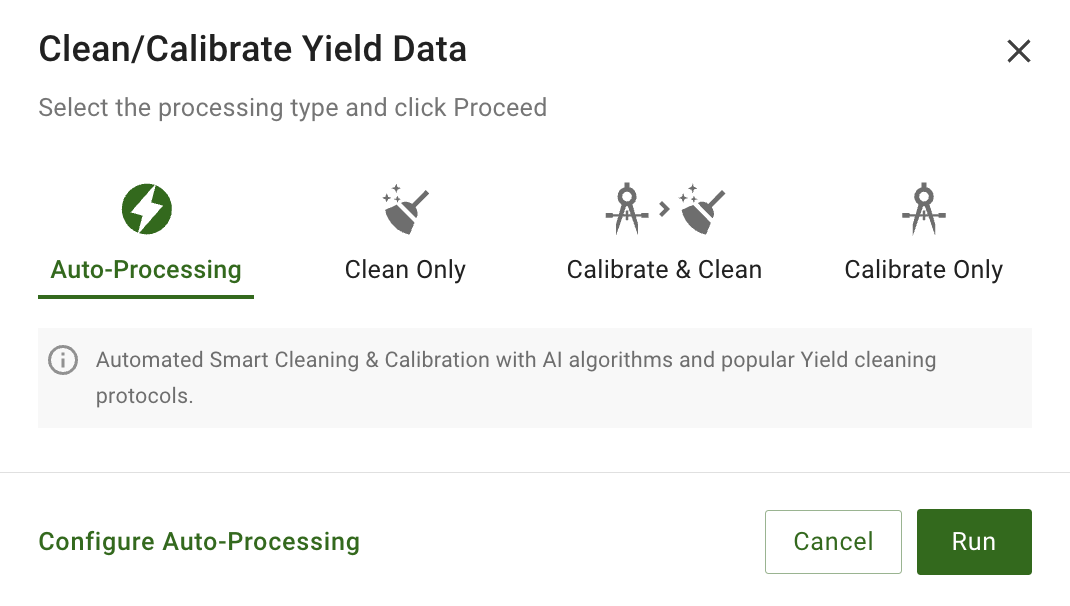
GeoPardは、その収量クリーンアップ・キャリブレーションモジュールを使用して、収量データセットのクリーンアップと補正を可能にした。.

収量データセットの質を向上させることがこれまで以上に容易になり、農家の方々が信頼できるデータに基づいた意思決定を行えるようになりました。.

GeoPard - 収量クリーニングとキャリブレーション(フィールドポテンシャルゾーンと同様)

キャリブレーションとクリーニングの後、得られた収量データセットは均質になり、外れ値や隣接する形状間の急激な変化はなくなります。.

新しいモジュールを使用すると、次のことが可能になります。

続行するにはオプションを選択してください。
  • 破損したデータポイント、重複したデータポイント、および異常なデータポイントを削除します。
  • 複数の機械間で歩留まり値を較正する
  • 数回クリックするだけでキャリブレーションを開始できます(ユーザーエクスペリエンスが簡素化されます)。または、関連するGeoPad APIエンドポイントを実行してください。

自動化された収量データクリーニングおよびキャリブレーションの最も一般的な使用例には、以下のようなものがあります。

  • 複数の収穫機が同時に、または数日間にわたって稼働した場合にデータを同期し、一貫性を確保する。.
  • ばらつきを平滑化することで、データセットの均質性と精度を高める。.
  • データノイズや、洞察を曇らせる可能性のある不要な情報を除去する。.
  • 実際の地形パターンや傾向を歪める可能性のある、方向転換や異常な形状を排除する。.

下の図は、15台の収穫機が同時に作業している畑の様子を示しています。この図は、元の収量データセットと、GeoPard収量クリーンキャリブレーションモジュールでキャリブレーションした後の改善されたデータセットが、いかに異なっていて分かりやすいかを示しています。.

GeoPardのキャリブレーションモジュールを使用した、元の収量データセットと改良された収量データセットの差

清掃と校正が重要な理由は何ですか?

収穫量データは、収穫機に取り付けられた収穫量モニターとセンサーによって収集されます。これらの装置は、収穫された作物の質量流量と水分含有量を測定し、GPS座標を使用してデータを地理的に特定します。.

しかし、機器の性能や作物の状態に影響を与える様々な要因があるため、これらの測定値は必ずしも正確または一貫しているとは限りません。これらの要因には以下のようなものがあります。

1. 機器のバリエーション: コンバインや収穫機などの農業機械には、データ収集の誤差につながる固有のばらつきが存在することがよくあります。こうしたばらつきには、センサーの感度や機械の校正の違いなどが含まれます。.

例えば、収量モニターの中には、電圧と質量流量の間に線形関係を用いるものもあれば、非線形関係を用いるものもある。また、センサーの種類によって、粉塵や汚れに対する感度が異なる場合もある。こうしたばらつきは、異なる機械や圃場間で収量データに差異を生じさせる可能性がある。.

例1 Uターン、停止、半分の幅の機器を使用
例2:Uターン、停止、半分の幅の機器を使用

2. 環境要因: 気象条件、土壌の種類、地形は作物の収量に大きな影響を与える。これらの環境要因を考慮しないと、収量データに誤差や不正確さが生じる可能性がある。.

例えば、砂質土壌や急斜面は、壌土や平坦な地形に比べて収穫量が少なくなる可能性がある。同様に、作物の密度が高い地域は、密度が低い地域よりも収穫量が多くなる可能性がある。.

3. センサーの不正確さ: センサーは高精度ではあるものの、決して完璧ではない。定期的に校正を行わないと、時間の経過とともに測定値がずれ、不正確な値を示す可能性がある。.

例えば、ロードセルの故障や配線の緩みは、質量流量の測定値の不正確さの原因となる可能性があります。水分センサーが汚れていたり破損していたりすると、水分含有量の値が誤って表示されることがあります。オペレーターが入力した圃場名やIDが間違っていると、収量データが誤った圃場ファイルに割り当てられる可能性があります。.

これらの要因により、ノイズが多く、誤りが多く、一貫性のない収量データセットが生じる可能性があります。これらのデータが適切にクリーニングおよび較正されない場合、誤った結論や意思決定につながる可能性があります。.

例えば、未処理の収量データを使用して収量マップを作成すると、圃場内の高収量地域や低収量地域を誤って識別してしまう可能性がある。.

収量データセットのクリーニングとキャリブレーションが重要な理由

未補正の収量データセットを使用して圃場間または複数年にわたる収量を比較すると、不公平または不正確な比較となる可能性があります。未処理または未補正の収量データを使用して栄養バランスや作物投入量を計算すると、肥料や農薬の過剰または不足につながる可能性があります。.

したがって、収量データを分析や意思決定に利用する前に、データのクリーニングとキャリブレーションを行うことが不可欠です。収量データセットのクリーニングとは、収量モニターやセンサーによって収集された生の収量データに含まれるエラーやノイズを除去または修正するプロセスです。.

収量データのクリーニングおよび較正のための自動化手法

ここで役立つのが、自動データクリーニング技術です。自動データクリーニング技術とは、人間の介入を一切必要としない、あるいは最小限に抑えながらデータクリーニング作業を実行できる手法のことです。.

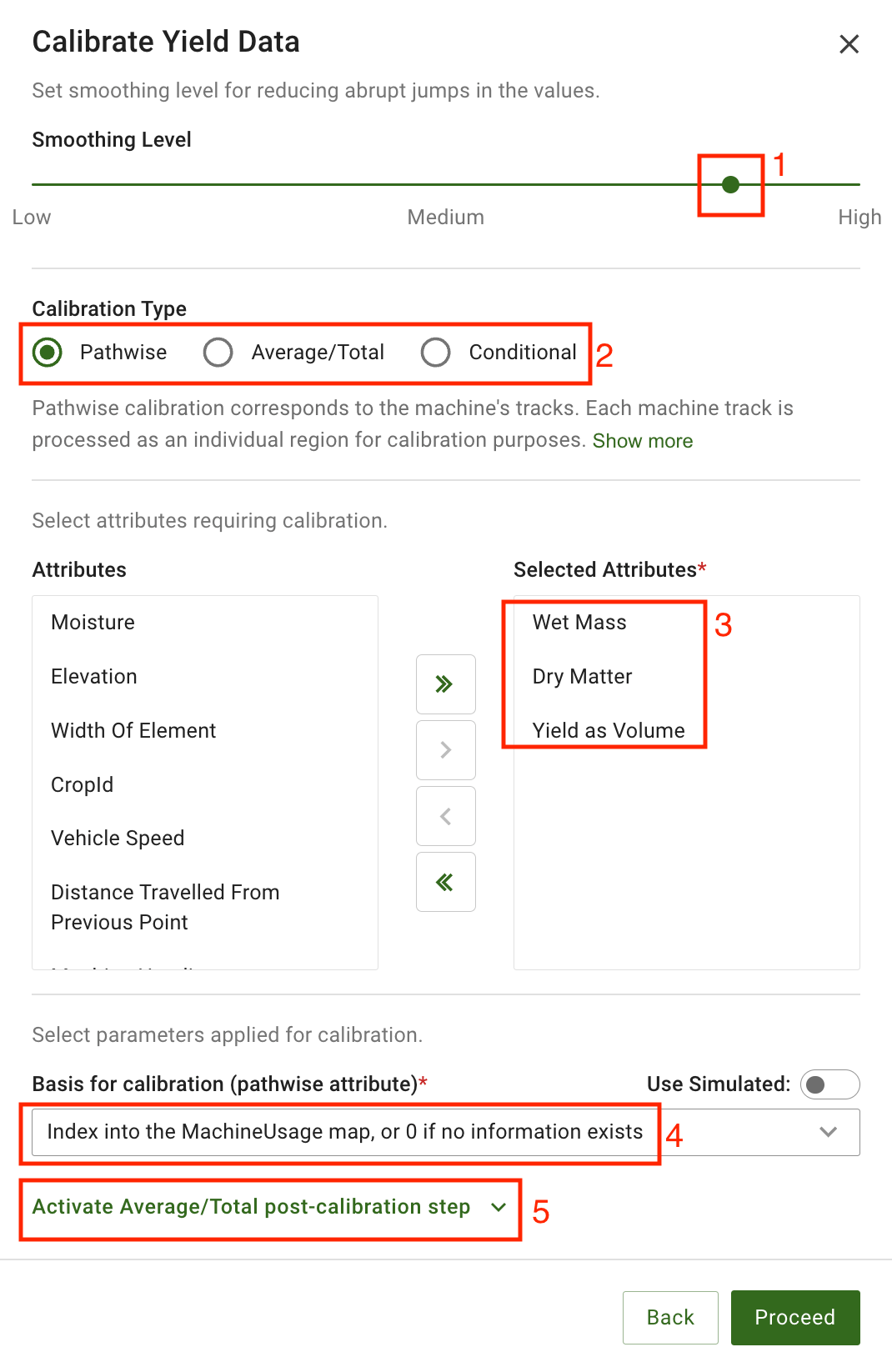
キャリブレーション手順を設定する
洗浄および校正のための自動化された方法

自動化されたデータクリーニング技術は、時間とリソースを節約し、人的ミスを減らし、データクリーニングの拡張性と効率性を向上させることができます。収量データに対する一般的な自動化データクリーニング技術には、次のようなものがあります。

1. 外れ値検出: 外れ値とは、平均値から大きく逸脱したデータポイントのことです。自動化されたアルゴリズムは、データポイントを平均値、中央値、標準偏差などの統計的指標と比較することで、これらの異常値を特定できます。.

例えば、収量データセットにおいて特定の圃場の収穫量が異常に高い場合、外れ値検出アルゴリズムによって、さらなる調査が必要な異常値としてフラグ付けすることができる。.

2. 騒音低減: 収量データにおけるノイズは、環境要因やセンサーの不正確さなど、さまざまな原因から発生する可能性がある。.

平滑化アルゴリズムなどの自動ノイズ低減技術は、不規則な変動を除去し、データの安定性と信頼性を向上させます。これにより、データ内の真の傾向やパターンを特定しやすくなります。.

3. データ補完収量データセットでは、データの欠損がよくある問題です。データ補完技術は、データ内のパターンや関係性に基づいて、欠損値を自動的に推定して補完します。.

例えば、センサーが特定の期間のデータを記録しなかった場合、補完手法を用いることで、隣接するデータポイントに基づいて欠損値を推定することができる。.

したがって、自動化されたデータクリーニング技術はデータ品質の番人として機能し、収量データセットが世界中の農家にとって信頼性が高く価値のある資産であり続けることを保証する。.

さらに、収量データを自動的にクリーンアップおよび調整できる便利なツールやコンピュータプログラムは数多く存在し、GeoPardもその一つです。GeoPardの収量クリーンアップ・キャリブレーションモジュールは、同様のソリューションと併せて、データの正確性と信頼性を確保するために非常に重要です。.

GeoPard - 収量洗浄およびキャリブレーション - 収穫機3台

結論

自動収量データクリーニングおよびキャリブレーション(AYDCC)は、精密農業において不可欠です。AYDCCは、エラーを除去し品質を向上させることで作物データの正確性を確保し、農家が情報に基づいた意思決定を行えるようにします。AYDCCはデータに関する課題に対処し、自動化された技術を活用して信頼性の高い結果を提供します。GeoPardの収量クリーニング・キャリブレーションモジュールなどのツールは、農家にとってこのプロセスを簡素化し、効率的で生産性の高い農業慣行に貢献します。.

GeoPardによる精密農業向け自動圃場境界検出モデル

GeoPard社は、複数年にわたる衛星画像、高精度な雲と影の検出、および深層ニューラルネットワークを含む高度な独自アルゴリズムを用いて、自動化された圃場境界検出モデルの開発に成功しました。.

GeoPardフィールド検出モデルは、最先端の精度を達成しました。 交差オーバーユニオン(IoU)指標で0.975, 世界中の様々な地域や作物において検証済み。.

ドイツでの成果については、以下の画像をご覧ください(平均耕地面積は7ヘクタールです)。

1 - 生のSentinel-2画像

1 – Sentinel-2の生画像

3 - 分割されたフィールド境界

2 – GeoPardによる超高解像度Sentinel-2画像(解像度1メートル)

2 - GeoPardによるSentinel-2の超高解像度画像

3 – 分割されたフィールド境界、, 0.975 交差オーバーユニオン(IoU)精度指標、, 複数の国際地域および作物種類にわたって。.


当社のAPIおよびGeoPardアプリケーションへの統合は間もなく開始されます。この自動化された費用対効果の高い方法は、収穫量の予測に役立ち、政府機関にメリットをもたらし、季節ごとに圃場の境界を更新する必要がある大規模地主を支援します。.

GeoPardのアプローチは 複数年にわたる作物の生育傾向 多因子分析と輪作を用いる。.


モデルは以下からアクセスできます。 GeoPard API 従量課金制なので、高額な定期購読料を支払う必要がなく、柔軟性に優れています。.


圃場境界画定とは何ですか?

圃場境界画定とは、農地や区画地の境界を特定し、地図上に示すプロセスを指します。これには、さまざまな技術やデータソースを用いて、個々の圃場や農地の境界を明確にすることが含まれます。.

従来、畑の境界線は、農民や地主が自身の知識や観察に基づいて手作業で定めていた。.

しかし、特にリモートセンシングや地理情報システム(GIS)といった技術の進歩に伴い、自動化および半自動化された手法がますます普及してきている。.

一般的な手法の一つは、衛星画像や航空画像の分析です。衛星や航空機によって撮影された高解像度画像は、異なる土地区画間の境界など、地形に関する詳細な情報を提供することができます。.

これらの画像に画像処理アルゴリズムを適用することで、植生の種類、色、質感、パターンなどの変化といった、圃場の境界の存在を示す特徴を検出することができる。.

別の手法としては、LiDAR(光検出・測距)データを用いる方法がある。これは、レーザー光線を用いてセンサーと地表との距離を測定するものである。.

LiDARデータは、詳細な標高情報と地形情報を提供することができ、圃場の境界に対応する可能性のある地形の微妙な変化を特定することを可能にする。.

さらに、地理情報システム(GIS)は、圃場の境界を明確にする上で重要な役割を果たします。.

GISソフトウェアは、衛星画像、地形図、土地所有権記録、その他の関連情報など、さまざまなデータレイヤーの統合と分析を可能にします。これらのデータソースを組み合わせることで、GISは圃場境界の解釈と特定に役立ちます。.

圃場の正確な区画分けは、いくつかの理由から不可欠です。農業資源のより良い管理を促進し、精密農業技術を可能にし、灌漑、施肥、害虫駆除などの農業慣行の計画と実施を支援します。.

正確な圃場境界データは、土地管理、土地利用計画、および農業規制の遵守にも役立ちます。.

それはどのように役立つのでしょうか?

農業と土地管理において極めて重要な役割を果たしており、数々の利点と重要性が証拠と世界的な統計データによって裏付けられています。以下に主なポイントをいくつか挙げます。

1. 精密農業: 正確な圃場境界は、精密農業技術の導入に役立ちます。精密農業では、水、肥料、農薬などの資源を圃場内の特定の場所に正確に投入することができます。.

世界銀行の報告書によると、精密農業技術は作物の収穫量を201TPT増加させ、投入コストを10~201TPT削減する可能性を秘めている。.

2. 効率的な資源管理: これにより、農家は灌漑システムの最適化、施肥方法の調整、作物の生育状況のモニタリングなどを通じて、資源をより効果的に管理できるようになります。この精密な管理は、資源の無駄遣いと環境負荷の低減につながります。.

国連食糧農業機関(FAO)は、精密農業の手法によって、水の使用量を20~501トン、肥料の消費量を10~201トン、農薬の使用量を20~301トン削減できると推定している。.

3. 土地利用計画: 正確な圃場境界データは、利用可能な農地の効率的な利用を確保するための土地利用計画に不可欠です。これにより、政策立案者や土地管理者は、土地配分、輪作、ゾーニングに関して十分な情報に基づいた意思決定を行うことができます。.

これは農業生産性の向上と食料安全保障の改善につながる可能性がある。土壌・水保全ジャーナルに掲載された研究によると、効果的な土地利用計画によって世界の食料生産量を20~671トン増加させることができるという。.

4.農業補助金と保険: 多くの国では、農地の境界に基づいて農業補助金や保険制度を提供している。正確な境界画定は、対象となる農地面積の特定、補助金の公平な分配、保険料の正確な算出に役立つ。.

例えば、欧州連合の共通農業政策(CAP)は、補助金の計算や遵守状況の監視のために、正確な圃場境界に依存している。.

5. 土地管理と法的境界: 農業における圃場境界の明確化は、土地管理、所有権、そして土地紛争の解決にとって極めて重要です。圃場境界の正確な地図は、法的所有権の確立、土地登記制度の支援、そして透明性の高い土地取引の促進に役立ちます。.

世界銀行の推計によると、世界の人口のうち、土地に対する法的権利を文書で証明できるのはわずか301,300人であり、確実な土地所有権を確保するためには、信頼できる土地境界データの重要性が強調されている。.

6.法令遵守と環境持続可能性: 正確な圃場境界は、法令遵守の監視に役立ち、環境規制と持続可能な農業慣行の遵守を確実にする。.

これは、緩衝地帯、保護区域、浸食や水質汚染の恐れのある区域を特定するのに役立ち、農家が適切な対策を講じることを可能にします。環境基準を遵守することで、持続可能性が高まり、生態系への悪影響が軽減されます。.

FAOによると、持続可能な農業慣行は、年間最大60億トンの温室効果ガス排出量を削減できる可能性がある。.

これらの点は、農業および土地管理におけるその有用性と重要性を示している。提示された証拠と世界的なデータは、それが資源効率、土地利用計画、法的枠組み、環境の持続可能性、そして農業生産性全体に及ぼすプラスの影響を裏付けている。.

要約すると、農業における圃場境界画定とは、農地や区画の境界を特定し、地図上に示すプロセスです。このプロセスは、衛星画像解析、LiDARデータ、GISなどの様々な技術を用いて境界を正確に定義・画定し、効果的な土地管理と農業活動を可能にします。.

精密農業における方程式ベースの分析

GeoPardチームは、数式ベースの分析モジュールをリリースすることで、農家、農学者、空間データアナリストが平方メートル単位で実用的な洞察を得られるよう、大きな一歩を踏み出しました。このモジュールには、農業関連の幅広い分析を網羅する50種類以上のGeoPard高精度計算式が収録されています。.

精密な式は以下に基づいて開発されました。 複数年にわたる独立した農学系大学および産業研究 そして、その精度と有用性を保証するために厳密なテストが行われています。簡単に設定でき、 自動的に実行されました あらゆる分野において、ユーザーが作物の収穫量を最適化し、投入コストを削減するのに役立つ、強力で信頼性の高い洞察を提供します。.

方程式ベースの分析モジュールは、GeoPardプラットフォームの中核機能であり、ユーザーが業務をより深く理解し、農業慣行に関するデータに基づいた意思決定を行うための強力なツールを提供します。増え続ける数式のカタログと、さまざまな圃場シナリオに合わせて数式をカスタマイズできる機能により、GeoPardはあらゆる農業経営の特定のニーズに対応できます。.


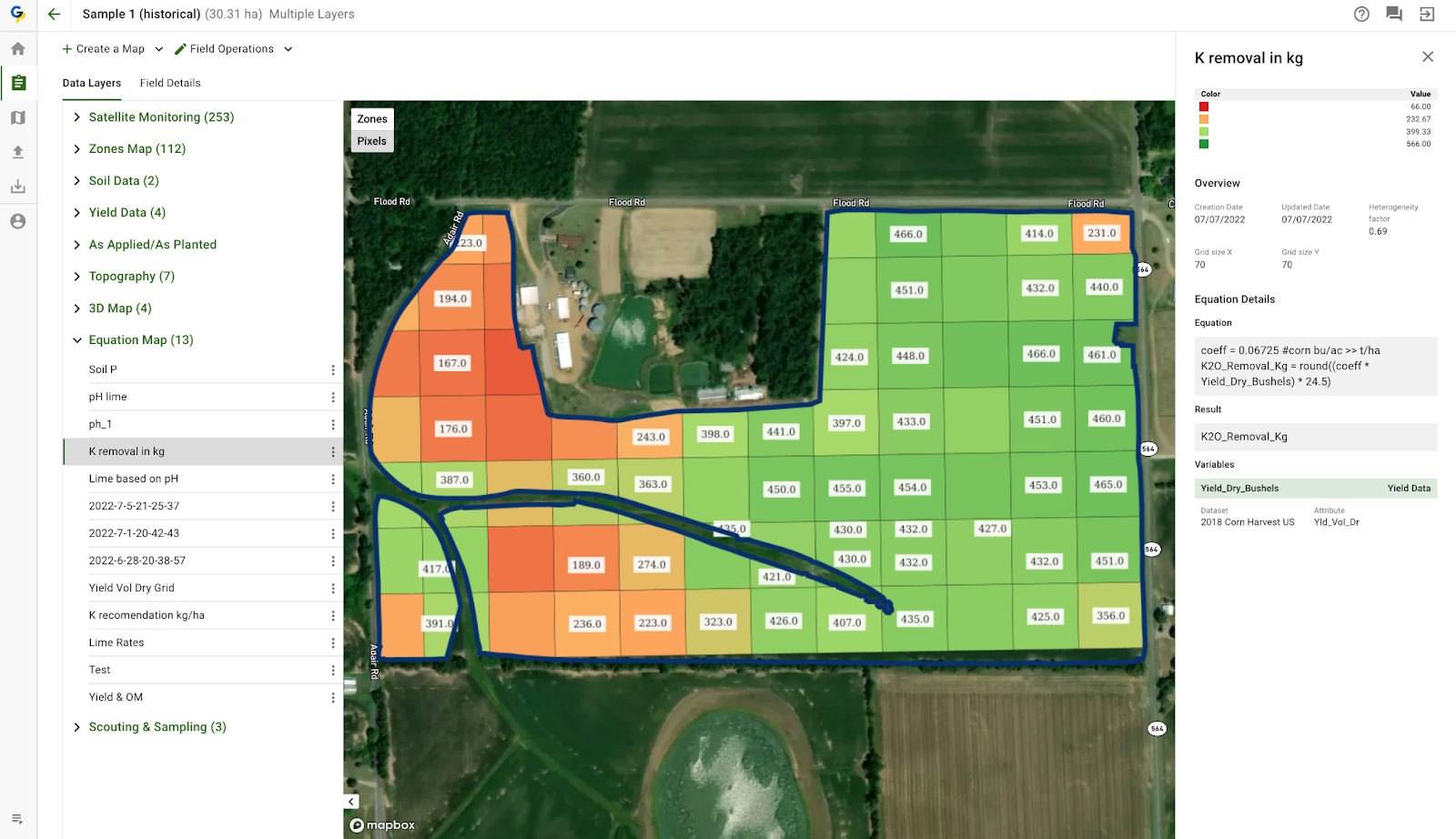
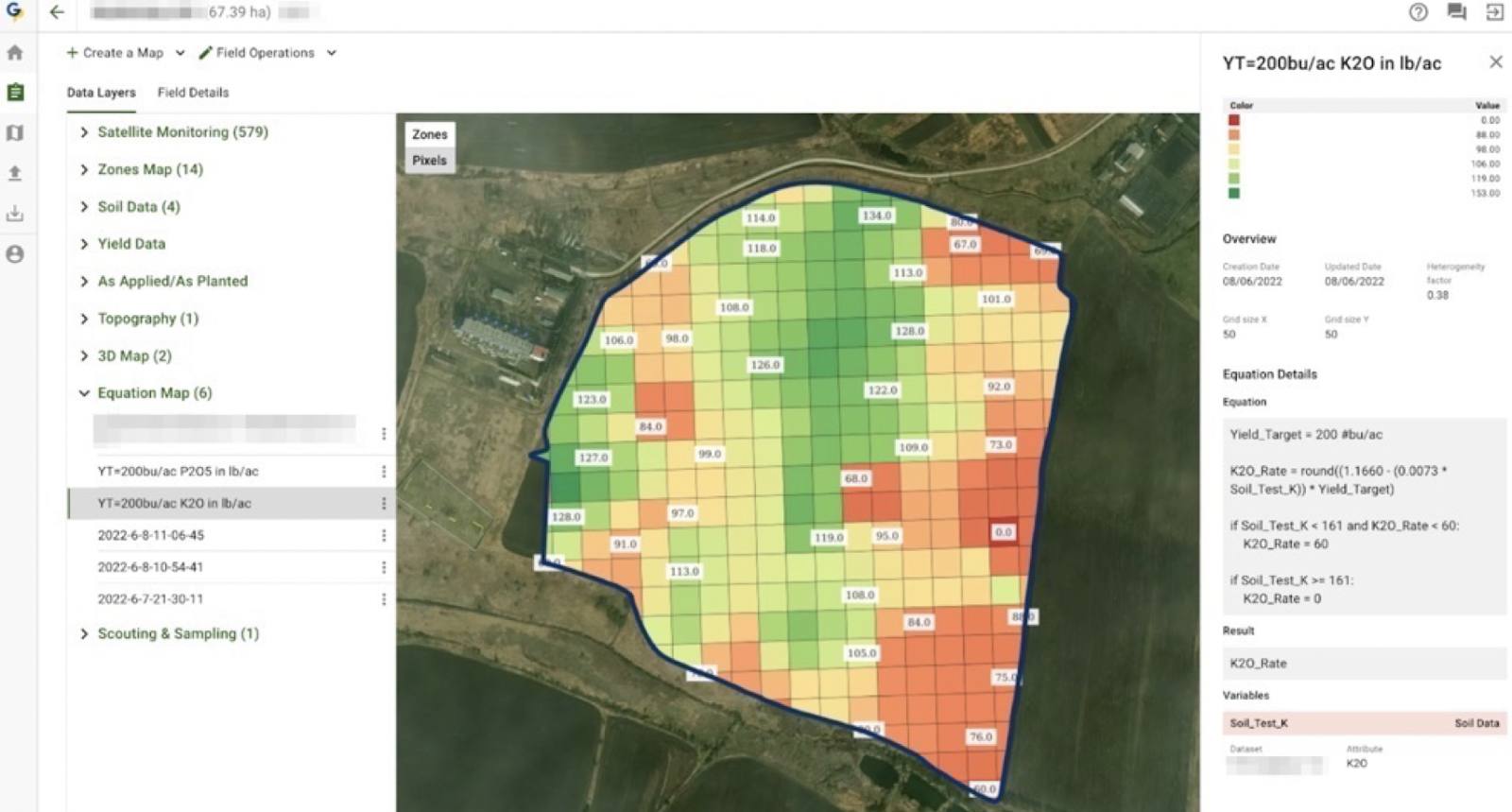
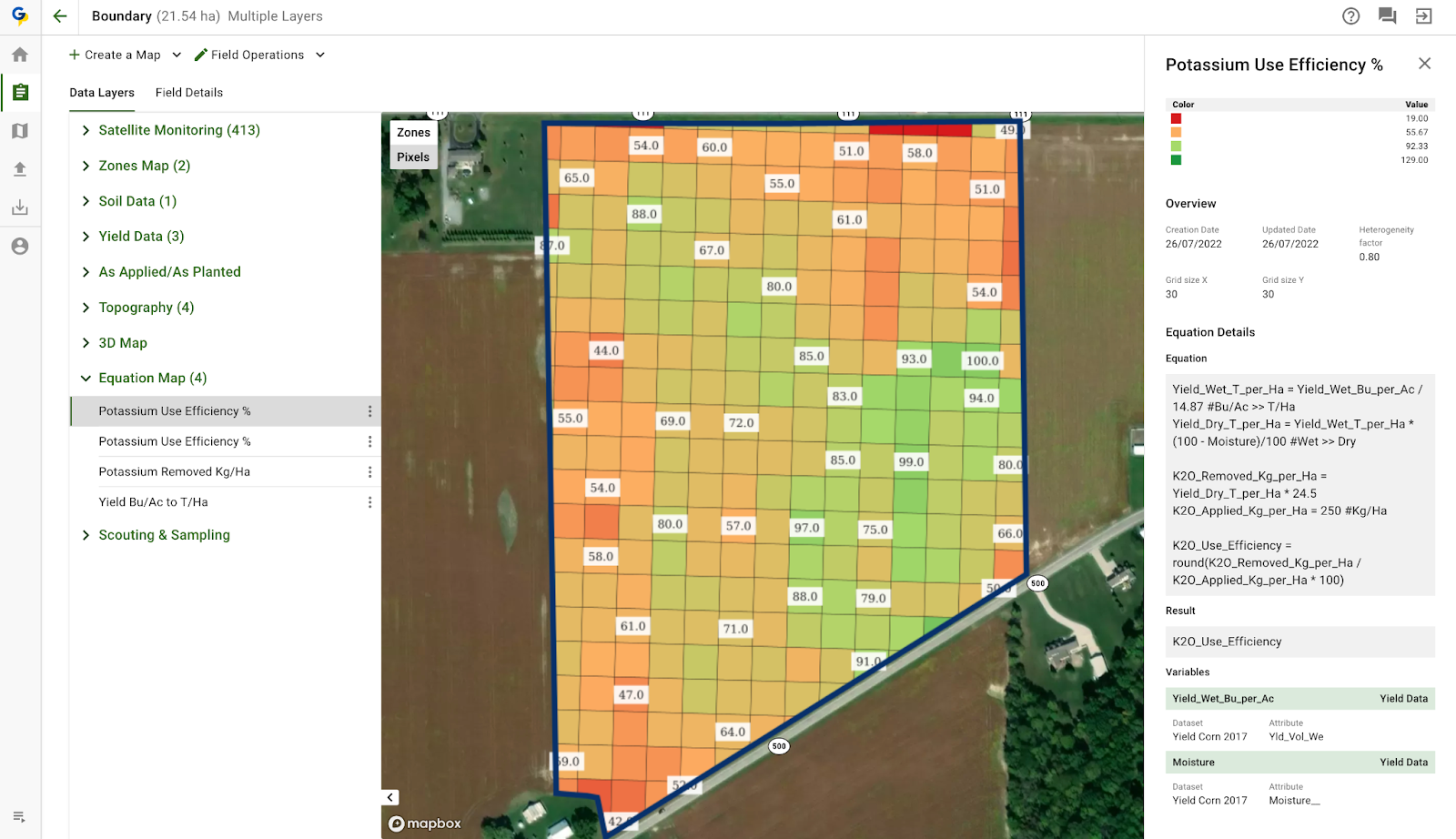
収量データに基づくカリウム除去

収量データに基づくカリウム除去


ユースケース(以下の例を参照):

  • 窒素吸収 収量とタンパク質データを用いた絶対数
  • 窒素利用効率(NUE) 収量およびタンパク質データ層を使用した過剰計算
  • 土壌サンプリングのpHデータに基づく石灰の推奨事項または 土壌スキャナー
  • サブフィールド(ゾーンまたはピクセルレベル) ROIマップ)
  • 土壌サンプリング、圃場ポテンシャル、地形、収量データに基づいた微量栄養素および多量栄養素の施肥推奨
  • 炭素モデリング
  • 変化検出とアラート(Sentinel-2、Landsat8-9、またはPlanetの画像間の差分を計算)
  • 土壌および穀物水分モデリング
  • 湿潤収量データセットから乾燥収量を計算する
  • 目標Rxマップと適用マップの差分計算


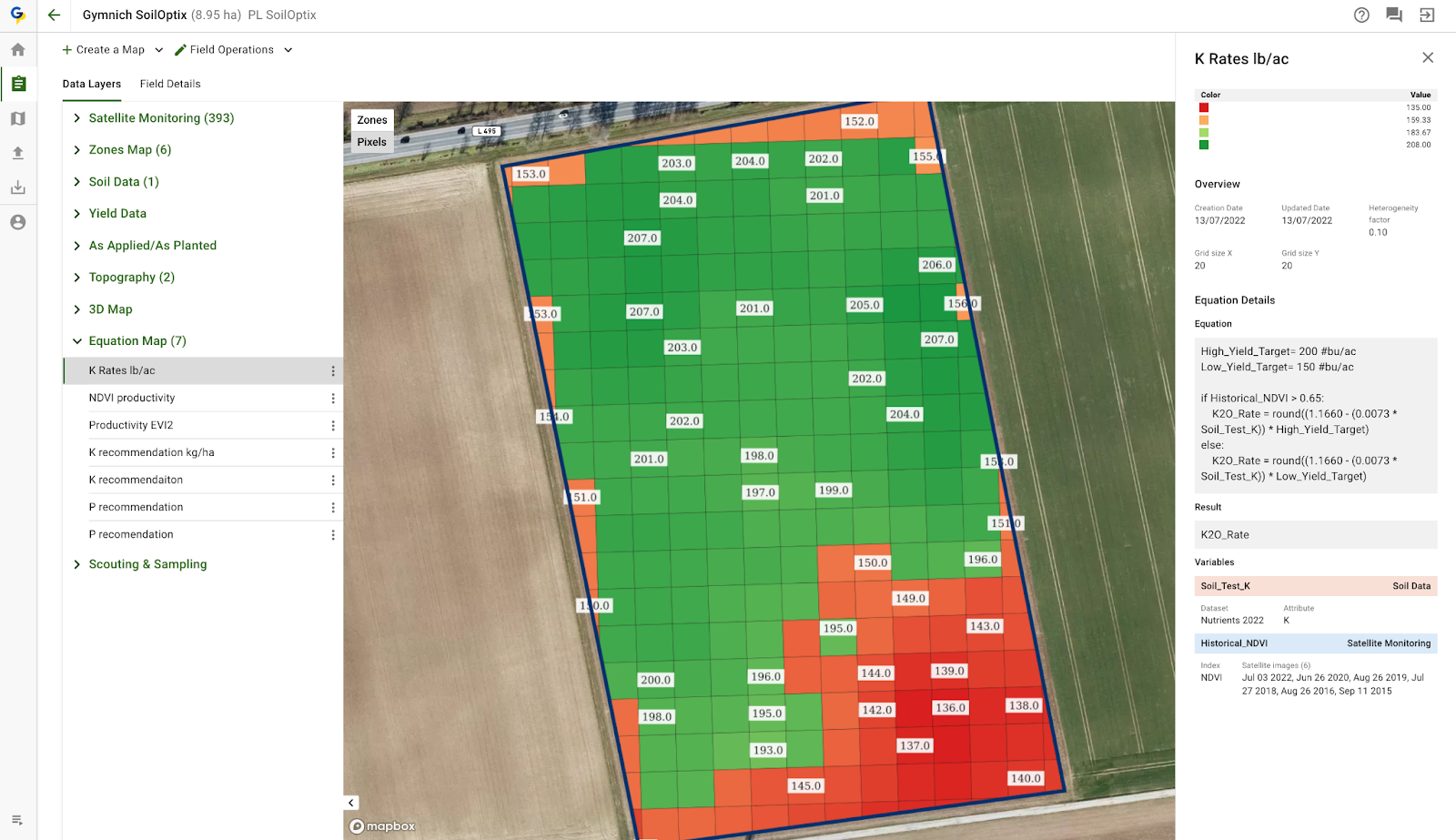
2つの収量目標(生産性ゾーン)に基づいたカリウム施肥推奨量

2つの収量目標(生産性ゾーン)に基づいたカリウム施肥推奨量


肥料:推奨ガイド。カリウム/トウモロコシ。.

肥料:推奨施肥ガイド(サウスダコタ州立大学):カリウム/トウモロコシ。レビューおよび改訂:ジェイソン・クラーク|助教授兼サウスダコタ州立大学普及局土壌肥沃度専門家


カリウム利用効率(kg/ha)

カリウム利用効率(kg/ha)


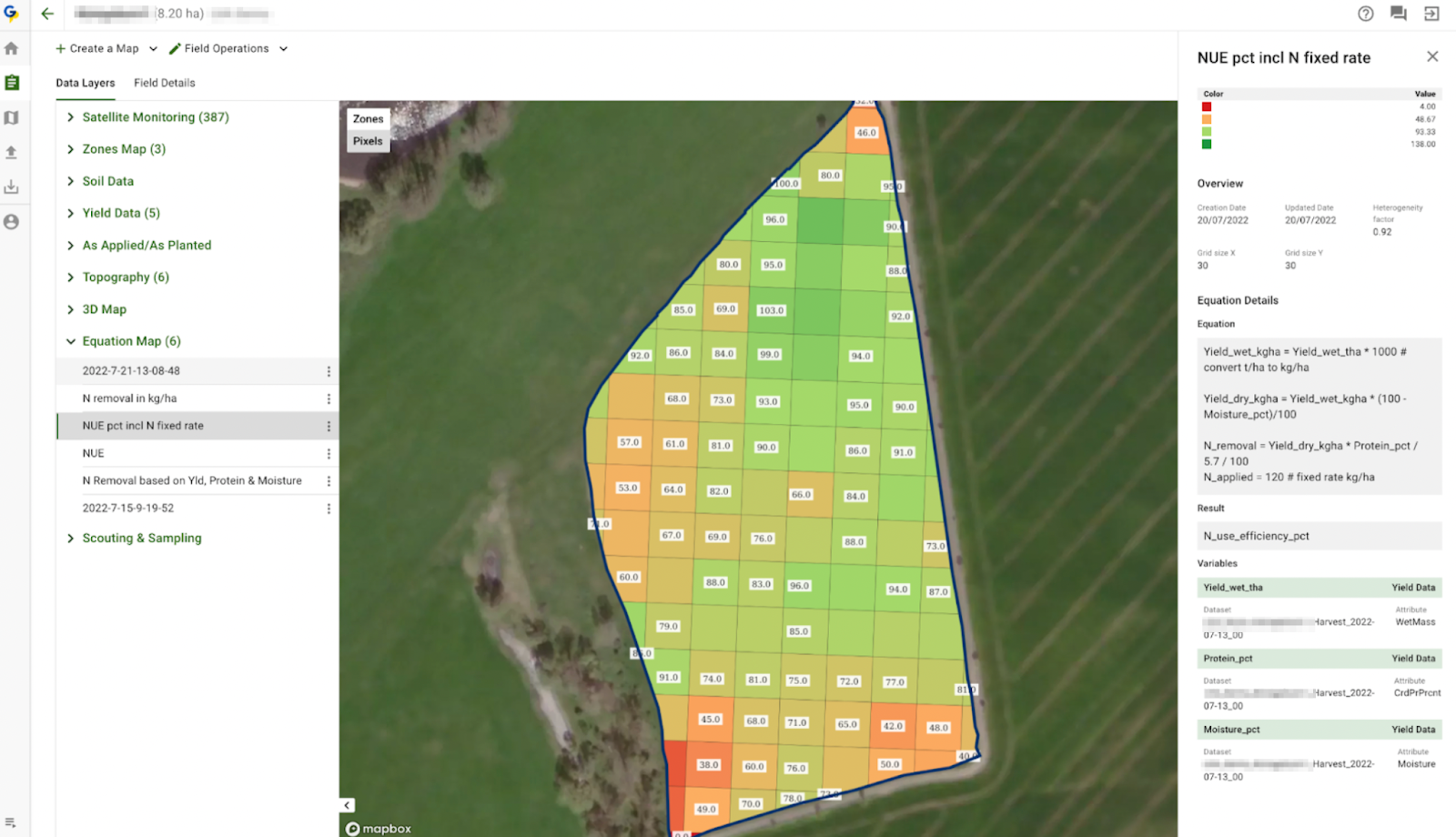
窒素利用効率(パーセント)。計算は収量、タンパク質含有量、穀物水分含有量のデータレイヤーに基づいています。

窒素利用効率(パーセント)。計算は収量、タンパク質含有量、穀物水分含有量のデータレイヤーに基づいています。


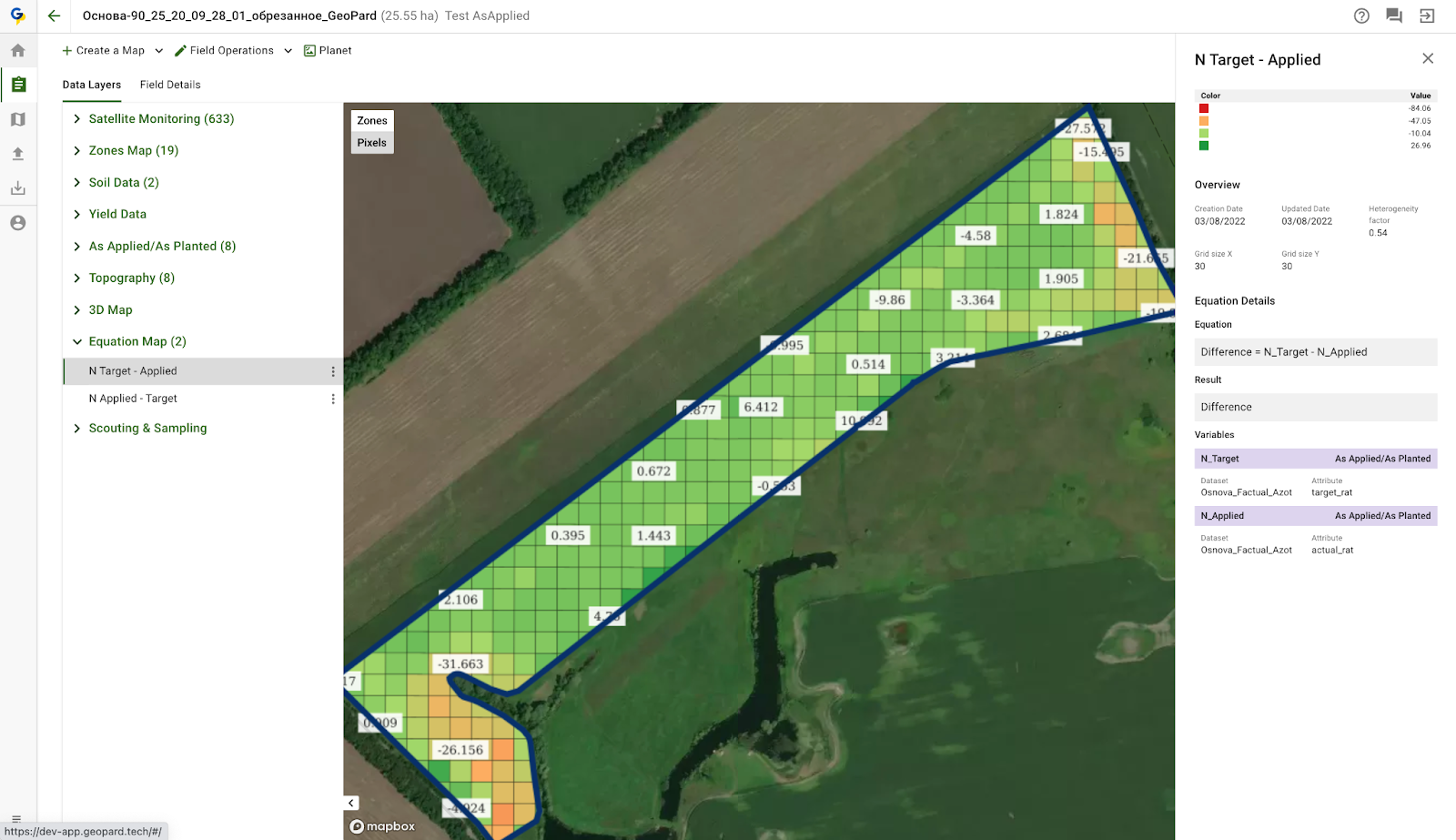
窒素:目標処方量と実際の施用量の比較

窒素:目標処方量と実際の施用量の比較


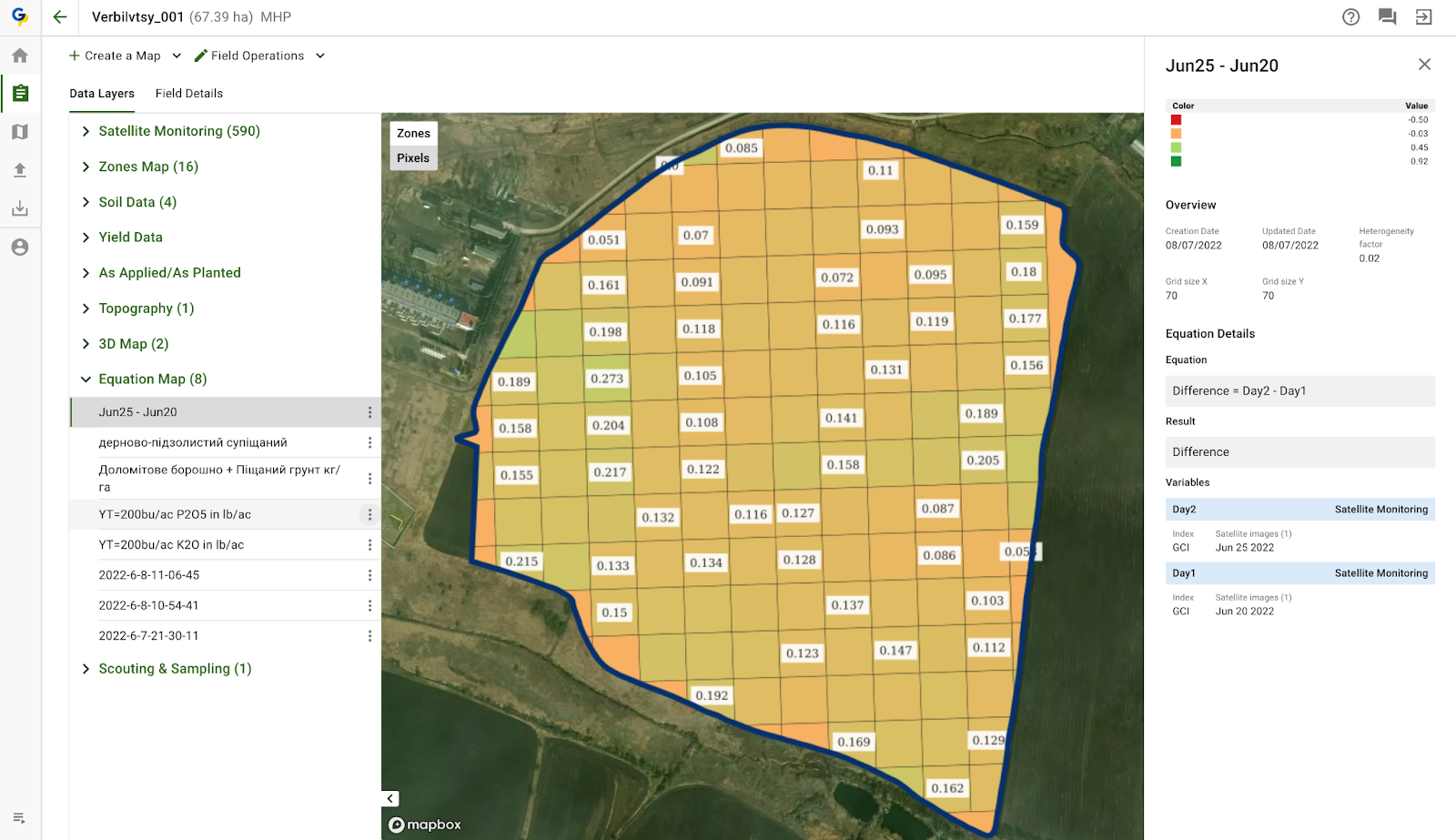
2つの衛星画像間のクロロフィル濃度の差

2つの衛星画像間のクロロフィル濃度の差


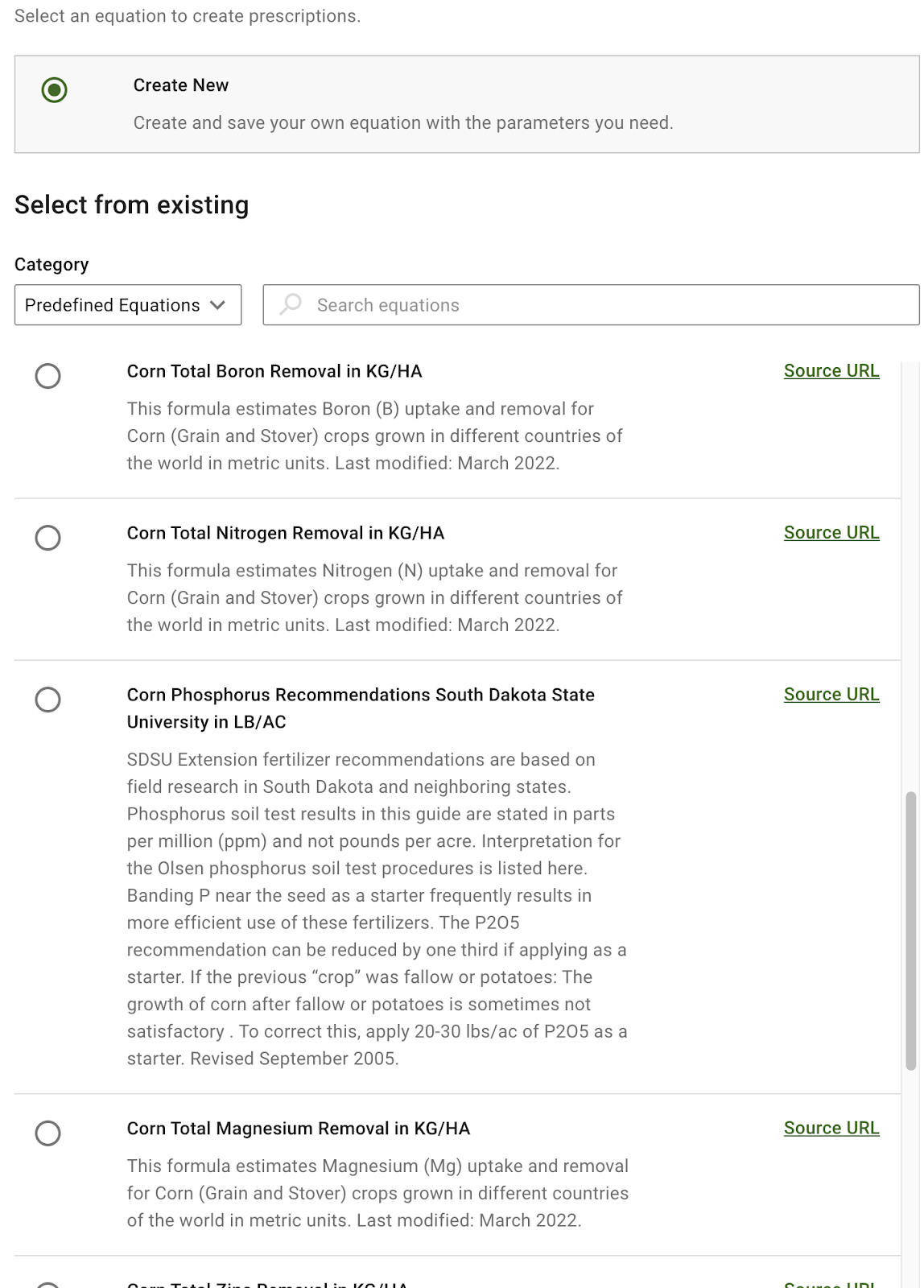
GeoPardのユーザーは既存の設定を調整し、独自の設定を作成できます。 プライベートな数式 GeoPardがサポートする画像、土壌、収量、地形、またはその他のデータレイヤーに基づいています。. 

テンプレートGeoPard方程式の例

テンプレートGeoPard方程式の例


数式に基づく分析は、農家、農学者、データサイエンティストがワークフローを自動化し、複数のデータと科学的研究に基づいて意思決定を行うことを支援し、持続可能で精密な農業のより容易な導入を可能にする。.

精密農業における方程式ベースの分析とは?精密計算式の活用

精密農業における方程式ベースの分析とは、農業データを分析し、農家が作物管理に関してより良い意思決定を行うのに役立つ知見を得るために、数学モデル、方程式、精密計算式、アルゴリズムを使用することを指します。.

これらの分析手法は、気象条件、土壌特性、作物の生育状況、栄養要求量など、さまざまな要素を取り入れることで、農業慣行を最適化し、作物の収量を向上させると同時に、資源の浪費と環境への影響を最小限に抑えます。.

精密農業における方程式ベースの分析の主要な構成要素には、以下のようなものがある。

  • 作物生育モデル: これらのモデルは、天候、土壌特性、作物管理方法などの様々な要因間の関係性を記述し、作物の生育と収量を予測します。こうしたモデルの例としては、CERES(作物環境資源統合モデル)やAPSIM(農業生産システムシミュレーターモデル)などが挙げられます。これらのモデルは、農家が播種時期、作物品種、灌漑スケジュールなどについて、十分な情報に基づいた意思決定を行うのに役立ちます。.
  • 土壌水分モデル: これらのモデルは、降雨量、蒸発量、作物の水分利用量などの要因に基づいて、土壌断面の水分含有量を推定します。これにより、農家は灌漑方法を最適化し、作物の収量を最大化するために、水を効率的かつ適切な時期に散布することができます。.
  • 栄養管理モデル: これらのモデルは作物の栄養要求量を予測し、農家が最適な施肥量と施肥時期を決定するのに役立ちます。これらのモデルを使用することで、農家は作物が適切な量の栄養素を確実に摂取できるようにし、同時に栄養素の流出や環境汚染のリスクを最小限に抑えることができます。.
  • 害虫と病気のモデル: これらのモデルは、気象条件、作物の生育段階、管理方法などの要因に基づいて、病害虫の発生確率を予測します。農家はこれらのモデルを活用することで、植え付け時期の調整や適切な時期の農薬散布など、病害虫管理に関して先を見越した意思決定を行うことができます。.
  • リモートセンシングに基づくモデル: これらのモデルは、衛星画像やその他のリモートセンシングデータを利用して、作物の健康状態を監視し、ストレス要因を検出し、収量を推定します。この情報を他のデータソースと統合することで、農家は作物管理に関するより良い意思決定を行い、資源利用を最適化することができます。.

要約すると、精密農業における方程式ベースの分析は、数学モデルとアルゴリズムを用いて、作物の生育と管理に影響を与える様々な要因間の複雑な相互作用を分析します。これらの分析を活用することで、農家はデータに基づいた意思決定を行い、農業慣行を最適化し、作物の収量を向上させ、環境への影響を最小限に抑えることができます。.


よくある質問


1. 精密農業は、農業における資源利用と汚染の問題に対処する上で、どのように役立つのでしょうか?

これは、資源の的確な利用、効率的な資源管理、監視体制の強化、そして保全対策の導入を通じて、農業における資源利用と汚染の問題に対処するのに役立ちます。肥料や農薬などの投入資材を必要な場所にのみ使用することで、農家は無駄を減らし、汚染を最小限に抑えることができます。.

データに基づいた意思決定は最適な資源管理を可能にし、リアルタイム監視は汚染事故を未然に防ぐためのタイムリーな介入を可能にする。さらに、保全活動の実施は持続可能な農業を促進し、環境への影響を軽減する。.

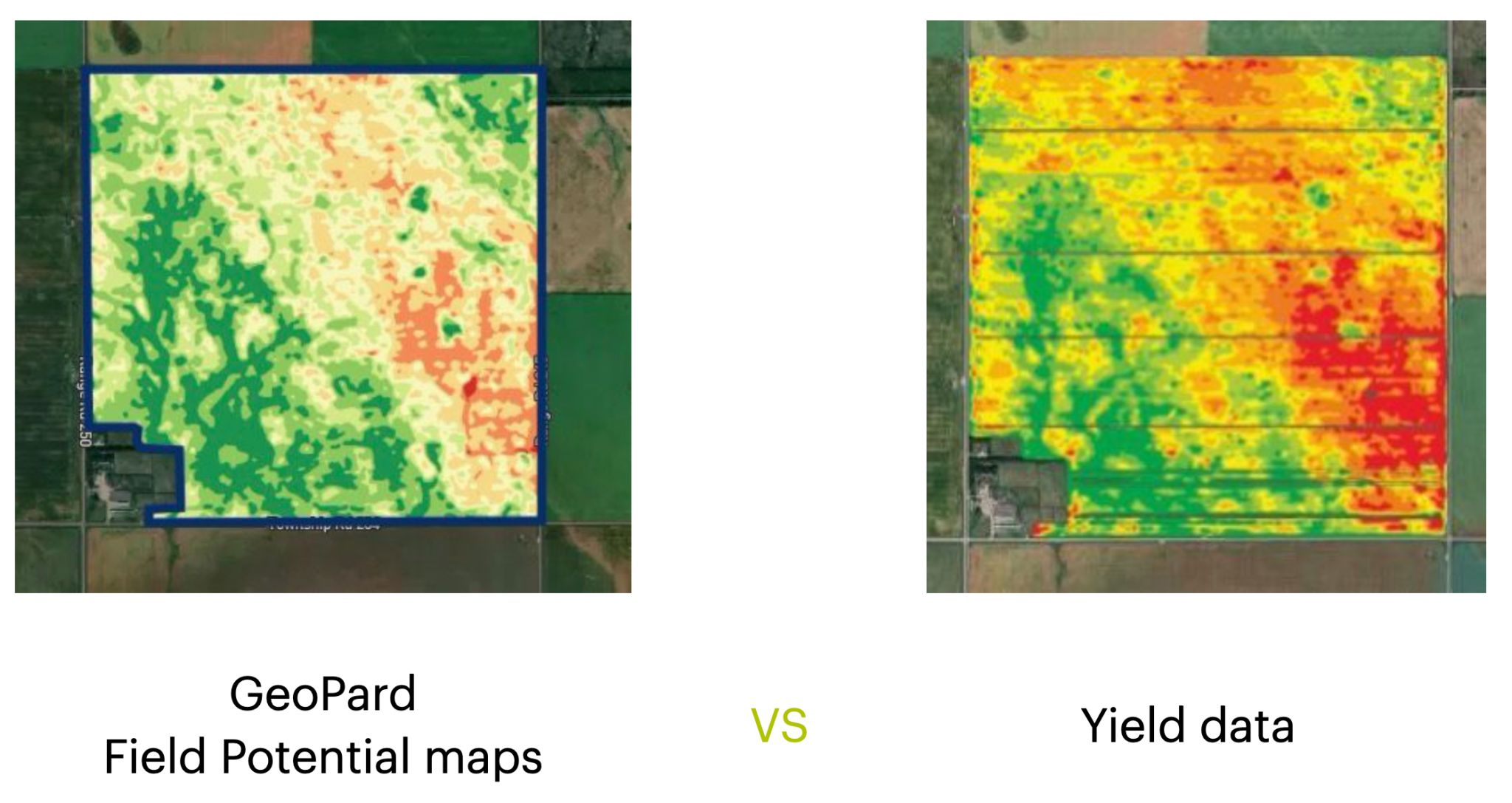
GeoPardのフィールドポテンシャルマップと収量データの比較

GeoPardのフィールドポテンシャルマップは、非常によく まさに収量と同じ データ。.

私たちはそれらを作成するために 多層分析 歴史的情報、地形、および裸地分析に基づいている。.

このようなプロセス 合成収量マップは自動化されています (そして特許取得済み)で、世界中のどの分野でも約1分で生成できます。.


GeoPardのフィールドポテンシャルマップと収量データの比較

以下のものの基礎として使用できます。

電位マップとは何ですか?

圃場潜在力マップ(収量潜在力マップまたは生産性潜在力マップとも呼ばれる)は、圃場内における作物の潜在収量または生産性の空間的なばらつきを視覚的に表現したものです。これらのマップは、土壌特性、地形、過去の収量データなど、作物の生育に影響を与える様々な要因を分析することによって作成されます。.

これらの地図は、精密農業において、肥料の可変施用、灌漑、その他の投入資材といった管理上の意思決定を導くために使用できるほか、特別な注意や管理方法が必要な地域を特定するためにも使用できる。.

圃場潜在力マップを作成する際に一般的に考慮される主な要素には、以下のようなものがあります。

  1. 土壌の特性: 土壌の質感、構造、有機物含有量、養分利用可能性といった特性は、作物の収量ポテンシャルを決定する上で重要な役割を果たします。農家は圃場全体の土壌特性をマッピングすることで、生産性の高い地域と低い地域を特定することができます。.
  2. 地形標高、傾斜、方位などの要因は、作物の生育と収量に影響を与える可能性があります。例えば、低地は湛水や霜害のリスクが高く、急斜面は浸食を受けやすい場合があります。これらの地形的特徴を地図上にマッピングすることで、農家はそれらが生産性にどのように影響するかを理解し、それに応じて管理方法を調整することができます。.
  3. 過去の収量データ: 過去の年やシーズンの収穫量データを分析することで、農家は自分の畑全体の生産性の傾向やパターンを把握できます。この情報を使って、収穫量が継続的に高い地域や低い地域を強調表示する地図を作成できます。.
  4. リモートセンシングデータ: 衛星画像、航空写真、その他のリモートセンシングデータは、作物の健康状態、生育状況、成長段階を評価するために利用できます。これらの情報を用いて、作物の生産性ポテンシャルの空間的なばらつきを反映した地図を作成することができます。.
  5. 気候データ: 気温、降水量、日射量といった気候変数も、作物の生育や収量に影響を与える可能性があります。これらの地図に気候データを組み込むことで、農家は環境要因が畑の生産性にどのように影響するかをより深く理解できるようになります。.

これらは精密農業において非常に有用なツールであり、農家が圃場内の生産性ポテンシャルの空間的なばらつきを視覚的に把握するのに役立ちます。これらの地図を経営判断の指針として活用することで、農家は資源の利用を最適化し、作物の収量全体を向上させ、農業活動による環境負荷を軽減することができます。.

圃場ポテンシャルマップと収量データの違い

精密農業では、圃場の潜在能力マップと収量データはどちらも、農家が圃場の空間的なばらつきを理解し、より適切な管理判断を下すために利用されます。しかし、この2つにはいくつかの重要な違いがあります。

データソース:

これらの地図は、土壌特性、地形、過去の収量データ、リモートセンシングデータ、気候データなど、さまざまな情報源からのデータを統合して作成されます。ただし、これらのデータは、収穫機に設置された収量モニターを使用して収集され、収穫時に作物の収量が記録されます。.

時間的側面:

これらの地図は、圃場の潜在的な生産性を推定したものであり、土壌特性やその他の影響要因に大きな変化がない限り、一般的には静的であるか、時間の経過とともにゆっくりと変化します。しかし、収量データは特定の栽培シーズンまたは複数のシーズンに特有のものであり、気象条件、病害虫の発生状況、管理方法などの要因に基づいて、年ごとに大きく変動する可能性があります。.

要約すると、圃場潜在能力マップと収量データは、精密農業において相互補完的なツールです。これらのマップは圃場の潜在的な生産性を推定し、農家が異なる管理方法を必要とする可能性のある領域を特定するのに役立ちます。一方、収量データは実際の作物生産量を記録し、管理方法の有効性を評価し、将来の意思決定に役立てることができます。.

データレイヤーの交差を利用した自動作物調査

In GeoPard we have a module to create crop data scouting zones Automatically using flexible configuration of business and agronomic logic.

It allows to control huge amount of fields and do scouting only when emergency case happened.

Business/agronomic logic could be flexible. In this example – Tasks are created in the areas where we have High Historical Field Potential Zones and Low vegetation on the latest satellite imagery.

An example of another use-case: Low Yield zone (from yield file) Intersected with Low pH zones – to adjust lime fertility levels.


Automated Crop data Scouting zones with the Intersection of Data Layers
High Historical Field Productivity zones intersected with the latest Planet image low vegetation Zones -> Scouting tasks are created automatically in GeoPard

For crop trading companies and data modelers intersection between Historically most stable and High yield zones could be a good indicator to extrapolate Yield predictions.

If you’re a farmer, agronomist, or precision agriculture specialist, you know the importance of crop data scouting. It’s essential for monitoring the health of your crops and identifying any potential issues before they become major problems.
However, traditional crop scouting can be time-consuming and labor-intensive. That’s where automated scouting tasks come in.

GeoPard is a revolutionary automated precision agriculture software that uses advanced algorithms and satellite imagery to automatically monitor your crops. With GeoPard, you can easily set up automated scouting tasks that will alert you to any potential issues, such as pests, diseases, or nutrient deficiencies.

One of the key benefits of using automated scouting tasks is the ability to quickly and accurately identify issues in your crops. GeoPard uses advanced algorithms to analyze the satellite imagery of your fields, detecting even the smallest changes in your crops.

This means you can quickly identify any potential problems and take action to address them before they become more serious.

Another advantage of automated scouting tasks is the ability to monitor your crops on a regular basis. With traditional scouting, it can be difficult to regularly visit your fields and check for potential issues.

But with GeoPard, you can set up automated tasks that will monitor your crops on a daily or weekly basis, giving you a more comprehensive view of their health.

GeoPard’s automated scouting tasks are also customizable, allowing you to tailor them to your specific needs. You can set up tasks to monitor for specific issues, such as pests or diseases, or set up tasks to monitor specific areas of your field. This means you can get the information you need to make informed decisions about your crops.

In addition to its automated scouting tasks, GeoPard also offers a range of other features that can help you manage your precision agriculture operations. You can use GeoPard to plan your planting and fertilization, monitor soil moisture levels, and track your yield.

Overall, GeoPard’s automated scouting tasks are a powerful tool for farmers, agronomists, and precision agriculture specialists. With GeoPard, you can quickly and easily monitor your crops and identify potential issues, helping you make better decisions about your operations.

What is Crop Scouting?

Crop scouting is a practice in agriculture that involves systematically inspecting and monitoring crops to assess their health, growth, and potential issues. It typically involves physically walking through fields or utilizing technology such as drones or sensors to gather data.

Crop scouts observe and collect information on factors like pest infestations, disease outbreaks, nutrient deficiencies, and weed pressure.

This data helps farmers make informed decisions regarding crop management, such as implementing targeted treatments, adjusting fertilizer applications, or implementing pest control strategies. It plays a crucial role in maximizing crop yields and ensuring overall crop health.

What is Automated Crop Data Scouting?

Automated crop scouting refers to the application of cutting-edge technologies, including robotics, unmanned aerial vehicles (UAVs), various sensors, and artificial intelligence (AI), to observe and evaluate crop health and development in an agricultural environment.

The goal is to enhance effectiveness, lower expenses, and streamline crop management by automating tasks traditionally performed by human crop scouts.

The process of automated crop data scouting entails several stages, such as:

  • Gathering data: UAVs or terrestrial robots fitted with a range of sensors (e.g., cameras, multispectral sensors, LIDAR) acquire information on crop conditions, encompassing plant health, pest and disease occurrence, soil properties, and nutrient concentrations.
  • Analyzing data: The gathered data is subsequently processed and examined using AI and machine learning algorithms to detect patterns, irregularities, and tendencies related to crop health and development.
  • Making decisions: The data analysis results can be utilized to make informed choices about crop management, including optimizing watering, fertilization, pest management, and other interventions.
  • Taking action: Farmers can implement targeted measures based on the knowledge acquired from automated crop monitoring to address specific problems in the field, such as applying pesticides or nutrients solely where required, minimizing waste and environmental impact.

By providing farmers with real-time, accurate data, it can significantly enhance agricultural productivity and sustainability, allowing for better decision-making and the implementation of more precise management techniques.

How to Identify Scouting Zone?

Determining crop data scouting zones involve dividing a farm field into smaller, manageable sections based on aspects such as soil composition, terrain, historical crop outcomes, or other pertinent factors.

The objective is to establish uniform areas representing similar conditions, enabling more focused scouting, observation, and management practices. Here’s a step-by-step method to pinpoint crop scouting zone:

  • Collect historical information: Compile data on previous crop yields, soil analysis results, occurrences of pests and diseases, and any other significant information for the field. This data can help recognize areas with comparable conditions or performance.
  • Examine soil composition and terrain: Investigate the soil types and terrain of your field to comprehend natural variations. Different soil compositions and elevation levels can influence crop growth, nutrient absorption, and water accessibility, which in turn affects crop health.
  • Utilize remote sensing technology: Use satellite or drone-based imagery to obtain additional details on field conditions, such as vegetation indices, soil moisture levels, and temperature variations. This information can help fine-tune scouting zones by providing a more comprehensive view of the field.
  • Implement precision agriculture techniques: Use precision agriculture software to process and analyze the gathered data. These tools can help identify patterns and establish data-driven scouting areas, considering factors like crop health, soil variability, and terrain.
  • Establish scouting areas: Based on the data analysis, segment the field into smaller, uniform areas that display similar traits. These areas should be manageable in size and adapted to the specific requirements of your operation.
  • Update and adjust regularly: As circumstances change and new data becomes available, reassess and modify the scouting areas to ensure they remain relevant and precise. This may involve updating the areas based on new yield data, occurrences of pests and diseases, or other factors that influence crop performance.

Hence, by pinpointing and creating crop scouting zone, farmers can concentrate their monitoring efforts more efficiently and apply targeted management practices, resulting in better resource usage and improved crop health.

GeoPardにおける収量データと分析

In this article:

  • Using yield analytics in precision agriculture
  • In-depth yield data analytics in GeoPard Agriculture 
  • Visualization of each attribute in Yield files
  • Correction of raw yield data 
  • 5 Practical examples of usage of yield maps
Raw and cleaned yield data in GeoPard

収量データ allows you to make more informed decisions and improve growing efficiency.
Field management zones constructed from multiple years of yield data are suitable for an initial assessment of potential yield and soil nutrient variability to make future crop management decisions.

Analysis of yield data can be converted to a variable rate application map and used, for example, for fertilizer application. Its calibration is another topic you need to consider, we will cover it in a separate blog post.

The advanced analytics in GeoPard is that you can perform multi-layer analysis by combining multiple layers of data into one map and looking for relationships between the data layers. 

Combined productivity zones can be generated based on vegetation indices from satellite imagery, topography, data from machinery such as yield, electrical conductivity, soil moisture, and others, as well as agrochemical analysis results.

Visualization of yield files is done automatically after downloading the file, it’s automatic processing and cleaning. Two versions of maps are shown below – the original image with data from the equipment monitor as is, and the GeoPard visualization.
The raw data has been converted into a gradient continuous surface image, for an easier understanding of the field heterogeneity and for creating management zones.

Each of the attributes of the yield file is available for visualization, such as moisture, yield mass, yield volume wet and dry, downforce, fuel consumption, machine speed, and so on.

Raw data correction means that if a point in the field is unnatural, it will be smoothed (for example, working over not the full width of the combine header). When creating Zones-based yield data, you can correct individual zones and polygons. 

Let’s take a look at some practical examples of using yield maps and other GeoPard data layers.

1. Management zones based on yield data. Management zones can be constructed based on either one year’s yield data or multiple years. It is important to note that you cannot directly stack yields from different years, as you will get a bias in favor of one of the years.

To reduce this effect, GeoPard applies several algorithms to make the weight of each year even.  You can set the importance of a single year through the Weight tool when you create a Multi-layer map.

Such field management zones can be used to build application/prescription/Rx (VRA) maps, calculating the potential yield in each zone.

Multi-year and multi-layer yield potential map

2. Multi-layer zones with yield data and other data sources (topography, soil, sensor, satellite). It can be added to multilayer analytics and set the weight it will have on the final zones.

In this example, three layers of data are added to the map: Yield, Satellite imagery, and Topography. You can combine any data layers you consider relevant for analytics. The multi-layer map can be used for further yield analytics and for creating VRA maps. 

Yield, Topography and Satellite imagery
Multi-layer zones: Yield, Topography and Satellite imagery

3. Yield calculation on zone and field level. To analyze different treatments, seed varieties, and agronomic practices you probably want to compare the average and total yield in each zone, strip, or between fields.

GeoPard automatically calculates this for you to make it easier to compare yield in absolute numbers. 

GeoPard calculates yield in abs numbers based on Yield files. Total and average for field and each zone

4. Dependency zones based on yield data. Zones based on yield data can be overlaid on other data zones and you can search for dependencies between data layers. This example shows the overlay of high yield and average protein (1) and low yield and high protein (2) of different wheat varieties in a field.

Other examples include the relationship between the influence of topography on yield, the intersection between low yields, and the lack of macro-and micronutrients in the soil, soil moisture, and electrical conductivity (EC) layers.

Intersections of different yield and protein levels

5. Variable Rate application (VRA) maps based on yield data.  You can create prescription maps for different operations – fertilizing, seeding, spraying, irrigation, and planning of soil sampling. You can edit the number and shape of the zones.

You can also build a prescription map for a variable rate application by combining yield data with other data sources (soil, EC, satellite, topography). 

Variable rate Seeding rates per zone
Variable-rate Seeding rates per zone

Even if you do not have yield data, you can use GeoPard multi-year zones (up to 33 years) based on satellite imagery or combine it with other data layers like topography to start your precision agriculture journey. These analyses often correlate with yield analytics data, but this is another story.


よくある質問


1. How to do yield analysis?

Yield analysis is a process used to assess the productivity and performance of a crop or agricultural system. Here are the steps to conduct a basic yield analysis:

  • Measure the total harvested yield: Collect all the harvested produce from a specific area and weigh it.
  • Determine the area: Measure or calculate the total area of land from which the yield was obtained.
  • Calculate the yield per unit area: Divide the total harvested yield by the area to get the yield per unit area (e.g., yield per hectare).
  • Compare and analyze: Compare the obtained yield with previous years’ data or regional averages to assess the performance and identify any variations or trends.

Yield analysis helps farmers make informed decisions, monitor crop productivity, and identify areas for improvement in their farming practices.

2. What is yield data?

Yield data refers to the information collected and recorded about the amount of crop or agricultural produce obtained from a specific area of land. It includes measurements or estimates of the quantity of harvested yield, usually expressed in terms of weight or volume.

It provides valuable insights into the productivity and performance of crops, helping farmers make informed decisions about their farming practices, assess the effectiveness of different techniques or inputs, and monitor trends or variations in crop yields over time.

3. What is yield potential?

Yield potential refers to the maximum achievable yield or production level of a crop under ideal growing conditions. It represents the upper limit of what a specific crop variety or plant species can yield in terms of quantity and quality.

Yield potential is influenced by various factors such as genetics, environmental conditions, nutrient availability, and management practices. It serves as a benchmark or reference point for farmers and agronomists to evaluate the performance and productivity of different crop varieties and to identify areas where improvements can be made to optimize yield levels.

精密農業における多層(統合)データ分析

精密農業は、 膨大な量のデータ 収量データ、衛星画像、土壌肥沃度などの形で提供される。.

作物生産者が圃場データの層を有用な知識や実行可能な推奨事項に変換するのに役立つ、使いやすいクラウド型精密ソフトウェアツールキットが不足していることが、精密農業技術の応用を制限している。.

精密農業において、管理ゾーンとは、土壌の種類、傾斜、土壌の化学組成、微気候、および/または作物生産に影響を与えるその他の要因に基づいて、同様の収量ポテンシャルを持つ圃場内の区域のことである。.

の 生産者の分野に関する知識 これはプロセスにおいて非常に重要な要素です。管理区域は、作物の投入量と収量ポテンシャルを最適化するための仕組みと考えられています。.

単一のデータレイヤーで生成された地図と、複数のデータレイヤーで生成された地図。.

大きな課題は、圃場のばらつきを完全に反映した管理ゾーンを構築することです。衛星画像、土壌肥沃度、地形派生データ、収量モニターデータなどのさまざまなレイヤーを組み合わせることが、次の論理的なステップです。 より迅速に対応できる管理区域.

多層分析(別名: 統合分析は、GeoPardの地理空間分析エンジンの一部になりつつあります。.

統合分析パラメータの典型的な組み合わせには、1つ以上の収量データ、NDVIマップ、標高、および土壌センサーの物理化学的特性が含まれる。. 

GeoPardはこれらのパラメータをサポートするだけでなく、システムに既に存在する、またはユーザーが直接アップロードした他のフィールドデータレイヤー(土壌サンプリング、収量データセットなど)を含めることも可能です。.

その結果、あなたは自由に操作できます パラメータの完全なセット 統合分析の実施:

多層収量データ分析

リモートセンシングデータ:

  • 潜在生産性マップ(単年度および複数年度)
  • 安定性/変動マップ
  • 植生指数 NDVI、EVI2、WDRVI、LAI、SAVI、OSAVI、GCI、GNDVI

地形:

  • デジタル標高
  • スロープ
  • 曲率
  • 湿潤度指数
  • 丘の陰影

土壌データ:

  • pH
  • CEC(陽イオン交換容量)
  • SOM(土壌有機物)
  • K(カリウム)
  • 表土が薄く、保水能力が低い(干ばつに弱い土壌)
  • EC(電気伝導率)
  • アップロードされたデータセットに含まれるその他の化学的属性

カスタムファクターは、目的の値を割り当てるために、すべてのデータレイヤーの上に構成されることを強調することが重要です。 層重量.統合分析のユースケースをぜひ共有してください。また、GeoPardでデータソースとその重みを選択する際に、現場の知識に基づいて管理ゾーンマップを作成してください。.

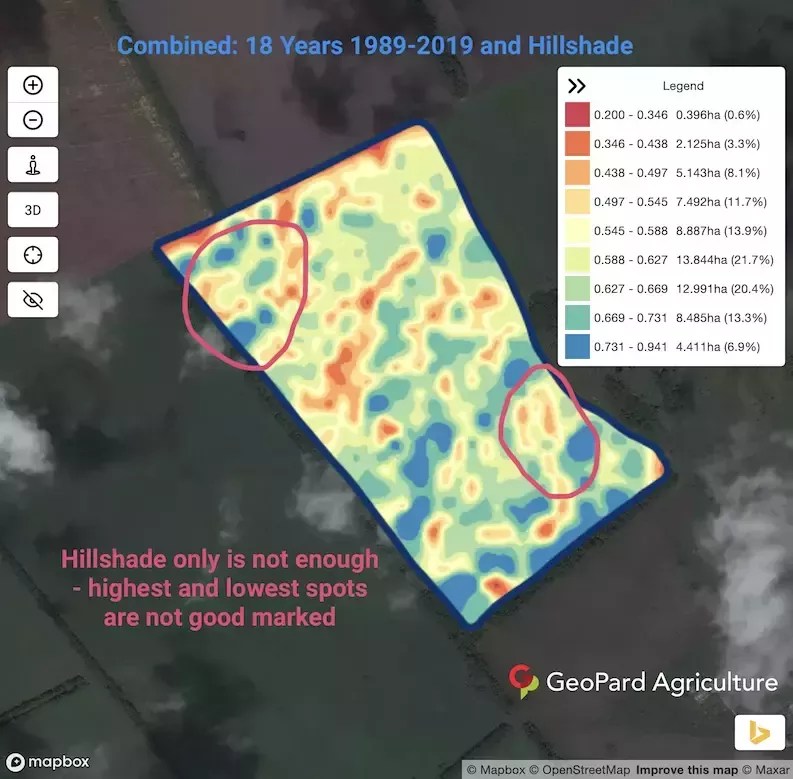
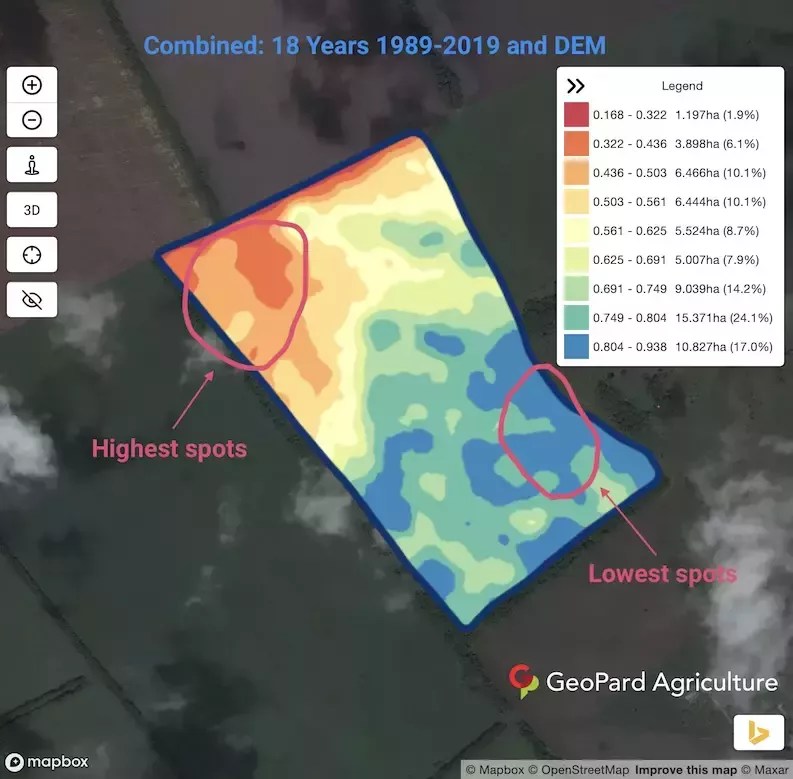
このブログに掲載されている画像には、データレイヤー(18年間の生産性マップ、デジタル標高モデル、傾斜、陰影図、2019年の収量データなど)と、さまざまな組み合わせの統合分析マップを含むサンプルフィールドが含まれています。. 

管理ゾーンの進化の過程を追跡しながら、追加のデータレイヤーで統合分析を拡張することができます。.


よくある質問


1. データレイヤーとは何ですか?

データレイヤーとは、特定の領域や主題を包括的に表現するために、整理され積み重ねられた個々のデータ構成要素または要素を指します。.

各レイヤーは、地理的特徴、土地利用、人口密度、環境要因など、データの特定の側面を表します。これらのレイヤーを組み合わせて分析することで、洞察を得たり、パターンを視覚化したり、情報に基づいた意思決定を行うことができます。.

データレイヤーは、地理情報システム(GIS)や空間分析において、複雑なデータを視覚的かつ解釈しやすい方法でよりよく理解し、表現するために一般的に使用されます。.

2. 統合分析とは何ですか?

統合分析とは、特定の課題や現象について、より包括的かつ全体的な理解を得るために、複数の情報源や分野からのデータを組み合わせ、分析するプロセスを指します。.

これには、データセットの統合、統計的手法の適用、および異なる変数や領域間の関係性の探索が含まれます。.

統合的な分析を行うことで、複雑なシステムをより繊細かつ相互に関連した視点から捉えることが可能になり、データを個別に分析しただけでは明らかにならないパターン、傾向、因果関係を特定しやすくなる。.

このアプローチにより、研究者や意思決定者は、より幅広い情報に基づいて、より情報に基づいた効果的な意思決定を行うことができるようになる。.

wpChatIcon
wpChatIcon

    無料GeoPardデモ・コンサルテーションをリクエスト


    ボタンをクリックすると、弊社の プライバシーポリシー. そのリクエストに返信するために必要です。.

      登録


      ボタンをクリックすると、弊社の プライバシーポリシー

        情報をお送りください


        ボタンをクリックすると、弊社の プライバシーポリシー