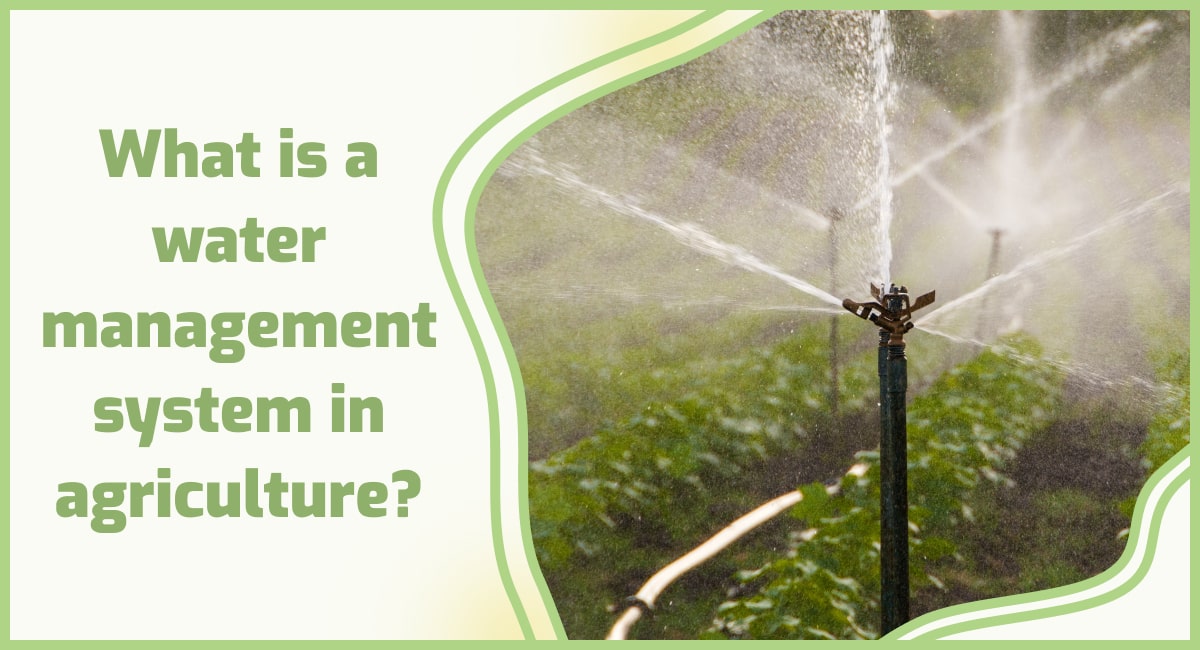
Why agricultural water management is so important

Agricultural water management or water management systems in agriculture are crucial for several reasons. While it helps ensure the reduction of adverse environmental effects, it also accelerates crop productivity.

Why is water management important?

Owing to the given fact, farmers have been making use of irrigation – a water management system in agriculture – for centuries. However, improper irrigation management by ranchers and farmers can cause water pollution, soil erosion, and other associated problems.

It is worth noting that 70% of freshwater that exists in our world is steered toward agriculture. Whereas 10% is used by livestock, industry, and aquaculture, irrigation surprisingly consumes 60%.

Therefore, it’s high time to pay proper attention to irrigation for a sustainable and supportable water management system in agriculture. Here we see a few imperatives below.

  • First of all, proper irrigation guarantees the production and development of a good yield by providing the required amount of water for plants to grow.
  • It averts the drying out of the soil by maintaining soil moisture.
  • Moreover, it tapers off the amount of soil erosion.
  • It cuts down the excessive water usage.
  • Last, but not least, it enhances the production quality.

When improving the water management system in agriculture, there are several ways. You can apply the proper irrigation method, develop a water management plan, and monitor water usage.

Improving sustainable agricultural water management system

Farming and environmental quality benefit from sustainable agricultural water management. So, it comes down to choosing suitable irrigation systems according to the specific situations. In agriculture, there exist plenty of irrigation systems.

For row crops, the appropriate irrigation system is the furrow irrigation system. Equally, hilly terrains cultivate better yields with the trickle irrigation system.

On the other hand, crops utilize the appropriate amount of water with the help of the calibrated irrigation system, as over-watering/under-watering is harmful to crops.*

Here we go through some other types of water management systems in agriculture.

1. Centre Pivot Irrigation: The sprinklers spread the water above wheeled poles in spirals.

2. Sub-Irrigation: Pumping stations, ditches, gates, canals, and other waterways raise the water level in a bid to distribute water across the land.

3. Lateral Move Irrigation: A series of pipes supply water, and each line is equipped with a set of sprinkles and a wheel. This system can be regulated manually or automatically.

1. Use evaluation of rainfall patterns

In some parts of the world, water for agriculture is limitedly available, which led researchers to develop a novel method called rainfall patterns for agriculture.

Not only is understanding rainfall patterns crucial in determining crop yields, but so is figuring out the rainfall quality and quantity.

In this way, farmers can get the most desirable raindrops by scheduling their crops at the best of times, paving the way for increased production and improved yield quality.

2. Use drip irrigation

Given the scarcity of water in our world, there is no better alternative than a drib irrigation system. It diminishes evaporation by delivering water straight to the roots of plants.

Drip irrigation

By estimates, it can save up to 80 percent more water when compared to traditional irrigation systems in case of its proper installation and scheduled watering. While it reduces water loss, it ramps up crop yields.

3. Make irrigation scheduling

Delivering the right amount of water at the appropriate time for crops comes down to the meticulous monitoring of soil and plant moisture, weather forecast, and other related conditions.

It is the realization of the fact that one cannot manage water smartly without knowing when and how much water is required to get distributed to crops from time to time.

4. Try dry farming

Farmers can resort to dry farming since it helps produce crops without irrigation during a dry season. Essentially, it relies on moisture stored in the soil from the rainy season.

5. Pay attention to compost and mulch

Farmers can use compost and mulch to their advantage. While compost optimizes soil structure and ratchets up the water-retaining capacity, mulch spreads over the soil and makes way for moisture conservation of the soil.

Mulch

Remember that compost alludes to decomposed organic matter utilized as fertilizer, whereas mulch can be made of organic materials such as wood or straw.

6. Use cover crops

Averting erosion and compaction, suppressing weeds, and improving soil fertility and organic matter come great with cover crops.

Surprisingly, it does not only enhance water-retaining capacity, but it also pushes water to get absorbed deep into the soil.

7. Implement conservation tillage

Conservation tillage reduces erosion and paves the way for soil conservation. However, it demands specialized plows and other tools to moderately till the soil. On the other hand, it leaves a minimum of 30% of vegetative crop residue on the surface.

8. Go organic

Do you know organic methods keep the toxic pesticides at bay from our waterways and help maintain soil moisture?

In a similar vein, the Rodale Institute witnessed 30% more corn yields in organic fields than traditional fields in times of drought in its thirty-year farm systems trial. It also noted that up to 20% of groundwater is rechargeable through organic fields.

9. Use a smart irrigation system

With everything on automation nowadays, automating the workflow and getting a real-time outlook on irrigation is also crucial for farmers. Along similar lines, with the help of remote controllers and connected sensors, you can now water your crops with a smart irrigation system.

It can help farmers keep updated with the weather forecast or moisture levels for appropriate irrigation schedules and predict possible threats by using statistics from earlier irrigation sessions. Similarly, farmers also can develop a better future farming plan by considering plausible changes.

In the wake of global water scarcity, the entire agriculture sector might be at significant risk. Without resorting to implementing new methods in place of conventional ones and leveraging new technology, we can hit agriculture and hence food insecurity at a faster rate than imagined.

Therefore, it is indispensable to get partnered with a professional such as GeoPard, who utilizes modern techniques of crop monitoring, soil data analytics, field benchmarking, etc., and realizes the specifications of implementing smart agricultural water management.


Frequently Asked Questions


1. What is irrigation system?

An irrigation system is a method used to deliver controlled amounts of water to plants or crops in order to fulfill their water requirements. It involves the distribution of water through various mechanisms such as sprinklers, drip lines, or flood systems.

By providing water directly to the roots, an irrigation system ensures efficient water usage and prevents wastage. This technology helps maintain optimal moisture levels in the soil, supporting plant growth and maximizing agricultural productivity.

2. What is irrigation?

Irrigation is the process of artificially supplying water to plants, crops, or agricultural fields. It involves the controlled application of water through various techniques such as sprinklers, drip systems, or flood irrigation.

The primary purpose of irrigation is to supplement natural rainfall and ensure plants receive adequate moisture for growth, especially in areas with limited rainfall or during dry seasons.

3. What are the 4 types of irrigation?

The four types of irrigation are as follows:

  1. Sprinkler irrigation: This method involves distributing water through sprinklers that spray water over the fields, mimicking rainfall. It is commonly used in agriculture and landscaping.
  2. Drip irrigation: Drip irrigation delivers water directly to the roots of plants through a network of tubes or pipes with small emitters. This targeted approach minimizes water wastage and is suitable for individual plants or row crops.
  3. Surface irrigation: Surface irrigation is a traditional method where water flows over the soil surface and infiltrates through furrows or basins. It is commonly used for crops such as rice, wheat, and corn.
  4. Sub-surface irrigation: Sub-surface irrigation involves delivering water underground through buried pipes or tubes. It delivers water directly to the plant roots, minimizing evaporation and surface runoff. This method is commonly used in commercial agriculture and water-sensitive landscapes.

4. What is the importance of water in crop production?

Water plays a crucial role in crop production for several reasons. Firstly, plants require water for photosynthesis, the process by which they convert sunlight into energy. Adequate water supply ensures proper plant growth, leaf development, and nutrient uptake.

Secondly, water regulates plant temperature, helping them withstand heat stress and maintain physiological balance. Additionally, water is essential for the transportation of nutrients within plants.

Lastly, water availability directly impacts crop yield and quality, making it a critical factor in agricultural productivity and food security.

How to prevent waterlogging in agriculture

We all know that the excessive use of everything is bad. But could anyone ever imagine the implication of excessive water availability to the soil? As much as plants need adequate water, sunlight, and fertilizers. The excessive and uncontrolled water supply could result in the logging of water and ultimately hinder the development of plants. In the worst cases, it may lead to the death of those plants.

What is waterlogging? How does it harm the crops?

Waterlogging refers to the excessive accumulation of water in the soil, leading to the saturation of the root zone. It occurs when the soil’s ability to drain water is compromised, often due to factors such as heavy rainfall, poor soil structure, or inadequate drainage systems.

It deprives plant roots of oxygen, hindering their ability to absorb nutrients and causing stress or even death. It adversely affects plant growth and crop productivity, making it a significant challenge in agriculture and requiring effective drainage measures to mitigate its impact.

The meaning of waterlogging in a much simpler term is the process of hardening or clogging of the topsoil due to excessive water availability to the soil. In agricultural terms, it can be defined as the extravagant and uncontrolled flow of water, through rain or irrigation practices to crops.

When the water available to the soil is much more than what the plant’s root and soil can absorb, then there will be waterlogging on the soil. The most significant effect of this condition on crops is the drop in the level of oxygen available to plants’ roots.

Water logging on the soil is a common problem in underdeveloped and developing countries where small-scale and medium-scale agriculture is majorly practiced. Large-scale farming usually has a strategy that controls the flow of water to crops.

Properly done Irrigation farming is an example of a modernized method of farming that reduces the stagnancy of water on the soil.

Crops need oxygen for normal activities such as respiration and consistent growth. CO2 absorbed by plants during respiration and photosynthesis is broken down into oxygen and carbohydrates. A greater portion of the oxygen obtained by the plant is released into the surroundings while the remaining portion is stored in the root for other purposes.

In severe cases, plants undergo anaerobic respiration to survive. This condition is called “anaerobiosis”, a condition of respiration when oxygen is absent. Plants may stop growing well, undergo denitrification, experience an evident decrease in the secretion of manganese and iron oxides, and eventually die off.

It is not usually detected until it has led to severe damages to the crops. Prompt detection reduces its effect on soil, plants, and the surrounding environment. Agriculturists need to know the signs of water logging on the soil for prompt detection and treatment.

It at the beginning stage leads to the yellowish coloration of the leaves. It also leads to wilting of leaves, smelly roots, and abnormally colored roots. Later signs are decomposition, stunted growth, and dying off of plants.

Summarily, waterlogging is the situation where there is oversaturation beyond the water holding capacity of the soil. It leads to clogging and obstruction in the flow of oxygen.

Forms of Waterlogging in Agriculture

There are various forms of waterlogging that occur in agriculture. The forms are:

  • Periodic waterlogging
  • Subsoil waterlogging
  • River waterlogging
  • Ocean waterlogging

Causes of waterlogging in Agriculture

1. Periodic 

Here, rainwater accumulates on depressed or flatlands and results in waterlogging of soil.

2. Subsoil 

This is when water enters the roots of plants. This usually happens during heavy rainfall or extensive irrigation practices.

3. River 

Here, there is an inflow from the bigger water sources like rivers into the farmlands. This is caused by extensive rainfall.

4. Ocean 

This is caused by adverse weather conditions such as earthquakes. Here, water from oceans flows into the farmlands.

Causes of waterlogging

The causes of waterlogging are:

  • Badly practiced irrigation
  • Poor medium of drainage
  • Land Topography
  • Heavy rainfall and flood
  • Soil permeability
  • Seepage inflow of water

1. Badly practiced irrigation

The intensive method of irrigation exposes soil to water logging. This is because water seeps through the soil and there is a rise in the groundwater table.

2. Poor system of drainage

In the absence of a proper draining system to evacuate water during rainfall, water remains stagnant on the soil. This is a major cause of waterlogging in agriculture. A drainage system helps to evacuate water from the land.

3. Land Topography

The topography of land includes the sloppiness, shape, and other physical features of particular land or environment. Some lands are accelerated such as hills and valleys, while some lands are depressed such as lowlands.

Accelerated lands have high steeps and prevent it. While depressed lands are flat and encourage stagnant water. This becomes worse in the absence of a proper drainage system.

4. Heavy rainfall and flood

Excessive rainfall is a natural cause of waterlogging. Water may remain on the land for several days especially if the soil has low porosity or permeability.

A flood is a natural disaster that results in the accumulation of water. Flooding is more destructive to plants and usually leads to the dying off of plants.

5. Soil permeability

The different types of soil have different porosity and water permeability. For instance, loamy soil is more permeable and porous than other types of soil.

In the advent of excessive rainfall, loamy soil absorbs more water than clayey soil and prevents or reduces the effect of waterlogging on the soil.

6. Seepage inflow of water

Lands that are closer to large water bodies are more likely to experience water inflows to the land. This effect can be reduced by utilizing water effectively. Water from rivers can be treated and used for industrial purposes.

Effects of waterlogging

It has numerous effects on plants. The effects of waterlogging are:

  • Poor aeration
  • Anaerobiosis
  • Retarded growth of plants
  • Increased salinity
  • Growth of unwanted plants
  • Lowered soil temperature
  • Difficulties in performing farm operations
  • Environmental pollution

1. Poor aeration of the soil

Excessive and indiscriminate supply of water to plants leads to a reduction in the supply of oxygen to plants. Aeration is the process of air circulation in the soil. Plants produce oxygen during the day. A larger portion of the oxygen produced by plants is in the environment.

While the remaining portion is stored in plants’ roots. When water-logging occurs, the oxygen stored in the plant root is lost due to excessive moisture.

2. Anaerobiosis

Anaerobiosis is the condition of anaerobic respiration in plants. In extreme cases, plants lose the oxygen required for their normal respiration.

Thus, they resort to anaerobic respiration, a condition of respiration in the absence of oxygen.

3. Retarded growth of plants

It disrupts the normal biological function of plants. Excessive supply of water to plants reduces the supply of oxygen and nitrogen to plants.

Since both elements are fundamental to the growth of plants, disruption in their supply will retard the growth of plants.

4. Increased salinity

This is usually more common in intensive methods of irrigation farming. Salts are accumulated in the root of plants due to the accumulation of minerals in the water.

5. Growth of unwanted plants

Some water-loving and wild plants thrive more during the condition of waterlogging. These unwanted plants compete with the main crops for nutrients and sunlight.

They outgrow the main plants and retard their growth. In some cases, it eventually causes the crops to die. The growth of unwanted plants reduces the profit of farmers. A large amount of money is spent to get them destroyed.

6. Lowered soil temperature

Due to the moist environment created by waterlogging, there is a fall in the temperature of the soil. Low temperature encourages the activities and functions of microorganisms. Some chemical substances that are harmful to plants are also bred.

7. Difficulties in performing farm operations

Many farm operations such as weeding, plowing, planting, and more are best carried out in dry environments. It prevents farmers from carrying out many activities on the farm or makes those activities harder to perform.

8. Environmental pollution

It leads to water pollution in the environment. The accumulated water serves as a medium for the growth of microorganisms. It may also harbor dirt and unwanted objects. It may pose a great danger to the environment.

How to prevent waterlogging in agriculture

Due to the effect waterlogging has on soil, plants, the ecosystem, and agriculturists, it is necessary to prevent the occurrence of waterlogging on lands. Agricultural industries can prevent it through the following ways:

  • Growing crops in raised beds
  • Practice good drainage system
  • Mulching
  • Minimizing seepage inflow
  • Proper irrigation management
  • Alternating farming methods

How to prevent waterlogging in agriculture

1. Growing crops in raised beds

This method is more effective when the land or area of farming is small. For example, backyard gardens and small-scale farms. The beds of the crops may be raised to a higher level to avert it.

Although, this method is very stressful and requires a lot of effort by the farmer. But provides reliable prevention to waterlogging and protects crop roots from excessive water.

2. Practice good drainage system

This is an important precaution against it in agriculture. Farmers should ensure that their farms have a reliable drainage system. It ensures that water is properly evacuated from the farm. When draining water away from farms, farmers should ensure that the water does not remain stagnant on another person’s land or farm.

This is to prevent affecting the environment or someone else with water logging. There are natural and man-made systems of draining water in agriculture. The farmer should adopt the method that is the best fit for his crop and type of land.

3. Mulching

Mulching provides a better and more practicable solution to the problem of waterlogging in farms. In Agriculture, mulching is the process of treating the soil with organic or inorganic substances. When these substances are added to the soil, it protects the soil surface and help plants grow.

It also helps to reduce the rate of evaporation. It is however advisable to use a thicker mulch of organic substances in severe cases of water logging. Mulching aids soil aeration and eventually eradicate it on the soil.

4. Minimizing seepage inflow

Water inflows from rivers, canals, and lakes to the farmland can be minimized or blocked to prevent it. Paths can be created along the water bodies to prevent the inflow of water to the farms. Drainage systems could also be planted along the water bodies to prevent unsolicited inflow of water to the farm.

The water bodies could also be widened to aid water flow to its maximum capacity. Also, water from lakes, canals, and oceans can be used more beneficially and economically. This will also prevent unnecessary inflow of water to the surrounding environment.

5. Proper irrigation management

Proper irrigation management should be practiced to prevent waterlogging of soil. The intensity or deepness of irrigation practices should be below. Proper soil types with the right level of porosity should be used for irrigation.

Furthermore, alkaline water or seawater should not be used for irrigation. This is because the minerals present in alkaline water can harden the soil surface and prevent soil from absorbing them. And this will result in waterlogging of the soil.

6. Alternating farming methods

Crop rotation should be practiced on lands to prevent waterlogging and improve the well-being of the soil. The farmer should endeavor to practice different crop production methods on his land. Also, extensive methods of irrigation farming should not be practiced on land for a very long time. Crops that require intensive irrigation should be encouraged.

In conclusion, It is a notable challenge in both modern and traditional farming. It may not be easily detected unless close attention is paid to it. Its causes are numerous and they are all highlighted in this article.

Some are natural while some are man-made. It has enormous consequences on the following: soil effectiveness, plants, agriculturists, and the ecosystem, and numerous methods can be employed to stop the incidence and also reduce its effect.

This article gives a detailed analysis of the issues surrounding waterlogging in farming. The underlying causes, and practicable prevention.


Frequently Asked Questions


1. Why should excessive supply of water to plants be avoided?

Excessive water supply to plants should be avoided to prevent waterlogging, nutrient loss, disease susceptibility, and water wastage. When a field becomes waterlogged, it can have detrimental consequences on plants.

The lack of oxygen in the waterlogged soil can suffocate plant roots, leading to root rot and poor nutrient uptake. Ultimately, these factors can result in stunted growth, wilting, yellowing of leaves, and even plant death.

2. What are the basic reasons of water logging and salinity?

The basic reasons for waterlogging and salinity are primarily related to poor drainage and excessive irrigation. It occurs when the soil is unable to drain adequately due to factors such as high water table, compacted soil, or inadequate drainage systems.

Salinity, on the other hand, arises when there is an accumulation of salts in the soil due to excessive irrigation and evaporation, leading to an increase in soil salinity levels. Both negatively impact plant growth and productivity, requiring proper drainage and irrigation management to mitigate these issues.

3. How does salinity affect plant growth?

Salinity negatively affects plant growth in multiple ways. High levels of salt in the soil can create an osmotic imbalance, causing water to be drawn out of plant roots, leading to dehydration and wilting.

Excess salt also interferes with the uptake of essential nutrients, depriving plants of vital elements necessary for growth and development.

Additionally, salt accumulation can damage plant tissues and disrupt physiological processes, impairing photosynthesis and reducing overall productivity. Ultimately, salinity stress can result in stunted growth, leaf burn, reduced yield, and even plant death.

4. How does soil help plants grow?

Soil plays a crucial role in supporting plant growth in several ways. Firstly, soil serves as a medium for plant roots to anchor and obtain physical support. It also acts as a reservoir for water, holding moisture that plants need for hydration and nutrient uptake.

Soil provides essential nutrients to plants, acting as a source of minerals and organic matter necessary for their growth and development. Additionally, soil contributes to root aeration and gas exchange, allowing plants to access oxygen for respiration.

5. How the modern methods of irrigation are more water efficient than the traditional ones?

Modern methods of irrigation are more water-efficient compared to traditional ones for several reasons. Firstly, modern techniques such as drip irrigation and sprinkler systems deliver water directly to the root zone, reducing wastage through evaporation or runoff.

Secondly, these methods allow for precise control of water application, adjusting the flow rate and timing according to plant needs. Thirdly, technology-driven irrigation systems incorporate sensors and automation, enabling real-time monitoring and optimizing water usage.

Lastly, modern methods promote water conservation practices like mulching and soil moisture management, further enhancing efficiency. Collectively, these advancements minimize water loss and promote sustainable water usage in agriculture.

6. How to harden soil?’

To harden soil, there are a few simple steps you can take. Firstly, avoid over-watering the soil, as excessive moisture can make it soft and compact. Secondly, ensure proper drainage by improving the soil’s structure with organic matter, such as compost or well-rotted manure, which helps to promote better drainage.

Thirdly, avoid excessive foot traffic or heavy machinery on the soil, as this can lead to compaction. Lastly, consider incorporating sand or gravel into the soil to increase its density and improve its hardness.

7. How to prevent soil salinization?

To prevent soil salinization, manage irrigation carefully, improve soil drainage, use salt-tolerant plants, and practice crop rotation.

8. What are the four traditional methods of irrigation?

The four traditional methods of irrigation are flood irrigation, furrow irrigation, sprinkler irrigation, and manual irrigation. Flood irrigation involves flooding the entire field with water. Furrow irrigation involves creating small channels or furrows to direct water to the plant roots.

Sprinkler irrigation utilizes sprinklers to distribute water over the field. Manual irrigation involves manually carrying and applying water to plants, often using watering cans or buckets.

These traditional methods have been used for centuries but may not be as water-efficient as modern irrigation techniques.

9. What would happen to a plant if it grow in polluted soil?

If a plant grows in polluted soil, it can experience various adverse effects. The pollutants present in the soil can be absorbed by the plant’s roots and transported throughout its tissues. This can lead to reduced growth, stunted development, and yellowing or wilting of leaves.

Pollutants can also disrupt essential physiological processes, hinder nutrient uptake, and cause cellular damage. In severe cases, plants may die due to the toxic effects of the pollutants. Therefore, it is crucial to ensure plants grow in healthy, unpolluted soil for optimal growth and productivity.

11. How to fix a waterlogged garden?

To fix a waterlogged garden, several steps can be taken. Firstly, improve drainage by creating channels or trenches to redirect excess water away from the garden area. Secondly, amend the soil by adding organic matter like compost or well-rotted manure to enhance its structure and drainage capacity.

Thirdly, raise garden beds or create raised planting areas to elevate plants above waterlogged soil. Lastly, select plants that are more tolerant of wet conditions and ensure proper spacing to allow for adequate air circulation. These measures will help alleviate waterlogging and promote a healthier garden environment.

12. Does gravel absorb water?

No, gravel does not absorb water. Gravel is a non-porous material, meaning it does not have the ability to retain or absorb water. Instead, it allows water to pass through it freely, promoting drainage. Gravel is often used in landscaping and construction projects precisely for its excellent drainage properties, as it helps to prevent water from pooling or causing waterlogged conditions.

How to deal with water erosion?

Erosion is a result of forces of nature acting on soils and other earth materials. Displacement of soil particles by the force of water followed by their transport away from the initial place can be called water erosion.

This possesses a major role in the loss of topsoil, which is the vital top few centimeters of any soil ecosystem and contains the major amounts of soil nutrition & microbial diversity. There are multiple forms of it all of which change the land in various ways.

While all the places found on the planet are prone to be eroded by water, regions with sloping topography are normally more extremely affected than those with flatter landscapes. Among the vulnerable areas are the ones with lower organic matter content in the soil, impermeable soil layers, as well as silty soils.

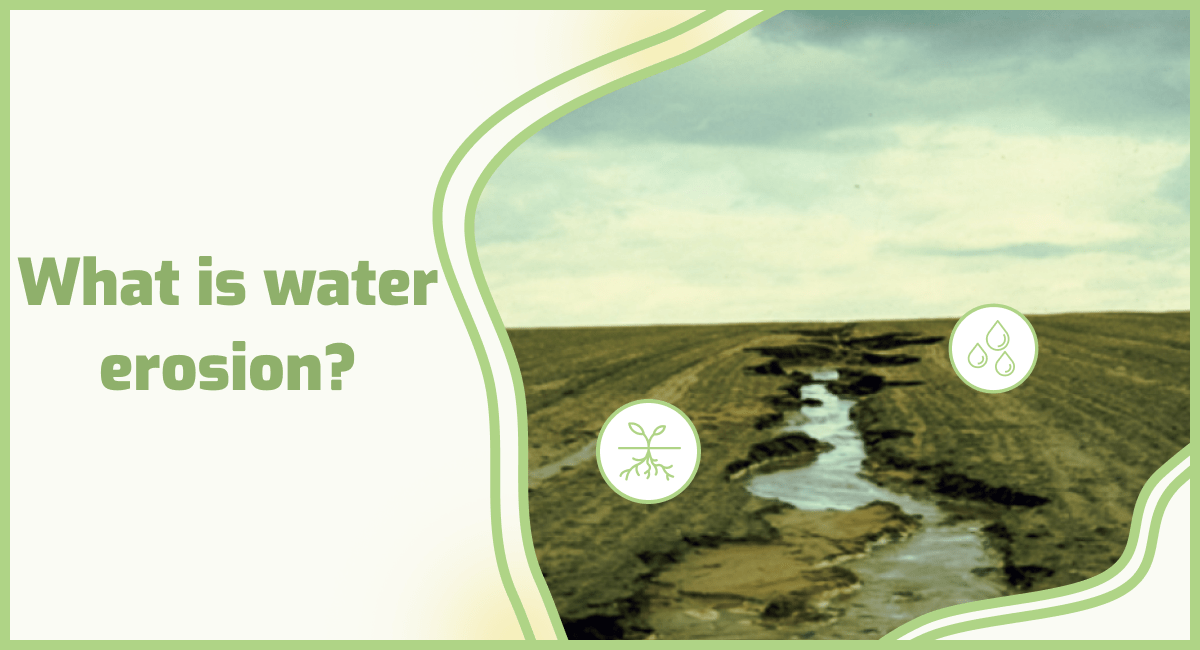
What is water erosion?

Water-erosion is a complicated process with many different forms, but it can be summarized as the removal or displacement of soil away from its original location by the water. This results from rainfall, melted snow, flowing rivers, the movement of glaciers, or the freeze/thaw cycles.

Similar to erosion caused by water, it will slowly erode away landscapes over time if left unaddressed and can be very hazardous to those whose livelihoods depend on the land remaining intact like farmlands and ecological landscapes.

Different forms of water-erosion commonly found are rills erosion, gullies erosion, splash effect erosion, sheet flow erosion, and tunneling erosion, each of which this article will address in more detail further below.

What causes water erosion?

Like many environmental phenomena, there are both natural and exacerbated forms of erosion, the latter of which are the direct or indirect result of our activities. For example, the erosion of banks from coursing rivers over hundreds of years is a natural form of water erosion that would occur with or without human interference.

Conversely, water-erosion that has been intensified or created by our activity may include anything from the flooding and the resulting degradation of farmlands from improper irrigation to the accelerated melting of glaciers from the enhanced greenhouse effect from human-caused pollution.

It can be difficult to pinpoint the exact cause behind water erosion when considering the complex interactions present in ecological and physical systems that are affected, but it is clear that our activity has increased its overall levels, particularly in the major farming regions of the world.

However, the main reason for water-erosion in farmland can be attributed to several intentional or unintentional activities such as improper irrigation, unsuitable quality, and quantity of fertilizers, extreme or insufficient water availability, harmful cropping practices, etc.

The following factors are responsible to define the its magnitude:

1. Rainfall Characteristics:

Rainfall can be considered as the major culprit of water erosion since most of the water is circulated as rainfall in the water cycle. Moreover, the intensity of rainfall, amount of rainfall, and the seasonal distribution of rainfall largely affect it.

It is obvious that the higher the intensity and amount of rainfall, the greater the likelihood of its severity. Also, the seasonal distribution of rainfall plays a major role, especially in today’s changing climate since erratic rainfall has increasingly been a major issue for rain-fed agricultural systems around the world.

2. Catchment Characteristics:

The catchment is the expanse of land that has a common outlet for the flowing water. It occurring in a catchment is largely dependent upon several catchment characteristics such as the size, shape, and slope of the catchment as well as the presence or absence of a well-defined water channel.

Like mentioned earlier, an area with a greater slope has higher chances for water erosion since the effect of water is exacerbated by the action of gravity. A well-drained catchment has lower chances of water erosion than one without water channels.

3. Soil Characteristics:

Soil differs from one place to the other and each type of soil reacts differently to the effect of eroding water. The properties of soil that affects it are physical properties (texture, structure, porosity, and density), chemical properties (pH, Cation exchange capacity, nutrient content), and biological properties (presence or absence of vegetation, microorganism, and soil fauna).

4. Atmospheric Characteristics:

The climatic and weather condition of the region also has a significant contribution to erosion through the water. Weather events can affect the hydrological cycle as well as the biological cycle of the vegetation which in turn affects it.

Types of water erosion

There are five main types of water erosion, all of which arise from separate circumstances or weather events, and many of which are interlinked with one another. Some are more severe than others, such as gully and tunnel erosion, and all are natural occurrences that we have seen enhanced by human activity, particularly in farming areas.

Types of water erosion

1. Splash erosion

Splash erosion occurs from the impact of raindrops on delicate topsoil, which creates a small crater that may widen over time. Typically single or small soil particles are removed from the main soil structure.

The scientific explanation for the splash effect of raindrops is that a moving (falling) body has kinetic energy and upon impact, that energy is transferred to the dislodge soil particles from the ground.

While the individual events are less impactful than other types of water erosion on this list, it is the combined effect of countless raindrops that makes the effect significant. Especially, splash erosion is especially a matter of concern in areas that completely lack vegetation.

Sheet erosion

2. Sheet erosion

Sheet erosion is the erosion of soil in thin layers by excess water flowing as sheets above the soil. When the amount of rainfall or water on land exceeds the ability of the land to absorb water, water cannot infiltrate into the ground and it carries a thin layer of soil with it when it flows downslope.

Sheet erosion can be defined as the overflowing of water above the ground in a uniform layer and eroding the small and light particles found on the top layer. Sheet erosion is related to the formation of gullies, where the pounding rainfall exceeds the ability of the soil to absorb the water.

On a hill or sloping landscape, this can result in the accumulation of soil particles in a mound at the bottom of the slope, hence even resulting in the formation of a rill in the surface layer.

Rill erosion

3. Rill erosion

Just as sheet erosion creates rill erosion, rill erosion eventually leads to gully erosion when left unaddressed. A rill can be defined as a shallow channel that has developed from water erosion and typically does not exceed 30-50 cm in width or depth.

It is the initiation of the development of water-flowing channels which, with time, increases in depth and width as it erodes more and more of the soil materials and carries it downstream through the rills.

They are typically found in hilly or sloping areas, as well as areas where the soil is naked and vulnerable to erosion like deforested areas or commercial farmland.

water erosion

4. Gully erosion

Gully erosion is a type of advanced water erosion that originates from the formation of rills that deepen until they gradually become deep and wide trenches that are much more difficult to repair and highly impractical for machinery in the case of farming.

The water flowing through gullies is also often of poorer quality as it contains a high concentration of sediment and soil particles as it continues to erode the landscape.

Gullies are a much serious concern in farmland productivity as well as on any other land use since they require more time and effort to repair and if not corrected properly and given favorable conditions, they can keep growing up to a point where the entire land has to be rendered unusable.

In areas where advanced gullies are found, sediment loading in the downstream rivers is also a serious problem.

Dealing with water erosion

5. Tunnel erosion

Tunnel erosion is a unique type of subsurface water erosion typically caused by water penetration into a hollow underground zone that then moves soil particles away from their original location below the soil surface, forming tunnels.

This type of erosion is very dangerous as it may not be apparent for some time but create unstable landscapes that are prone to collapse. Tunnel erosion is mainly found in specific orders of soil like the sodosol which has an unstable subsoil.

The advancement of tunnel erosion occurs when water enters the interior of soil through holes or cracks on the land formed by tree roots or other causes. Tunnel erosion seriously affects the water holding capacity of the soil.

Dealing with water erosion

It comes in various forms and degrees of severity, all of which lead to land degradation and the loss of productive capacity of the land.

While the most accurate and effective solutions to deal with water erosion depends on factors such as topography, vegetation, atmospheric condition, etc., there are some established ways or practices that alone, or indifferent combinations that can be used to prevent, mitigate or reduce the action and its impacts:

1. Select Appropriate Land Use

The land use selected for a given land should match the type and vulnerability of the soil for erosion. The location, physical and chemical characteristics of the soil should govern the choice of land use.

For example, steep slopes are best suited for the production of forage crops while forests are appropriate land use for marginal lands with degraded and low productive soils.

2. Maintain Organic Matter

Organic matter is what binds the soil together. Soils with higher organic matter content are more stable with good infiltration and high water holding capacity, making the soil less prone to be eroded.

Not only that, organic matter is vital for microorganism activities and better vegetation production. This further helps the soil to be resistant to the eroding action of water. It is mainly effective in checking rill erosion, sheet erosion, tunnel erosion, etc.

Maintenance of organic matter content usually requires the checking of balancing between the rate of decomposition and the rate of organic matter buildup. Planned practices such as reducing disturbance to the soil structure and adding manure or leaving crop residue serve to establish and maintain that balance.

Maintain Organic Matter:

3. Establish Crop Residue cover

Providing cover to the soil by leaving residues of crops on the ground is a proven method to mainly reduce splash erosion. By doing so, the rainfall does not come in direct contact with the soil and hence isn’t eroded easily. Furthermore, it also controls sheet erosion by reducing the rate of water flow on the surface.

Establishing crop residue is obtained by reducing tillage operations or by using the conservation tillage method.

Establish Crop Residue cover:

4. Reduced tillage

Intense tillage operation is used in hopes of making the soil more arable but it makes the soil easily erodible. It disrupts the structural integrity of the soil, reduces the moisture content, and makes it vulnerable to the splashing effect of raindrops.

So the reduction in the tillage operation or by using alternative methods is essential to deal with all types of erosion.

Reduced tillage:

5. Use zero tillage or direct seeding

Zero tillage and direct seeding are two effective methods of dealing with soil erosion and are often used in combination to increase the agricultural productivity of the land. Zero tillage leaves most of the crop residue uniformly distributed across the area and the stubbles are also left intact.

Direct seeding involves seeding crops directly on the earlier crop residue with the use of fertilizers and herbicides to replace tillage for weed control and nutrient cycling. It is an economical and beneficial method to reduce the negative impacts of water erosion along with increasing production.

Use conservation fallow:

6. Use conservation fallow

The use of fallows has been an effective method of revitalizing the productivity of the land by leaving it barren for one or more vegetative periods.

However, cases of moderate to severe erosion have been a common occurrence in fallows left without any crop residue cover because the organic matter content in the soil declines with increased decomposition.

To solve this problem, conservational fallow leaves the crop residue in the fallows which keeps on feeding organic matter to the soil while reducing tillage operations.

Use zero tillage or direct seeding:

7. Grow forages and use crop rotations

The use of crop rotations and the integration of forages in crop rotation substantially reduces water erosion in farms. The perennial forages have a fibrous root system that protects the soil from both above and below the ground.

The selection of appropriate time for rotation as well as the best crop varieties allows the farm to maintain a healthy nutrient cycle. Legumes and cereals when rotated alternatively with forages, give the best results against its control.

Grow forages and use crop rotations:

8. Use direct seeding for pasture conversion

The method of directly seeding crops into the sod helps to eliminate the heavy plowing and harrowing requirements in the pasture lands while maintaining the same amount of yield. Direct seeding can be done with the use of a disc as well as an air drill.

9. Controlling severe erosion

While adopting good practices to deal with normal water erosion is effective, controlling its severe cases like gullies and extreme sedimentation requires more specialized measures such as:

Controlling severe erosion

10. Grassed Waterways

Just as the name suggests, grassed waterways are the channels in farmlands that have grass on them to carry large amounts of water from the land to a safe outlet. Waterways serve to dispose of the farmlands of the excess water without allowing it to erode the farmland soil.

However, newly constructed waterways are prone to failure due to the eroding action of water. So, maintaining a good cover of grass on the waterways ensures sustainability.

Grassed waterways should be large enough to be able to drain peak volumes of water from storms and melting snow and should thus consider the historical records as well the size of the land to be drained using the waterway.

While establishing a grass waterway, a gentle slope should be given and the normal drainage pattern should be adhered to as far as possible.

Grassed Waterways

11. Lined Channels

Artificial channels, as well as natural gullies, help to carry excess water away from the farmlands. Lining the channels with matting that helps to control the erosion within the channel helps to make the channels more stable against channel bank and channel bed erosion.

The lined channels can be constructed by using biological means such as turfs, rocks, and grasses as well as fabricated geotextiles and concrete, both of which are highly effective in restricting the expansion of gullies and conveying periodic water over slopes with a gradient of 10 percent. Lined channels also help to maintain the water quality downstream.

Drop Structures

12. Drop Structures

The channel through which water flows is hardly uniform and flat. Sometimes, the elevation difference across a small distance is high enough to accelerate the kinetic and gravitational forces of water causing erosion.

In such locations, drop structures are constructed to safely drop down the water to lower grounds. To do so, different types of drop structures such as vertical drop structure, grouted drop structure, and pipe drop structure are used. Among them, pipe drop structures are easier and less costly to construct.

Cross Section of a Pipe Drop Structure

13. Cross Section of a Pipe Drop Structure:

Pipe drop structures can also vary based on the needs of the site and the method of construction. The simplest types of pipe drop structure include laying out a pipe along with the flow of the channel connecting the upward and downward elevations.

The flowing water is concentrated into the inlet of the pipe and then the water flows inside the pipe which is released back into the channel through the outlet.

A more complex pipe drop structure includes constructing a berm or a storage area upstream where water is retained temporarily.

One or more plastic pipes with small openings as inlets in the berm are laid into the ground with their outlets opening up on the channels below. In doing so, the water is removed at a slowed pace, and holding water upstream also helps to increase moisture levels.

types of pipe drop structure

14. Terracing

In rugged topography with steep uninterrupted slopes, terraces are the best option to deal with water erosion and mass movements such as landslides caused by it.

Establishing channels in steep slopes is hard and the natural water channels cannot drain the entire area. As a result, water tends to flow along the slope and through the soil downslope. Terraces are built along the contour to control the flow of water.

Terracing

15. Cross Section of Terrace

Establishing terraces in such areas results in the runoff water being intercepted by the terraces and the water thus intercepted is drained through the channels that separate the terraces.

Constructing terraces in sloppy land includes cutting or removing materials to form channels and using the material to form flat land called berms where crops are cultivated.

It is rather expensive to build terraces, but considering the lack of alternatives in sloping lands, terraces are one of the best options for controlling it which further helps to stabilize the slope and increase the productive potential of the soil.

Cross Section of Terrace

Examples of water erosion

Examples of water erosion can be seen everywhere around us. The peculiar shape of the hills and the mountains are a result of the constant wearing action of water and wind. Some of the examples of include:

Examples of water erosion

1. Caves: Caves are one of the most fascinating natural landforms found on earth and are largely formed by the action of flowing water over many years.

This process is further exacerbated by carbonic acid from the rock’s calcium carbide which can result in caves hundreds of kilometers long like the mammoth cave of the United States.

Riverbank erosion is the removal of the river materials

2. River Bank Erosion: Riverbank erosion is the removal of the river materials present in the banks of the river as flowing water pounds on the river bends.

Riverbank erosion is a serious problem in flood plains agricultural systems where thousands of acres of cultivable land is being washed away annually due to the cutting of river banks.

3. Canyons: One of the grandest examples of water erosion is the Grand Canyon which was formed by the eroding action of the Colorado River millions of years ago.

The Grand Canyon and other canyons across the globe are scenic representations of its power.

4. Coastal Erosion: Coastal erosion is the erosion of lands on the coastline which results in the formation of coastal cliffs and regular removal of coastal lands.

Conclusion

Water is a strong force of nature and its eroding effect can cause serious harm to the overall farmland productivity everywhere, especially on marginal lands. While the causes of water erosion can be both natural as well as human-accelerated, there are certain factors like soil properties and rainfall characteristics that define the its severity.

Furthermore, it is best dealt with as early as possible where normal tillage operations and the adoption of good farming practices can control it effectively and economically. However, severe erosion caused by water or its potential erosion risk asks for other measures such as drop structures, terraces, grassed waterways, and lined channels.

Finally, the means of controlling water erosion can be summarized down to maintaining a good crown cover and the structural integrity of the soil. Its prevention and mitigation are vital to sustaining agricultural and farming operations in farmlands.


Frequently Asked Questions


1. Which type of water erosion occurs when water travels down slopes in small channels?

Rill erosion is the type that occurs when water flows down slopes in small channels. It occurs when rainwater or runoff creates small, shallow channels in the soil.

Rill erosion can be a precursor to more severe forms of erosion if left unchecked. It is important to implement proper soil conservation practices to prevent and mitigate rill erosion.

2. What is the most erosive water force?

The most erosive water force is known as “sheet erosion.” It happens when a thin layer of water flows over a large area, causing the detachment and transport of soil particles.

Sheet erosion can be particularly damaging as it can lead to the loss of fertile topsoil. Implementing soil conservation measures, such as contour plowing and terracing, can help mitigate the effects of sheet erosion and protect the land.

3. How can eroded soil enter a body of water?

Eroded soil can enter a body of water through a process called “sedimentation.” When soil erosion occurs, the eroded soil particles are carried away by water runoff or wind. These particles can eventually make their way into nearby rivers, streams, or lakes, contaminating the water.

Sedimentation poses risks to aquatic ecosystems, as it can disrupt aquatic life, reduce water quality, and affect the overall health of the body of water. Implementing soil conservation practices and maintaining vegetative buffers can help reduce soil erosion and prevent sedimentation in water bodies.

wpChatIcon
wpChatIcon

    Request Free GeoPard Demo / Consultation


    By clicking the button you agree our Privacy Policy. We need it to reply to your request.

      Subscribe


      By clicking the button you agree our Privacy Policy

        Send us information


        By clicking the button you agree our Privacy Policy