

South Dakota State University (SDSU) pioneered a program teaching and aiding farmers in utilizing precision agriculture.
In Brookings, South Dakota, SDSU’s new precision agriculture program has been successful in encouraging local and some other Midwestern farmers to adopt more technology in their operations. However, farmers in other states are slower in embracing this technology.
SDSU became the first university in the country to establish a program that educates and assists farmers in using precision agriculture, which is the science of integrating new technologies and traditional methods to improve operational efficiency, leading to increased crop yields while minimizing environmental effects.
For instance, the utilization of global positioning satellites aids in targeting chemicals and fertilizers precisely where they are most needed.
Ali Mirzakhani Nafchi, an assistant professor at the precision ag center, mentioned that the school is working to increase usage through education and research to make the technology more practical for farmers.
“I am very optimistic it is going to work. And we will see the changes not only in South Dakota, in the nation and in the world,” Nafichi said.
South Dakota has one of the highest percentages of usage, with 53% of farmers using precision ag technology, according to a study from the U.S. Department of Agriculture.
In other Midwest states such as North Dakota, Iowa, Illinois, and Nebraska, more than half of the farmers use precision agriculture, according to a study conducted by the SDSU Ness School of Management and Economics.
However, nationally, only 27% of farmers use precision agriculture practices to manage crops or livestock, as found by the Ness study.
Precision Ag Benefits, Challenges To Adoption
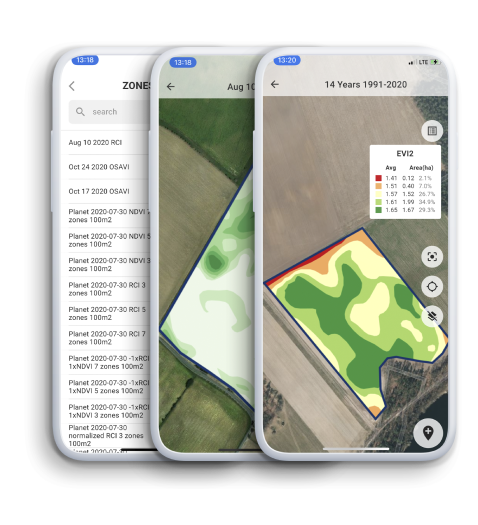
Precision agriculture (precision ag) technologies are becoming more popular among farmers. Auto-steering in machinery is one widely used technology. It helps farmers steer their machines without needing to do it manually. Another important technology is “georeferencing,” which involves taking digital images to pinpoint locations.

Satellite imagery is also widely used, with nearly 60% of farmers having tried it, according to a study by Ness. This technology allows farmers to view their fields from above. Research shows that precision ag technologies typically increase crop production by 4% and improve fertilizer placement efficiency by 7%, according to a study by the Association of Equipment Manufacturers. Additionally, precision ag reduces the use of herbicides, pesticides, fossil fuels, and water.
However, despite the benefits of improving returns and yields, factors such as cost and a lack of general knowledge about precision ag have prevented many farmers from using these technologies as widely as expected.
Anna Karels, a student at the precision ag center, remarked that although it requires money to get started, it ultimately saves money in the long term.
“I think it’s hard for a lot of farmers to grasp that, yes, it may increase my costs upfront, but it pays off over a certain number of years,” Karels said.
Nafchi mentioned that lowering the initial rate will incentivize more farmers to use the technology.
“The initial costs for variable rate application are too high,” Nafchi said. “So imagine if we get help. Somehow maybe make it less expensive, or lower the initial costs, or just provide an incentive, an investment for them, and ask them to just try it. And then they see the return on their investment is really good. I’m very optimistic they will use it.”
If the initial costs are too high for some farmers, there are programs to help. According to the U.S. Government Accountability Office, the USDA and the National Science Foundation have given nearly $200 million for precision ag research and development from 2017 to 2021.
Another reason for the low adoption rates is the lack of knowledge about the new technology. But there are options for South Dakota farmers to learn more.
“Dealerships like John Deere, they organize a lot of clinics where they show farmers how to use it,” Karels said.
The Raven Precision Agriculture Center
The Raven Precision Agriculture Center was established to help students in the major learn about precision ag in hands-on ways.
The building has rooms filled with equipment and precision ag products that students use for hands-on learning. It opened in August 2021, costing $46.2 million, making it the first precision ag program in the nation.

“We want to grow our precision ag program to the next level and enhance the experiences for our students,” said Muthukumarappan.
The department needs to continue making changes to keep up with new technologies. This is one area where the program can improve, according to some students.
“The precision ag program is something that is going to have to keep changing to adapt to all the new technology that’s emerging. And I think that maybe SDSU could do a little bit better job of keeping up with that,” Karels said.
This is something the program is working on.
One change is to add more specialized majors to collect more data on precision ag.
“Previously, we had a one recipe for all the students who are enrolled in (the) precision ag program, meaning that we combine agronomy and technologies together and make it one robust program,” Muthukumarappan said. “Now, we are making it more user-friendly. And we have three different tracks. One is for technology track. The other one is for agronomy track. And the other one is for data track, electronic strikers.”
“Currently, our new faculty are working on developing biosensors and unmanned vehicles,” Muthukumarappan said.
The program’s goal is to conduct more research that will make precision ag more practical for farmers, which may raise adoption rates in turn.
The program is aiming to increase enrollment rates by 20% in the next five years to make this goal achievable. SDSU’s mission is to simplify this technology and make it more practical for farmers, Nafchi said.
Currently, the program has 66 students.
“We have great resources as a building. However, we didn’t have a lot of faculty resources, human resources, in doing things, offering things and doing research activities in this space,” Muthukumarappan said. “The last two years, we were able to hire three new faculty to do high-end research activities, bring in more research dollars and help our research program to grow.”
Source: South Dakota News Watch
Precision Farming