Візуалізація економічного впливу сталого землеробства з використанням GeoPard у точному землеробстві

Researchers from Bayerische Landesanstalt für Landwirtschaft (LfL) and GeoPard Agriculture teamed up to look into the economics of strip-intercropping systems for sustainable farming. They shared their findings at the University of Hohenheim’s event on “Promote Biodiversity through Digital Agriculture,” focusing on eco-friendly farming practices and their financial impacts.

Their project, “Future Crop Farming,” aimed to explore new ways of farming, with a special focus on strip-intercropping. This technique involves growing different crops side by side in strips within the same field, which could reduce the need for chemicals and increase biodiversity. The researchers wanted to find ways to make farming more eco-friendly while still being profitable for farmers.

Led by Olivia Spykman and Markus Gandorfer from LfL, along with Victoria Sorokina from GeoPard, this collaboration started during the EIT Food Accelerator program. Using their knowledge in farming, digital tools, and data analysis, they set out to study the economic side of sustainable farming practices.

While addressing the reduction of synthetic inputs and the increase of biodiversity they found that the ecological potential of strip-intercropping is well-researched. However, its mechanization and labor economics, especially with autonomous equipment, require further evaluation.

They found that farmers were unsure about its practicality, especially with new technology. To address this, they talked with farmers at a strip-intercropping field lab to understand their concerns and communicate better.

Furthermore, changes to the landscape can make farmers hesitant, so providing clear information upfront is important. Therefore, digital tools, like visualizations, can facilitate communication between farmers and their communities, generating acceptance and appreciation for ecologically beneficial landscape transformations.

For example, in New Zealand, farmers used virtual reality (VR) goggles to visualize suitable areas for afforestation, aiding farm-scale planning by illustrating impacts on farm profitability, landscape aesthetics, and rural communities. Such visualizations can enhance farmers’ understanding and interest in landscape changes, though successful implementation also depends on farmers’ self-confidence.

Similarly, in this research, the cloud-based program GeoPard was used to analyze a strip intercropping production system from multiple perspectives. GeoPard’s equations were parametrized with empirical data from the Future Crop Farming project. Initial results include visualizations of herbicide and nitrogen input and yield output, with more complex calculations planned.

Herbicide application map displaying

Furthermore, the system integrated various data sources, including:

  • Yield and applied-input datasets
  • Price information for crops and plant protection (provided by the user)
  • Satellite imagery (Sentinel-2, Landsat, Planet)
  • Topography data
  • Zone maps of historical data available in GeoPard

Meanwhile, the main techniques utilized involved spatial analysis and efficient handling of spatial data using the NumPy framework. Data was sourced from .xlsx and .shp files. However, the shape file lacked specific details about individual strips, necessitating the integration of various data formats.

GeoPard facilitated organizing data spatially to link strip-specific details with their respective locations in the field. Hence, the integrated dataset, displaying the strips, formed the basis for the descriptive trial analysis in GeoPard.

Although the research didn’t examine variable-rate application of inputs, GeoPard’s high-resolution mapping (pixel size: 3×3 meters) enabled detailed visualization at the pixel level, adding complexity. This detailed mapping is valuable for future applications, like combining multiple layers or integrating more spatially variable information such as ‘yield profiles’ based on small-scale yield data collected by plot combines in the research project.

Yield-per-crop map in full view and zoomed-in to show pixel-level details

Researchers have also discovered that although GeoPard has primarily served descriptive functions, it possesses the potential for more complex visualizations. For example, incorporating sub strip-level yield data and price information could help create profit maps, showing edge effects between neighboring crop strips.

Furthermore, integrating labor economic data could reveal the impacts of reducing economies of scale to promote biodiversity. Such data can aid scenario modeling, allowing exploration of various crop rotations, strip widths, and mechanization types, focusing on field-specific outcomes to improve agricultural management and decision-making.

Hence, the setup could function as a digital twin, with real-time data transfer from field machines and sensors to GeoPard, a capability already achievable with some commercial technologies and satellite data. However, farmers’ concerns about technology compatibility emphasize the need to integrate additional data sources for broader applicability.

Management Zone Maps and Corn Growers: How Much Do They Matter?

During multiyear analysis, researchers have tested if management zone maps based on soil conditions, topography, or other landscape features can reliably predict which parts of a cornfield will benefit most from increased seeding rates or nitrogen application.

The study revealed that, contrary to common assumptions, crop-plot responses to the same inputs vary significantly from year to year. The most unpredictable factor, the weather, seemed to have the biggest impact on how the crops responded to these inputs. However, farmers can still take steps to manage the impacts of weather on their crops.

Management zone mapping came about due to a rise in interest in digital agriculture – the use of new data-gathering and analysis technologies to better understand the interplay of factors affecting crop yields, explained University of Illinois Urbana-Champaign crop sciences professor Nicolas Martin, who conducted the analysis with former postdoctoral researcher Carlos Agustin Alesso.

These methods involve using field-based sensors, satellite data, and other digital tools to track how crops respond to local conditions, fertilizer, seed rates, and other inputs. The aim is to minimize wasteful or destructive practices while maximizing yield, Martin added.

The recent study employed a unique method to validate the predictions of management zone maps.

“We utilized our farm machinery as a printer, generating a patchwork of inputs akin to a quilt with various colors,” explained Martin. “We implemented our experiment across multiple sites, employing a completely randomized design.”

The researchers carried out their study on seven typical non-irrigated corn production sites in Illinois. Each site was divided into numerous plots. Different rates of corn seeding and nitrogen application were randomly assigned to each plot.

Additionally, the researchers measured the soil composition, topography, and other landscape features specific to each site. They standardized all variables except for weather conditions across the fields. This study was conducted from 2016 to 2021.

The researchers gauged the yield of each plot at harvest time over several years. This helped them identify which plots responded best to various inputs each year. They employed an advanced random-forest algorithm to ascertain which factors – like weather conditions, soil characteristics, or slope – most accurately predicted whether increasing nitrogen application or using a higher seeding rate would boost yields.

Martin explained that weather variables are the primary factors influencing the spatial patterns of response to nitrogen or seed rates, with landscape and soil attributes following closely. Additionally, he noted that these responses vary annually due to weather effects, resulting in inconsistency, at least in the fields we examined.

“This means that a plot which responds well to a higher nitrogen rate one year might not respond as well the next time it is planted with corn,” he said. “This makes the management zone mapping concept an unreliable predictor of crop responses to inputs.”

“We believe that these findings can partially explain why precision agriculture technologies have not been uniformly adopted by farmers,” Martin said.

The researchers believe that gathering more data over multiple years and using better tools for on-site analysis could enhance the accuracy of management zone mapping.

This research was supported by the U.S. Department of Agriculture’s Natural Resources Conservation Service and National Institute of Food and Agriculture.

Зони управління в точному землеробстві для оптимізації врожайності

Precision agriculture is a way of farming that uses technology to optimize the use of inputs. By applying inputs at the right amount, time and place, it can improve crop yield, quality, profitability and sustainability. And one of the key concepts in precision agriculture is management zones.

What are management zones and why are they used?

A management zone is a sub-region of a field that has similar characteristics and responds similarly to inputs. They can be based on factors such as soil type, texture, organic matter, electrical conductivity, elevation, slope, crop health, yield history and more.

Management zones are used to divide a field into smaller units that can be managed differently according to their needs and potential. For example, a field may have areas with different soil textures, such as clay, loam and sand.

These areas may have different water holding capacity, nutrient availability and drainage. Applying the same amount of water or fertilizer to the whole field may result in over-irrigation or under-fertilization in some areas, and vice versa in others.

This can lead to wasted resources, reduced crop performance and environmental problems. By creating MZ’s based on soil texture, the farmer can adjust the irrigation and fertilization rates for each zone to match the soil conditions and crop requirements. This can increase water use efficiency, nutrient use efficiency and crop yield.

Delineation of management zones in precision agriculture

Delineation of management zones in PA is a process of making different zones in a field based on what’s similar in that area. These zones help farmers decide how to use things like water, fertilizers, and pesticides more effectively.

What are management zones and why are they used

To do this, farmers collect data about the soil, the land’s shape, or how well crops grow in different spots. Then, they use computer programs to group together areas that are alike. For example, places with similar soil or places where crops always grow well become their own zones.

Once they have these zones, farmers can be smarter about how they use resources. They might give more water to zones that need it or use fewer chemicals in places that don’t need as much. This helps save money, protect the environment, and grow better crops.

There are different methods and tools for delineating MZs in PA, but one of the most common and recommended ones is cluster analysis. Cluster analysis is a data mining technique that groups data points into clusters based on their similarity or dissimilarity.

Cluster analysis can be applied to spatial data, such as soil samples, yield maps or satellite images, to identify homogeneous areas within a field. It involves the following key steps:

  • Data Collection: Collect data about the field, like soil info, yield records, and more.
  • Data Analysis: Use technology (like GIS) to study the data, finding patterns and differences in the field.
  • Clustering: Group similar areas together based on the data. For example, areas with similar soil types become zones.
  • Boundary Definition: Set clear boundaries between these zones to avoid mixing resources.
  • Zone Characterization: Each zone gets described by its unique traits, such as soil type or nutrient levels.
  • Data Integration: Combine data from different sources, like soil surveys and satellite images, to make the zones even more accurate.

How management zones are created?

There are different methods for creating management zones in precision agriculture. Some of the common methods are:

  • Using existing soil maps or surveys that provide information on soil properties and boundaries.
  • Using soil sensors or probes that measure soil parameters such as electrical conductivity, moisture, pH and more.
  • Using remote sensing or aerial imagery that capture crop health indicators such as vegetation indices, biomass, chlorophyll content and more.
  • Using yield monitors or maps that record crop yield and quality data over multiple years.
  • Using data analysis or modeling tools that integrate multiple data sources and apply statistical or spatial techniques to identify patterns and clusters.

1. Soil maps or surveys

In precision agriculture, MZ’s are crafted by harnessing existing soil maps or surveys, which provide essential data on soil properties and boundaries.

methods for creating management zones in precision agriculture.

Two primary soil sampling methods are employed: grid sampling, breaking the field into squares for soil samples, and zone sampling, grouping areas with similar soil properties. Grid sampling offers detailed insights into field variability but comes with higher costs due to increased samples.

Zone sampling’s effectiveness depends on method and size. By integrating this data with sampling approaches, precision farming optimizes resource allocation to specific soil conditions within zones, promoting sustainability and crop productivity.

2. Soil electrical conductivity

In precision agriculture, soil sensors and probes measure essential soil parameters such as electrical conductivity (EC), moisture, and pH. Soil EC, expressed in mS/m, gauges a soil’s electrical conductivity ability.

By sending controlled currents into the soil and geotagging the measurements with GPS coordinates, these tools help quantify soil texture variations and yield potential. They inform decisions on nutrient management, seeding rates, depths, and irrigation schedules.

Soil EC data also offers rapid, cost-effective insights into soil properties like texture, cation exchange capacity (CEC), drainage, organic matter, and salinity, enabling the creation of precise MZ’s for optimized farming practices.

3. Remote sensing or aerial imagery

Creating management zones in precision farming involves the utilization of remote sensing or aerial imagery to capture crucial crop health indicators such as vegetation indices, biomass, chlorophyll content, and more.

How MZ's are used The Benefits

This is achieved through the use of airplanes or drones equipped with imaging technology capable of generating high-resolution images. By employing sophisticated image analysis techniques, these images are processed to delineate zones within the field.

4. Yield monitors

In precision agriculture, zones are established through the use of yield monitors and maps that collect vital crop yield and quality data over several years.

This process, known as yield mapping, involves real-time monitoring on harvesters, capturing information on crop mass, moisture levels, and the area covered.

Subsequently, this data is harnessed to create comprehensive yield maps, driving more precise and efficient farming practices.

5. Data analysis or modeling tools

In precision farming, we create MZ’s carefully using advanced tools that analyze data. These tools bring together lots of different information and help us see patterns in the farm. They use math and maps to find out where we should focus our attention. This helps farmers make smart choices about where to use resources like water and fertilizer. It makes farming better and helps crops grow well.

However, the choice of method depends on the availability of data, the type of input to be varied, the size of the field, the cost of the technology and the farmer’s preference. The goal is to create zones that are meaningful, consistent and practical.

How MZ’s are used? The Benefits

Once zones are created, they can be used to guide variable rate applications (VRA) of inputs such as seeds, fertilizers, water and pesticides. VRA is a technique that allows changing the rate of input application within a field based on the management zone information.

To implement VRA, the farmer needs:

  • A variable rate controller that can adjust the application rate according to a prescription map or a sensor feedback.
  • A global positioning system (GPS) that can locate the position of the applicator within the field.
  • A geographic information system (GIS) that can store, display and analyze spatial data such as MZ’s and prescription maps.

Using VRA based on MZ’s can help the farmer to:

  • Apply inputs where they are most effective and avoid over-application or under-application.
  • Improve productivity of fertility-limited or water-limited soils.

Optimize management zones with GeoPard 

Furthermore, by customizing input application rates, farmers can reduce input costs on soils that are unresponsive or have low productivity potential. This cost-effective approach ensures that resources are invested wisely.

It is also worth noting that precision agriculture, with MZ’s and variable rate applications (VRA), benefits the environment by minimizing nutrient leaching, reducing runoff of chemicals into water bodies, and preventing soil erosion.

Optimize management zones with GeoPard

GeoPard Agriculture simplifies precision farming with its Management Zones & VRA Maps feature, allowing users to create customized zones and prescription maps based on various data layers like satellite imagery, soil analysis, and more.

These maps are compatible with agricultural equipment and machinery. Users can also conduct multi-layer analytics, identify areas with higher or lower yield potential, and detect field stability trends. The platform offers cross-layer maps to uncover dependencies between different zone maps and facilitates easy zone adjustments.

Additionally, GeoPard supports Variable Rate Application (VRA) mapping for precise agricultural operations and provides statistics on zone-level accuracy. It offers data compatibility for export and allows manual zone customization and equation-based prescriptions for cost calculation.

Висновок

Precision agriculture is a transformative approach to farming that harnesses technology and data-driven insights to enhance crop production. Whether by utilizing data from soil sensors, remote sensing, yield monitors, or data analysis tools, it empowers farmers to create management zones tailored to their fields. These zones optimize resource allocation, leading to improved crop yields, reduced costs, and sustainable agricultural practices.

LfL використовує платформу GeoPard для свого майбутнього проєкту в галузі землеробства

Agriculture today faces major challenges. It has to produce high-quality food and raw materials, but increasingly it also has to take into account requirements for the protection of soil, water, climate, and biodiversity.

The Bavarian State Research Center for Agriculture (LfL) has long been conducting research on these challenges and is now testing the GeoPard precision agriculture platform for its Future Crop Farming project.

Dmitry Dementiev, CEO and Co-Founder of GeoPard: “Traditional crop farming methods often face challenges such as inefficient resource management and limited access to real-time data. These factors can lead to suboptimal crop yields, increased costs, and environmental strain.”

GeoPard’s platform provides LfL with a centralized platform to visualize and analyze critical farming data. The platform’s user-friendly interface permits the combination of satellite data and experimental data from the field trial, simplifying complex data interpretation and empowering users to make informed choices that optimize productivity and sustainability.

The field was divided into sections to showcase a specific setup for the trial: LfL has implemented a strip intercropping system, i.e., the simultaneous cultivation of multiple crops in parallel strips in the same field.

These strips can subsequently be employed separately in equations for inputs (such as fertilizer and plant protection) and yield results, enabling the computation of overall field

profit. Moreover, the profits generated by individual crops and the possible impacts at the edges between strips can be assessed.

The collaboration between LfL and GeoPard through the Future Crop Farming project can move forward analysis tools for unconventional field structures.

By leveraging GeoPard’s advanced platform, it can complement its research results and create valuable visualizations for communicating insights from the project to the public.

With a focus on precision farming, productivity, and environmental stewardship, the innovative LfL project showcases the potential for a more sustainable future in crop farming.

PD Dr. Markus Gandorfer, Head of Digitalization and Project Lead at LfL: “It is a pleasure for us to work with the enthusiastic GeoPard team. Deeper insights into our strip-intercropping data enabled by the GeoPard tool are very valuable to us.”

About

Bavarian State Research Center for Agriculture (LfL) The Bavarian State Research Center for Agriculture (LfL) is the knowledge and service center for agriculture in Bavaria. The applied research of the LfL takes up issues of agricultural practice and provides applicable solutions for agricultural enterprises in various ways.

The interdisciplinary Future Crop Farming project is located in Ruhstorf a.d. Rott in southeastern Bavaria. More information about the project can be found on the project website: http://www.future-crop-farming.de

ГеоПард Агрікультура is a leading provider of precision farming software. The company was founded in 2019 in Cologne, Germany, and is represented globally. The company offers a range of solutions that help farmers to optimize their operations and increase yields.

З акцентом на сталий розвиток та регенеративну економіку, GeoPard Agriculture прагне сприяти впровадженню методів точного землеробства по всьому світу.

The company’s partners include such well-known brands as John Deere, Corteva Agriscience, ICL, Pfeifer & Langen, IOWA Soybean Association, Kernel, MHP, SureGrowth, and many others.

Графіки розвитку культур для точного землеробства від GeoPard

Today’s agricultural industry requires not only hard work and understanding of the land, but also the smart application of technology. I am thrilled to share an insight into one of the tools making a significant difference in sustainable farming practices: GeoPard’s Crop Development Graphs.

Our Crop Development Graphs offer a comprehensive, user-friendly display of crop growth data since 1988. Automatically generated for any field, these graphs are designed to ensure precision and accuracy.

The data is calculated solely for the cloud and shadow-free area of the field. A simple hover reveals the average NDVI (Normalized Difference Vegetation Index) value, providing an instant snapshot of crop health.

But what sets our tool apart? The capability to switch views. GeoPard’s interface allows users to alternate between Yearly and Monthly views. This level of detail ensures you are equipped with the essential data to make well-informed decisions about crop management, harvest timing, and yield prediction.

In the hands of a farmer, this precise insight can guide field management strategies, helping to detect the optimal harvest time, monitor crops at scale, and overall, optimize productivity and sustainability.

This is an exciting step forward in precision farming, a path that leads not only to improved yields but also to more sustainable practices that consider our environmental footprint.

Stay tuned for more updates as we continue to develop and refine our tools to serve the agricultural community better. We’re on a journey to make precision farming more accessible and efficient, and we’re thrilled to have you join us. Together, let’s redefine the future of farming!

Планетне зображення (щоденне, з роздільною здатністю 3 м) для створення зон управління

Access to Planet imagery became simpler, faster, and more affordable with GeoPard Agriculture. Since August 2022 GeoPard has released the capabilities to search and analyze only requested Planet images from the user’s preferred date range.

So a GeoPard user requests only preferred Planet images and can use them in GeoPard analytical toolbox.

Planet images extend Sentinel and Landsat coverages (provided by default) and can be mixed with other data layers (harvesting/spraying/seeding machinery datasets, topography profile) via existing Multi-Layer, Multi-Year, і Equation tools


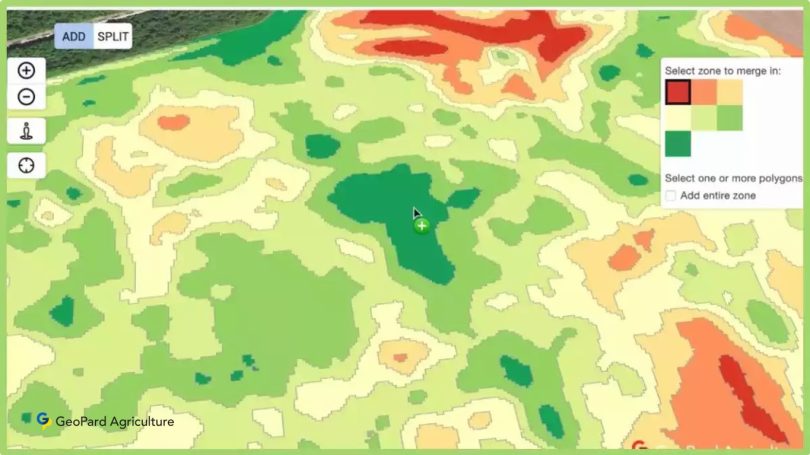
Planet Imagery for Management Zones Creation


Планета is the largest earth observation satellite network delivering a near-daily global dataset and enables its high-resolution and high-frequency satellite imagery data.

Management Zones Based on Planet Scope (3.5m resolution) imagery.

Read more about GeoPard / Planet Partnership.

What is Planet Imagery And Its Use for Management Zones Creation?

It refers to the satellite imagery provided by Planet Labs, a private company that operates a fleet of small satellites called Doves. These satellites capture high-resolution images of Earth’s surface on a daily basis. The term “3m resolution” means that each pixel in the image represents a 3×3 meter area on the ground. This level of detail allows for detailed analysis and monitoring of various features and changes on the Earth’s surface.

When it comes to management zones creation, Planet Imagery with daily 3m resolution can be highly beneficial for various industries and applications, such as:

  • Agriculture: High-resolution imagery can help in creating management zones in agriculture, where different areas of a field may require different treatments, like irrigation, fertilization, or pest control. By analyzing the imagery, farmers can identify patterns related to crop health, soil moisture, and other factors, enabling them to make better decisions about resource allocation.
  • Environmental management: Satellite imagery can be used to identify and monitor environmentally sensitive areas, such as wetlands, forests, and wildlife habitats. This information can be used to create management zones that protect these areas and ensure sustainable land use practices.
  • Urban planning: High-resolution imagery can help urban planners identify areas of growth, land use patterns, and infrastructure development. This information can be used to create management zones that guide future development and ensure efficient use of resources.
  • Disaster management: Satellite imagery can help in identifying and monitoring disaster-prone areas, such as floodplains or wildfire hotspots. Management zones can be created to establish evacuation routes, allocate resources for disaster response, and inform land use policies that minimize the risk of future disasters.
  • Natural resource management: High-resolution imagery can help in monitoring and managing resources like water, minerals, and forests. By identifying areas of high resource value or scarcity, management zones can be created to ensure the sustainable use and conservation of these resources.

In summary, Planet Imagery with daily 3m resolution is a valuable tool for creating management zones in various fields, providing up-to-date and detailed information that can help decision-makers optimize resource allocation and ensure sustainable land use practices.


Поширені запитання


1. What can the use of imagery help establish?

The use of imagery can help establish a more efficient and effective farming system. By utilizing technologies like drones or satellite imaging, imagery can provide valuable insights into crop health, soil conditions, and irrigation needs.

It aids in identifying areas of concern, such as pest infestations or nutrient deficiencies, allowing farmers to take targeted actions. Furthermore, imagery helps in monitoring crop growth and development, enabling precise decision-making and maximizing yields. 

Рівняннєва аналітика в точному землеробстві

With the release of the Equation-based analytics module, the GeoPard team has taken a big step forward in empowering farmers, agronomists, and spatial data analysts with actionable insights for each square meter. The module includes a catalog of over 50 predefined GeoPard precision formulas that cover a wide range of agriculture-related analytics.

The precision formulas have been developed based on multi-year independent agronomic university and industry research and have been rigorously tested to ensure their accuracy and usefulness. They can be easily configured to be executed automatically for any field, providing users with powerful and reliable insights that can help them to optimize their crop yields and reduce input costs.

The Equation-based analytics module is a core feature of the GeoPard platform, providing users with a powerful tool to gain a deeper understanding of their operations and make data-driven decisions about their farming practices. With the ever-growing catalog of formulas and the ability to customize formulas for different field scenarios. The GeoPard can meet the specific needs of any farming operation.


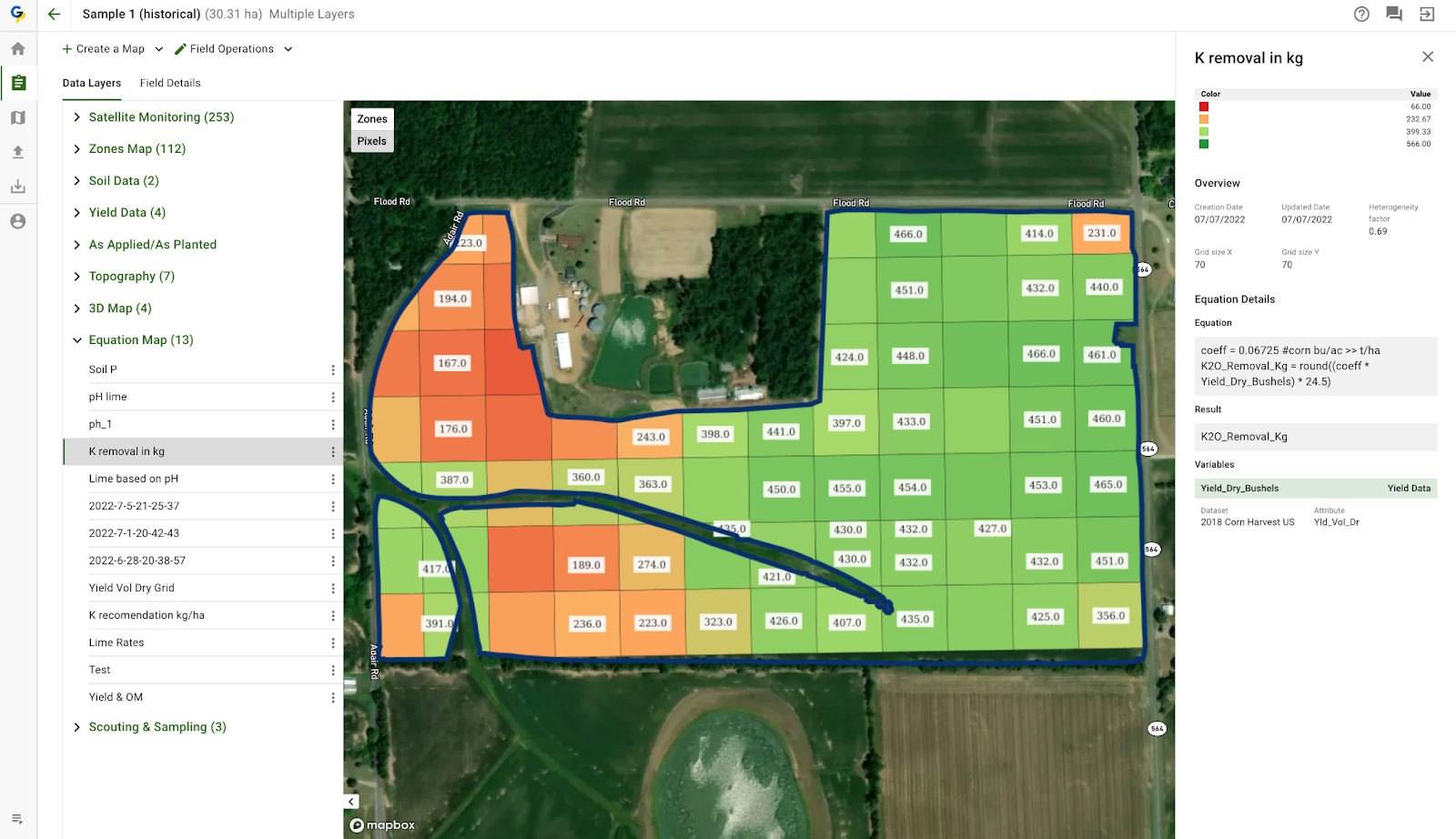
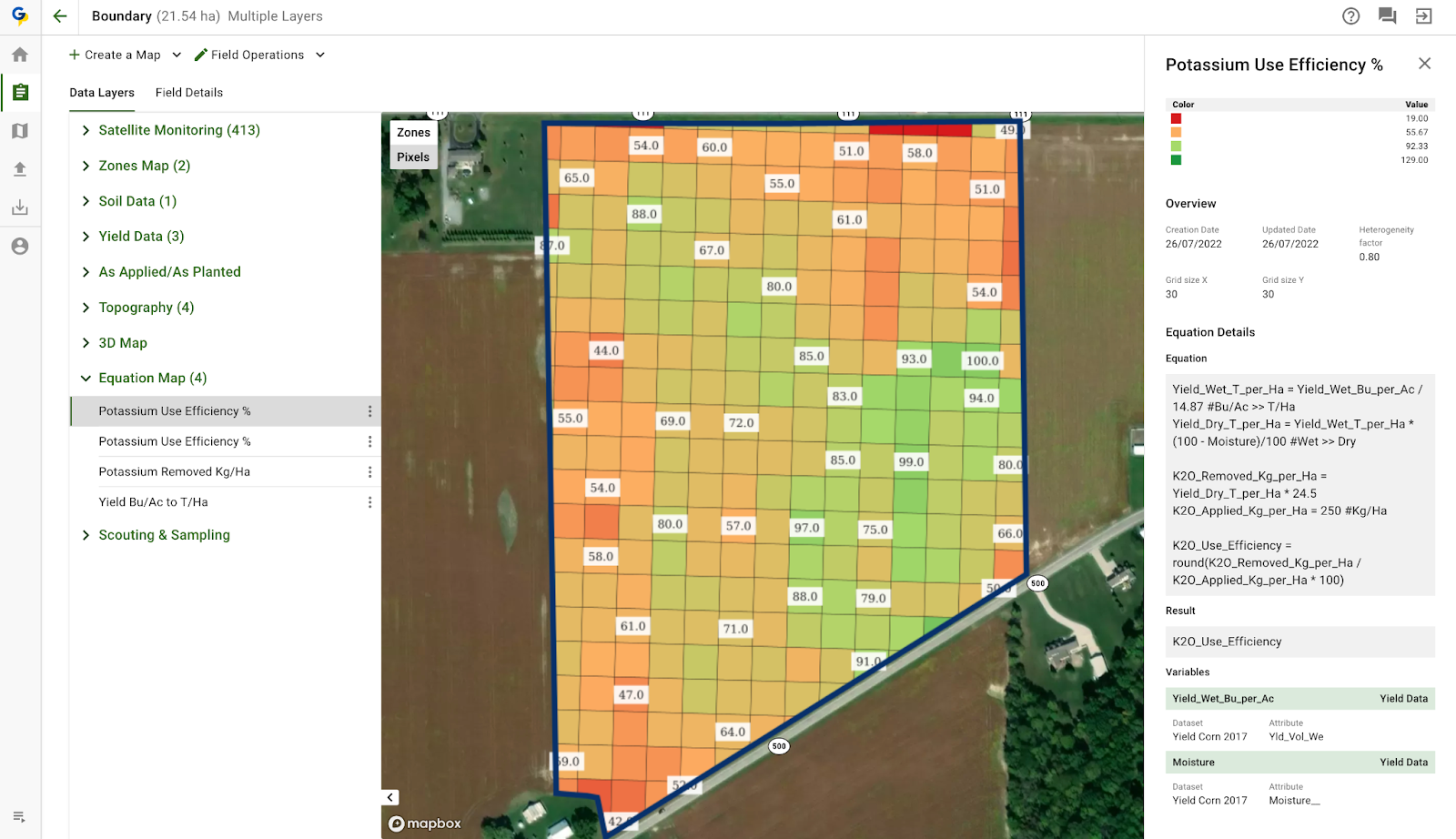
Potassium Removal based on Yield data

Potassium Removal based on Yield data


Use Cases (see examples below):

  • Nitrogen Uptake in absolute numbers using Yield and Protein data
  • Nitrogen Use Efficiency (NUE) and Excess calculations with Yield and Protein data layers
  • Lime recommendations based on pH data from soil sampling or soil scanners
  • Sub-field (zones or pixel-level ROI maps)
  • Micro and Macro nutrients fertilization recommendations based on Soil sampling, Field Potential, Topography, and Yield data
  • Carbon modeling
  • Change detection and alerting (calculate difference between Sentinel-2, Landsat8-9 or Planet imagery)
  • Soil and grain moisture modeling
  • Calculation of dry yield out of wet yield datasets
  • Target Rx vs As-applied maps difference calculation


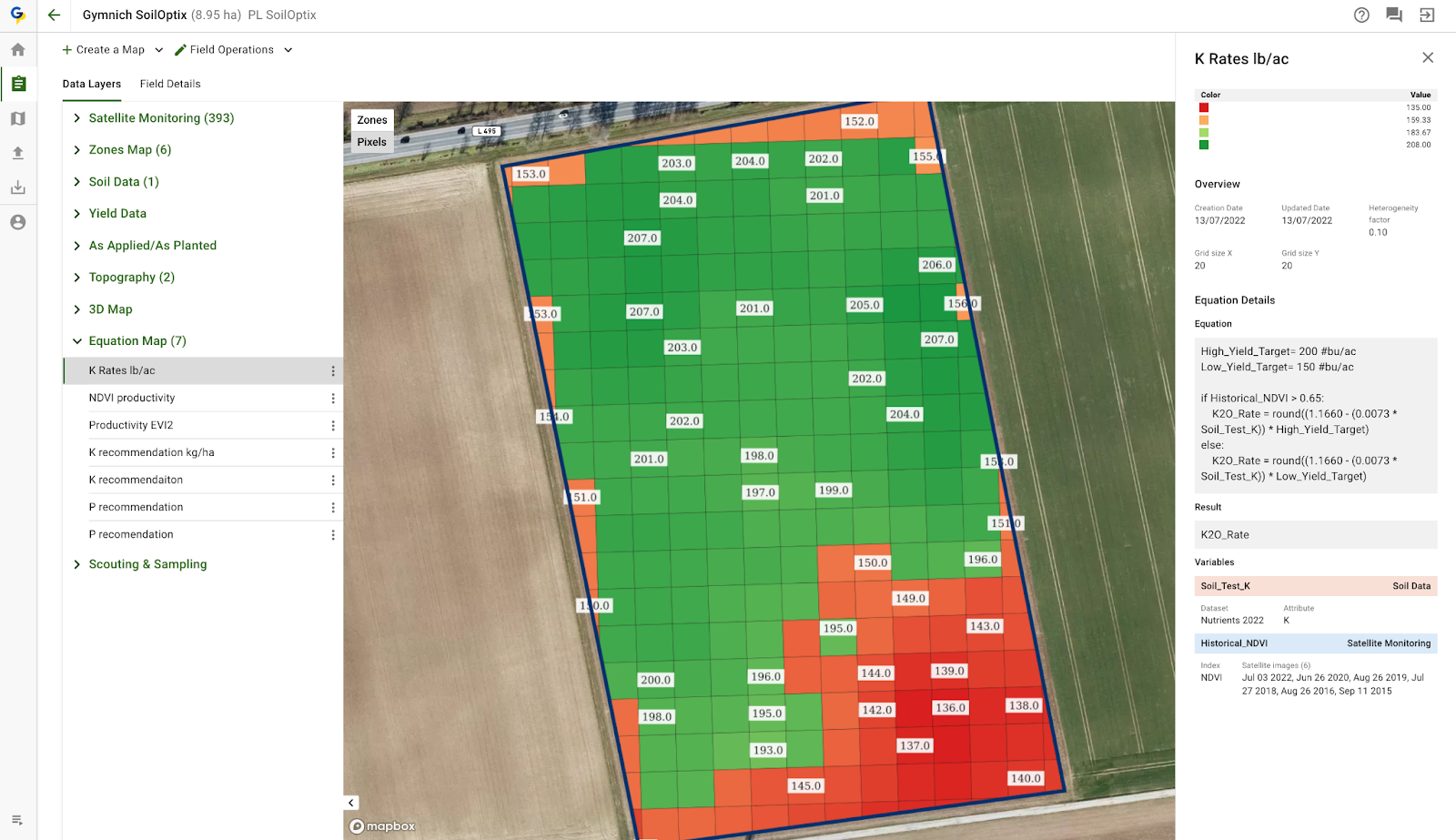
Potassium Recommendations based on Two Yield Targets (Productivity Zones)

Potassium Recommendations based on Two Yield Targets (Productivity Zones)


Fertilizer: Recommendations Guide. Potassium / Corn.

Fertilizer: Recommendations Guide (South Dakota State University): Potassium / Corn. Review and Revision: Jason Clark | Assistant Professor & SDSU Extension Soil Fertility Specialist


Potassium Use Efficiency in Kg/Ha

Potassium Use Efficiency in Kg/Ha


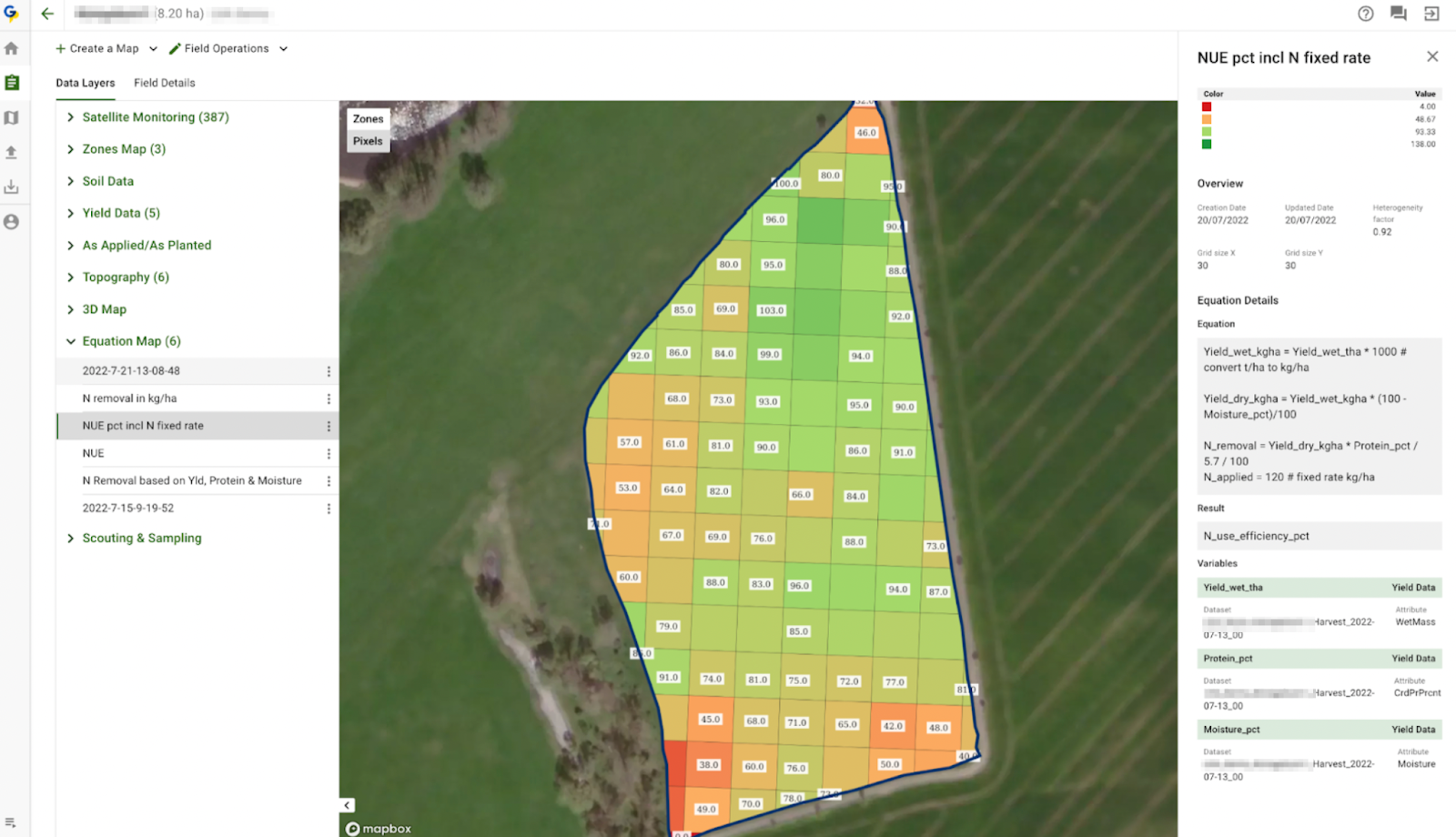
Nitrogen Use Efficiency in percentage. Calculation is based on Yield, Protein and Grain Moisture data layers

Nitrogen Use Efficiency in percentage. Calculation is based on Yield, Protein and Grain Moisture data layers


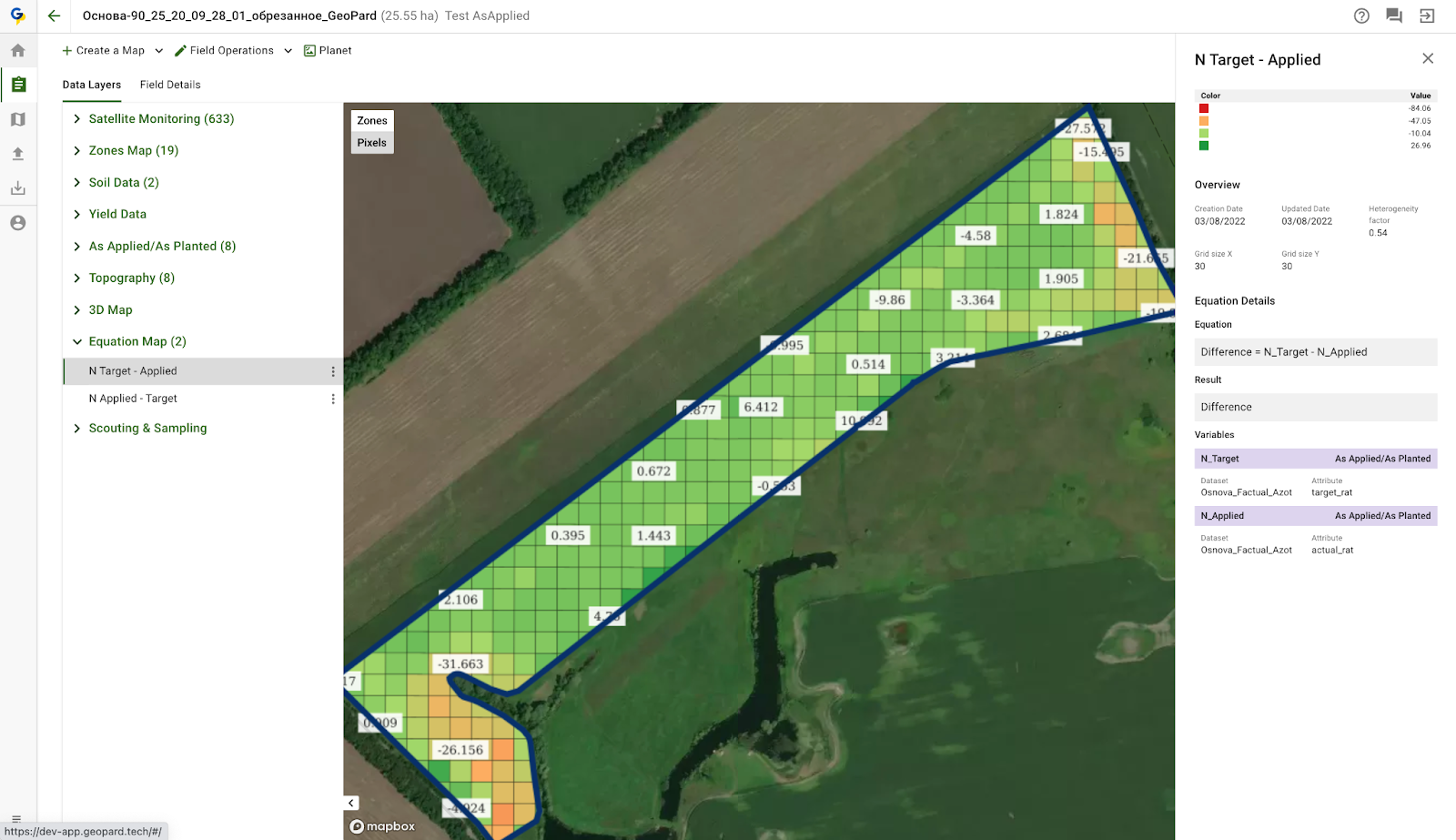
Nitrogen: Target Rx vs As-Applied

Nitrogen: Target Rx vs As-Applied


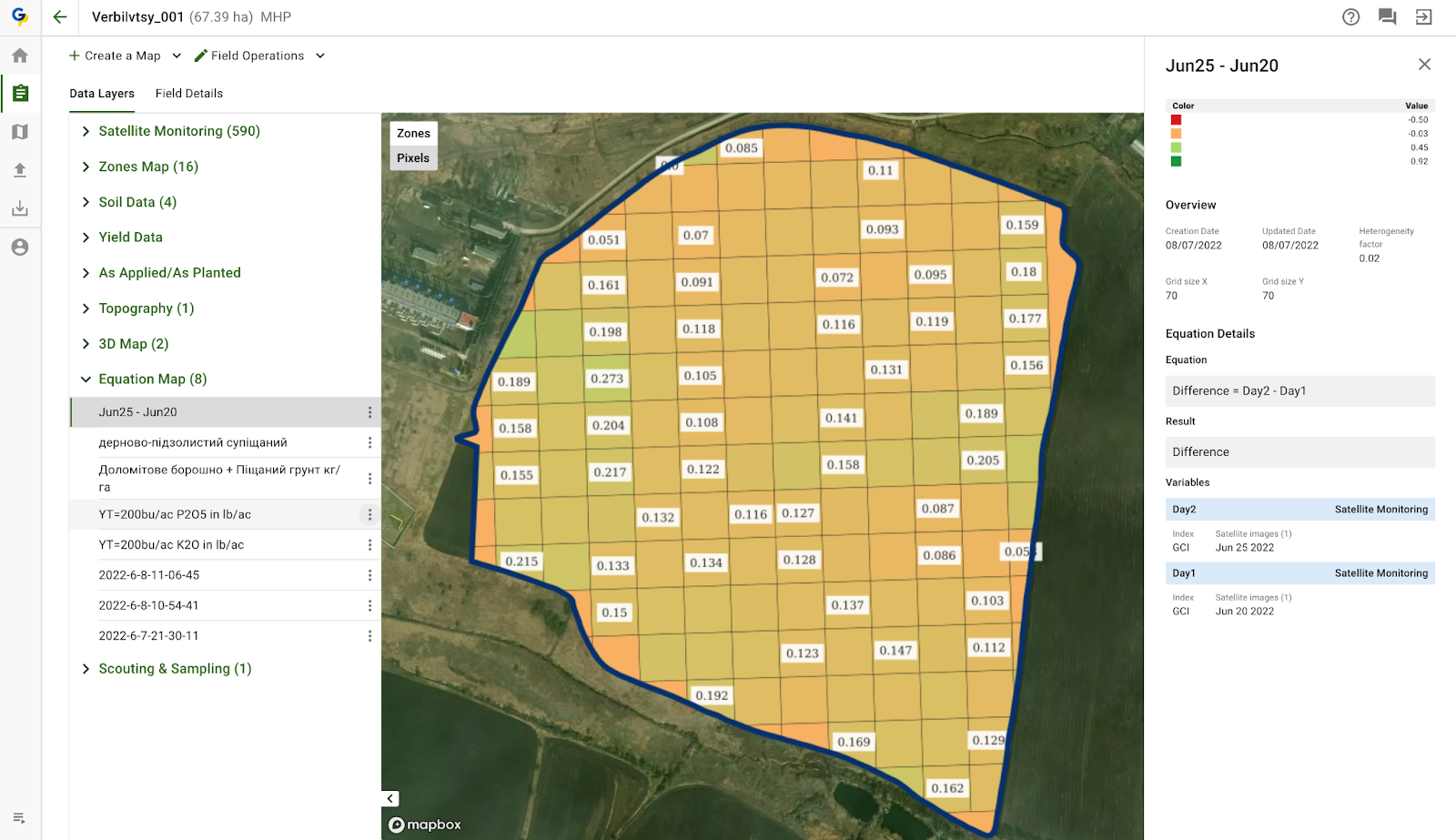
Chlorophyll difference between two satellite images

Chlorophyll difference between two satellite images


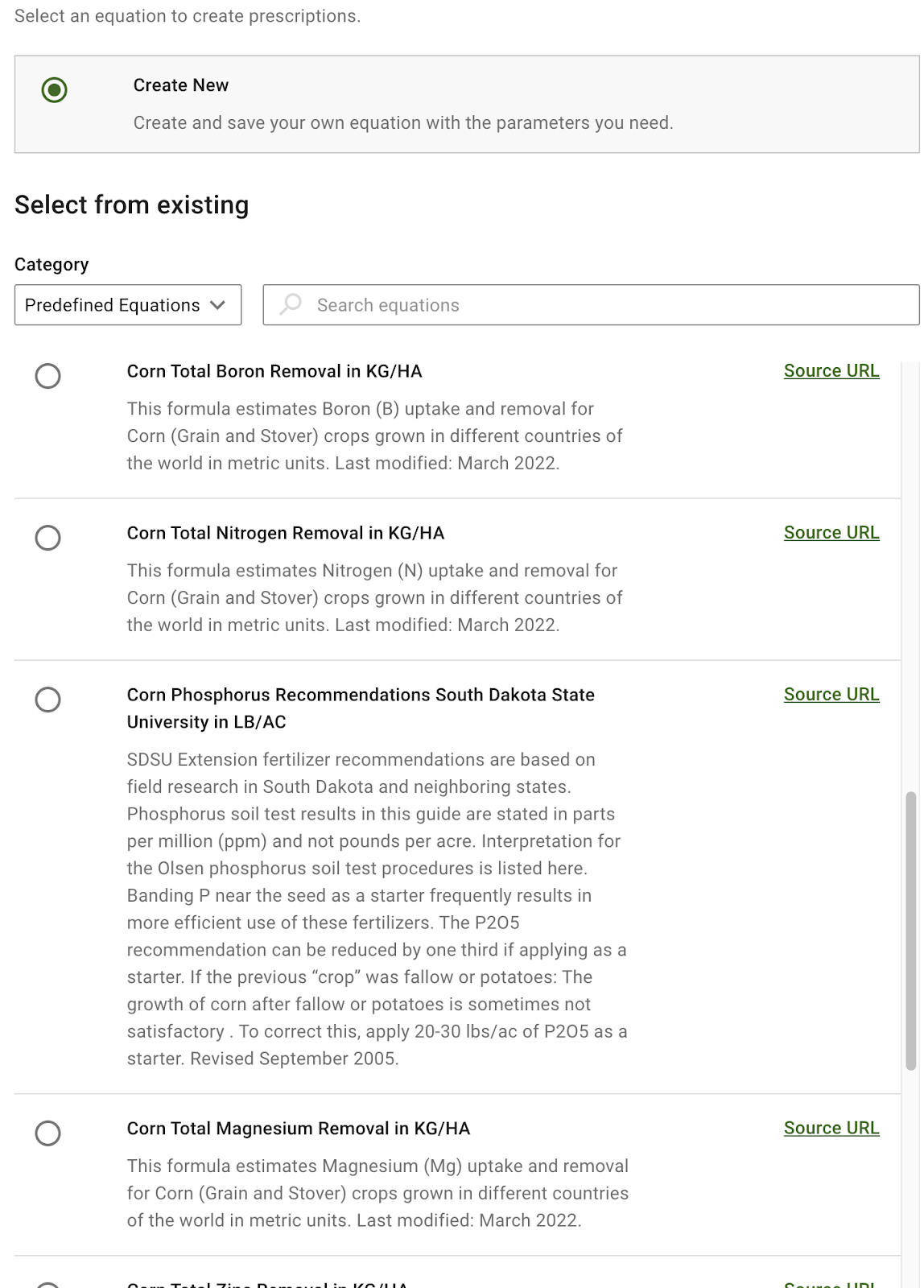
A user of GeoPard can adjust existing and create their private formulas based on Imagery, Soil, Yield, Topography, or any other data layers GeoPard supports. 

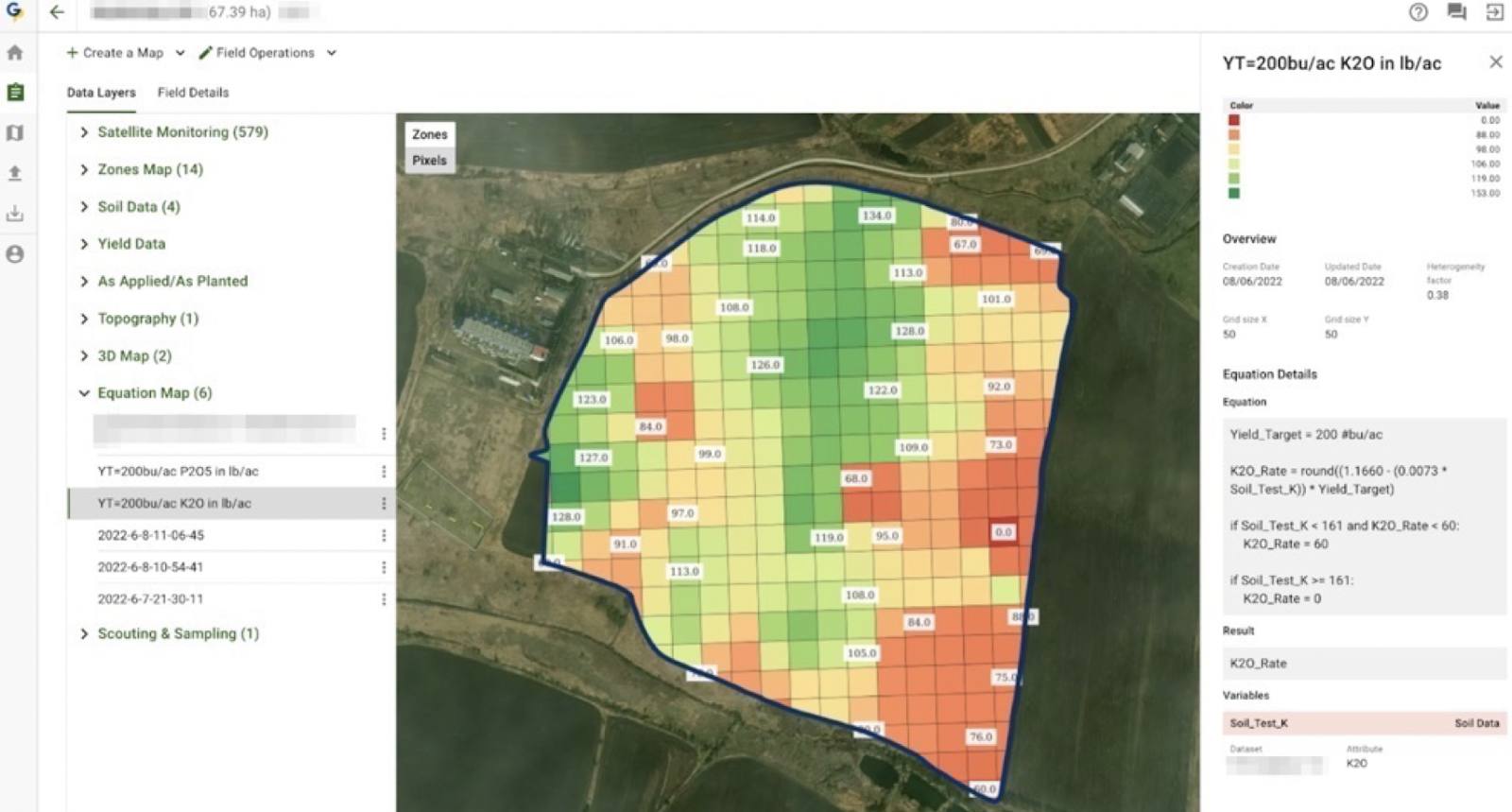
Examples of the template GeoPard Equations

Examples of the template GeoPard Equations


Formula-based analytics helps farmers, agronomists, and data scientists to automate their workflows and make decisions based on multiple data and scientific research to enable easier implementation of sustainable and precision agriculture.

What is Equation-based Analytics in Precision Agriculture? The Use of Precision Formula

Equation-based analytics in precision agriculture refers to the use of mathematical models, equations, precision formula, and algorithms to analyze agricultural data and derive insights that can help farmers make better decisions about crop management.

These analytics methods incorporate various factors such as weather conditions, soil properties, crop growth, and nutrient requirements to optimize agricultural practices and improve crop yields, while minimizing resource waste and environmental impact.

Some of the key components of equation-based analytics in precision agriculture include:

  • Crop growth models: These models describe the relationship between various factors such as weather, soil properties, and crop management practices, to predict crop growth and yield. Examples of such models include the CERES (Crop Environment Resource Synthesis) and APSIM (Agricultural Production Systems sIMulator) models. These models can help farmers make informed decisions about planting dates, crop varieties, and irrigation scheduling.
  • Soil water models: These models estimate the water content in the soil profile based on factors such as rainfall, evaporation, and crop water use. They can help farmers optimize irrigation practices, ensuring that water is applied efficiently and at the right time to maximize crop yields.
  • Nutrient management models: These models predict nutrient requirements for crops and help farmers determine the optimal rates and timing of fertilizer application. By using these models, farmers can ensure that crops receive the right amount of nutrients, while minimizing the risk of nutrient runoff and environmental pollution.
  • Pest and disease models: These models predict the likelihood of pest and disease outbreaks based on factors such as weather conditions, crop growth stages, and management practices. By using these models, farmers can make proactive decisions about pest and disease management, such as adjusting planting dates or applying pesticides at the right time.
  • Remote sensing-based models: These models use satellite imagery and other remote sensing data to monitor crop health, detect stress factors, and estimate yield. By integrating this information with other data sources, farmers can make better decisions about crop management and optimize resource use.

In summary, equation-based analytics in precision agriculture uses mathematical models and algorithms to analyze complex interactions between various factors that affect crop growth and management. By leveraging these analytics, farmers can make data-driven decisions to optimize agricultural practices, improve crop yields, and minimize environmental impact.


Поширені запитання


1. How can precision agriculture help address resource use and pollution issues in agriculture?

It can help address resource use and pollution issues in agriculture through targeted resource application, efficient resource management, enhanced monitoring, and the adoption of conservation practices. By applying inputs such as fertilizers and pesticides only where needed, farmers can reduce waste and minimize pollution.

Data-driven decision-making enables optimal resource management, while real-time monitoring allows for timely interventions to prevent pollution incidents. Additionally, the implementation of conservation practices promotes sustainable agriculture and reduces environmental impacts.

Карти потенціалу поля GeoPard проти даних урожайності

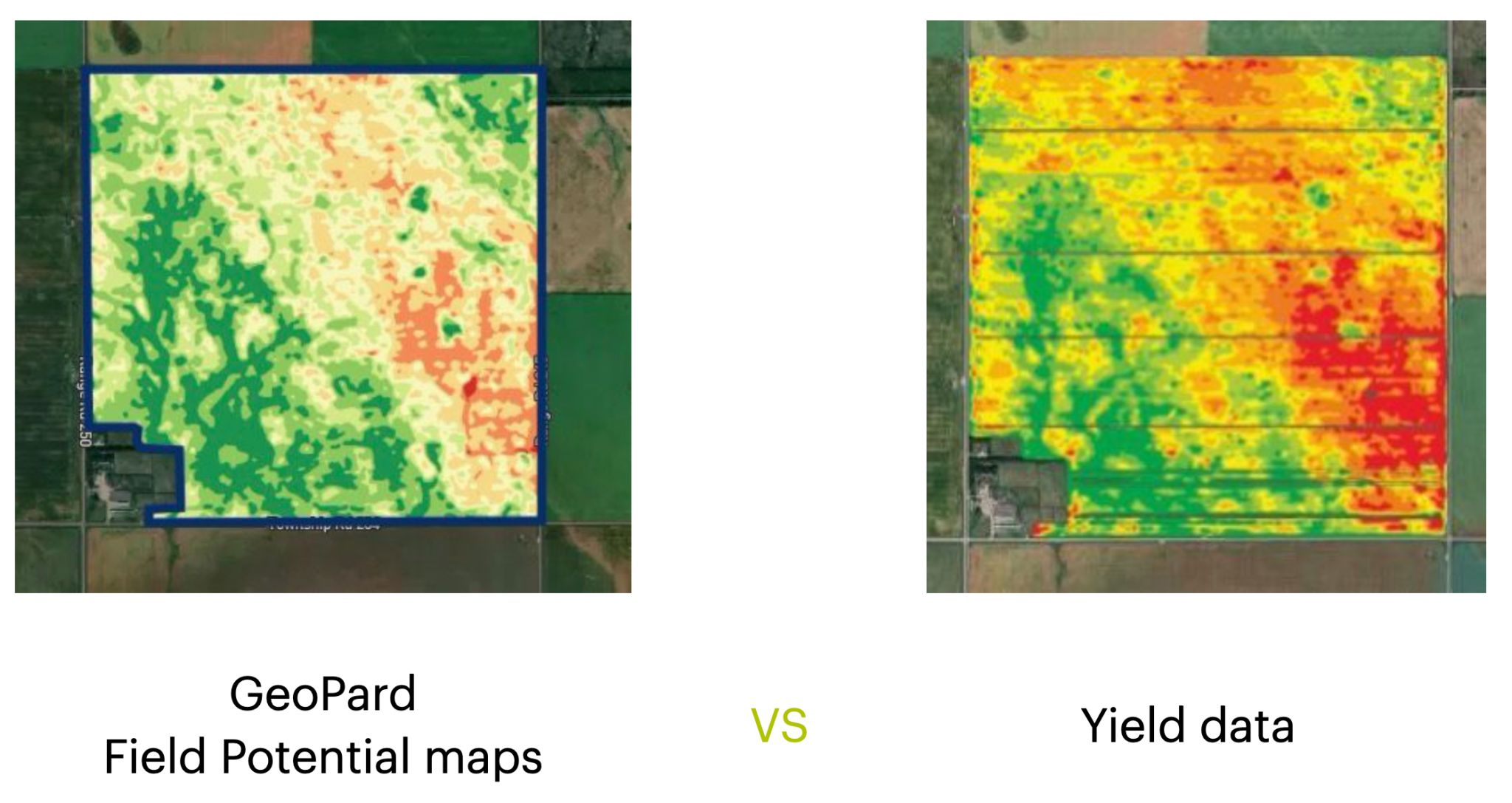
GeoPard Field Potential maps very often look exactly like yield data.

We create them using багатошаровий аналіз of historical information, topography, and bare soil analysis.

The process of such synthetic Yield maps is automated (and patented) and it takes about 1 minute for any field in the world to generate it.


Карти потенціалу поля GeoPard проти даних урожайності

Can be used as the basis for:

What are Field Potential maps?

Field potential maps, also known as yield potential maps or productivity potential maps, are visual representations of the spatial variability in potential crop yield or productivity within a field. These maps are created by analyzing various factors that influence crop growth, such as soil properties, topography, and historical yield data.

These maps can be used in precision agriculture to guide management decisions, such as variable-rate application of fertilizers, irrigation, and other inputs, as well as to identify areas that require specific attention or management practices.

Some key factors that are typically considered when creating field potential maps include:

  1. Soil properties: Soil characteristics such as texture, structure, organic matter content, and nutrient availability play a significant role in determining crop yield potential. By mapping soil properties across a field, farmers can identify areas of high or low productivity potential.
  2. Топографія: Factors like elevation, slope, and aspect can influence crop growth and yield potential. For example, low-lying areas may be prone to waterlogging or have a higher risk of frost, while steep slopes may be more susceptible to erosion. Mapping these topographical features can help farmers understand how they affect productivity potential and adjust their management practices accordingly.
  3. Historical yield data: By analyzing historical yield data from previous years or seasons, farmers can identify trends and patterns in productivity across their fields. This information can be used to create these maps that highlight areas of consistently high or low yield potential.
  4. Дані дистанційного зондування: Satellite imagery, aerial photography, and other remote sensing data can be used to assess crop health, vigor, and growth stage. This information can be used to create these maps that reflect the spatial variability in crop productivity potential.
  5. Climate data: Climate variables such as temperature, precipitation, and solar radiation can also influence crop growth and yield potential. By incorporating climate data into these maps, farmers can better understand how environmental factors affect productivity potential in their fields.

They are valuable tools in precision agriculture, as they help farmers visualize the spatial variability in productivity potential within their fields. By using these maps to guide management decisions, farmers can optimize the use of resources, improve overall crop yields, and reduce the environmental impact of their agricultural operations.

Difference between Field Potential maps vs Yield data

Field potential maps and yield data are both used in precision agriculture to help farmers understand the spatial variability in their fields and make better-informed management decisions. However, there are some key differences between the two:

Data sources:

These maps are created by integrating data from various sources, such as soil properties, topography, historical yield data, remote sensing data, and climate data. However, this data is collected using yield monitors installed on harvesting equipment, which record the crop yield as it is harvested.

Temporal aspect:

These maps represent an estimation of the potential productivity of a field, which is generally static or changes slowly over time, barring significant changes in soil properties or other influencing factors. However, yield data is specific to a particular growing season or multiple seasons and can vary significantly from year to year based on factors like weather conditions, pest pressure, and management practices.

In summary, field potential maps and yield data are complementary tools in precision agriculture. These maps provide an estimate of the potential productivity of a field, helping farmers identify areas that may require different management practices. Yield data, on the other hand, documents the actual crop output and can be used to assess the effectiveness of management practices and inform future decision-making.

Vegetation Indices and Chlorophyll Content

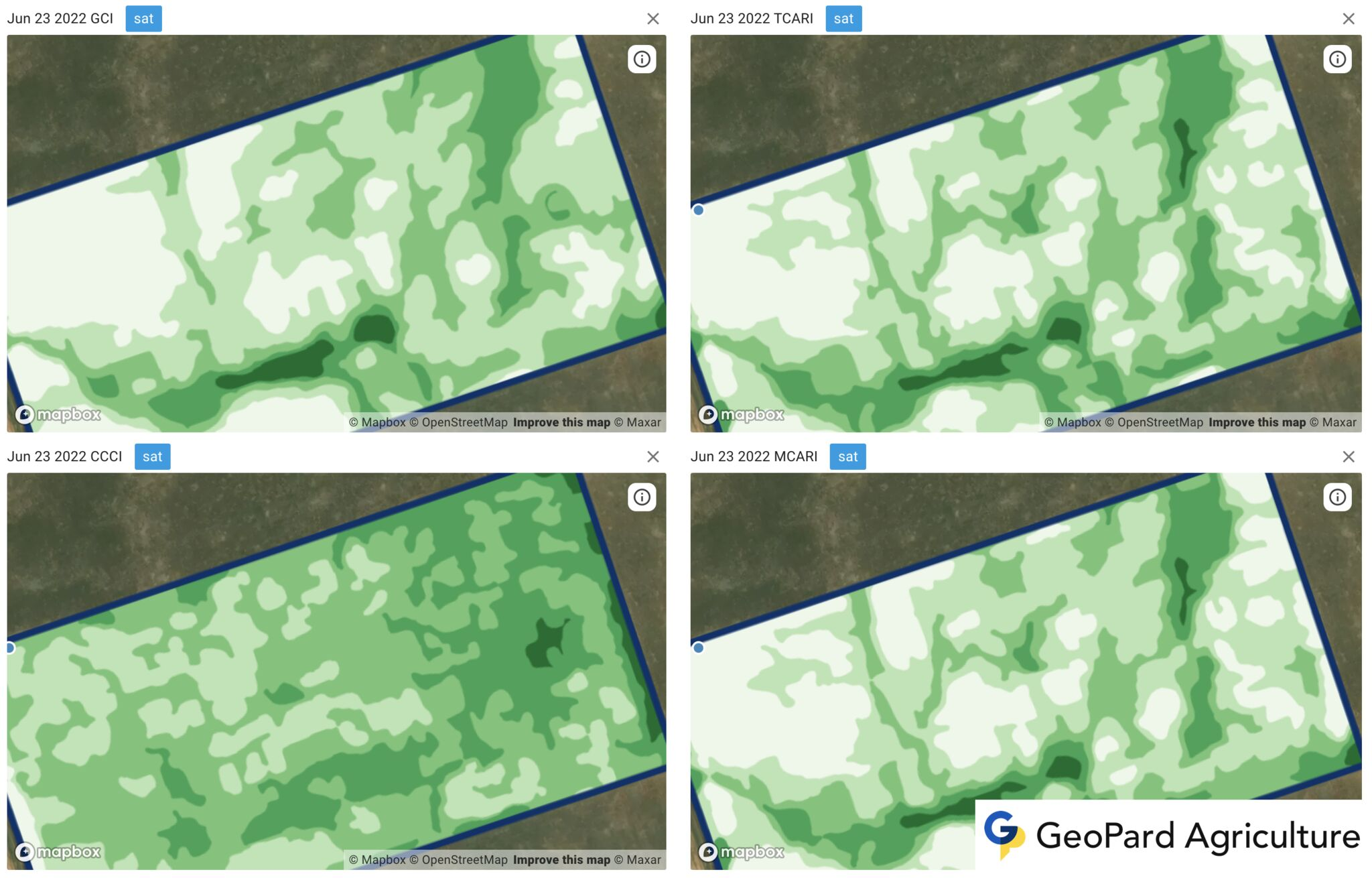
GeoPard extends the family of supported chlorophyll-linked vegetation indices with

  • Canopy Chlorophyll Content Index (CCCI)
  • Modified Chlorophyll Absorption Ratio Index (MCARI)
  • Transformed Chlorophyll Absorption in Reflectance Index (TCARI)
  • ratio MCARI/OSAVI
  • ratio TCARI/OSAVI

They help to understand the current crop development stage including

  • identification of the areas with nutrient demand,
  • estimation of the nitrogen removal,
  • potential yield evaluation,

And the insights are used for precise Nitrogen Variable Rate Application maps creation.


Read More: Which index is the best to use in the precisionAg

Read More: GeoPard vegetation indices


Vegetation Indices and Chlorophyll ContentCanopy Chlorophyll Content Index (CCCI) vs Modified Chlorophyll Absorption Ratio Index (MCARI) vs Transformed Chlorophyll Absorption in Reflectance Index (TCARI) vs Ratio MCARI/OSAVI

What is Vegetation Indices?

Vegetation indices are numerical values derived from remotely sensed spectral data, such as satellite or aerial imagery, to quantify the density, health, and distribution of plant life on the Earth’s surface.

They are commonly used in remote sensing, agriculture, environmental monitoring, and land management applications to assess and monitor vegetation growth, productivity, and health.

These indices are calculated using the reflectance values of different wavelengths of light, particularly in the red, near-infrared (NIR), and sometimes other bands.

The reflectance properties of vegetation vary with different wavelengths of light, allowing for the differentiation between vegetation and other land cover types.

Vegetation typically has strong absorption in the red region and high reflectance in the NIR region due to chlorophyll and cell structure characteristics.

Some widely used vegetation indices include:

  • Normalized Difference Vegetation Index (NDVI): It is the most popular and widely used vegetation index, calculated as (NIR – Red) / (NIR + Red). NDVI values range from -1 to 1, with higher values indicating healthier and denser vegetation.
  • Enhanced Vegetation Index (EVI): This index improves upon NDVI by reducing atmospheric and soil noise, as well as correcting for canopy background signals. It uses additional bands, such as blue, and incorporates coefficients to minimize these effects.
  • Soil-Adjusted Vegetation Index (SAVI): SAVI is designed to minimize the influence of soil brightness on the vegetation index. It introduces a soil brightness correction factor, enabling more accurate vegetation assessments in areas with sparse or low vegetation cover.
  • Green-Red Vegetation Index (GRVI): GRVI is another simple ratio index that uses the green and red bands to assess vegetation health. It is calculated as (Green – Red) / (Green + Red).

These indices, among others, are used by researchers, land managers, and policymakers to make informed decisions regarding land use, agriculture, forestry, natural resource management, and environmental monitoring.

Нормалізований індекс різниці вологості

The number of vegetation indices supported by GeoPard is continuously growing. GeoPard team introduces the Normalized Difference Moisture Index (NDMI). The index determines vegetation water content and normalized difference water index (NDWI). It is useful for finding the spots with existing water stress in plants.

Lower NDMI values mark the spots where the plants are under stress from insufficient moisture.
On the other side, lower normalized difference water index values following the vegetation peak highlight the spots that are becoming ready for harvesting first.

The difference of the vegetation relative water content between two satellite images (Sentinel-2 constellation in this case)

The difference of the vegetation relative water content between two satellite images (Sentinel-2 constellation in this case)

In the following screenshots, you can find the NDMI zones generated based on June 19 (vegetation peak) and July 6 satellite images and the equation map representing the NDMI difference.

Normalized Difference Moisture Index calculated on top of Planet / Sentinel-2 / Landsat imageNDMI calculated on top of Planet / Sentinel-2 / Landsat image

What is Moisture Index?

It is a measure or calculation used to assess the moisture content or availability in a specific area or region. It is typically derived from various environmental factors such as precipitation, evapotranspiration, soil properties, and vegetation cover.

It provides a relative indication of the wetness or dryness of an area, helping to identify potential water stress or drought conditions.

It is a valuable tool for monitoring and managing water resources, agricultural planning, and understanding the ecological conditions of a particular region.

What is Normalized Difference Moisture Index?

Normalized Difference Moisture Index (NDMI) is a vegetation index derived from remote sensing data to assess and monitor the moisture content of vegetation. Like other vegetation indices, it is computed using spectral reflectance values from satellite or aerial imagery.

It is particularly useful in monitoring plant water stress, assessing drought conditions, estimating fire risk, and studying the impacts of climate change on vegetation.

It is calculated using the Near-Infrared (NIR) and Shortwave Infrared (SWIR) bands, which are sensitive to the moisture content in vegetation. The formula for NDMI is:

NDMI = (NIR – SWIR) / (NIR + SWIR)

NDWI values typically range from -1 to 1, with higher values indicating higher vegetation moisture content and lower values indicating lower moisture content or water stress in the vegetation. Negative NDMI values can be associated with non-vegetated areas or areas with very low moisture content.

What is NDWI?

NDWI, or Normalized Difference Water Index, is a remote sensing index used to quantify and assess water content or water-related features in vegetation or landscapes.

It is calculated by analyzing the reflectance of near-infrared and green light bands from satellite or aerial imagery. It is particularly useful for identifying water bodies, monitoring changes in water availability, and assessing vegetation health.

By comparing the absorption and reflection of different wavelengths, it provides valuable information for applications such as drought monitoring, hydrological analysis, and ecosystem management.

Visualization of NDMI to Determine Normalized Difference Water Index

Visualizing the NDMI involves processing satellite or aerial imagery, calculating the NDMI values, and then displaying the results as a color-coded map or image. Here are the general steps to visualize NDMI:

  • Acquire satellite or aerial imagery: Obtain multispectral imagery from a satellite or aerial platform, such as Landsat, Sentinel, or MODIS. Ensure that the imagery includes the necessary bands: Near-Infrared (NIR) and Shortwave Infrared (SWIR).
  • Pre-process the imagery: Depending on the data source, you may need to preprocess the imagery to correct for atmospheric, geometric, and radiometric distortions. Convert the digital numbers (DN) in the image to spectral reflectance values.
  • Calculate NDMI: For each pixel in the image, use the NIR and SWIR reflectance values to compute the NDMI using the formula: NDMI = (NIR – SWIR) / (NIR + SWIR).
  • Color mapping: Assign a color palette to the NDMI values. Typically, a continuous color scale is used, ranging from one color (e.g., red) for low NDMI values (indicating low moisture content) to another color (e.g., green) for high NDMI values (indicating high moisture content). You can use software like QGIS, ArcGIS, or programming libraries like Python’s Rasterio and Matplotlib to create a color map.
  • Visualize the NDMI map: Display the NDMI map or image using GIS software, a programming library, or an online platform. This will allow you to analyze the spatial distribution of vegetation moisture content and identify areas of water stress or high moisture.
  • Interpretation and analysis: Use the NDWI visualization to assess vegetation health, monitor drought conditions, or evaluate fire risk. You can also compare normalized difference water index maps from different time periods to analyze changes in vegetation moisture content over time.

Remember that different software tools or programming libraries may have slightly different workflows, but the overall process will be similar. Additionally, you can overlay other data layers, such as land use, elevation, or administrative boundaries, to enhance your analysis and better understand the relationships between vegetation moisture content and other factors. 

wpChatIcon
wpChatIcon

    Замовити безкоштовну демонстрацію / консультацію GeoPard


    Натискаючи кнопку, ви погоджуєтесь з нашими Політика конфіденційності. Нам це потрібно, щоб відповісти на ваш запит.

      Підписатися


      Натискаючи кнопку, ви погоджуєтесь з нашими Політика конфіденційності

        Надішліть нам інформацію


        Натискаючи кнопку, ви погоджуєтесь з нашими Політика конфіденційності