
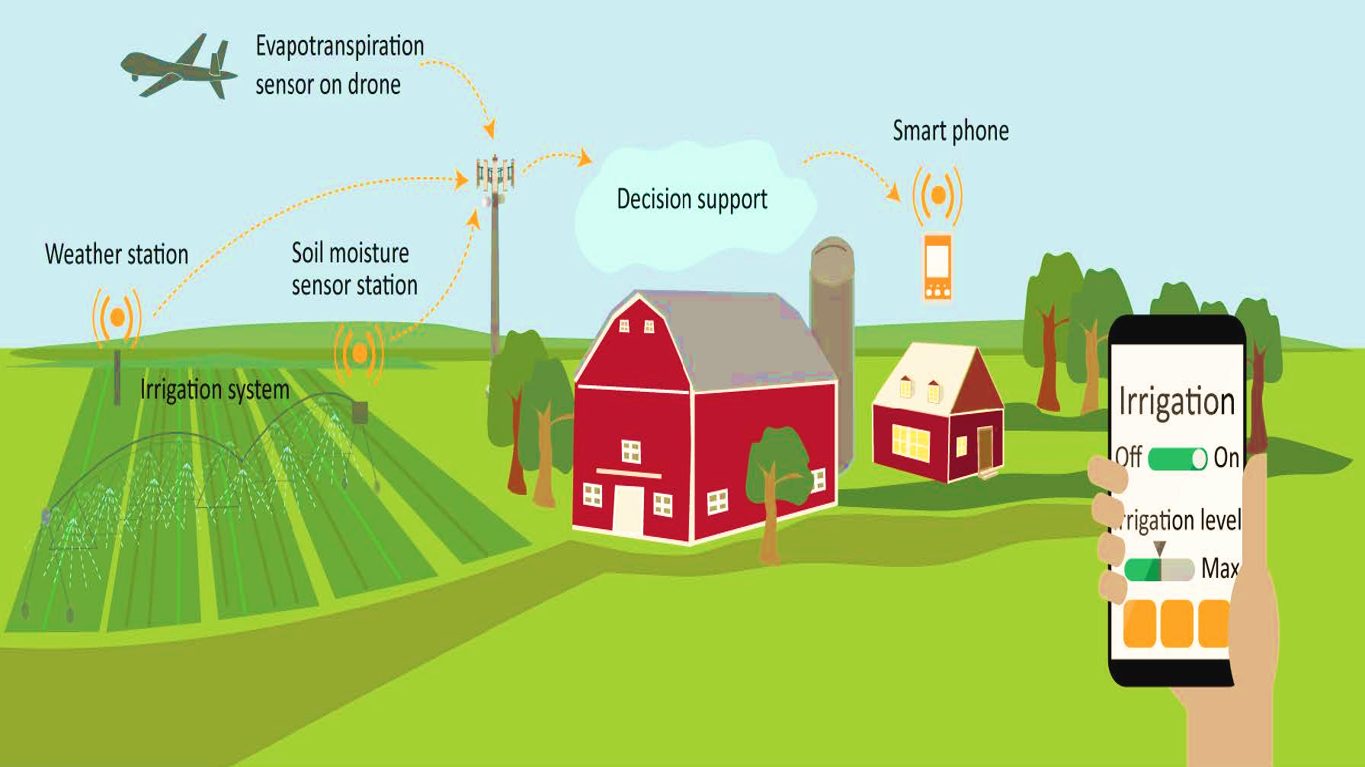


Precision farming, also known as precision agriculture (PA), is a modern approach to agricultural management that uses advanced technologies and primary components of precision farming to optimize agricultural production and minimize waste.
It has gained significant momentum in recent years due to its potential to improve agricultural productivity, reduce waste, and promote sustainability.
According to a report by Grand View Research, the global precision farming market size was valued at USD 5.44 billion in 2020 and is expected to grow at a compound annual growth rate (CAGR) of 12.7% from 2021 to 2028.
This growth is attributed to the increasing adoption of precision farming technologies by farmers worldwide.
Components of Precision Farming
The major components include information, technology, and management, which are integrated to optimize production.
Information:
Information is a key component of precision farming. This component includes gathering data about soil, weather, crops, and other factors that affect agricultural production. This information is collected through various sources such as sensors, drones, satellites, and ground-based equipment.
Once the data is collected, it is analyzed using advanced software and algorithms to generate actionable insights. These insights help farmers to make informed decisions about planting, fertilizing, irrigating, and harvesting crops.
For example, soil sensors can be used to measure soil moisture, temperature, and nutrient levels, which can help farmers to determine the optimal time to plant and fertilize crops.
Similarly, weather data can be used to predict the likelihood of pests and diseases, which can help farmers to take preventive measures before the crops are affected.

Technology:
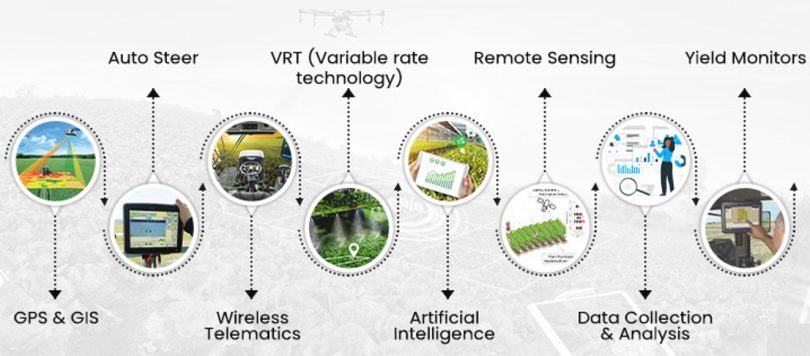
Technology is another major component. This component includes a wide range of technologies such as GPS, drones, robotics, and advanced machinery.
These technologies are used to automate various agricultural processes, reduce labor costs, and improve efficiency.
For example, GPS technology can be used to guide tractors and other farm equipment, which can reduce overlap in operations and minimize fuel consumption.
Similarly, drones can be used to monitor crop health and detect pests and diseases, which can help farmers to take timely action to prevent crop damage.
Management:
Management is the third major component of precision farming. This component includes the use of advanced software and tools to manage agricultural operations, optimize resource use, and minimize waste. This component also includes the adoption of sustainable agricultural practices to protect the environment and promote long-term sustainability.
For example, precision farming software can be used to plan crop rotations, optimize irrigation, and monitor crop growth, which can help farmers to maximize yields and minimize waste.
Similarly, sustainable agricultural practices such as conservation tillage, cover cropping, and integrated pest management can help farmers to reduce soil erosion, conserve water, and minimize the use of pesticides.
How Components of Precision Farming Can be Implemented?
There are several systems and processes that farmers can follow. These systems are designed to help farmers collect and analyze data, automate agricultural processes, and make informed decisions about resource use and crop management.
Here are some of the systems and processes that farmers can adopt to implement the components of precision agriculture:
Farm Management Software:
Farm management software is a key tool for implementing the management component. This software can help farmers to plan and manage their agricultural operations, track input use and costs, and monitor crop growth and yields.
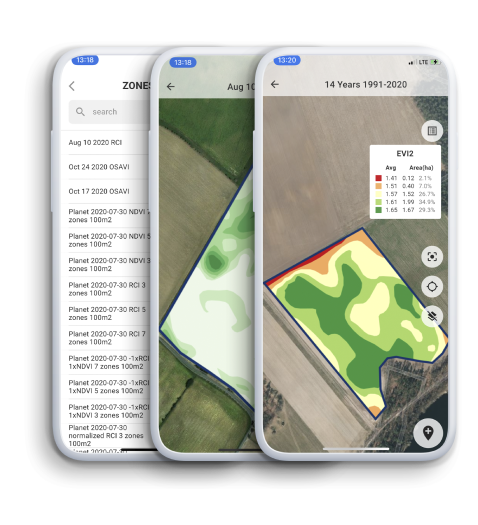
Farm management software can also be used to integrate data from various sources, such as soil sensors and weather stations, to provide real-time insights that can inform decision-making.
GPS and Auto-steering:
GPS technology is essential for implementing the technology. By using GPS-enabled farm equipment, farmers can ensure that they are operating with maximum efficiency, reducing overlap in operations and minimizing fuel consumption.
Auto-steering technology can also be used to guide farm equipment, which can improve accuracy and reduce operator fatigue.
Sensors and Drones:
Sensors and drones are essential for implementing the information. These tools can be used to collect data on soil moisture, temperature, and nutrient levels, as well as monitor crop growth and detect pests and diseases.
This data can then be analyzed to generate insights that can inform crop management decisions, such as when to plant and fertilize crops, and when to take preventive measures against pests and diseases.
Irrigation Management:
Irrigation management is a critical component. By using soil moisture sensors and weather data, farmers can optimize irrigation schedules to ensure that crops receive the right amount of water at the right time.
This can help to reduce water waste, minimize the risk of crop damage due to over- or under-watering, and improve yields.
Crop Monitoring:
Crop monitoring is another important component. By using drones or satellite imagery, farmers can monitor crop growth and detect potential issues such as nutrient deficiencies or pest infestations.
This can help farmers to take timely action to address these issues, improving crop health and maximizing yields.
In conclusion, to implement the components, farmers can adopt a range of systems and processes that enable them to collect and analyze data, automate agricultural processes, and make informed decisions about resource use and crop management. By leveraging the power of technology, data, and management, precision farming can help farmers to achieve greater efficiency, sustainability, and profitability in their agricultural operations.
Точное земледелие




 English
  German
  Ukrainian
  French
  Kazakh
  Portuguese
  Spanish
  Arabic
  Swedish
  Serbian
  Romanian
  Norwegian
  Finnish
  Lithuanian
  Estonian
  Latvian
  Croatian
  Slovenian
  Slovak
  Japanese
  Polish