How Advanced Analytics Helped Agribusinesses Overcome Q1 Hurdles: A Strategic Guide

How Advanced Analytics Helped Agribusinesses Overcome Q1 Hurdles: A Strategic Guide

Q1 throws a mix of weather swings, tight planting timelines, and rising input costs at agribusinesses every year. You’ve likely felt the pressure of these challenges cutting into your margins and decision-making. With advanced analytics for agribusiness, you can turn complex data into clear, actionable steps—like creating precise management zones and variable rate application maps—that keep your operations on track. Let’s explore how GeoPard’s AI-driven platform helped farms overcome these hurdles and deliver measurable ROI this season. For more insights, check out this document.

Navigating Q1 Agribusiness Challenges

Weather, prices, and planting windows create a perfect storm in Q1 for agribusinesses. Let’s see how you can navigate these challenges effectively.

Managing Weather Volatility with Precision

Weather unpredictability is a major concern for farmers. But what if you could forecast accurately and prepare better? GeoPard’s platform helps you use historical data and satellite imagery to understand weather patterns. This data lets you plan operations when conditions are just right.

For instance, using NDVI time series, you can track plant health and predict growth stages. This means you can optimize your crop management around expected weather changes, ensuring your crops thrive regardless of what Mother Nature throws your way.

Tackling Input Price Fluctuations

Why pay more when you can save smartly? Rising input costs can eat into profits, but smart planning makes a difference. GeoPard’s software analyzes your field data to recommend precise input levels. This means you use only what you need, cutting unnecessary costs.

Imagine reducing fertilizer use by 20% while maintaining yield. By understanding yield and soil data integration, you’re not just guessing; you’re making data-backed decisions that result in savings.

Addressing Tight Planting Windows

Timing is everything in planting. Miss the window, and yields suffer. GeoPard’s crop monitoring platform keeps you informed about optimal planting times. With real-time data, you can seize the perfect moment.

Think of it this way: instead of rushing, you’re strategizing. Precise timing means healthier crops and better yields, putting you ahead in Q1.

Leveraging Precision Agriculture Software

Precision agriculture software transforms farming challenges into opportunities. Here’s how GeoPard leads the way with its advanced tools.

GeoPard for Advanced Analytics

Why settle for guesswork when you can have precision? GeoPard offers advanced analytics for agribusiness, turning complex data into clear solutions. With over 20 years of satellite imagery, you gain a historical edge in planning.

This software doesn’t just provide data; it offers insights. By integrating topography analytics, you understand your land better, making informed decisions that boost productivity.

Smart Agronomic Recommendations

What if your software could think like an agronomist? GeoPard offers smart agronomic recommendations based on real-time data. The recommendations adapt to your specific fields, ensuring optimal input use and timing.

This means you’re not just managing your fields; you’re mastering them. With precise recommendations, you enhance productivity and reduce waste.

Creating Management Zones and VRA Maps

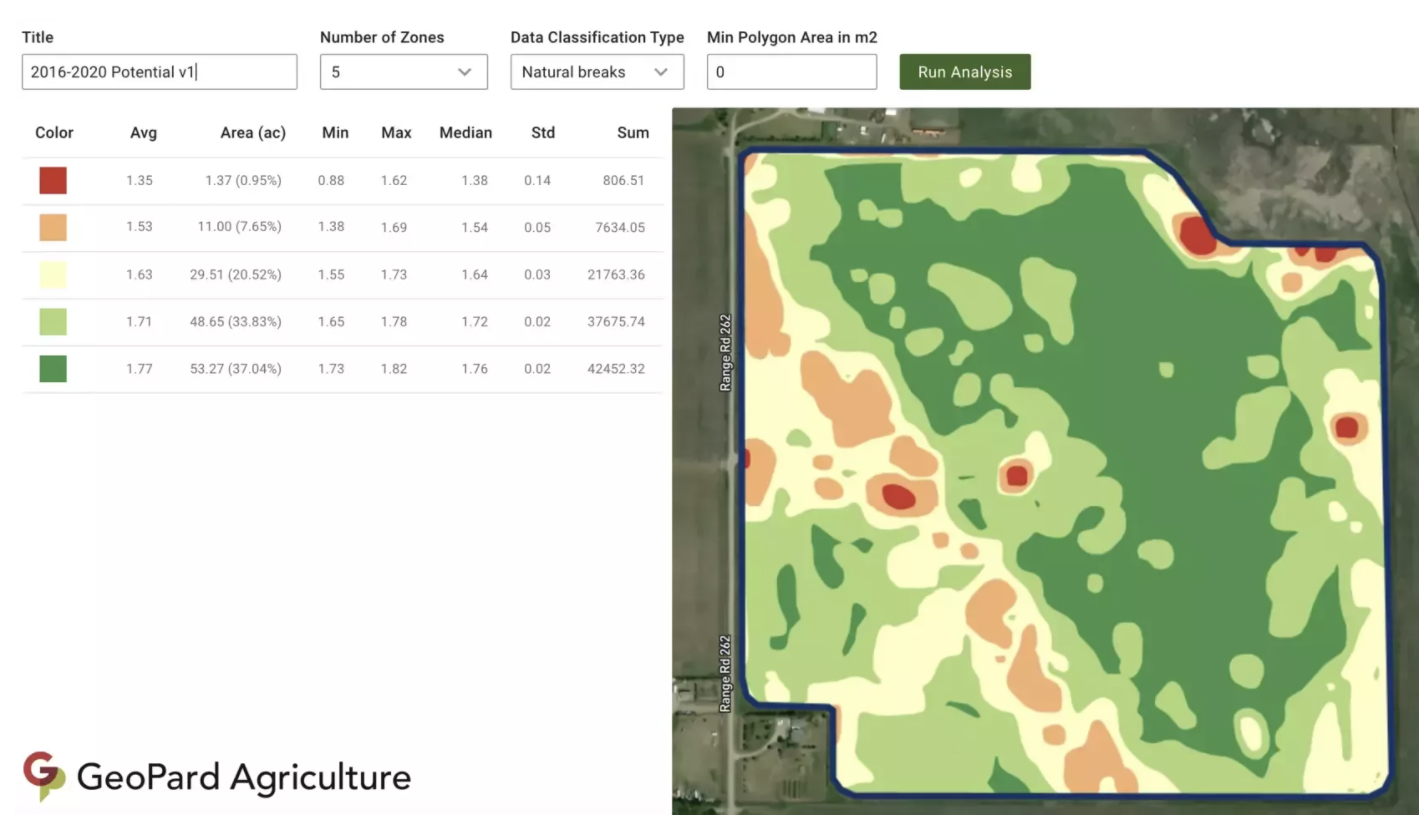
Imagine knowing exactly where to plant, fertilize, or irrigate. GeoPard’s tools allow you to create management zones and variable rate application maps tailored to your fields. These maps ensure every input is used effectively.

Instead of a one-size-fits-all approach, you have a customized strategy that reflects your unique landscape, leading to better resource management and higher yields.

Realizing ROI with Data-Driven Agronomy

Data is power, especially in agriculture. Let’s explore how you turn data into profit with GeoPard.

Crop Monitoring and Decision Support

Picture having a personal assistant for your fields. GeoPard’s crop monitoring platform offers in-season decision support, keeping you updated on crop health and growth. This proactive monitoring means fewer surprises and more informed decisions.

By spotting issues early, you save on potential losses, turning challenges into opportunities for improvement.

Integrating Yield and Soil Data

Your soil tells a story. By integrating yield and soil data, you understand your fields better. GeoPard’s platform helps you combine these data points to enhance decision-making, ensuring every action is guided by facts.

This integration means better planning, optimized input use, and ultimately, higher returns on your investment.

John Deere Operations Center Bi-Directional Sync

In the fast-paced world of farming, flexibility is key. GeoPard’s integration with John Deere Operations Center provides bi-directional data sync, ensuring your data flows smoothly between platforms. This seamless integration means your operations are always up-to-date.

By syncing data, you streamline processes, reduce errors, and enhance efficiency, leading to a higher ROI. This approach not only saves time but also positions you for success in agribusiness.

Prepare for smarter farm decisions this year

From Q1 Insights to Input Efficiency: Best Practices for Precision Ag Teams

From Q1 Insights to Input Efficiency: Best Practices for Precision Ag Teams

You’ve just wrapped up your Q1 agronomy analysis, but turning all that data into smarter input use isn’t simple. Many consultants and growers struggle to translate field insights into precise fertilizer rates, seed placement, and crop protection tactics. This post lays out clear steps to apply your Q1 learnings with precision agriculture best practices, showing how GeoPard’s tools simplify management zones, VRA maps, and decision tracking to sharpen your strategies right now. For more information on precision agriculture practices, check out this guide.

Turning Q1 Insights into Action

Turning your Q1 agronomy insights into tangible actions can feel like a puzzle. Yet, the right tools make it easier. Harnessing precision agriculture best practices allows you to optimize input use and boost productivity.

Leveraging Q1 Agronomy Analysis

Step one is understanding the data from your Q1 agronomy analysis. This data holds the key to smart farming decisions. By identifying patterns and trends, you can make informed choices about how to manage your fields.

  • Identify trends: Look at your data for any standout patterns. Are there areas consistently underperforming?

  • Use insights wisely: Prioritize actions that address these patterns. This ensures your focus is on areas with the most impact.

  • Consult resources: For a deep dive into precision agriculture, this guide is a good place to start.

Input Optimization in Farming

Optimizing your inputs isn’t just about cutting costs; it’s about getting more out of every dollar spent. The data from your Q1 analysis can reveal where adjustments are needed.

  • Fertilizer: Apply just the right amount to maximize crop growth without waste.

  • Seeds: Use your data to determine the best seed placement strategies.

With the right approach, you can see a 20% savings in fertilizer use, translating directly into increased profitability.

AI in Agriculture for Precision

AI technology is revolutionizing agriculture with its ability to analyze large datasets quickly and accurately. GeoPard’s platform uses AI to help you make data-driven decisions efficiently.

  • AI tools: These tools can highlight areas of improvement or predict future trends.

  • Decision support: AI aids in creating adaptable strategies that respond to real-time data.

The longer you wait to integrate AI, the more opportunities for increased efficiency you might miss. For more on precision ag software, see this resource.

Building Effective Management Zones

Creating effective management zones is crucial for precision agriculture success. These zones let you treat each part of your field according to its specific needs, boosting overall efficiency.

Satellite Imagery for Crops

Satellite imagery provides a bird’s-eye view of your fields, allowing for precise management zone creation.

  • Field insights: Imagery helps identify crop health and growth patterns.

  • NDVI interpretation: This index shows plant health by measuring light absorption.

GeoPard’s 20+ years of satellite imagery gives you unparalleled access to historical data for comparison and planning. Learn more about optimizing inputs with satellite imagery here.

Topography Analytics for Precision

Topography analytics are essential for understanding field variations. These insights help in crafting strategies that account for natural landscape changes.

  • Elevation and slope: These factors affect water runoff and nutrient distribution.

  • Precision strategies: Use topography data to fine-tune input applications.

Effective use of topography analytics can dramatically enhance your input strategy’s precision.

Historical Field Variability Insights

Past performance is a strong indicator of future potential. Understanding historical field variability allows you to predict and plan for future seasons more accurately.

  • Data trends: Identify areas with consistent patterns of high or low productivity.

  • Adjustments: Tailor your strategy to leverage these insights for better outcomes.

Having a comprehensive view of your field’s history is a game-changer in making informed decisions.

Crafting Precision Agriculture Strategies

Transforming your data into actionable strategies is the final step. By implementing precision agriculture tactics, you can enhance your crop management practices significantly.

Variable Rate Application and VRA Maps

Variable Rate Application (VRA) is a cornerstone of precision agriculture. It involves applying inputs at varying rates across a field to match the needs of specific areas.

  • VRA maps: These maps guide where and how much of an input to apply, optimizing resource use.

  • Efficiency gains: VRA can lead to a 30% reduction in input costs while maintaining yield.

Integrating VRA into your operations can streamline your processes remarkably.

Fertilizer Rate and Seed Optimization

Optimizing fertilizer and seed rates is crucial for maximizing yield without unnecessary costs.

  • Tailored application: Use your data to apply the right amount of fertilizer and seeds where they’re needed most.

  • Cost benefits: Optimized rates mean lower input costs and higher yields, improving ROI.

Precision ag software like GeoPard can automate these calculations, making the process seamless.

Crop Protection Strategy Enhancement

Enhancing your crop protection strategy is the final piece of the puzzle. With better data, you can create a strategy that reduces risk and increases output.

  • Targeted protection: Focus efforts on areas most prone to pests or disease.

  • Smart solutions: Use data to decide when and where to apply crop protection measures.

By refining your crop protection strategy, you can ensure a healthier crop and a more profitable season.

In conclusion, applying Q1 agronomy insights effectively through precision agriculture practices can revolutionize your farming operations. By leveraging tools like GeoPard, you can optimize every aspect of your input use, from fertilizers to seeds, and protect your crops more effectively. Remember, every data point is a stepping stone to smarter, more efficient farming.

Reflect on the quarter’s precision ag insights and prepare to adopt smarter strategies.

wpChatIcon
wpChatIcon

    Request Free GeoPard Demo / Consultation


    By clicking the button you agree our Privacy Policy. We need it to reply to your request.

      Subscribe


      By clicking the button you agree our Privacy Policy

        Send us information


        By clicking the button you agree our Privacy Policy