3D мапе топографије у прецизној пољопривреди

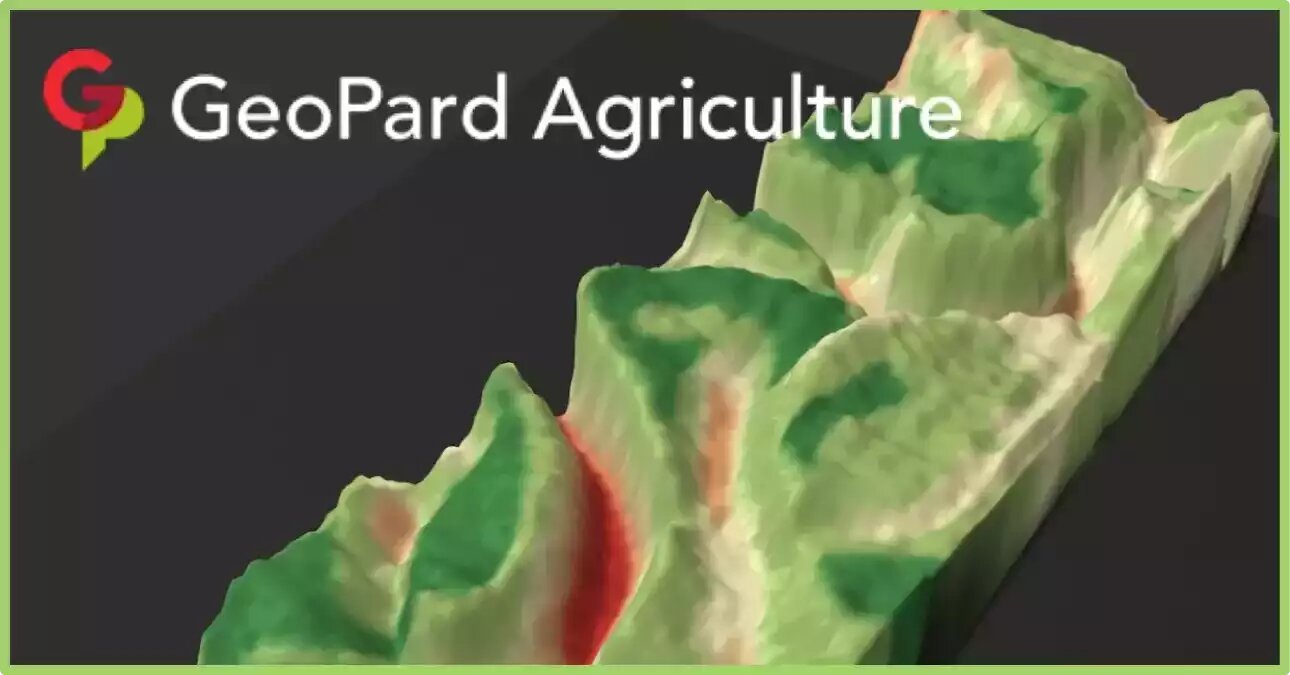
GeoPard is making history by being the first company to automate the online creation of high-resolution 3D topography maps with their new 3D mapping tool.


In just a few seconds, users can generate maps that explain the complex variability. For example, the maps help to learn how the topography and relief data of a given area influence crop development.

3D Топографске Мапе у Прецизној Пољопривреди3d topography model overlaid with the Field Potential map

GeoPard is continuing its mission to make such tools more accessible for crop growers. There is no need for a powerful computer or specialized skills to start with data-driven decisions. 

What are Topography maps?

Topography maps, also known as elevation maps, are maps that depict the shape and elevation of the Earth’s surface. These maps use contour lines to show the different elevations of the land, with each line representing a constant elevation above sea level. T

he closer together the contour lines, the steeper the slope of the land, while widely spaced contour lines indicate flatter terrain.

In precision agriculture, they can be used to identify variations in slope and terrain, which can affect the distribution of water, nutrients, and other inputs across a field.

By understanding the 3d topographic maps of their fields, farmers can make informed decisions about planting, irrigation, and drainage, and can implement precision farming techniques such as variable-rate application of inputs.

They can be created using various technologies, including LiDAR (Light Detection and Ranging) and satellite imagery. These maps can be overlaid with other data, such as soil maps and yield data, to create customized prescription maps for precision agriculture applications.

Overall, they are an important tool for precision agriculture, as they provide farmers with a detailed understanding of the terrain and landscape of their fields, enabling them to optimize yields and reduce input costs.

What is 3D mapping in precision agriculture?

3D mapping in precision agriculture is a technique that uses various sensors and imaging technologies to create a detailed three-dimensional map of a farm or field.

The process typically involves the use of drones, airplanes, or ground-based vehicles equipped with sensors that capture images of the area from different angles.

These images are then processed to create a high-resolution 3D map of the field or farm that can be used to identify variations in terrain, soil types, and crop health.

This information can be used to create customized prescription maps for variable-rate application of inputs such as fertilizers, herbicides, and pesticides, and to optimize irrigation and drainage systems.

3D mapping can also be used to identify potential problem areas such as soil erosion or drainage issues, allowing farmers to take proactive measures to address them.

3D topography maps integration with GeoPard precision tool

The 3D mapping tool can be used with any GeoPard base layer in addition to LIDAR topography and its derivatives. Among the additional available layers, there are soil agrochemical properties, yield/as-applied/as-planted datasets, ground scanners data, and even vegetation indices.

Any cover map like zones from принос, historical vegetation, organic matter, electrical conductivity, or pH distribution can be utilized on top of the base layer. The 3D maps help users better understand how relief and topography influence soil properties, vegetation, and yield.

And they contribute to a better visual and analytical understanding of how to manage individual land parcels in the most efficient way. 

It is important to mention, that this Live 3d Model works directly in the browser without any 3rd party pre-installed programs or extensions. You can rotate, zoom in and zoom out, and change cover maps to understand fields better.

The latest improvement includes the capabilities to save the preferred datalayers sets for 3D maps and fastly access them later. This enables saving your current investigation state and continuing further review later.

An additional benefit here is the capability to trace changes through agricultural crop seasons within saved snapshots.

The way topography affects crop vegetation has a significant impact on crop yield (more details are in a previous blog post post here).

The marked areas represent the value of the GeoPard 3D mapping tool, which improves the understanding of the reasons for yield distribution and informs about the necessary changes in planting patterns.

Whatsmore, the 3D topographic maps model provides insight into how watersheds feed into your land and which pathways water takes.

GeoPard’s  3d topographic maps can relay essential information about surface and subsurface drainage inefficiencies, allowing irrigation and drainage systems to be reworked to optimize soil water availability for your crops.

GeoPard is aiming high with the development of new tools like this and is constantly improving and refining its own global understanding related to precision agriculture digital solution demand.

If you are interested in knowing more about how the data is collected and analyzed, feel free to check out this post to learn more!


Најчешћа питања


1. How to turn on topography in google earth?

To enable topography in Google Earth, follow these simple steps. First, open Google Earth on your device. Next, navigate to the “Layers” panel located on the left side of the screen.

Click on the “Primary Database” folder, and then select the checkbox next to “Terrain” or “3D Buildings” to display topographic features. You can further customize the appearance by adjusting the transparency or other settings.

With these steps, you’ll be able to view and explore the topography in Google Earth, enhancing your virtual experience of the Earth’s terrain.

2. How to make a 3d model from a topographic map?

Creating a 3D model from a topographic map involves a few steps. First, obtain a high-resolution topographic map of the desired area. Next, digitize the elevation contours from the map using specialized software or by tracing them manually.

Then, import the digitized contours into a 3D modeling software and extrude them vertically based on their elevation values. Finally, add texture and other details to the model to enhance its appearance.

With these steps, you can transform a topographic map into a 3D model, allowing for a more immersive representation of the terrain.
Партнерство GeoPard и Origin Digital за пружање решења за прецизну пољопривреду

То ГеоПард пољопривреда и Ориџин дигитал компани су склопили споразум о савезништву како би решили проблеме у вези са пољопривредом.

Мотив савеза је проширење сфере пољопривредног тржишта дигиталним и подацима заснованим методама као што је прецизна пољопривреда, анализа података, и развој софтвера.

Такође нуде професионалне програме и предлоге клијентима о томе како да изаберу одрживо семе, науку о сетви и жетви усева, и методе узимања узорака земљишта.

Многе од ових иновација су сада доступне у Украјини јер је то база компанија. Компанија Origin Digital је укључила пољопривредне консултације, добре пољопривредне стратегије и методе засноване на подацима како би олакшала процес доношења одлука.

Додатно, програм помаже стручњацима да лако управљају прецизном пољопривредом. Централни фокуси повезаних група су решавање проблема фармера и нуђење практичних решења.

Генерални директор компаније Геопард Агрицултуре, господин Дмитриј Дементјев, у једној од својих изјава је поменуо:

“Сарадња Геопардовог тима са Origin digitals представља прекретницу у унапређењу прецизне пољопривреде. Клијенти сада лакше и брже могу да приступе дигиталним решењима које компанија пружа, захваљујући овој алијанси.”

Он је такође додао да је његов тим одушевљен недавним развојем догађаја и да су спремни да ствари добро функционишу.

Шеф компаније Origin Digital, господин Џон Рајмс, такође је рекао: “Савез ће промовисати прецизну пољопривреду у Украјини. То је зато што су компаније у своју шему укључиле програме као што су анализа података и вештачка интелигенција. Ови програми ће олакшати начин дистрибуције информација и давање предлога потенцијалним клијентима.”

Слично томе, узгајивачи усева у Украјини ће имати користи од овог програма. Он ће им такође помоћи да смање производне трошкове, повећају своје приходе и водиће их кроз друге процесе.

Решења за прецизну пољопривреду

Решења прецизне пољопривреде су технологије и технике које се користе за оптимизацију производње усева кроз доношење одлука заснованих на подацима и циљану примену улагања. Неки од примера решења прецизне пољопривреде укључују:

  1. Технологија променљиве брзине (VRT): Ова технологија омогућава пољопривредницима да примењују улазне материјале попут ђубрива, пестицида и семена различитим брзинама по пољу, на основу фактора као што су плодност земљишта, фаза раста усева и потенцијал приноса.
  2. Даљинско испитивање: Ово укључује употребу сателита, дронова и других сензора за прикупљање података о стању земљишта и усева, који се могу користити за доношење информисаних одлука о примени улазних материјала и управљању усевима.
  3. Географски информациони систем (ГИС): ГИС је алат који пољопривредницима омогућава прикупљање, складиштење, анализу и управљање просторним подацима о њиховим парцелама, као што су тип земљишта, надморска висина и метеоролошки обрасци.
  4. Прецизна наводњавања: Ово укључује технологије као што су системи за наводњавање кап по кап и сензори влажности земљишта, који пољопривредницима омогућавају да оптимизују употребу воде и смање расипање.
  5. Аутономна опрема: Аутономни трактори и друга опрема могу бити програмирани да обављају задатке попут сетве, ђубрења и жетве, што омогућава већу прецизност и ефикасност у управљању усевима.

Свеукупно, решења прецизне пољопривреде омогућавају пољопривредницима да доносе одлуке засноване на подацима које оптимизују принос усева, смањују расипање улагања и побољшавају укупну ефикасност. Коришћењем напредних технологија и техника, решења прецизне пољопривреде могу помоћи пољопривредницима да се суоче са изазовима брзо променљивог пољопривредног пејзажа и постигну одрживу, профитабилну производњу усева.

How does precision agriculture help in crop insurance?

Insuring crops is becoming more expensive as a result of climate change. Crop losses can be caused by floods, hail, and droughts, and farming insurance companies can assist farmers and crop producers to recover. Crop insurance can be obtained for a variety of reasons.

According to a new analysis of the agricultural industry, the international farm subsidy market was valued at $34.05 billion in 2019 and is expected to reach $53.02 billion by 2027, growing at a compound annual growth rate (CAGR) of 6.1 percent between 2020 and 2027.

Its coverage usually covers hail and other natural disasters that may adversely affect productivity. Farming insurance companies are leveraging IoT, drones, and satellites to improve the coverage of their policies.

What is crop insurance?

It is a type of insurance policy designed to protect farmers and agricultural producers from financial losses caused by events such as weather-related disasters, pest infestations, and other risks that can affect crop yields.

Insurance policies typically provide coverage for a range of risks, including yield loss, crop damage, and revenue loss, and are typically tailored to the specific needs and risks of the individual farmer or producer.

In exchange for paying a premium, the farmer or producer receives financial protection against potential losses, which can help to mitigate the risks and uncertainties associated with farming and agricultural production.

It is often subsidized by governments and is an important tool for promoting the stability and sustainability of agricultural production.

Agricultural insurance encourages critical crop investment decisions by protecting farmers and communities from unplanned losses. Those purchasing it faces obstacles such as a lack of rate information and significant wait times for claim settlements.

Direct sales from insurance carriers will continue to be the most profitable income stream during the projection period. Meanwhile, it is looking into new and intriguing ways to reach out to certain market segments through insurance.

Crop insurance businesses in this industry collaborate with agents, brokers, internet markets, and banks (banks).

Its increases in North America led to worldwide market growth in 2019 and are projected to continue. Its coverage has grown in recent years as farmers and ranchers attempt to protect and increase crop production.

Agri-insurers also work to improve the safety of food and fiber crops grown in the region for human use.

Its expansion has been hampered by international laws. As a result of this negative impact, agricultural production in certain nations has stalled, delaying its expansion of coverage.

By the middle of the decade, the global economic recovery, new legislation, and changes to existing insurance plans are expected to strengthen the insurance industry.

Why is crop insurance important for farmers?

It is crucial for farmers for several reasons. Firstly, it provides financial protection against potential losses caused by natural disasters, pests, diseases, or adverse weather conditions, reducing the financial risks associated with farming.

Secondly, it helps farmers secure loans and financing by providing a safety net for lenders. It enhances the stability and sustainability of farming operations, ensuring farmers can recover and continue farming after a significant loss.

Lastly, it promotes confidence and peace of mind for farmers, allowing them to make informed decisions, invest in their farms, and adopt innovative practices without the fear of devastating financial setbacks.

How does precision agriculture help in crop insurance?

Precision farming technology has advanced significantly in recent years, resulting in major advances in agricultural effectiveness and profitability. Precision agricultural technology is expected to be used by approximately six out of every ten production farmers.

Farmers now have a plethora of innovative alternatives at their disposal to improve agricultural productivity, ranging from auto-steer to variable-rate applications.

As members of the federal crop insurance program, some farmers have recently turned to precision farming technologies to simplify – and improve the quality of – the data they collect about their crop planting and production in order to submit mandatory government reports.

Instead of utilizing traditional paper records such as plantation logs and scale tickets, growers can gather and record cultivated and produced acres by using the apparatus GPS monitor and agricultural management system, rather than by hand.

In summary, farmers can “digitize” their planting and production records by utilizing existing precision farming technological capabilities, making important planting and production information more accurate and controllable.

Furthermore, digitizing farm data can bring a considerable increase in understanding of farming processes, including the capacity to better assess crop production risk, especially when combined with other data sources such as conditions of the soil, weather, and geography.

When insurers have a better understanding and insight into agricultural production risk, they may be able to not only offer additional risk management solutions but also underwrite and price the risk more effectively.

While it is distinct from many other types of insurance, it shares certain fundamental principles with homes and auto insurance. The usage of telematics/GPS data from the automobile has resulted in a substantial change in the underwriting and pricing of auto insurance compared to ten years ago.

Because the automobile’s telematics/GPS data provides a more complete picture of driving risk, vehicle insurers can more precisely assess and value auto insurance risk (i.e. speed, braking, etc.).

When automobile data is integrated with other standard driver risk data, better estimations of possible accident risk are obtained.

Similarly, the technology of precision agriculture can provide insurers with more accurate and detailed information on planting and production activity (such as seed spacing, etc.), allowing for more accurate crop output projections beyond what weather alone can affect.

As a result, what does the future hold for precision agriculture and crop insurance solutions? There are already a number of options.

Farmers Mutual Hail Insurance, for example, gives customers a discount on crop hail insurance coverage if they utilize a combined head equipped with GPS technology.

The GPS-enabled combine head is more effective at “picking up” falling corn during a windstorm due to the precision with which the combine is guided along the row line masked by flat corn stalks.

Insurance risk is decreased due to the lower risk of production loss connected with the GPS-guided head, allowing for a lower insurance premium to be imposed.

Farmers have a lot of potential to use precision farming technologies to improve agricultural risk management, particularly crop insurance. We can acquire a better knowledge of agricultural production risk by gathering and organizing field data with precision farming tools.

Trusted advisors can assist farmers in identifying and acquiring new solutions, such as enhanced risk management tools that more accurately reflect individual farmer risk and the solutions desired to mitigate the risk of loss, by working within a clearly defined environment in which the farmer retains control and ownership of their data.

How farming insurance companies can assess and predict field productivity

Satellite monitoring is an efficient method of observing crop health because it is cost-effective. This is an opportunity for agricultural insurance businesses. Satellites are multitasking operating systems capable of doing a variety of tasks, including the following:

  •       exact field area assessment
  •       identifying seedlings
  •       The ID of the accumulated dirt (whether a field has been harvested or not)

 All of this is occurring concurrently. Agricultural insurance offers the following significant benefits:

  •       speed
  •       precision
  •       cost-cutting initiatives

All of this is possible because of remote sensing, a capability possessed by the majority of current satellites. We’re not talking about snapping images on the fly here; we’re talking about photographing beyond the visible spectrum, into the realm of infrared photography.

When viewed via various wavelengths, the world appears very different. We are only a little sensitive to these rays, and we experience them mostly as heatwaves with no accompanying sensations.

On the other hand, satellites are capable of precisely studying them and providing breathtaking images that shed light on the natural world’s mysteries.

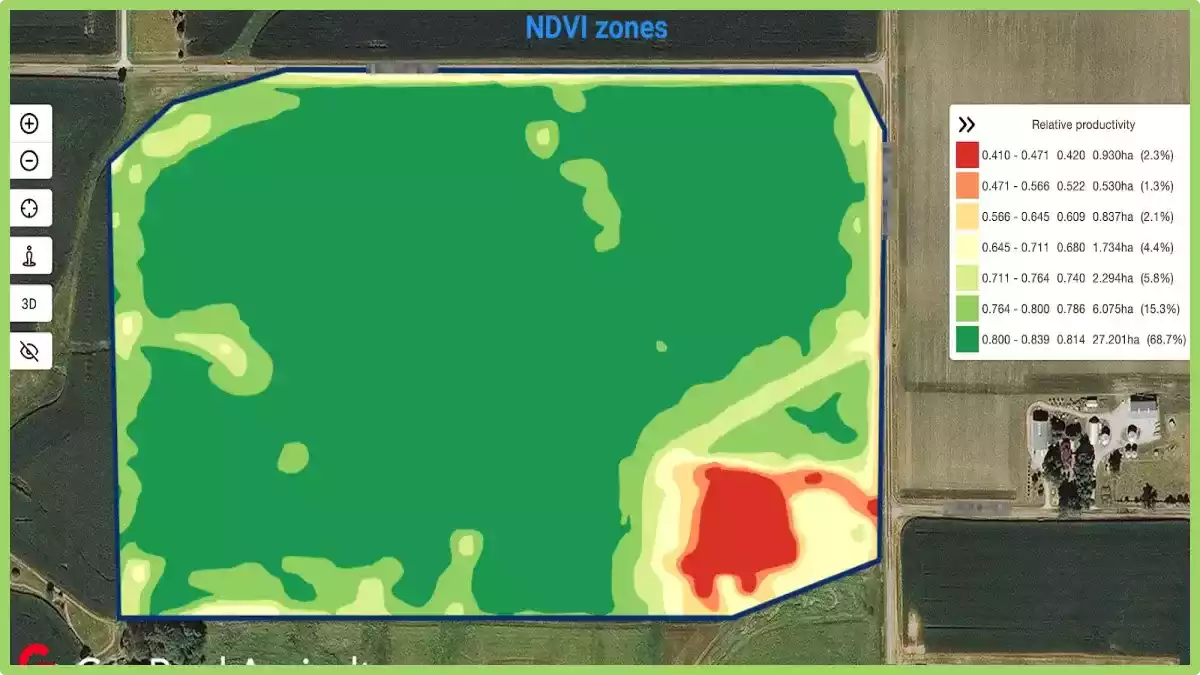
The application of vegetation indices, most notably the Normalized Difference Vegetation Index, exposes the true condition of crops (NDVI).

Farming insurance companies would significantly profit from incorporating this technology into their operations since it would significantly reduce costs while also saving vital time and resources.

Due to the orbital speed of satellites, they can examine vast areas of land and sea in a couple of minutes. Indeed, one orbit can last as little as two hours, implying that the entire circumference of the Earth can be covered in that time!

Crop insurance firms can precisely quantify the area of a field in seconds due to the extraordinary breadth of coverage provided by satellite imagery data. The data is promptly uploaded to the Crop Monitoring platform, which enables users to view the exact contours of any field on any screen, at any time of day or night, via an interactive map.

Another method worth mentioning is the high resolution of satellite images, which enables the detection and monitoring of seedlings and harvest status, among other things.

This technology, when combined with remote sensing data, enables agricultural insurance firms to forecast weather risks and quantify soil and crop damage from natural and man-made disasters.

Waterlogging can be detected through soil moisture monitoring, and critical temperatures can be monitored to detect natural detrimental events such as cold stress.

However, the precise assessment of a field’s production based on historical and present data is unquestionably the most critical feature that any insurance business can profit from.

Additionally, insurers can forecast the future potential production of any certain location by utilizing this skill. Consider each of these in greater detail. 

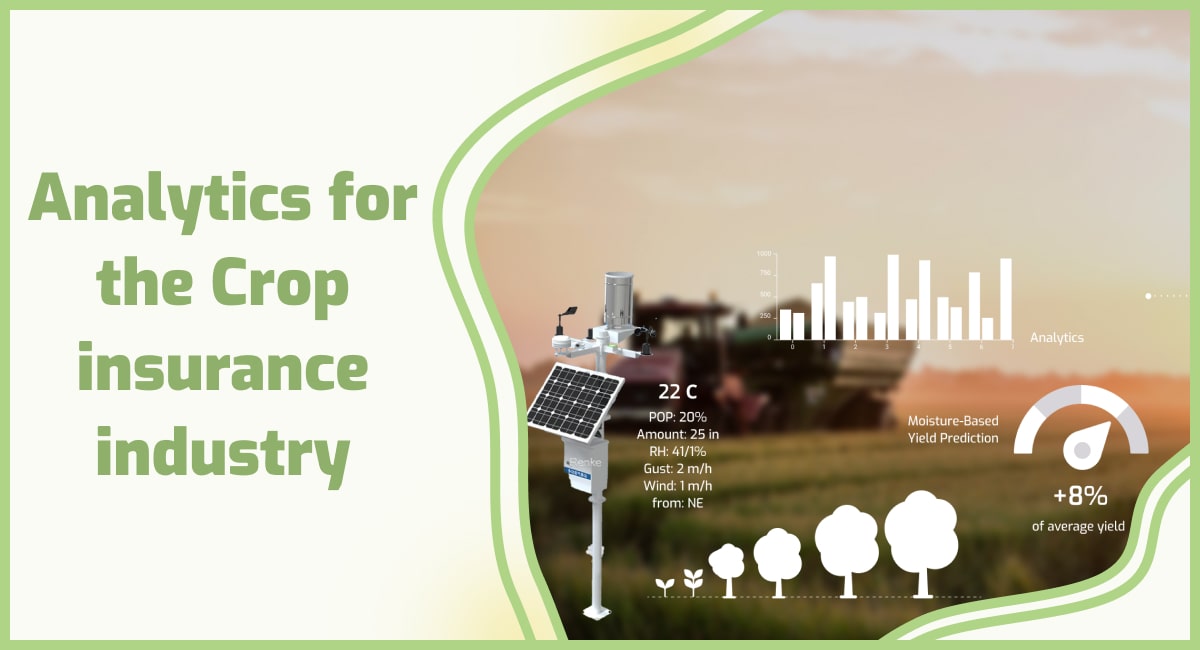
What can GeoPard do for the crop insurance industry?

Because it provides a single platform for field health monitoring, climate change analysis, fertility management, and crop yield prediction, agricultural crop monitoring is a universal tool for all agro-industry participants.

It is impossible to tell whether or not decisions are paying off without a reliable instrument for analyzing results, so:

Farmers can also use the platform to monitor weather conditions to reduce associated risks, plan and manage fieldwork, prevent field losses, make informed decisions using powerful analytic tools such as vegetation indices (you can select the time period for analysis), and stay on the cutting edge of farming technology through yield prediction.

GeoPard allows insurers to have immediate access to a field’s history data, farming records, and land usage without physically visiting the field; all of this information can be tracked straight from the platform.

Agribusiness merchants can evaluate a location’s eligibility for safer agricultural crop supply transactions, optimize logistical planning, manage land utilization, anticipate yields to forecast future revenues and expenses, and monitor climatic conditions to reduce crop failure risks.

It is a highly valuable tool for farming insurance companies to utilize when deciding who to insure. It is a web-based platform that provides agricultural insurance firms with accurate and up-to-date data that is saved in the system and available at any time, online or offline. Crop Monitoring is offered online as well as offline.

Furthermore, ГеоПард includes a number of analytical tools that help insurers access and/or validate relevant data as quickly and efficiently as feasible. What is its main advantage? All of the processes aid in the reduction of time, money, and resources while boosting precision and accuracy, after all, the application is convenient.


Најчешћа питања


1. How to get crop insurance?

To obtain insurance, follow these general steps. Firstly, contact your local agricultural insurance provider or the agricultural department in your country to understand the available insurance programs.

Secondly, gather necessary information such as crop details, acreage, historical yield data, and production practices. Thirdly, complete the application process, providing accurate information about your crops and farming practices.

Finally, pay the premium as required by the insurance provider. It’s crucial to consult with experts or insurance agents who can guide you through the specific requirements and options available in your region.

2. How to sell crop insurance?

To sell crop insurance, individuals typically need to follow certain steps and meet specific requirements. Firstly, become licensed as an insurance agent in your country or region by completing the necessary education and training programs.

Secondly, partner with an insurance company or agency that offers insurance products. Thirdly, build relationships with farmers and agricultural communities to understand their needs and provide them with information on its benefits and coverage options.

Lastly, market and promote it through various channels such as networking, advertising, and attending agricultural events. Developing trust, expertise, and effective communication skills are essential for its successful selling.

Precision pest control and management in agriculture

Effective pest control is important for protecting crops, plants, property, and public health. However, it is also important to ensure that control methods are environmentally safe and do not harm non-target species or the broader ecosystem.

The principles of precision agriculture mean implementing various technologies such as Geographic Information Systems (GIS), the Global Positioning System (GPS), Variable Rate Technology (VRT), and Remote Sensing (RS) in order to monitor the situation in the agricultural fields and based on the generated data to execute the needed operation properly.

As a result of the properly executed operation, the farmer has the ability to control the nutrients in the soil, occurrence of weeds, pests, and diseases on a micro-management level, and ultimately provide the optimal condition to achieve the desired yields.

What is pest?

Pest refers to any organism that can cause harm, damage, or nuisance to crops, plants, animals, humans, or the environment.

In agriculture, pests can include insects, mites, rodents, birds, nematodes, weeds, and other organisms that can reduce crop yields, damage crops, or spread diseases to crops.

Pests can also be a problem in urban and suburban areas, where they can damage homes and property, spread disease, and create a nuisance.

What is pest control? Why it is important?

Pest control is the process of managing, reducing, and eliminating pests that can cause harm, damage, or nuisance to crops, plants, animals, humans, or the environment.

According to the Food and Agriculture Organization of the United Nations (FAO), pests and diseases are responsible for an estimated 20-40% of global crop losses each year. This translates into billions of dollars in economic losses for farmers and the global food system.

It can be achieved through a variety of methods, including chemical treatments, biological control, cultural practices, and physical barriers.

Chemical treatments involve the use of pesticides or other chemicals to kill or repel pests. Biological control involves the use of natural predators or parasites to control pest populations.

Cultural practices involve altering the farming or landscaping practices to reduce the likelihood of pest infestations. Physical barriers such as screens, netting, and fencing can also be used to prevent pests from entering a specific area.

Pest control in agriculture production systems

Obtaining high yields, especially in climates where predominantly is humid, often requires the application of fungicides in order to get rid of harmful effects of different pests and diseases that can potentially lower the yield or in the worst-case scenario disrupt the whole production season.

The pests, as the focus of this article, have their own way of prospering and surviving on the agricultural plots.

Various pests have various stages of development, different speeds of going through that stages, and different mechanisms to battle against the environmental effects, as well as the anthropogenic activities i.e. application of pesticides.

Pest management in agriculture is defined as “utilizing environmentally sensitive prevention, avoidance, monitoring, and suppression strategies, to manage weeds, insects, diseases, animals and other organisms that directly or indirectly cause damage or annoyance.”

Effective pest management relies on the use of any tools or strategies to reduce the impacts of pests on crops in order to meet landowner objectives.

What is Precision pest control in agriculture?

Precision pest control in agriculture can be defined as the utilization of technologies and strategies for monitoring, prevention, avoidance, and suppression of pests, diseases, weeds, and other living things that are directly or indirectly disrupting the agricultural production processes.

The solutions are relying on different tools and methods to reduce the impacts of pests on crops. Such tools and methods are divided into two major distinct categories:

  • Tools and methods for monitoring the pest occurrence and presence. In the context of precision farming for this category, there is a utilization of several technologies such as GIS, GPS, and RS.
  • Tools and methods for prevention and suppression of pest occurrence. In the context of precision farming for this category, there is a utilization of several technologies such as GIS, GPS, RS, and VRT.

Two approaches of precision pest control

Precision pest control in agriculture systems that implement precision technologies can be realized in two approaches:

1. Area-wide pest management in agriculture

Area-wide pest management is implemented in order to act preventively on pest outbreaks on a larger spatial resolution where many agricultural plots are included.

Acting under this approach means implementing Integrated Pest Management activities and all the available technologies that enable remote sensing of the pest occurrence and their stages of development.

The remote sensing technologies implemented in this approach are satellite and UAV imagery with NDVI and hyperspectral indices, GIS software for calculating the area of the affected fields, and agricultural IoTs that can remotely measure the environmental parameters and the presence of pests in order to feed the disease and pest models for forecasting the severity of the outbreak.

The IPM methods are used mostly because of their success in offering long-term solutions, preventing major outbreaks, and more sustainable management procedures for growers to use.

2. Site-specific Pest Management in agriculture

This approach is the absolute opposite of the approach explained above, which means that the precision pest control is done in a smaller site-specific management zone that can be even found on one individual agricultural plot.

Apart from the above-mentioned technologies for monitoring, in this approach, there is also extensive use of the Variable Rate Technology that enables the farmers to act precisely.

The methods in this site-specific control are more conventional, which means using specific pesticides in order to eradicate the pest or to act alleviate when the damages or the complete development of the pests is already present.

In these conditions, the VRT enables the farmers to lower their input costs for pesticides, as well as to reduce the negative impacts on the environment from using such chemicals.

Such a tool as GeoPard allows you to monitor crops, control the soil, and prevent the spread of pests in time.


Најчешћа питања


1. What is the best way to prevent pest infestation?

The best way to prevent pest infestation is through integrated pest management (IPM) practices. Firstly, practice good sanitation by removing food sources, cleaning regularly, and properly storing crops and products.

Secondly, monitor pest activity through regular inspections, scouting, and use of traps. Thirdly, employ cultural methods such as crop rotation, companion planting, and maintaining healthy soil to discourage pests.

Lastly, utilize biological controls like natural predators or parasites, and if necessary, use targeted and judicious pesticide applications as a last resort. By combining these strategies, farmers can effectively prevent and manage pest infestations while minimizing environmental impact.

2. How are pests controlled in a crop field?

Pests in a crop field can be controlled through various methods. Firstly, cultural practices such as crop rotation, proper spacing, and maintaining healthy soil conditions help reduce pest populations.

Secondly, biological control involves introducing natural predators or beneficial insects to control pests. Thirdly, mechanical methods like handpicking or trapping can physically remove pests from the field.

Lastly, if pest populations reach damaging levels, targeted and judicious use of pesticides can be employed. Integrated pest management (IPM) combines these approaches to effectively control pests while minimizing environmental impact and ensuring crop health.

3. What is integrated pest management in agriculture?

Integrated Pest Management (IPM) is an approach in agriculture that aims to minimize reliance on chemical pesticides by integrating various pest management strategies. It involves monitoring and identifying pest populations, setting action thresholds, and implementing a combination of cultural, biological, and chemical control methods.

4. How does the government combat agricultural pests?

The government combats agricultural pests through various measures. Firstly, they conduct research and develop pest management strategies to address specific pests and crop diseases. Secondly, they establish regulatory frameworks and enforce standards for control practices and pesticide use.

Thirdly, government agencies provide education and training programs to farmers on pest identification, prevention, and management. Lastly, they may offer financial assistance or subsidies to farmers for implementing pest management practices and investing in pest-resistant crop varieties.

By taking these actions, the government plays a crucial role in safeguarding agricultural crops and ensuring food security.

5. What are the methods of pest control?

Methods of control include various approaches to manage pest populations. The methods include:

  • Cultural control
  • Biological control
  • Chemical control
  • Mechanical control
  • Integrated pest management (IPM)

How to use farming drones in precision agriculture?

Drones are used for more than just military purposes. Farming drones can now help farmers and agriculture businesses maintain their land more effectively and efficiently.

The Growth of food production and consumption demands in the contemporary farming industry has led it to a critical turning point, with global food supplies shrinking faster than ever and commodity prices soaring like never before.

Agronomists and farmers throughout the world are under higher pressure to enhance efficient management of resources in the face of dwindling finances, whereas the “farm to plate” phenomenon has led to the increasing push for better traceability of food products as customers are getting quite concerned in the sources of the foods being bought and how they were produced.

Additionally, the agricultural industry’s attempts to preserve the supply chain’s security are getting more complicated due to climate change.

How are drones used in precision agriculture?

Drones are becoming more popular in agriculture as part of a holistic sustainable farming plan, allowing agronomists and farmers to aid in streamlining processes while obtaining important information on their crops through thorough data and topography analytics.

For instance, surveilling of crops is simplified by the information received from farming drones that are then applied in developing and implementing continuing enhancements such as alterations in fertilizer application or ditch placement.

Using GPS locations at various points along the route, instead of labor-intensive and time-consuming methods of data collection, food may be reliably tracked from the farm to the plate.

The role of farming drones in precision agriculture

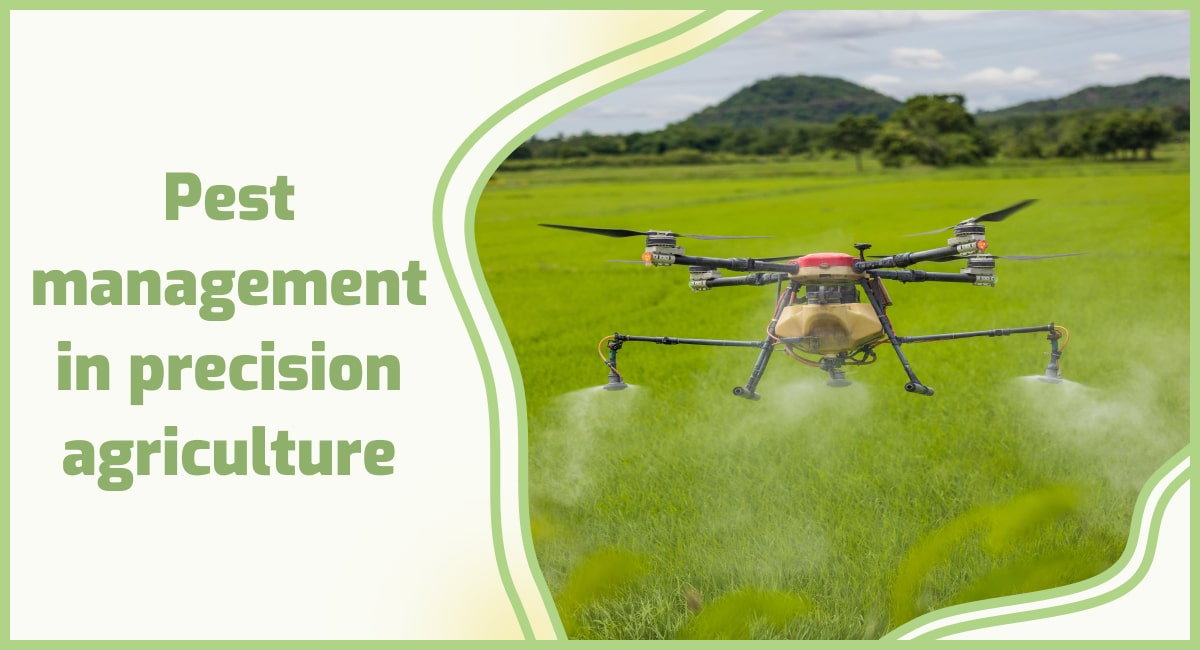
In precision agriculture, UAVs are employed in a variety of tasks ranging from Узорковање земљишта and crop field analysis to planting and pesticide application.

Drones in agriculture can be combined with various imaging technologies like hyperspectral, multispectral, thermal, and so on to offer farmers temporal and site-specific information about crop health, fungal infections, growth bottlenecks, and so on.

UAVs are very effective for carefully keeping track of huge expanses of agricultural land, taking into account parameters such as slant and height, for instance, to discover the most effective planting regimen.

Importantly, the high-quality resolution of drone data may be used to measure the fertility of crops, enabling agronomists to apply fertilizers with great precision, reduce waste, and design or fix systems of irrigation.

After natural calamities, such as flooding, the technology can be especially useful in assisting farmers to survey damage over land terrains that may be inaccessible if you’re on foot. The following are some of the roles of drones in precision agriculture:

1. Crop surveying and mapping

Whereas crop evaluation used to have to be done manually, on foot, or from a tractor or using pricey satellite technology, drones in agriculture now allow us to analyze the health of vegetation from the skies in a matter of minutes.

Time-lapse drone photography, for example, can be used to precisely monitor yield growth and development over several days or weeks, and drone-driven NDVI mapping, which employs specialized sensors, is extremely useful for analyzing chlorophyll levels, detecting insects, pests, and disease, identifying weeds and measuring plant stress levels.

Farmers are then able to deal with issues promptly and make essential adjustments as and when they are needed to ensure higher productivity. It essentially means that farmers may be considerably more attentive to their crops’ ever-changing needs.

The mapping process of surveying crops with a drone is pretty straightforward. Many recent agricultural drone models come with flight planning software that enables the operator to draw a shape around the area to be covered. The software then automatically designs a flying course and, in some cases, even prepares camera image shots.

While flying, the drone captures images automatically using onboard sensors and the built-in camera, and it uses GPS to calculate when to take each shot. However, if your drone lacks these automatic features, one person must operate the drone while the other shoots images.

2. Weeds and pest control management

Crop failure is caused by weeds and pests in practically all major crops, including wheat, palm oil, soybean, rice, potato, cotton, and corn. Precision agriculture has a wide range of applications and uses in agricultural settings, including weds and pest management.

They with specialized cameras and sensors capable of detecting specific weeds and pests, as well as GPS technology capable of providing location information for field mapping, can assist in properly tracking enormous regions in a matter of seconds.

Drones in agriculture enable more precise weed strategy planning, increasing the efficiency of mechanical methods and decreasing herbicide growth, leading to cheaper costs, a slower establishment of weed resistance, and increased biodiversity.

Farming drones can cover many hectares in a matter of minutes by flying over the field and sending photographic data for weed and pest identification. Furthermore, farmers and companies may deal with weeds and pests as soon as possible before they harm the entire harvest.

3. Soils inspection

They are frequently used to inspect the status of the soil. In conventional agricultural methodology, there are several phases involved in inspecting the ground, such as visiting the field manually with equipment and reviewing soil samples for various parameters.

Farmers and academics, on the other hand, can watch vital indications of soil quality long after the seeds have been planted, thanks to improved land monitoring technologies.

Drones for soil and field study can assist in monitoring soil and plant density throughout the growing season to avoid “surprises” later on.

This proactive soil sampling with farming drones can assist farmers in staying ahead of any problems and making modifications as needed (e.g., adjusting irrigation, adding nitrogen fertilizer, etc.) in order to maximize crop health.

Soil composition and condition monitoring are critical for modern farming operations. The more exact the data, like with most things, the better.

Farmers can make more informed judgments about where to plant which crops and when to make adjustments by using multispectral soil quality maps of their fields. As a result, with more sustainable land management approaches, yields will be larger and healthier.

4. Irrigation and water management

Water is a valuable commodity that is critical to the success of all farming operations, so it must be properly managed. Drone thermography, which employs thermal sensors to provide an image that indicates the moisture content of the land, comes into play.

With this information, informed judgments about irrigation operations may be made to guarantee that areas of the farm that require more water receive it, while areas that are already moist are not overwatered.

At the end of the day, they help to make farming a far more precise science by providing the benefits listed above. Water and irrigation concerns are not only expensive, but they can also reduce crop production. Drone surveying can be used to identify these issues before they become a problem.

5. Spraying management

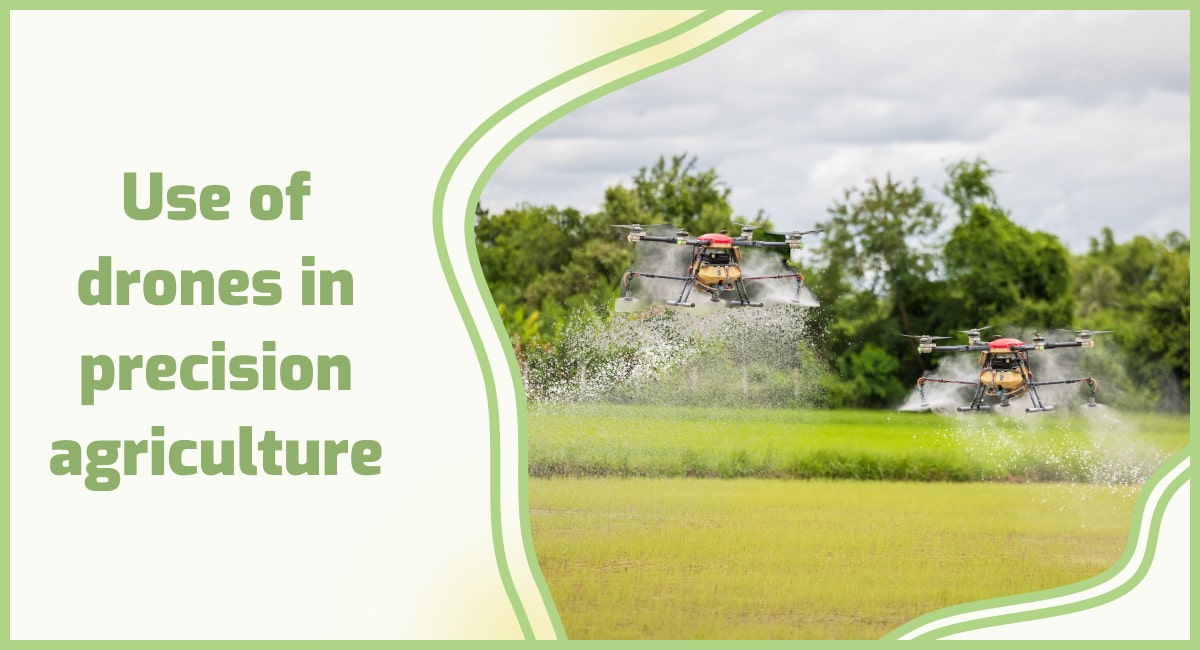
Another advantage of precision agriculture drones is the effective and efficient use of fertilizers. UAVs can use advanced sensor technology to pinpoint exactly where additional nutrients are needed, allowing them to be applied only where they are most needed.

Drones in agriculture are also very effective sprayers, capable of delivering precisely the correct amount of plant food at just the right time, successfully lowering the amount of fertilizer discharged by up to 20%. This not only reduces farming costs but also saves excessive environmental damage.

Types of drones used in Agriculture

Unmanned aerial vehicles come in a variety of shapes and sizes, and they can be classified into the following categories:

1. Fixed-wing drones

Fixed-wing use the lift and drag to maintain altitude in the same way as airplanes do. They are fairly simple to operate. It has a non-movable wing and a propeller that allows it to go ahead.

Fixed-wing Agriculture drones

Because of its design, it must always be moving relative to the air surrounding it in order to stay aloft. As a result, the wind can have a significant impact on its operation.

Another constraint is that larger drones require a runway area for deployment and retrieval, whereas smaller ones can be hand-launched and retrieved by landing on a soft surface.

2. Fixed-wing hybrid VTOL drones

A new category of hybrids that can take off and land vertically combines the benefits of fixed-wing drones with hovering ability.

Fixed-wing hybrid VTOL (Vertical Take-off and Landing) drones combine UAV (Unmanned Aerial Vehicle) qualities with the ability to fly in a single location while keeping hybrid traits.

These can take off from a single spot and fly vertically for an extended amount of time because of this function.

3. Multi drones

Multi-rotor drones are the most commonly used for mapping and modeling. These are made up of a fuselage and four motors that power the proper propellers. Multi-rotor are a fantastic choice for aerial photography due to their compact size and outstanding control.

Multi purpose Agriculture drones

They can simply hover and take off vertically, giving them even more mobility. Because of their design, they can also support the higher weight. The multi-rotor can transport goods such as a DSLR camera or other items that allow it to move.

These can easily navigate small spaces. Drones’ GPS receivers will allow them to hover and follow a predefined path using waypoints.

4. Single-rotor helicopter

Single rotor helicopter drones have more advantages than other types. It has a gas-controlled mechanism to boost endurance.

single-rotor helicopter drones

Aerodynamic standards stress that larger rotor blades result in less spinning and greater system reliability. As a result, single rotor helicopters are more practical than other types. Agriculture benefits from single-rotor helicopters’ longer rotor blades.

5. Tethered Drone

A tethered vehicle is a typical drone that is tethered to a wire in order to eliminate the need for a remote controller. Drone movement is thus constrained by the tether. Furthermore, tethered drones come in a wide range of configurations.

They can range from a normal drone that moves in accordance with the tether to a drone that is tethered with a microfilament wire and has an established power source for infinite flying.

According to the Association for Unmanned Vehicle Systems International, in the near future, 80 percent of Unmanned Aerial Vehicles (UAVs) will be employed for agricultural reasons.

But how prepared is the agricultural sector for the use of drones? And how prepared are they to operate fully on the farm?


Најчешћа питања


1. What season do they fly the drones to analyze the crops?

Drones are typically flown to analyze crops during the growing season, which is when the crops are actively growing and developing. This period generally corresponds to spring and summer months, depending on the specific crop and location.

By flying drones during this season, farmers can obtain real-time data on crop health, identify areas of concern, and make informed decisions to optimize crop management and maximize yields.

2. Which natural resource can we help protect by using drone and precision application of inputs?

Using drones and precision application of inputs can help protect water resources. By accurately targeting the application of fertilizers, pesticides, and irrigation, farmers can minimize runoff and leaching of these substances into water bodies. Drones provide high-resolution imaging and data collection, allowing farmers to identify areas of over or under-application and adjust inputs accordingly.

3. How to operate the drone?

Operating a drone typically involves the following steps: Firstly, ensure the drone is fully charged and the necessary components, such as the remote controller and mobile device, are connected.

Secondly, conduct a pre-flight check, verifying that the drone’s sensors, propellers, and camera are functioning properly. Thirdly, plan the flight path and set waypoints if needed using the drone’s control software.

Lastly, launch the drone, maneuver it using the remote controller, and monitor the live video feed or captured images for analysis. Following local regulations and practicing safe flying techniques are also important for successful drone operation.

4. How do drones collect data?

Drones collect data through various sensors and technologies on board. These may include cameras, thermal sensors, LiDAR (Light Detection and Ranging), and multispectral sensors. As the drone flies over the target area, these sensors capture images, video, or other data. The collected data is then transmitted and stored on the drone or transferred to a computer for analysis.

Предности и улога технологије прецизне пољопривреде

Precision agriculture technology is at the heart of modern agricultural technologies, but it has become a frequently used and somewhat ambiguous term, trending online and amongst professionals in the field.

All eyes are on the world of agriculture as global awareness about the linkages between industrial farming and climate change increases, and an ever-growing population raises serious concerns about international food security.

The United Nations reports a predicted population increase to close to 10 billion by 2050, most of which is expected to occur in developing nations, placing an already inequitable food system under severe pressure.

Investors are looking toward the AgTech sector, which is buzzing with innovative technologies, for solutions to transform land-use practices, bolster food security with highly productive farming techniques, and mitigate the adverse effects of industrial farming.

Let’s break it down to the core principles and associated technologies to better understand what it is and how it fits into a changing food system? It is the exact application of specific inputs at variable rates to optimize economic efficiency and reduce wastage.

Traditionally, farmers would use the same inputs such as irrigation, fertilizer, or pesticides across an entire field in a blanket application process, not accounting for variations in land type and soil biogeochemistry.

Precision farming makes use of geospatial data to analyze the fluctuations of soil nutrients, water availability, slope, sun exposure, and other such variable features of land parcels and addresses them only as needed.

This core practice of precision ag is called variable rate application (VRA) and is what makes this agricultural movement stand out as a more advanced and responsible way to farm.

Traditional commercial farming simply did not have access to the detailed data we do today, so it presumed monotonous patterns in crops and fields that led to a large-scale wastage of resources that is no longer necessary with current data availability.

Variable-rate application is very much at its center, but many different technologies go into making it work or that enhance other aspects of farm work to be more streamlined and efficient.

What is precision?

Precision refers to the level of accuracy or exactness of a measurement or calculation. In other words, precision is a measure of how close multiple measurements or calculations are to each other, or how well a single measurement or calculation can be replicated.

For example, if you were to measure the length of a pencil with a ruler, the precision of your measurement would depend on the smallest unit of measurement on the ruler. If the ruler had millimeter markings, your measurement would be precise to the nearest millimeter. If the ruler had centimeter markings, your measurement would be precise to the nearest centimeter.

What is precision agriculture?

Precision agriculture (PA) is an approach to farming that uses technology and data analytics to optimize crop yields and reduce waste, while minimizing the impact on the environment.

PA involves collecting and analyzing data from various sources, such as weather patterns, soil samples, and crop growth rates, to make informed decisions about how to manage crops.

This approach allows farmers to apply fertilizers and pesticides more precisely, reducing the amount needed and minimizing the risk of overuse or waste. It also helps farmers identify areas of their fields that need more attention or specific treatments, which can increase crop yields and reduce costs.

Some of the technologies used in precision farming include global positioning systems (GPS), drones, sensors, and machine learning algorithms. These tools enable farmers to collect and analyze data in real-time, allowing them to make timely decisions about crop management.

It is becoming increasingly popular as farmers seek to maximize yields and reduce waste, while also minimizing their impact on the environment. It is also seen as a way to address the challenges of feeding a growing global population while reducing the environmental impact of agriculture.

What Are the Main Advantages of Precision agriculture technology?

Precision farming and VRA applications benefit all stakeholders in agricultural operations in just about every way, but mainly through the provision of more metrics for agricultural monitoring, the improved ability to make informed and efficient decisions, the creation of highly accessible farm records, the ability to better protect crops and investments, streamlined irrigation management, and superior land stewardship and sustainable practices.

Let’s dive into each advantage and highlight the key benefits they offer ag professionals:

1. Advanced metrics for agricultural monitoring

The most notable benefit of systems that employ precision agriculture technologies or practices is the vast amount of specific metrics they collect and use to monitor their operations. Quantitative data about everything under the sun is collected, stored, analyzed, and used to keep a close eye on every aspect of a farm, no matter the size or location.

Metrics are constantly available for review or comparison, and multi-layer analysis can provide insights into complex relationships between soil chemistry and crop nutrition, soil brightness and yield productivity, water inputs, and drainage inefficiencies – just to name a few.

Advanced metrics for agricultural monitoring

In a field of work that has historically been associated with instability and risk, precision ag has transformed farming into a carefully mapped constellation of data points and those who make their livelihood from it into the astronomers who study and understand it.

2. Improved decision-making efficiency

Data-based decision-making means that previously complicated cost-benefit analyses and guesswork are taken out of the equation and clear statistical calculations are utilized to provide highly precise results in just a fraction of the time.

IoT networks, API integrations, and smart devices all work together to create farming systems that are responsive to real-time updates about all aspects of an operation so that decisions can be made almost instantaneously and any data needed to make those decisions is available at the click of a button.

This is especially true for software platforms that compile all the relevant data into one user-friendly package and provide analytics that can make the smartest decision for you based on your data inputs and desired results.

3. Accessibility to farm records

The improved access to detailed records and data can provide agribusinesses and agronomists with the accountability for what works and what doesn’t on a new level, all of which is added to a constantly growing resource base from which smart and informed decisions can be made.

This also reduces the stress associated with agricultural professions, where many factors that were previously deemed uncontrollable or random- like topographic inconsistencies or weather patterns- can now be predicted and accounted for with a much higher level of accuracy, leaving more time to manage other aspects of a business.

4. Crop and livelihood protection

Contingency planning, risk evaluation, and crop protection can all be factored into software that provides constant monitoring of changes and threats to land productivity, allowing farmers to be one step ahead at all times and reduce the risks associated with their profession.

It also opens up opportunities for agricultural laborers and employees to higher-paying job opportunities in tech and software as farm labor becomes increasingly redundant and positions in programming and equipment maintenance increase in demand.

Pests, diseases, and extreme weather events can all be monitored and diagnosed early on to prevent devastation and provide enough time for the appropriate response or counter-attack to be put in place.

5. Superior irrigation management

Presently, estimates suggest that over 70% of globally available freshwater is used by the agricultural sector and high volumes are wasted through inefficient irrigation systems. Many major growing regions are already experiencing water scarcity, and WWF statistics suggest two-thirds of the world’s population will experience water shortages by 2025.

Superior irrigation management

This highlights how essential efficient irrigation management is in modern agriculture, and variable rate irrigation (VRI) can help conserve water resources enormously by removing irrigation dead zones and putting every drop of water towards productive use.

VRI makes use of data from geospatial data analysis, weather monitoring, and soil moisture sensors to only provide water in exact quantities to crops that need it, and adapt applications depending on factors like slope and run-off that affect how water is absorbed into soil.

6. Sustainability

Precision agriculture is beneficial not only for agribusinesses but also for the surrounding environment, as optimizing input efficiency reduces the volume of unnecessary pollutants released into the soil, water, and air, and data analytics allows for constant monitoring of soil health.

Sustainability is integral in Precision farming technology, as an increasing global population will place more pressure on already degraded soil systems, so practices that encourage biodiversity and conservation of local ecosystems are essential.

The more nuanced understanding of a piece of land that comes with this type of agriculture creates an appreciation for diversity and the micro-differences that exist across a landscape.

Catering to those differences through VRA means that biodiversity can be more effectively preserved, and it provides agricultural professionals with a systems lens through which to view their operation and appreciate the complex biological, chemical, and physical linkages that occur.

The relationship between climate change and land use is a positive feedback cycle in which both are constantly affecting the state of the other.

Traditional agriculture has played a significant role in bringing the climate to the breaking point it is currently at through a combination of fossil fuel dependency and the eradication of carbon sinks, like healthy soils and forests, to plant monocultures.

The livelihoods of agricultural professionals will be some of the first to be most affected by changing climate patterns and extreme weather events, but the sustainable nature of precision agriculture allows for the close monitoring of greenhouse gas emissions and carbon sequestration so that further negative effects are minimized, and active climate change mitigation strategies can be woven into land management.

It combined with regenerative agriculture and soil building practices has the potential to become one of the most significant tools that we can use as a global society to reduce global warming.

Important Technologies for Precision Ag

The smooth operation of precision farming is dependent on technologies that have the capabilities to efficiently collect data, automate systems, create advanced communication networks across the board, and apply inputs at variable rates.

As with everything in the 21st century, technology is becoming an essential component in agriculture, and the Agtech sector is seeing constant new additions and inventions that can be used to further contribute to highly accurate and streamlined practices.

Here are ten of the most valuable technologies being utilized in this field, and how they fulfill a specific need or supply a vital service to ag professionals.

1. Smart devices

Smart devices like phones, tablets, and watches are already staples in the daily lives of most but are now essential tools for farmers, agronomists, and agribusinesses to efficiently manage their operations.

Immediate access to information, instant communication with other parties, calendars and scheduling capabilities, and the use of high-definition cameras to quickly identify and diagnose issues as they arise are just some of the most notable benefits that smart devices can offer professionals in the agricultural sector.

Additionally, having access to devices with app compatibility is a prerequisite to using many other technologies on this list and allows individuals to plug into a world of largely free knowledge.

There is also a world of creative apps available to ag professionals that contribute to efficient practices in other ways, like those that assist in the identification or diagnosis of different pest species or diseases or offer specific platforms for farmers to communicate locally.

Farms looking to transition to precision agriculture need to have smart devices in order to lay the groundwork for everything else, like accessibility to data and instantaneous communication are essential in running more efficient operations.

2. Internet of Things (IoT)

IoT goes hand in hand with smart devices by connecting all relevant information into one secure web of information that is accessible anywhere, anytime.

Detailed metrics collected from other devices on this list such as soil or livestock sensors, equipment out in the field, and weather forecasts can all be triangulated to instantly respond to environmental threats or quickly coordinate tasks.

The real highlight of IoT-connected devices is the capability that they provide farmworkers or other relevant professionals to receive real-time updates wherever they are, and open pathways of communication even over large, thousand-acre operations.

3. GPS and Satellite Data

GPS technology laid the groundwork for precision agriculture from the very beginning, by opening up the world of geospatial data and providing farmers with detailed maps that have completely changed the way food is grown.

There are now many ways to access and manipulate different types of datasets acquired through remote sensing, but the raw technology of satellites remains a cornerstone of Precision farming technology.

We are also seeing the exponential improvement of satellite imagery every day, with increasingly refined images and more missions that can tell us highly detailed information about land system interactions and changes over time.

4. Topography field profile

The topographic dimensions of a piece of land have a significant effect on crop yields as they have a significant effect on the drainage of water and nutrients through a landscape and soil erosion patterns.

Variable-rate applications of inputs like irrigation and fertilizer need to be adjusted according to the topographic profile of a farm, where the elevation, slope, and aspect are all accounted for to ensure maximum yield potential with minimum resource wastage.

3D mapping tools that generate advanced models of topography profiles are proving essential for informing VRA and showing large-scale linkages to watersheds and surface drainage patterns. These can be used with base layers like LIDAR and cover maps like pH distribution of organic matter to provide a multi-layer analysis of the soil profile.

5. Software analytics platforms

Platforms that provide software as a service are a key component in the accessibility of precision agriculture to those working in agriculture and looking to employ VRA in seeding, fertilizing, and irrigating their fields.

These platforms, like GeoPard, provide all the complex data analytics and processing needed to translate raw data into clear solutions and allow users to isolate different variables like topography, soil nutrients, soil water moisture, soil brightness, and many more to generate specific VRA maps.

With API integrations and IoT compatibility, these VRA maps can be uploaded to machine fleets and simplify every step of the VRA process from data acquisition to input application.

These platforms act as a hub for data where everything collected from machines, sensors, and satellites can be collated in one secure location and compared in a multi-layer analysis.

6. Robotics

Robotics are great additions to the streamlining mission of precise farming, as by their very nature they can be programmed to work on a strict schedule and without the same limitations as manual workers.

Important Technologies for Precision Agriculture

Robotic devices can work all hours of the day in most weather conditions, have precision steering, and are usually operated remotely from smart devices.

Since there is a global trend of younger generations leaving agricultural regions to pursue higher-paying jobs in cities, robotics play an essential role in performing the increasing amount of farm work needed to feed growing urban populations.

Robotics are now a staple in many precision ag operations and are able to carry out all activities from seeding to weeding to harvesting. The current direction of robotics is moving towards fleets of smaller robots that are lighter, faster, and easier to control than large tractor-like machines, especially since they can now be so easily managed when hooked up to IoT networks.

7. Drones

Drones are proving to be very important tools when it comes to the application and spraying of inputs from above.

drones can quickly fly and apply specific fertilizers

Using GPS configurations drones can quickly fly and apply specific fertilizers variably across large land parcels, without the adverse effects of soil compaction associated with large, heavy tractors.

In addition, tractor tracks and paths become redundant with the use of drones and open up more productive land space for crops to grow unimpeded. The information and imagery collected by drones also contribute to an overall larger database of information and can be used to quickly identify pest or disease issues before they spread.

The mobility of these little machines means they can be flown high up to apply inputs or collect data over a wide area or zoomed down to a specific crop patch to analyze insect eggs or crop damage.

8. Wireless sensors

To complement the immense database of satellite imagery available, wireless sensors offer on-ground means to collect information about soil nutrition, plant available moisture, livestock movement, and basically anything they are attached to or planted in.

Wireless sensors and immense database of satellite imagery

This data provides an even more nuanced understanding of the precise needs of all components of an agricultural operation, and livestock sensors can even measure the body temperature and hydration levels of individual animals to ensure population health and limit the spread of infectious diseases that are common in commercial animal agriculture.

Soil and moisture sensors can provide live updates about chemical cycles like water and nitrogen, which are constantly in flux due to the nature of the compounds, to ensure that the timing of inputs can be as precise as possible.

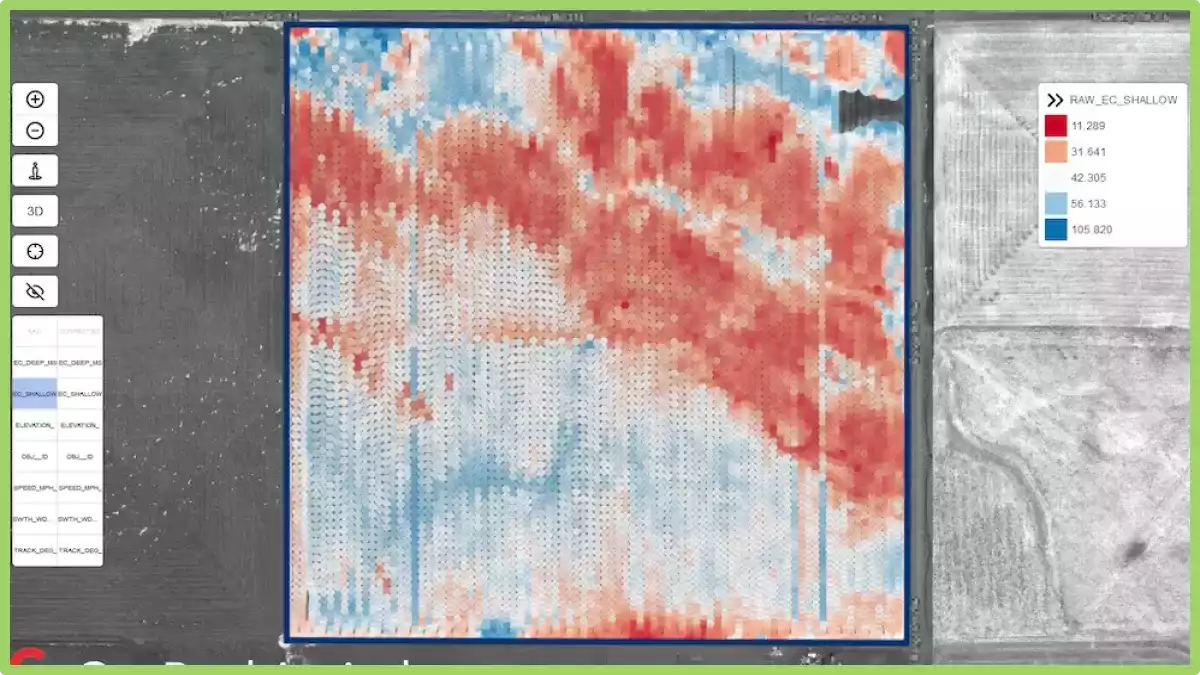
Soil measurement and analysis systems, like those offered by SoilOptix and TopSoil Mapper, collect an unparalleled volume of data points about soil systems by measuring radiation and can be used to create detailed VRA maps.

Sensors are also available to calculate and keep track of yield during harvesting, and on an even more advanced level, certain sensors can calculate grain protein whilst measuring yield data.

9. Weather modeling services

Weather data modeling services have been around for many decades now, but as with every technology on this list, they are constantly improving and offering more exact predictions for micro-climates.

Precise weather modeling services are increasingly needed due to the extreme weather patterns of climate change, which directly impact the livelihoods of farmers.

Weather data modeling services

Even with Precision farming technology, crop yields remain highly vulnerable to sudden weather events like droughts, floods, storms, and cold snaps, and advanced modeling technologies are vital for the appropriate contingency plans to be put in place.

10. API integration and collaboration

A technology designed to facilitate the use of other technologies, API integrations are proving themselves to be essential in the seamless and successful implementation of all the other technologies associated with precision agriculture.

Since the AgTech sector is so diverse and far-reaching in the solutions offered by different companies, collaboration through API integration is the best way for data to be exchanged and utilized most efficiently by consumers.

Precision ag is all about access to fast, easy, and accurate data to inform practices, and API integrations are what bind this process together.

11. Artificial Intelligence (AI) and Machine Learning (ML)

Artificial intelligence and machine learning are the future of many key parts of society, and although it is far from being implemented in most farming operations, the benefits of this type of technology from a precision farming perspective are already evident.

Primarily, AI takes informed data-based decision-making to the next level by creating fully autonomous and self-regulating ML systems that are programmed for precision.

The Future of Precision agriculture technology: Onwards and Upwards

A human error exists in the equation with machine learning and AI integrations, and the impacts this will have on food production are monumental.

The Future of Precision agriculture technology: Onwards and Upwards

So what’s next? Based on the explosive innovation that has occurred in farming over just the past decade, and the predicted increase in food demands over the next several decades, we can be sure that technology will only become more and more integrated into our farming systems.

Already on the horizon are completely automated systems that are controlled by artificial intelligence, that would be hyper-responsive to minute system changes and able to maintain tighter profit margins than have ever been seen in agriculture.

Agronomists, agribusinesses and other agricultural professionals asking themselves whether they should switch to precision agriculture can be certain of the advantages this system presents to all stakeholders involved, and how it will contribute to the overall longevity of their operation.

The affordability of the technologies mentioned in this article is the main barrier to implementation, but the world of finance is starting to hedge its bets in favor of sustainable agriculture as the key to creating resilient and food secure systems, and investments in AgTech are reflecting this.

As long as accessibility and sustainability are kept at the forefront of progress in this field, a self-sufficient food system that can feed upwards of 10 billion people is in sight.


Најчешћа питања


1. What is a possible negative aspect of new farming technology?

A possible negative aspect of new farming technology is the initial high cost of investment. Implementing advanced technologies such as precision farming systems, drones, or automated machinery may require significant upfront expenses.

This can pose a financial burden for small-scale farmers or those with limited resources. Additionally, there may be a learning curve associated with adopting new technologies, requiring farmers to acquire new skills and knowledge.

Moreover, increased reliance on technology can lead to potential job displacement and reduced employment opportunities for farm laborers. Proper planning, training, and financial support can help mitigate these challenges and ensure a successful transition to new farming technologies.

2. What is difference between multiple cropping and modern farming method?

The main difference between multiple cropping and modern farming methods lies in their approach to crop cultivation.

Multiple cropping involves growing multiple crops simultaneously or successively on the same piece of land, maximizing the utilization of available resources and diversifying the harvest.

In contrast, modern farming methods, such as monoculture or specialized crop production, focus on cultivating a single crop in a large-scale, mechanized manner for higher productivity and efficiency.

3. How did they practice precision in agriculture?

Precision in agriculture is achieved through the application of advanced technologies and precise management techniques.

Farmers utilize GPS systems to precisely determine field boundaries, establish accurate planting and harvesting patterns, and optimize resource usage.

Sensors and data collection tools are employed to monitor soil conditions, crop health, and environmental factors in real-time.

4. What is precision vs smart farming?

Precision and smart farming are two terms often used interchangeably, but they have slightly different focuses. It primarily emphasizes the use of technology, data, and analytics to optimize agricultural practices on a precise and localized level.

On the other hand, smart farming encompasses a broader concept that includes it but also incorporates the integration of various technologies such as Internet of Things (IoT), artificial intelligence (AI), and big data analytics to create a more interconnected and automated agricultural system.

5. Does precision farming use Al?

Yes, it does utilize Artificial Intelligence (AI). AI algorithms and machine learning techniques are employed to analyze the vast amounts of data collected by precision technologies. AI helps in interpreting satellite imagery, sensor data, and historical information to make accurate predictions and recommendations for optimized crop management.

6. How is precision farming good for the environment?

It offers several environmental benefits. By precisely applying fertilizers, pesticides, and water, it reduces the risk of overuse and minimizes environmental contamination. Optimal resource management and targeted interventions reduce the overall ecological footprint of farming operations. It also promotes soil health and biodiversity through practices like cover cropping and crop rotation.

7. Who invented precision farming?

It, also known as site-specific farming, has evolved over time with the integration of various technologies and practices. There is no single inventor attributed to it as it has emerged as a result of advancements in agricultural technology, including GPS, remote sensing, and data analytics.

8. What is the impact of precision farming on animal welfare?

It have a positive impact on animal welfare. By monitoring and analyzing data in real-time, farmers can ensure optimal conditions for livestock, including temperature control, feed management, and health monitoring.

Precision technologies allow for better disease detection and early intervention, reducing the risk of animal suffering. Improved efficiency in resource management also ensures the availability of high-quality feed and water for animals.

9. What are techniques of precision farming?

It utilizes various techniques to optimize agricultural practices. These techniques include GPS (Global Positioning System) for precise field mapping, satellite imagery for monitoring crop health and growth patterns, and sensors for collecting real-time data on soil moisture, nutrient levels, and weather conditions.

Variable rate technology allows for precise application of fertilizers, pesticides, and irrigation based on specific field requirements. Data analytics and machine learning algorithms enable farmers to make informed decisions and implement site-specific interventions, leading to increased productivity and resource efficiency.

10. What is the difference between accuracy and precision in agriculture?

In agriculture, accuracy refers to the closeness of a measured value to the true or target value. It represents the overall correctness of the measurement.

Precision, on the other hand, refers to the level of consistency and reproducibility of measurements. It indicates how closely repeated measurements agree with each other, regardless of their accuracy.

SoilOptix® Data Analysis in Precision Agriculture Platform GeoPard

The importance of healthy soil systems in agriculture have been historically undervalued, but innovative agtech companies like СоилОптикс® are shifting this paradigm with data that supports both farmers and local environments. 

Precision agriculture is creating increasingly economic and sustainable systems with modern technologies that can measure vital aspects of land composition, ensuring crops and livestock are managed as efficiently as possible.

SoilOptix ® facilitates this type of sustainable land management by enabling the accurate collection of soil data without doing a labour-intensive soil sampling. 

Soil Data & Variable Rate Application (VRA) maps

A main reason for global topsoil loss has been the mismanagement of fertilizers, pesticides, irrigation systems, and other agro-inputs on a large scale. It is not economically feasible to apply the same amount of, for example, high Nitrogen fertilizers over an area where only a fraction is lacking in Nitrogen.

Variable rate Lime application based on SoilOptix® pH levels. Variable rate Lime application based on SoilOptix® pH levels. The cost of product is calculated by GeoPard

This is also commonly done with the comprehensive application of lime to balance out acidic soils, despite the fact that only a few specific soil patches with a low pH may need it. Assuming a monotonous soil composition across large areas simplifies what is one of nature’s most complex systems.

This is where SoilOptix® data contributes immense value to farmers, who can view maps that specify exactly where and in what quantities different types of fertilizers and other inputs need to be applied via VRA.

This not only saves costs for farmers, but also contributes to the longevity of that land parcel, which may have otherwise been over-fertilized and expedited the eutrophication of nearby lakes and water sources.

Precision agriculture is all about providing agricultural systems with tools for economic and sustainable development, and this is demonstrated by using soil data to maintain and create healthy soil systems that are actually cheaper to amend. As GeoPard co-founder Dmitry Dementiev says:

“Modern precision agriculture is the synergy of agronomy, technology, software, hardware, all of which optimize sustainable and economic decision making. We are happy to work with SoilOptix®, and analyze soil data from the soil ground scanners to provide real time value to agronomists.” 

Understanding SoilOptix® data through GeoPard

Importing SoilOptix® data into GeoPard can simplify the process of understanding soil mineral composition by providing clearly mapped value gradients that are designed for VRA.

The variety of soil elements that SoilOptix® technology measures can be viewed with different layers in GeoPard, and can be compared and contrasted to better visualize patterns and correlations in a land parcel.

It is also possible to create Rx maps with a multi-layer approach, where users can combine and cross-analyze SoilOptix® data with GeoPard data sets like historical vegetation, topography, yield, or soil moisture.

“The appetite for soil data as part of this modern precision agriculture system is ever increasing as demand for a more healthy soil landscape evolves. We are happy to have GeoPard as part of the platforms working with SoilOptix® data to enable growers and agronomists with the tools to accurately and visually analyze and manage their fields.” – Закари Хармер, North America Sales & Global Support Manager at SoilOptix®


Moreover, GeoPard is capable of automatically create a complete topography profile with soil scanners data and with the latest updates also to create a 3d map of a scanned field

3d map of a field was created in GeoPard Agriculture platform using the data from SoilOptix® scanner. The 3d map is overlaid by pH management zones (later used for variable rate lime application) from SoilOptix®.

This data compatibility between GeoPard and SoilOptix® exemplifies the expression ‘work smarter not harder’, by providing agribusinesses and agronomists with the tools and multi-layer analysis needed to optimize yields and save costs on inputs. 

Advanced Statistics For Management Zones In Precision Agriculture

То accurate calculation of statistics is a cornerstone of precision agriculture data analysis. GeoPard has added more detailed statistical precision calculations to the agriculture zones created on the platform to ensure that your maps and the analytic conclusions you draw from them are precise and reliable. 

Advanced statistics are calculated per zone, containing the attributes: minimum and maximum values of the vegetation index (or other attributes), medianaveragestandard deviation, and the sum of all the values in the zone.

The median is the middle value of a dataset that has been numerically ordered, as opposed to the average. This relates to the standard deviation, which reflects how the data is arranged around the average value.

A low standard deviation suggests that the data in a given zone is grouped closely around the average, whereas a high standard deviation indicates that the zone data is spread out more widely around the average.

The sum attribute is simply the total sum of all pixel values in that zone. Before any stats are calculated for your zones, all the outliers or anomalous data points are removed to prevent the creation of misleading statistics that do not accurately reflect your zone data. 

After the manual amendments of agriculture zones through the Merge/Split tool, zone statistics are recalculated based on the new zone geometries. This allows for a refined and accurate understanding of data distribution inside and across zones.

Management zones statistics in GeoPard

As always, GeoPard values transparency throughout all aspects of the platform. During the aggregation of classified data into agriculture zones, all details are smoothed and hidden without metrics to show what happened, so the results of the data aggregation are provided through precision statistics.

It is also always possible to backpedal and extract the original values from your zones to recheck them or to utilize them in your own models. You never need to worry about losing your original data in GeoPard.

Statistics are of high value in determining map accuracy and are calculated for agriculture zones based on any data layer of your choice, including yield, ground sensors, satellite, topography, and multi-layer. 

GeoPard presents zone statistics in a highly readable and straightforward manner, which can be seen in the example images below.

At GeoPard we want to make it easy for you to be confident in the decisions you are making about your fields by providing you with the best and most comprehensive access to statistical precision calculations we can.

What is advance statistics?

Advanced statistics is a branch of statistical analysis that involves more complex and sophisticated techniques beyond basic statistical methods. It encompasses a range of statistical models and techniques used to analyze and interpret complex data sets.

Advanced statistical methods include regression analysis, multivariate analysis, time series analysis, and experimental design, among others. These techniques allow researchers and analysts to uncover deeper insights, identify patterns and relationships, and make more accurate predictions or informed decisions based on the data.

Which vegetation index is better to use in Precision Agriculture?

There are several vegetation indices that are commonly used, including the Normalized Difference Vegetation Index (NDVI), Wide Dynamic Range Vegetation Index (WDRVI), and Green Chlorophyll Index (GCI).

  • Which vegetation index reflects more details?
  • Which vegetation index shows variation better?
  • Is NDVI the best in the multispectral vegetation index family?

The questions are known and coming up very often. Let’s investigate.

What is vegetation index?

Vegetation index is a numerical measure that quantifies the amount and condition of vegetation in a specific area based on remote sensing data.

Vegetation indices are calculated by combining different spectral bands from satellite imagery or aerial photography, which reflect the amount of energy absorbed and reflected by plants in the visible and near-infrared regions of the electromagnetic spectrum.

These indices can provide information about the health, density, and productivity of vegetation, which is useful for a wide range of applications, including agriculture, forestry, land management, and climate monitoring.

What is Normalized Difference Vegetation Index (NDVI)?

NDVI (Normalized Difference Vegetation Index) is the most famous and widely used in industries related to biomass and remote sensing.

NDVI saturation affects the accurate distinguishing of vegetation at biomass peaks. Another issue with NDVI is the soil noise effect on the early stages of crop development.

It is calculated using satellite or aerial remote sensing data, based on the difference in the reflectance of two spectral bands: the near-infrared (NIR) and the red band.

The NDVI formula is NDVI = (NIR-Red) / (NIR+Red).

Where NIR is the reflectance in the near-infrared band and Red is the reflectance in the red band.

The resulting NDVI value ranges from -1 to +1, with higher values indicating a higher density of vegetation. A value of zero indicates no vegetation, while negative values indicate water bodies or other non-vegetated surfaces.

NDVI values close to +1 indicate dense and healthy vegetation, while values closer to zero indicate sparse vegetation or areas with significant stress or damage.

It is widely used in agricultural and ecological applications to monitor vegetation growth, estimate crop yields, and assess the health and productivity of forests and other ecosystems.

It can also be used to detect and monitor drought, soil erosion, and other environmental factors that affect vegetation cover.

It, for example, is calculated by subtracting the reflectance in the near-infrared (NIR) band from the reflectance in the red band and dividing the result by the sum of the two. The resulting value ranges from -1 to +1, with higher values indicating higher levels of vegetation.

Furthermore, the idea of WDRVI (Wide Dynamic Range Vegetation Index) was created to resolve NDVI saturation issues. It was reached by expanding the range of possible WDRVI values via the introduction of the mathematical coefficient (α).

NDVI (Normalized Difference Vegetation Index) use

The NDVI (normalized difference vegetation index) formula was transformed into WDRVI = (α∗NIR-Red) / (α∗NIR+Red).

WDRVI (Wide Dynamic Range Vegetation Index) and NDVI

Zones built based on WDRVI are better compared to NDVI zones. Nevertheless, they are still not ideal because of too high biomass. 

GCI (Green Chlorophyll Index) is used to estimate leaf chlorophyll content in the plants based on near-infrared and green bands. In general, the chlorophyll value directly reflects the vegetation.

The GCI formula looks like GCI = NIR / Green – 1.

GCI (Green Chlorophyll Index) 

Zones built based on GCI better distinguish high biomass spots compared to NDVI and WDRVI. The details help to manage the field more accurately and efficiently.

RCI (Red Chlorophyll Index) incorporates the same chlorophyll content knowledge base as GCI and reflects it via the red multispectral band.

The RCI formula looks like RCI = NIR / Red – 1.

RCI (Red Chlorophyll Index) 

Zones based on RCI are accurate as GCI zones.

Keep tracking your fields and utilize the right vegetation index at the right moment during the season. A large family of vegetation indices is available in GeoPard right now.

Density Sensor-based Technologies in Precision Farming

GeoPard is continuously improving its capabilities to process various types of in-field datasets. High-density sensor datasets are supported by our analytics core for further research and collecting field insights.

A user has access to capabilities to import, visualize, analyze, and research geo-referenced high-density data. These operations are supported via the Web/Mobile user interfaces and АПИ.

Analytics capabilities cover:

  1. Supporting data formats either points and polygons
  2. Processing of sensor data to correct the data and to build a continuous surface for a field boundary
  3. Customizing of color schemas to set preferred color codes and classification
  4. Generating of management zones and further creation of Variable Rate Application
  5. Using as a part of multi-layers and cross-layers analytics

An example of Electrical Conductivity data collected by our partners. Density Sensor-based Technologies in Precision FarmingAn example of Electrical Conductivity data collected by our partners.

For agricultural consultants, agronomists, and growers it means more field-collected data can be stored, analyzed, and used in daily operations in a single solution and easily available for data exploration.

For local sensor companies, GeoPard is an excellent tool that supports analytics of the data collected by such companies and provides contextual information: historical and current satellite analysis, topographic field profile based on remote sensing and machinery data

An example of such a successful collaboration is GeoPard integration with FarmVU – soil moisture sensor company. 

What is Density Sensor?

A density sensor is an electronic device used to measure the density of a substance, which is the amount of mass per unit volume. It works by detecting changes in the pressure or frequency of a wave passing through the substance.

They are used in a variety of industries, including food and beverage, pharmaceuticals, and oil and gas, to ensure consistent quality control of products.

For example, in the food industry, they can be used to measure the density of liquid products such as juices, syrups, and sauces to ensure they meet specific standards for taste and texture.

In the oil and gas industry, they are used to measure the density of fluids such as oil, gas, and water to determine their composition and ensure that they are being extracted efficiently. This information is important for determining the volume and value of the extracted material.

Role of Density Sensor in Agriculture

They can play an important role in agriculture by providing valuable information about soil quality and crop health. These sensors measure the density of the soil or plant tissues, which can indicate nutrient levels, moisture content, and other important factors that affect plant growth and yield.

One application of density sensors in agriculture is soil analysis. By measuring the density of the soil, farmers can determine its texture and structure, which can help them make decisions about fertilization, irrigation, and other soil management practices.

For example, sandy soils have lower density than clay soils, which means they drain more quickly and may require more frequent irrigation.

They can also be used to measure the density of plant tissues, such as leaves or stems. This information can help farmers identify nutrient deficiencies or other issues that may be affecting plant growth. For example, plants with low nitrogen levels will have lower leaf density than healthy plants.

Another application of density sensors in agriculture is precision farming. By using them mounted on tractors or drones, farmers can create detailed maps of their fields that show variations in soil density, moisture content, and other factors.

This information can be used to create prescription maps that guide precision application of fertilizers, pesticides, and other inputs. This can help reduce waste, improve crop yields, and protect the environment.

впЦхатИцон
впЦхатИцон

    Захтев за бесплатну ГеоПард демо/консултацију


    Кликом на дугме прихватате наше Политика приватности. Треба нам да бисмо одговорили на ваш захтев.

      Претплатите се


      Кликом на дугме прихватате наше Политика приватности

        Пошаљите нам информације


        Кликом на дугме прихватате наше Политика приватности