How New Incentives Could Boost Precision Agriculture Adoption in the UK?

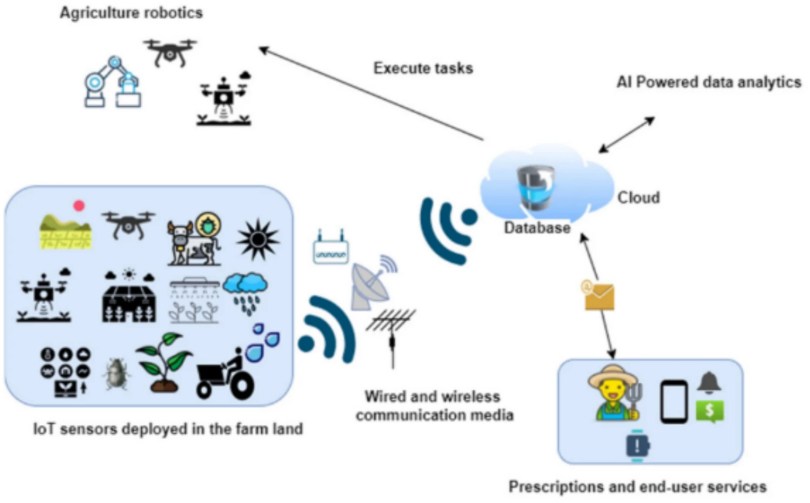
Precision agriculture (PA) refers to using modern tools – GPS-guided machinery, soil sensors, drones, data analytics and even robots – to manage each part of a farm field in the most efficient way. Instead of treating an entire field uniformly, farmers can test soil and crop health in small zones and apply water, fertiliser or pesticides exactly where they are needed. This approach boosts yields and cuts waste: for example, on many farms precision techniques can cut fertiliser use by 15–20% while raising yields 5–20%. Smart sprayers using cameras can reduce herbicide use by up to 14%.

In the UK, precision farming also means meeting climate and nature goals while keeping farms profitable. However, adoption has been slower than hoped. Costs are high and many farmers lack the training or proof of value needed to invest. Now the government has unveiled a major package of incentives in 2026 – bigger farm support payments (SFI26) plus grants for equipment. The core question is: can these new incentives really shift farmer behaviour at scale? The evidence suggests yes, if they are well-targeted and combined with other support.

The timing is urgent. UK farms face rising costs for fuel, fertiliser and labour, and at the same time must cut greenhouse gases and protect wildlife. Precision tools can help on both fronts. A recent market study found the UK precision farming market was about $307 million in 2024 and is projected to grow to $710 million by 2033 at ~9.8% annual growth. This growth indicates strong interest in the technology.

Yet on-farm take-up remains uneven. Large arable farms (especially in East Anglia) are already using GPS steering and soil sensors, but many smaller family farms are still “paper plans” rather than data-driven. Industry surveys show around 45% of farmers cite unclear returns on investment and high upfront costs as key barriers. Only about one in five farmers have so far invested in agri-tech. Without help, switching every farm to precision methods could take a decade or more. That is why the new 2026 incentives – simplified subsidy schemes plus targeted grants – aim to tilt the economics and risk in farmers’ favour.

The Current State of Precision Agriculture in the UK

Precision farming use is growing but still far from universal. The Adoption of specific technologies varies widely by farm type and region. For example, GPS automatic steering and field mapping are common on large arable holdings, but less so on small mixed or livestock farms. In a recent UK farm survey, farmers said they plan to boost precision ag by 2026, but actual uptake lags. One report noted “around half of farmers surveyed cited high costs and uncertain returns as barriers”. Another found about 20% of farms had adopted any agri-tech, reflecting that many smaller farms cannot yet afford or integrate these tools.

Size matters. Larger farms (hundreds of hectares) are far more likely to have yield monitors, variable-rate spreaders, soil probes and drones. These farms already use data for decisions – one industry leader noted that 75% of large farms now use some data tools. By contrast, on smaller farms (under 50 ha) adoption is much lower: often less than 20–30%. Regional differences appear too: highly mechanized areas like East Anglia and Lincolnshire see more precision use, whereas smaller mixed farms in Wales, Scotland or hilly regions stick to traditional methods.

The types of technology also vary. GPS auto-steer is one of the most common tools, but even that may be on only a quarter of tractors on small farms. Sensors (soil and weather stations) are still rare outside trials. Satellite or drone imagery is growing (many farmers now reference free NDVI maps), but active drone spraying or robotic weeding is still uncommon. In the UK, variable-rate fertiliser application and precision sprayers have been pioneered on some cereal farms, but penetration remains modest. Overall, most farmers are aware of precision options, but many are waiting for clear evidence or support to invest.

Barriers Limiting Adoption Without Strong Incentives

Several interlocking barriers have held UK farmers back from precision ag, especially smaller and medium-sized farms. The biggest hurdle is cost. New equipment like robot weeders, drones or advanced seed drills can cost tens of thousands of pounds. Many farms cannot make that investment without help – especially after years of low profits, floods or high energy prices. Surveys repeatedly find that a lack of affordable financing and unclear payback is a top reason cited by farmers.

One UK agri-tech report noted nearly half of farmers said unclear return on investment was a key barrier. In practice, a new precision sprayer or variable-rate spreader must save enough in fertiliser or labour to cover its own cost, and on marginal crop margins that is risky without a subsidy.

Skills and knowledge gaps also slow adoption. Precision tools generate lots of digital data: mapping fields, analysing satellite images, or running smartphone apps. Many farmers (especially older ones) find this new digital farming approach daunting. Training and advice lag behind the technologies. There is no single “plug-and-play” solution: a farmer needs to know how to interpret yield maps or calibrate sensors. Studies of UK farmers find that lack of digital skills and support is a key reason to stick with tried-and-true methods.

Connectivity issues make digital farming harder in the countryside. Good internet and mobile coverage is often needed for cloud-based agronomy apps and real-time data feeds. But rural connectivity is patchy. A 2025 NFU survey reported only 22% of farmers have reliable mobile signal across their whole farm, and about one in five farms still have less than 10 Mbps broadband. This means a drone or sensor that needs an online data link can be frustrating or impossible on many farms. Poor Wi-Fi or 4G signals leave some farmers unwilling to rely on apps or real-time weather data – a fundamental hurdle that farm incentives alone can’t fix.

Other issues include risk aversion and culture. Farming tends to value consistency. Trying a new system that can fail (say, robot weeding not working) can scare farmers who cannot afford a crop loss. There are also data trust and ownership concerns. Who owns the field data – the farmer, the equipment maker or an app provider? Without clear standards, some farmers worry about giving away their crop data or being locked into one company’s platform. This adds a layer of hesitation, since “getting on the wrong tractor” or software could lead to costly headaches.

Existing UK Incentives and Policy Framework

Historically, UK farm support was mainly through direct payments tied to land area (the old EU Basic Payment Scheme). Since Brexit, these are being phased out and replaced by more conditional schemes. The flagship is Environmental Land Management (ELM) payments run by DEFRA. ELM has multiple strands (Sustainable Farming Incentive, Countryside Stewardship, Landscape Recovery) rewarding farmers for environmental benefits. The idea is to pay farmers for outcomes like better soil health, cleaner water or more wildlife. Precision agriculture can help achieve those outcomes, but only if farmers adopt the tools – hence the interest in linking incentives.

Until 2024, the Sustainable Farming Incentive (SFI) had dozens of possible actions (cover crops, hedges, etc) that farmers could sign up for. Many of these actions generate data (like cover crop photos, soil tests). But the link to technology was indirect. Farmers might get paid per hectare for doing an action but had little extra support to invest in new machines. That meant SFI alone didn’t give a big boost to buying sensors or drones – it mainly encouraged land use changes.

There were some precision-friendly actions (e.g. measuring nutrient levels) but no direct equipment grants. Meanwhile, DEFRA has run small grant pilots (the Farming Innovation Programme etc) to test new tech on farms, but uptake was limited without scaling.

Recent UK policy has explicitly recognized these gaps. In 2024-25 the government assembled a £345 million investment package for farming productivity and innovation. Within that, some ELM funding is earmarked for tech adoption. Key elements include:

1. A revamped Sustainable Farming Incentive (SFI26) to start mid-2026. This new scheme is much simpler: only 71 actions instead of 102, with a £100,000 per-farm cap to spread money more evenly. Crucially, SFI26 keeps three direct precision-farming actions with clear per-hectare payments. For example, it pays £27/ha for variable-rate nutrient application (applying fertiliser based on soil maps) and £43/ha for targeted spraying using camera or sensors.

The most generous is £150/ha for robotic mechanical weeding (removing weeds by machine rather than spraying). These payments effectively reward farmers each year for using precision methods. In addition, the SFI26 focus is on “doing and documenting” outcomes – meaning farmers using tech (drones, photos, sensors) can more easily prove their work and get paid.

2. Equipment grants. The Farming Equipment and Technology Fund (FETF) offers £50 million in capital grants (rounds in 2026) specifically for precision tools: GPS systems, robotic planters, drone sprayers, smart slurry mixers, etc. Farmers apply for a share of this to buy new machines.

3. ELM Capital Grants open in mid-2026 with £225 million for broader investments (water tanks, storage, low-emission equipment) that often complement precision tech. Together, these grants directly lower the upfront cost of precision gear, while SFI payments give a recurring income boost for using it.

4. Innovation and advisory support. A £70m Farming Innovation Programme is accelerating lab research into farm-ready tools. And Defra is offering new advice services and a free nutrient-management app to help farmers learn precision techniques. These non-cash incentives aim to build skills and create markets, making technology adoption less daunting.

What “New Incentives” Could Look Like

New incentives can be both financial (grants, payments, tax breaks) and technical (data, training, networks). The recent policy moves already cover much ground, but ongoing debate suggests broadening support beyond single-year payments: moving toward rewarding actual environmental and efficiency outcomes, and building the digital backbone (connectivity, data systems, skills) that makes precision tools usable.

1. More targeted capital grants or loans. The FETF and ELM grants are a good start, but some farmers want even larger or longer-term financing. Proposals include tax incentives (e.g. accelerated depreciation on ag-tech purchases) or low-interest green loans for precision equipment. For instance, government could allow 100% first-year depreciation on ag-tech assets for tax purposes. This would lower the effective cost of machines for farms with profit taxes.

2. Outcome-based payments linked to efficiency or sustainability targets. Instead of flat per-hectare rates, farmers could earn bonuses for measured gains. For example, a payment for reducing fertiliser use by X% while maintaining yield, or for cutting carbon emissions on the farm. A move toward these “results” payments would make precision tools more attractive, as the better the tech works, the more subsidy the farmer gets. In effect, this would be a pay-for-performance scheme requiring data logs (which only precision ag provides easily).

3. Data platforms and interoperability support. A common complaint is that different machines and software don’t talk to each other. The government or industry consortia could fund open data platforms or standards so that a drone map can feed any farm app, or results from one tool can integrate with another. Grants or vouchers for subscribing to farm-management software could also be offered. This lowers the “soft cost” of adoption by making it easier to use multiple technologies together.

4. Skills and training incentives. Training grants for farmers (like voucher-funded courses on digital farming) and subsidies for advisory services could be expanded. Some experts propose mobile “precision farms” or demo days where farmers earn credit for visiting. Putting graduate agronomists or engineers on farms (funded partly by government) would give on-the-ground help to test and learn new tech.

5. Collaborative or co-investment models. Encouraging farms to pool investments or lease equipment could spread costs. For example, a scheme where farmers share a drone service, or co-own a robot, with initial capital subsidized by grant. The UK’s Agri-EPI Centre already runs leasing trials. New incentives might explicitly support co-ops buying AI or robotics for groups of farms.

Lessons from Other Countries and Sectors

Other nations’ experiences show how incentives can move the needle, and what pitfalls to avoid:

1. United States:
The US Farm Bill and conservation programs now explicitly cover precision farming. For example, recent US legislation added precision equipment and data analysis under the Environmental Quality Incentives Program (EQIP) and Conservation Stewardship Program (CSP), with cost-share rates up to 90% for technology adoption. In practice, American farmers can apply for huge rebates on precision seeders or variable-rate applicators, offsetting the high cost.

The US also funds ag-tech R&D aggressively, creating spin-outs that benefit farmers. These policies have boosted US tech adoption rates, especially on larger farms. However, even in the US, uptake on small farms is less than ideal unless incentives are well-targeted.

2. European Union:
The EU’s Common Agricultural Policy (CAP) now includes “eco-schemes” and innovation funds that reward precision farming in the context of sustainability goals. For example, French and German farmers can get CAP payments for precision watering or biodiversity monitoring using smart tools. EU initiatives also fund data sharing projects (like the European Agricultural Data Space) to make digital tools more accessible.

The lesson is that tying tech adoption to climate and biodiversity goals can justify public money to farmers, as seen in CAP’s “green architecture”. However, uniform EU rules also mean member states must ensure small farms aren’t left behind by big machines, a balance UK policy can emulate with its £100k cap.

3. Australia:
The Australian government and states have supported precision farming through research grants and tax incentives. Agencies like the Cooperative Research Centres (CRC) and Rural R&D Corporations have poured funds into agri-tech, benefiting tools tailored to Australian crops. Farmers can often get rebates for adopting water-saving precision irrigation or drones.

Even though Australia’s conditions differ (e.g. more arid land, larger farms), the key lesson is the combination of R&D funding and on-farm trials. Programs that help transition a prototype into a commercial product on real farms have accelerated adoption there.

Other sectors:
We can draw analogies to sectors like electric vehicles or renewable energy, where government incentives (grants, tax credits) drastically raised adoption. In the EV space, subsidies quickly pushed sales from niche to mainstream. A similar idea in farming is “get the first movers on board with generous support, then the rest follow”. Public-private partnerships have worked in fields like water-efficient irrigation, and could work for precision ag.

For instance, telecom companies sometimes team with governments to upgrade rural broadband; similarly, there could be joint schemes with private tech firms to deploy agri-tech. Across these examples, effective incentive design often means:

  1. High cost-share early on for new tech (like the US 90% cost-share) to overcome initial skepticism.
  2. Clear outcome metrics tied to payments (so farmers see exactly what they gain by doing X technology).
  3. Focus on smaller farmers and “late adopters” with dedicated windows or higher rates, to avoid widening the farm-size gap.
  4. Non-financial supports (extension services, interoperability standards) alongside the money.

Potential Impacts of Stronger Incentives

With well-designed incentives, the potential upside is large: more efficient, sustainable farming with a solid data backbone for the future. But this assumes the incentives are targeted carefully (to smaller farms and outcome metrics), and that supports like training keep pace. If not, the risk is new incentives mainly boosting the biggest operators and adding admin burden to small farms with little gain. If new incentives succeed in accelerating adoption, the impacts could be significant:

Productivity and profitability gains. Farmers who use precision tools often report better yields or lower input costs. For example, trials of variable-rate fertiliser and no-till in the UK have shown as much as 15% lower fertiliser use with stable or higher yields.

With new incentives, industry experts project an arable farm using cover crops, no-till and variable-rate nutrients could gain £45,000+ per year in SFI payments alone. Over time, these efficiency gains could boost overall farm margins. Smaller farms would especially benefit from the £100k cap ensuring they get a share of these gains.

Environmental benefits. Precision ag is often touted as “grow more with less”. Less wasted fertiliser and pesticide means lower nutrient runoff and water pollution. Early adopters in East Anglia using government-supported variable-rate spreading reported 15% less fertiliser use and healthier soils.

Robots instead of herbicides reduce chemical load in fields. By 2030, more precision farms could help the UK meet targets like cutting agricultural nitrogen pollution and methane. Additionally, detailed field data from sensors and drones can improve on-farm monitoring of wildlife habitats or soil carbon – something large food buyers are beginning to demand.

Better data for national goals. Incentivised precision farming will generate a wealth of geospatial data (soil maps, yield records, greenhouse gas estimates). This data can feed into national efforts on food security and climate reporting.

For example, if many farmers map their soil organic matter, the UK could have far better national estimates of soil carbon. And tracking pesticide use by field helps verify compliance with environmental regulations. In effect, precision adoption could turn farmers into precise “data providers” who help shape agricultural policy.

Structural effects – both positive and cautionary. On the one hand, stronger incentives may accelerate mechanisation and favor larger or well-financed farms that can handle complex tech. This could risk widening the gap between big and small farms unless carefully managed (hence the cap and small-farm window in SFI26). We might see a consolidation of farm management systems, with fewer farmers controlling larger precision-enabled farms.

On the other hand, better-funded smaller farms could survive in a tightening market. As agriculture becomes more data-driven, there is a chance that smaller farmers who leverage tech might actually compete better (through better yields or targeted niche markets).

Cultural shift and innovation spillover. If technology becomes the norm on farms, we may see younger or more tech-savvy people enter farming. The private agri-tech sector might also boom: equipment suppliers and software companies will have a bigger market. Lessons learned in UK could spill overseas (British precision startups might export to other countries’ farms, for instance). Moreover, farmers who become accustomed to precise farming may be quicker to adopt other innovations (like digital livestock sensors or even genetic tools).

Role of the Private Sector and Supply Chains

Private investment and supply-chain programs can amplify government incentives. If retailers require data-backed farming practices, that creates a business incentive to adopt precision tools, often matching or exceeding public funds. Conversely, without private sector buy-in, even generous public grants may not reach every farmer (as seen in schemes where uptake was lower than expected).

The ideal scenario is a virtuous cycle: government incentives kick-start adoption, which makes the business case clearer, which then attracts more private financing and market demand for precision outputs. Government money is one piece of the puzzle – private industry and supply chains are the others. In practice, adoption will likely depend on a mix of public and private incentives:

1. Agri-tech companies and financiers. Companies that develop precision tools have a big stake. Many are offering creative financing: tractor manufacturers (John Deere, CLAAS, etc) now bundle GPS and telematics options into leases, making them more affordable. Agri-tech startups and equipment dealers may partner with banks or leasing firms to spread costs. In fact, the Angloscottish article noted a surge in farmers using finance to buy new tech.

New incentives like grants can make it easier for these companies to demonstrate ROI to farmers, which in turn can boost sales. We may also see more co-investment models, where an equipment maker or retailer shares the cost or risk of deploying a new technology on a demo farm.

2. Food processors and retailers. The supply chain can strongly influence what happens on farms. Large buyers often set sourcing standards. For example, major UK retailers and processors increasingly demand proof of low carbon or low pesticide residues. Some are now explicitly rewarding sustainable practices – for instance, offering premiums to farms that show environmental monitoring data.

Marks & Spencer’s recent “Plan A for Farming” initiative is a case in point. M&S has committed £14m to sustainable farming and innovation, and is investing in a program where 50 British farmers receive free soil, biodiversity and carbon monitoring tools to meet retailer standards. By helping farmers afford sensors and data collection, M&S (and others) essentially act as co-funders of precision ag. Similarly, food processors might pay more for inputs from farms that can prove efficient water and chemical use.

3. Industry groups and partnerships. Bodies like the Agri-Tech Centre, InnovateUK and supply-chain alliances can help match farms with technology. Grant programs (like Innovate UK’s Agri-Tech Catalyst) often require collaboration between farmers, tech firms and universities. These partnerships can reduce risk by pooling knowledge. Trade groups can also negotiate bulk discounts for members: for instance, a farmers’ co-op might organize a single purchase of a drone or weather station platform for all its members, with some subsidy.

4. Financial sector innovation. Agricultural banks and insurers have a role too. Insurance products might reward farms that use precision controls (lower risk, lower premiums). Banks and fintech firms could offer loans tied to grant eligibility (e.g. a loan forgiven if matched by a grant). We already see some fintech offerings for equipment leasing; new incentives might encourage more competition in that space.

Measuring Success: How to Know if Incentives Are Working

To judge whether new incentives truly accelerate precision farming, we need clear metrics. By combining these indicators, policymakers and industry can gauge effectiveness. Ultimately, success means not just more equipment on farms, but verifiable environmental gains and improved farm finances. It will likely take several years of data (2026–2030) to see the full picture of impact. Ongoing monitoring and evaluation will be key, with a willingness to adjust incentives if certain goals aren’t being met. Possible measures include:

1. Adoption rates and usage: These could include the percentage of farms reporting use of specific technologies (e.g. % of fields managed with variable-rate equipment, % of farms using yield mapping or drones). Government surveys (like those done by Defra or industry bodies) should track these over time. But raw adoption counts can be misleading if farms only tick a box without real change. So it’s important to measure meaningful use – for example, not just owning a GPS system, but using it to cut input rates.

2. Farm productivity and cost metrics: Changes in average input usage per hectare, yields, profits or labor hours could indicate impact. If farmers on average need 20% less fertiliser per tonne of crop, that suggests precision tools are making a difference. These figures could be reported via annual statistics or pilot program results. One could track, say, reductions in fertilizer bought per farm per year, or improvements in profit per hectare, though many factors influence these.

3. Environmental and sustainability indicators: Since one goal is greener farming, measuring things like nitrogen runoff, pesticide usage, soil organic carbon or greenhouse gas emissions on participating farms would show if precision tools help meet targets. For example, Defra might compare nitrate levels in water catchments where many farms adopt variable-rate spreading versus others.

4. Economic ROI and farmer satisfaction: Surveys of farmers in the schemes could assess whether the financial incentives outweigh costs. A key measure is whether farmers who adopted precision under incentive schemes actually renew their investments later. If a year after SFI26 some farms drop the tech (because it didn’t help enough), that would be a red flag. On the other hand, positive case studies (farmers saying “we saved X and cut our fertiliser bill”) help justify the incentives.

5. Equity of access: Another measure is who benefits. For example, statistics on how many small vs large farms applied for and received grants or actions would indicate if the cap and windows are working as intended. If small farms remain under-represented, that suggests tweaks are needed.

6. Administrative and training uptake: The success of support measures (like new training programs or data platforms) can be tracked too. Metrics could include number of farmers trained in digital skills, or percentage of farms using the new nutrient planning app (since DEFRA launched a free nutrient-management tool for variable-rate inputs).

Zaključek

The new 2026 incentives address the core adoption barriers and put precision tools at the heart of farming payments. Early indicators are positive: many farms are enrolling in SFI26 and asking for tech grants, showing that the system is steering behavior. If these policies remain stable and adaptable, and if follow-through supports the digital transition, we can expect a step-change in how UK farming operates. Widespread precision agriculture adoption may not happen overnight, but the trajectory is set. With the right mix of incentives, collaboration and oversight, the answer to whether incentives can accelerate adoption appears to be yes – especially when paired with continued private and industry support.

Ignoring Integrated Farm Data Drives Costs Up and Yields Down

Ignoring Integrated Farm Data Drives Costs Up and Yields Down

Ignoring integrated farm data adds hidden costs and cuts crop yields. When your data stays in separate silos, you miss critical patterns that drive smarter decisions. This gap inflates input expenses and leaves potential gains untapped. In this post, you’ll see how GeoPard’s data integration agriculture platform turns scattered information into clear, actionable insights that improve ROI and sharpen your precision ag workflow. For more insights, you can check out this article on The Value of Data, Information, and the Payoff of Precision Farming.

The Risks of Ignoring Data

When farm data is ignored, the potential for increased costs and decreased productivity is significant. Understanding these risks helps in making informed decisions.

Siloed Data Costs Explained

Siloed data is like having puzzle pieces without the picture. You can’t see the whole field’s potential. When data stays trapped in different systems, it creates gaps. These gaps can lead to poor decisions. One wrong move can increase input costs by as much as 30%. Without a clear view, you might buy more fertilizer than needed or miss a pest outbreak. A study on agricultural inefficiencies shows how fragmented information can drive up costs. Most farmers think their current systems are enough, but they miss out on valuable insights. The longer you wait to integrate, the more it drains your wallet.

Impact on Crop Yield Loss

Ignoring data has a direct impact on crop yields. For example, a farmer might apply water uniformly, not knowing some areas need more. This misstep can reduce yields by up to 20%. Satellite imagery and soil data, when combined, can pinpoint these needs. Research from Stanford highlights that even with adaptation, climate impacts still cut yields. Without integrated data, you’re flying blind. By seeing the whole picture, you can target your efforts where they’re needed most.

Enhancing Operational Efficiency

Efficiency in farming means making the most out of every resource. With the right tools, you can turn data into action.

Benefits of Precision Agriculture Software

Precision agriculture software offers a clear advantage. With tools like GeoPard, you can manage your fields more effectively. One key benefit is the ability to create območja upravljanja. This means you can apply inputs where they’re needed, saving costs and boosting yields. Another advantage is real-time decision-making. When a problem arises, you get immediate alerts. This saves you from costly delays. Imagine knowing exactly when to water or fertilize. GeoPard gives you these insights at your fingertips, allowing for smarter farming.

AI Agronomic Analytics in Action

AI in farming is no longer a dream. It’s happening now. With AI-driven analytics, you can analyze vast amounts of data in minutes. This includes satellite imagery, soil data, and weather patterns. AI helps you spot trends and make predictions. For example, you can forecast potential yield losses and act before they happen. Research shows AI can improve decision-making accuracy by 40%. Most people think traditional methods are good enough, but AI offers precision like never before.

GeoPard: A Game Changer

GeoPard is transforming how farms operate, offering solutions that power smarter decisions and enhance profitability.

Management Zones and Variable Rate Maps

GeoPard’s management zones allow you to tailor your approach. By using variable rate maps, you can adjust inputs like seeds and fertilizers based on real-time data. This method increases efficiency and reduces waste. For instance, if one part of your field needs more nutrients, GeoPard helps you target that area precisely. This can cut input costs by up to 25%. Farmers using GeoPard often see higher yields as a result. Most believe uniform application is sufficient, but precision is key to unlocking full potential.

John Deere Operations Center Integration

Integration with John Deere Operations Center is seamless with GeoPard. This connection allows for bi-directional data flow, ensuring all your data is in one place. You can easily sync machinery data with field analytics, streamlining your workflow. This integration helps in creating comprehensive reports, providing a clear view of your operations. By connecting with trusted platforms, GeoPard enhances your farming strategy, offering tools that are both powerful and easy to use. This partnership is a step toward a more data-driven future in agriculture.

In conclusion, embracing integrated farm data and leveraging platforms like GeoPard can significantly boost your farm’s efficiency and profitability. By understanding and overcoming the risks of siloed data, you can make informed, precise decisions that optimize your resources and yield.

See the real risks and losses that come from missed data insights in farming.

Data-Driven Farming Now: Cut Costs and Reduce Risk at Enterprise Scale

Data-Driven Farming Now: Cut Costs and Reduce Risk at Enterprise Scale

You manage vast fields across regions, juggling costs and risks that can make or break your season. Data-driven farming isn’t just a buzzword—it’s the key to cutting input costs and steering clear of costly mistakes. In this post, you’ll see how GeoPard’s tools bring all your field data together, deliver precise management zones, and sync with John Deere Operations Center to sharpen your decisions and boost your season-end ROI. For further reading, check this strategic framework for data-driven agribusiness transformation.

Embrace Data-Driven Farming

Cutting Costs with Precision

Imagine saving money on every acre you manage. Data-driven farming offers exactly that. By using precise data, you can cut unnecessary expenses on seeds, fertilizers, and chemicals. For example, instead of blanket applying resources, you apply them where needed most.

  1. Pinpoint Resource Needs: Analyzing yield data helps you decide how much fertilizer is required, avoiding waste.

  2. Tailored Solutions: Customize inputs to specific field conditions, which can reduce costs by up to 20%.

The beauty of precision farming is in the details. You might think you’re already efficient, but data reveals hidden opportunities. Most people think they have optimized their operations, but the real potential is often untapped. Dive into more insights on agricultural data analytics to see how others are maximizing their yields.

Risk Mitigation in Agriculture

Farming comes with risks, but data can act as your safety net. With the right tools, you can predict and prepare for challenges like droughts or pest invasions. This foresight allows you to act before problems escalate.

  • Weather Patterns: Use historical data to anticipate weather-related impacts.

  • Pest and Disease Forecasts: Stay a step ahead by monitoring conditions that lead to infestations.

Many overlook these advantages, but embracing data can transform how you manage risks. This proactive approach minimizes surprises and safeguards your investments. Learn more about making informed decisions in agriculture.

Accelerating Decision-Making

Fast, informed decisions are the backbone of successful farming. By integrating data into your operations, you gain clarity. This clarity speeds up decision-making, allowing you to capitalize on opportunities or pivot when necessary.

  • Real-Time Insights: Access up-to-date information on crop conditions and market trends.

  • Automated Alerts: Set parameters that notify you of critical changes in field data.

The longer you wait without using data, the more potential gains slip away. Immediate access to information transforms your approach, turning challenges into opportunities.

Precision Agriculture Software Benefits

Creating Management Zones

Creating management zones is the heart of precision farming. By dividing fields into zones based on data, you customize care for each area’s unique needs. This tailored approach boosts productivity.

  • Data-Driven Zones: Use soil and crop data to define zones.

  • Efficient Resource Use: Apply inputs only where they’re needed, ensuring every drop counts.

Management zones are like having a detailed map for success. They replace guesswork with strategy, leading to healthier crops and higher yields.

Variable Rate Application Strategies

Variable rate application (VRA) is a game-changer. Unlike uniform applications, VRA adjusts input levels based on real-time data. This precision saves money and enhances yields.

  • Input Savings: Adjust fertilizer rates based on soil tests, reducing waste.

  • Yield Boosts: Apply nutrients where they benefit crops the most.

This strategy challenges the conventional belief that more is better. Instead, it’s about being smart with resources. You can achieve more with less.

John Deere Operations Center Integration

Integrating with the John Deere Operations Center streamlines your operations. Seamless data flow between systems means less time managing information and more time making strategic decisions.

  • Centralized Data Hub: Access all field data in one place.

  • Efficient Workflow: Sync equipment data for smoother operations.

This integration is about working smarter, not harder. It eliminates barriers and keeps you focused on what matters most—farming success.

Monitoring and Analysis Tools

Satellite Imagery Agriculture

Satellite imagery gives you a bird’s-eye view of your fields. This perspective reveals patterns and changes you might miss from ground level.

  • Spot Trends Early: Identify areas of concern before they affect yields.

  • Monitor Growth: Track crop development over time.

Satellite data offers a fresh perspective, challenging assumptions and presenting new opportunities for intervention.

Crop Monitoring Analytics

Crop monitoring analytics provide detailed insights into plant health. By analyzing growth patterns, you can optimize care and interventions.

  • Health Indicators: Use data to track plant vitality and stress levels.

  • Timely Interventions: Act quickly if conditions change, preventing losses.

This proactive approach ensures your crops remain healthy throughout the season. Discover more about crop monitoring analytics.

Topography and Risk Mapping

Topography and risk mapping are essential for understanding field dynamics. By analyzing terrain, you can predict water flow, erosion risks, and other crucial factors.

  • Water Management: Plan irrigation efficiently based on slope.

  • Erosion Control: Identify and address high-risk areas.

Understanding your land’s topography helps you manage it better, reducing risks and enhancing crop performance.

By embracing data-driven farming, you’re not just growing crops—you’re cultivating a future where every decision is informed by insight. GeoPard is here to support you every step of the way, ensuring your success in the dynamic world of agriculture.

Understand what happens when critical farm data goes unused.

Stroški neučinkovitosti: Zakaj morajo vodje kmetijskih podjetij sprejeti analitiko natančnega kmetijstva

Stroški neučinkovitosti: Zakaj morajo vodje kmetijskih podjetij sprejeti analitiko natančnega kmetijstva

Wasting thousands each season on inefficient input use is a problem no agribusiness manager can afford. Precision agriculture analytics turns scattered data into clear actions that boost yield and cut costs. In this post, you’ll see the real price of inefficiency and how GeoPard streamlines farm data integration to create smart VRA maps and management zones that drive measurable ROI. For further insights, visit this link.

Hidden Costs of Inefficiency

You may not realize it, but inefficiency on the farm can drain your profits faster than a leaky bucket. These hidden costs can be more damaging than you think, affecting everything from yield to compliance with regulations. Let’s dig into these costly aspects and how they impact your bottom line.

Impact on Yield and Profit

Every missed opportunity to optimize input use affects your harvest. Imagine this: two fields, same size, but one uses precision agriculture tools and the other doesn’t. The difference can be staggering. The field using precision tools can see up to 20% higher yields. Over time, this isn’t just a slight gain; it’s a game-changer. This increase in yield directly impacts your profit margins, allowing you to reinvest in your business. By adopting precision agriculture analytics, you minimize waste and maximize returns, leading to sustainable growth for your operation.

Labor and Resource Wastage

Think about the time and resources you spend on tasks that don’t yield results. Without precision tools, you may be over-applying fertilizers or underutilizing your workforce. Labor can be wasted on unnecessary tasks, costing you both time and money. Precision agriculture reduces this wastage by targeting resources exactly where they are needed. This means less time spent on the field and more time spent optimizing your operations. The result? A workforce that is both efficient and effective, leading to a significant reduction in resource wastage.

Environmental and Regulatory Concerns

It’s not just about yield and labor: inefficiency can also impact the environment. Over-application of chemicals can lead to runoff, affecting local ecosystems. Furthermore, failing to comply with environmental regulations can lead to hefty fines. Precision agriculture analytics helps you stay on the right side of the law. By using data to guide your decisions, you ensure that your practices are both environmentally and legally sound. This not only protects the planet but also safeguards your business from regulatory risks.

Precision Agriculture Analytics ROI

Moving away from inefficiency, let’s explore how precision agriculture analytics can offer a tangible return on investment. The numbers don’t lie: investing in these tools can lead to impressive gains. Let’s break down how you can quantify these returns and learn from others who have already reaped the benefits.

Quantifying Investment Returns

Imagine being able to see a clear, quantifiable return from your investments. That’s what precision agriculture analytics offers. By streamlining your inputs and maximizing your outputs, you can achieve a clear return on investment. Studies have shown that farms using precision tools can see a 25% increase in profitability. This is achieved through better resource allocation, reduced waste, and optimized labor use. With precise data on hand, you can make informed decisions that yield tangible financial benefits.

Case Studies and Success Stories

Consider this success story: a large agribusiness in the Midwest switched to precision agriculture tools and saw a consistent 15% growth in profits over two years. They used VRA maps and soil data analytics to make informed decisions. The result? Increased yield, reduced costs, and a more sustainable operation. Stories like these show the real-world impact of precision agriculture. By learning from these examples, you can apply similar strategies to your own operation, driving success and growth.

Steps to Calculate Your ROI Baseline

Ready to see how precision agriculture can work for you? Here’s a simple method to calculate your ROI baseline:

  1. Assess Current Inputs and Outputs: Identify what you’re currently spending versus what you’re earning.

  2. Implement Precision Tools: Integrate tools like VRA maps and management zones.

  3. Monitor Changes: Track any changes in yield, labor, and input use.

  4. Calculate Differences: Compare the new data with your baseline to see the improvement.

This step-by-step approach will help you understand the financial benefits of adopting precision agriculture analytics.

Streamlining Data Workflows

We’ve seen how inefficiency can cost you and how precision tools can help. Now, let’s focus on how streamlining your data workflows can further enhance your operations. By integrating data effectively, you can unlock new levels of efficiency and productivity.

Benefits of Farm Data Integration

Data is your farm’s best friend when it comes to efficiency. Integrating your farm data allows for better decision-making. Imagine having all your soil, yield, and weather data in one place. This integration allows you to see patterns, predict outcomes, and plan accordingly. With a comprehensive view, you can adjust your practices to maximize productivity and minimize waste. By embracing data integration, you position your farm for long-term success and sustainability.

Leveraging AI Powered Agronomy

AI is transforming agronomy by providing insights that were once unimaginable. With AI, you can predict yield outcomes, identify crop stress early, and even automate certain tasks. GeoPard’s AI-powered tools give you a competitive edge. They analyze vast amounts of data quickly, offering recommendations that save you time and improve your results. By leveraging AI, you stay ahead of the curve, ensuring your farm operates at its full potential.

John Deere Operations Center Integration

Integrating with the John Deere Operations Center can take your operations to the next level. This platform allows for seamless data flow between your equipment and analytics tools. With this integration, you can track operations in real-time, adjust strategies on the fly, and ensure your machinery is running optimally. The result? Enhanced productivity and efficiency across the board. By utilizing these tools, you ensure your farm is ready for the challenges of modern agriculture.

In conclusion, the cost of inefficiency is too high to ignore. By adopting precision agriculture analytics, you can not only save money but also enhance your farm’s productivity and sustainability. GeoPard offers the tools and insights needed to make these changes. Don’t let inefficiency hold you back—embrace a data-driven approach and watch your farm thrive.

See the real risks and losses that come from missed data insights in farming.

The Hidden Bill: What Large Farms Pay When They Ignore Precision Data

The Hidden Bill: What Large Farms Pay When They Ignore Precision Data

Ignoring precision agriculture data on large farms costs more than you think. Yield losses, wasted inputs, and extra labor quietly chip away at your bottom line every season. This post breaks down the real price of skipping data-driven decisions and shows how GeoPard’s AI analytics and John Deere Operations Center integration can cut those losses fast. Keep reading to see the numbers that could reshape your farm’s profitability. Learn more about the cost implications of precision agriculture technologies.

Hidden Costs of Ignoring Data

Let’s uncover the hidden costs that can impact your farm’s success when you ignore precision data. These costs go unnoticed but add up quickly, affecting your bottom line.

Yield Drag Consequences

When you miss out on precision data, your yields suffer. Without accurate insights, you can’t pinpoint what limits crop growth. This can lead to lower production and missed opportunities to enhance your yield. For example, a study showed that farms using precision tools saw a 5% increase in corn yield, a benefit lost when data is ignored. Learn more about yield variability and its effects here.

Precision data helps you identify areas with low productivity. By not addressing these zones, you leave potential profits on the table. Think about a 1000-acre farm losing 5% yield per acre—it adds up to a significant loss annually. Ignoring yield data means you continue to work blindly, hoping for the best.

The longer you wait to use precision data, the more your farm lags behind. It’s crucial to stay competitive by understanding where your yield is being dragged down. Most farms find that data-driven farming decisions can prevent these pitfalls effectively.

Input Inefficiency Impacts

Input costs are a substantial part of farming expenses. Not using data-driven insights can lead to over or under-application of inputs like fertilizers and pesticides. This inefficiency not only raises costs but also impacts soil health and crop quality. Explore the financial implications of input inefficiency.

For instance, a farm could reduce input costs by 15% using precision agriculture tools. Without these insights, you might apply too much or too little, affecting both your crops and wallet. Efficient input use means better resource allocation and healthier fields.

Ignoring precision data means missing out on the chance to optimize input use. Most people think they manage well without it, but the numbers show the opposite. Your farm could save significantly with the right data-driven approach.

Labor Waste Implications

Labor is another area where costs can spiral without precision data. Without clear insights, labor tasks can be mismanaged, leading to wasted hours and increased payroll. By not using data, you’re likely overstaffing or misallocating labor on your farm.

Precision tools can streamline tasks, reducing the time and manpower needed. Imagine saving 10% on labor costs by just knowing where and when to deploy workers. This efficiency increases profits and frees up resources for other farm needs.

When labor is wasted, your farm’s overall productivity suffers. Implementing data-driven solutions can eliminate unnecessary tasks and focus your team on what truly matters for growth.

Precision Data as a Solution

Precision data offers a solution to these hidden costs. By leveraging accurate information, you can transform your farm operations and maximize profitability. Let’s look at how GeoPard’s tools make this possible.

GeoPard’s AI Analytics

GeoPard’s AI analytics provide deep insights into your fields. With these tools, you can monitor crop health, soil conditions, and more in real-time. This empowers you to make informed choices that enhance productivity.

AI analytics help you decode complex data, making it accessible and actionable. This means you can quickly identify issues and address them before they escalate. With GeoPard, you get a clear view of your farm’s needs.

Using AI tools, you can improve decision-making and farm efficiency. The insights gained from GeoPard’s analytics lead to more precise actions, reducing waste and boosting yields.

Creating Management Zones

Management zones allow for more tailored farming practices. By dividing your fields into specific zones, you can apply the right inputs at the right time, maximizing efficiency.

With GeoPard, you can easily create these zones using data from yield, soil, and topography. This precision ensures that every part of your field receives the attention it needs. Discover how management zones can transform your crop management.

Management zones help you focus resources where they’re needed most. This approach reduces waste and improves overall farm performance.

Variable Rate Application Maps

Variable rate application maps ensure precise input application. By varying the rates based on specific field needs, you can optimize input use and boost crop health.

With GeoPard’s platform, you can create these maps effortlessly. The software integrates data from multiple sources to guide your application decisions accurately. This leads to better input efficiency and healthier crops.

By implementing variable rate applications, you reduce input costs and improve crop outcomes. This data-driven method is a game-changer for modern farming.

Quantifying ROI with GeoPard

Understanding the return on investment (ROI) from using GeoPard is essential. Let’s explore how these tools provide tangible financial benefits for your farm.

Post Season ROI Analysis

Conducting a post-season ROI analysis with GeoPard helps you quantify gains from precision tools. By comparing input costs and yields before and after implementation, you see the impact clearly.

Such analysis reveals how precision farming boosts your bottom line. Investments become justifiable when you see the numbers, making future planning more strategic and informed.

Most farms realize significant gains from precision tools, yet underestimate the potential without proper analysis. GeoPard provides the insights needed for confident decision-making.

Historical Satellite Imagery Benefits

GeoPard offers access to over 20 years of satellite imagery. This historical data is invaluable for understanding field trends and making predictions.

Satellite imagery allows you to track changes and identify patterns over time. This foresight helps in planning future seasons and optimizing current operations. Learn more about the use of satellite imagery in farming here.

Access to historical imagery enhances your farm’s predictive abilities. This data-driven insight is a key advantage in staying competitive.

John Deere Operations Center Sync

Syncing with the John Deere Operations Center ensures seamless data integration. This connectivity streamlines operations, making it easier to monitor and manage your farm.

GeoPard’s integration with John Deere allows for smooth data flow, enhancing decision-making efficiency. This partnership ensures you have the best tools at your disposal.

Integrating with established platforms like John Deere is crucial. It ensures your farm’s data is current and actionable, driving better results.

By integrating precision data into your operations, you can sidestep the hidden costs that drain farm resources. GeoPard provides the tools needed to make informed, data-driven decisions, ensuring your farm’s success in an increasingly competitive landscape.

Understand what happens when critical farm data goes unused.

Solve Agribusiness Data Complexity with Advanced Analytics

Solve Agribusiness Data Complexity with Advanced Analytics

Agribusiness data complexity slows decisions and eats into profits. You juggle yield, soil, satellite imagery, and machinery logs—each in different formats. GeoPard’s advanced analytics brings all that data together, creating clear management zones and VRA maps that guide your next move. Read on to see how AI-powered agronomy simplifies your workflows and boosts your bottom line. Learn more about data analytics in agriculture here.

Advanced Analytics for Agribusiness

The world of agribusiness is filled with complex data streams. That complexity can make decision-making feel overwhelming. Let’s dive into how advanced analytics can help.

Tackling Agribusiness Data Complexity

Every farm generates a lot of data. From yield figures to satellite images, it all needs to be understood and used effectively. Otherwise, it’s just noise. The key to managing this complexity is organizing the data.

GeoPard’s platform turns this tangled web into a clear picture. It’s like having a map to guide you through a maze. By structuring data smartly, it cuts the time you spend figuring things out. Imagine having more hours in your day to focus on what really matters. That’s the power of data organization done right.

Role of AI-Powered Agronomy

AI plays a crucial role in transforming farm data into actionable insights. It’s not just about collecting data; it’s about using it to make better choices. AI helps you see patterns and trends that might not be obvious at first glance.

Think about the last time you made an important decision based on a hunch. With AI, those hunches turn into informed decisions. You get insights that are not just guesses but backed by real data. With this power, you’re equipped to make choices that can lead to higher yields and better profits.

Streamlining Farm Data

With data under control, the next step is streamlining it. Efficient data flow between systems ensures nothing is lost in translation.

Harmonizing Multi-Source Farm Data

Farm data comes from many places: machinery, satellites, and soil sensors. Each source has its own language, but they need to work together. GeoPard harmonizes these different data streams into one cohesive system.

This harmony allows you to see the whole picture without jumping from tool to tool. Your data speaks a unified language, simplifying your workflow. Imagine being able to access all your farm information in one place, making it easier to plan and execute your strategies.

Benefits of Bi-Directional Sync

Syncing data across platforms isn’t just about convenience. It’s about ensuring accuracy and timeliness. Bi-directional sync means your data is always up-to-date, no matter where it comes from.

When all systems talk to each other, you avoid costly mistakes. Entries are consistent, and records are reliable. This seamless communication between platforms can lead to substantial savings. Plus, it reduces the stress of managing multiple systems. Explore more about precision agriculture software here.

Transforming Insights into Action

Once your data is streamlined, you can focus on turning insights into action. This is where real change happens.

Creating Management Zones & VRA Maps

Management zones help you treat each part of your field according to its unique needs. GeoPard creates these zones using a mix of data sources. With precise Variable Rate Application (VRA) maps, you apply resources where they’re needed most.

This targeted approach means you use inputs more efficiently, leading to cost savings and better crop performance. Imagine reducing fertilizer use by 20% while still boosting yields. That’s the kind of impact precision management can have.

Enhancing Agronomic ROI Analysis

ROI analysis isn’t just about accounting; it’s about understanding the value of your decisions. GeoPard provides tools to evaluate the financial impact of your agronomic practices.

With clear insights into what’s working, you can focus on strategies that offer the best returns. This focus on ROI means you invest in practices that truly benefit your bottom line, ensuring sustainable growth for your farm. See how advanced analytics can address agricultural supply chain challenges.

In conclusion, the integration of advanced analytics into agribusiness not only simplifies complexity but also enhances profitability. With tools like GeoPard, you’re empowered to make informed decisions that drive success in today’s competitive agricultural landscape.

Identify your biggest precision agriculture challenges and start building solutions.

Taming Data Sprawl in Large Agribusinesses: Practical Fixes That Deliver ROI

Data Silos in Large Agribusinesses: Practical Fixes That Deliver ROI

Data sprawl drains time and cuts into profits across large agribusinesses. When your farm data—yield, satellite imagery, topography, and machinery records—lives in silos, making smart decisions feels impossible. This post breaks down key agribusiness data management challenges and shows how GeoPard Agriculture’s precision agriculture software simplifies your workflow, syncs with John Deere Operations Center, and delivers clear ROI. Ready to tame your data and boost results? Learn more about farm data management challenges here.

Understanding Data Management Challenges

Agribusinesses face a myriad of data management hurdles. From data sprawl to interoperability issues, navigating these challenges can be daunting. Let’s dive into these obstacles and explore practical solutions.

Navigating Agribusiness Data Sprawl

Data sprawl occurs when vital information, such as yield records and satellite imagery, is scattered across multiple platforms. This fragmentation can lead to inefficiencies, with up to 30% of time wasted on data management. When data lives in silos, informed decision-making becomes nearly impossible. Imagine trying to draw insights from scattered pieces of a puzzle; the picture remains incomplete without proper assembly. Most agribusinesses struggle with this issue as they expand, often accumulating disparate data systems with each new acquisition.

By consolidating data into a single access point, you can save time and reduce errors. GeoPard Agriculture offers solutions to centralize your data, making it easier to access and manage. This approach not only streamlines operations but also enhances decision-making by providing a comprehensive view of your data landscape. Here’s more on how data management impacts agribusiness.

Overcoming Interoperability Hurdles

Interoperability is another significant challenge in agribusiness data management. Often, systems don’t communicate effectively, leading to data silos and lost opportunities. For example, integrating yield data with soil analysis can unlock powerful insights, but only if the systems can talk to each other. Lack of integration can be a costly barrier, reducing your ability to make data-driven decisions.

GeoPard’s software bridges these gaps by ensuring seamless communication between platforms. By integrating systems like the John Deere Operations Center, GeoPard enhances data flow, enabling you to harness the full potential of your data. This integration not only saves time but also boosts productivity by ensuring all relevant data is at your fingertips.

Simplifying Data Governance in Agriculture

Data governance refers to the processes and policies that ensure data quality, privacy, and security. In agriculture, managing data governance is crucial as it directly impacts operational efficiency and compliance. Many agribusinesses lack robust data governance frameworks, leading to inconsistencies and security vulnerabilities. Without these frameworks, data management becomes reactive rather than proactive.

Implementing clear policies and using tools like GeoPard can simplify this process. GeoPard provides role-based access controls and secure data storage solutions, ensuring that your data remains both accessible and protected. By establishing strong governance policies, you can reduce risk and improve data reliability. Explore more about data governance in agriculture here.

Practical Solutions for Data Management

With data challenges clearly defined, let’s explore practical solutions that can transform your agribusiness. Solutions like GeoPard’s precision agriculture software offer powerful tools to optimize your data management processes.

Leveraging GeoPard for Precision Agriculture

GeoPard’s platform provides cutting-edge tools for precision agriculture. By leveraging advanced analytics, you can achieve up to 15% economic efficiency in resource distribution. The software integrates multiple data sources, offering a comprehensive view of your fields. This holistic approach enables precision application of inputs, saving both time and resources.

The platform’s user-friendly interface allows you to easily visualize and analyze data, turning raw information into actionable insights. Whether it’s yield data, satellite imagery, or topography analytics, GeoPard processes information seamlessly, empowering you to make informed decisions. Learn more about the role of data integration in agriculture.

Benefits of Yield Data Analytics

Yield data analytics offers significant benefits for agribusinesses. By analyzing yield patterns, you can identify underperforming areas and take corrective action. For instance, adjusting input applications based on yield data can lead to a 10% increase in crop productivity. This level of precision not only boosts yields but also enhances overall efficiency.

GeoPard’s analytics platform helps you delve into yield data with ease. By providing detailed reports and visualizations, it allows you to monitor trends and make proactive decisions. This capability is crucial for optimizing field performance and maximizing ROI.

Enhancing Crop Monitoring with Satellite Imagery

Satellite imagery is a game-changer for crop monitoring. With access to historical satellite data, you can track changes over time and predict future trends. Satellite imagery provides timely insights into crop health, helping you address issues before they escalate. For example, detecting stress areas early can prevent yield loss.

GeoPard integrates satellite imagery into its platform, offering a robust tool for crop monitoring. By combining satellite data with yield and soil information, you gain a comprehensive understanding of your fields. This integration enables precise interventions, enhancing both crop health and productivity.

Implementing GeoPard for Maximum ROI

Adopting GeoPard’s solutions can significantly enhance your ROI. Let’s explore how effective use of management zones, API integration, and other features can drive results.

Effective Use of Management Zones

Management zones are essential for optimizing input applications. By dividing your fields into distinct zones based on data insights, you can apply resources more efficiently. This approach often leads to a 20% reduction in input costs while maintaining or increasing yields.

GeoPard’s platform facilitates the creation and management of zones with ease. You can customize zones based on various data layers, such as soil type or historical yield data. This flexibility ensures that you can tailor applications to meet specific field needs, maximizing efficiency and productivity.

API Integration and John Deere Sync

API integration is crucial for seamless data flow across platforms. GeoPard’s software offers robust APIs that enable easy synchronization with systems like the John Deere Operations Center. This integration ensures that data from different sources is centralized, improving accessibility and usability.

By syncing with John Deere, GeoPard enhances operational efficiency, allowing you to make data-driven decisions promptly. This synchronization not only saves time but also reduces the likelihood of errors, ultimately boosting productivity and ROI. Discover more about API integration in agriculture.

Starting Your 14 Day Trial or Demo

Ready to transform your data management approach? Start with a free 14-day trial or schedule a demo to explore GeoPard’s features firsthand. This trial offers a risk-free opportunity to experience the platform’s capabilities and see how it can revolutionize your agribusiness operations.

In conclusion, effective data management is key to unlocking the full potential of your agribusiness. By addressing challenges and adopting practical solutions like GeoPard, you can streamline operations, enhance decision-making, and boost ROI.

Learn how precise data can reveal your farm’s hidden challenges.

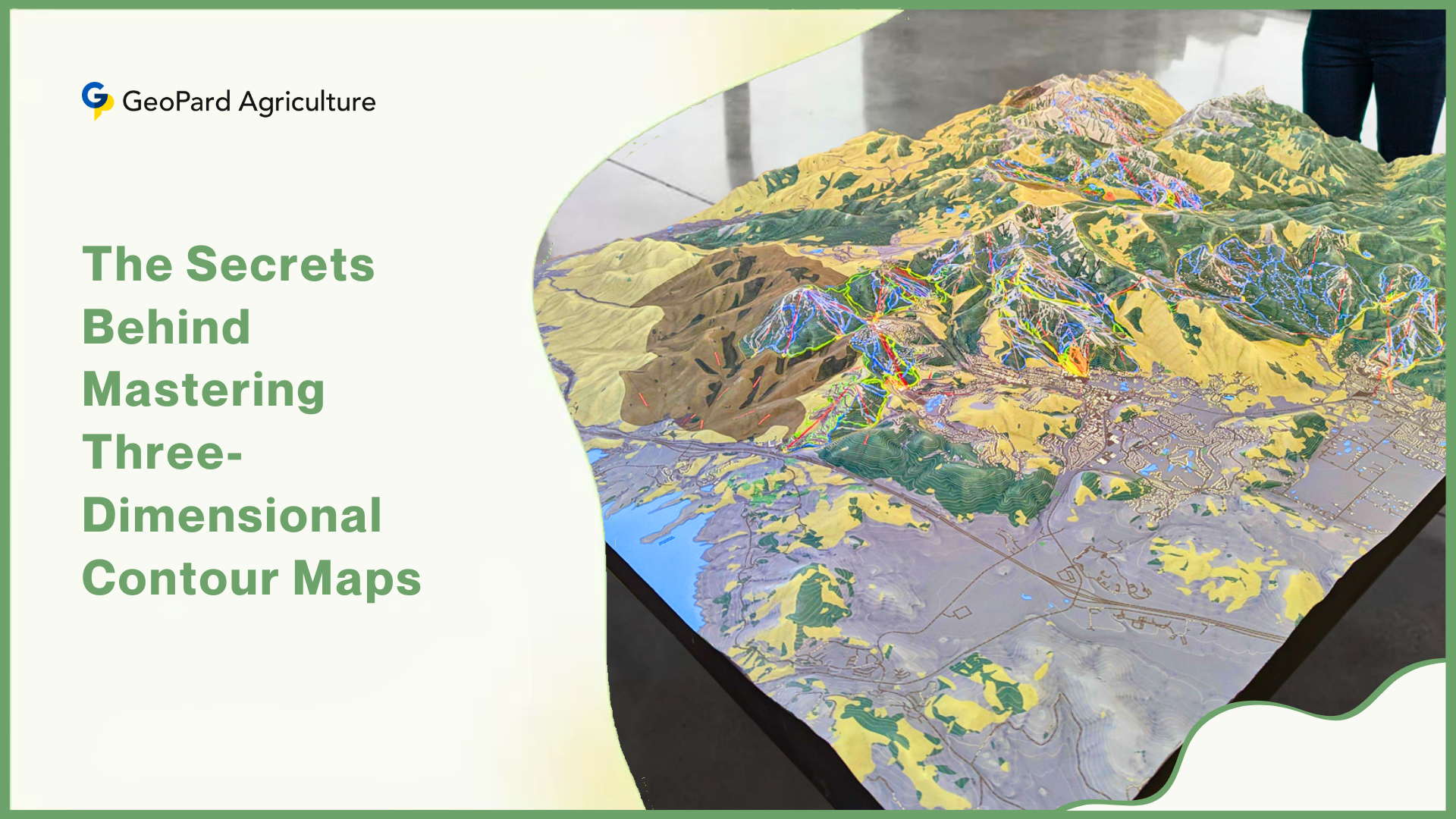
The Secrets Behind Mastering Three-Dimensional Contour Maps

Three-dimensional contour maps are more than just lines on paper—they are gateways to understanding the shape of our world. These maps, which use curved lines to represent elevation, challenge us to imagine hills, valleys, and slopes in three dimensions.

For many, this skill feels intuitive, but for others, it requires careful practice. A 1998 study by Margaret Lanca explored how people mentally convert flat contour maps into vivid 3D landscapes, while also investigating whether men and women approach this task differently.

Recent advancements in technology and psychology have expanded our understanding of these processes, offering new insights into how we learn and remember terrain.

The Challenge of Reading Contour Maps

Contour maps are 2D diagrams that use lines (contours) to represent elevation. Each line corresponds to a specific height above sea level, and the spacing between lines indicates the steepness of a slope. For example, tightly packed lines suggest a cliff, while widely spaced lines represent flat terrain.

These maps are essential in fields like geography, geology, and urban planning because they provide a compact way to visualize complex landscapes.

However, interpreting them requires terrain visualization, the ability to mentally reconstruct a 3D model of the land from 2D lines.

The Challenge of Reading Contour Maps

Imagine looking at a series of concentric circles on paper and picturing them as a hill or a crater. This mental leap is not easy, and researchers have long debated how people achieve it.

Some argue that forming a 3D mental image is essential for accurate map reading. This process, often called spatial processing, involves mentally rotating or “slicing” the map to infer cross-sectional views of the terrain.

Others believe verbal-analytical strategies—such as memorizing labels (e.g., “peak” or “valley”) or analyzing slope angles step-by-step—can work just as well. Lanca’s study aimed to resolve this debate while also exploring gender differences in strategy use.

Science Behind Three-Dimensional Contour Map Interpretation

Three-Dimensional Contour Maps begin as 2D diagrams using lines (contours) to represent elevation. Each line corresponds to a specific height, with spacing indicating slope steepness.

Translating these 2D lines into a mental 3D landscape—Three-Dimensional Contour Map Visualization—is a complex cognitive skill.

Learners often struggle with this process, as it requires spatial reasoning to infer hills, valleys, and slopes from abstract lines. Prior research debated two strategies:

  1. Spatial Processing: Mentally rotating or “slicing” the map to construct a 3D model.
  2. Verbal-Analytical Processing: Using labels, step-by-step analysis, or mnemonics.

Lanca’s study sought to resolve whether Three-Dimensional Contour Map Visualization is essential for accuracy or if verbal strategies suffice. She also examined gender differences, given men’s historical edge in spatial tasks like mental rotation.

How the Study Was Conducted

Lanca recruited 80 participants—40 men and 40 women—from the University of Western Ontario. None had prior experience with contour maps, ensuring that the results reflected genuine learning rather than existing knowledge. The participants were divided into four groups.

  1. Contour → Contour: Studied 2D maps, recognized 2D maps.
  2. Contour → Landsurface: Studied 2D maps, recognized 3D landsurface maps.
  3. Landsurface → Landsurface: Studied 3D maps, recognized 3D maps.
  4. Landsurface → Contour: Studied 3D maps, recognized 2D maps.

The first group studied traditional 2D contour maps and later took a recognition test with the same type of maps. The second group studied 2D contour maps but were tested on 3D drawings called landsurface maps, which show terrain in a more visual, realistic style.

Map Study and Recognition Groupings

The third group studied landsurface maps and were tested on the same format, while the fourth group studied landsurface maps and were tested on 2D contour maps. Each participant completed two tasks.

First, they took a cross-section test. After studying a map for 40 seconds, they answered questions about the terrain’s profile along specific lines. For example, they might be shown three cross-sectional diagrams and asked which one matched a line drawn across the map.

Second, they took an incidental recognition test, where they viewed pairs of maps—one they had studied and one new—and identified the familiar one.

Reaction times and accuracy were recorded for both tasks. Afterward, participants described the strategies they used, such as mentally rotating the map or memorizing labels.

3D Visualization in Contour Map Findings

The results revealed clear patterns. Participants who studied 3D landsurface maps performed better on the cross-section test, scoring an average of 58% accuracy compared to 45% for those who studied 2D contour maps. This suggests that 3D visuals make it easier to infer the shape of the terrain.

However, reaction times were similar for both groups—around 10 seconds per question—indicating that once a map was understood, answering questions took the same effort regardless of format.

Gender differences emerged in the recognition tests. Men outperformed women when tested on the same format they had studied.

  • Contour → Landsurface Group: Men scored 62.5% (SD = 8.1) vs. women’s 47.5% (SD = 9.7).
  • Contour → Contour Group: Men recognized 84.2% (SD = 10.7) of maps vs. women’s 73.3% (SD = 17.5).

For example, men who studied 2D contour maps recognized 84% of them later, compared to 73% for women. Men also excelled when tested on 3D landsurface maps after studying 2D contour maps, scoring 63% accuracy versus 48% for women.

These differences suggest that men relied more on spatial processing, building 3D mental images, while women used verbal or analytical strategies. Post-test reports supported this: men described “imagining the entire hill and rotating it,” while women focused on “counting contour lines” or “naming valleys.”

Long-term memory also favored 3D processing. Men who used spatial strategies showed stronger recognition of maps they had answered correctly in the cross-section test.

For example, they recognized 74% of landsurface maps linked to correct cross-section answers, compared to 52% for incorrect ones. Women, however, showed no such difference, implying their strategies—while effective for the test—did not create lasting mental models.

Recent Advancements in Spatial Cognition and Technology

Since Lanca’s study, new research has deepened our understanding of how people visualize 3D maps. For instance, a 2021 meta-analysis confirmed that spatial skills can be improved with practice, reducing gender gaps.

Women who trained for 10 hours on mental rotation tasks improved their accuracy by 30–40%, showing that these skills are not fixed. Modern tools like virtual reality (VR) and augmented reality (AR) have also transformed map learning.

Recent Advancements in Spatial Cognition and Technology

A 2022 study found that students using VR to “walk through” terrain scored 65% higher on tests than those using traditional 2D maps. These tools allow users to interact with 3D landscapes, making abstract concepts like elevation and slope more tangible.

Advancements in artificial intelligence (AI) have further changed the field. Programs like Esri’s ArcGIS Pro now generate 3D terrain models from 2D contour maps in seconds, helping professionals predict flood risks or plan infrastructure without relying solely on manual visualization.

Brain imaging studies, such as a 2020 project using fMRI scans, have shown that spatial processing activates areas of the brain linked to spatial awareness, while verbal strategies engage regions associated with language. This aligns with Lanca’s findings that men and women often use different parts of the brain for the same task.

Gender Differences in Map Reading Strategies

The gender differences observed in Lanca’s study align with broader research on spatial cognition. Men often excel in tasks requiring mental rotation, such as imagining how an object looks when turned sideways.

This skill is closely tied to 3D visualization, which explains their advantage in recognizing maps. Women, on the other hand, tend to use verbal-analytical strategies, breaking down problems into smaller steps or relying on labels.

Both approaches worked for the cross-section test, but spatial processing gave men an edge in long-term memory. These differences are not about ability but about strategy.

For instance, a woman might excel at remembering the names of landmarks on a map, while a man might better recall the overall shape of a hill.

This has important implications for education and training. If instructors focus only on one method—say, spatial visualization—they might overlook students who thrive with verbal or analytical techniques.

Gender Differences in Map Reading Strategies

These differences are not about ability but about cognitive style, or preferred ways of thinking. However, they have real-world implications. A 2023 report found that women make up only 28% of the workforce in fields like geology and cartography, which rely heavily on spatial skills.

Organizations like Girls Who Code and GeoFORCE are working to bridge this gap by introducing young women to 3D visualization tools and spatial training programs.

Contour Map Applications in Education

Lanca’s findings, combined with modern technology, offer valuable lessons for educators and professionals. First, integrating 3D tools early in education can help beginners grasp contour maps faster.

For example, a geography teacher might show students a 3D model of a mountain before introducing its 2D contour map. Virtual reality apps now allow students to “explore” terrain in immersive environments, turning abstract lines into interactive landscapes.

Second, training programs should encourage multiple strategies. Spatial learners might benefit from exercises like mentally rotating maps or building clay models, while verbal learners could use mnemonics or descriptive labels. For instance, a simple phrase like “Close contours mean cliffs!” helps students remember how line spacing relates to slope steepness.

Third, addressing gender gaps in spatial training is crucial. Women entering fields like engineering or geology might benefit from early exposure to 3D tools. Activities like using AR apps to “walk through” virtual terrain can build confidence and spatial awareness.

Finally, professionals who rely on maps—such as surveyors or emergency responders—can improve their skills with mental rotation drills.

For example, visualizing how a hill would look from different angles enhances efficiency in tasks like flood modeling or disaster planning. In Bangladesh, emergency teams now use AI-powered 3D maps to predict flood patterns, reducing decision-making time by 40% during crises.

Limitations and Unanswered Questions

While Lanca’s study provided important insights, it had limitations. For example, all participants were novices, so experts like geologists might process maps differently due to years of experience.

Additionally, the 40-second study time per map does not reflect real-world learning, where people often spend hours analyzing terrain.

Recent research has explored these gaps. A 2021 study found that combining spatial imagery with verbal descriptions improved retention by 25% in geography students.

Another project in 2023 showed that older adults experience a 20% decline in mental rotation accuracy, highlighting the need for lifelong spatial training.

Interactive tools like VR are also being tested in classrooms, with early results showing that students learn contour maps 50% faster using immersive simulations compared to textbooks.

Zaključek

Margaret Lanca’s research reminds us that contour maps are more than lines—they are invitations to explore the world in three dimensions. While spatial processing isn’t strictly necessary for basic tasks, it unlocks stronger memory and efficiency, especially in professions that depend on precise terrain analysis.

Gender differences in strategy underscore the importance of flexible teaching methods. By embracing 3D tools, encouraging diverse learning styles, and addressing gaps in spatial training, we can help everyone—from students to professionals—navigate the complexities of contour maps with confidence.

In a world where maps guide everything from hiking trails to disaster response plans, understanding how we think about terrain is as vital as the terrain itself. Whether you’re a visual learner who “sees” hills in your mind or an analytical thinker who breaks down slopes step-by-step, the goal remains the same: to turn lines on paper into a living, three-dimensional landscape.

Referenca: Lanca, M. (1998). Three-dimensional representations of contour maps. Contemporary educational psychology, 23(1), 22-41. https://doi.org/10.1006/ceps.1998.0955

Optimizing Soy Protein Practices for Higher Nutrient Efficiency in Poultry Supply Chains

The U.S. soybean industry stands at a crossroads, caught between the economics of commodity production and the untapped potential of value-added soy protein products.

While the global market for soybean meal continues to grow—projected to reach $157.8 billion by 2034—an oversupply of conventional soybean meal has driven prices down, creating a systemic barrier to adopting nutritionally superior, high-efficiency soy protein concentrates.

These value-added products, proven to improve Feed Conversion Ratios (FCR) in poultry by up to 5%, offer significant economic and sustainability benefits, yet struggle to compete in a market structured around bulk commodity trading.

However, the key challenge lies in redesigning supply chain incentives to make value-added soy protein economically viable for farmers, processors, and poultry producers. Meanwhile, technology plays a pivotal role in this transition.

Precision agriculture tools, such as GeoPard’s protein analysis and Nitrogen Use Efficiency (NUE) modules, enable farmers to optimize crop quality while meeting the precise nutritional demands of poultry feed.

Introduction to Value-Added Soy Protein

In an era where sustainability and efficiency are reshaping global agriculture, value-added soy protein products have emerged as a transformative solution for poultry production. With global poultry meat demand projected to grow at a 4.3% compound annual growth rate (CAGR) from 2024 to 2030, optimizing feed efficiency has become paramount.

Conventional soybean meal, a byproduct of oil extraction containing 45–48% protein, is increasingly overshadowed by advanced alternatives like soy protein concentrates (SPC) and modified soy protein concentrates (MSPC).

These value-added products undergo specialized processing—such as aqueous alcohol washing or enzymatic treatments—to achieve protein levels of 60–70%, while eliminating anti-nutritional factors like oligosaccharides.

Introduction to Value-Added Soy Protein

Recent innovations, including new enzyme blends (e.g., protease-lipase combinations) now reduce processing costs by 15–20% while improving protein solubility.

And companies like Novozymes are deploying machine learning to tailor enzyme treatments for specific poultry growth stages, maximizing nutrient absorption and boosting digestibility and amino acid availability. The benefits for Value-Added Soy Protein poultry feed are transformative:

1. Improved Feed Conversion Ratio (FCR):

FCR, a measure of how efficiently livestock convert feed into body mass, is critical for profitability and sustainability.

Studies demonstrate that replacing 10% of regular soybean meal with MSPC reduces FCR from 1.566 to 1.488—a 5% improvement—meaning less feed is required to produce the same amount of meat. This translates to lower costs and reduced environmental footprints.

2. Sustainability Gains:

Enhanced FCR reduces land, water, and energy use per kilogram of poultry produced. For example, a 5% FCR improvement in a mid-sized US poultry farm (producing 1 million birds annually) could save ~750 tons of feed yearly.

Beyond cost savings, the environmental benefits are significant: a 5% FCR improvement saves 1,200 acres of soybean cultivation annually per farm, easing pressure on land use and deforestation.

3. Animal Health Benefits:

Animal health outcomes further bolster the case for value-added soy. Trials in Brazil (2023) revealed that MSPC-fed broilers had 30% lower Enterobacteriaceae loads in their guts exhibiting stronger immunity, reducing diarrhea incidence and reliance on antibiotics—a critical advantage as regions like the EU tighten regulations on livestock antimicrobials.

European farms using MSPC reported a 22% decline in prophylactic antibiotic use in 2024, aligning with consumer demands for safer, more sustainable meat production.

Value-Added Soy Protein Market Dynamics & Challenges

Despite these advantages, value-added soy products face fierce headwinds in a market dominated by cheap, commoditized soybean meal. The US soybean meal market being valued at $98.6 billion in 2024 and projected to grow at a 4.8% CAGR to $157.8 billion by 2034.

Factor betweem Conventional Soybean Meal and Value-Added Soy Protein

However, this growth is underpinned by oversupply dynamics and cost-centric industry that depress prices and stifle innovation.

  • Global soybean meal production hit a record 250 million tons in 2024, driven by booming harvests in the U.S. and Brazil.
  • Prices plummeted to $313/ton in 2023 (USDA), making conventional meal irresistibly cheap for cost-sensitive poultry producers.
  • Conventional soybean meal, which constitutes over 65% of US animal feed ingredients, remains the default choice despite its nutritional limitations.

1. The Oversupply Problem

The U.S. soybean meal market is mired in a paradox of oversupply and missed opportunities. Despite producing a record 47.7 million metric tons (MMT) of soybean meal in 2023—a 4% increase from 2022—prices remain depressed, averaging $350–380/MT, still 20% below pre-2020 levels. This surplus stems from two key drivers:

i). Expanded Domestic Crushing: This glut stems from aggressive domestic crushing, driven by soaring demand for soybean oil (up 12% year-over-year for biofuels and food processing), which floods the market with meal byproduct. Stockpiles, though slightly reduced to 8.5 MMT in 2023 from 10.8 million in 2021, remain 30% above the decade average.

ii). Export Competition: Meanwhile, global competitors like Brazil and Argentina exacerbate the imbalance: Brazil’s 2023/24 soybean crop hit 155 MMT, with meal exports priced 10–15% below U.S. equivalents due to lower production costs, while Argentina’s meal exports rebounded 40% to 28 MMT post-drought, intensifying price pressures.

For value-added soy protein products, this oversupply is a double-edged sword. While conventional soybean meal becomes cheaper, processing costs for value-added variants like soy protein concentrate (SPC) remain stubbornly high.

2. Structural Barriers

Beyond cyclical oversupply, systemic flaws in the U.S. agricultural framework stifle innovation in value-added soy products. These barriers are entrenched in policy, market structures, and cultural practices, creating a self-reinforcing cycle that prioritizes volume over nutritional quality.

i). Outdated USDA Grading Standards

The USDA’s grading system for soybeans, last updated in 1994, remains fixated on physical traits like test weight (minimum 56 lbs/bushel for #1 grade) and moisture content, while ignoring nutritional metrics such as protein concentration or amino acid balance.

Value-Added Soy Protein Market Dynamics & Challenges

Without protein-based pricing, U.S. farmers lose 1.2–1.8 billion annually in potential premiums, as per a 2024 United Soybean Board analysis. This disconnect has tangible consequences:

  • Protein Variability: U.S. soybeans average 35–38% protein, but newer varieties (e.g., Pioneer’s XF53-15) can reach 42–45%—a difference erased in commodity markets where all soybeans are priced equally.
  • Farmer Disincentives: A 2023 Purdue University study found that 68% of Midwest soybean growers would adopt high-protein varieties if premiums existed. Currently, only 12% do so, citing lack of market rewards.
  • Global Contrast: The EU’s Common Agricultural Policy (CAP) allocates €58.7 billion annually (2023–2027), with 15% tied to sustainability and quality benchmarks. Dutch farmers, for example, receive subsidies for soybeans with protein content above 40%, driving adoption of nutrient-dense crops.

ii). The Commodity Trap

Soybean meal is traded as a bulk commodity, with feed mills and poultry integrators prioritizing cost per ton over cost per gram of digestible protein. This mindset is reinforced by:

  • Contract Farming: Long-term agreements between poultry giants and feed suppliers often lock in low-cost, standardized meal specifications.
  • Lack of Transparency: Without standardized nutritional labeling, buyers cannot easily compare protein quality across suppliers.

A 2023 National Chicken Council report revealed that 83% of U.S. broiler production is governed by contracts mandating “lowest-cost” feed formulations. Tyson Foods, for instance, saved $120 million annually by switching to generic soybean meal in 2022, despite a 4.8% FCR deterioration in its poultry flocks.

Furthermore, with soybean meal prices at 380–400/ton (July 2024), even a $50/ton premium for high-protein concentrates makes them nonviable for cost-driven buyers.

One Iowa feed mill manager noted:

“Our clients care about cost per ton, not cost per gram of protein. Until that changes, premium products won’t gain traction.”

Meanwhile, Only 22% of U.S. soybean meal sellers disclose protein digestibility scores (PDIAAS), compared to 89% in the EU, as per a 2024 International Feed Industry Federation survey.

poultry farms using premium soy proteins

A 2023 University of Arkansas trial showed poultry farms using 60% soy protein concentrate achieved 1.45 FCR vs. 1.62 for standard meal—but without labeling, buyers cannot verify claims. Moreover, a study by the National Oilseed Processors Association (NOPA) found that 87% of U.S. soybean farmers would grow high-protein varieties if grading standards rewarded them.

Meanwhile, feed trials in Brazil show that poultry farms using premium soy proteins achieve $1.50/ton savings in feed costs due to improved FCR—a case for recalibrating cost-benefit analyses industry-wide. This creates a vicious cycle of:

  • Farmers prioritize high-yield, low-protein soybeans to maximize bushels per acre.
  • Processors focus on volume-driven crushing, not niche value-added lines.
  • Poultry Producers opt for cheaper meal, perpetuating reliance on inefficient feed.

Breaking this cycle requires dismantling structural barriers—a challenge that demands policy reforms, market reeducation, and technological innovation.

Strategies for Incentive Redesign F0r Value-Added Soy Protein

To shift the U.S. soybean market toward high-protein, value-added production, a multi-stakeholder incentive framework is needed. Below are proven strategies, backed by 2024 market data, policy insights, and technological innovations, to drive adoption of premium soy protein in poultry feed.

1. Quality Grading Systems

The USDA’s Federal Grain Inspection Service (FGIS) grading system remains anchored to physical traits like test weight (minimum 54 lbs/bushel) and foreign material limits (≤1%), with no consideration for nutritional value. To incentivize value-added soy protein, reforms must prioritize nutritional quality:

a. Protein Content: Current U.S. soybeans average 35–40% protein, while high-value varieties (e.g., Prolina®) reach 45–48%. A 1% increase in protein content can raise soybean meal value by 2–4/ton, translating to 20–40M annually for U.S. farmers (USDA-ERS, 2023).

b. Amino Acid Profiles: Lysine and methionine are critical for poultry FCR. Modern hybrids like Pioneer® A-Series soybeans offer 10–15% higher lysine content. Research shows diets with optimized amino acids improve broiler FCR by 3–5% (University of Illinois, 2023).

c. Digestibility: Standardized methods like in vitro ileal digestibility assays (IVID) are gaining traction. For example, soy protein concentrate (SPC) achieves 85–90% digestibility vs. 75–80% for conventional meal (Journal of Animal Science, 2024).

value-added soy protein Quality Grading Systems

In 2013, Brazil restructured tax credits to favor soy meal and oil exports over raw beans, boosting value-added exports by 22% within two years. The U.S. could replicate this via tax rebates for farmers growing high-protein soy, estimated to boost producer margins by 50–70/acre.

2. Technological Enablers: GeoPard’s Precision Tools

GeoPard’s agricultural software offers real-time protein analysis modules, using hyperspectral imaging and machine learning to map protein variability across fields. Hyperspectral sensors analyze crop canopy reflectance to predict protein content with 95% accuracy.

  • In a 2023 Illinois pilot, farmers using GeoPard’s insights increased protein yields by 8% through optimized planting density and nitrogen timing.
  • A Nebraska cooperative achieved 12% higher protein soybeans in 2024 by integrating GeoPard’s zoning maps with variable-rate seeding (GeoPard Case Study).
  • Furthermore, GeoPard’s NUE algorithms reduced nitrogen waste by 20% in a 2024 Iowa pilot, while maintaining protein levels. This aligns with USDA’s goal to cut ag-related nitrogen runoff by 30% by 2030.

Redesigning U.S. soybean grading around nutritional metrics—supported by GeoPard’s precision tools and global policy models—can unlock 500M–700M in annual value-added revenue by 2030.

By aligning incentives with poultry industry needs, farmers gain premium pricing, processors secure quality inputs, and the environment benefits from efficient resource use. The time for a protein-centric revolution in soy grading is now.

3. Certification & Premium Markets

The U.S. soy market lacks a standardized certification for nutritional quality, despite clear demand from poultry producers for higher-protein, digestible soybean meal. While USDA Organic and Non-GMO Project Verified labels address production methods, a “High-Protein Soy” certification could fill this gap by ensuring:

  1. Minimum Protein Thresholds (≥45% crude protein, with premium tiers for ≥50%).
  2. Amino Acid Profiles (Lysine ≥2.8%, Methionine ≥0.7%) to meet poultry feed formulations.
  3. Sustainability Benchmarks (Nitrogen Use Efficiency ≥60%, verified via tools like GeoPard).

In 2024, the EU allocated €185.9 million to promote sustainable agri-food products, emphasizing protein-rich crops to reduce reliance on imported soy (European Commission). Similarly, the U.S. could channel Farm Bill funds into marketing campaigns for certified high-protein soy, targeting poultry integrators like Tyson Foods and Pilgrim’s Pride. Certifications already drive premiums:

  • Certified non-GMO soybeans already command a 4 per bushel premium (USDA AMS, 2023).
  • A “High-Protein” label could add another 3 premium, incentivizing farmers to adopt precision farming tools like GeoPard.

4. Government & Policy Levers

The USDA’s Value-Added Producer Grant (VAPG) program is a critical tool for incentivizing high-value soy protein production. In 2024, $31 million was allocated, with grants offering:

  1. Up to $250,000 for feasibility studies and working capital.
  2. Up to $75,000 for business planning (USDA Rural Development, 2024).

For example, a Missouri farmer cooperative secured a $200,000 VAPG grant in 2023 to establish a soy protein concentrate (SPC) processing facility. By shifting from commodity soybean meal to SPC (65% protein vs. 48%), local poultry farms reported:

  • 12% reduction in feed costs due to improved FCR (1.50 → 1.35).
  • 18% higher profit margins per bird.

Meanwhile, the 2023 Farm Bill earmarked $3 billion for climate-smart commodities, creating a direct pathway to subsidize:

  • Precision nitrogen management (via GeoPard’s NUE modules)
  • High-protein soy cultivation (rewarding >50% protein content)

A groundbreaking 2024 initiative involving 200 Iowa farms demonstrated the transformative potential of integrating GeoPard’s precision agriculture tools into soybean production. By adopting the company’s protein mapping and Nitrogen Use Efficiency (NUE) analytics, participating farmers achieved remarkable outcomes that underscore the economic viability of value-added soy production:

  • $78/acre savings on fertilizer costs
  • 6.2% higher protein content in soybeans (vs. regional avg.)
  • $2.50/bushel premium from poultry feed buyers (Iowa Soybean Association Report, 2024)

The EU’s CAP Eco-Schemes pay farmers €120/ha for protein crop cultivation. The US could replicate this via the Farm Bill’s “Protein Crop Incentive Program”. Furthermore, Brazil’s 2024 tax overhaul now offers 8% export tax rebates for soy protein (vs. 12% for raw beans).

Similarly, the US Soy Innovation Tax Credit (SITC), proposed in Illinois (2024), would give 5% state tax credits for SPC production. Moreover, Minnesota’s Ag Innovation Zone Program (2023) funded $4.2 million in soy processing upgrades, leading to:

  • 9% more SPC output
  • $11 million in new poultry contracts (MN Dept. of Ag, 2024)

5. Stakeholder Education And Economic Analysis: Quality vs. Commodity Soy

The adoption of value-added soy protein in poultry feed hinges on educating stakeholders—farmers, processors, and feed mills—about its long-term economic and environmental benefits. Recent initiatives and research underscore the transformative potential of targeted education programs, particularly when paired with precision agriculture tools like GeoPard’s modules.

1. Midwest Case Study: The American Soybean Association’s 2023 workshops demonstrated how high-protein soy could yield 70 more per acre despite higher input costs. Farmers using GeoPard’s modules reported 15% lower nitrogen waste, offsetting expenses.

2. Digital Resources: Platforms like the Soybean Research & Information Network (SRIN) provide free webinars on optimizing protein content through precision agriculture. it hosted 15 webinars in 2023–2024, reaching 3,500+ farmers, with 68% reporting improved understanding of protein optimization techniques.

3. Iowa State University: Researchers developed a feed efficiency model showing that a 1% improvement in FCR (e.g., from 1.5 to 1.485) saves poultry producers $0.25 per bird (ISU Study, 2023). Partnering with GeoPard, they now offer training on linking soy protein metrics to FCR outcomes.

4. Purdue University: Trials with modified soy protein concentrates (MSPC) showed 7% faster broiler growth rates, providing data to persuade feed mills to reformulate rations (Poultry Science, 2024). Feed mills that reformulated rations with MSPC reported 12% higher profit margins due to reduced feed waste and premium pricing for “efficiency-optimized” poultry products.

6. Value-Added Soy Protein Economic Viability & Implementation

The adoption of value-added soy protein products hinges on their economic viability compared to conventional soybean meal. However, value-added soy products cost more to produce, their poultry feed advantages deliver long-term savings.

Soybean Meal Types Cost and Nutritional Metrics

Data sources: USDA ERS, GeoPard Analytics, 2024.

  • A farm raising 1 million broilers annually saves $23,400 in feed costs with SPC.
  • Over 5 years, this offsets the $200/ton premium for SPC, justifying upfront investment.

A 2023 Iowa State University trial found that replacing 10% of regular soybean meal with SPC in broiler diets reduced feed costs by $1.25 per bird over six weeks, driven by faster growth rates and lower mortality.

  1. Protein Efficiency: While SPC costs 30–40% more per ton, its higher protein content (60–70%) narrows the gap in cost per kg of protein.
  2. FCR Savings: A 5% FCR improvement reduces feed intake by 120–150 kg per 1,000 birds, saving 70 per ton of meat (assuming feed costs of $0.30/kg).
  3. Break-Even Point: At current prices, poultry producers break even on SPC adoption if FCR improves by ≥4%, underscoring its viability for large-scale operations.

Global Case Studies: Lessons in Incentivizing Value-Added Soy Production

From Brazil’s export tax reforms to the EU’s precision agriculture subsidies, these case studies demonstrate that shifting to value-added soy production is not just possible, but economically imperative in an era of volatile feed markets and tightening sustainability standards.

1. Brazil: Tax Incentives for Value-Added Exports

In 2013, Brazil overhauled its tax policies to prioritize exports of processed soy products over raw beans, aiming to capture higher value in global markets.

The government eliminated domestic tax credits for soybean processors and reallocated them to exporters of soy meal and oil. This policy shift was designed to compete with Argentina, then the world’s largest soy meal exporter. Some key impact of this policy are:

  • Export Surge: By 2023, Brazil’s soy meal exports reached 18.5 million metric tons (MMT), a 72% increase from 2013 levels (10.7 MMT). Soy oil exports also grew by 48% over the same period (USDA FAS).
  • Market Dominance: Brazil now supplies 25% of global soy meal exports, rivaling Argentina (30%) and the U.S. (15%) (Oil World Annual 2024).
  • Domestic Growth: Tax incentives spurred investments in processing infrastructure. Crushing capacity expanded by 40% between 2013–2023, with 23 new plants added (ABIOVE).

Furthermore, in Mato Grosso, Brazil’s top soy-producing state, processors like Amaggi and Bunge capitalized on tax breaks to build integrated facilities. These plants now produce high-protein soy meal (48–50% protein) for poultry feed in Southeast Asia, generating $1.2 billion in annual revenue for the state (Mato Grosso Agricultural Institute).

Hence, Brazil’s model demonstrates how targeted tax policies can shift market behavior. The U.S. could adopt similar incentives, such as tax credits for soy protein concentrate (SPC) production, to counter commodity oversupply.

2. EU: CAP & Quality-Driven Farming

The EU’s Common Agricultural Policy (CAP) has long prioritized sustainability and quality over sheer volume. The 2023–2027 CAP reforms tie €387 billion in subsidies to eco-schemes, including protein crop cultivation and nitrogen efficiency. Some of the key mechanism are:

Impact of EU Agricultural Policies on Soy and Sustainability

1. Protein Crop Premiums

Under the EU’s 2023–2027 Common Agricultural Policy (CAP), farmers growing protein-rich crops like soybeans or legumes (e.g., peas, lentils) receive €250–€350 per hectare in direct payments, compared to €190/ha for conventional crops like wheat or corn. This premium, funded through the CAP’s €387 billion budget, aims to:

  • Reduce reliance on imported soy (80% of EU soy is imported, mostly GM from South America).
  • Improve soil health: Legumes fix nitrogen naturally, cutting synthetic fertilizer use by 20–30% (EU Commission, 2024).
  • Boost protein self-sufficiency: EU soy production rose by 31% since 2020 (Eurostat).

The financial gap between protein crops (€250–350/ha) and cereals (€190/ha) incentivizes farmers to switch. For example, a 100-hectare farm growing soy earns €25,000–€35,000 annually vs. €19,000 for cereals—a 32–84% premium.

2. Sustainability-Linked Payments:

30% of direct payments are contingent on practices like crop rotation and reduced synthetic fertilizers. €185.9 million allocated in 2024 to promote “sustainable EU soy” in animal feed (EU Agri-Food Promotion Policy).

  • Synthetic fertilizer use in EU soy farming dropped by 18% since 2021.
  • Poultry feed trials using CAP-compliant soy showed 4.2% better FCR.

3. France’s Soy Excellence Initiative

France’s Soy Excellence Initiative, spearheaded by agricultural cooperatives like Terres Univia (representing 300,000 farmers), has redefined soy production by prioritizing protein quality. The program introduced a protein-based grading system, requiring a minimum of 42% protein content for soybeans destined for poultry feed—surpassing the EU average of 38–40%.

Farmers meeting this standard earn a €50/ton premium (€600/ton vs. €550/ton for standard soy), creating a direct financial incentive to adopt advanced practices like precision nitrogen management and high-protein seed varieties. The results, tracked from 2021 to 2024, have been transformative:

  • Protein yields surged by 12%, while domestic soy production grew by 18%, rising from 440,000 tons in 2020 to 520,000 tons in 2023.
  • This growth displaced 200,000 tons of GM soy imports, reducing reliance on volatile global markets.
  • The poultry sector also benefited, with feed costs dropping by €8–10/ton due to improved Feed Conversion Ratios (FCR), as reported by the French Poultry Association.

For the U.S., this France’s model offers a blueprint to shift from commodity-driven systems to value-added agriculture.

By replicating this approach—through protein-based USDA contracts (e.g., 10–15/ton premiums for soy exceeding 45% protein) and policies to curb reliance on GM imports (the U.S. poultry sector imports 6.5 million tons annually)—farmers could align production with poultry nutrition needs while stabilizing costs and enhancing sustainability.

3. Germany: GeoPard’s NUE in Action

Precision agriculture tools like GeoPard’s Nitrogen Use Efficiency (NUE) modules are revolutionizing soy quality optimization. A 2023 pilot with John Deere dealership LVA (Germany) demonstrated how data-driven farming can enhance protein yields while cutting costs.

  • GeoPard’s software analyzed satellite imagery, soil sensors, and historical yield data to create variable-rate nitrogen maps.
  • 22% reduction in nitrogen use (from 80 kg/ha to 62 kg/ha).
  • Protein content increased by 4% (from 40% to 41.6%) due to optimized nutrient uptake.
  • €37/ha in fertilizer costs, with no yield loss (LVA-John Deere Report).

Precision agriculture tools like GeoPard’s Nitrogen Use Efficiency (NUE) modules

Moreover, GeoPard’s NUE tool is now used on 15,000+ hectares of German soy farms, improving compliance with EU sustainability standards. In the U.S., similar adoption could help farmers meet emerging “low-carbon feed” demands from poultry giants like Tyson and Pilgrim’s Pride.

Synergy Between Tech and Trends: Role of GeoPard’s Precision Tools

The success of value-added soy protein production hinges on precise agricultural management – a challenge perfectly addressed by GeoPard’s cutting-edge precision farming technology. The company’s advanced analytics platform provides farmers with two game-changing capabilities for protein optimization:

1. Protein Content Analysis: Sensor-Driven Insights for Premium Soy

Modern agriculture demands precision, and GeoPard’s protein analysis tools are revolutionizing how farmers cultivate high-protein soybeans. By integrating satellite imagery, drone-mounted sensors, and Near-Infrared (NIR) spectroscopy, GeoPard provides real-time insights into crop health and protein levels pre-harvest.

i. NDVI & Multispectral Imaging:

  • Monitors plant vigor and nitrogen uptake, correlating with protein synthesis.
  • Example: Trials in Iowa (2023) showed a 12% increase in protein content by adjusting irrigation and fertilization based on GeoPard’s NDVI maps.

ii. NIR Spectroscopy:

  • Non-destructive, in-field protein measurement (accuracy: ±1.5%).
  • Farmers can segment fields into zones, harvesting high-protein soy separately for value-added markets.

iii. Predictive Analytics:

  • Machine learning models forecast protein levels 6–8 weeks pre-harvest, enabling mid-season corrections.
  • Case Study: An Illinois cooperative used GeoPard’s alerts to optimize sulfur application, boosting protein from 43% to 47% in 2023.

2. Nitrogen Use Efficiency (NUE): Cutting Waste, Boosting Quality

GeoPard’s NUE modules tackle one of agriculture’s biggest challenges: balancing crop nutrition with environmental stewardship. Here are some of its key features to improve crop monitoring and value addition:

i. Variable Rate Application (VRA):

  • GPS-guided equipment applies nitrogen only where needed, reducing overuse.
  • Example: A John Deere dealer in Germany (LVA) achieved 20% less nitrogen use while maintaining yields, as per GeoPard’s NUE case study.

ii. Soil Health Monitoring:

  • Sensors track organic matter and microbial activity, optimizing fertilizer schedules.

iii. Certification Readiness:

  • GeoPard’s dashboards generate compliance reports for sustainability certifications (e.g., USDA Climate-Smart, EU Green Deal).

GeoPard’s precision agriculture technology delivers significant environmental and economic benefits for farmers. By optimizing nitrogen application through its advanced analytics platform, the system achieves a 15–25% reduction in nitrogen runoff, directly contributing to compliance with EPA water quality standards.

On the financial side, farmers realize substantial cost savings of $12–18 per acre on fertilizer expenditures, while the return on investment for GeoPard subscriptions typically occurs within just 1–2 growing seasons.

Furthermore, a cooperative in Nebraska used GeoPard’s protein mapping to segregate high-protein (50%+) soybeans for value-added processing. This generated $50/ton premiums compared to commodity prices.

3. The Synergy Between Tech and Trends

While commodity markets still dominate, the quiet rise of tech-savvy farmers and eco-conscious consumers is rewriting the rules. As one Iowa farmer noted: “GeoPard isn’t just about cutting costs—it’s about growing what the future market wants.”

The convergence of GeoPard’s ag-tech innovations and shifting consumer preferences creates a rare opportunity:

Farm-to-Fork Traceability: GeoPard’s blockchain-integrated modules allow poultry producers to verify soy protein content and nitrogen efficiency, enabling “farm-to-feed” transparency. Pilgrim’s Pride recently piloted this system, boosting sales of its “Net-Zero Chicken” line by 34% (WattPoultry, 2024).

Policy Momentum: The 2024 Farm Bill includes a $500 million fund for precision agriculture adoption, with GeoPard-style tools eligible for subsidies (Senate Agriculture Committee, 2024).

Consumer Trends: The Silent Driver of “Climate-Smart” Poultry

While farmers and processors navigate complex supply chain economics, shifting consumer preferences are quietly reshaping the poultry industry. According to a 2024 McKinsey report, 64% of U.S. consumers now prioritize sustainability labels when purchasing poultry, with terms like “climate-smart” emerging as a powerful differentiator.

This trend is fueling a surge in demand for poultry raised on high-efficiency, low-carbon feed, creating new opportunities—and pressures—for producers to adopt value-added soy protein.

1. The Rise of Carbon-Conscious Chickens

The market for poultry marketed as “low-carbon” or “sustainably fed” grew by 28% year-over-year in 2023, far outpacing conventional poultry (Nielsen, 2024). Major brands like Perdue and Tyson now sell “climate-smart” chicken at 15–20% price premiums, explicitly highlighting feed efficiency (FCR) as a key sustainability metric (Institute of Food Technologists, 2024).

  • Tyson Foods has pledged to cut its supply chain emissions by 30% by 2030, with improved FCR through high-protein soy feeds playing a central role (Tyson Sustainability Report, 2023).
  • McDonald’s committed to sourcing 100% of its poultry from farms using verified sustainable feeds by 2025, a move that could reshape the entire feed industry (QSR Magazine, 2024).

1. The Rise of Carbon-Conscious Chickens

The USDA’s Partnership for Climate-Smart Commodities has allocated $2.8 billion to projects that connect sustainable farming practices to consumer markets—including initiatives that promote soy-based, low-carbon poultry feed (USDA, 2024).

2. The Hidden Role of Feed in Carbon Labeling

The shift toward high-protein soy concentrates isn’t just about efficiency—it’s also a climate solution. Research from the World Resources Institute (2023) shows that switching from conventional soybean meal (45% protein) to concentrated soy protein (60% protein) can reduce feed-related emissions by 12% per broiler, thanks to lower land use and nitrogen runoff.

Furthermore, consumer awareness of this connection is growing rapidly. A 2024 Environmental Defense Fund survey found that 41% of shoppers now understand the link between animal feed and climate impact—up from just 18% in 2020.

This trend suggests that “climate-smart” poultry isn’t just a niche market—it’s becoming a mainstream expectation, forcing the industry to rethink how feed is sourced, labeled, and marketed.

Zaključek

The widespread adoption of value-added soy protein products in poultry feed faces significant challenges due to commodity market dynamics, but strategic supply chain redesign can overcome these barriers. As demonstrated by Brazil’s export tax incentives and the EU’s quality-based subsidy programs, targeted policy interventions can effectively shift production toward higher-value soy products. The U.S. can leverage similar approaches through USDA grading reforms and Farm Bill provisions that reward protein content and sustainability.

Technological solutions like GeoPard’s precision agriculture tools offer a practical pathway for farmers to improve soy quality while maintaining profitability, with proven results including 8% protein increases in European trials.

These innovations become increasingly valuable as consumer demand grows for sustainably-produced poultry, with the climate-smart poultry market expanding by 28% annually. This transformation would create new revenue streams for farmers, improve efficiency for poultry producers, and reduce the environmental impact of animal agriculture – a true win-win scenario for all stakeholders in the agricultural value chain.

Oblakovni transformativni model priporočil za pridelke spreminja natančno kmetijstvo

Agriculture is at a crossroads. With the global population set to reach 9.7 billion by 2050, farmers must produce 70% more food while battling climate change, soil degradation, and water scarcity.

Traditional farming methods, which rely on outdated practices and guesswork, are no longer sufficient. Enter the Transformative Crop Recommendation Model (TCRM), an AI-driven solution designed to tackle these challenges head-on.

This article explores how TCRM uses machine learning, IoT sensors, and cloud computing to deliver 94% accurate crop recommendations, empowering farmers to boost yields, reduce waste, and adopt sustainable practices.

The Growing Need for AI in Modern Farming

The demand for food is skyrocketing, but traditional farming struggles to keep up. In regions like Punjab, India—a major agricultural hub—soil health is declining due to overuse of fertilizers, and groundwater reserves are depleting rapidly.

Farmers often lack access to real-time data, leading to poor decisions about crop selection, irrigation, and resource use. This is where precision agriculture, powered by AI, becomes critical.

Unlike conventional methods, precision agriculture uses technology like IoT sensors and machine learning to analyze field conditions and provide tailored recommendations. TCRM exemplifies this approach, offering farmers actionable insights based on soil nutrients, weather patterns, and historical data.

By integrating AI into farming, TCRM bridges the gap between traditional knowledge and modern innovation, ensuring farmers can meet future food demands sustainably.

“This isn’t just about technology—it’s about ensuring every farmer has the tools to thrive.”

How TCRM Works: Merging Data and Machine Learning

At its core, TCRM is an AI crop recommendation system that combines multiple technologies to deliver precise advice. The process begins with data collection. IoT sensors deployed in fields measure critical parameters like soil nitrogen (N), phosphorus (P), potassium (K), temperature, humidity, rainfall, and pH levels.

These sensors feed real-time data into a cloud-based platform, which also pulls historical crop performance records from global databases like NASA and the FAO. Once collected, the data undergoes rigorous cleaning.

Missing values, such as soil pH readings, are filled using regional averages, while outliers—like sudden humidity spikes—are filtered out. The cleaned data is then normalized to ensure consistency; for example, rainfall values are scaled between 0 (100 mm) and 1 (1000 mm) to simplify analysis.

Next, TCRM’s hybrid machine learning model takes over. It blends Random Forest algorithms—a method using 500 decision trees to avoid errors—with deep learning layers that detect complex patterns.

How TCRM Works Merging Data and Machine Learning

A key innovation is the multi-head attention mechanism, which identifies relationships between variables. For instance, it recognizes that high rainfall often correlates with better nitrogen absorption in crops like rice.

The model is trained over 200 cycles (epochs) with a learning rate of 0.001, fine-tuning its predictions until it achieves 94% accuracy. Finally, the system deploys recommendations via a cloud-based app or SMS alerts, ensuring even farmers in remote areas receive timely advice.

Why TCRM Outperforms Traditional Farming Methods

Traditional crop recommendation systems, such as those using Logistic Regression or K-Nearest Neighbors (KNN), lack the sophistication to handle farming’s complexities.

For example, KNN struggles with imbalanced data—if a dataset has more entries for wheat than lentils, its predictions skew toward wheat. Similarly, AdaBoost, another algorithm, scored just 11.5% accuracy in the study due to overfitting. TCRM overcomes these flaws through its hybrid design.

By merging tree-based algorithms (for transparency) with deep learning (for handling intricate patterns), it balances accuracy and interpretability.

In trials, TCRM achieved a 97.67% cross-validation score, proving its reliability across diverse conditions. For instance, when tested in Punjab, it recommended pomegranate for farms with high potassium (120 kg/ha) and moderate pH (6.3), leading to a 30% yield increase.

Farmers also reduced fertilizer use by 15% and water waste by 25%, as the system provided precise nutrient and irrigation guidelines. These results highlight TCRM’s potential to transform agriculture from a resource-intensive industry into a sustainable, data-driven ecosystem.

TCRM Outperforms Traditional Farming Models

Real-World Impact: Case Studies from Punjab

Punjab’s farmers face severe challenges, including depleted groundwater and soil nutrient imbalances. TCRM was tested here to assess its practical value.

One farmer, for example, input data showing soil nitrogen at 80 kg/ha, phosphorus at 45 kg/ha, and potassium at 120 kg/ha, alongside a pH of 6.3 and 600 mm of annual rainfall.

TCRM analyzed this data, recognized the high potassium levels and optimal pH range, and recommended pomegranate—a crop known for thriving in such conditions. The farmer received an SMS alert detailing the crop choice and ideal fertilizers (urea for nitrogen, superphosphate for phosphorus).

Over six months, farmers using TCRM reported 20–30% higher yields for staple crops like wheat and rice. Resource efficiency improved too: fertilizer use dropped by 15% as the system pinpointed exact nutrient needs, and water waste fell by 25% due to irrigation aligned with rainfall forecasts.

These outcomes demonstrate how AI-driven tools like TCRM can enhance productivity while promoting environmental sustainability.

Technical Innovations Behind TCRM’s Success

TCRM’s success hinges on two breakthroughs. First, its multi-head attention mechanism allows the model to weigh relationships between variables.

For example, it detected a strong positive correlation (0.73) between rainfall and nitrogen uptake, meaning crops in high-rainfall regions benefit from nitrogen-rich fertilizers.

Conversely, it found a slight negative link (-0.14) between soil pH and phosphorus absorption, explaining why acidic soils require lime treatment before phosphorus-heavy crops like potatoes are planted.

Second, TCRM’s cloud and SMS integration ensures scalability. Hosted on Amazon Web Services (AWS), the system handles over 10,000 users simultaneously, making it viable for large cooperatives.

For smallholders without internet, the Twilio API sends SMS alerts—3,000+ monthly in Punjab alone—with crop and fertilizer advice. This dual approach ensures no farmer is left behind, regardless of connectivity.

Technical Innovations Behind TCRM’s Success

Challenges in Adopting AI for Farming

Despite its promise, TCRM faces hurdles. Many farmers, especially older ones, distrust AI recommendations, preferring traditional methods. In Punjab, only 35% of farmers adopted TCRM during trials.

Cost is another barrier: IoT sensors cost 200500 per acre, unaffordable for small-scale farmers. Additionally, TCRM’s training data focused on Indian crops like wheat and rice, limiting its usefulness for quinoa or avocado growers in other regions.

The study also highlights gaps in testing. While TCRM scored 97.67% in cross-validation, it wasn’t evaluated under extreme conditions like floods or prolonged droughts. Future versions must address these limitations to build resilience and trust.

The Future of AI in Agriculture

Looking ahead, TCRM’s developers plan to integrate Explainable AI (XAI) tools like SHAP and LIME. These will clarify recommendations—for example, showing farmers that a crop was chosen because potassium levels were 20% above the threshold.

Global expansion is another priority; adding datasets from Africa (e.g., maize in Kenya) and South America (e.g., soybeans in Brazil) will make TCRM universally applicable.

Real-time IoT integration using drones is also on the horizon. Drones can map fields hourly, updating recommendations based on changing weather or pest activity.

Such innovations could help predict locust outbreaks or fungal infections, enabling preemptive action. Lastly, partnerships with governments could subsidize IoT sensors, making precision agriculture accessible to all farmers.

Zaključek

The Transformative Crop Recommendation Model (TCRM) represents a leap forward in agricultural technology. By combining AI, IoT, and cloud computing, it offers farmers a 94% accurate, real-time decision-making tool that boosts yields and conserves resources.

While challenges like costs and adoption barriers remain, TCRM’s potential to revolutionize farming is undeniable. As the world grapples with climate change and population growth, solutions like TCRM will be vital in creating a sustainable, food-secure future.

Referenca: Singh, G., Sharma, S. Enhancing precision agriculture through cloud based transformative crop recommendation model. Sci Rep 15, 9138 (2025). https://doi.org/10.1038/s41598-025-93417-3

wpChatIcon
wpChatIcon

    Zahtevaj brezplačno GeoPard predstavitev / posvet

    Zdravo


    S klikom na gumb soglašate z našimi Pravilnik o zasebnosti. Potrebujemo ga za odgovor na vašo zahtevo.

      Naročite se na


      S klikom na gumb soglašate z našimi Pravilnik o zasebnosti

        Pošljite nam informacije


        S klikom na gumb soglašate z našimi Pravilnik o zasebnosti