
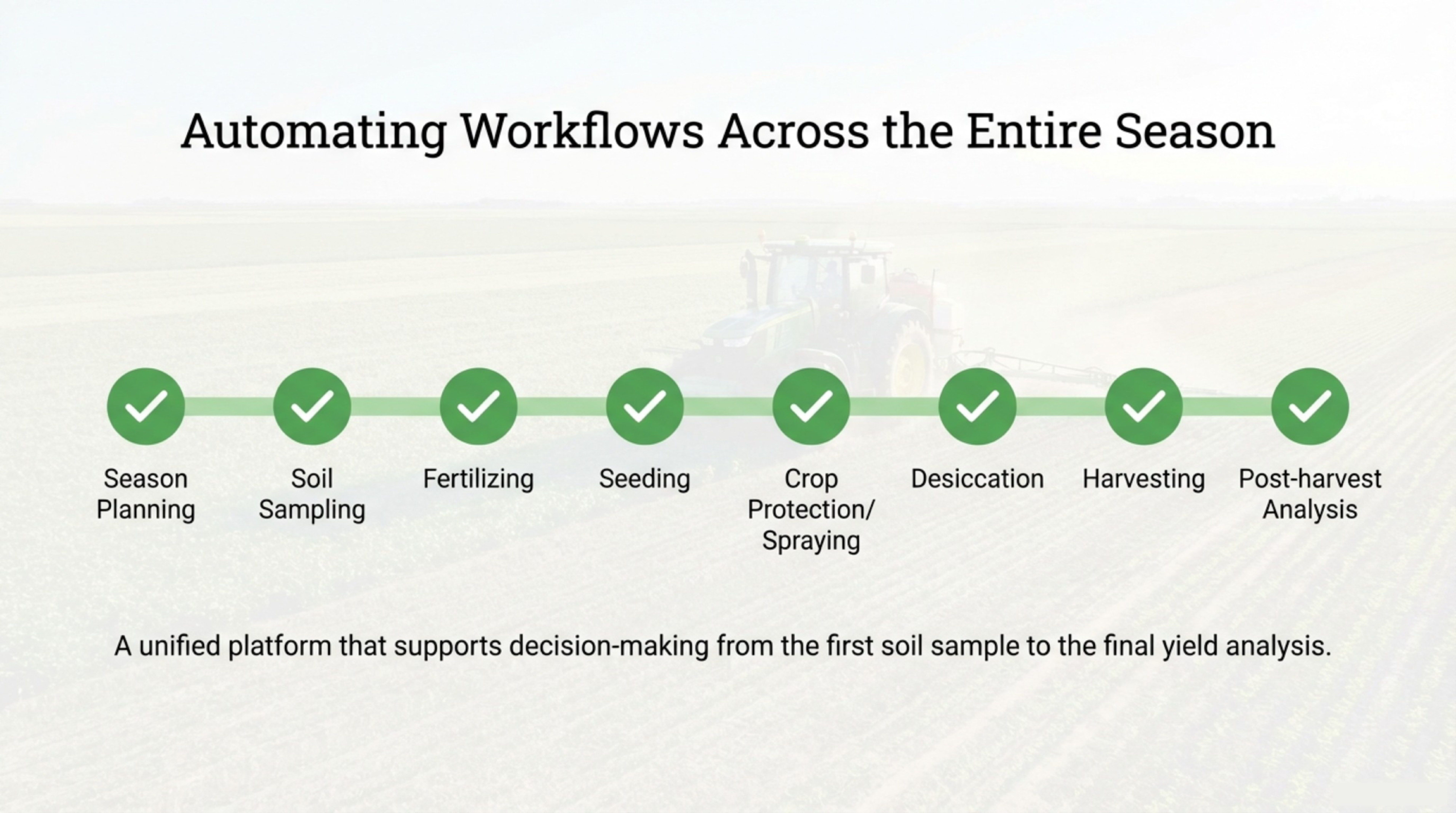


From Q1 Insights to Spring Wins: Turning Early-Season Data Into Precise Actions
You spent months gathering Q1 agronomy insights, but how do you turn that data into spring planting strategy that actually drives results? Many consultants and growers struggle to move from raw numbers to clear, actionable steps. In this post, you’ll learn how to build stable management zones, generate precise VRA prescriptions, and connect your equipment data for smarter spring operations with GeoPard’s agronomic analytics platform.
Harnessing Q1 Agronomy Insights

Unlocking the potential of Q1 agronomy insights can set the foundation for a successful planting season. The goal is to transform data into actionable strategies that maximize yield and efficiency.
Building Stable Management Zones
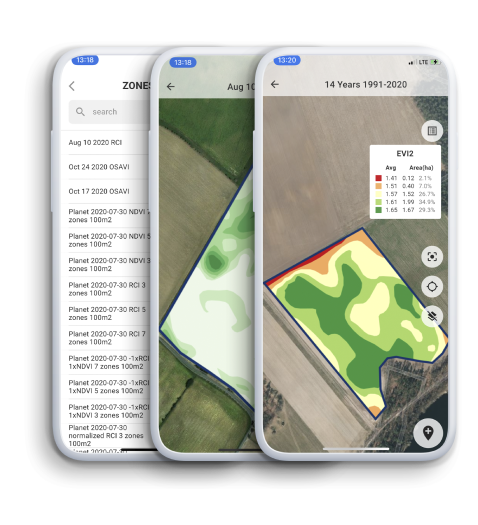
Stable management zones are key to tailored agronomic practices. First, gather multi-year satellite imagery and soil data. This helps identify areas of consistent performance across your fields. Use this data to draw boundaries that reflect the unique characteristics of each zone. This personalized approach allows you to apply precise inputs where they are needed most.
Crafting VRA Prescriptions
Variable Rate Application (VRA) prescriptions can significantly boost productivity. Start by analyzing yield data and topography. With these insights, generate maps that guide seed, fertilizer, and pesticide applications. VRA prescriptions ensure resources are allocated efficiently, reducing waste and increasing returns.
Synchronizing Equipment Data
Connecting your equipment with data analytics platforms like GeoPard is essential. By syncing machinery data with agronomic insights, you can automate applications and monitor performance in real-time. This seamless integration supports informed decision-making and enhances operational efficiency.
Optimizing Spring Planting Strategy

With your zones and prescriptions in place, it’s time to focus on optimizing your planting strategy. This involves precise monitoring and targeted applications based on real-time data.
Monitoring Crop Vigor with Satellite NDVI
Satellite NDVI is a powerful tool for tracking crop health. Regularly monitor NDVI images to assess crop vigor and identify stress areas early. This proactive approach allows timely interventions, ensuring optimal growth conditions.
Implementing Variable Rate Seeding
Variable rate seeding optimizes plant populations by adjusting seed rates according to zone productivity. Use soil and historical yield data to determine the best seeding rates for each area. This ensures plants have the resources they need to thrive, leading to higher yields.
Planning Nitrogen Topdress Applications
Nitrogen is crucial for crop development, but over-application can be costly and harmful. Plan your topdress applications using soil test integration and real-time crop monitoring. Adjust nitrogen rates based on current crop needs and environmental conditions to maximize efficiency and minimize waste.
Tracking and Analyzing ROI

After implementing your strategies, it’s crucial to track their effectiveness and analyze the return on investment. This informs future planning and optimizes resource allocation.
As-Applied Data Analysis
Analyzing as-applied data provides insights into application accuracy and effectiveness. Compare planned vs. actual application rates to identify discrepancies. This analysis helps fine-tune future applications for better results.
Zone Stability and Field Variability Mapping
Mapping field variability and zone stability highlights areas needing attention. Use this information to adjust management practices and improve overall field performance. Regular mapping keeps your strategy aligned with field dynamics.
Setting Up ROI Analysis in Agriculture
ROI analysis is essential for evaluating the success of your agronomic strategies. Calculate inputs vs. outputs to determine profitability. This analysis helps refine future strategies and ensures a focus on high-return practices.
By systematically applying these insights, you can transform raw Q1 data into actionable strategies that drive success throughout the growing season. With GeoPard’s platform, unlocking the full potential of your fields is within reach.
Reflect on the quarter’s precision ag insights and prepare to adopt smarter strategies.
Uncategorized






 English
  German
  Ukrainian
  French
  Kazakh
  Portuguese
  Spanish
  Arabic
  Swedish
  Serbian
  Romanian
  Norwegian
  Finnish
  Lithuanian
  Estonian
  Latvian
  Croatian
  Slovenian
  Slovak
  Japanese
  Polish