

Durum wheat, a cornerstone of Mediterranean agriculture and a globally critical crop for pasta production, faces an urgent challenge: the unsustainable use of nitrogen (N) fertilizers.
While nitrogen is indispensable for maximizing yields, its excessive application has dire environmental consequences, including groundwater contamination, greenhouse gas emissions, and soil degradation.
A groundbreaking four-year study (2018–2022) conducted in Asciano, Italy, and published in the European Journal of Agronomy, sought to address this crisis by rigorously comparing conventional nitrogen management with advanced precision farming techniques.
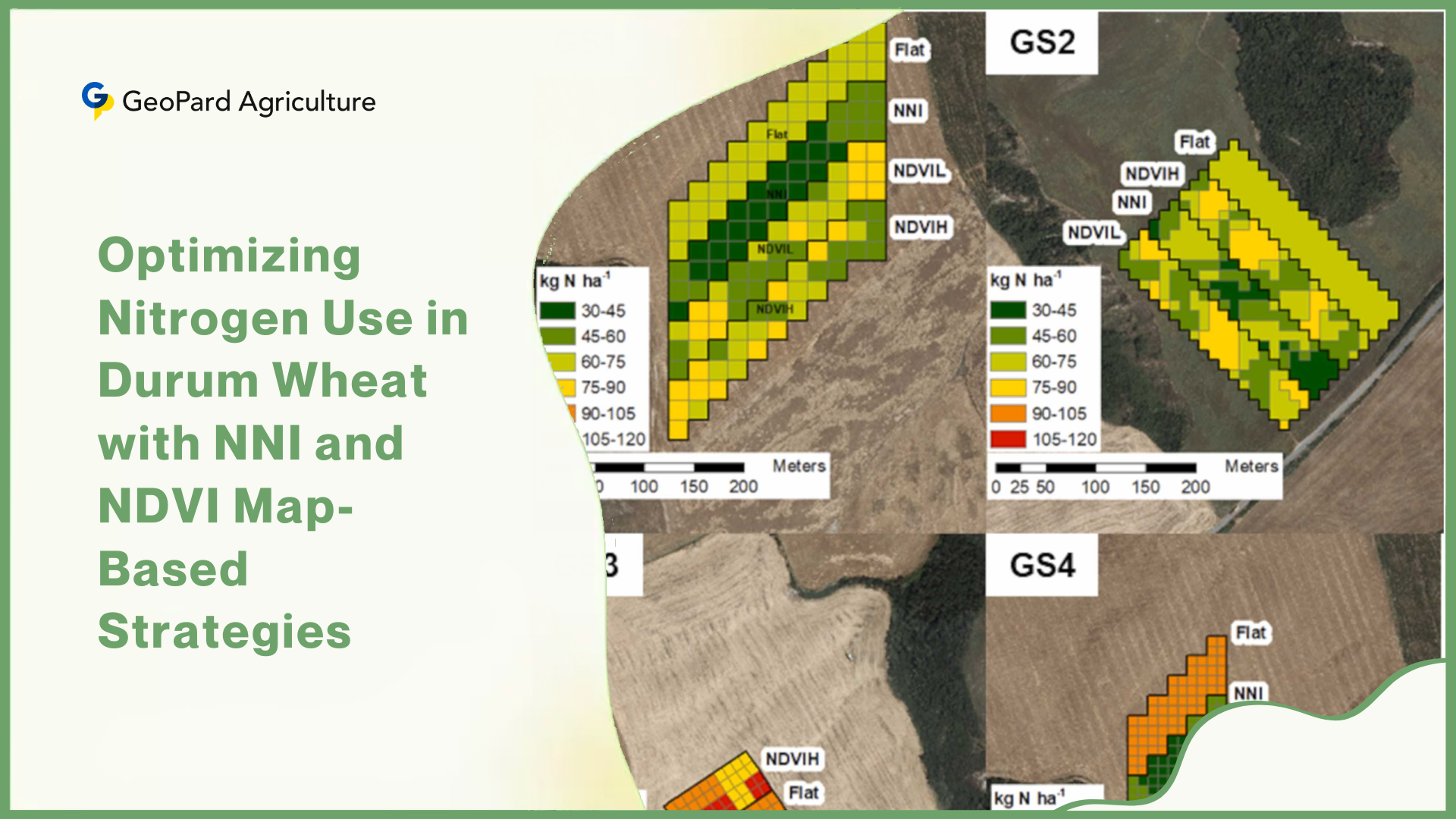
The research focused on three satellite-guided strategies—Nitrogen Nutrition Index (NNI), proportional NDVI (NDVIH), and compensative NDVI (NDVIL)—against traditional uniform N application. The findings not only reveal a path to sustainable durum wheat cultivation but also quantify the economic and ecological trade-offs of each method with remarkable precision.
Methodology: Precision Farming Meets Satellite Technology
The experiment unfolded across four consecutive growing seasons in the rolling hills of Tuscany, a region emblematic of Mediterranean wheat farming. Researchers divided test fields into plots subjected to four distinct N management strategies.
The conventional “flat rate” approach followed regional agronomic guidelines, applying 150 kg of nitrogen per hectare annually. In contrast, the precision methods leveraged Sentinel-2 satellite imagery—a European Space Agency mission providing high-resolution (10-meter) multispectral data—to tailor N application spatially and temporally.
The NNI strategy stood apart by calculating real-time crop nitrogen status using a validated algorithm that integrates leaf area index and biomass estimates. NDVIH allocated N proportionally based on vegetation density (Normalized Difference Vegetation Index), while NDVIL adopted a compensative approach, funneling extra N to low-vegetation zones.
NNI Outperforms Conventional and NDVI-Based Strategies
Over the study period, the NNI method demonstrated unparalleled efficiency. It reduced nitrogen use by 20%, applying just 120 kg per hectare compared to the conventional 150 kg, while maintaining statistically equivalent grain yields of 4.8 tons per hectare versus 4.7 tons under flat-rate farming.
Protein content—a critical quality metric for durum wheat’s end-use in pasta—reached 13.2% with NNI, slightly outperforming the conventional method’s 12.5%.
This marginal gain in protein translated to significant industrial advantages: dough produced from NNI-optimized wheat exhibited a W-index (a measure of gluten strength) of 280, far surpassing the 240 observed in conventional wheat.
Such improvements stemmed from NNI’s ability to synchronize nitrogen availability with crop developmental stages, ensuring optimal nutrient partitioning during grain filling.
The Hidden Costs of NDVI-Based Approaches
The NDVI-based strategies, while innovative, revealed critical limitations. The proportional NDVIH approach, which allocated N based on canopy greenness, increased protein content to 13.8% but reduced yields to 4.5 tons per hectare—a 6% drop compared to NNI.
This paradox arose from over-fertilization in already nitrogen-rich zones, where excessive vegetative growth diverted energy from grain production.
The compensative NDVIL method, designed to boost struggling crop areas, achieved the highest yield (5.1 tons/ha) but at a steep environmental cost: it required 160 kg N per hectare, leading to a 33% surge in nitrous oxide emissions (1.4 kg CO2-equivalent per kg of grain) compared to NNI’s 0.8 kg.
These emissions matter profoundly—nitrous oxide has 265 times the global warming potential of carbon dioxide over a century.
Economically, NNI emerged as the clear winner. Farmers adopting this strategy achieved a net return of €220 per hectare, 12% higher than the conventional method’s €196. This advantage stemmed from two factors: reduced fertilizer costs (€98/ha vs. €123/ha) and premium pricing for high-protein grain.
The study introduced a novel “social cost” metric—a comprehensive measure of environmental damage, public health impacts from water pollution, and long-term soil degradation. NNI’s social cost totaled €42 per hectare, dwarfed by conventional farming’s €60. NDVIH and NDVIL posted intermediate costs of €58 and €55, respectively, reflecting their imbalanced nitrogen distribution.
Delving deeper into environmental metrics, nitrogen fertilizer use efficiency (NfUE)—the percentage of applied N converted into harvestable grain—reached 65% under NNI, a stark improvement over the 52% efficiency of conventional methods. This leap translated to an 18% reduction in nitrate leaching, protecting local aquifers from contamination.
Over the four-year study, fields under NNI lost just 12 kg of nitrogen per hectare annually to leaching, compared to 22 kg in conventional plots. For context, the EU’s Nitrates Directive mandates groundwater nitrate concentrations below 50 mg/L—a threshold exceeded in 30% of conventional plots but only 8% of NNI-managed areas.
Scaling NNI: Challenges and Policy Interventions
The research also illuminated hidden climate benefits. Using life cycle assessment (LCA) methodology, the team calculated that NNI’s carbon footprint totaled 0.8 kg CO2-equivalent per kg of grain, 33% lower than conventional farming’s 1.2 kg.
This reduction primarily stemmed from decreased fertilizer production emissions (1.2 kg CO2-eq/kg N avoided) and lower nitrous oxide releases from soils. If scaled across the EU’s 2.4 million hectares of durum wheat farmland, widespread NNI adoption could slash annual emissions by 960,000 metric tons of CO2-equivalent—equivalent to removing 208,000 cars from roads.
However, the study cautions against viewing precision agriculture as a panacea. The NNI method’s success hinges on continuous access to high-quality satellite data and advanced machinery capable of variable-rate application—infrastructure gaps in developing regions.
For instance, the Sentinel-2 satellites revisit each location every five days, but cloud cover during critical growth stages can disrupt data collection. Moreover, the algorithms require calibration to local conditions; in this study, NNI thresholds were fine-tuned to Mediterranean climates, achieving 92% accuracy in nitrogen status prediction.
Applying the model to arid regions or heavy clay soils without recalibration could reduce accuracy to 70–75%.
The human factor proves equally critical. Farmers transitioning to NNI need training to interpret spectral indices—for example, understanding that NDVI values above 0.7 often signal over-vegetation and warrant reduced N.
The research team estimates that a 10% increase in farmer literacy on precision tools could boost NfUE by 4–6 percentage points. Policy interventions will likely prove essential: subsidizing soil sensors, funding agronomist-led workshops, and incentivizing cooperatives to share machinery could democratize access.
Looking ahead, the study’s implications extend far beyond durum wheat. The NNI framework, when adapted to crops like maize or rice, could address the 60 million tons of excess nitrogen applied globally each year—a key target of the UN Sustainable Development Goals.
Preliminary trials in Spain’s barley fields show similar yield stability with 18% less N, suggesting cross-crop applicability. For researchers, integrating machine learning with satellite data presents a promising frontier: early models can now predict nitrogen demands with 95% accuracy 30 days pre-application, enabling proactive rather than reactive management.
Conclusion
In conclusion, this research transcends academic circles, offering a blueprint for reconciling agricultural productivity with planetary health.
By reducing nitrogen use by 20%, boosting farmer profits by 12%, and slashing greenhouse gas emissions by a third, the NNI method demonstrates that sustainability and profitability are not mutually exclusive. As climate change intensifies droughts and destabilizes growing seasons, such precision strategies will prove indispensable.
The challenge now lies in transforming this scientific validation into on-ground action—through policy reform, technological democratization, and a paradigm shift in how we view fertilizers: not as blunt tools, but as precision instruments in the quest for food security.
Reference: Fabbri, C., Delgado, A., Guerrini, L., & Napoli, M. (2025). Precision nitrogen fertilization strategies for durum wheat: a sustainability evaluation of NNI and NDVI map-based approaches. European Journal of Agronomy, 164, 127502.
Satellite Imagery